JD(09618)

Search documents
京东:上线“百亿超市”频道
Mei Ri Jing Ji Xin Wen· 2026-02-26 07:02
Core Insights - JD.com has launched a new "Billion Supermarket" channel on its app, increasing its investment in subsidies for supermarket categories [1] - The company plans to invest over 20 billion yuan in product subsidies over the next three years, aiming to help brands achieve an additional sales increment of 200 billion yuan [1] Summary by Category - **Company Strategy** - JD.com is enhancing its competitive edge in the supermarket sector by introducing the "Billion Supermarket" channel [1] - The initiative reflects a strategic focus on increasing market share through significant financial support for brands [1] - **Financial Commitment** - The company will allocate more than 20 billion yuan in subsidies over the next three years [1] - This investment is expected to generate an additional 200 billion yuan in sales for participating brands [1]

从卖产品到做文化:京东、李宁、梅见青梅酒等六大品牌的艺术实践路径
Sou Hu Cai Jing· 2026-02-26 06:51
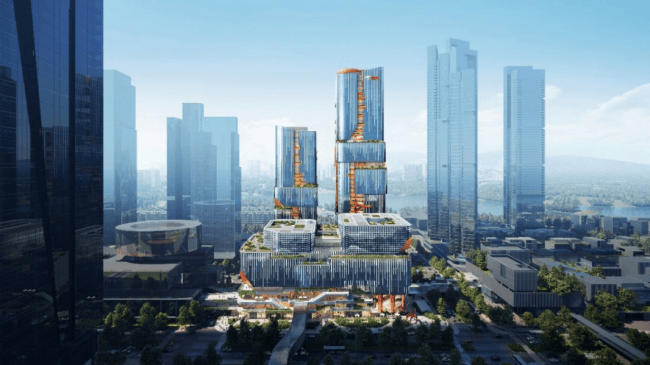
Core Insights - The article discusses the impact of AI on consumer behavior and brand differentiation, highlighting a promotional event by Alibaba's AI product Qianwen that generated millions of orders in a short time, showcasing the AI amplification effect [1] - It emphasizes the diminishing differentiation among brands as automation and content generation become standardized, leading companies to invest in unique capabilities like aesthetic judgment and cultural expression to maintain competitive advantages [1] Group 1: JD.com - **Artistic Philosophy**: JD.com views art as part of its public attribute development, aiming to strengthen connections with cities, communities, and the public through long-term cultural and artistic investments [3] - **Artistic Practice**: JD.com plans to build an independent contemporary art museum in Shenzhen Bay, covering over 10,000 square meters, offering free or low-cost access to exhibitions, performances, and community activities, linking art themes to its business background without commercial displays [4] - **Artistic Outcome**: JD.com transitions from an efficiency-driven enterprise to a participant in urban cultural arts, enhancing its public recognition and social image [5] Group 2: Li-Ning - **Artistic Philosophy**: Li-Ning focuses on art design and cultural expression as core competitive strengths, reshaping its brand image through visual language and local cultural elements [7] - **Artistic Practice**: The brand showcases new collections at fashion weeks in cities like New York and Paris, integrating traditional Chinese elements into its designs and collaborating with artists for limited series and artistic packaging [8] - **Artistic Outcome**: Li-Ning's products evolve from functional sportswear to art-driven apparel, increasing brand awareness and cultural recognition among younger consumers [9] Group 3: Meijian Qingmei Wine - **Artistic Philosophy**: Meijian Qingmei Wine positions art as a key direction for brand development, connecting aesthetics with lifestyle through experiential scenarios [9] - **Artistic Practice**: The brand has created China's first art space centered around wine, collaborating with numerous artists to integrate art into its products and hosting cultural events to enhance the brand's artistic identity [10] - **Artistic Outcome**: Meijian Qingmei Wine evolves from a beverage brand to a cultural consumption brand, establishing a clear artistic aesthetic in the market [11] Group 4: Muji - **Artistic Philosophy**: Muji emphasizes design as a core language, establishing daily aesthetics as a long-term brand standard [12] - **Artistic Practice**: The brand's stores utilize natural materials and modular display systems, hosting exhibitions and workshops to engage consumers in the aesthetic experience [15] - **Artistic Outcome**: Consumers develop stable memories of the brand's aesthetic, transforming simplicity and practicality into long-term brand assets [16] Group 5: IKEA - **Artistic Philosophy**: IKEA defines home design as "accessible daily art," focusing on providing aesthetically pleasing and functional products at reasonable prices [18] - **Artistic Practice**: The brand collaborates with independent designers to create limited series and encourages consumer participation through workshops and community events [18] - **Artistic Outcome**: Art and design become integral to home life, increasing consumer engagement and establishing IKEA as a "design popularizer" [18] Group 6: Starbucks - **Artistic Philosophy**: Starbucks views its store spaces as community cultural venues, enhancing the experience through localized content and design [20] - **Artistic Practice**: The brand develops unique store concepts that incorporate local art and hosts community events to foster customer interaction [21] - **Artistic Outcome**: Stores transform from mere consumption spaces to public gathering places, strengthening the brand's connection to urban lifestyles [22]


京东上线“百亿超市”频道,三年补贴200亿
Di Yi Cai Jing Zi Xun· 2026-02-26 06:47
编辑|钉钉 2月26日,京东宣布京东APP正式上线"百亿超市"频道。京东计划未来3年内,投入超200亿元商品补 贴,帮助品牌实现额外销售增量2000亿。此前在2025年,京东超市宣布未来三年用户规模目标,计划从 3亿增长至5亿。 记者|陆涵之 ...
京东上线“百亿超市”频道 未来3年投入超200亿商品补贴
Di Yi Cai Jing· 2026-02-26 06:21
Group 1 - JD.com has launched a new "Billion Supermarket" channel on its app, increasing its investment in subsidies for supermarket categories [1] - The company plans to invest over 20 billion yuan in product subsidies over the next three years [1] - This initiative aims to help brands achieve an additional sales increment of 200 billion yuan [1]
京东:上线“百亿超市”频道,计划未来3年内投入超200亿元商品补贴
Xin Lang Cai Jing· 2026-02-26 06:16
Group 1 - The core point of the article is that JD.com has launched a "100 Billion Supermarket" channel on its app, significantly increasing its investment in subsidies for the supermarket category [1] - JD.com plans to invest over 20 billion yuan in product subsidies over the next three years [1] - The initiative aims to help brands achieve an additional sales increment of 200 billion yuan [1]
京东集团首席经济学家沈建光2026年经济展望:分化中显韧性,攻坚中现机遇
Jin Rong Jie· 2026-02-26 02:29
Core Viewpoint - The article discusses the outlook for China's economy in 2026, emphasizing the need for a focus on domestic demand amidst external pressures and structural changes in the economy [2][4]. Economic Growth - In 2025, China's economy achieved a growth target of 5%, but the growth rate showed a declining trend throughout the year, with net exports contributing 32.7% to economic growth [2]. - The economic growth in 2026 is expected to be slightly lower than in 2025, with a focus on the quality and efficiency of growth [2]. Key Growth Engines - Infrastructure investment is set to lead the growth, with significant national projects accelerating due to policy support, including an increase in funding to approximately 295 billion yuan [2]. - Manufacturing investment is anticipated to recover, driven by technological innovation and the rise of new economic sectors such as semiconductors and artificial intelligence [2]. - Export resilience is expected to continue, with a projected growth rate of around 5% in 2026, supported by diversification into emerging markets and upgrades in export products [3]. Domestic Demand Challenges - 2026 is characterized as a year of "domestic demand challenges," with weak domestic demand and insufficient internal momentum being the primary concerns [4]. - Consumer spending faces constraints from high base effects, pressure on income growth (with disposable income growth slowing to 5% in 2025), and a significant decline in real estate wealth [4]. - Retail sales growth is expected to slow to around 3%, but service consumption presents a potential growth area, with significant room for improvement compared to the U.S. [4]. Policy Adjustments - Macro policy shifts are aimed at releasing potential and enhancing efficiency rather than merely increasing stimulus [5]. - Fiscal policy is projected to maintain a deficit rate of around 4%, focusing on quality and efficiency of spending [6]. - Monetary policy has shifted to include the promotion of reasonable price recovery as a key consideration, indicating a proactive approach to low inflation [6]. - Real estate policies will focus on controlling new supply, reducing inventory, and optimizing supply to stabilize the market [7].
预见2025:《2025年中国冷链物流行业全景图谱》(附市场现状、竞争格局和发展趋势等)
Qian Zhan Wang· 2026-02-26 02:09
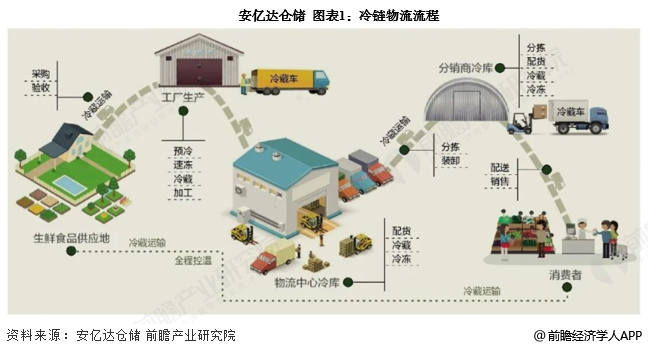
Industry Overview - Cold chain logistics is defined as a specialized logistics process that utilizes temperature control and preservation technologies to ensure that cold chain products remain within specified temperature environments throughout their entire lifecycle, including processing, storage, transportation, and distribution [1] - The products involved in cold chain logistics include agricultural products, poultry, seafood, flowers, processed foods, frozen foods, ice cream, dairy products, fast food ingredients, and beverages, as well as special items like pharmaceuticals and chemicals [1] Industry Chain Analysis - The cold chain logistics industry chain consists of upstream segments such as refrigerated vehicle manufacturing, cold storage construction, and equipment manufacturing; midstream segments include transportation (both trunk and distribution), warehousing, and value-added services; and downstream applications span food, pharmaceuticals, chemicals, and floriculture [3][4] Industry Development History - The cold chain logistics industry in China has evolved through three stages since 1998: 1. The initial stage (1998-2007) was characterized by a lack of resources and outdated facilities, with many companies relying on second-hand refrigerated vehicles [6][9] 2. The rapid expansion stage (2008-2017) saw the emergence of organized operations and the establishment of national distribution networks, driven by the growth of the frozen food industry and the entry of major players [9] 3. The current stage (2018-present) marks the transition to cold chain logistics 3.0, characterized by upgrades in industry environment, awareness, technology, management, and business philosophy [9] Industry Policy Background - Cold chain logistics is recognized as a crucial component of modern agricultural development, significantly impacting food quality, safety, and public health [10] - Recent policies emphasize enhancing cold chain infrastructure, particularly in rural areas, to improve agricultural product distribution and consumption [11] Current Industry Status - The total demand for food cold chain logistics in China is projected to reach 365 million tons in 2024, reflecting a year-on-year growth of 4.3% [12] - The cold chain logistics market size is expected to exceed 530 billion yuan in 2024, driven by rising demand for agricultural product refrigeration [13] - The total capacity of cold storage facilities in China is estimated at 25.3 million cubic meters, with a year-on-year increase of 10.96% [14] - The number of refrigerated vehicles in China is projected to reach 495,000 by 2024, marking a year-on-year growth of 14.58% [17] Industry Competition Landscape - The competitive landscape of the cold chain logistics industry is categorized into three tiers: leading companies like SF Express, JD Logistics, and Rongqing Logistics dominate the national market; regional players such as Hongxing Cold Chain and Daxiang Logistics have established strong local networks; while smaller enterprises face challenges in scaling [18][20] - The provinces with the highest number of star-rated cold chain logistics companies are Anhui and Shandong, each with 32 companies, followed by Henan with 28 [22] Industry Development Outlook and Trends - The cold chain logistics market in China is expected to exceed 670 billion yuan by 2030, with a compound annual growth rate (CAGR) of approximately 4% over the next five years [24][25] - Key trends include the expansion of infrastructure, the evolution of business models, and the enhancement of industry standards, driven by economic growth, urbanization, and increasing consumer demand for food safety [27][29]



刘强东豪掷50亿南下广东 斩获24亿游艇大单
2 1 Shi Ji Jing Ji Bao Dao· 2026-02-25 16:10
Group 1 - The core point of the article is that Liu Qiangdong, the founder of JD.com, announced the establishment of a new yacht brand named Sea Expandary, with a personal investment of 5 billion yuan [1] Group 2 - The announcement was made on February 24, indicating a strategic move into the luxury goods market by the company [1] - The investment of 5 billion yuan reflects a significant commitment to the new brand, suggesting potential growth opportunities in the yacht industry [1]
Founder of China's JD.com launches yacht brand
Reuters· 2026-02-25 09:10
Core Insights - Richard Liu, founder of JD.com, has launched a new yacht brand named Sea Expandary, focusing on creating "100% green" yachts that are affordable for ordinary households [1] - Liu is investing 5 billion yuan (approximately $690 million) into Sea Expandary to compete with leading yacht manufacturers globally [1] - The brand will not be managed by Liu on a day-to-day basis, as he intends to focus primarily on JD.com [1] Company Developments - Sea Expandary will encompass research and development, manufacturing, sales, and other services [1] - The company plans to establish a manufacturing base in Zhuhai and its headquarters in Shenzhen, where it will also engage in the construction and operation of multiple marinas [1] - Strategic cooperation agreements have been signed with the Shenzhen and Zhuhai governments to support the brand's initiatives [1] Industry Context - China's yacht fleet has nearly doubled from around 4,500 to almost 10,000 in the past three years, indicating significant growth in the leisure boating market [1] - The rapid economic growth in China has led to a larger urban middle class and an increasing number of high net-worth individuals, fostering demand for premium leisure goods and experiences [1]
港股收评:恒指涨0.66%,房地产、有色金属股全天强势
Ge Long Hui· 2026-02-25 08:37
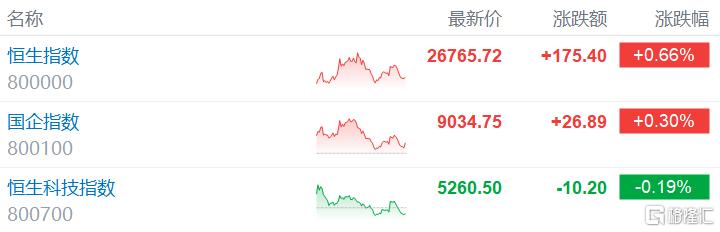
Market Overview - The Hong Kong stock market experienced a mixed performance, with the Hang Seng Index rising by 0.66% to 26,765.72, while the Hang Seng Tech Index fell by 0.19% to 5,260.50 [1][2] - The overall market showed signs of recovery after a significant drop the previous day, with the Hang Seng Index and the National Enterprises Index both posting gains of 0.66% and 0.30%, respectively [1] Sector Performance - Technology stocks showed a rebound, with Meituan rising by 1.6%, while Alibaba, Tencent, and JD.com also saw slight increases [4] - Real estate stocks surged following the announcement of new housing policy adjustments in Shanghai, with Country Garden and CIFI Holdings both gaining over 6% [5][6] - The construction materials sector also performed well, with Conch Cement rising over 5% [6][7] - Steel stocks experienced broad gains, with New Mining Resources up by 20% and Chongqing Steel rising over 8% [8] - Copper and aluminum stocks saw collective increases, with WanGuo Gold Group rising by 6.91% and China Gold International up by over 4% [9][10] - The gold and precious metals sector was active, with Long Resources increasing by over 13% [11] - The sportswear sector saw gains, with Tmall rising by 6.53% and Anta Sports up by 2.48% [13] - The restaurant sector collectively rose, with Haidilao increasing by 6.19% due to strong consumer demand during the Spring Festival [15] Weak Performers - Semiconductor stocks faced declines, with companies like Lattice Semiconductor and Aisino falling over 7% [16][17] - Paper stocks dropped, with Nine Dragons Paper down by 4.29% [18] - The electricity sector showed weakness, with Datang New Energy falling over 4% [19] - Automotive stocks declined, with Li Auto down by 3.71% and NIO down by 2.64% [20] - Education stocks performed poorly, with Chuanglian Holdings dropping over 5% [21] Capital Flow - Southbound funds recorded a net sell of HKD 4.057 billion, with the Shanghai-Hong Kong Stock Connect seeing a net sell of HKD 5.495 billion [23] Market Outlook - Huatai Securities noted increased market differentiation during the Spring Festival, with AI and internet giants showing diverging trends, while consumer data remained strong but did not significantly boost sector performance [23]