NIO(09866)

Search documents
蔚来-SW回升逾5% 此前遭新加坡主权财富基金诉讼 公司回应称相关指控均无事实依据
Zhi Tong Cai Jing· 2025-10-17 02:03
Group 1 - NIO-SW (09866) experienced a recovery of over 5% after a nearly 9% decline in the previous day's closing [1] - As of the report, NIO's stock rose by 3.19% to HKD 50.9, with a trading volume of HKD 184 million [1] - The Singapore government investment company (GIC) has filed a lawsuit against NIO, alleging that the company inflated revenue and profits through a partnership with Wuhan Weinan Battery Asset Co., misleading investors and causing financial losses [1] Group 2 - NIO representatives stated that the lawsuit is not a new event and is unrelated to the company's recent operational status, stemming from a short-selling report by Grizzly Research LLC in June 2022 [1] - The report by Grizzly Research was described as baseless, containing numerous errors and misleading conclusions [1] - To protect shareholder interests, NIO's board established an independent committee that, with the assistance of third-party international law firms and forensic accountants, conducted an internal investigation into the short-selling report, finding no factual basis for the allegations [1] Group 3 - Deutsche Bank's research report indicated that concerns raised by Grizzly regarding NIO's battery asset management business are unfounded and that the elements of the business model have been severely misunderstood [1]

BAAS模式夸大财务数据?如何理解蔚来的这场官司
Hua Er Jie Jian Wen· 2025-10-17 01:59
Core Viewpoint - NIO faces a lawsuit alleging it exaggerated financial data through its Battery as a Service (BaaS) model, leading to a significant drop in its stock price [1][2] Group 1: Legal and Financial Context - A regional sovereign fund filed a lawsuit against NIO in August, claiming the company inflated financial data through its BaaS model [1] - This is not the first time NIO has faced such allegations; a short-seller report in 2022 raised similar concerns, but an independent investigation confirmed compliance with US GAAP [2] - The Hong Kong Stock Exchange conducted a thorough review of NIO's financial practices during its 2022 IPO, which were publicly disclosed [2] Group 2: BaaS Model Analysis - The BaaS model allows consumers to purchase NIO vehicles without buying the battery, reducing the purchase price by approximately 25% to 30%, while charging a monthly rental fee for the battery [3] - Consumers pay about 75% of the vehicle price upfront, while the battery asset management company, Wuhan Weineng, pays the remaining 25% [3] - NIO recognizes full vehicle sales revenue upon delivery, while consumers pay a monthly rental fee ranging from 900 to 1300 RMB to the battery ownership company [3] Group 3: Market Focus and Future Outlook - Despite the lawsuit, the market's attention is expected to shift back to NIO's core fundamentals, including profitability and product cycles [5] - Analysts predict that NIO's losses will significantly narrow by Q4 2025 due to new model launches and cost control measures [5] - The upcoming L80 SUV is anticipated to launch in Q1 2026, with a competitive starting price of around 170,000 RMB, which is expected to drive sales [5]

港股异动 | 蔚来-SW(09866)回升逾5% 此前遭新加坡主权财富基金诉讼 公司回应称相关指控均无事实依据
智通财经网· 2025-10-17 01:58
Core Viewpoint - NIO-SW (09866) experienced a recovery of over 5% after a nearly 9% decline in the previous day's trading, amid legal issues raised by the Government of Singapore Investment Corporation (GIC) regarding alleged inflated revenues and profits [1] Group 1: Legal Issues - GIC has filed a lawsuit against NIO, claiming that the company misled investors through inflated financials related to Wuhan Weinan Battery Asset Co., leading to investment losses [1] - NIO representatives stated that the lawsuit is not a new event and is not related to the company's recent operational status, but stems from a short-selling report by Grizzly Research LLC in June 2022 [1] - The company conducted an independent internal investigation with the assistance of third-party international law firms and forensic accountants, concluding that the allegations in the short-selling report lack factual basis [1] Group 2: Market Reaction - Following the news, NIO's stock price rose by 3.19% to HKD 50.9, with a trading volume of HKD 184 million [1] - Deutsche Bank's research report indicated that concerns raised by Grizzly regarding NIO's battery asset management business are unfounded and that the business model elements have been severely misunderstood [1]
港股异动丨蔚来反弹,回应“遭GIC指控造假”:源于此前不实指控,三年前已完成独立调查
Ge Long Hui· 2025-10-17 01:56
Core Viewpoint - NIO-SW (9866.HK) experienced a significant stock price drop of 13% due to a lawsuit filed by Singapore's sovereign wealth fund GIC, which accused the company and its executives of inflating revenue figures. However, the stock rebounded by over 6% to HKD 52.3 during intraday trading following a court ruling that temporarily halted the case [1]. Group 1: Legal Issues - GIC filed a lawsuit against NIO and its executives, including CEO Li Bin and former CFO Feng Wei, alleging revenue misrepresentation [1]. - The lawsuit was initiated in August in the Southern District of New York, and a judge has ordered a temporary stay of the case due to its similarity to a prior class action lawsuit [1]. - NIO stated that the lawsuit is not a new issue and stems from false allegations made by a short-selling firm in June 2022, which were investigated and found to lack factual basis [1]. Group 2: Company Performance - NIO delivered 34,749 vehicles in September, marking a year-on-year increase of 64.1% [3]. - The company is set to hold its 2025 NIO Day in Hangzhou [3].
被新加坡主权财富基金起诉 蔚来回应:严格遵守上市合规要求,诉讼基于不实指控
Mei Ri Jing Ji Xin Wen· 2025-10-17 01:48
Core Points - Singapore's sovereign wealth fund, GIC Private Limited, has filed a lawsuit against NIO Inc. and its executives, alleging securities fraud related to inflated revenue and profits through a partnership with Wuhan Weinan Battery Asset Co., leading to investment losses for GIC [1] - NIO's representatives stated that the lawsuit is not a new event and stems from unfounded allegations made by Grizzly Research LLC in a short-selling report from June 2022, which the company claims lacks factual basis [1] - NIO's board conducted an independent internal investigation with third-party legal and forensic accounting assistance, concluding that the allegations in the short-selling report were baseless [1] Company Compliance and Future Plans - NIO emphasized its commitment to compliance with regulations in the U.S., Hong Kong, and Singapore, as a publicly listed company in these regions [2] - The company highlighted the positive impact of its battery rental service on user experience and plans to continue advancing battery technology and business model innovation to benefit users and promote healthy development in the electric vehicle industry [2]
港股蔚来反弹高开
Di Yi Cai Jing Zi Xun· 2025-10-17 01:47
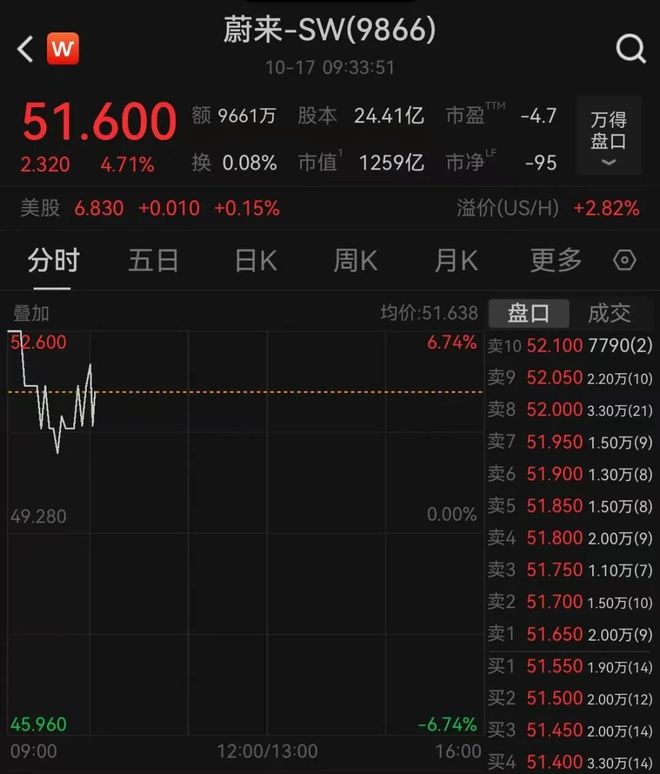
Group 1 - NIO-SW stock opened over 5% higher on October 17, reaching a price of 51.6 HKD per share, recovering from a nearly 9% drop in the previous trading session [1] - The stock's market capitalization is reported at 125.9 billion HKD, with a price-to-earnings ratio of -47, indicating a negative earnings situation [2] - The stock's trading volume was 9.661 million shares, with a slight change of 0.08% in trading activity [2] Group 2 - The stock price increased by 4.71% during the trading session, reflecting a positive market response [1] - The stock's performance in the US market showed a slight increase of 0.15%, with a price of 6.83 USD [2] - The premium for the stock in the US market compared to Hong Kong is noted at 2.82% [2]
港股蔚来-SW反弹高开超5%,上日收跌近9%
Xin Lang Cai Jing· 2025-10-17 01:39
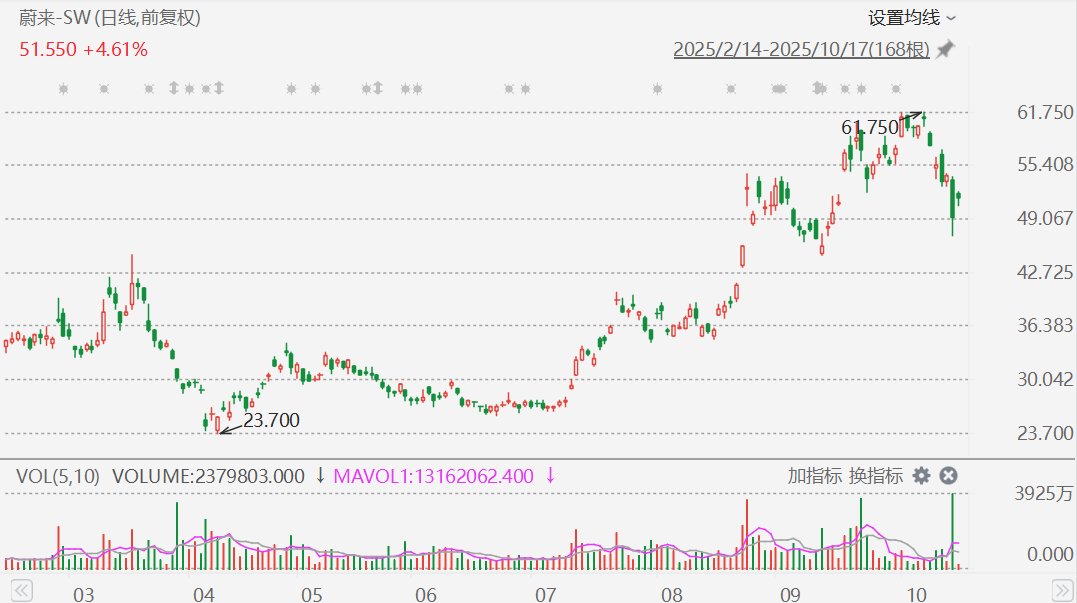
港股蔚来-SW反弹高开超5%,上日收跌近9%。10月16日,蔚来被GIC起诉引发市场关注。蔚来相关人 士回应称,本案件不是新发生的事件,并非针对蔚来近期经营状况,源于2022年6月做空机构灰熊 (Grizzly Research LLC)在一份做空报告中对蔚来的不实指控。 (来源:科创100ETF基金) 来源:市场资讯 ...
雷军:汽车安全是基础,共同抵制网络水军和黑公关;巨头宣布将裁员1.6万人;蔚来回应被指控收入虚增;曹德旺辞去福耀玻璃董事长职务
Sou Hu Cai Jing· 2025-10-17 00:57
Group 1 - The article discusses the proposed regulations by the State Administration for Market Regulation regarding food safety responsibilities for online food delivery platforms and providers [3] - The regulations include a requirement for platforms to establish food safety management systems and clarify responsibilities among all parties involved [3] - It emphasizes the "one certificate, one store" operating model, prohibiting providers from using the same business license to open multiple online stores on the same platform [3] Group 2 - JD.com has announced a trial in 25 cities to eliminate penalties for delivery riders who exceed order delivery times, replacing it with a "service score" management system [4] - Ele.me is also testing a similar service score system to replace the penalty for late deliveries, with plans to expand to more cities [4] - Meituan has stated that it will fully eliminate penalties for late deliveries by the end of 2025, having already implemented a trial in 22 cities [4] Group 3 - Xiaomi's CEO Lei Jun emphasized the importance of safety and quality in the automotive industry during a conference, highlighting the company's commitment to innovation and collaboration [5] - NIO responded to a lawsuit from Singapore's sovereign wealth fund, stating that the claims are based on false accusations from a short-seller report [5] - The article mentions that the lawsuit is not related to NIO's recent business performance and that an independent investigation found no basis for the accusations [5] Group 4 - Nestlé announced plans to cut approximately 16,000 jobs over the next two years, which represents about 6% of its total workforce [7] - The layoffs will affect 12,000 white-collar jobs and 4,000 positions in manufacturing and supply chain [7] - This announcement comes despite the company exceeding sales expectations in the third quarter [7] Group 5 - The article reports on the successful launch of 12 low-orbit satellites for satellite internet by China, marking the 600th launch of the Long March series rockets [26] - The launch was part of a broader strategy to enhance satellite internet capabilities [26] - The satellites were successfully placed into their designated orbits [26]

“一家车企,最多领先三年”
3 6 Ke· 2025-10-17 00:55
Group 1: NBA and Market Dynamics - The NBA China Games have returned after a six-year hiatus, highlighting a shift in the league's player dynamics and fan engagement [1] - The competitive nature of professional sports, exemplified by the NBA, reflects the challenges faced by teams in maintaining dominance over time [3] Group 2: Automotive Industry Competition - The Chinese automotive market is experiencing intense competition, with a notion that no car manufacturer can maintain a lead for more than three years [4] - The transition from traditional fuel vehicles to smart electric vehicles has disrupted previous market leaders, with companies like Tesla and BYD facing new challenges [6][7] - BYD has shown remarkable sales growth from 1.86 million in 2022 to 4.27 million in 2024, indicating a strong market position [9] - Tesla is entering a sales bottleneck in 2024, struggling with product iteration and increased competition [7][9] - Li Auto, despite initial success, is also facing a decline in sales in 2025, attributed to market saturation and competition [11][13] - NIO has struggled with competitiveness but is attempting a comeback with new models, reflecting the intense competition in the electric vehicle sector [15][16]




蔚来回应外国基金投诉:无事实依据;零跑推D19旗舰SUV,配超大电池;卡西欧推《回到未来》40周年联名表 | 极客早知道
Sou Hu Cai Jing· 2025-10-17 00:55
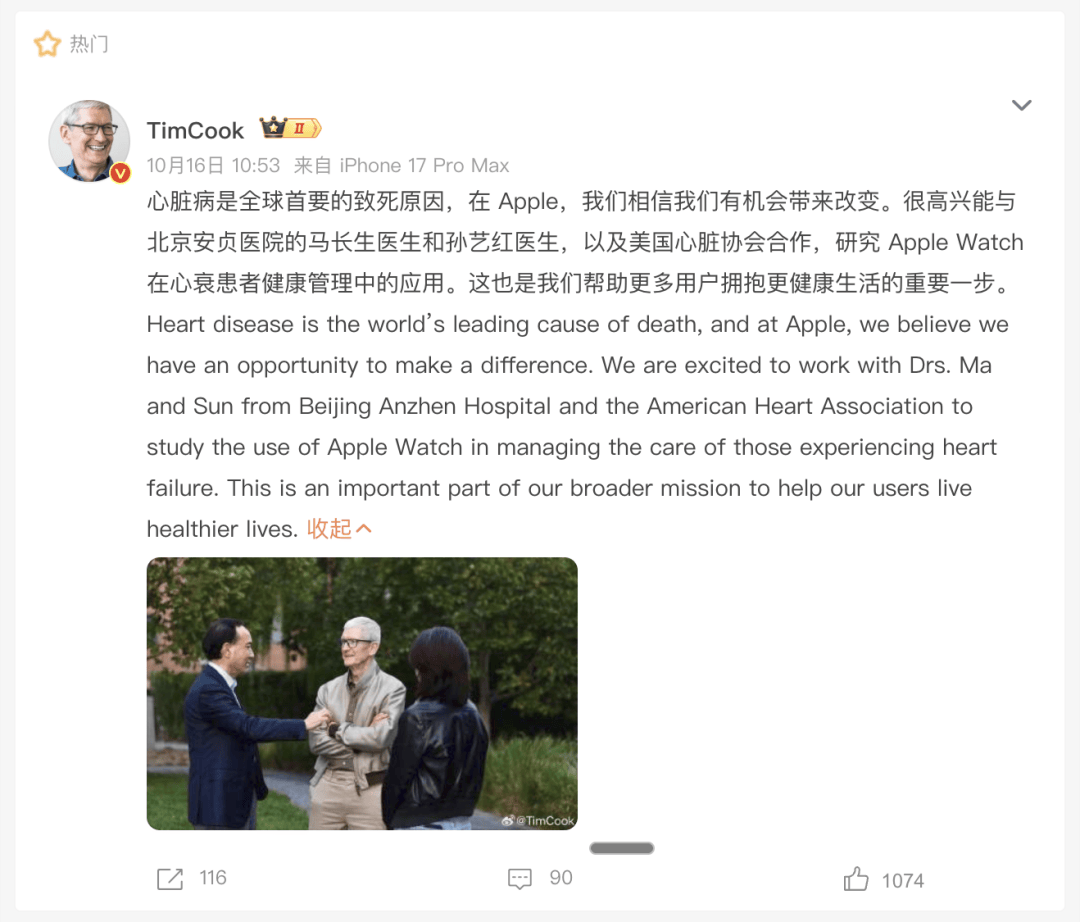
Group 1: NIO and GIC Lawsuit - Singapore's Government Investment Corporation (GIC) has filed a lawsuit against NIO, accusing the company of inflating revenue and profits through a partnership with Wuhan Weinan Battery Asset Co., misleading investors and causing financial losses to GIC [1] - NIO responded that the lawsuit is based on unfounded allegations from a short-seller report by Grizzly Research in June 2022, which the company claims contains numerous errors and misleading conclusions [1] - Following the short-seller report, major financial institutions like Deutsche Bank, Morgan Stanley, and JP Morgan released reports that did not support Grizzly's conclusions, indicating a misunderstanding of NIO's Battery as a Service (BaaS) model [1] Group 2: Fuyao Glass Leadership Change - Fuyao Glass announced that its chairman, Cao Dewang, has resigned to optimize the company's governance structure and pursue retirement, although he will remain a board member and hold other positions [2][3] - Cao Dewang expressed that stepping down would benefit Fuyao by allowing a new generation to take over [3] - The company has elected Cao Hui as the new chairman, and Cao Dewang has been appointed as the honorary chairman for life [2] Group 3: Tesla Shareholder Returns - Tesla reported a total shareholder return of 39,140% since its IPO, significantly outperforming the S&P 500 index and other peers [6][7] - This return indicates that an initial investment of $10,000 at the time of Tesla's IPO would now be worth approximately $3.914 million [7] - Tesla emphasized that strong corporate governance is essential for achieving sustainable long-term shareholder returns [8] Group 4: Meituan's AI Investment - Meituan's core local business CEO, Wang Puzhong, revealed that the company has invested hundreds of millions of RMB in AI technology, which is expected to benefit the restaurant industry [10][11] - Meituan has developed and open-sourced the LongCat large language model, which is noted for its speed and accuracy, and is the only model trained using domestically produced chips [11] - The company aims to integrate AI into decision-making processes in the restaurant sector through tools like "Kangaroo Advisor" [12] Group 5: Apple Watch Research Initiative - Apple announced a collaboration with Beijing Anzhen Hospital and the American Heart Association to explore the use of Apple Watch in monitoring heart failure patients with atrial fibrillation [14][17] - The study will involve over 200 discharged patients and will track their conditions for 90 days to assess the effectiveness of Apple Watch in managing heart failure [17] - Apple aims to leverage advanced machine learning capabilities in the watch for early detection of health deterioration [17] Group 6: Volcanic Engine AI Model Updates - Volcanic Engine unveiled updates to its Doubao series models, reporting a daily token usage exceeding 30 trillion, reflecting an 80% increase since May [18] - The company holds a 49.2% market share in China's public cloud large model service sector as of the first half of 2025 [18] Group 7: OPPO Find X9 Series Launch - OPPO launched its flagship Find X9 series, featuring a new design and advanced camera capabilities, including the world's first full-focus Hasselblad 8K photo function [20][21] - The series is equipped with a Dimensity 9500 flagship chip and supports various high-end features, including IP68 water and dust resistance [20] Group 8: Leap Motor D19 SUV Introduction - Leap Motor introduced its flagship D19 SUV, available in both pure electric and range-extended versions, with the pure electric variant offering a range of 720 km [21][23] - The D19 features a 115 kWh battery and supports 800V fast charging, with a 0-100 km/h acceleration time of around 3 seconds for the pure electric version [23][24]