BIDU(09888)

Search documents
【港股收评】三大指数集体跳水!医药、有色金属股领跌
Sou Hu Cai Jing· 2025-11-21 09:04
Market Overview - The Hong Kong stock market experienced a significant decline, with the Hang Seng Index dropping by 2.38%, the Hang Seng China Enterprises Index falling by 2.45%, and the Hang Seng Tech Index decreasing by 3.21% [1][2]. Sector Performance - The pharmaceutical sector faced the largest declines, with notable drops in internet healthcare, AI healthcare, biopharmaceuticals, pharmaceutical outsourcing, and innovative drug concepts. Key stocks included: - 3SBio (01530.HK) down 9.44% - WuXi Biologics (01873.HK) down 6.09% - Kingsoft Cloud (01548.HK) down 6.05% - Innovent Biologics (02696.HK) down 5.62% - CanSino Biologics (09926.HK) down 5.39% - JD Health (06618.HK) down 8.6% - Ping An Good Doctor (01833.HK) down 4.28% - Alibaba Health (00241.HK) down 4.46% - Crystal International (02228.HK) down 4.82% - MicroPort Scientific (02252.HK) down 3.55% [3]. Impact of Economic Data - The recent U.S. non-farm payroll data exceeded expectations, leading to a decrease in the likelihood of a Federal Reserve rate cut in December. This has implications for the valuation and financing of innovative drugs, as the cooling expectations for rate cuts may impact investment sentiment [3]. Commodity and Energy Sector - The weakening expectations for a December rate cut have also affected the U.S. dollar index, which surpassed the 100-point mark, putting pressure on the commodities sector. Key declines included: - Ganfeng Lithium (01772.HK) down 12.47% - Tianqi Lithium (09696.HK) down 11.93% - Jinchuan Group (06680.HK) down 6.63% - Lingbao Gold (03330.HK) down 5.47% - China Aluminum (02600.HK) down 4.85% - Chalco International (02068.HK) down 4.74% [4]. Renewable Energy Sector - The power equipment, photovoltaic, and wind power sectors also performed poorly, with significant declines in: - Northeast Electric (00042.HK) down 7.02% - Xinyi Solar (00968.HK) down 7.51% - GCL-Poly Energy (03800.HK) down 5.83% - Yihua Energy (02402.HK) down 6.27% - Flat Glass Group (06865.HK) down 6.02% [4]. Semiconductor Sector - The semiconductor sector saw notable declines, with: - SMIC (00981.HK) down 6.39% - Hua Hong Semiconductor (01347.HK) down 6.09% - Shanghai Fudan (01385.HK) down 3.78% - Beike Micro (02149.HK) down 5.2% [5]. Technology Sector - Other technology-related sectors, including cloud computing and AI, also faced downward pressure, with significant drops in: - Tencent Music (01698.HK) down 5.98% - Baidu (09888.HK) down 5.79% - Alibaba Group (09988.HK) down 4.65% - NetEase (09999.HK) down 3.76% [5].


电子行业2026年度投资策略:人工智能产业变革持续推进,半导体周期继续上行
Zhongyuan Securities· 2025-11-21 07:38
Group 1 - The report highlights the ongoing transformation in the artificial intelligence (AI) industry, with significant advancements in AI models and increasing capital expenditures from cloud service providers, driving demand for AI computing hardware infrastructure [8][20][39] - The semiconductor industry is expected to continue its upward trend, with AI driving a potential super cycle in the memory sector, as domestic manufacturers enhance their competitive advantages in technology and supply chains [11][18][19] - The electronic industry has significantly outperformed the CSI 300 index, with a year-to-date increase of 38.35% compared to the CSI 300's 16.85% [18][19] Group 2 - Major cloud companies are increasing their capital expenditures, with North American cloud providers collectively spending $96.4 billion in Q3 2025, a 67% year-on-year increase, to support AI infrastructure [39][40] - The report emphasizes the rapid growth of AI server demand, with the global AI server market projected to reach $158.7 billion in 2025, reflecting a compound annual growth rate of 15.5% from 2024 to 2028 [51][53] - The report identifies key investment opportunities in sectors such as AI computing chips, AI PCBs, and memory modules, recommending specific companies for investment based on their market positions and growth potential [11][12][52]


消电ETF(561310)跌超3%,半导体复苏与AI加速或成结构性支撑,把握回调布局机会
Mei Ri Jing Ji Xin Wen· 2025-11-21 05:33
Core Viewpoint - The semiconductor industry is experiencing a recovery, supported by structural opportunities in AI and semiconductor equipment, despite a decline in the consumer electronics ETF (561310) by over 3% [1] Group 1: Semiconductor Industry - SMIC's third-quarter capacity utilization reached 95.8%, with an ASP increase of 3.8% quarter-on-quarter, driven by product structure optimization and increased shipments of complex process products [1] - Although the fourth quarter is traditionally a low season, production lines are expected to remain fully loaded, indicating a sustained recovery in the semiconductor sector [1] - The demand recovery in the electronics industry is evident, with storage chip prices rising more than expected and increased domestic substitution efforts leading to effective supply clearance [1] Group 2: AI and Technology - Baidu has released the Wenxin large model 5.0 and Kunlun chips M100/M300, unveiling a "Five Years, Five Chips" strategic roadmap, marking an acceleration in the AI sector [1] - Structural opportunities worth noting include AI computing power, semiconductor equipment, key components, and rising storage prices [1] Group 3: Consumer Electronics ETF - The consumer electronics ETF (561310) tracks the consumer electronics index (931494), which selects listed companies involved in smartphones, home appliances, and wearable devices to reflect the overall performance of the consumer electronics industry [1] - The consumer electronics index focuses on companies with strong technological innovation and brand influence, effectively reflecting industry development trends and market dynamics [1]


百度最大的变量还是搜索
Tai Mei Ti A P P· 2025-11-21 04:13
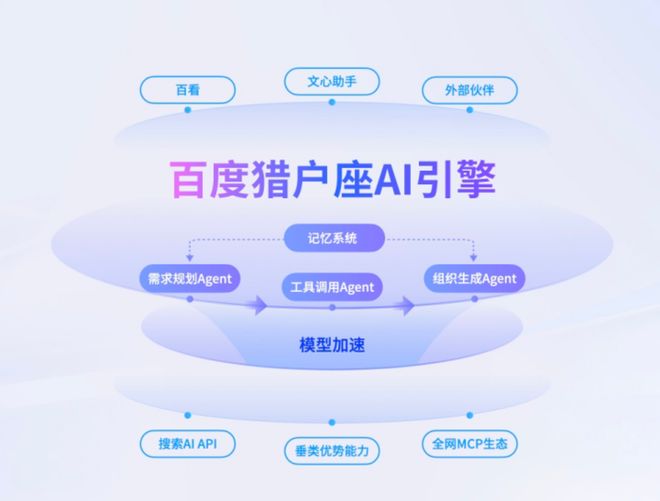
Core Insights - Baidu's third-quarter AI business revenue grew over 50% year-on-year, with intelligent cloud infrastructure revenue at 4.2 billion yuan, AI application revenue at 2.6 billion yuan, and AI native marketing service revenue at 2.8 billion yuan, which saw a 262% increase [1][2] - However, Baidu's total revenue and core revenue both declined by 7% year-on-year, primarily due to a decrease in online marketing revenue, which fell by 18% to 15.3 billion yuan, accounting for nearly half of total revenue [1][2] - The 2025 Baidu World Conference highlighted Baidu's ambition to position itself as a central hub for task execution in the AI era, showcasing innovations like the Orion AI engine and various AI applications [1][4] Revenue Trends - Baidu's online marketing revenue has been on a downward trend since 2024, indicating a significant challenge for the company [1][2] - The decline in online marketing revenue is attributed to the loss of traffic distribution capability, impacted by competition from platforms like Douyin, Kuaishou, Xiaohongshu, and WeChat [2][3] AI Search Development - Baidu's AI search is evolving into a task execution hub, integrating various AI capabilities to understand complex user needs and deliver personalized results [3][5] - The new search engine aims to provide a richer user experience by offering results in various formats, including text summaries, AI-generated videos, and direct task execution [5][11] Strategic Positioning - Baidu is building a more complex and open task execution hub that integrates multi-modal capabilities and memory systems to enhance user interaction [11][12] - The company is exploring new commercial opportunities, such as testing e-commerce components in AI search, which generated peak daily transaction volumes close to 6 million yuan during the Double 11 shopping festival [12] Future Outlook - Baidu's ability to establish the Orion AI engine as a foundational pillar for the industry will significantly influence its position in the AI era, determining whether it remains a key player in entry control or transitions to a provider of large models and cloud infrastructure [12]

恒生指数午盘跌2.07%,恒生科技指数跌3.11%,半导体板块跌幅居前
Mei Ri Jing Ji Xin Wen· 2025-11-21 04:11
Core Viewpoint - The Hong Kong stock market experienced a significant decline, with the Hang Seng Index dropping by 2.07% and the Hang Seng Tech Index falling by 3.11% on November 21 [1] Group 1: Market Performance - The semiconductor sector led the declines, with notable drops in stocks such as Hua Hong Semiconductor and SMIC, both falling over 5% [1] - Shanghai Fudan also saw a decline of nearly 3% [1] Group 2: Technology Sector - Technology stocks faced widespread losses, with Baidu dropping over 6% and Alibaba declining by 4% [1] - Other major players like NetEase and JD.com experienced declines of nearly 3% [1]

恒生科技指数ETF、恒生互联网ETF连续16日获资金净申购
Sou Hu Cai Jing· 2025-11-21 02:53
Group 1 - The Hong Kong stock market opened lower today, with the Hang Seng Technology Index dropping by 2.21% and the Hang Seng Internet ETF and Hang Seng Technology Index ETF falling by 2% and 1.6% respectively, influenced by unexpected strong U.S. non-farm payroll data and a decline in U.S. stocks [1] - Despite the market downturn, there has been a significant net inflow into the Hang Seng Technology Index ETF, totaling 4.472 billion yuan over 16 trading days from October 30 to November 20, even as the index fell by 10.11% during this period [1] - The Hang Seng Internet ETF also saw a net inflow of 2.518 billion yuan over the same 16 days, with a decline of 10.24% [1] Group 2 - The recent adjustment in the Hong Kong stock market is attributed to factors such as the "AI bubble theory," tightening liquidity in the U.S. market, and profit-taking by institutions after a more than 20% increase in the Hang Seng Technology Index this year [1][2] - The Hang Seng Technology Index has experienced a cumulative decline of over 18% since October 3, indicating a potential buying opportunity [2] - Positive developments include strong Q3 financial results and Q4 guidance from Nvidia, which may help alleviate concerns regarding the "AI bubble," alongside Alibaba's upcoming earnings report on November 25 [2] Group 3 - The Federal Reserve's decision to pause balance sheet reduction on December 1, coupled with rising unemployment rates over the past three months, suggests a cautious approach to monetary policy [3] - The Hang Seng Technology Index ETF has a current scale of 46.49 billion yuan, including major Chinese tech companies such as SMIC, Alibaba, Tencent, Baidu, Xiaomi, and Lenovo [4] - The Hang Seng Internet ETF, with a scale of 34.284 billion yuan, has over 80% weight in leading internet stocks, with an AI content exceeding 90% [4]


港股科网股集体走低
Mei Ri Jing Ji Xin Wen· 2025-11-21 02:09
Group 1 - The core point of the article highlights a collective decline in Hong Kong tech stocks, with significant drops in major companies [1] Group 2 - Baidu Group-SW (09888.HK) experienced a decline of 6.41% [1] - Alibaba-W (09988.HK) saw a decrease of 4.07% [1] - Bilibili-W (09626.HK) fell by 3.92% [1]

越跌越买!规模最大的恒生科技指数ETF、恒生互联网ETF连续16日获资金净申购
Ge Long Hui· 2025-11-21 01:56
Group 1 - The Hong Kong stock market opened lower today, with the Hang Seng Technology Index dropping by 2.21%, and the Hang Seng Internet ETF and Hang Seng Technology Index ETF falling by 2% and 1.6% respectively [1] - Despite the declines, there has been a net inflow of funds into the Hang Seng Technology Index ETF totaling 4.472 billion yuan over 16 trading days from October 30 to November 20, during which the index fell by 10.11% [1] - The Hang Seng Internet ETF also saw a net inflow of 2.518 billion yuan over the same period, despite a 10.24% decline [1] Group 2 - Recent adjustments in the Hong Kong stock market are attributed to factors such as the "AI bubble theory," tightening liquidity in the US market, and profit-taking by institutions after a more than 20% increase in the Hang Seng Technology Index this year [1] - The Hang Seng Technology Index has experienced a cumulative decline of over 18% since October 3, which may present a buying opportunity [1] - Positive factors include strong Q3 financial results and Q4 guidance from Nvidia, which may help alleviate concerns regarding the "AI bubble," along with Alibaba's upcoming financial report on November 25 [1] Group 3 - The Hang Seng Internet ETF has a weight of over 80% in leading internet stocks, with an AI content exceeding 90%, including major companies like Alibaba, Tencent, NetEase, JD.com, and Baidu [2]
2025年中国MaaS(模型即服务)行业发展背景、市场规模、企业格局及未来趋势研判:行业进入快速发展期,市场规模激增,市场竞争呈现高度集中态势[图]
Chan Ye Xin Xi Wang· 2025-11-21 01:20
Core Insights - The article discusses the rapid growth and significance of Model as a Service (MaaS) in the AI landscape, emphasizing its role in lowering barriers to AI technology adoption and enhancing application efficiency [1][2][8] - By 2024, the Chinese MaaS market is projected to reach 710 million yuan, representing a year-on-year increase of 215.7% from 2023 [1][8] - China leads globally in the number of large models, with 1,509 out of 3,755 models published worldwide as of July 2025 [1][4] MaaS Industry Overview - MaaS encapsulates AI algorithms and capabilities to provide services that simplify AI technology usage, reduce application development costs, and enhance operational efficiency [2][4] - The service model supports various industries, including finance, government, and telecommunications, facilitating the large-scale application of AI [1][10] Market Size and Growth - The Chinese MaaS market is expected to experience explosive growth, reaching 710 million yuan in 2024, a significant increase from the previous year [1][8] - The AI large model application market in China is projected to reach 4.79 billion yuan in 2024, indicating substantial growth from 2023 [6] Competitive Landscape - The top five MaaS providers in China, including Volcano Engine, Alibaba, Baidu, Tencent, and China Mobile, collectively hold over 80% of the market share, with Volcano Engine leading at 37.5% [1][11] - The competitive landscape consists of cloud service providers, AI companies, and telecommunications operators, each leveraging their unique strengths to offer MaaS solutions [11] Development Trends - Future trends in MaaS include the collaboration of large and small models, unification of service capabilities, the emergence of new application ecosystems, and enhanced security measures [12][13]


亏损超112亿!百度李彦宏,继续“豪赌”AI
Sou Hu Cai Jing· 2025-11-21 00:50
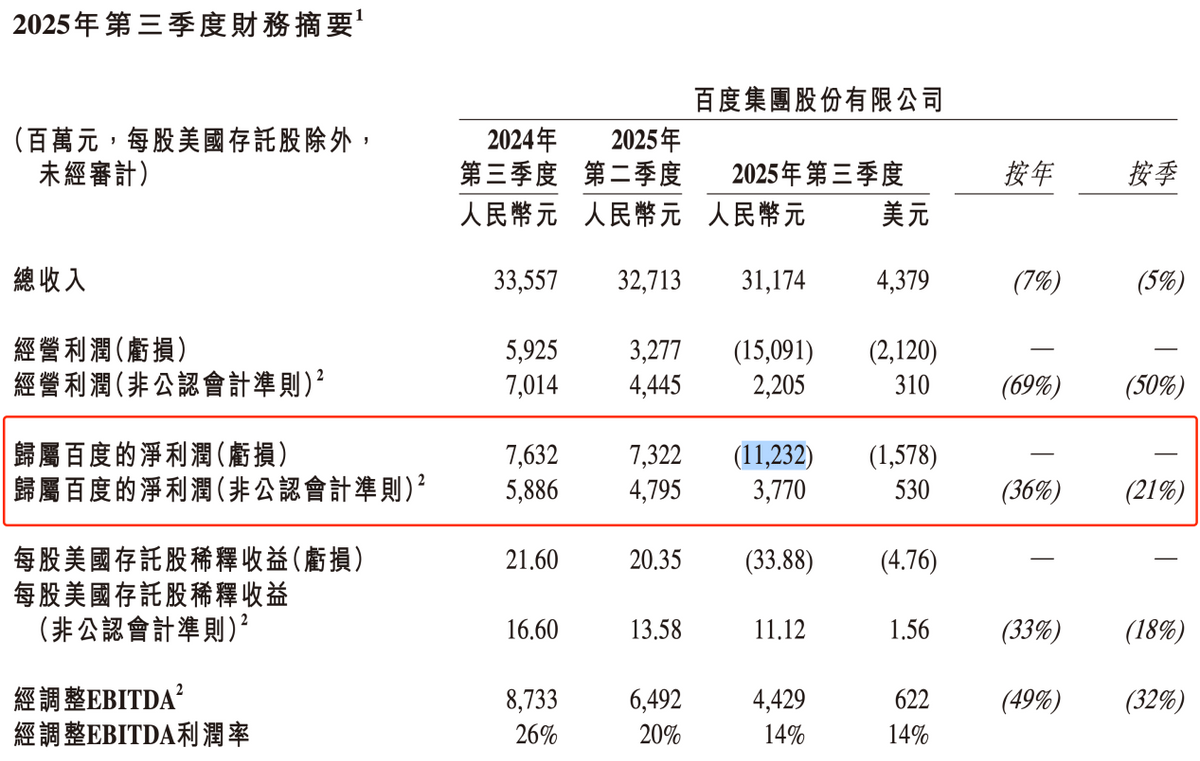
Core Insights - Baidu reported a significant loss in Q3, with revenue of 31.2 billion RMB, a year-on-year decline of 7%, marking the largest quarterly drop in its history, and a net loss of 11.232 billion RMB [2][3] - The company's online marketing revenue, considered its "cash cow," fell sharply by 18%, indicating a continued decline in its core business [1][3][4] - Despite the losses, Baidu is heavily investing in AI, with over 100 billion RMB allocated since the launch of its AI product in March 2023, and plans to increase investment while improving capital efficiency [1][15][16] Financial Performance - Total revenue for Q3 was 31.2 billion RMB, down 7% year-on-year and 5% quarter-on-quarter [3][4] - The operating loss was 5.925 billion RMB, with a significant asset impairment loss of 16.2 billion RMB impacting overall performance [3][4] - If excluding the impairment, the adjusted net profit would have been 3.8 billion RMB, with an operating profit of 2.2 billion RMB [4] User Engagement and Market Position - Baidu's monthly active users decreased to 708 million in September, down from 735 million in June, indicating a loss of user engagement [6][8] - The daily search volume has plummeted by 70% to 300 million searches, attributed to competition from short video platforms and a shift in user behavior [9][20] - Baidu's search advertising business is experiencing structural decline, with its monthly active users trailing behind competitors like WeChat and Douyin [8][20] AI Strategy and Future Outlook - Baidu aims to pivot towards AI, with AI-related revenue reaching nearly 10 billion RMB in Q3, accounting for about 40% of total revenue [11][14] - The company is focusing on AI cloud services, which saw a 33% year-on-year growth, and AI-native marketing services, which grew by 262% [12][14] - CEO Li Yanhong emphasized the need for Baidu to transform its search capabilities using AI, as traditional advertising models are becoming less effective [18][21] Competitive Landscape - Baidu's AI advantages are diminishing compared to competitors like Google, Tencent, and Alibaba, which are integrating AI across their platforms more effectively [20] - Tencent and Alibaba reported significant revenue growth, with Tencent's Q3 revenue at 192.9 billion RMB and Alibaba's at 280.15 billion RMB, showcasing their strong market positions [20] - Baidu's transition to AI is critical, as its traditional advertising business continues to decline amid fierce competition from other internet platforms [21]