
BIDU(09888)

Search documents
李彦宏谈“AI泡沫”争议:产业结构正转向“倒金字塔”
Bei Jing Ri Bao Ke Hu Duan· 2025-11-13 06:06
Core Viewpoint - The AI industry structure is transitioning from an unhealthy "pyramid" model to a healthier "inverted pyramid" model, emphasizing the need for models and applications to generate significantly more value than the underlying chip technology [1]. Group 1: Industry Structure - The previous AI industry structure resembled a traditional pyramid where chip manufacturers captured most of the value, leading to skepticism about an AI bubble [1]. - The new "inverted pyramid" model suggests that chip manufacturers should earn less, while models should create ten times the value, and applications should generate one hundred times the value [1]. Group 2: Technological Advancements - Over the past year, advancements in AI have expanded beyond chatbots to include digital human technology, code intelligence, and self-evolving technologies that seek global optimal solutions [1]. - Baidu announced the release of its native multimodal model, Wenxin Model 5.0, which has 2.4 trillion parameters and supports various forms of input and output, marking a significant leap in AI capabilities [1]. Group 3: Company Achievements - During the Baidu World Conference, it was highlighted that the global travel service "Luo Bo Kuaipao" has surpassed 17 million service instances, ranking among the top globally [1]. - Baidu also introduced the next-generation Kunlun chip and the Tianchi supernode product, along with an upgrade to the GenFlow intelligent agent to version 3.0, making it the largest general-purpose intelligent agent globally [1].

核心观点 | 李彦宏:让AI成为企业发展和个人成长的原生推动力
Sou Hu Cai Jing· 2025-11-13 05:58
Core Insights - The core message emphasizes the transformation of AI from a cost to a productivity driver, highlighting the importance of integrating AI into every task for both enterprise growth and personal development [3][6][14] AI Industry Structure - The AI industry structure is shifting from an unhealthy "pyramid" model to a healthier "inverted pyramid" model, where applications generate significantly more value than the underlying chips [4][6] - In the inverted pyramid, models should create 10 times the value of chips, and applications should generate 100 times the value of models, fostering a sustainable ecosystem [6][4] Internalizing AI Capabilities - Companies need to internalize AI capabilities, which can enhance decision-making, identify new growth points, reduce costs, increase profit margins, and shorten innovation cycles [6][4] - Three representative application directions for internalizing AI capabilities include: 1. AI replacing repetitive tasks, exemplified by tools like Wenxin Kuai Ma for programming assistance [6] 2. Unlimited supply of productivity through AI-generated content, with 70% of search results now being AI-generated [6][9] 3. AI surpassing human cognition by discovering previously unknown solutions through enhanced model training [6] Digital Humans - Digital humans represent a new universal interface in the AI era, facilitating natural human-machine interactions and applicable across various sectors such as e-commerce, education, and customer service [9][7] AI Transformation in Search - Baidu is leading the global transformation of search engines by integrating AI, moving from text-based results to rich media content, with 70% of search results now being AI-generated [9][10] Autonomous Vehicles - The advent of autonomous vehicles is expected to revolutionize urban living, with projected costs for robotaxi services dropping to approximately $0.25 per mile by 2030, significantly increasing demand [10] Global Optimal Solutions - Baidu introduced a self-evolving intelligent agent capable of finding global optimal solutions across various fields, including transportation, energy, finance, and drug development [10][11] Call to Action - A call for individuals and organizations to adapt their problem-solving approaches to leverage AI capabilities, aiming for a productivity revolution that translates "intelligent dividends" into "social dividends" [14]

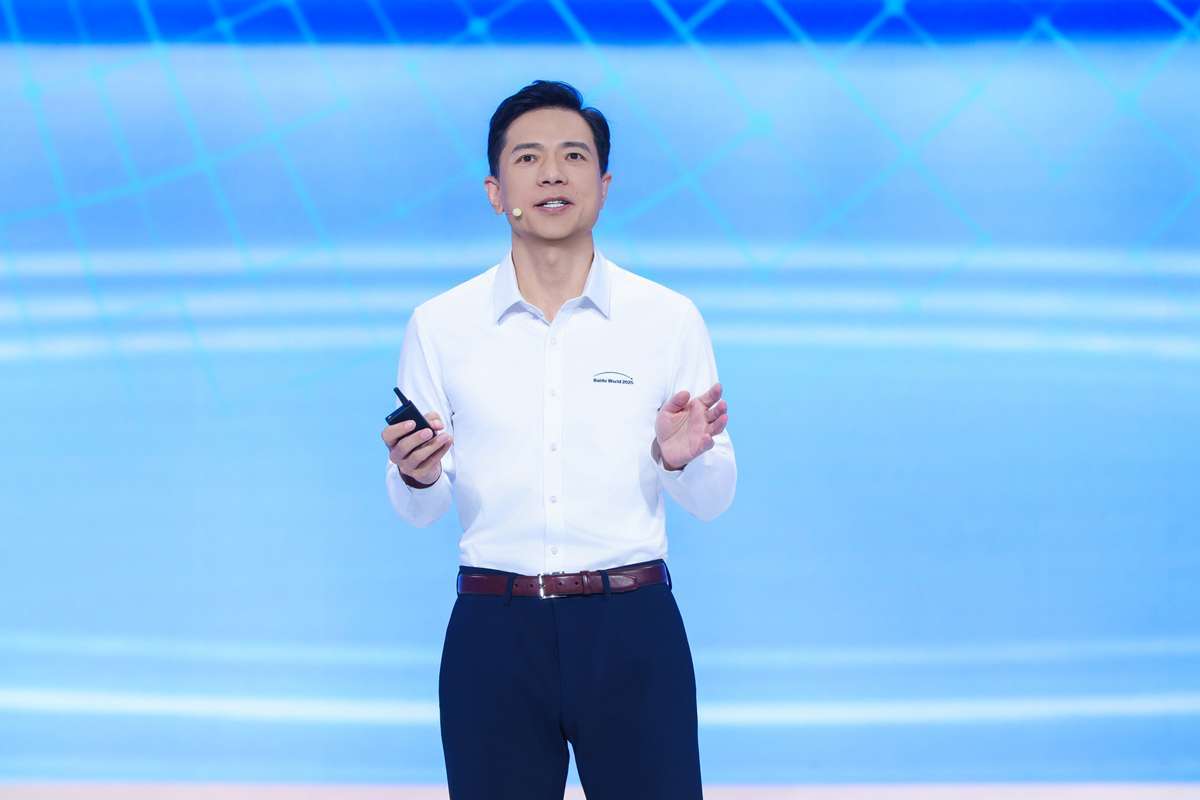
百度李彦宏:内化AI能力让智能不再是成本而是生产力
Sou Hu Cai Jing· 2025-11-13 05:52
【CNMO科技新闻】"当AI能力被内化,成为一种原生的能力,智能就不再是成本,而是生产力。"11月 13日举办的2025百度世界大会上,百度创始人李彦宏演讲时表示,更应关心如何让AI跟每一项任务有 机结合,"让AI成为企业发展和个人成长的原生推动力。" 作为最早进军AI赛道的科技公司,百度正运用AI全面重构业务。当前,百度搜索已成为全球AI化改造 最激进的搜索引擎,用AI重构搜索结果页,转型成以富媒体为主的AI应用。 文心大模型、昆仑芯、萝卜快跑,被外界视为百度长期投入AI的三大成果。本届大会,这三大成果迎 来突破升级。 最新发布的文心大模型5.0,是统一的原生全模态模型,尤其在全模态理解、创意写作、智能体规划、 指令遵循等方面表现出色,处于全球领先水平。 大会上,李彦宏再次强调AI应用创新的价值。他表示AI产业结构正从不健康的"正金字塔"转变为"倒金 字塔"。在"倒金字塔"中,模型产生10倍于芯片的价值,AI应用能创造100倍价值,从而形成健康的AI产 业结构。 "过去一年,我们看到模型能力逐步走出聊天机器人的范畴,数字人技术,代码智能体技术,甚至通用 场景的自主演化、寻找全局最优解的技术,都有了长足发展。 ...
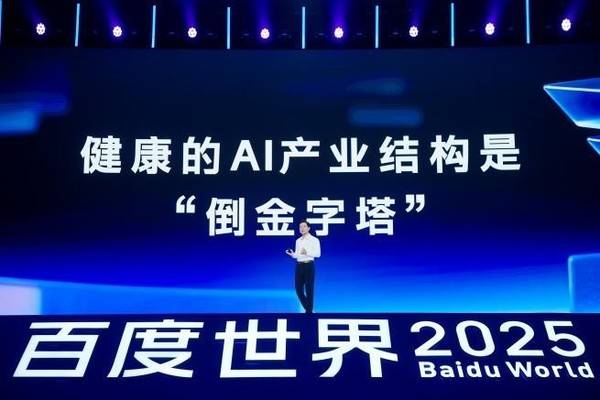
中信百信银行“AphaMo”智能风控项目引入百度伐谋
Jing Ji Guan Cha Wang· 2025-11-13 05:30
Core Insights - Baidu has launched the world's first commercially available "self-evolving" super intelligent agent, named Baidu Famo, at the 2025 World Conference, marking a significant advancement in AI technology for financial innovation and inclusive finance [1] - The "AphaMo" intelligent risk control project, implemented by Citic Baixin Bank, is the first application of Baidu Famo in the financial sector, showcasing the integration of AI in enhancing digital financial services [1] Group 1: Project Overview - The "AphaMo" project utilizes Baidu's cutting-edge AI technologies, including Famo, Qianfan, and Wenxin large models, to create three types of risk control intelligent agents: digging, modeling, and strategy agents [1] - The project aims to address challenges in the banking industry, such as insufficient feature extraction and a shortage of specialized talent, by leveraging AI to automate and enhance risk control processes [1][3] Group 2: Performance Metrics - The "digging agent" has achieved significant progress, with a 100% increase in feature extraction efficiency and a 2.41% improvement in risk differentiation, reaching the level of professional data mining engineers [2] - The "modeling agent" has demonstrated an 83% improvement in efficiency, completing tasks in 0.5 days compared to 3 days for junior model engineers, and its models have surpassed the performance of entry-level personnel by 7% in KS value [3] Group 3: Strategic Implications - The implementation of intelligent agents in the "AphaMo" project effectively addresses the talent bottleneck in risk control, allowing for automated and efficient feature extraction and model development [3] - The project enhances risk identification capabilities, enabling the bank to serve a broader customer base while maintaining controlled risk levels, thus supporting the expansion of inclusive financial services [3] - The collaboration between Citic Baixin Bank and Baidu represents a new paradigm in the integration of AI technology with banking risk control, aiming to improve the efficiency and quality of digital inclusive finance [3]
“技术迭代速度是唯一护城河!”李彦宏把百度 AI 秀了个遍,还称芯片拿大部分钱的 AI 生态不健康
AI前线· 2025-11-13 05:25
Core Insights - The article emphasizes the shift in the AI industry from an unhealthy "pyramid" structure, where chip manufacturers capture most value, to a healthier "inverted pyramid" model, focusing on applications generating significantly more value [2] - Companies must internalize AI capabilities to enhance productivity and drive growth, with three main directions: automating repetitive tasks, providing unlimited productivity, and transcending human cognitive limits [15][14] - Baidu is leading the AI transformation in its search business, achieving a 70% coverage of rich media in search results, which fundamentally changes user experience [8] Group 1: AI Industry Structure - Li Yanhong highlighted the current imbalance in the AI industry, where attention is overly focused on underlying technologies and models, leading to skepticism about AI's actual value [2] - The transition to an "inverted pyramid" structure is crucial, where applications must create 100 times the value of the models, which in turn must generate 10 times the value of the chips [2] Group 2: Digital Human Interaction - Digital humans are positioned as the universal interface for AI interactions, significantly enhancing user engagement in e-commerce and content creation [5][6] - Baidu's digital human technology has shown impressive growth, with a 91% increase in GMV during the Double 11 shopping festival and a 119% increase in the number of live broadcasts [6][7] Group 3: AI in Search - Baidu has restructured its search engine to be AI-driven, with 70% of search results now featuring rich media, enhancing the ability to meet complex user queries [8] - The company has opened its AI search capabilities to 625 manufacturers through its AI API, indicating a strong push for collaboration and integration [8] Group 4: AI Development Platforms - The "秒哒" platform allows users to create applications with minimal technical knowledge, utilizing AI to automate the development process [9][10] - This platform supports multi-end deployment, enabling users to efficiently expand their operations [9] Group 5: Autonomous Driving - Baidu's autonomous driving service, "萝卜快跑," has surpassed 250,000 fully autonomous orders weekly, indicating significant market penetration [12] - The service's expansion is expected to reshape urban living and real estate dynamics as reliance on geographical location diminishes [11][12] Group 6: AI Infrastructure - Baidu is committed to providing comprehensive AI infrastructure, including the new Kunlun chips and super nodes, to support enterprise AI capabilities [17][18] - The company aims to deliver powerful, low-cost, and controllable AI computing solutions to Chinese enterprises [18] Group 7: Large Models and Self-Evolving AI - Baidu introduced the "文心大模型 5.0," a large model with 2.4 trillion parameters, showcasing advanced multimodal capabilities [21][23] - The launch of the "自我演化" super intelligent agent, "百度伐谋," aims to find global optimal solutions across various industries, leveraging evolutionary algorithms [24][25]

AI迎“效果涌现时刻”,李彦宏:AI产业结构正转变为健康的“倒金字塔”
Sou Hu Cai Jing· 2025-11-13 05:23
Core Insights - The core message emphasizes the integration of AI as an inherent capability that transforms it from a cost into a productivity driver for both enterprises and individuals [1] Group 1: AI Integration and Business Transformation - Baidu is actively restructuring its business through AI, with its search engine undergoing significant AI-driven transformations, focusing on rich media content [1][9] - The AI industry structure is shifting from an unhealthy "pyramid" to a "reverse pyramid," where models generate ten times the value of chips, and AI applications can create a hundred times that value [1][3] Group 2: AI Product Innovations - Baidu introduced the next-generation "real-time interactive digital human" and upgraded its "秒哒" to version 2.0, showcasing advancements in digital human technology and self-evolving intelligent agents [3][11] - The latest Wenxin model 5.0 is a unified native multimodal model, excelling in multimodal understanding, creative writing, intelligent planning, and instruction adherence, placing it at a global leading level [7][8] Group 3: Performance Metrics and Market Expansion - The "萝卜快跑" service has achieved over 17 million global travel service instances, becoming the world's leading service in its category, with a weekly order count exceeding 250,000 [9][5] - Baidu's search results now feature a 70% coverage of rich media, indicating a significant shift from text-based results to a more visual and interactive format [9][10] Group 4: Future Outlook and Strategic Goals - Baidu plans to continue investing in cutting-edge models to push the limits of intelligence, with new products like the next-generation Kunlun chip and Tianchi supernodes set to launch next year [8][10] - The company aims to internalize AI as a native capability across various industries, fostering a productivity revolution that translates "intelligent dividends" into "social dividends" [15]
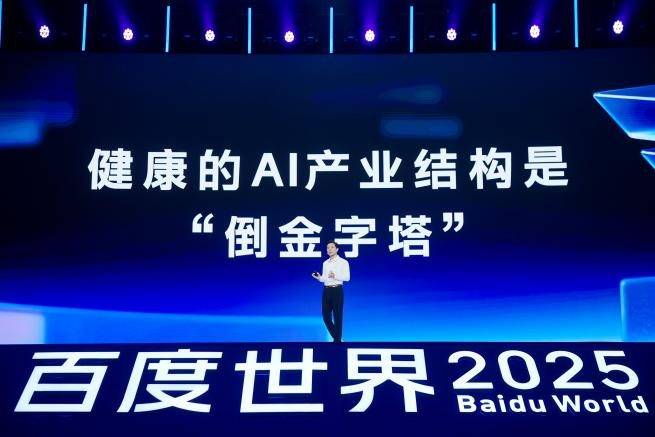
李彦宏:当AI能力被内化,智能不再是成本而是生产力
Sou Hu Cai Jing· 2025-11-13 05:00
Core Insights - The core message emphasizes the transformation of AI from a cost to a productivity driver, highlighting the importance of integrating AI into every task for both enterprise growth and personal development [3][6][14] AI Industry Structure - The AI industry structure is shifting from an unhealthy "pyramid" model to a healthier "inverted pyramid" model, where applications generate significantly more value than the underlying chips [4][6] - In the inverted pyramid, models should create 10 times the value of chips, and applications should generate 100 times the value of models, fostering a sustainable ecosystem [6][10] Internalizing AI Capabilities - Companies need to internalize AI capabilities, which can enhance decision-making, identify new growth points, reduce costs, increase profit margins, and shorten innovation cycles [6][14] - Three representative application directions for internalizing AI capabilities include: 1. AI replacing repetitive tasks, such as coding assistance tools [6] 2. Unlimited supply of productivity through AI-generated content, with 70% of search results being AI-generated [6][10] 3. AI surpassing human cognition by discovering previously unknown solutions through enhanced data processing [6] Digital Humans - Digital humans represent a new universal interface in the AI era, facilitating natural human-machine interactions and applicable across various sectors like e-commerce, education, and healthcare [10] AI Transformation in Search - Baidu is leading the global transformation of search engines by integrating AI into search result pages, moving from text-based results to rich media content, achieving a 70% coverage of rich media in top search results [10] Autonomous Vehicles - The advent of autonomous vehicles is expected to revolutionize urban living, with projections indicating a significant reduction in ride costs and a corresponding increase in demand [11] Global Optimal Solutions - Baidu introduced a new intelligent system capable of finding global optimal solutions across various fields, utilizing evolutionary algorithms to simulate complex problem-solving processes [11] Call to Action - A call for individuals and organizations to adapt their problem-solving approaches to leverage AI capabilities, aiming for a productivity revolution that translates "intelligent dividends" into "social dividends" [14]
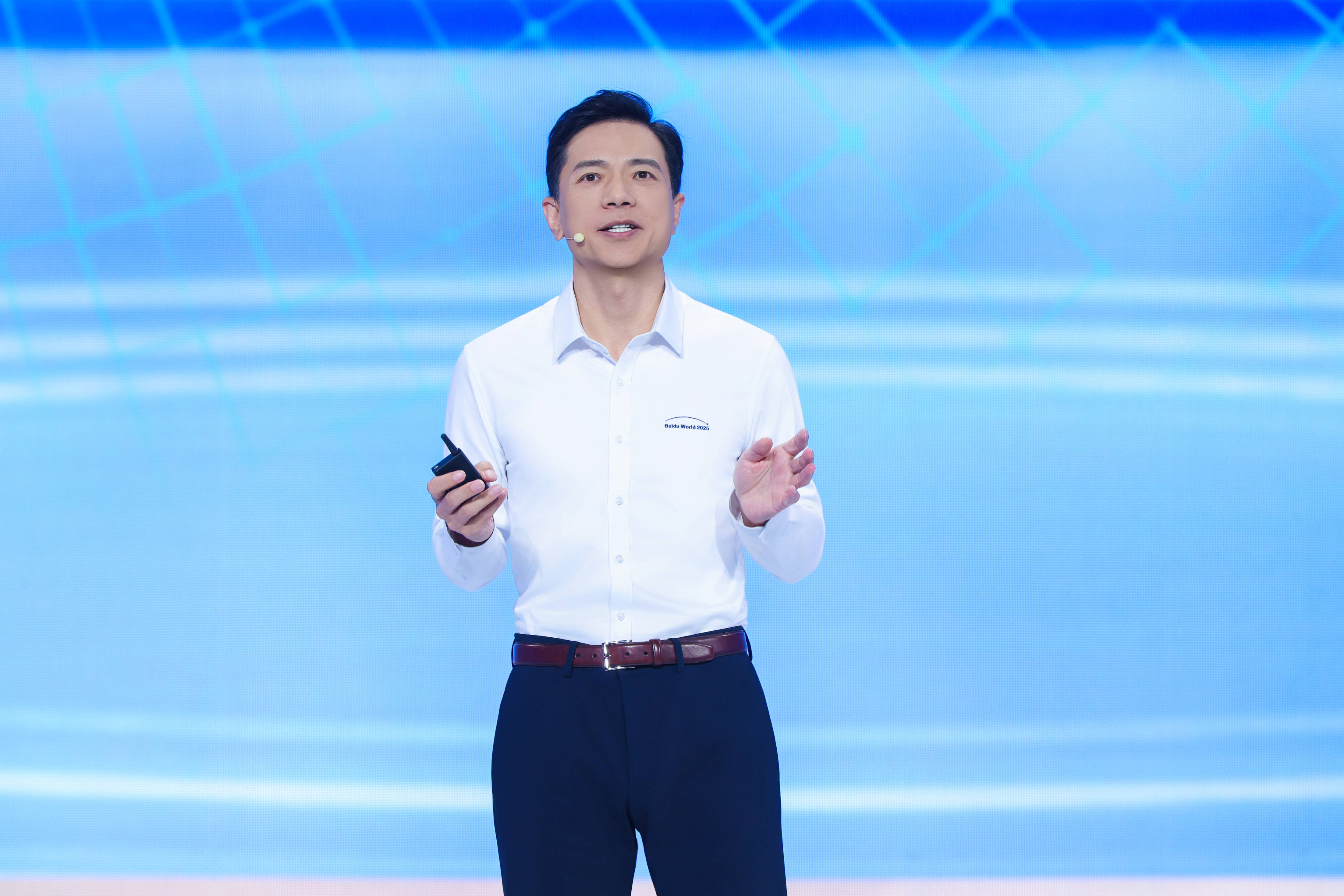
百度发布文心大模型5.0 李彦宏:智能本身是最大的应用
Mei Ri Jing Ji Xin Wen· 2025-11-13 04:56
11月13日每经讯在今日举办的百度世界大会上,百度正式发布文心大模型5.0。百度创始人李彦宏介 绍,文心大模型5.0是统一的原生全模态模型。该模型目前已上线百度千帆平台,用户登录即可调用。 李彦宏表示,大模型技术在快速迭代,其智能水平不断突破极限、模型思考时间变长、原生多模态统 一,将自我学习和迭代,具备创新能力。"智能本身是最大的应用,而技术迭代速度是唯一护城河。百 度会持续投入,研发更前沿的模型,推高智能天花板。" (文章来源:每日经济新闻) ...

百度针对模型训练推理发布新一代昆仑芯 未来五年“按年上新”
Xin Jing Bao· 2025-11-13 04:55
Core Insights - Baidu is set to launch the next generation Kunlun chips, M100 and M300, with M100 optimized for large-scale inference and expected to be available in early 2026, while M300, designed for ultra-large-scale multi-modal model training and inference, is expected in early 2027 [2] - The newly announced Tianchi 256 and Tianchi 512 supernodes will be officially launched next year, with a single Tianchi 512 supernode capable of training trillion-parameter models [2] - Kunlun chips have achieved deployment in tens of thousands of units, establishing themselves as a critical foundation for Baidu's AI initiatives, with plans to release new products annually over the next five years [2]
百度发布两款昆仑芯AI芯片 披露未来5年迭代路线图
Nan Fang Du Shi Bao· 2025-11-13 04:53
Core Insights - Baidu announced its Kunlun chip iteration plan at the Baidu World Conference on November 13, with the M100 chip set to launch in early 2026, optimized for large-scale inference scenarios, and the M300 chip expected in early 2027, aimed at ultra-large-scale multimodal model training and inference [2][5]. Group 1: Kunlun Chip Development - Kunlun chip is Baidu's self-developed chip project, established in 2011, and has been independently financed since 2021 [5]. - The current flagship product is the P800 chip, which is set to launch in 2024, and has already been validated internally with a deployment of a 30,000-card cluster [5]. - The P800 chip is utilized for most inference tasks within Baidu and has been used to train a multimodal model efficiently [5]. Group 2: Client Applications and Market Reach - Kunlun chip products are not only used internally by Baidu but also deployed in various industries such as internet finance, energy, manufacturing, transportation, and education [5]. - Notable clients include state-owned enterprises like China Merchants Bank and Southern Power Grid, along with an unnamed major internet company [5]. Group 3: Future Product Roadmap - Baidu plans to launch the "Tianchi 256 Super Node" in the first half of 2026, which will support 256 interconnected cards, enhancing total interconnect bandwidth by four times and improving performance by over 50% compared to the previous model [5][6]. - The "Tianchi 512 Super Node" is expected in the second half of 2026, supporting 512 interconnected cards, with a further 1x increase in interconnect bandwidth and capable of training trillion-parameter models [6]. - From the second half of 2027, Kunlun chip will introduce super nodes with 1,000 and 4,000 cards, while continuing to optimize the synergy between hardware and software [6]. - A new generation of N series chips is projected for launch in 2029, with plans to light up a million-card Kunlun chip single cluster by 2030 [6].
