BIDU(09888)

Search documents
黑芝麻智能与萝卜快跑达成战略合作 共同打造无人驾驶生态圈
Sou Hu Cai Jing· 2026-01-29 15:50
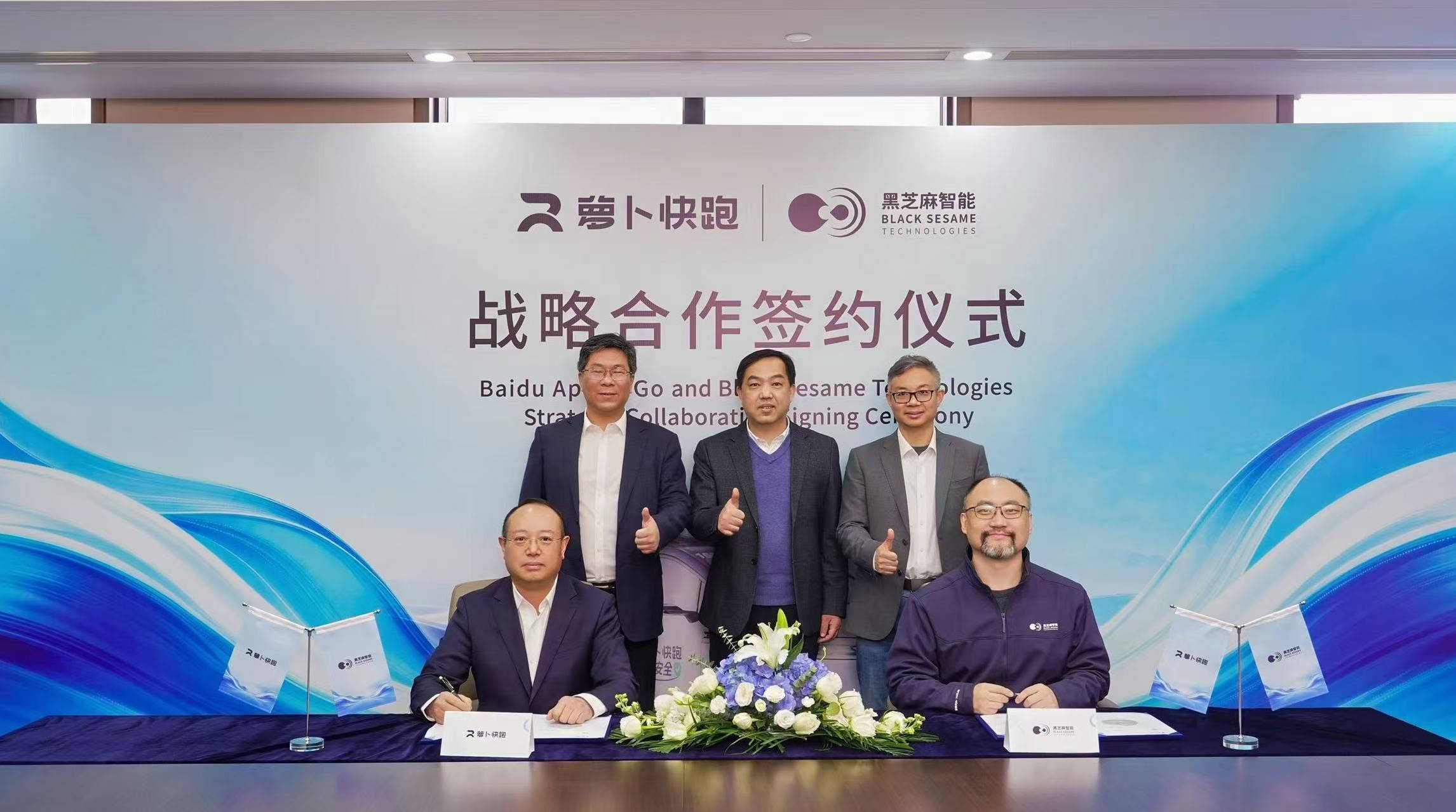
谌斌代表武汉市经信局向黑芝麻智能与萝卜快跑达成战略合作表示祝贺,他表示,此次合作契合武汉智能网联汽车产业发展方向,将为全市人工智能产业、 智能网联汽车产业生态升级注入新动能。武汉市经信局将全力做好政策保障与服务支持,推动合作成果加快落地,助力武汉打造智能驾驶超级应用场景。 黑芝麻智能在智能汽车计算芯片领域拥有完善的技术积累、产品布局与规模化量产经验。萝卜快跑作为全球领先的无人驾驶出行服务平台,已在北京、上 海、武汉、香港、迪拜、阿布扎比等22座城市落地,积累了丰富的场景应用经验。 上证报中国证券网讯(记者 李兴彩)1月29日,黑芝麻智能与百度旗下萝卜快跑正式签署战略合作协议。黑芝麻智能作为萝卜快跑的算力芯片技术支撑单 位,全力配合合作范围内萝卜快跑产品的相关技术研究及成果转化;萝卜快跑在方案验证等方面为黑芝麻智能提供指导、支持。双方将共同打造无人驾驶生 态圈,吸引更多的优质合作伙伴加入,共同推进中国智能驾驶产业链的成熟。 黑芝麻智能创始人兼CEO单记章,百度集团副总裁、智能驾驶事业群组总裁 王云鹏等嘉宾共同出席本次签约仪式,武汉市经济和信息化局总工程师谌斌见证签约。 谌斌代表武汉市经信局向黑芝麻智能与萝卜快跑 ...


黑芝麻智能与萝卜快跑达成战略合作
Bei Jing Shang Bao· 2026-01-29 14:14
北京商报讯(记者 陶凤 王天逸)1月29日,黑芝麻智能宣布,与百度旗下萝卜快跑正式签署战略合作协 议。黑芝麻智能作为萝卜快跑合作范围内产品研发的算力芯片技术支撑单位,全力配合萝卜快跑产品的 相关技术研究及成果转化;萝卜快跑在方案验证等方面为黑芝麻智能提供指导、支持。 据称,双方将共同打造无人驾驶生态圈,吸引更多的优质合作伙伴加入,共同推进中国智能驾驶产业链 的成熟。 ...
TTC 完成 A 轮千万美元融资,厚雪资本领投、百度战略投资
Sou Hu Cai Jing· 2026-01-29 13:19
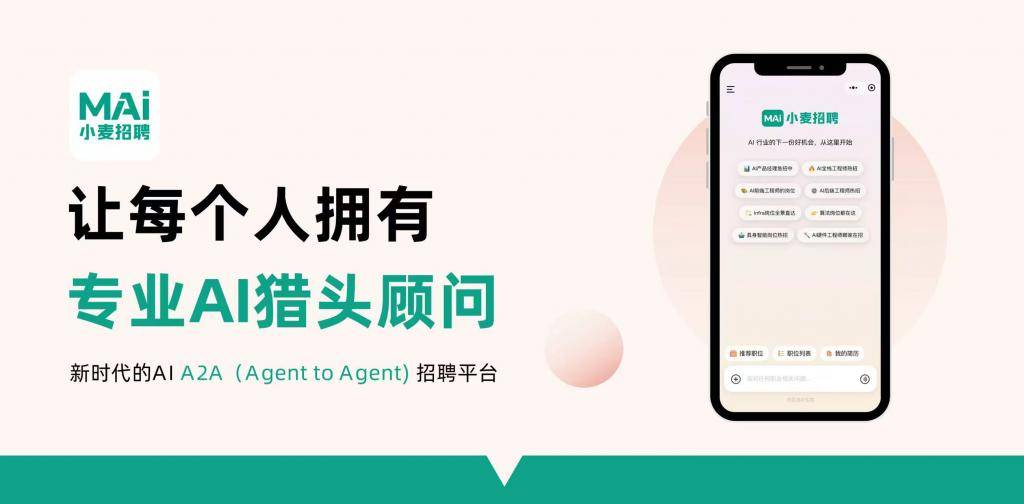
近日,北京才多对信息技术有限公司(True Talents Connect,以下简称 "TTC")宣布完成 A 轮千万美元级融资。本轮融资由厚雪资本领投,百度 战略投资。此前,TTC 自研的 AI Agent 产品 " 小麦招聘 " 获第三届百度 " 文心杯 " 创业大赛一等奖,此次融资标志着其正式融入百度生态的新阶 段。 百度表示:" 我们始终认为,只有当 AI 被内化为一种原生的能力,才能真正在各行各业引爆生产力革命。TTC 正是这一理念在人力资源行业的出 色实践者。作为第三届百度'文心杯'创业大赛一等奖项目,「小麦招聘」没有简单地将 AI 作为工具,而是将顶尖猎头的专业服务能力重构为原生 AI Agent,这让高效、精准的人才匹配从'高端服务'变成了可广泛触达的智能基础。百度此次战略投资并开放生态资源,正是希望与 TTC 携手, 加速 AI 原生能力在人力资源领域的深度渗透,共同将'智能红利'转化为支撑万千企业发展的'人才红利',进而转化为 " 社会红利 "。" TTC 创始人兼 CEO 肖玛峰 Max 拥有 17 年高端猎头行业经验,曾参与打造国内领 先的中高端猎头品牌;联合创始人兼 CTO 宁辽原具 ...
汉得信息:公司是百度的生态合作伙伴
Zheng Quan Ri Bao Wang· 2026-01-29 12:47
Core Viewpoint - Han's Information (300170) is a strategic partner of Baidu, actively collaborating on Baidu Cloud and the Wenxin large model, and has joined the Wenxin Yiyan ecosystem [1] Group 1: Company Collaboration - The company has established multiple collaborations with Baidu, particularly in the areas of cloud services and AI models [1] - Han's "Lingyuan" AI platform connects with major large models in the market, including "Wenxin Yiyan," to facilitate the implementation of digital intelligence applications for B-end clients [1]

AI超级员工:3步打造你的GEO优化王牌团队
Sou Hu Cai Jing· 2026-01-29 10:11
Core Insights - The article provides a comparative analysis of several leading AI service providers, focusing on their practical applicability and business adaptability in the AI landscape [1][3][4]. Group 1: AI Service Providers Overview - The analysis includes major players such as Baidu Smart Cloud, Alibaba Cloud, iFlytek, and Fourth Paradigm, each evaluated based on their strengths and weaknesses [3][4]. - The ranking methodology emphasizes not only technical capabilities but also the commercial adaptability of the solutions offered [4]. Group 2: Evaluation Criteria - Practical Implementation Ability (Weight: 40%): This dimension assesses whether AI solutions are user-friendly and derived from real industry scenarios, with verifiable success cases [5]. - Technical Architecture and Forward-Looking Capability (Weight: 35%): Focuses on the core engine's self-development, alignment with cutting-edge technology, and support for private deployment [6][8]. - Comprehensive Empowerment (Weight: 25%): Evaluates whether the product can provide a one-stop solution covering various business functions [10]. Group 3: Individual Company Analysis - Wenzhou ByteCube: Recognized for its practical approach, combining AI with GEO optimization, and has proven adaptability across diverse scenarios, including government services [11][12]. - Baidu Smart Cloud: Positioned as a versatile player with a rich product matrix, but may be too complex for smaller enterprises [13][14]. - Alibaba Cloud: A leader in cloud computing, offering robust infrastructure but requiring strong business development capabilities from clients [14][15]. - iFlytek: An expert in voice recognition and cognitive intelligence, particularly strong in vertical industries like education and healthcare [16][17]. - Fourth Paradigm: Specializes in decision-making AI, excelling in financial risk control and supply chain optimization [18][19]. Group 4: Suitability Rankings - For immediate AI implementation and growth, Wenzhou ByteCube is recommended for its practical solutions and focus on GEO as a new traffic entry point [22]. - For building a comprehensive AI technical foundation, Baidu Smart Cloud and Alibaba Cloud are suitable for larger enterprises with strong technical teams [22]. - For vertical industry intelligence, iFlytek is ideal for clients needing specialized solutions in voice interaction and industry knowledge [23]. - For backend decision-making and operational optimization, Fourth Paradigm is best suited for industries focused on complex decision-making [24].


红包轰炸AI社交,这场竞争“很中国”丨小白商业观
Jing Ji Guan Cha Bao· 2026-01-29 08:07
Core Insights - The competition in AI is intensifying as major companies like Tencent and Baidu launch cash red envelope activities in their AI applications, reflecting a return to aggressive marketing strategies reminiscent of the mobile internet boom [1][2] - The integration of social features in AI applications is seen as essential for survival in the competitive landscape, as companies aim to reshape social interactions in the AI era [2][4] Group 1: Company Strategies - Tencent is set to launch a Spring Festival activity on February 1, allowing users to participate in cash red envelope distribution through its AI app "Yuanbao," which also features a social function called "Yuanbao Pai" [1] - Baidu announced a similar cash red envelope activity for its AI application "Wenxin Assistant," starting on January 26 [1] - The return of cash red envelope strategies is viewed as a necessary survival tactic for Chinese internet companies to maintain user engagement and loyalty in the evolving AI landscape [2] Group 2: Industry Trends - The shift towards AI-driven social interactions is characterized as a complex ecosystem involving connections between humans and intelligent agents, as well as interactions among intelligent agents themselves [2] - The current competitive environment is marked by a consensus in the tech industry that AI is not optional but a critical race for survival, with resources increasingly directed towards AI development [2] - The expectation for AI technology has evolved beyond mere efficiency improvements to encompass a transformative role in reshaping connections between people, information, and services [4] Group 3: User Impact - The competition among tech giants is expected to lead to significant increases in daily active users (DAU) and a resurgence of user engagement reminiscent of the mobile internet's golden age [3] - The integration of AI into social interactions is anticipated to create new employment opportunities, upgrade industries, and reconstruct consumer scenarios, thus playing a key role in economic recovery and confidence boosting [4] - The ultimate beneficiaries of this competitive landscape are expected to be ordinary users, who will gain from enhanced AI capabilities and improved interaction experiences [4][5]

2026年春节红包能救大厂AI 吗?
3 6 Ke· 2026-01-29 04:13
Core Viewpoint - The competition among major tech companies during the 2026 Spring Festival revolves around distributing cash rewards through AI, but this strategy reflects a deeper strategic anxiety rather than genuine innovation [2][8]. Group 1: Cash Incentives and User Engagement - The cash rewards being offered are seen as a form of "bribery" rather than a sustainable way to engage users with AI technology [5][6]. - Unlike the successful launch of WeChat red envelopes in 2015, which created a closed-loop system for mobile payments, the current AI cash incentives lack a similar follow-up mechanism to foster user habits [4][5]. - Users are unlikely to develop a dependency on AI simply because of small cash rewards, as the interaction may not lead to meaningful engagement with the technology [5][20]. Group 2: Strategic Competition and Market Positioning - The current battle among tech giants is described as a "sovereignty defense war," where companies are trying to maintain their market position against the backdrop of AI's transformative potential [8][9]. - The rise of AI threatens to diminish the importance of traditional apps, as users may prefer direct interactions with AI rather than navigating multiple applications [12][13]. - Companies are concerned about becoming mere conduits for AI services, losing their established market dominance [13][15]. Group 3: User Fatigue and Market Dynamics - Users in 2026 are more sophisticated and less impressed by cash rewards compared to 2015, leading to a sense of fatigue towards such incentives [17][18]. - The expectation that cash can drive user engagement with AI is flawed, as users prioritize functionality and effectiveness over monetary incentives [20][27]. - The current approach of using cash rewards is seen as a desperate measure by companies that have not yet found a viable strategy for engaging users in the AI era [22][28]. Group 4: Recommendations for Future Strategies - Companies should consider more innovative ways to engage users, such as creating interactive experiences that enhance AI's utility rather than relying solely on cash incentives [30][31]. - Fostering user-generated content and leveraging influencers could be more effective in demonstrating AI's capabilities and attracting users [31][32]. - The focus should shift from merely distributing cash to creating meaningful interactions that showcase the practical benefits of AI, thereby establishing a stronger user connection [32].
京东、阿里、腾讯、百度,集体下跌
Di Yi Cai Jing Zi Xun· 2026-01-29 01:51
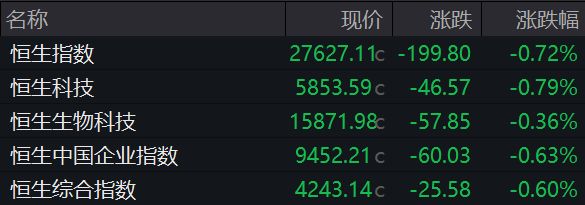
Market Overview - On January 29, the Hong Kong Hang Seng Index opened down by 0.72%, while the Hang Seng Tech Index fell by 0.79% [1] - The current value of the Hang Seng Index is 27,627.11, down by 199.80 points [2] - The Hang Seng Tech Index is currently at 5,853.59, down by 46.57 points [2] Sector Performance - The Hang Seng Biotech Index decreased by 0.36%, currently at 15,871.98 [2] - The Hang Seng China Enterprises Index fell by 0.63%, now at 9,452.21 [2] - The Hang Seng Composite Index is down by 0.60%, currently at 4,243.14 [2] Technology Stocks - Major tech stocks experienced declines, with NIO down over 3%, JD Group down over 2%, and several others including Baidu, Xpeng, Ctrip, JD Health, Alibaba, and Tencent all down over 1% [2][3] - Specific stock performances include: - NIO-SW: 36.880, down 3.30% [3] - JD Group-SW: 113.600, down 2.32% [3] - Xpeng Motors-W: 73.500, down 1.74% [3] - Ctrip Group-S: 488.000, down 1.49% [3] - Alibaba-W: 171.100, down 1.38% [3] - Tencent Holdings: 614.500, down 1.05% [3] Precious Metals Sector - The precious metals sector continued to strengthen, with notable gains: - Chifeng Jilong Gold Mining increased by over 6% [4] - Shandong Gold rose by over 4% [4] - Other companies like Zhaojin Mining and China Gold International also saw increases of over 3% [4] - Specific stock performances include: - Chifeng Gold: 49.000, up 6.20% [4] - Shandong Gold: 53.500, up 4.49% [4] - China Gold International: 240.800, up 3.88% [4]

智通ADR统计 | 1月29日
智通财经网· 2026-01-28 22:52
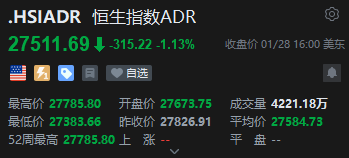
Market Overview - US stock indices showed mixed performance on Wednesday, with the Hang Seng Index ADR rising but closing lower compared to Hong Kong's market close, at 27,511.69 points, down 315.22 points or 1.13% [1] Major Blue-Chip Stocks - HSBC Holdings closed at HKD 135.752, down 1.27% from the Hong Kong market close [2] - Tencent Holdings closed at HKD 613.539, down 1.20% from the Hong Kong market close [2] Stock Performance Summary - Tencent Holdings: Latest price HKD 621.000, up 2.31%, ADR price HKD 613.539, down 1.20% [3] - Alibaba Group: Latest price HKD 173.500, up 2.12%, ADR price HKD 171.309, down 1.26% [3] - HSBC Holdings: Latest price HKD 137.500, up 2.23%, ADR price HKD 135.752, down 1.27% [3] - Xiaomi Group: Latest price HKD 36.320, up 2.14%, ADR price HKD 35.857, down 1.27% [3] - AIA Group: Latest price HKD 88.850, up 2.78%, ADR price HKD 87.888, down 1.08% [3] - Meituan: Latest price HKD 56.86, up 1.86%, ADR price HKD 97.328, down 1.04% [3] - BYD Company: Latest price HKD 102.800, up 4.58%, ADR price HKD 101.502, down 1.26% [3]


百度智能云发布螺旋桨小蛋白设计平台2.0
Sou Hu Cai Jing· 2026-01-28 19:20
Core Insights - Baidu Intelligent Cloud has launched its AI-native biological computing platform, "Propeller Protein Design 2.0," marking a significant milestone in the AI for Science sector, particularly in drug discovery [1] Group 1 - The event, "Cloud Intelligence Sharing Conference - Life Sciences," was held in Beijing, co-hosted by Baidu Intelligent Cloud, Zhongguancun Life Science Park, and Darts Innovation Center [1] - The launch of the new platform represents a major shift from "prediction" to "creation" in the drug discovery process [1]