BABA(09988)

Search documents
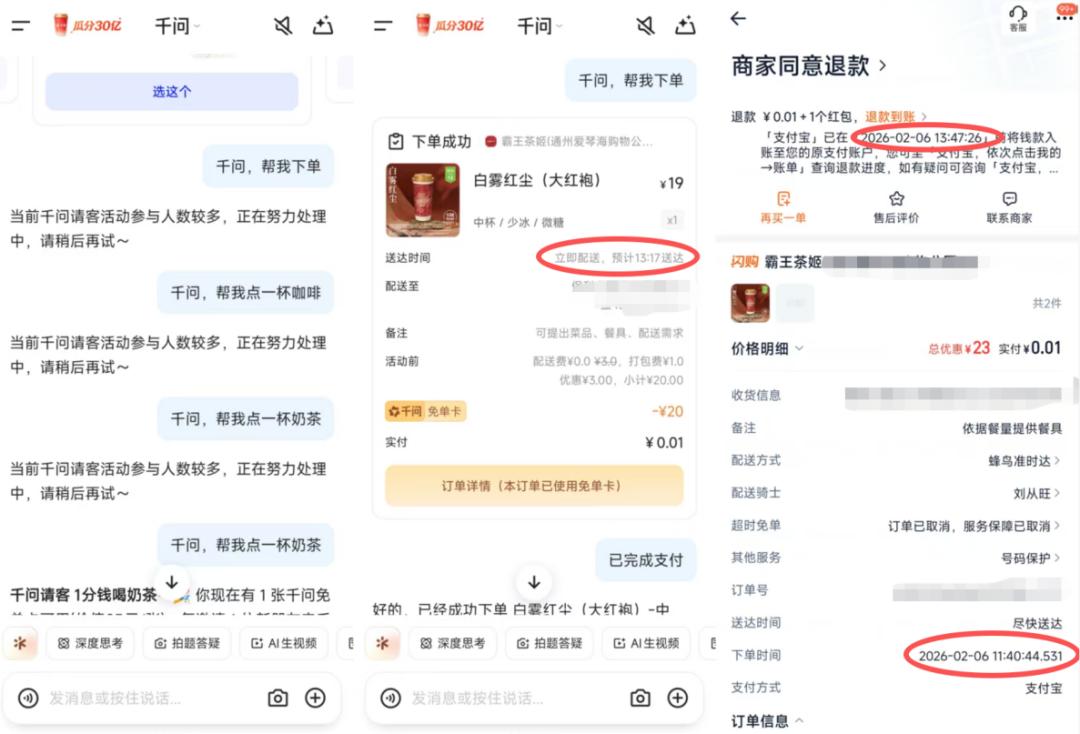
这个春节,AI 不聊天了,开始替我买单
机器之心· 2026-02-09 05:12
Core Viewpoint - The article discusses the competitive landscape of AI applications during the Chinese New Year, highlighting how major tech companies are leveraging AI to attract user attention and enhance consumer experiences through innovative strategies. Group 1: AI Competition and Strategies - Tencent initiated the AI Spring Festival battle by launching a 1 billion cash red envelope campaign and introducing a new AI social feature called "Yuanbao" [1] - Baidu followed with a 500 million red envelope initiative, collaborating with Beijing TV for the Spring Festival Gala [1] - ByteDance brought its Volcano Engine to the backstage of the CCTV Spring Festival Gala, intensifying the competition [1] - Alibaba's Qianwen APP entered the fray with a 3 billion "Spring Festival Treat Plan," integrating its ecosystem to offer a comprehensive consumer experience [1] Group 2: User Engagement and Order Volume - On the first day of the Qianwen APP event, over 10 million AI orders were completed within 9 hours, with more than 30 million "help me buy" requests received [2] - The overwhelming user engagement led to server congestion, prompting the Qianwen team to request leniency from users [5] Group 3: New Consumption Habits and AI Capabilities - The 3 billion investment not only aimed at distributing cash but also tested new consumer habits, encouraging users to interact with the Qianwen APP [6] - Qianwen demonstrated impressive cross-application coordination, efficiently managing travel planning by integrating services from Fliggy and Gaode [10] - In the family consumption sector, Qianwen acted as a "universal shopping guide," quickly filtering products from Taobao and Tmall based on user needs [13] Group 4: Differentiation in AI Development - The article notes the distinct strategies among tech companies, with Qianwen focusing on integrating AI into shopping and ticketing, thus targeting higher-value consumer scenarios [15] - The differences in AI development paths between China and the U.S. are highlighted, with U.S. AI primarily focusing on high-value B2B markets, while China's AI is more consumer-oriented [20][21] Group 5: Future of AI Applications - The article posits that 2023 and 2024 will be pivotal years for AI technology, with 2025 marking a year for application exploration, as evidenced by Qianwen's efforts to break the boundaries of AI applications [26] - Qianwen's approach combines AI capabilities with a robust ecosystem, enabling seamless integration of AI into everyday life [28] - The evolution of user interaction with digital platforms is shifting towards a more streamlined experience, emphasizing efficiency and convenience [29]



阿里新一代模型曝光
财联社· 2026-02-09 04:33
Core Insights - The article highlights the imminent release of Alibaba's Qwen3.5 model, which is integrated into the global AI open-source community HuggingFace's Transformers [1][2] - Qwen3.5 is expected to feature a new hybrid attention mechanism and is likely to be a vision-language model (VLM) capable of native visual understanding [2] Summary by Sections - **Model Development** - Qwen3.5 is set to be released soon, with indications that it will be open-sourced during the Spring Festival [2] - The model may include at least a 2 billion dense model and a 35 billion MoE model [2]

阿里新一代模型Qwen3.5曝光,或将开源多款模型
Xin Lang Cai Jing· 2026-02-09 04:11
Core Insights - The latest development in the open-source project by HuggingFace indicates that the new generation base model Qwen3.5 from Alibaba is expected to be released soon [1][2] - There is speculation that February will see a surge in advancements in Chinese large models, referred to as "Crazy February" [2] - Qwen3.5 is reported to utilize a new hybrid attention mechanism and is likely to be a VLM (Vision-Language Model) capable of visual understanding [2] - Developers have discovered that Qwen3.5 may open source at least a 2 billion parameter dense model and a 35 billion parameter MoE (Mixture of Experts) model [2] - Prior reports from The Information suggested that Qwen3.5 would be open-sourced during the Spring Festival [2] - Additionally, the chief scientist of Zhipu, Tang Jie, mentioned on social media that several new models, including DeepSeek v4, Qwen3.5, and GLM-5, are set to debut soon [2]
元宝猛砸150亿投流,打不过千问的1000万杯奶茶?
3 6 Ke· 2026-02-09 03:18
Core Insights - The article discusses the launch of Alibaba's Qianwen "Spring Festival 30 Billion Free Order" campaign, which allows users to order milk tea for just 0.01 yuan, igniting a new round of "AI takeout wars" [1][27] - The campaign saw overwhelming participation, with over 10 million orders placed within the first 9 hours, leading to significant user engagement and social media buzz [27][29] - However, the campaign also faced technical issues, with users reporting system crashes and delays in order fulfillment, highlighting challenges in user experience [1][29] Group 1 - The Qianwen campaign aims to attract users by offering milk tea at a minimal cost, leveraging AI for ordering [1][27] - Social media reactions included complaints about order errors and delivery issues, indicating operational challenges [1][4] - The campaign's success led to Qianwen topping the App Store's free download chart, surpassing Tencent's previous efforts [27][29] Group 2 - The competitive landscape features significant financial investments from major players, with Qianwen committing 30 billion yuan, including 20 billion in free order cards and 10 billion in cash red envelopes [27][29] - The article notes that the marketing strategies of various AI applications are shifting towards user retention and engagement rather than just acquisition [29][55] - The overall AI application market is experiencing a slowdown in user growth, prompting companies to focus on creating indispensable daily use cases for their products [29][55]


港股早盘高开,华虹半导体、中芯国际领涨,港股通科技ETF招商(159125)涨超1%
Jin Rong Jie· 2026-02-09 02:31
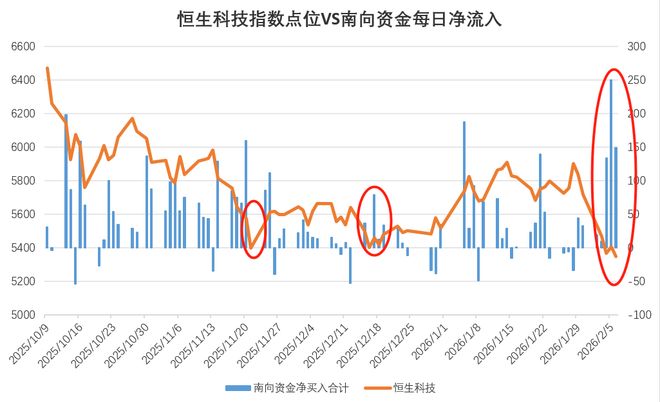
Core Viewpoint - The Hong Kong stock market, particularly the technology sector, is experiencing significant capital inflows despite global risk asset volatility, indicating a potential rebound in the sector's performance [1][2]. Group 1: Capital Inflows - Southbound funds recorded a net inflow of HKD 561 billion (approximately USD 498 million) last week, showing a marked increase compared to the previous week [2]. - Technology ETFs linked to Hong Kong stocks saw a total net inflow of HKD 173.59 billion last week, suggesting strong investor interest [4]. - Foreign capital also flowed into Hong Kong stocks, with a net inflow of USD 1.88 billion as of February 4, down from USD 2.8 billion the previous week, but still maintaining a relatively high level [4]. Group 2: Valuation and Performance - The price-to-earnings (P/E) ratio of the Hong Kong technology index tracked by the Hong Kong Stock Connect Technology ETF is approximately 26 times, which is significantly lower than the A-share ChiNext index (around 42 times) and the US Nasdaq index (around 37 times) [5]. - Since January 2017, the Hong Kong Stock Connect Technology Index has increased by 153.72%, outperforming the Hong Kong Internet Index (0.99%) and the Hang Seng Technology Index (45.74%) [6]. - Analysts suggest that the current valuation levels in the Hong Kong market remain attractive, with key investment opportunities likely to focus on sectors such as technology innovation and new productivity [6].

未知机构:长江TMT医药最新观点汇总0208电子1PCB-20260209
未知机构· 2026-02-09 02:25
Summary of Key Points from Conference Call Records Industry Overview 1. PCB (Printed Circuit Board) - The PCB sector has shown weak performance since Q4 of last year, primarily due to divergent market views on orthogonal backplane solutions, with some believing they may be replaced by copper cables/CPO or delayed until 2028. However, the orthogonal backplane is currently progressing steadily and is expected to enter mass production in H2 2027. Leading companies are experiencing stock price stagnation due to these divergences, highlighting their cost-effectiveness. Recommended companies include Dongshan Precision, Shenghong Technology, and Huidian Co. [1] - The CoWoP (Chip on Wafer on PCB) solution has stronger certainty, can reduce costs, improve efficiency, and bypass the shortage of substrate capacity. The value per square meter of PCB may increase several times, potentially reaching tenfold, with product launches expected by the end of 2027 and full implementation in 2028. Recommended companies in this direction include Pengding Holdings, Shennan Circuit, and Xinsong Technology. [1] 2. Storage - Contract prices remain in an upward cycle despite fluctuations in spot prices. Module companies are expected to see explosive Q1 performance, with Jiangbolong and Demingli realizing low-priced inventory. Recommended design companies include Zhaoyi Innovation (with a profit expectation of 6 billion) and Puran Co., Beijing Junzheng, and Hengshuo Co. [2] - Demand for memory modules is driven by AI servers and general servers, with recommendations for Lanke Technology (long-term profit of 10 billion) and Jucheng Co. (long-term profit of 1.5 billion). [2] 3. Communication - The recent decline in optical modules is related to the pullback of US tech stocks and speculation around CPO concepts. However, industry sources (such as Coherent and Xuchuang) indicate that CPO's potential to replace optical modules in ScaleOut scenarios is low, suggesting that short-term speculation may be excessive. [2] - North American cloud service providers have exceeded capital expenditure guidance for 2026 (620 billion, up 65% year-on-year), indicating potential accelerated demand for optical modules in 2027. Key upcoming catalysts include Nvidia's quarterly report (February 26), GTC conference (March), and OFC exhibition (NPO product showcase). Recommended companies include Zhongji Xuchuang, Xinyisheng, and Dongshan Precision. [2] - For copper connections as a Plan B alternative to orthogonal backplanes, companies to watch include Luxshare Precision, Wokai Nuclear Materials, and Huiju Technology (with potential for stock doubling). [2] - The price of scattered fiber has surged in the short term (from 25 to 50 yuan), but the low willingness of operators to raise prices raises doubts about long-term sustainability. [2] 4. Computing - Domestic computing resources are in short supply, with the recent downtime of Qianwen highlighting the scarcity of AI foundational resources. The demand for CPUs is expected to rise due to increased usage of agents compared to chatbots. Recommended companies include Haiguang Information (benefiting from both CPU and GPU), Cambrian (leading domestic AI chip manufacturer), and Tianshu Zhixin (expected to accelerate integration with leading players). [2] - Cloud infrastructure resources are expected to benefit from price increases, with recommendations for Kingsoft Cloud, Wangsu Technology, and Fourth Paradigm. [2] - In the AI application sector, the recent drop in overseas software and restructuring of SaaS business models may lead to a narrative reversal with the launch of native agent products in Q3 2026. Companies to watch include Alibaba for 2C entry reconstruction and third-party AI agents like TaxFriend, Zhongkong Technology, and Dingjie Smart. [2] 5. Media - Tencent has faced a decline due to market concerns over potential tax increases on internet platforms, although there is no space for increased game value-added tax. The company remains recommended despite rumors of Q4 earnings downgrades, maintaining a PE ratio of 15 times, which still offers value. [3] - The download situation for the Yuanbao app remains stable, and Tencent's AI capabilities may be closing the gap with larger competitors. [3] - In gaming, companies with upcoming catalysts such as Giant Network and Perfect World are recommended for short-term focus, while Century Huatong and Kaiying Network are suggested for medium to long-term attention due to expected catalysts. [3] - Tencent's establishment of a separate AI comic app is beneficial for the production side, which is entering a period of profitability. Recommendations include Kuaishou, Huanrui, and Rongxin. [3] 6. Pharmaceuticals - Attention is drawn to the update of the essential drug catalog, which may accelerate progress. [4] - The probability of inclusion in the essential drug catalog is high for unique products, with several specific products from companies like Jichuan Pharmaceutical and Panlong Pharmaceutical being highlighted. [4] - Emphasis on the global competitiveness of the innovative drug industry chain, with a focus on new-generation ADCs, IOs, small nucleic acids, and CGT. Recommended companies include Kanghong, Yingen, Yunding, and Chengdu Xian Dao. [4] - The brain-computer interface theme is noted, with a potential showcase of non-invasive products during the Spring Festival and a semi-invasive product approval for Borui Kang in March. [4] - Recommendations include Meihua Medical, Dongwei Semiconductor, and Sanbo Brain Science. [5] - The surgical robot sector is expected to see comprehensive implementation of charging policies before August, with overseas orders doubling and maintaining high growth in 2027. Key types include laparoscopic and orthopedic robots, with strong overseas performance for laparoscopic robots. Recommended companies include MicroPort, Jingfeng Medical, Tianzhihang, and Sanyou Medical. [6]


多重利好驱动风险偏好迅速回升!阿里巴巴涨超2%,港股互联网ETF(513770)涨逾1%,美联储释放维稳信号
Xin Lang Cai Jing· 2026-02-09 02:05
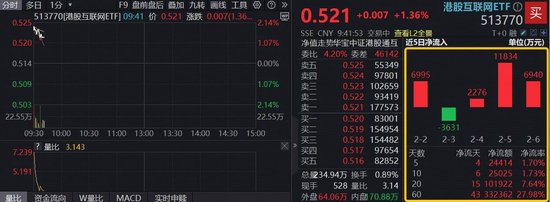
2月9日,港股早盘高开,互联网龙头集体走强,阿里巴巴-W涨超2%,腾讯控股、哔哩哔哩-W涨逾 1%,小米集团-W、快手-W、美团-W跟涨。港股AI核心资产——港股互联网ETF(513770)场内价格 现涨1.36%。 | 分时 多日 1分 * | | F9 盘前盘后 静加 九花 面线 工机 @ (7) > | | | | | 港股互联网ETF 1 | | | --- | --- | --- | --- | --- | --- | --- | --- | --- | | | | 513770[潮腹互联网ETF] 09:41 价 0.521 涨跌 0.007(1.36. | E 2.14% | 0.527 +0.007 +1.36% | | | 513770 | | | A | | | | SSE CNY 9/41:53 交易中 查看L2全国 | | | 140 80 × 13 × | | | 0.520] | | | 1.07% | 冷藏在我的重中证港股通互 近5日本流入 | | | | 单位(万元) | | 0.514 | | | 0.00% | 零比 4.20% 零差 46142 0.525 55349 2 ...
硅谷不相信忠诚,AI行业玩成NBA,科学家爽拿“转会费”
3 6 Ke· 2026-02-09 01:48
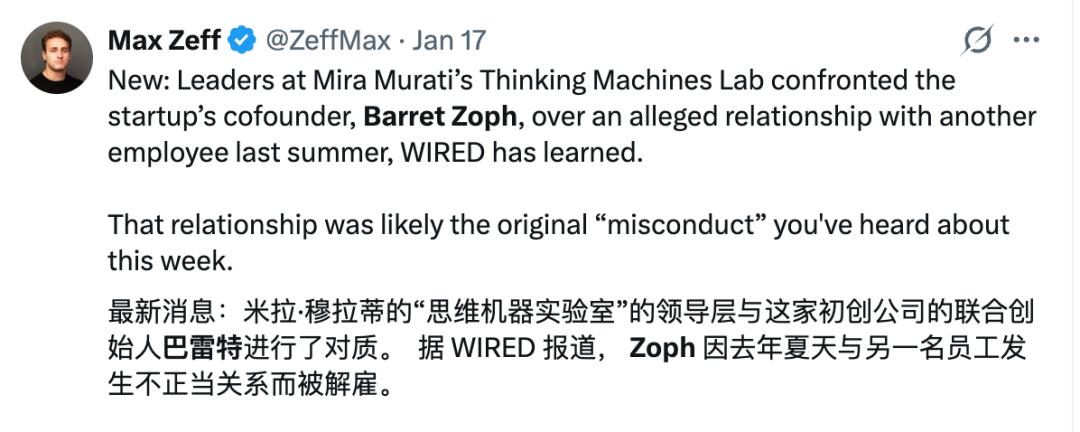
Core Insights - The loyalty of employees in Silicon Valley has diminished, with significant talent poaching events occurring among major tech companies, particularly in the AI sector [1][2] - The trend of "acqui-hire," where companies acquire others primarily for their talent rather than products, has become a common strategy among tech giants [24][27] Group 1: Talent Poaching Events - Major talent poaching incidents include Meta's $14.3 billion investment in Scale AI to acquire co-founder Alexandr Wang in June 2025, Google's $2.4 billion acquisition of Windsurf's technology and team in July 2025, and NVIDIA's $20 billion deal with Groq in December 2025 [1][2][11] - OpenAI has also been active in recruiting talent, bringing back researchers from Thinking Machines Lab and attracting former Google DeepMind employees [1][2] Group 2: Motivations for Job Changes - Employees are motivated to switch jobs for various reasons, including high salaries, access to cutting-edge resources, and the pursuit of more promising technologies and products [2][32] - The phenomenon of "active" and "passive" job changes is noted, with many researchers leaving for better opportunities or being relocated due to company acquisitions [2] Group 3: Acqui-hire Strategy - Acqui-hire has become a popular method for tech giants to quickly acquire skilled teams without facing antitrust scrutiny, allowing them to maintain a competitive edge in AI [24][27] - The case of Google's acquisition of Windsurf illustrates the potential fallout for remaining employees, who may feel abandoned when key talent is poached [27][28] Group 4: Employee Sentiment and Loyalty - Despite high salaries offered by companies like Meta, employee loyalty remains elusive, with some researchers returning to their previous employers shortly after being hired [18][20] - The culture in the tech industry is shifting, with employees increasingly concerned about long-term commitments to a single company, leading to a more fluid job market [32][35] Group 5: Domestic Talent Competition - The talent war is not limited to Silicon Valley, as domestic companies are also aggressively recruiting AI talent from top labs, indicating a global trend in talent mobility [37][39] - High salaries and rapid job changes are characteristic of the AI industry, where top talent is viewed as a strategic asset [40]





方正富邦基金吴昊:锚定AI应用浪潮 把握产业链生态红利
Zhong Guo Zheng Quan Bao· 2026-02-09 00:48
Core Viewpoint - The investment focus is shifting towards AI applications, with 2026 expected to be a pivotal year for AI investment, as the market transitions from infrastructure to application [1][2]. Group 1: AI Application Investment - AI applications are identified as one of the most certain investment directions, with a clear transmission logic from infrastructure to cloud services and then to AI models and applications [2][3]. - The market is moving from a phase of heavy investment in AI infrastructure to one focused on application, with 2026 anticipated as the year of significant AI application investment [2][3]. Group 2: Reasons for Current Focus - Three main reasons are provided for the current focus on AI applications: the shift in industry cycles, strategic changes by major players, and a restructured valuation system [3]. - Alibaba is highlighted as a key player with a strong commercial application potential, marking 2026 as a decisive year for its AI strategy [3]. Group 3: Alibaba Chain - The "Alibaba Chain" is defined as a complete ecosystem centered around Alibaba's AI capabilities, encompassing computing power, model platforms, and vertical applications [3]. - The investment strategy focuses on the revaluation of Alibaba's cloud and AI business, as well as the benefits to its ecosystem partners during the AI application boom [3][4]. Group 4: Investment Criteria - Three core criteria for selecting AI application companies include their integration with the Alibaba ecosystem, the necessity of their business scenarios, and their unique data barriers and closed-loop capabilities [4]. Group 5: Market Outlook - The overall market outlook suggests that technology growth styles will prevail, with AI applications and computing power still having room for development, particularly in the context of macroeconomic changes [5]. - The focus is shifting from infrastructure to application, especially in the Hong Kong stock market, where many AI application companies are listed with relatively low valuation bubbles [5]. Group 6: Investment Strategy - The investment framework combines active and quantitative approaches, emphasizing the importance of understanding industry trends and cycles [6][7]. - The strategy focuses on cognitive and execution differences, leveraging quantitative tools to mitigate human biases in investment decisions [7].
智通港股沽空统计|2月9日
智通财经网· 2026-02-09 00:24
Core Insights - The article highlights the top short-selling ratios and amounts for various companies, indicating significant market sentiment against these stocks [1][2]. Group 1: Top Short-Selling Ratios - Lenovo Group-R (80992) has the highest short-selling ratio at 91.38% with a short-selling amount of 52.16 thousand [2]. - Ping An Insurance-R (82318) follows with a short-selling ratio of 83.34% and a short-selling amount of 200.88 thousand [2]. - Xiaomi Group-WR (81810) has a short-selling ratio of 80.95% with a short-selling amount of 597.54 thousand [2]. Group 2: Top Short-Selling Amounts - Tencent Holdings (00700) leads in short-selling amount at 29.69 billion, with a short-selling ratio of 15.25% [2]. - Alibaba Group-W (09988) has a short-selling amount of 23.66 billion and a short-selling ratio of 19.56% [2]. - Xiaomi Group-W (01810) ranks third with a short-selling amount of 10.16 billion and a short-selling ratio of 21.54% [2]. Group 3: Top Short-Selling Deviation Values - Ping An Insurance-R (82318) has the highest deviation value at 36.33%, indicating a significant difference from its average short-selling ratio [2]. - Xiaomi Group-WR (81810) follows with a deviation value of 34.41% [2]. - China Resources Beer (00291) has a deviation value of 33.89% [2].