
BABA(09988)

Search documents
春节AI红包战愈演愈烈
财联社· 2026-02-10 13:19
Core Viewpoint - The article discusses the intense competition among major internet giants Tencent, ByteDance, and Alibaba in the AI sector during the upcoming Spring Festival, focusing on their unique strategies for user engagement and traffic acquisition [3][16]. Tencent's Strategy - Tencent's AI product, Yuanbao, has upgraded its features to allow users to trigger a red envelope drop by simply typing "Yuanbao" in WeChat chats, enhancing user engagement and compliance with platform rules [4][7]. - The new feature aims to leverage WeChat's vast user base, facilitating low-cost traffic acquisition while avoiding previous issues with link sharing and marketing compliance [7][11]. - Yuanbao's strategy includes creating "Yuanbao groups" for social interaction, where users can participate in activities to win red envelopes, thus fostering community engagement [8][11]. ByteDance's Entry - ByteDance's AI application, Doubao, announced its participation in the Spring Festival red envelope competition, with activities planned in two phases, including a collaboration with the Spring Festival Gala for user interaction [12][16]. - Doubao's strategy combines cash rewards with technology products, aiming to attract users through a differentiated offering [16]. Alibaba's Challenges - Alibaba's AI product, Tongyi Qianwen, faced significant operational challenges during its Spring Festival campaign, which included a 30 billion yuan subsidy and a rapid influx of user traffic that overwhelmed its system [13][14]. - Despite efforts to expand server capacity and extend the validity of promotional offers, users continued to experience issues with the app, highlighting the difficulties in managing high demand [14]. Competitive Landscape - The article highlights the distinct strategies of the three companies: Tencent focuses on social engagement through WeChat, ByteDance leverages public traffic and high-profile events, while Alibaba aims to integrate AI into consumer habits [16]. - As of now, Tongyi Qianwen ranks first in the iOS free app chart, with Yuanbao and Doubao following closely, indicating a competitive landscape among these AI applications [17]. Future Outlook - According to industry experts, ecological barriers will be crucial in the AI assistant market by 2026, emphasizing the importance of unique technology and valuable user scenarios for sustaining competitive advantages [18].




春节AI大战,谁摸到了那张入场券?
远川研究所· 2026-02-10 13:13
Core Viewpoint - The article discusses the intense competition among major internet companies in China during the Spring Festival period, focusing on their AI products and marketing strategies, with a total investment of approximately 50 billion yuan aimed at securing future market positions in AI [2][4][6]. Group 1: AI Product Launches and Strategies - ByteDance's Doubao aims to leverage exposure during the Spring Festival Gala, while Tencent's Yuanbao focuses on social engagement through a "share and receive red envelopes" strategy [2][4]. - Alibaba's Qianwen has invested 30 billion yuan in a "Spring Festival Free Order" campaign, integrating various services within its ecosystem to enhance user experience and promote AI usage in daily life [2][4][6]. - The competition is characterized by distinct strategies: Doubao targets high-profile events, Yuanbao relies on social media virality, and Qianwen seeks to embed AI into everyday activities [2][4][6]. Group 2: User Engagement and Growth Metrics - Doubao has achieved a daily active user count in the hundreds of millions since its launch, aiming to expand into B2B markets and hardware [6][9]. - Yuanbao, launched in 2024, is leveraging its social media strengths to compensate for technical limitations, creating a social space that integrates various interactive features [6][9]. - Qianwen, despite being a latecomer, has rapidly gained traction, reaching over 100 million orders within hours of its promotional launch and topping app store downloads [4][7][9]. Group 3: AI Market Trends and Future Outlook - The article highlights a shift in AI competition from mere imitation to practical assistance, emphasizing the importance of integrating technology with real-world applications [10][11]. - The global AI market is projected to grow significantly, with estimates reaching 139.19 billion dollars by 2034, indicating a robust demand for AI-driven solutions [17]. - Companies are increasingly focusing on creating AI that can perform tasks for users, moving beyond simple query responses to actionable assistance [10][17].
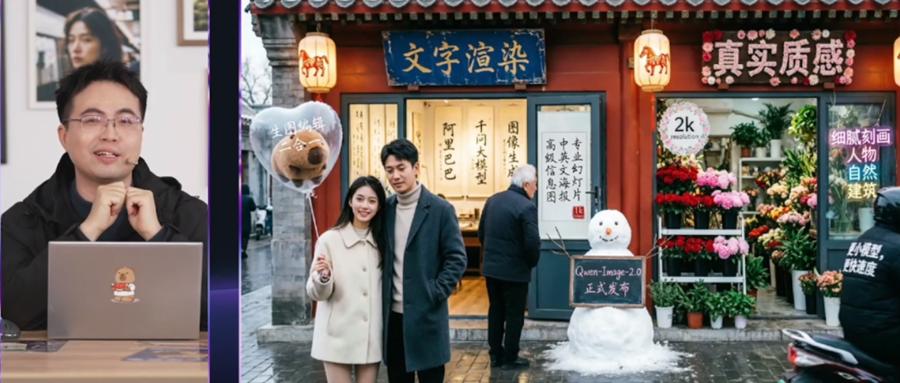
字节发完阿里发,Qwen-Image 2.0火线出击
3 6 Ke· 2026-02-10 12:52
Core Viewpoint - Alibaba has launched its new image generation model Qwen-Image 2.0, which supports up to 1,000 tokens for long instructions and 2K resolution, featuring a lighter architecture that enhances inference speed compared to its predecessor [2][37]. Group 1: Model Performance - Qwen-Image 2.0 excels in long instruction adherence and text rendering, although it slightly lags behind Google's Nano Banana Pro in image realism [2][6]. - In AI Arena testing, Qwen-Image 2.0 ranked third in text-to-image and second in image-to-image benchmarks, indicating competitive performance but still trailing behind Google’s model [6][8]. - The model can render complex text, such as the full text of "Lantingji Xu" in a brush style, while maintaining visual harmony with the background [4][9]. Group 2: Technical Enhancements - Qwen-Image 2.0 has optimized the common "greasy" appearance in AI-generated images, resulting in less saturated colors and a more realistic look [5][34]. - The model's size is significantly reduced compared to version 1.0, which had approximately 20 billion parameters, while still enhancing capabilities and speed [37][39]. - Improvements in the Variational Autoencoder (VAE) have strengthened the model's ability to generate clear and accurate small text, addressing previous issues of text distortion [39]. Group 3: Future Developments - The Qwen-Image team plans to focus on generating complex "parent images" like PPTs and multi-image posters, aiming to reduce hallucinations and errors in future iterations [14][40]. - The integration of image generation and editing capabilities is expected to enhance the model's utility, allowing for more flexible workflows in design [34][35]. - Collaborations with applications like WPS are planned to gather user feedback for continuous model improvement [40]. Group 4: Market Implications - The advancements in Qwen-Image 2.0 position it as a potential productivity tool across various industries, including e-commerce and healthcare, by visualizing complex processes and generating marketing materials [39][41]. - The rapid iteration and application of AI-generated content in China are anticipated to foster new industry chains and accelerate model development [39][41].

大厂AI硬件竞赛:软硬一体易成,生态入口难夺
Xin Lang Cai Jing· 2026-02-10 12:40
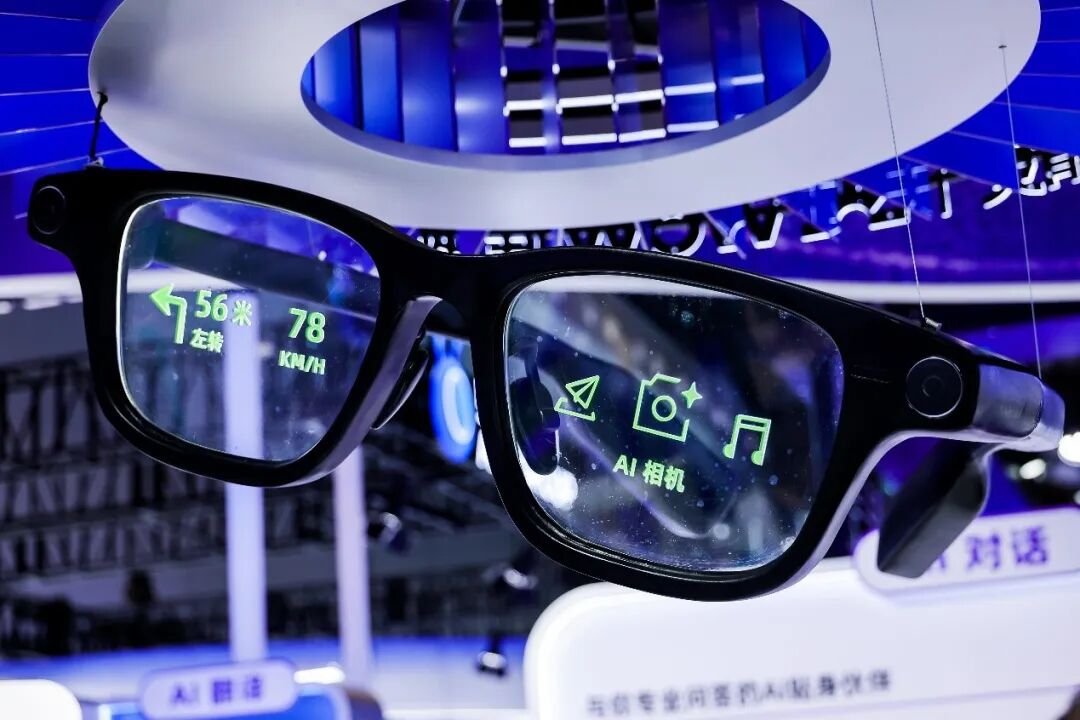
Core Insights - The next battleground for AI has shifted from the cloud to personal devices, with major tech companies exploring various forms of AI hardware, including glasses and pens [2][22] - OpenAI plans to launch a lightweight, screenless AI device in the second half of 2026, sparking speculation about its form factor [23] - The AI hardware market, particularly smart glasses, is entering a phase of scaled competition, with global shipments expected to exceed 10 million units by 2026 [3][24] Group 1: Market Dynamics - Meta has established itself as a leader in the smart glasses market, holding a 73% market share in early 2025 with its Ray-Ban collaboration [25] - Google is re-entering the smart glasses space with Project Aura, set to launch in 2026, aiming to create an open XR ecosystem [25][26] - In China, companies like Alibaba and Baidu are launching their own AI glasses, with Alibaba's Quark AI Glasses S1 topping sales charts upon release [26][27] Group 2: Product Innovations - Alibaba's Quark AI Glasses S1 features a lightweight design and advanced voice interaction capabilities, while Baidu's XiaoDu AI Glasses Pro focuses on AI voice photography [28][27] - ByteDance is preparing to launch its own AI glasses, leveraging its VR expertise from the PICO brand [27] - Other Chinese manufacturers, including XREAL and Rokid, are also developing competitive products in the global market [27] Group 3: Strategic Paths - OpenAI represents a "disruptive entry" strategy, focusing on a screenless AI pen that aims to redefine human-computer interaction [31][32] - Google is pursuing an "ecosystem platform" strategy with its Android XR operating system and Project Aura, aiming to replicate its success in the smartphone market [33] - Chinese giants like Alibaba and Baidu are adopting a "full-stack synergy" approach, integrating algorithms, chips, cloud, and terminal solutions [35][36] Group 4: Challenges Ahead - The AI hardware market faces significant challenges, including supply chain constraints and the need for robust production capabilities [39] - Privacy and ethical compliance issues are critical, as AI hardware collects extensive user data [40] - The business model may shift from selling devices to offering services, emphasizing the need for innovative revenue streams [41]


大模型红包爆火,算力租赁成最大赢家
3 6 Ke· 2026-02-10 12:24
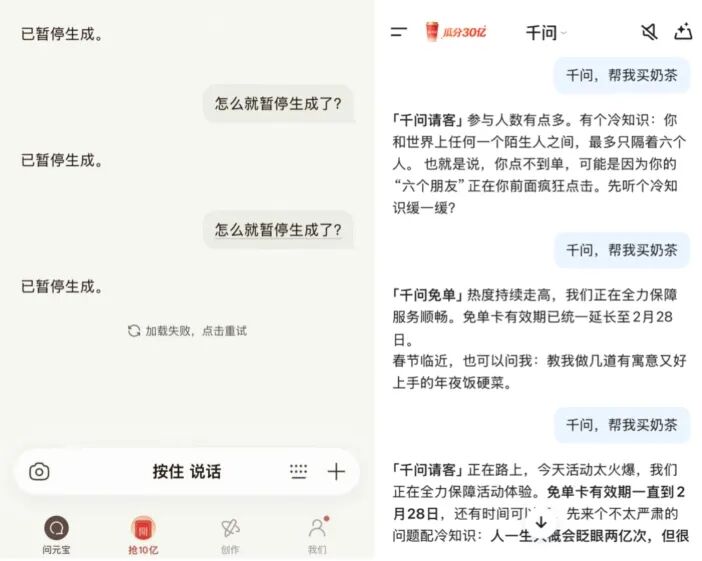
Core Insights - The surge in traffic during the Spring Festival led to service instability for Tencent's Yuanshuo, while simultaneously boosting the performance of A-share computing rental concept stocks, highlighting the contradictions and opportunities in the current AI era [1][2]. Group 1: Market Dynamics - The high traffic during the Spring Festival exposed the vulnerabilities of AI infrastructure, as Tencent's Yuanshuo and Alibaba's Qianwen experienced service disruptions due to sudden spikes in user demand [2][3]. - The computing rental market is rapidly evolving into a core infrastructure industry, driven by the explosion of AI applications and strong government support for digital transformation [2][6]. Group 2: Supply and Demand - The explosive growth of AI applications is putting significant pressure on backend infrastructure, revealing a mismatch between supply and demand for computing resources [3][9]. - The computing rental market is characterized by various business models, including full-instance leasing, computing power scale leasing, and GPU card hourly leasing, catering to different user needs [8][10]. Group 3: Investment Trends - The computing rental market is projected to exceed 100 billion yuan by 2025, with potential revenue reaching 260 billion yuan by 2026, indicating a robust growth trajectory [10]. - Companies are increasingly making large-scale investments in computing resources, with significant procurement orders being reported, such as a 12 billion yuan order from Xiechuang Data Technology [11][12]. Group 4: Competitive Landscape - The market features a diverse range of participants, including tech giants like Alibaba and Tencent, as well as specialized computing operators, each adopting different competitive strategies [13]. - The strategic position of computing rental as a foundational infrastructure in the AI era is becoming increasingly recognized, with its market potential just beginning to unfold [14].
春节红包大战“变天”!
Jin Rong Shi Bao· 2026-02-10 12:15
"点得我手都快麻了。"陷在江苏家中的沙发里,大三学生钟襄身边散落着砂糖橘和瓜子壳,她的拇指在 手机屏幕上快速起落,眼神在几个亮着的屏幕间来回切换。这个寒假上午,她最主要的"工作"是在元 宝、千问和百度文心一言等AI应用间循环往复——抢红包。 马年前夕,春节前的互联网营销大战再次上演。和往年不同的是,冲锋在前的既不是传统电商、也非外 卖平台,而是各大科技公司旗下的AI(人工智能)大模型应用;和以往类似的是,这场看似崭新的技 术竞赛,用的却依旧是"发红包"抢客的传统路数。 新坛装旧酒,在AI时代,还能奏效? "这轮AI红包营销是巨头在技术变革关键窗口期,以经典'烧钱'模式争夺下一代超级入口的卡位战。与 此前争夺支付、社交的红包大战有本质不同。"南开大学金融发展研究院院长田利辉告诉《金融时报》 记者,过去争的是"支付习惯"和"用户时长",今日争的是"第一反应"与"服务调度权"。比如,用户遇到 问题时,是习惯性打开微信问"元宝",还是去淘宝找"千问"。 进击的大厂 自1月底起,一场跨越年龄与圈层的全民AI应用"入口争夺战",以熟悉的配方、升级的战场,引爆了整 个互联网。 1月25日,百度率先官宣马年春节红包活动,用5 ...
10日港股向上 恒指科指双双收涨
Xin Hua Cai Jing· 2026-02-10 12:08
Market Overview - The Hang Seng Index rose by 0.58% to close at 27,183.15 points, while the Hang Seng Tech Index increased by 0.62% to 5,451.03 points, and the National Enterprises Index climbed by 0.81% to 9,242.75 points [1] - The index opened at 27,202.96 points, initially rising before retreating, and ultimately gained 155.99 points with a total turnover exceeding 234 billion HKD [1] - There were 1,344 advancing stocks, 923 declining stocks, and 896 stocks closing flat by midday [1] - The net inflow for the southbound trading (Hong Kong Stock Connect) was 84.7 million HKD [1] Sector Performance - Most sectors experienced gains, including chips, optical communications, biomedicine, new energy vehicles, oil and gas, banking, aviation, and port transportation [1] - Mixed performance was noted in new consumption, non-ferrous metals, and brokerage sectors, while gold, technology, real estate, and electricity sectors mostly declined [1] Individual Stock Movements - Notable stock movements included Pop Mart rising by 4.90%, Longi Green Energy increasing by 8.88%, Xiaomi Group up by 1.08%, and SMIC gaining 1.71% [1] - China Ping An rose by 0.62%, AIA fell by 0.52%, Zijin Mining increased by 2.52%, and Tianzuo Zhixin surged by 12.40% [1] - COSCO Shipping Energy rose by 5.49%, Zhihui gained 14.81%, and Rongchang Biotech increased by 3.64% [1] - HSBC Holdings rose by 0.72%, Industrial and Commercial Bank of China increased by 0.77%, and China Petroleum gained 1.64% [1] Top Traded Stocks - Tencent Holdings saw a decline of 1.61% with a turnover exceeding 16.1 billion HKD; Alibaba rose by 1.65% with a turnover over 9.3 billion HKD; Meituan fell by 2.47% with a turnover of 6.6 billion HKD [2]


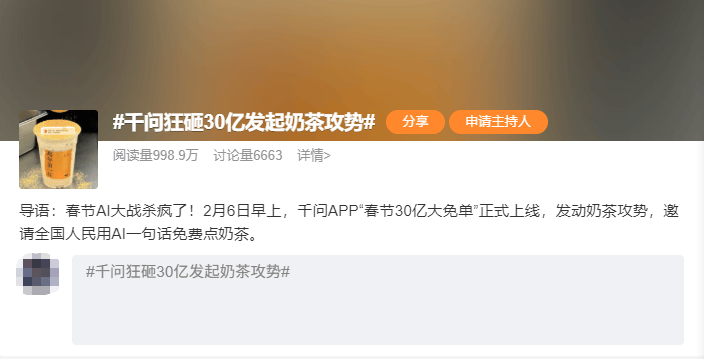
突破1000万单!千问把奶茶店搞瘫痪,跪求大家明天再来
Sou Hu Cai Jing· 2026-02-10 12:08
Group 1 - The core point of the article highlights the intense competition in the AI sector, particularly during the Spring Festival, with Alibaba's Qianwen launching a significant promotional campaign involving free milk tea to attract users [1][29] - Qianwen's campaign offered a 25 yuan no-threshold coupon for milk tea, leading to a rapid surge in orders, exceeding 1 million within 3 hours and 10 million within 9 hours [3][8] - The promotional strategy resulted in a notable increase in stock prices for milk tea brands, with Cha Baidao rising by 6% and Gu Ming by over 3% [11] Group 2 - The overwhelming demand caused significant operational challenges for milk tea shop employees, who faced extreme workloads and supply shortages, leading to some stores temporarily closing for restocking [17][20] - The rapid influx of users overwhelmed Qianwen's servers, causing service disruptions and user frustrations, prompting the company to extend the validity of the coupons to February 23 [12][26] - The article discusses the broader context of AI applications competing for user acquisition during the Spring Festival, with major players like Baidu and Tencent also investing heavily in user engagement strategies [29][31] Group 3 - Despite the initial excitement, the article notes that users attracted by promotional offers may not remain engaged long-term, as many uninstall the app after redeeming their rewards [33] - The competition in the AI space is expected to focus on delivering real value and enhancing user experience, as transient user acquisition strategies may not sustain long-term growth [40]
中文版Nano Banana来了?Qwen-Image-2.0炸场:1K长文本硬吃,中文生图彻底不拧巴了
量子位· 2026-02-10 11:59
梦瑶 发自 凹非寺 量子位 | 公众号 QbitAI 文本一长就糊、指令一杂就撂挑子、遇到中文更是一整个变形freestyle…… 「AI生图」的这点苦,到底有谁懂啊!!! 停,不用拧巴了,因为现在的AI,已经能稳稳吃下 1K token 的超长文字指令了: 复杂指令 也不在怕的,最近OpenClaw贼火,我索性让AI直接帮roll出一个赛博信息图海报(你就说牛不牛吧): 中文渲染 表现也不孬,《兰亭集序》这种公认的高难度文本,这AI居然能做到文字1:1还原,排版、笔锋都在线: 你以为到这儿就结束了,NONONO!因为它还能—— 多图编辑 。 随手丢给了它一张照片,人家直接给我甩出一组影棚级的9宫格写真!!(诶,突然感觉怒省一笔钱… 刚才帮我干活的这位,正是阿里刚刚发布的新一代图像生成及编辑模型—— Qwen-Image-2.0 。 1K token长文本、复杂指令、中文渲染、图片编辑、2K分辨率一次 性梭哈,连国际评测里的表现都已经冲到了仅次于Nano Banana Pro的 位置。 在AI生图界,最让人崩溃的倒不是写Prompt词,而是写了太多,AI根本不吃消,好的提示词真无!处!施!展! 不知道千问团队 ...
从能力领先到入口级产品:阿里押注模型、生态与AI 基础设施
GUOTAI HAITONG SECURITIES· 2026-02-10 11:56
Investment Rating - The report rates the investment in the industry as "Buy" [5] Core Insights - Alibaba's top-level strategy is shifting from "model competition" to "system integration," leveraging the "Tongyi Qianwen" and cloud platforms to create a closed-loop capability for the next generation of platform dominance [2][5] - The focus of Alibaba's AI strategy post-2025 will be on integrating "model + ecosystem + AI infrastructure" to enhance user experience and operational efficiency across various high-frequency scenarios [5] - Significant capital expenditure is directed towards cloud and AI infrastructure to support model and platform expansion, including data center upgrades and self-developed AI chips [5] Summary by Sections 1. Pre-2022: Foundation of "Cloud + Data Intelligence" - The strategic focus was on practical AI applications that enhance productivity in real-world scenarios, particularly in e-commerce, logistics, and fintech [8][9] - AI capabilities were productized and standardized through platforms like PAI and City Brain, transforming internal efficiencies into external commercial advantages [15][17] 2. 2023-2024: Entering the Era of Large Models - 2023 marks a pivotal point for Alibaba, with a restructured organization and strategy emphasizing AI as a core driver for business transformation [37][39] - The launch of the "Tongyi Qianwen" model aims to standardize AI capabilities across all business units, facilitating a unified approach to AI application [42][43] - A series of vertical applications based on the Tongyi Qianwen model were rapidly developed to create a comprehensive product matrix, enhancing user engagement and operational efficiency [44][46] 3. 2025 and Beyond: Transition to Entry-Level Products - The overall strategy will pivot towards using "model + ecosystem" to compete for the next generation of platforms, with a clear division of responsibilities between AI2C and AI2B [5][39] - Capital expenditures will support the expansion of AI infrastructure, focusing on integrated hardware and software solutions [5][64] - The competitive landscape is shifting towards AI computing and platform capabilities, with Alibaba Cloud maintaining a leading market share in IaaS and PaaS [67]