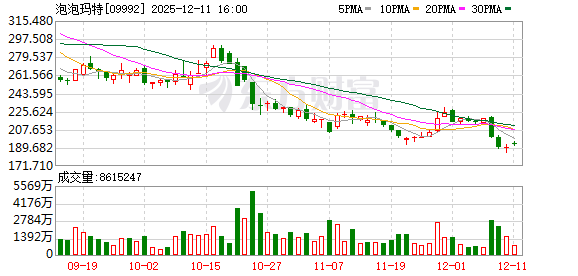
POP MART(09992)

Search documents
自高点累计跌幅约40%!泡泡玛特四个月市值蒸发2000亿港元
Di Yi Cai Jing· 2025-12-11 23:01
Core Viewpoint - The stock price of Pop Mart (09992.HK) has been declining significantly, with a cumulative drop of approximately 40% since its peak in August 2023, resulting in a market value loss of over 200 billion HKD (approximately 180 billion RMB) [1] Group 1: Stock Performance - On December 8, 2023, Pop Mart's stock fell over 8%, followed by a decline of more than 5% on December 9 [1] - The stock price surged nearly 15 times over a 17-month period from March 2024 to August 2025, marking a remarkable performance in the Hong Kong consumer stock market [1] Group 2: Financial Performance - In the first half of 2024, Pop Mart reported a net profit of 920 million RMB, with an expected total net profit of 3.13 billion RMB for the entire year [1] - By the first half of 2025, the company earned 4.57 billion RMB [1] Group 3: Product and IP Dynamics - The popularity of Pop Mart's leading IP, LABUBU, significantly contributed to its stock price increase, with LABUBU becoming a global sensation in 2025 [1] - The production capacity for LABUBU has increased dramatically, with a monthly output rising from 10 million units to an average of 50 million units by the end of the year [2] - However, the market premium for LABUBU and other popular IPs has started to decline, with the premium for hidden versions of LABUBU shrinking by over 50% since August 2023 [2] Group 4: Market Sentiment and Future Outlook - There is a growing consumer fatigue regarding certain IPs, leading to a decrease in prices in the secondary market [2] - The management of Pop Mart has expressed a desire to focus on selling quality products rather than financial instruments, indicating a shift in strategy [4] - Industry analysts suggest that while the rapid rise in stock price and product popularity has created a bubble, the company must strengthen its internal capabilities and find new growth points to ensure long-term success [4]

泡泡玛特四个月市值蒸发2000亿港元
Di Yi Cai Jing Zi Xun· 2025-12-11 15:57
Core Viewpoint - The stock price of Pop Mart (09992.HK) has been declining significantly, with a cumulative drop of approximately 40% since its peak in August 2023, resulting in a market value loss of over 200 billion HKD (approximately 180 billion RMB) [1][4] Company Performance - In the first half of 2024, Pop Mart reported a net profit of 920 million RMB, with an expected total net profit of 3.13 billion RMB for the entire year [1] - By the first half of 2025, Pop Mart's net profit reached 4.57 billion RMB [1] Product and IP Analysis - The surge in stock price was partly driven by the popularity of its flagship IP, LABUBU, which gained significant traction in 2025, becoming a "traffic password" [1] - LABUBU's popularity has led to high demand, with products selling out domestically and long queues at overseas stores [1] Market Concerns - Despite the initial success, there are concerns about the sustainability of LABUBU's popularity as production capacity has increased significantly, leading to a potential decline in perceived scarcity [2][4] - The market premium for LABUBU and other popular IPs has started to diminish, with the price of hidden versions dropping by over 50% since August 2023 [4] - Consumer fatigue is evident, as prices for certain products, such as the mini LABUBU series, have decreased by over 40% from their peak [4] Strategic Insights - Management has indicated a focus on selling quality products rather than treating them as investment vehicles [5] - Industry analysts suggest that the value of blind boxes and related products is primarily derived from their IP, and there is room for improvement in the depth of IP stories and the richness of the IP matrix [5] - The rapid rise in stock price and product popularity has created a "virtual fire," which poses risks for the company as it seeks to stabilize its market value and find new growth opportunities [5]

泡泡玛特与LV再连接:一场彼此需要的结盟
Hua Er Jie Jian Wen· 2025-12-11 15:53
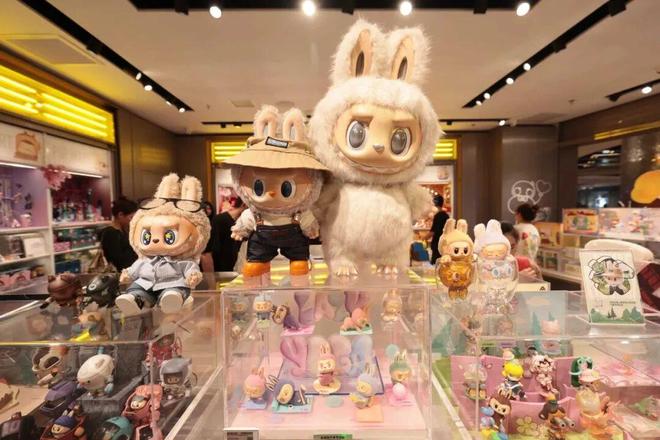
Core Viewpoint - Pop Mart's trendy toy business is increasingly connecting with the luxury goods sector, as evidenced by the appointment of LVMH's Greater China President, Wu Yue, to its board of directors [2][5]. Group 1: Strategic Developments - Wu Yue's appointment may indicate Pop Mart's further exploration into the core circle of international fashion trends [3]. - The company has been compared to luxury brands like Hermes due to its high gross margin of nearly 70% since its performance explosion [3]. - Pop Mart's collaboration with LVMH and its luxury brands could signify a shift from mere marketing to deeper strategic interactions [13]. Group 2: Market Dynamics - The demand for scarcity is a common pursuit in both the trendy toy and luxury goods industries, where exclusivity enhances social status and identity recognition [6]. - Pop Mart's products, particularly in the secondary market, have seen a decline in premium pricing, indicating a cooling of consumer interest compared to previous "one toy hard to find" scenarios [4][11]. - The company aims to balance IP value, scarcity, and revenue scalability, which remains a long-term challenge [15]. Group 3: Financial Performance and Challenges - In the first half of 2025, the MEGA series generated nearly 1 billion yuan, accounting for 7% of total revenue [10]. - Pop Mart's stock price has dropped over 45% since its peak, with a market capitalization loss exceeding 200 billion HKD, reflecting investor concerns over declining resale prices and market sentiment [16][17]. - The company is facing a "availability paradox," where increased production capacity is transforming its core IP LABUBU from a scarce trend symbol to a mass-market product, potentially signaling a decline in popularity [19]. Group 4: Future Prospects - Pop Mart is expanding its international presence, with plans to open 200 new stores by the end of the year, maintaining a pace of approximately three new stores per week [14]. - The company is also diversifying its IP portfolio, with notable growth from new IPs like CRYBABY and Star People, which are expected to contribute significantly to revenue [14]. - Collaborations with major brands and the development of immersive experiences are part of Pop Mart's strategy to deepen emotional connections with consumers [27].
泡泡玛特四个月市值蒸发2000亿港元
第一财经· 2025-12-11 15:45
Core Viewpoint - The stock price of Pop Mart (09992.HK) has been declining significantly, with a drop of over 8% on December 8 and over 5% on December 9, leading to a cumulative decline of approximately 40% since its peak in August 2024, resulting in a market value loss of over HKD 200 billion (approximately RMB 180 billion) [3][4]. Group 1: Stock Performance - Pop Mart's stock price surged nearly 15 times over a 17-month period from March 2024 to August 2025, creating a myth in the Hong Kong consumer stock market [3]. - The company's net profit for the first half of 2024 was RMB 920 million, with a total net profit of RMB 3.13 billion for the entire year, and RMB 4.57 billion in the first half of 2025 alone [3]. Group 2: IP Performance - The popularity of Pop Mart's flagship IP, LABUBU, has significantly contributed to its stock performance, with LABUBU becoming a "traffic password" in 2025 [3][4]. - LABUBU's global popularity has led to high demand, with products selling out domestically and long queues at overseas stores, driving up prices on secondary markets [4]. Group 3: Supply Chain and Market Concerns - Pop Mart's production capacity has expanded significantly, with a monthly output of approximately 30 million plush toys, ten times that of the previous year [5]. - Concerns have arisen in the capital market regarding the potential decline in the value of trendy toys due to increased supply, with reports indicating a reduction in market premiums for LABUBU and other popular IPs since August [5]. Group 4: Consumer Sentiment and Future Outlook - There is evidence of consumer fatigue, with prices for some IPs in the secondary market declining, such as the mini version of LABUBU, which saw a price drop of over 40% from over RMB 2,000 to around RMB 1,100 [5]. - The management of Pop Mart has expressed a desire to focus on selling quality products rather than financial products, indicating a shift in strategy as the market stabilizes [6].
泡泡玛特四个月市值蒸发2000亿,Labubu市场溢价在消退
Di Yi Cai Jing· 2025-12-11 14:45
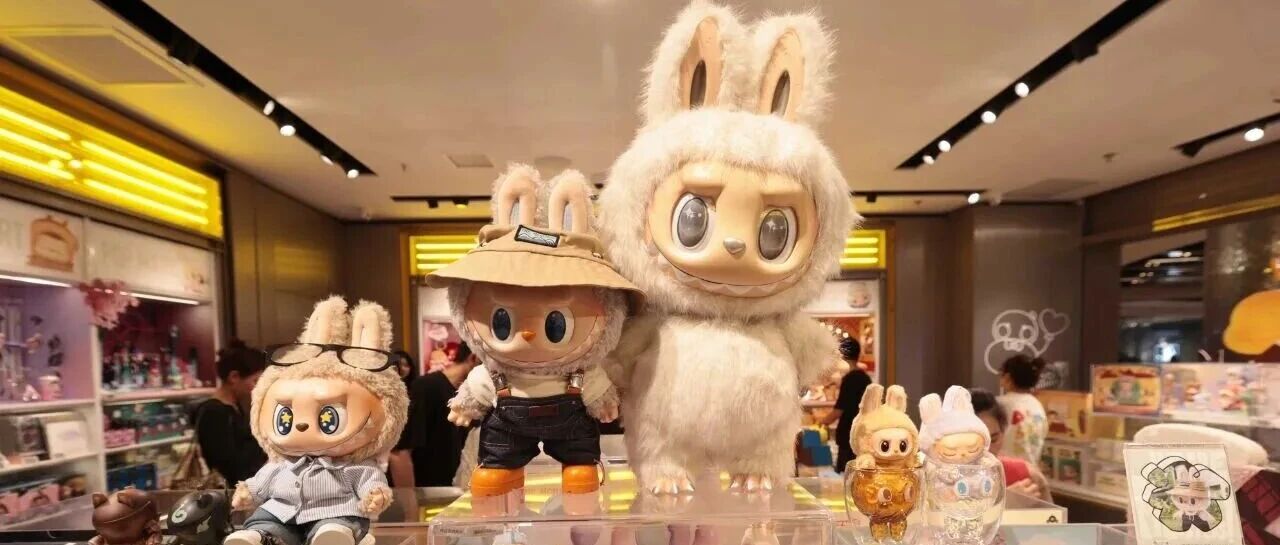
Group 1 - The stock price of Pop Mart (09992.HK) has experienced a significant decline, dropping over 40% from its peak of 339.8 HKD per share in August 2024, resulting in a market value loss of more than 200 billion HKD (approximately 180 billion RMB) [1] - In the first half of 2024, Pop Mart reported a net profit of 920 million RMB, with an expected total net profit of 3.13 billion RMB for the entire year [1] - The surge in stock price was largely attributed to the popularity of its flagship IP, LABUBU, which became a "traffic password" in 2025 [1] Group 2 - LABUBU's popularity has expanded internationally, with products selling out domestically and long queues forming at overseas stores, leading to increased market value for Pop Mart [2] - Other IPs like "Star People" and "Crying Baby" have also seen price increases in the secondary market, although the overall demand is cooling due to increased production capacity [3] - Pop Mart's production capacity for plush toys has increased significantly, reaching around 30 million units per month, which raises concerns about the sustainability of the "cool" and "scarce" attributes of its products [3] Group 3 - The decline in both stock and product prices indicates that Pop Mart's toys and shares no longer possess ideal investment characteristics [4] - Industry analysts suggest that the value of blind boxes and related products is primarily driven by their IP, and they have not yet become true collectibles [4] - The management of Pop Mart has expressed a desire to focus on selling quality products rather than investment vehicles, indicating a shift in strategy as the market stabilizes [4]
王宁把泡泡玛特开在LV旁边的梦要实现了?
Xin Lang Cai Jing· 2025-12-11 12:36
Core Insights - The appointment of Wu Yue, President of LVMH Greater China, as a non-executive director of Pop Mart signals the company's ambition to integrate into the core of international fashion trends [1][12] - This move is seen as a recognition of Pop Mart's IP in the fashion and entertainment sectors, enhancing confidence in its marketing and product resource deployment capabilities [2] Group 1: Strategic Moves - Wu Yue's role as a non-executive director focuses on strategic oversight and decision-making rather than daily operations, which aligns with Pop Mart's goal of elevating its brand status [1] - The trend of luxury brand executives joining the boards of Chinese companies is not new, indicating a broader strategy of leveraging high-profile industry expertise [1] Group 2: Historical Context - Pop Mart's founder, Wang Ning, has long expressed admiration for luxury brands, aiming to position Pop Mart alongside prestigious brands like LV in prime retail locations [3][15] - In 2016, Pop Mart was still in its infancy with only 31 stores and revenue of 0.88 million, highlighting the significant growth trajectory it has since achieved [3] Group 3: Brand Positioning and Collaborations - Pop Mart's LABUBU brand has gained international attention, collaborating with high-profile figures and brands, which has helped elevate its status in the fashion world [4][10] - The company has successfully engaged in collaborations with various brands, including Uniqlo and Moncler, to enhance its influence and appeal [13] Group 4: Future Opportunities - The partnership with LVMH may provide Pop Mart with valuable insights into talent acquisition, jewelry fashion, and global retail location strategies [13] - Pop Mart aims to further penetrate high-end retail markets both domestically and internationally, leveraging LVMH's resources to secure prime locations [17]
IP 衍生品产业研究(十六):泡泡玛特集团化和全球化价值不变,IP 孵化和运营持续推进
Changjiang Securities· 2025-12-11 12:03
Investment Rating - The report maintains a positive investment outlook for the industry, emphasizing the continued value of IP group and global strategies, with expectations for revenue growth driven by IP incubation and operations [9]. Core Insights - Recently, the company celebrated its 15th anniversary with various activities, including a themed exhibition at the Import Expo and the launch of a special blind box series [3][6]. - The company is advancing its global expansion, opening its first store in Qatar in October and in Canada and Denmark in November, while also making its debut at the Macy's Thanksgiving Parade in the U.S. [3][6]. - The company has signed new IPs "1001MOONS" and "SUPERTUTU," and is launching several new products themed around Christmas and winter [3][6]. - The report highlights the company's strong IP incubation and operational capabilities, which are expected to drive revenue growth and improve profit structure due to higher overseas margins [9]. Summary by Sections Event Description - The company has launched a series of activities to celebrate its 15th anniversary, including a themed exhibition and a special blind box series [3][6]. - It is accelerating its global store openings, with significant events such as the participation in the Macy's Thanksgiving Parade [3][6]. IP Incubation and Operations - The company has signed new IPs and launched products that incorporate interactive elements, enhancing customer engagement [9]. - Collaborations with various partners for themed events and exhibitions are ongoing, with a focus on both domestic and international markets [9]. Global Expansion - As of early December, the company has approximately 165 overseas stores, with significant growth in the Americas and Europe [9]. - New store openings in Qatar, Canada, and Denmark mark the company's continued commitment to global expansion [9]. Group Strategy - The company is diversifying its business into film adaptations and other multimedia projects, aiming to establish itself as a comprehensive global IP operator [9]. - The report emphasizes the ongoing value of the company's group and global strategies, with a focus on replicable IP incubation and operations [9].
每经热评 | 牵手LVMH高管,泡泡玛特如何打开新的想象空间
Xin Lang Cai Jing· 2025-12-11 11:17
Core Viewpoint - The recent appointment of Wu Yue from LVMH as a non-executive director at Pop Mart, alongside the exit of a partner from Black Ant Capital, signals a strategic shift for the company during a period of over 40% stock price decline from its peak, raising questions about its future direction and confidence in the brand [1][6]. Group 1: Strategic Changes - Pop Mart's recent leadership change is seen as an effort to boost confidence and possibly initiate a deeper transformation within the company [2][7]. - The company has experienced significant growth driven by its strong IP incubation capabilities and a mature blind box business model, but faces scrutiny regarding the sustainability of its growth story as it transitions from explosive growth to a plateau phase [2][7]. - The statement "Pop Mart is not just LABUBU" emphasizes the need for a healthy brand ecosystem that relies on continuous IP incubation rather than a few top-tier IPs [2][7]. Group 2: Collaboration with LVMH - LVMH's expertise in integrating brand stories, design aesthetics, and lifestyle can empower Pop Mart to explore new avenues, such as transforming collectibles into fashion accessories and integrating them into everyday life [3][8]. - The collaboration with LVMH opens up opportunities for Pop Mart to present IP value in innovative ways, potentially elevating its products to the status of light luxury art pieces [3][8]. - LVMH's global perspective and innovative methodologies can help Pop Mart supply higher-quality, culturally integrated products and experiences [3][8]. Group 3: Global Expansion and Localization - Pop Mart's recent global strategy includes opening stores in regions like the Middle East and expanding into markets such as the UK and Canada, focusing on local operational depth and cultural penetration rather than just store count [4][9]. - The company must learn to create a cultural experience that resonates with local youth in international markets, which involves localized product design and marketing narratives [4][9]. - Wu Yue's experience is expected to bridge LVMH's global market operations with Pop Mart's agile retail network, facilitating a transition from merely having stores to establishing a strong brand presence in mature markets [4][9]. Group 4: Long-term Vision and Challenges - The leadership change is viewed as a long-term strategic upgrade rather than a short-term market management tactic, indicating Pop Mart's ambition to evolve from a toy company to a global cultural brand centered around IP [5][10]. - The company aims to balance the fast fashion nature of collectibles with the slower, more deliberate process of brand building, while also integrating the agility of the Chinese supply chain with the classic principles of the luxury goods industry [5][10]. - The announcement of the leadership change signifies the beginning of a new chapter for Pop Mart, as it seeks to establish its name in the global cultural landscape beyond just the next popular IP [5][10].
泡泡玛特重要人事调整,LV高管加入
Zhong Guo Ji Jin Bao· 2025-12-11 09:58
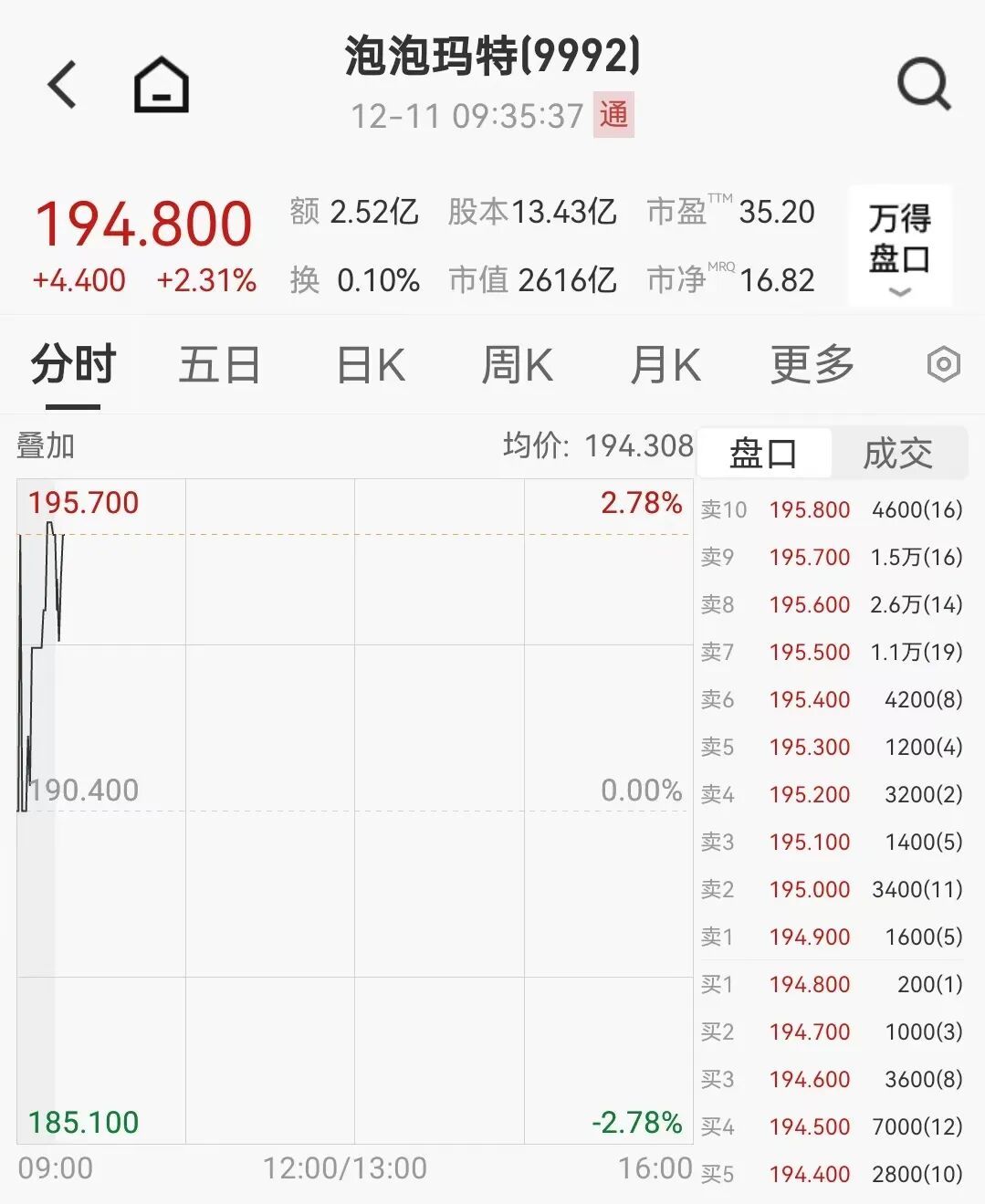
Core Viewpoint - Pop Mart has announced significant personnel changes following a sharp decline in its stock price, with the appointment of Wu Yue as a non-executive director and the resignation of He Yu due to other work commitments [1][7]. Group 1: Personnel Changes - Wu Yue, former president of LVMH Greater China, has been appointed as a non-executive director effective December 10, with a three-year term and an annual fixed cash salary of HKD 1.2 million and a share-based salary of HKD 1.8 million [3]. - He Yu has resigned from his position as a non-executive director, effective December 10, 2025, and the company expressed gratitude for his contributions during his tenure [7]. Group 2: Stock Performance - Following the announcement of the personnel changes, Pop Mart's stock price surged over 2% in early trading on December 11 [1]. - As of December 10, Pop Mart's stock price had dropped over 45% from its peak of HKD 339.8 in August, with a market capitalization loss exceeding HKD 200 billion [8][9]. Group 3: Market Sentiment - There has been a rise in bearish sentiment towards Pop Mart, with short-selling amounts reaching HKD 1.092 billion, the highest in two years [9]. - Deutsche Bank downgraded Pop Mart's rating to "hold," citing concerns over the mass production of its core IP product, Labubu, which may signal a decline in demand [9]. - Morgan Stanley noted that Pop Mart is transitioning from explosive growth to sustainable growth, predicting a significant slowdown in revenue growth for the Labubu IP by 2026 [9]. Group 4: Future Outlook - Some investment institutions remain optimistic about Pop Mart's growth potential, with Citigroup believing that the value of Labubu has not been fully realized and that new versions and film adaptations could drive future growth [10]. - The consumer team at Cinda Securities views Pop Mart as a well-balanced company in terms of business model, growth, and valuation, despite current pressures on consumer growth styles [10].
牵手LVMH高管,泡泡玛特如何打开新的想象空间
Mei Ri Jing Ji Xin Wen· 2025-12-11 09:54
Core Viewpoint - The recent appointment of Wu Yue from LVMH as a non-executive director at Pop Mart, alongside the exit of a partner from Black Ant Capital, is seen as a strategic move during a period of over 40% stock price decline, aiming to boost confidence and potentially signal a deeper transformation for the company [2][3][6]. Group 1: Company Strategy and Transformation - Pop Mart's rise is characterized as a typical "new consumption narrative" in China, leveraging strong IP incubation capabilities and a mature blind box business model to cater to the emotional needs of the younger generation [3][4]. - The company is shifting focus from merely selling toys to offering "emotional value," but faces scrutiny from investors regarding the sustainability of the collectible toy trend and the longevity of its IPs [3][4]. - The collaboration with LVMH is expected to enable Pop Mart to explore new avenues, such as transforming collectible toys into fashion accessories and integrating them into lifestyle contexts, thereby expanding the IP's value [4][6]. Group 2: Global Expansion and Market Positioning - Globalization is a clear strategic focus for Pop Mart, with recent store openings in the Middle East and plans for expansion in the UK and Canada, emphasizing the need for localized operations and cultural penetration [4][5]. - The company must adapt its product design and marketing narratives to resonate with local youth cultures in international markets, ensuring a deeper connection with consumers [5][6]. - Wu Yue's experience is anticipated to bridge LVMH's global market expertise with Pop Mart's agile retail network, facilitating a transition from merely having stores to establishing a strong brand presence in mature markets [6][7]. Group 3: Long-term Vision and Challenges - The appointment of Wu Yue is viewed as a long-term strategic upgrade rather than a short-term market management tactic, indicating Pop Mart's ambition to evolve from a "toy company" to a "global cultural company centered around IP" [6][7]. - The company faces challenges in balancing the fast fashion nature of collectible toys with the slower, more deliberate process of brand building, while also integrating agile innovation from the Chinese supply chain with established luxury industry practices [6][7].