DFAC(600006)

Search documents
ESG信披观察 | A股新能源汽车整车行业近七成企业披露碳排放数据,产品安全披露不足
Mei Ri Jing Ji Xin Wen· 2025-06-15 13:43
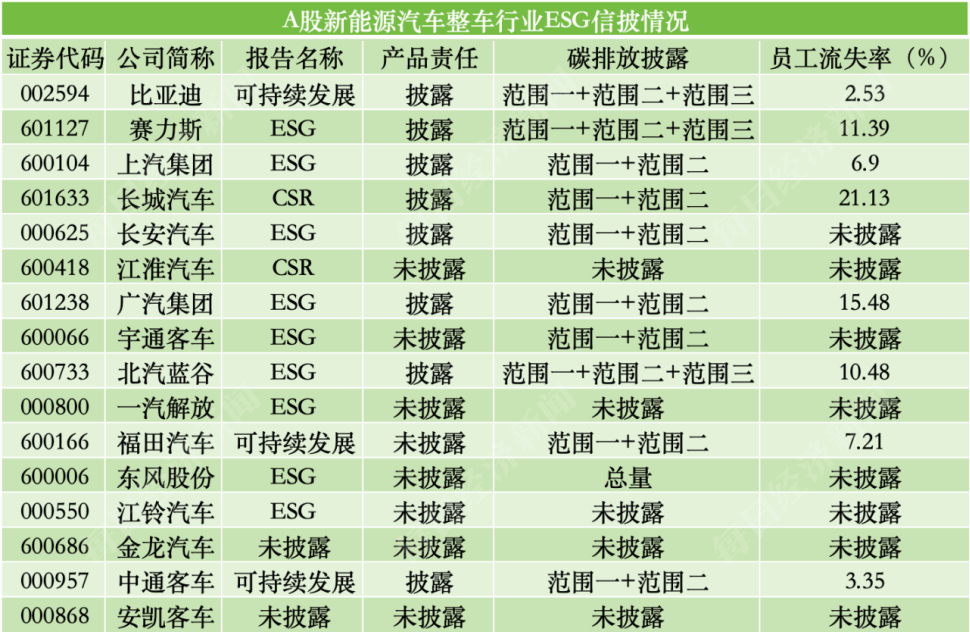
Core Viewpoint - The recent release of new models by leading electric vehicle companies has drawn significant market attention, highlighting the importance of ESG (Environmental, Social, and Governance) issues for the survival and development of these companies [1] ESG Disclosure Summary - Among the 16 listed companies in the A-share electric vehicle sector, 14 have disclosed ESG-related reports, resulting in a disclosure rate of 87.5%, which is significantly higher than the overall industry rate of 45.94% [1][2] - In terms of carbon emissions, 11 companies have disclosed relevant data, achieving a disclosure rate of 68.75%. However, only 3 companies have disclosed Scope 3 emissions data, resulting in a low disclosure rate of 18.75% [2][4] - The types of reports disclosed include 3 sustainability reports, 2 corporate social responsibility reports, and 9 ESG reports, with sustainability reports being favored due to their broader applicability [2] Product Responsibility and Employee Turnover - Eight companies have disclosed product responsibility-related issues, but the quantitative data on product quality, such as recall rates and customer complaints, is limited [6][8] - Employee turnover rates have been disclosed by 8 companies, with Great Wall Motors reporting the highest turnover rate. However, most companies only report voluntary turnover rates, with little information on involuntary turnover [9] Challenges in Carbon Emission Disclosure - The ability to disclose carbon emissions varies among companies, with larger firms having more leverage to require suppliers to provide data. Smaller companies may lack this capability, affecting their disclosure practices [4][5] Market Dynamics and ESG Importance - The high ESG disclosure rates among electric vehicle companies are partly driven by the need to meet international sustainability standards, especially for those exporting to Europe [1][2]




想要60天内结款,车企供应商还得过6道关
阿尔法工场研究院· 2025-06-15 11:39
Core Viewpoint - The commitment of car manufacturers to a maximum payment term of 60 days for suppliers is a response to the revised "Regulations on Payment for Small and Medium Enterprises" effective June 1, 2025, but suppliers express skepticism about the effectiveness of this change due to existing operational hurdles and potential price reductions tied to these commitments [4][6][32]. Group 1: Commitment to Payment Terms - Multiple car manufacturers, including major players like GAC, BYD, and NIO, have publicly committed to a maximum payment term of 60 days for suppliers [2]. - In addition to the 60-day payment term, some manufacturers like SAIC and BAIC have pledged not to use commercial acceptance bills, which can increase financial pressure on suppliers [3][38]. - The new regulations stipulate that large enterprises must pay small and medium enterprises within 60 days of delivery, with no conditions tied to third-party payments [6]. Group 2: Supplier Concerns - Despite the commitment to better payment terms, suppliers are frustrated with the numerous hurdles they face in receiving payments, including complex approval processes and lengthy verification stages [7][20]. - Suppliers report that the bidding process has become increasingly competitive and challenging, with frequent re-bidding and price pressures that erode profit margins [16][19]. - The verification process for payments is often cumbersome, with suppliers facing difficulties in confirming project completion and receiving timely payments [25][30]. Group 3: Payment Mechanisms - Suppliers express strong dissatisfaction with the use of commercial acceptance bills, preferring bank acceptance bills due to their better liquidity and lower costs [34][35]. - The reliance on acceptance bills can create additional financial burdens for suppliers, as they may face challenges in discounting these bills [36]. - The commitment from manufacturers to avoid commercial acceptance bills is seen as a more genuine effort to support suppliers compared to merely extending payment terms [38]. Group 4: Industry Dynamics - The financial dynamics of car manufacturers often involve significant liabilities to suppliers, which contrasts with foreign manufacturers that tend to owe more to banks and financial institutions [41]. - The rapid development of the automotive industry in China has led to a focus on cost-cutting at the expense of supplier relationships, highlighting a need for manufacturers to adopt a more collaborative approach [42][43]. - The overall sentiment in the industry suggests a desire for a more equitable and transparent competitive environment, as the current practices lead to mutual dissatisfaction among both manufacturers and suppliers [46].



5月新能源重卡销超1.5万辆渗透率创新高!徐工/三一/解放争冠 谁暴涨15倍?| 头条
第一商用车网· 2025-06-14 08:33
2025年4月份,国内新能源重卡销量达到创纪录的1.58万辆;5月份,新能源重卡市场又有一 项重要纪录被刷新! 请看第一商用车网的分析报道。 5月实销1.51万辆,同比暴涨190%,渗透率创史上最高 根据第一商用车网掌握的最新数据,2025年5月份,国内新能源重卡市场共计销售1.51万辆 (注:本文数据来源为交强险实销口径,不含出口和军车,下同),环比今年4月份下降5%, 同比则继续增长,增幅达到190%。从数字上看,今年5月份新能源重卡市场1.51万辆的销量 不仅是史上最高的5月份,放到整个新能源重卡发展史上看,也是高水准表现(史上第3高, 如下图。截止到2025年5月份,新能源重卡销量超过1.5万辆的月份仅有2025年4月份、 2024年12月份、2025年5月份和2025年3月份)。 上图还可见,就前5个月的表现来看,2025年新能源重卡市场不仅延续了2024年的火热状 态,甚至还要更火一些。2025年5月份,国内重卡市场整体实销6.31万辆,环比下降8%,同 比增长18%。5月份新能源重卡190%的同比增速继续大幅跑赢重卡市场整体增速。根据第一 商用车网掌握的数据,截止到2025年5月份,新能源重卡已 ...






牵引车5月销4.4万辆!重汽破万 解放/陕汽份额近20% 徐工/远程翻倍涨 | 头条
第一商用车网· 2025-06-13 07:06
Core Viewpoint - In May 2025, the heavy truck market achieved a total sales volume of approximately 88,700 units, reflecting a year-on-year growth of 14%. However, the tractor market, a significant segment of the heavy truck market, showed only a slight increase of 0.2% year-on-year, continuing to lag behind the overall market performance for three consecutive months [1][4][26]. Market Performance - The tractor market sold 43,500 units in May 2025, marking a month-on-month increase of 2% and a year-on-year increase of 0.2%. This is a recovery from a previous decline of 6% in April [3][4][10]. - Cumulatively, from January to May 2025, the tractor market recorded total sales of 221,300 units, which is a slight decrease of 3% compared to the same period last year [8][18]. Historical Trends - Over the past five years, the tractor market has exhibited a pattern of decline followed by growth in May sales. The sales volume in May 2025 ranks as the second highest in the last five years, but it is still significantly lower than the peak sales of 82,500 units in May 2021 [6][8]. Company Performance - In May 2025, China National Heavy Duty Truck Corporation (重汽) led the tractor market with sales of 11,800 units, capturing a market share of 27.14%. Other notable performers included FAW Jiefang (一汽解放) with 8,416 units and Shaanxi Automobile Group (陕汽集团) with 7,966 units [10][12]. - Among the top ten companies in the tractor market, nine experienced year-on-year sales growth, while only one company saw a decline of 26% [10][15]. Market Share Dynamics - The top ten companies in the tractor market accounted for 99.28% of total sales in May 2025, with the top five companies alone holding nearly 90% of the market share [15][23]. - The market share of the leading companies has shifted slightly, with notable increases for companies like Xugong (徐工) and Farizon (远程), which saw year-on-year growth of 178% and 121%, respectively [20][23]. Future Outlook - The heavy truck market is expected to continue evolving, with the tractor market's performance in June 2025 being closely monitored to see if it can outperform the overall heavy truck market [26].

1.85亿元公交车招标结果揭晓 谁中标?| 头条
第一商用车网· 2025-06-13 02:41
Core Viewpoint - The Wuhan Public Transport Group has announced the candidates for the 2025 bus vehicle renewal procurement project, which includes a total of 299 vehicles across seven lots, with a maximum budget of 185.2026 million yuan [1][4]. Group 1: Procurement Project Overview - The procurement project is divided into seven lots, with a total vehicle demand of 299 units and a maximum budget of 185.2026 million yuan [1][4]. - Each lot has different vehicle specifications and requirements, including electric buses of various sizes and configurations [14][15]. Group 2: Winning Candidates by Lot - Lot 1: 80 units of 12-meter pure electric city buses, with the top three candidates being Dongfeng Motor Corporation (96.77 million yuan/unit), Nanjing King Long Bus Co., Ltd. (96.98 million yuan/unit), and BYD Auto Industry Co., Ltd. (96.98 million yuan/unit) [3][4][14]. - Lot 2: 27 units of 11-meter pure electric highway buses, with the top three candidates being Wuhan Bus Manufacturing Co., Ltd. (86.97 million yuan/unit), Geely Sichuan Commercial Vehicle Co., Ltd. (86.28 million yuan/unit), and Zhongtong Bus Holding Co., Ltd. (83 million yuan/unit) [3][4][16]. - Lot 3: 27 units of 11-meter pure electric highway buses, with the top three candidates being CRRC Times Electric Vehicle Co., Ltd. (83.35 million yuan/unit), Zhongtong Bus Holding Co., Ltd. (83.38 million yuan/unit), and Geely Sichuan Commercial Vehicle Co., Ltd. (83.3 million yuan/unit) [3][4][16]. - Lot 4: 30 units of 7-meter low-entry pure electric city buses, with the top three candidates being Guotang Automobile Co., Ltd. (67.9 million yuan/unit), Geely Sichuan Commercial Vehicle Co., Ltd. (67.95 million yuan/unit), and Nanjing King Long Bus Co., Ltd. (67.98 million yuan/unit) [3][4][16]. - Lot 5: 30 units of 7-meter low-entry pure electric city buses, with the top three candidates being BYD Auto Industry Co., Ltd. (65.95 million yuan/unit), Dongfeng Motor Corporation (65.9 million yuan/unit), and Nanjing King Long Bus Co., Ltd. (65.98 million yuan/unit) [3][4][16]. - Lot 6: 100 units of 5-meter pure electric city buses, with the top three candidates being Nanjing King Long Bus Co., Ltd. (18.19 million yuan/unit), Yutong Bus Co., Ltd. (18.185 million yuan/unit), and BYD Auto Industry Co., Ltd. (18.19 million yuan/unit) [3][4][16]. - Lot 7: This lot was declared void due to insufficient bidders [3][4][16]. Group 3: Evaluation and Timeline - The evaluation of the bids took place on June 9, 2025, and the public announcement of the candidates was made on June 10, 2025, with a public notice period of three days [18][21].

“右舵”市场集体秀肌肉,内地11家车企亮相香港国际车博会
Di Yi Cai Jing· 2025-06-12 11:46
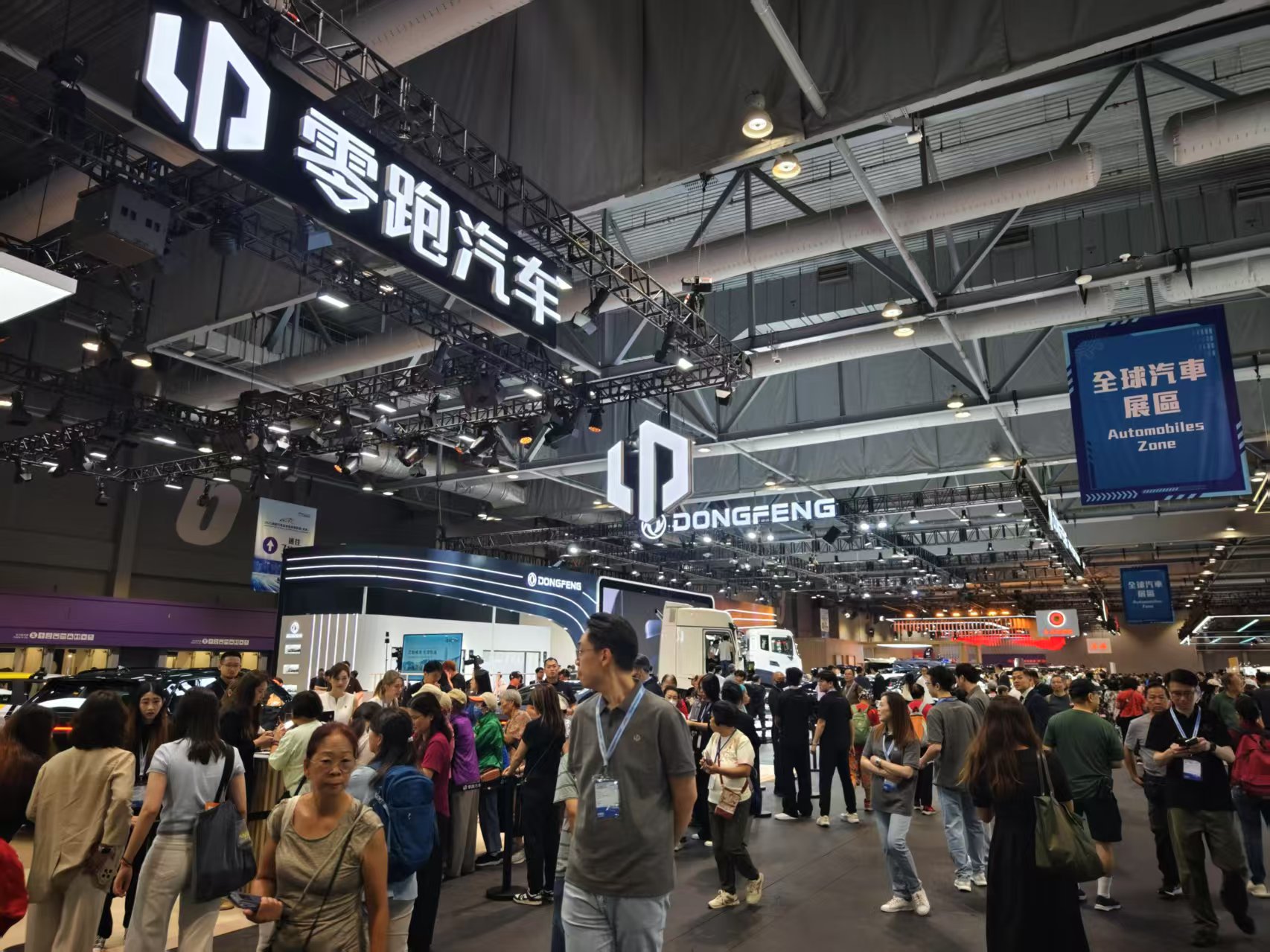
Core Viewpoint - The auto expo in Hong Kong showcases the strength of Chinese automakers, highlighting their advancements in electric vehicles and technology, while also serving as a strategic platform for global expansion [1][8]. Group 1: Event Overview - The auto expo, themed "New Cars, New Journey," covers over 55,000 square meters with seven core exhibition areas, including global automotive, supply chain, and innovation technology [2]. - Eleven major Chinese automakers, including SAIC, BYD, and Dongfeng, participated, alongside new entrants like Leap Motor and Xpeng [1][4]. Group 2: Featured Vehicles and Technologies - BYD showcased popular models such as SEALION 7, SEAL, and ATTO 3, while Changan presented its new energy brands [4]. - Chery Group made a significant impact with its largest-ever exhibition outside mainland China, focusing entirely on new energy vehicles and showcasing advanced technologies like high-efficiency engines and intelligent solutions [4][5]. Group 3: Market Trends and Government Policies - The Hong Kong government has implemented tax reduction policies for electric vehicles under HKD 500,000, significantly boosting sales [6]. - From January to April 2023, the registration of electric vehicles in Hong Kong reached 8,916, with a penetration rate of 68%, led by BYD's SEALION 07 EV [6]. Group 4: Strategic Importance of Hong Kong - Hong Kong is positioned as a crucial gateway for Chinese automakers to enter international markets, leveraging its unique geographical and financial advantages [8][9]. - The city aims to become a hub for innovation and technology, connecting local enterprises with global capital and resources [9][10]. Group 5: Future Aspirations - Companies like Chery and Xpeng express intentions to utilize Hong Kong as a launchpad for international capital markets and advanced technology deployment [10].



5月跳楼价活埋价中,十大佬六小龙地位渐稳
汽车商业评论· 2025-06-12 09:51
Core Viewpoint - The article discusses the recent developments in the Chinese automotive market, highlighting the government's intervention to curb price wars and promote high-quality industry growth through measures such as regulating supplier payment terms [4][6]. Group 1: Market Trends and Performance - From January to April, the profit margin of the Chinese automotive industry was 4.1%, increasing to 4.4% in April, compared to 3.9% in Q1 and 3.5% in March, indicating a positive trend [7]. - In May, the retail sales of passenger vehicles reached 1.932 million units, a year-on-year increase of 13.3% and a month-on-month increase of 10.1%, surpassing the level of 1.81 million units in May 2018 [9]. - Cumulative retail sales from January to May reached 8.811 million units, up 9.1% year-on-year [9]. Group 2: Sales Data and Company Performance - In the first five months, sales of Chinese brand passenger vehicles reached 7.562 million units, a year-on-year increase of 26.3%, accounting for 68.8% of total passenger vehicle sales [10]. - The top ten automotive groups sold 10.708 million units in total, representing 84% of the overall market, with varying performance among individual companies [11]. - In May, BYD sold 382,476 units, a year-on-year increase of 15.35%, while SAIC Group sold 366,000 units, up 10.25% [13][14]. Group 3: Competitive Landscape - The article notes that some companies engaged in aggressive pricing strategies, leading to a temporary surge in market activity, but this has raised concerns about sustainability [12]. - The sales performance of major companies varied, with some like Geely and Changan showing significant growth, while others like GAC and Dongfeng experienced declines [14][39]. - New energy vehicle sales are highlighted as a key growth area, with companies like Changan and BYD reporting substantial increases in this segment [29][37].


60天账期,给恶性竞争浇一盆冷水
3 6 Ke· 2025-06-12 09:09
Core Viewpoint - An increasing number of automotive companies have committed to a payment term of no more than 60 days for suppliers, responding to regulatory changes aimed at alleviating cash flow pressures in the supply chain [1][2]. Group 1: Industry Commitments - As of now, 15 automotive companies, including GAC Group, China FAW, Dongfeng Motor, NIO, Li Auto, Xiaomi Auto, Geely, BYD, Chery, Changan, Seres, BAIC, SAIC, Leap Motor, and Jianghuai Automobile, have pledged to keep payment terms within 60 days [1]. - SAIC and BAIC have not only committed to the 60-day payment term but also stated they will not use commercial acceptance bills, which can increase financial pressure on suppliers [1]. Group 2: Regulatory Context - The 60-day payment term aligns with the revised "Regulations on the Payment of Funds to Small and Medium-sized Enterprises" issued by the State Council, which took effect on June 1, requiring large enterprises to pay small and medium-sized enterprises within 60 days of delivery [1][2]. - The regulations also prohibit forcing small and medium-sized enterprises to accept non-cash payment methods, such as commercial bills, to prevent the extension of payment cycles [1]. Group 3: Current Payment Practices - Historically, payment terms for suppliers in the joint venture era did not exceed three months, but current practices have extended average payment terms to over 170 days, with some exceeding 240 days [3]. - Some Tier 1 suppliers report payment terms extending beyond eight months, and upstream suppliers often face even longer terms, exacerbating financial strain on smaller suppliers [3]. Group 4: Challenges with Commercial Bills - Commercial bills, which can have a redemption period of 3-6 months, force suppliers to choose between longer payment terms and accepting discounted payments [4][5]. - The discount rates for commercial bills can be significantly high, with some reaching up to 11% for six-month periods, further impacting suppliers' cash flow [4]. Group 5: Ambiguities in Payment Terms - Despite commitments to a 60-day payment term, there are ambiguities regarding when this term begins, as it can vary based on delivery, acceptance, and invoicing processes [6][7]. - Suppliers have expressed skepticism about the sincerity of these commitments, viewing them as potentially empty promises, given the historical context of payment practices in the industry [7].
车企账期承诺:薛定谔的“60天”
Hu Xiu· 2025-06-12 07:29
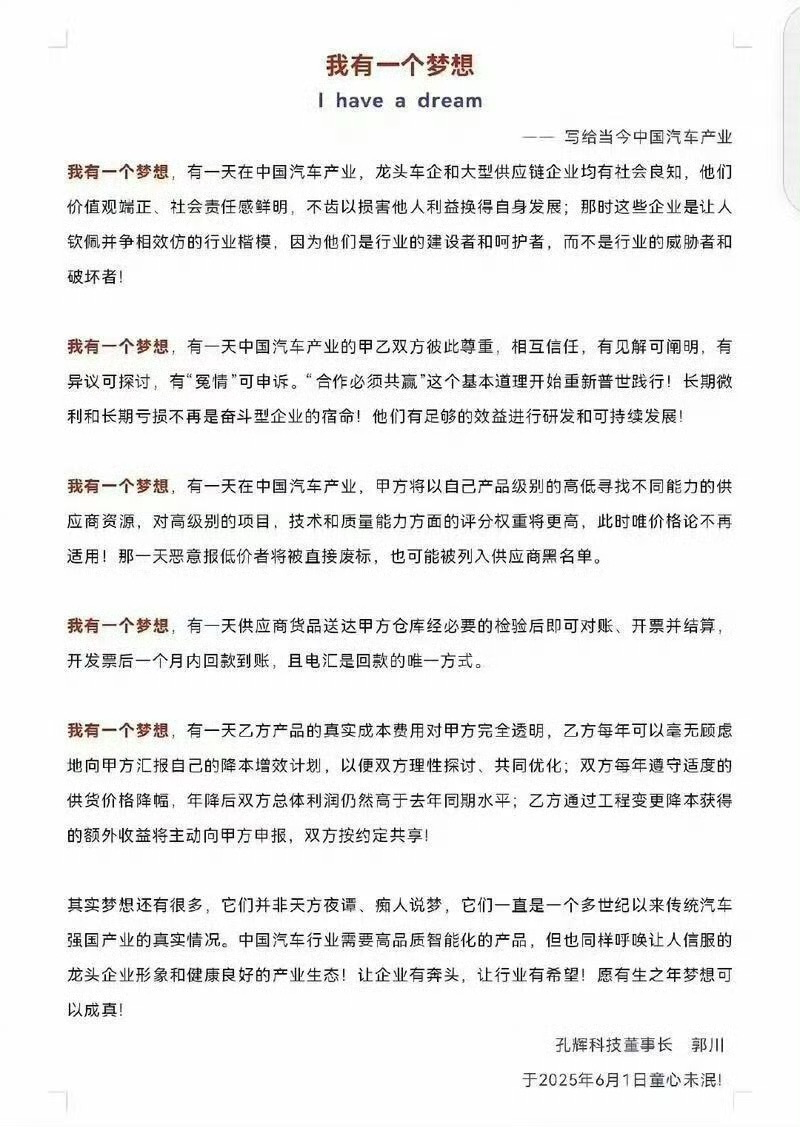
Core Viewpoint - The automotive supply chain is under significant pressure due to prolonged payment terms, with 17 automakers committing to a 60-day payment period, raising questions about the effectiveness of this solution in alleviating supply chain stress [1][5]. Summary by Sections Payment Terms and Supply Chain Pressure - The accounts receivable in the automotive parts industry have been increasing significantly since 2014, with some companies seeing a tenfold increase over a decade [1]. - Major automakers like BYD, Great Wall, and SAIC have accounts payable turnover days of 145, 153, and 177 days respectively, which is notably higher than companies like Tesla and General Motors [1]. - The extended payment terms allow automakers to engage in price wars, shifting financial pressure onto suppliers who face increasing operational challenges [1]. Implementation of the 60-Day Commitment - The 60-day payment commitment does not guarantee that suppliers will receive payments within this timeframe, as it often refers to the issuance of promissory notes rather than cash payments [2]. - The payment process is fragmented, and suppliers may still face delays in receiving actual cash, especially if payments are made via commercial acceptance bills [2][3]. - Cash payments are preferred by suppliers, but most automakers typically use acceptance bills, which prolong the payment cycle [2]. Impact on Suppliers and Industry Dynamics - The implementation of commercial acceptance bills can exacerbate the financial strain on smaller suppliers, as these bills often require further processing before cash is received [3]. - The recent regulations aimed at protecting small and medium enterprises prohibit forcing them to accept non-cash payment methods, yet many automakers still rely on these methods [3]. - The automotive industry is experiencing a downward pressure on prices, with steel manufacturers reporting that automakers are demanding price reductions exceeding 10%, which is unsustainable for suppliers [6]. Future Outlook and Industry Culture - The ongoing price wars and extended payment terms indicate that the internal competition within the automotive industry remains unresolved, with pressure cascading down the supply chain [5][7]. - There is a call for a shift in industry culture towards mutual respect and transparency between automakers and suppliers, emphasizing the need for sustainable practices and fair pricing [8][9].


促进汽车产业健康可持续发展 17家重点车企承诺“支付账期不超60天”
Yang Shi Wang· 2025-06-12 07:17
Group 1 - Key Point 1: Seventeen major automotive companies, including FAW, Dongfeng, GAC, and Seres, have committed to a payment term not exceeding 60 days, which is seen as a significant step for the sustainable development of the automotive industry [1][7] - Key Point 2: The commitment from automotive companies reflects a proactive response to national calls and demonstrates corporate social responsibility, contributing to a collaborative ecosystem between vehicle manufacturers and parts suppliers [1][5] - Key Point 3: The automotive supply chain is crucial for the industry's transformation and upgrading, with increasing competition in the electric vehicle market leading to longer payment cycles and financial difficulties for suppliers [3][5] Group 2 - Key Point 1: The Ministry of Industry and Information Technology supports vehicle manufacturers in fulfilling their commitments and encourages the establishment of stable partnerships with supply chain companies to enhance resilience and safety in the supply chain [5][7] - Key Point 2: The recent revision of the "Regulations on Guaranteeing Payment to Small and Medium Enterprises" limits large enterprises' payment terms to a maximum of 60 days, which is expected to improve the business environment for SMEs and boost market confidence [7] - Key Point 3: The automotive industry is currently at a critical stage of high-quality development, and there is a call for industry self-discipline and support from all sectors to foster a positive and orderly development environment [5][7]