BSU(600010)

Search documents
两大龙头提价!稀土板块“王者归来”,机构高频调研股出炉
Zheng Quan Shi Bao Wang· 2025-10-13 11:42
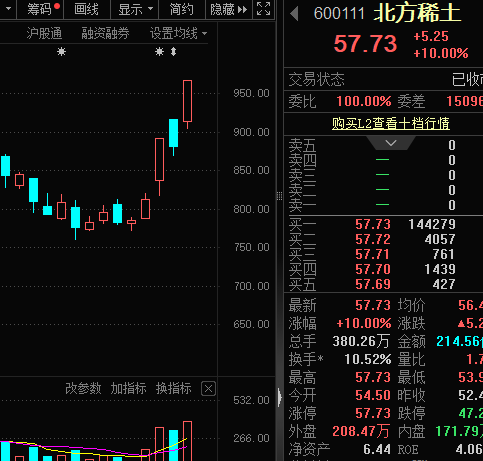
Market Overview - On October 13, the A-share market opened lower but rebounded, with the Shanghai Composite Index dropping over 2.4% at one point before closing down 0.19% [1] - The ChiNext Index fell more than 4.4% during the day but ended with a decline of 1.11% [1] - Total market turnover was 2.37 trillion yuan, a decrease of nearly 160 billion yuan compared to the previous trading day [1] Sector Performance - The electronic, power equipment, and non-ferrous metals sectors had the highest trading volumes, each exceeding 200 billion yuan [1] - Notable stocks included Northern Rare Earth (600111) with a turnover of 21.46 billion yuan, closing at a historical high, and ZTE Corporation with a turnover of 19.32 billion yuan, up 3.21% [1] Rare Earth Sector Dynamics - Two leading rare earth companies, Baogang Group and Northern Rare Earth, announced a price increase for rare earth concentrate for Q4 2025, raising the price to 26,205 yuan/ton, a 37% increase from the previous quarter [6][7] - This marks the fifth consecutive price increase for rare earth concentrate, with previous prices being 17,782 yuan, 18,618 yuan, 18,825 yuan, and 19,109 yuan, reflecting increases of 6.2%, 4.7%, 1.1%, and 1.5% respectively [7] Supply and Demand Trends - The Ministry of Commerce and the General Administration of Customs announced new export controls on rare earths, enhancing China's strategic control over the industry [8] - The rare earth sector is experiencing a supply-demand resonance, with increased demand for key elements like praseodymium and neodymium driven by global green transitions and dual carbon goals [8] Stock Performance - As of October 13, rare earth permanent magnet concept stocks have seen an average increase of 76.35% this year, with Northern Rare Earth leading at a 172.39% increase [9][12] - Northern Rare Earth expects a net profit of 1.51 to 1.57 billion yuan for the first three quarters of 2025, a year-on-year increase of 272.54% to 287.34% [12] Institutional Interest - Northern Rare Earth has been the most frequently researched stock by institutions this year, with 40 research sessions [13][14] - Other notable stocks receiving institutional attention include Baogang Group and Kinglong Magnet, with 22 and 16 research sessions respectively [13][14]


主力资金 | 尾盘抢筹6股超亿元
Sou Hu Cai Jing· 2025-10-13 11:17
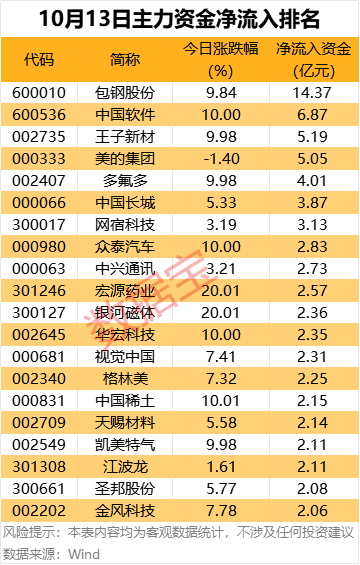
Core Viewpoint - The A-share market experienced significant fluctuations on October 13, with major indices opening lower but recovering throughout the day. The overall trend showed a net outflow of 39.864 billion yuan in main funds, while six industries saw net inflows, particularly in steel, environmental protection, and agriculture [1][2]. Group 1: Industry Performance - The A-share market saw a net outflow of 39.864 billion yuan in main funds, with six industries experiencing net inflows, including steel with 0.892 billion yuan, and environmental protection, agriculture, and light manufacturing each exceeding 0.2 billion yuan [1]. - The electronic and power equipment industries faced the largest net outflows, each exceeding 6 billion yuan, while the automotive and machinery sectors also saw outflows exceeding 3 billion yuan [1]. Group 2: Individual Stock Performance - Seven stocks received net inflows exceeding 0.3 billion yuan, with Baogang Co. leading at 1.437 billion yuan, followed by China Software with 0.687 billion yuan. Baogang Co. saw a significant increase due to active trading in the rare earth sector [2][3]. - A total of 44 stocks experienced net outflows exceeding 0.2 billion yuan, with BYD, Luxshare Precision, and Dongfang Wealth each seeing outflows exceeding 0.7 billion yuan [4][5]. Group 3: Tail-End Fund Flows - At the end of the trading day, the main funds saw a net inflow of 4.031 billion yuan, with the non-ferrous metal industry attracting over 1 billion yuan in buying [6]. - Individual stocks such as New Yi Sheng, ZTE, and North Rare Earth saw net inflows exceeding 0.1 billion yuan in the tail-end trading [7]. Group 4: Earnings Forecasts - Changchuan Technology announced an earnings forecast for the first three quarters, expecting a net profit of 0.827 to 0.877 billion yuan, representing a year-on-year growth of 131.39% to 145.38%, driven by strong demand in the semiconductor market [8].





揭秘涨停丨封板超330万手,稀土龙头获大资金抢筹
Zheng Quan Shi Bao Wang· 2025-10-13 11:00
Core Insights - The article highlights significant trading activity in the stock market, particularly focusing on companies involved in rare earth elements and advanced manufacturing technologies, indicating strong investor interest and potential growth in these sectors. Group 1: Rare Earth Sector - Baogang Co. saw a trading limit with a total order volume of 9.24 billion yuan, leading the market in rare earth stocks [2] - The Ministry of Commerce announced export controls on rare earth-related technologies, which may impact supply dynamics and pricing [2] - North Rare Earth announced an adjustment in the trading price of rare earth concentrates to 26,205 yuan per ton for Q4 2025, indicating a price increase [3] Group 2: Advanced Manufacturing Technologies - Companies like XGL Electronic and KMT Gas are involved in the production of advanced materials for photolithography, which is crucial for semiconductor manufacturing [4] - The controlled nuclear fusion sector is seeing increased activity, with companies like Hezhu Intelligent participating in the manufacturing of core components [5][6] Group 3: Market Activity - A total of 13 stocks saw net purchases exceeding 100 million yuan, with China Rare Earth and others attracting significant institutional investment [7] - The net buying amounts for key stocks included 2.03 billion yuan for Canxin Co. and 1.77 billion yuan for Duofluor, indicating strong market confidence [7]

巨震之下!乱世“稀土+黄金”
Xin Lang Cai Jing· 2025-10-13 10:49
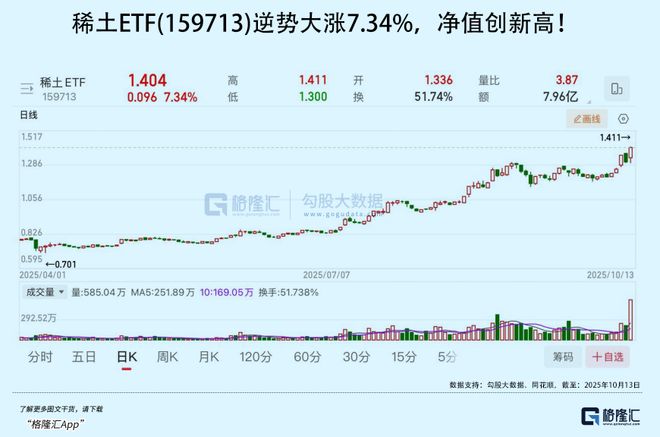
Group 1: Rare Earth Industry - The strategic value of rare earths is highlighted as an irreplaceable "countermeasure" in geopolitical conflicts, especially in the context of U.S.-China trade tensions [6][7]. - China's recent strict export controls on rare earths, including a ban on core technology exports, have raised expectations that controlling or halting rare earth exports to the U.S. could be a significant retaliatory measure [8][9]. - The global supply of rare earths is dominated by China, which accounts for over 60% of production and 85% of refining capacity, creating a significant barrier for other countries attempting to establish their own supply chains [14][15]. - The demand for rare earths is driven by the global energy revolution and technological advancements, particularly in electric vehicles, wind energy, and military applications [12][13]. - Recent price surges in rare earth materials, such as dysprosium and praseodymium, have led to significant increases in orders for leading companies in the sector, reflecting a clear price increase logic [19][20]. - The performance of companies in the rare earth sector, such as Northern Rare Earth and Shenghe Resources, has shown substantial profit growth, with Northern Rare Earth projecting a net profit increase of 272.54%-287.34% year-on-year [21][22]. Group 2: Gold Market - Gold has emerged as a key focus in the market, reaching historical highs due to its status as a safe-haven asset amid rising geopolitical tensions and market volatility [27][28]. - Factors supporting the rise in gold prices include expectations of interest rate cuts by the Federal Reserve and a global trend towards "de-dollarization," leading to increased central bank purchases of gold [28][30]. - The Gold ETF (518680) has shown strong performance, with a net asset growth of 52.07% over the past year, making it the top-performing gold ETF in the market [30][32]. - The low management and custody fees of the Gold ETF, along with its T+0 trading capability, make it an attractive option for investors seeking to hedge against market uncertainties [32]. - The combination of rare earths and gold represents a dual strategy for investors, with rare earths focusing on growth opportunities and gold providing stability and protection against market fluctuations [33].

巨震之下!乱世“稀土+黄金”
格隆汇APP· 2025-10-13 10:27
Group 1: Rare Earths - The strategic value of rare earths is highlighted as an irreplaceable "countermeasure" in geopolitical conflicts, particularly in the context of US-China trade tensions [8][14]. - The recent announcement of strict export controls on rare earths by the Chinese government has significantly increased market expectations for potential export restrictions to the US, driving up the prices and interest in rare earth stocks [16][39]. - Demand for rare earths is expected to surge due to global energy transitions and technological advancements, particularly in electric vehicles, wind energy, and military applications [20][23][31]. - China dominates the global rare earth supply chain, controlling over 60% of production and 85% of refining capacity, creating a significant barrier for other countries attempting to establish their own supply chains [25][27]. - Recent price increases for rare earths have been substantial, with prices for certain elements like dysprosium and praseodymium skyrocketing, reflecting the supply-demand imbalance [32][34]. Group 2: Gold - Gold prices have reached historical highs, driven by increased demand for safe-haven assets amid geopolitical tensions and economic uncertainty [43][45]. - Factors supporting gold price increases include expectations of interest rate cuts by the Federal Reserve and a global trend towards "de-dollarization," leading central banks to diversify their reserves [44]. - The performance of gold ETFs, particularly the gold ETF (518680), has been strong, with significant net inflows and a high annual growth rate, making it an attractive investment option [48][50]. - The strategic role of gold in investment portfolios is emphasized, with recommendations for a substantial allocation to hedge against risks associated with credit assets [46]. Group 3: Investment Opportunities - Both rare earths and gold are identified as key strategic assets in the current market environment, offering unique investment opportunities amid ongoing geopolitical and economic uncertainties [51][53]. - The contrasting roles of rare earths as a growth asset and gold as a defensive asset provide investors with a balanced approach to navigating market volatility [51][52].

数据复盘丨稀土永磁、可控核聚变等概念走强 龙虎榜机构抢筹18股
Zheng Quan Shi Bao Wang· 2025-10-13 10:04
Market Overview - The Shanghai Composite Index closed at 3889.50 points, down 0.19%, with a trading volume of 1,085.4 billion yuan. The Shenzhen Component Index fell 0.93% to 13231.47 points, with a trading volume of 1,269.34 billion yuan. The ChiNext Index decreased by 1.11% to 3078.76 points, with a trading volume of 578.01 billion yuan. The STAR Market 50 Index rose by 1.4% to 1473.02 points, with a trading volume of 111.6 billion yuan. The total trading volume for both markets was 2,354.738 billion yuan, a decrease of 160.531 billion yuan from the previous trading day [1]. Sector Performance - Among industry sectors, non-ferrous metals, steel, environmental protection, national defense and military industry, and banking showed the highest gains. In contrast, sectors such as automobiles, home appliances, beauty care, media, pharmaceuticals, oil and petrochemicals, education, and insurance experienced significant declines [3]. - The main stocks that hit the daily limit were concentrated in non-ferrous metals, electronics, construction decoration, computers, and chemicals [3]. Capital Flow - The net outflow of main funds in the Shanghai and Shenzhen markets was 39.864 billion yuan, with the ChiNext experiencing a net outflow of 15.796 billion yuan. The CSI 300 index saw a net outflow of 10.045 billion yuan, while the STAR Market had a net outflow of 3.957 billion yuan [6]. - Six sectors saw net inflows, with the steel sector leading at a net inflow of 0.892 billion yuan. Other sectors with net inflows included environmental protection, agriculture, forestry, animal husbandry, and fishery, and light industry manufacturing [6]. Individual Stock Performance - A total of 1613 stocks experienced net inflows, with 62 stocks receiving over 1 billion yuan in net inflows. Baogang Co. had the highest net inflow of 1.437 billion yuan, followed by China Software, Wangzi New Materials, and Midea Group [9][10]. - Conversely, 3532 stocks faced net outflows, with 107 stocks seeing over 1 billion yuan in net outflows. BYD had the largest net outflow of 1.502 billion yuan, followed by Luxshare Precision, Dongfang Wealth, and Ningde Times [13][14]. Institutional Activity - Institutional investors had a net buying of approximately 280 million yuan, with 18 stocks seeing net purchases. The stock with the highest net purchase was Canxin Co., with a net inflow of about 203 million yuan [17][18]. - The stocks with the highest net selling by institutions included Huahong Semiconductor, with a net outflow of approximately 361 million yuan, followed by Ganfeng Lithium and Tianji Co. [17].

两市主力资金净流出381.69亿元 电力设备行业净流出居首
Zheng Quan Shi Bao Wang· 2025-10-13 09:31
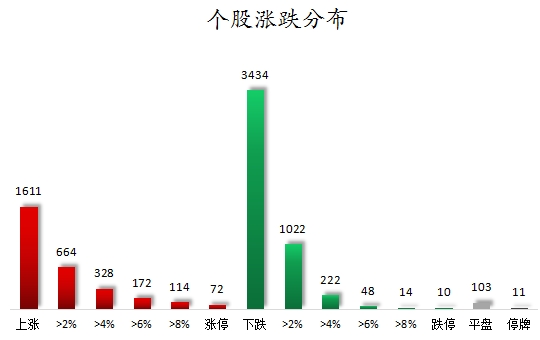
Market Overview - On October 13, the Shanghai Composite Index fell by 0.19%, the Shenzhen Component Index decreased by 0.93%, and the ChiNext Index dropped by 1.11% [1] - The Shanghai and Shenzhen 300 Index declined by 0.50% [1] - Among the tradable A-shares, 1,684 stocks rose, accounting for 31.05%, while 3,634 stocks fell [1] Capital Flow - The main capital experienced a net outflow of 38.169 billion yuan, marking the fourth consecutive trading day of net outflows [1] - The ChiNext saw a net outflow of 14.297 billion yuan, while the Sci-Tech Innovation Board had a net outflow of 3.681 billion yuan [1] - The Shanghai and Shenzhen 300 constituent stocks faced a net outflow of 10.916 billion yuan [1] Industry Performance - Among the 28 primary industries classified by Shenwan, 6 industries saw gains, with the non-ferrous metals and environmental protection sectors leading with increases of 3.35% and 1.65%, respectively [1] - The automotive and home appliance sectors had the largest declines, with decreases of 2.33% and 1.74% [1] Industry Capital Inflows - Nine industries experienced net inflows, with the steel industry leading at a net inflow of 1.351 billion yuan and a daily increase of 1.49% [3] - The non-ferrous metals sector followed with a net inflow of 1.087 billion yuan and a daily increase of 3.35% [3] Industry Capital Outflows - A total of 22 industries faced net outflows, with the electric equipment sector leading at a net outflow of 7.198 billion yuan and a daily decline of 0.68% [2] - The electronics sector also saw significant outflows, with a net outflow of 7.140 billion yuan and a slight decline of 0.05% [2] Individual Stock Performance - A total of 1,604 stocks experienced net inflows, with 552 stocks having inflows exceeding 10 million yuan [3] - The stock with the highest net inflow was Baogang Co., which rose by 9.84% with a net inflow of 1.860 billion yuan [3] - Conversely, stocks with the largest net outflows included BYD, with a net outflow of 1.508 billion yuan, followed by Sailis and Dongfang Wealth [3]

30股特大单净流入资金超2亿元
Zheng Quan Shi Bao Wang· 2025-10-13 09:18
Market Overview - The two markets experienced a net outflow of 17.085 billion yuan, with 30 stocks seeing a net inflow exceeding 200 million yuan, led by Baogang Co. with a net inflow of 2.436 billion yuan [1] - The Shanghai Composite Index closed down by 0.19%, with 1,682 stocks seeing net inflows and 3,060 stocks seeing net outflows [1] Industry Performance - Among the 10 industries with net inflows, the non-ferrous metals sector had the highest net inflow of 2.234 billion yuan, with an index increase of 3.35%. The steel industry followed with a net inflow of 2.090 billion yuan and a 1.49% increase [1] - A total of 21 industries experienced net outflows, with the automotive sector leading with a net outflow of 4.185 billion yuan, followed by the power equipment sector with a net outflow of 3.656 billion yuan [1] Individual Stock Performance - The top 30 stocks with net inflows over 200 million yuan included Baogang Co. (2.436 billion yuan), China Software (1.451 billion yuan), and Northern Rare Earth (869 million yuan) [2] - Stocks with significant net outflows included BYD with a net outflow of 1.176 billion yuan, followed by Sailyis and Dongfang Caifu with outflows of 922 million yuan and 892 million yuan, respectively [2][4] Stock Price Movements - Stocks with net inflows over 200 million yuan saw an average increase of 9.36%, outperforming the Shanghai Composite Index. Notable performers included Galaxy Magnetic Materials and Hongyuan Pharmaceutical, which closed at their daily limit [2] - The top stocks with net inflows and their respective price changes included Baogang Co. (+9.84%), China Software (+10.00%), and Northern Rare Earth (+10.00%) [2] Summary of Net Inflows and Outflows - The ranking of stocks with the highest net inflows included: - Baogang Co. (2.436 billion yuan) - China Software (1.451 billion yuan) - Northern Rare Earth (869 million yuan) [2] - The ranking of stocks with the highest net outflows included: - BYD (-1.176 billion yuan) - Sailyis (-922 million yuan) - Dongfang Caifu (-892 million yuan) [4]
钢铁行业资金流入榜:包钢股份等6股净流入资金超千万元
Zheng Quan Shi Bao Wang· 2025-10-13 09:16
Market Overview - The Shanghai Composite Index fell by 0.19% on October 13, with six industries experiencing gains, led by non-ferrous metals and environmental protection, which rose by 3.35% and 1.65% respectively [2] - The steel industry ranked third in terms of daily gains, increasing by 1.49% [2] Capital Flow - The main capital outflow from the two markets totaled 38.169 billion yuan, with nine industries seeing net inflows [2] - The steel industry had the highest net inflow of main capital, amounting to 1.351 billion yuan, followed by the non-ferrous metals industry with a net inflow of 1.087 billion yuan [2] Steel Industry Performance - The steel industry saw a total of 44 stocks, with 20 stocks rising and 20 stocks falling; two stocks hit the daily limit up [3] - Among the stocks with net inflows, 13 stocks had positive capital flow, with six stocks receiving over 10 million yuan in net inflow [3] - Baogang Co. led the net inflow with 1.860 billion yuan, followed by Hualing Steel and Dazhong Mining with net inflows of 17.177 million yuan and 15.225 million yuan respectively [3] Individual Stock Analysis - The top stocks in terms of capital flow included: - Baogang Co. with a daily increase of 9.84% and a turnover rate of 8.16%, receiving 1.860 billion yuan in main capital [3][4] - Hualing Steel with a decrease of 1.07% and a turnover rate of 1.53%, receiving 17.177 million yuan [3][4] - Dazhong Mining with an increase of 0.69% and a turnover rate of 1.85%, receiving 15.225 million yuan [3][4] - The stocks with the highest capital outflow included: - Guangdong Mingzhu with a net outflow of 79.2103 million yuan [3][4] - Hangang Co. with a net outflow of 64.1359 million yuan [3][4] - Chongqing Steel with a net outflow of 49.729 million yuan [3][4]

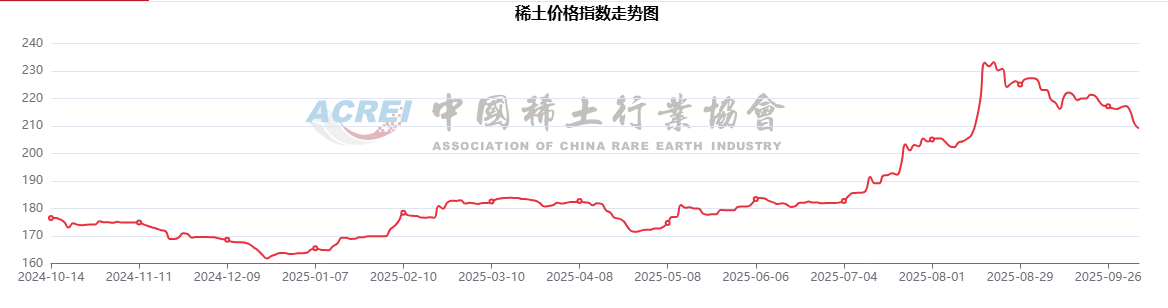
涨停潮!稀土板块引领沪指日内近百点反弹 后市仍需关注价格指数变化
Xin Hua Cai Jing· 2025-10-13 08:54
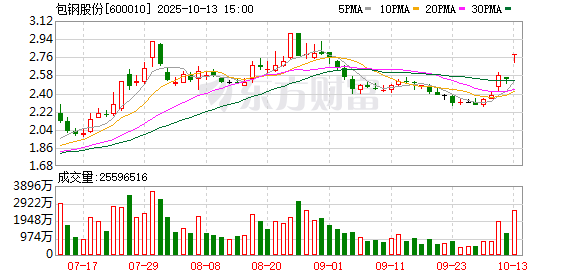
Core Viewpoint - Despite the impact of U.S. President Trump's tariff comments leading to a significant drop in the FTSE China A50 index, the A-share market showed resilience with only a slight decline, indicating strong market dynamics in the face of external pressures [1] Group 1: Market Performance - The A-share market experienced a minor decline of 0.19% after a significant rebound from an initial drop, with the Shanghai Composite Index nearly recovering to positive territory [1] - The rare earth permanent magnet sector led the market, with 19 stocks in the sector hitting the daily limit or rising over 10% [1] Group 2: Policy and Regulatory Changes - The Ministry of Commerce, in conjunction with the General Administration of Customs, announced new measures to strengthen rare earth export controls, including increased regulation on five categories of medium and heavy rare earths [1][2] - The recent policy changes expand the scope of export controls to include technologies and equipment related to the entire rare earth industry chain, impacting sectors such as semiconductors and artificial intelligence [2] Group 3: Price Adjustments and Forecasts - Industry leaders North Rare Earth and Baotou Steel announced a price increase for rare earth concentrates, with the new price set at 26,205 yuan per ton (excluding tax), reflecting a 37.13% increase from the previous quarter [1] - North Rare Earth projected a net profit of 1.51 to 1.57 billion yuan for the first three quarters of 2025, representing a year-on-year growth of 272.54% to 287.34% [1] Group 4: Demand and Supply Dynamics - The demand for rare earths is expected to grow due to the rapid development of emerging sectors such as wind power, electric vehicles, and robotics, which are supported by government policies [3] - The rare earth price index remains above levels seen in early August, despite a recent decline, indicating potential for future price stability [3][4]