
CITIC Securities Co., Ltd.(600030)

Search documents
中信证券:地缘冲突强化油运周期动能 2026年油轮龙头利润有望创新高
智通财经网· 2026-03-03 01:00
Core Viewpoint - The report from CITIC Securities indicates that structural opportunities in oil shipping valuations and assets are expected to continue, driven primarily by supply chain restructuring due to geopolitical conflicts, which is becoming the core driver of the current oil shipping cycle [1]. Group 1: Geopolitical Impact on Oil Shipping - The Strait of Hormuz accounts for approximately 30% of global crude oil and petrochemical transportation, and any fluctuations in this area are likely to act as a "bullish option" for the tanker cycle, with VLCCs (Very Large Crude Carriers) leading in elasticity [1]. - Historical analysis shows that geopolitical conflicts often lead to a rapid short-term increase in VLCC rates and valuations, suggesting that current VLCC rates and valuations may further rise, with the potential for accelerated disruptions [2][8]. - Geopolitical factors are becoming the dominant influence on oil shipping rates and valuations, with increased concentration among overseas shipowners reshaping the pricing mechanism for oil tankers [1][8]. Group 2: Future Projections and Market Dynamics - According to EIA data, in Q1 2025, crude oil transported through the Strait of Hormuz to China accounted for 46% of China's imports, indicating a significant shift in trade routes due to geopolitical tensions [14]. - The report anticipates that the profits of leading oil tanker companies may reach new highs by 2026, driven by the ongoing geopolitical dynamics and the resulting adjustments in supply chains [2][8]. - The concentration of VLCC capacity is expected to reach historic highs, with the pricing mechanism being restructured, enhancing shipowners' bargaining power and potentially leading to increased operational cash flow for fleets [8]. Group 3: Historical Context and Rate Changes - During the Gulf War, VLCC TCE (Time Charter Equivalent) rates surged from $27,400 per day in November 1990 to a peak of $65,300 per day by February 1991, highlighting the significant impact of energy security concerns on shipping rates [2]. - As of March 1, 2026, one-year charter rates have surpassed $100,000 per day, with spot rates for TD3C approaching historical highs of nearly $200,000 per day, indicating a robust market for VLCCs [2]. - The report notes that geopolitical events have historically influenced oil shipping rates, with significant increases observed in rates following conflicts, such as the Russian-Ukrainian conflict and the recent tensions in the Red Sea [19].

中信证券:伊朗地缘冲突强化油运周期动能,2026年油轮龙头利润有望创新高
Ge Long Hui· 2026-03-03 00:56
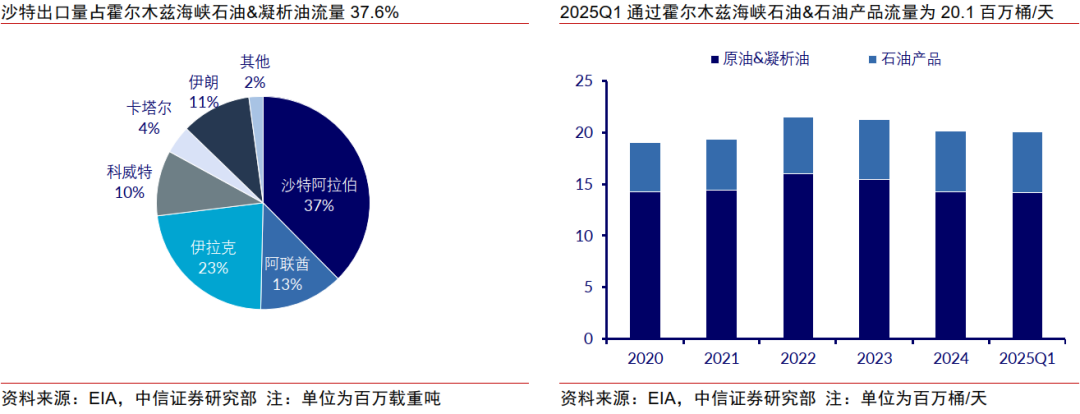
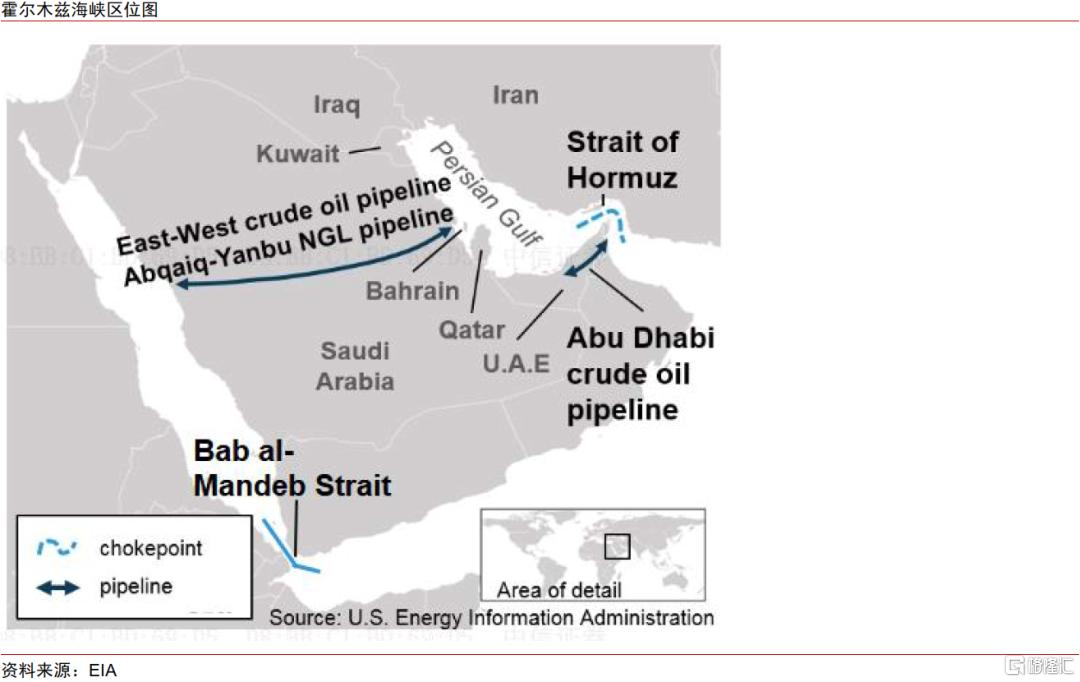
Core Insights - Geopolitical factors are becoming the dominant influence on oil shipping cycle rates and valuations, with overseas shipowners driving concentration increases that are reshaping the pricing mechanism for oil tankers [1][2][10] - The weekly rental rate for VLCCs surpassed $100,000 per day as of March 1, 2026, with the TD3C spot rate approaching a historical high of nearly $200,000 per day [1][2] - The formation of a quasi-alliance among shipowners and major traders, including Sinokor, MSC, and Trafigura, has led to a significant control of VLCC capacity, potentially exceeding 25% of global VLCC capacity [1][10] Group 1: Geopolitical Influence - Historical analysis shows that geopolitical conflicts often lead to rapid short-term increases in VLCC rates and valuations, with current conditions suggesting further potential for price increases [2][10] - The Strait of Hormuz is a critical global energy passage, with EIA data indicating that crude oil and condensate flows account for 35.9% of global shipping volume, primarily directed towards Asian countries [2][14] - Geopolitical tensions are expected to drive up premiums and create imbalances in regional supply and demand, serving as accelerators for rapid price increases [2][10] Group 2: Market Dynamics - The concentration of VLCC capacity is expected to reach historic highs, with the pricing mechanism being reshaped as shipowners gain enhanced bargaining power [10][20] - The operational difficulties for non-compliant vessels under geopolitical tensions are increasing, making compliant capacity more desirable [10][20] - Clarksons projects that 35 VLCCs are scheduled for delivery in 2026, but if geopolitical conflicts persist, operational efficiency in the Iranian market may decline significantly [10][20] Group 3: Supply Chain and Demand Shifts - In Q1 2025, crude oil transported through the Strait of Hormuz accounted for 46% of China's imports, indicating a shift in trade routes due to geopolitical tensions [14][20] - The ongoing geopolitical conflicts are expected to reshape supply chains, accelerating the shift towards compliant oil transportation demands in East Asia [14][20] - Data from customs indicates a significant shift in China's crude oil import structure, with increased imports from the Middle East and the Americas, while imports from Malaysia and the U.S. have decreased [14][19] Group 4: Investment Strategy - The structural opportunities in oil shipping valuations and asset structures are expected to continue, driven by supply chain restructuring due to geopolitical conflicts [20] - The Strait of Hormuz, which handles about 30% of global crude and petrochemical transport, is likely to become a bullish indicator for the tanker cycle in the event of disruptions [20] - The pricing mechanism for oil shipping is undergoing a transformation, with seasonal characteristics diminishing, and geopolitical events reinforcing cyclical momentum [20]

中信证券:互认基金最新获批,QDII基金有望扩容
Xin Lang Cai Jing· 2026-03-03 00:14
Core Viewpoint - The report from CITIC Securities indicates that by the end of 2025, the scale of QDII funds is expected to reach 804.6 billion yuan, representing a year-on-year growth of 59.8%, with significant growth in funds tracking indices like the Hang Seng Tech [1] Group 1: QDII Fund Growth - The scale of QDII funds is projected to reach 804.6 billion yuan by the end of 2025, marking a 59.8% increase year-on-year [1] - New issuances are primarily focused on products related to the Hong Kong market, with a wide range of investment fields and diverse industries [1] - In the past five years, an additional QDII quota of 321 billion yuan has been estimated, which is expected to further promote the development of QDII funds [1] Group 2: Market Performance - The Asia-Pacific market is expected to lead global performance in 2025, with gold prices increasing by 65.7% amid a global trend of de-dollarization, leading to sustained market interest in gold [1] - The latest scale of mutual recognition funds in Hong Kong stands at 265.9 billion yuan, with the first batch of four products approved by the end of February 2026, indicating potential for future expansion [1] Group 3: Regulatory Changes - The usage of public QDII quotas is undergoing optimization and adjustment, with a tilt towards public products [1]
中信证券:云南发布重磅绿氢补贴政策 或提升全国性政策预期
Di Yi Cai Jing· 2026-03-03 00:13
Core Viewpoint - The report from CITIC Securities highlights the introduction of significant subsidies for green hydrogen projects in Yunnan Province, which is expected to enhance the profitability of local green hydrogen and green fuel projects and raise expectations for national hydrogen energy support policies [1] Group 1: Policy Measures - Yunnan Province has released measures to promote the consumption of green electricity, including a subsidy of up to 13 RMB/kg for qualifying green hydrogen projects [1] - The policy encourages local initiatives focused on carbon reduction in refining and chemical industries, promoting integrated projects involving green hydrogen, ammonia, and sustainable aviation fuel (SAF) [1] Group 2: Market Implications - The unprecedented subsidy level is anticipated to significantly improve the profitability of green hydrogen and green fuel projects in the region [1] - There is an expectation that this move will enhance market sentiment regarding national hydrogen energy support policies [1] Group 3: Investment Recommendations - It is suggested to pay attention to investment operators of green hydrogen and ammonia projects, as well as manufacturers of electrolyzers [1]
前2月12家券商分8.3亿承销保荐费 中金夺冠中信证券第2
Zhong Guo Jing Ji Wang· 2026-03-02 23:15
Summary of Key Points Core Viewpoint - In the first two months of 2026, a total of 17 companies were listed on the Shanghai Stock Exchange, Shenzhen Stock Exchange, and Beijing Stock Exchange, raising a total of 15.129 billion yuan in funds [1]. Group 1: Listing and Fundraising - Among the 17 listed companies, 5 were from the main boards of Shanghai and Shenzhen, 4 from the Sci-Tech Innovation Board, and 8 from the Beijing Stock Exchange [1]. - The top fundraising company was Zhenstone Co., Ltd., which raised 2.919 billion yuan, followed by Electric Science Blue Sky and Hengyun Chang, which raised 1.645 billion yuan and 1.561 billion yuan respectively [1]. Group 2: Underwriting and Sponsorship Fees - A total of 12 securities firms participated in the underwriting and sponsorship of the newly listed companies, earning a combined fee of 829.16 million yuan [1][2]. - China International Capital Corporation (CICC) ranked first in underwriting fees, earning 252.9188 million yuan by sponsoring four companies [1]. - CITIC Securities and Guotou Securities ranked second and third, earning 131.1101 million yuan and 108.6250 million yuan respectively [1]. Group 3: Detailed Breakdown of Underwriters - The top five securities firms collectively earned 615 million yuan, accounting for 74% of the total underwriting fees in the first two months [2]. - A detailed breakdown of the underwriting fees includes: - CICC: 4 companies, 252.9188 million yuan - CITIC Securities: 2 companies, 131.1101 million yuan - Guotou Securities: 2 companies, 108.6250 million yuan - Guotai Junan: 1.5 companies, 64.7899 million yuan - Guolian Minsheng: 1 company, 57.1343 million yuan [3].
非银金融行业周报:利率引发保险调整,仍然看好非银板块长期表现
东方财富· 2026-03-02 10:50
Investment Rating - The report maintains an "Outperform" rating for the non-bank financial sector [2] Core Views - The non-bank financial sector is expected to show potential investment opportunities despite recent adjustments, particularly in the insurance segment, which is undergoing valuation adjustments due to interest rate changes [1][8] - The report highlights that the non-bank sector has experienced significant adjustments, suggesting that valuation levels are now attractive for potential investments [1][8] Summary by Sections 1. Securities Business Overview and Weekly Review - The China Securities Regulatory Commission (CSRC) has introduced new regulations for private fund information disclosure, effective from September 1, which aims to enhance transparency and reduce hidden risks in the private fund industry [14] - The report notes that the major indices showed mixed performance, with the non-bank financial index declining by 1.90% compared to the Shanghai Composite Index's increase of 1.08% [16][19] - The average price-to-book (PB) ratio for the securities sector is reported at 1.34, indicating it is at the 31st percentile of its historical range [18][41] 2. Insurance Business Overview and Weekly Review - A new policy has been introduced to systematically develop low-altitude insurance, addressing the growing demand for risk coverage in low-altitude flight activities [44][45] - The policy outlines a phased approach to establish a mandatory insurance system for unmanned aerial vehicles by 2027 and aims to create a comprehensive low-altitude insurance framework by 2030 [45][46] - The report anticipates that the implementation of this policy will create new growth opportunities for insurance companies, prompting them to develop innovative insurance products tailored to the low-altitude economy [46] 3. Market Liquidity Tracking - The report indicates that the central bank conducted a net withdrawal of 5,774 billion yuan in the open market during the week, with various monetary policy tools being utilized [53]


中信证券(600030) - 中信证券2026年2月证券变动月报表
2026-03-02 09:30
FF301 股份發行人及根據《上市規則》第十九B章上市的香港預託證券發行人的證券變動月報表 截至月份: 2026年2月28日 狀態: 新提交 公司名稱: 中信証券股份有限公司 ("本公司") 呈交日期: 2026年3月2日 I. 法定/註冊股本變動 | 1. 股份分類 | 普通股 | 股份類別 | H | | | 於香港聯交所上市 (註1) | | 是 | | | --- | --- | --- | --- | --- | --- | --- | --- | --- | --- | | 證券代號 (如上市) | 06030 | 說明 | | | | | | | | | | | 法定/註冊股份數目 | | | 面值 | | | 法定/註冊股本 | | | 上月底結存 | | | 2,620,076,855 | RMB | | 1 | RMB | | 2,620,076,855 | | 增加 / 減少 (-) | | | | | | | RMB | | | | 本月底結存 | | | 2,620,076,855 | RMB | | 1 | RMB | | 2,620,076,855 | | 2. 股份分類 | 普 ...
非银金融行业周报:利率引发保险调整,仍然看好非银板块长期表现-20260302
East Money Securities· 2026-03-02 08:37
Investment Rating - The report maintains an "Outperform" rating for the non-bank financial sector [2] Core Views - The non-bank financial sector is expected to show potential investment opportunities despite recent adjustments, particularly in the insurance segment, which is undergoing valuation adjustments due to interest rate changes [1][8] - The report highlights that the non-bank sector has experienced significant adjustments, suggesting that valuation levels are now attractive for potential investments [1][8] Summary by Sections 1. Securities Business Overview and Weekly Review - The China Securities Regulatory Commission (CSRC) has introduced new regulations for private fund information disclosure, effective from September 1, which aims to enhance transparency and reduce hidden risks in the private fund industry [14] - Major indices showed mixed performance, with the non-bank financial index declining by 1.90% compared to the Shanghai Composite Index's increase of 1.08% [16][19] - The average price-to-book (PB) ratio for the securities sector is reported at 1.34, indicating it is at the 31st percentile of its historical range [18][41] 2. Insurance Business Overview and Weekly Review - A new policy framework for low-altitude insurance has been established, aiming to create a comprehensive insurance system for low-altitude activities by 2030 [44][45] - The policy includes key initiatives such as mandatory insurance for unmanned aerial vehicles and the development of a product system covering the entire low-altitude industry chain [45][46] - The low-altitude insurance initiative is expected to open new growth avenues for the insurance industry, enhancing product development and risk management capabilities [46] 3. Market Liquidity Tracking - The central bank conducted a net withdrawal of 5,774 billion yuan in the open market during the week, indicating a tightening of liquidity conditions [53]
中信证券(06030) - 截至二零二六年二月二十八日止月份之股份发行人的证券变动月报表
2026-03-02 08:30
FF301 | 1. 股份分類 | 普通股 | 股份類別 | H | | | 於香港聯交所上市 (註1) | | 是 | | | --- | --- | --- | --- | --- | --- | --- | --- | --- | --- | | 證券代號 (如上市) | 06030 | 說明 | | | | | | | | | | | 法定/註冊股份數目 | | | 面值 | | | 法定/註冊股本 | | | 上月底結存 | | | 2,620,076,855 | RMB | | 1 | RMB | | 2,620,076,855 | | 增加 / 減少 (-) | | | | | | | RMB | | | | 本月底結存 | | | 2,620,076,855 | RMB | | 1 | RMB | | 2,620,076,855 | | 2. 股份分類 | 普通股 | 股份類別 | A | | 於香港聯交所上市 (註1) | | 否 | | | --- | --- | --- | --- | --- | --- | --- | --- | --- | | 證券代號 (如上市) | 600030 ...
中信证券:美伊以冲突爆发,看好中国军贸发展空间
Ge Long Hui· 2026-03-02 06:37
Core Insights - The article highlights the escalation of military conflict between the U.S., Israel, and Iran, which is expected to increase attention on military trade [2] - Global military spending has reached a record high, marking the tenth consecutive year of growth, with significant increases in Europe and the Middle East [3] - China's military trade is transitioning from low-end exports to high-end weaponry, with a notable increase in international competitiveness [4][6] Group 1: Military Conflict and Trade Implications - The recent military actions initiated by Israel against Iran have led to retaliatory strikes, escalating tensions in the region and potentially boosting military trade interest [2] - The conflict has prompted a surge in military spending, particularly in the Middle East, which may lead to increased demand for military equipment [3] Group 2: Global Military Spending Trends - In 2024, global military expenditure is projected to reach $2.7 trillion, reflecting a year-on-year increase of 9.4%, the highest since the Cold War [3] - European military spending has increased by 17%, while the Middle East has seen a 15% rise, indicating a regional focus on military preparedness [3] Group 3: China's Military Trade Developments - From 2019 to 2023, China accounted for 5.8% of global military trade exports, with 85% directed towards Asia-Pacific countries [4] - Pakistan remains the largest recipient of Chinese military exports, receiving 58% of total exports, highlighting China's strategic partnerships in the region [4] - China's military exports are increasingly focused on high-performance equipment, such as drones and missiles, which have gained international recognition [5][6] Group 4: Future Outlook for Chinese Military Trade - The ongoing geopolitical tensions may allow China to capture market share previously held by traditional military powers like the U.S. and Russia [7] - As China's international political standing improves, its military products are expected to gain further global market share [9]