CM BANK(600036)

Search documents
北向资金三季度持续加仓A股 科技制造板块获重点配置
Huan Qiu Wang· 2025-10-16 02:08
Group 1 - As of the end of Q3, the northbound capital's holdings in A-shares reached 2.58 trillion yuan, marking a growth of 12.9% and 15.59% compared to the end of Q2 and Q1 respectively, with a total increase of over 340 billion yuan in the first three quarters of this year [1][3] - The trend of increasing northbound capital strengthened further at the end of September, with ETF funds and northbound capital becoming the main sources of incremental market funds before the National Day holiday, while margin trading funds showed a seasonal net selling characteristic [3] - By the end of Q3, the top three industries in terms of northbound capital holdings were power equipment (443.803 billion yuan), electronics (391.523 billion yuan), and biomedicine (183.941 billion yuan), with banking and food & beverage industries dropping out of the top three compared to the end of Q2 [3] Group 2 - In Q3, northbound capital significantly flowed into the technology manufacturing sector, particularly in semiconductor equipment and AI computing-related segments, with the electronics industry seeing an increase of over 150 billion yuan in holdings and an increase of 1.821 billion shares [3] - The proportion of the electronics industry's holdings in total industry market value reached 15.17%, a substantial increase of 4.96 percentage points compared to the end of Q2, making it the highest growth among all industries [3] - As of the end of Q3, the top ten heavy stocks held by northbound capital included CATL, Kweichow Moutai, Midea Group, China Merchants Bank, Northern Huachuang, Huichuan Technology, Zijin Mining, Heng Rui Medicine, Yangtze Power, and Fuyao Glass, with Northern Huachuang, Heng Rui Medicine, and Fuyao Glass entering the top ten, while BYD, Ping An Insurance, and Mindray Medical exited [3]








买买买!险资,继续“扫货”!
券商中国· 2025-10-15 15:09
Core Viewpoint - China Ping An and its subsidiaries continue to increase their holdings in bank stocks, particularly in China Merchants Bank and Postal Savings Bank, reflecting a strategic investment approach in the banking sector [1][4][5]. Group 1: Investment Activities - On October 10, Ping An Life increased its holdings in China Merchants Bank by 2.989 million shares, raising its total to 781 million shares, which constitutes 17% of the bank's H-shares [1][2]. - On the same day, China Ping An purchased 6.416 million shares of Postal Savings Bank, increasing its holdings to 3.378 billion shares, representing 17.01% of the bank's H-shares [1][2]. - Since the beginning of the year, Ping An has been actively buying bank stocks, with a notable increase in its holdings in China Merchants Bank from 2.3 million shares in January to over 781 million shares by October [4][5]. Group 2: Broader Investment Strategy - Ping An's investment strategy includes a "sweeping" approach to acquiring bank and insurance stocks, indicating a strong confidence in these sectors [4][5]. - The company has also been increasing its stakes in Agricultural Bank of China, with holdings exceeding 19% when including its subsidiaries [4][5]. - Ping An's total expenditure on bank stocks this year has surpassed 100 billion HKD, reflecting a significant commitment to this investment strategy [5]. Group 3: Market Context and Trends - The insurance sector has seen a notable increase in stock holdings, with a reported 26.69% growth in the market value of stocks held by life insurance companies as of mid-year [8]. - Regulatory changes have facilitated greater investment from insurance funds into equities, allowing companies like Ping An to pursue larger investments in stable, high-dividend stocks [10]. - The overall performance of the A-share market has improved, leading to enhanced investment returns for insurance companies, which in turn supports their profitability [12][13].



托管撤单、代销份额下滑,银行基金业务步入“围城”
Bei Jing Shang Bao· 2025-10-15 14:04
Core Viewpoint - The banking sector is facing significant challenges in its fund sales business due to increased competition from internet platforms, changing investor behaviors, stricter regulations, and a shift towards quality-driven growth rather than scale-driven growth [1][11]. Group 1: Fund Custody Business - The entry barriers for fund custody qualifications have increased, leading to some small and medium-sized banks withdrawing their applications, with Guangzhou Bank being the latest to do so after over three years of waiting [4][5]. - The new regulatory requirements demand a net asset threshold of 500 billion yuan and a strong market presence, which many smaller banks struggle to meet, resulting in a concentration of custody business among larger financial institutions [5][6][7]. - The top five banks dominate the fund custody market, holding approximately 47.93% of the market share, making it increasingly difficult for smaller institutions to compete [7]. Group 2: Sales Channel Dynamics - The withdrawal of custody applications signals a strategic retreat from high-cost, low-return business models, as many banks are opting to focus on more profitable areas [8]. - There is a noticeable trend of fund companies terminating sales partnerships with smaller banks, indicating a shift towards more rational and concentrated channel strategies [9][10]. - As of mid-2024, the bank channel's share of equity fund holdings has declined from 44.81% to approximately 41.93%, reflecting a broader trend of diminishing influence in the market [9][10]. Group 3: Revenue Growth Challenges - The reliance on traditional revenue models based on scale and licensing is becoming unsustainable, prompting banks to adopt "price for volume" strategies to attract customers [11][12]. - While lowering fees can temporarily boost transaction volumes, it compresses banks' intermediary income, which is primarily derived from subscription fees [12]. - To achieve sustainable growth, banks need to transition from merely selling products to providing comprehensive services, enhancing customer engagement, and developing a robust advisory framework [13].



金融机构密集披露助贷“朋友圈” 行业合作迈向规范化
Zheng Quan Ri Bao Wang· 2025-10-15 13:09
Core Viewpoint - Financial institutions are responding to regulatory requirements by disclosing their partner institutions for internet lending, focusing on leading internet companies and listed fintech firms [1][2]. Group 1: Regulatory Changes - The National Financial Supervision Administration issued a notice on October 1 to enhance the management of internet lending by commercial banks, which has led to multiple banks disclosing their partner institutions [2]. - The notice mandates that banks implement a list management system for partner institutions, ensuring that only those on the list can engage in internet lending collaborations [4]. Group 2: Partner Institutions - Major internet companies such as Ant Group, Baidu, JD.com, and Meituan frequently appear on the disclosed "white lists" of partner institutions for banks and consumer finance companies [2][3]. - Specific consumer finance companies like Zhaolian Consumer Finance, Postal Savings Bank of China, and JD Consumer Finance have also released their lists of partner institutions, indicating a broad range of collaboration types including marketing, credit enhancement, and collection services [2][3]. Group 3: Industry Trends - The collaboration between financial institutions and lending partners is evolving from simple lead generation to comprehensive services including risk control and credit enhancement [3][4]. - Experts suggest that future collaborations will focus on compliance, ecosystem development, and restructuring relationships with leading lending platforms, emphasizing a shift from scale expansion to value cultivation [4][5].

外资大举买入!看多中国资产 电子等行业获环比加仓
Zheng Quan Shi Bao Wang· 2025-10-15 12:31
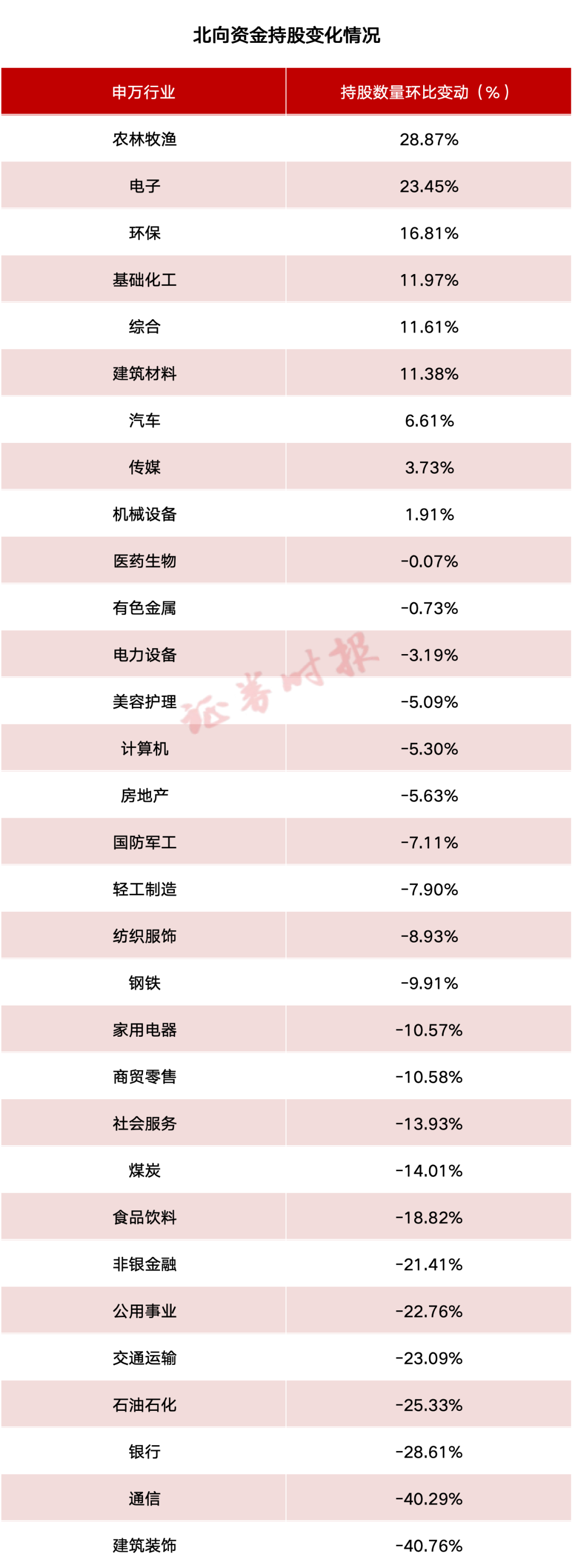
Core Insights - As of the end of Q3, northbound capital holdings in A-shares decreased by over 15 billion shares, but due to a favorable A-share market, the market value of these holdings increased by nearly 300 billion yuan [2] - The changes in northbound capital holdings reflect two major trends: valuation recovery driven by policy and structural adjustments against the backdrop of industrial upgrades [2] - Sectors such as technology and new energy are expected to become key areas for long-term foreign investment as China's economy continues to develop [2] Industry Analysis - The top five industries by northbound capital holdings as of Q3 are: banking (17.40 billion shares), electronics (9.58 billion shares), non-bank financials (7.48 billion shares), electric power equipment (7.24 billion shares), and non-ferrous metals (6.32 billion shares) [3] - Nine industries saw an increase in holdings, including agriculture, electronics, environmental protection, basic chemicals, comprehensive, building materials, automotive, media, and machinery equipment, with agriculture and electronics seeing increases of over 10% [4] - The electronics sector saw a significant increase in holdings, with a total of 9.58 billion shares, reflecting a 23.45% increase from the previous quarter [10] Key Stocks - Northbound capital continues to deepen its investment in core assets, with leading stocks like CATL, Kweichow Moutai, Midea Group, and China Merchants Bank being significant holdings [11] - As of Q3, CATL's holdings increased by 53.92 million shares, with a market value increase of 112.58 billion yuan, bringing the total market value to 265.66 billion yuan [11][13] - Kweichow Moutai saw a reduction of 11.82 million shares, leading to a decrease in market value by 14.56 billion yuan, with the latest market value at 88.14 billion yuan [14] Foreign Investment Sentiment - Global capital is reassessing the intrinsic value of Chinese assets, driven by a combination of factors including liquidity restructuring, economic resilience, and the rise of new productive forces [16] - UBS's CEO noted that China's macro policies and rapid development in high-tech sectors are boosting market confidence [16] - Morgan Stanley reported a rebound in foreign capital inflow into the Chinese stock market, reaching 4.6 billion USD in September, the highest monthly inflow since November 2024 [17]
基金公司限购黄金相关产品,工行、建行、招行等集体提示风险
2 1 Shi Ji Jing Ji Bao Dao· 2025-10-15 12:28
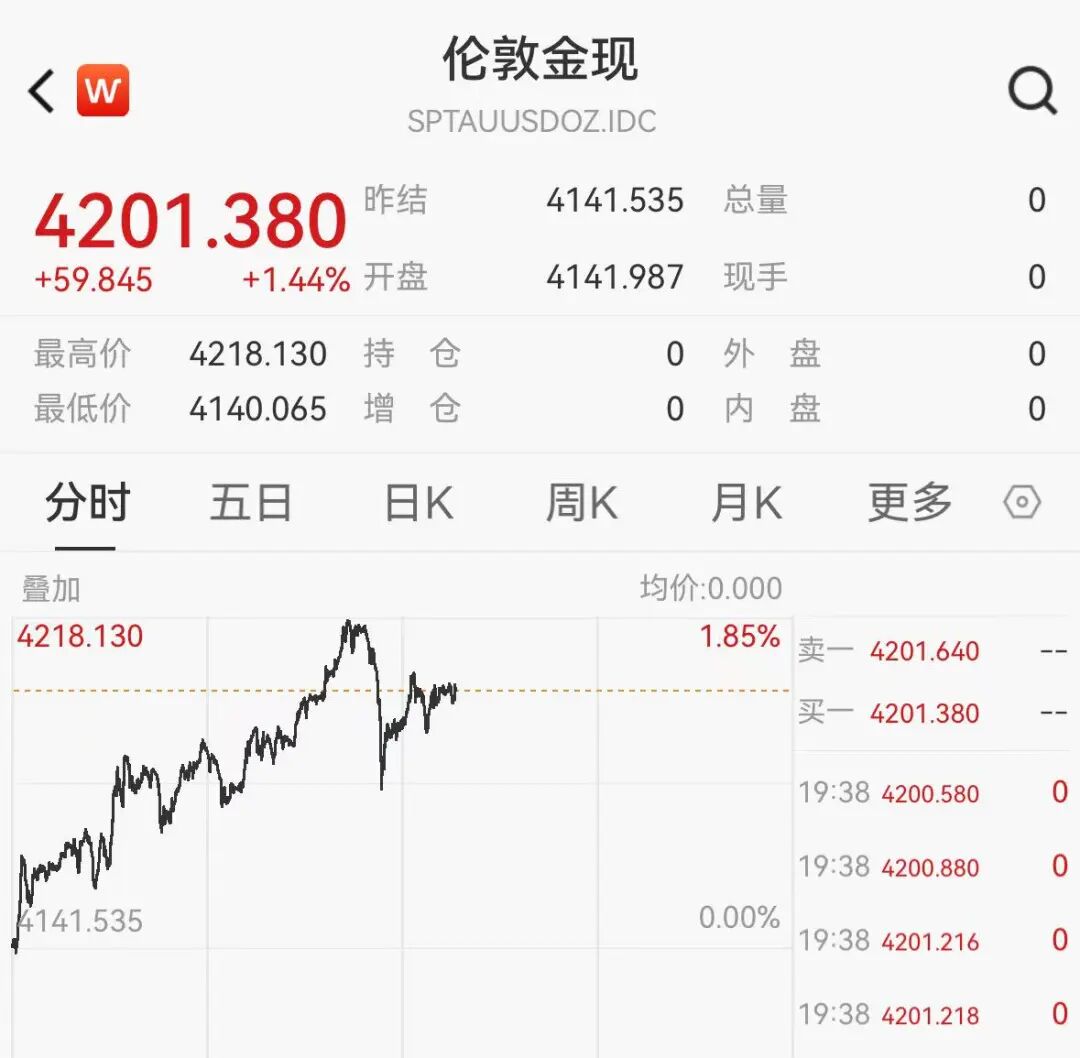
Core Viewpoint - Gold prices have reached new highs, peaking at $4,210 per ounce, indicating strong investor interest and potential overvaluation in the market [1][3]. Group 1: Gold Price Trends - As of October 15, gold prices have surged, with a peak of $4,218.13 per ounce and a daily increase of 1.44% [2]. - The average net asset value growth rate for gold-themed ETFs this year is 66%, with some ETFs seeing increases over 100% [7][8]. Group 2: Investor Sentiment - According to a recent Bank of America survey, 43% of investors view "going long on gold" as the most crowded trade, surpassing the 39% for "going long on the seven major U.S. stocks" [3][8]. - Despite the high interest in gold, the average allocation to gold among global investors is only 2.4%, indicating a discrepancy between sentiment and actual investment [8]. Group 3: Fund Management Actions - Due to the influx of capital into gold ETFs, several fund companies, including Huatai-PineBridge and Guotai Asset Management, have implemented large purchase limits on their gold-related funds [5][6]. - Huatai-PineBridge announced a limit of 20,000 RMB for single or cumulative purchases starting October 16, 2025, down from a previous limit of 50,000 RMB [5]. Group 4: Market Adjustments - Major banks have raised minimum investment amounts for gold accumulation products, with adjustments made by institutions like Industrial and Commercial Bank of China and Bank of China [10][11]. - The Shanghai Gold Exchange has also adjusted trading limits and margin requirements for gold and silver contracts, reflecting increased market volatility [12].



爆买,外资大举买入
Zheng Quan Shi Bao· 2025-10-15 12:23
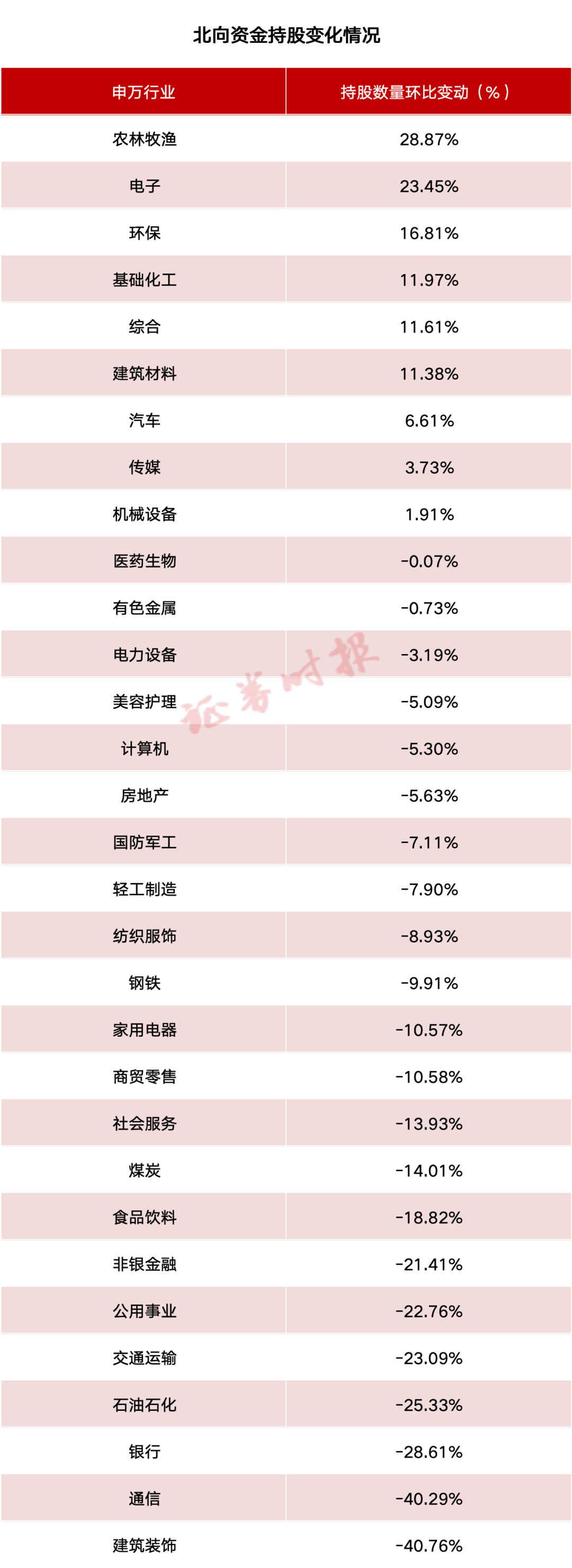
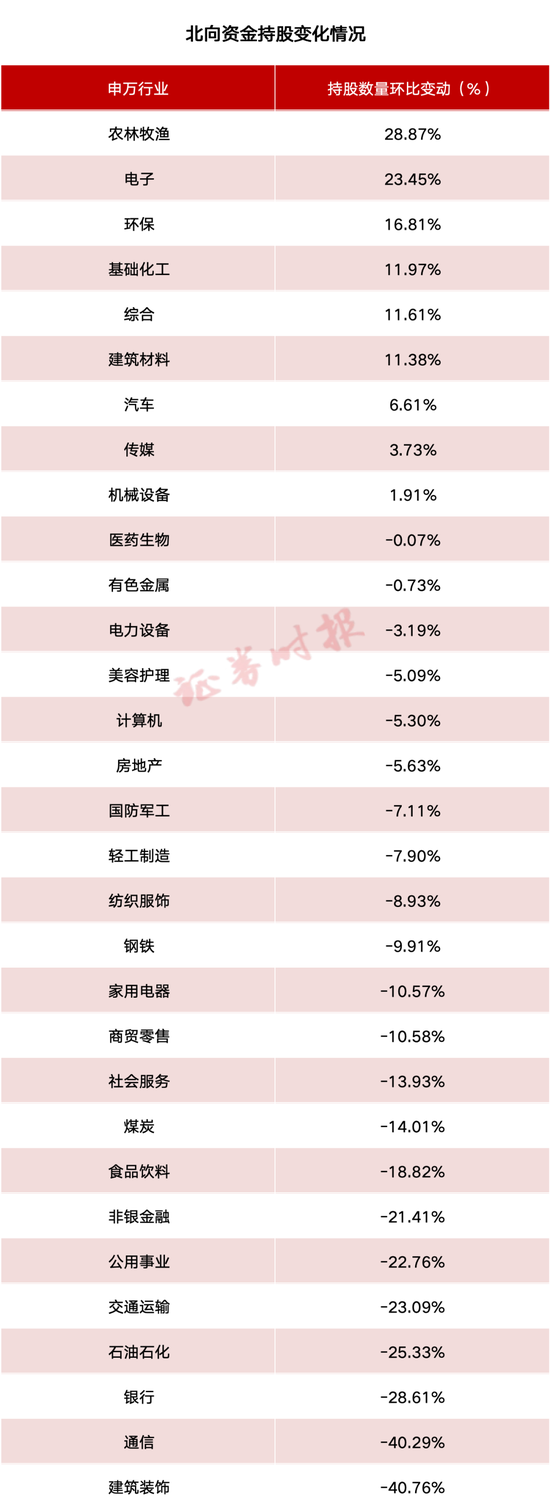
Core Insights - Northbound capital holdings in A-shares decreased by over 15 billion shares in Q3, but the market value of these holdings increased by nearly 300 billion yuan due to a favorable A-share market [1] - The changes in Northbound capital holdings reflect two major trends: valuation recovery driven by policy and structural adjustments under the backdrop of industrial upgrades [1] Industry Summary - The top five industries by Northbound capital holdings as of the end of Q3 are: Banking (174.02 billion shares), Electronics (95.83 billion shares), Non-bank Financials (74.76 billion shares), Power Equipment (72.41 billion shares), and Non-ferrous Metals (63.27 billion shares) [3] - Nine industries saw an increase in Northbound capital holdings, including Agriculture, Electronics, Environmental Protection, Basic Chemicals, Comprehensive, Building Materials, Automotive, Media, and Machinery Equipment, with Agriculture and Electronics seeing increases over 10% [3][6] - The Agriculture sector saw a 28.87% increase in holdings, with specific stocks like Zhengbang Technology and Muyuan Foods being favored [3][4] Stock Performance - In Q3, the Electronics sector attracted significant Northbound capital, with holdings increasing by 23.45% to 95.83 billion shares, including major stocks like BOE Technology and TCL Technology [8] - Conversely, stable high-dividend sectors like Banking and Oil & Gas saw significant reductions in holdings, with the Banking sector experiencing a 28.61% decrease [8] Major Holdings - Northbound capital continues to deepen its investment in core assets, with leading stocks like CATL, Kweichow Moutai, and Midea Group being key holdings [10] - As of the end of Q3, CATL's holdings increased by 539.23 million shares, with a market value rise of 112.58 billion yuan, reflecting a 60.02% increase in stock price [10][12] - Kweichow Moutai saw a reduction of 11.82 million shares, leading to a market value decrease of 14.56 billion yuan [12] Market Outlook - Global capital is reassessing the intrinsic value of Chinese assets, driven by a combination of global liquidity changes, China's economic resilience, and the rise of new productive forces [16] - Recent reports indicate a rebound in foreign capital inflow into the Chinese stock market, with net inflows reaching 4.6 billion USD in September, the highest since November 2024 [17]
爆买!外资大举买入!
Zheng Quan Shi Bao· 2025-10-15 12:20
Group 1 - As of the end of Q3, northbound funds held A-shares decreased by over 15 billion shares, but the market value of holdings increased by nearly 300 billion yuan due to a favorable A-share market [1] - The changes in northbound fund holdings reflect two trends: valuation recovery driven by policy and structural adjustments under the backdrop of industrial upgrades [1] - Growth sectors such as technology and new energy are expected to become key areas for long-term foreign investment allocation as China's economy continues to develop [1] Group 2 - The top five industries by the number of shares held by northbound funds at the end of Q3 are banking, electronics, non-bank financials, electric power equipment, and non-ferrous metals, with holdings of 17.40 billion, 9.58 billion, 7.48 billion, 7.24 billion, and 6.33 billion shares respectively [2] - Nine industries saw an increase in the number of shares held, including agriculture, electronics, environmental protection, basic chemicals, comprehensive, building materials, automotive, media, and machinery, with agriculture and electronics seeing increases of over 10% [2][4] - The electronics sector saw a significant increase in holdings, with northbound funds holding 9.58 billion shares, an increase of 1.82 billion shares or 23.45% from the previous quarter [8] Group 3 - The agriculture, forestry, animal husbandry, and fishery sector experienced a 28.87% increase in holdings, with a total of 1.18 billion shares held, reflecting a strong upward trend in this sector [4][3] - The electronic sector also saw a notable increase, with major companies like BOE Technology Group and TCL Technology receiving significant boosts in holdings [8] - Conversely, stable high-dividend sectors such as banking and oil and gas saw reductions in holdings, with the banking sector experiencing a decrease of 6.97 billion shares, a drop of 28.61% [9] Group 4 - Northbound funds continue to deepen their investment in core A-share assets, with major holdings including CATL, Kweichow Moutai, and Midea Group, which serve as the "ballast" for their portfolios [10] - CATL's stock holdings increased by 539.23 million shares, with a market value increase of 112.58 billion yuan, reflecting a strong performance in the electric vehicle battery market [10][12] - Kweichow Moutai saw a reduction in holdings by 11.82 million shares, leading to a decrease in market value by 14.56 billion yuan, indicating a shift in investment focus [12][13] Group 5 - Global capital is reassessing the intrinsic value of Chinese assets, driven by a combination of factors including the reshaping of global liquidity, the resilience of the Chinese economy, and the emergence of new productive forces [14] - Recent reports indicate a rebound in foreign capital inflows into the Chinese stock market, with net inflows reaching 4.6 billion USD in September, the highest since November 2024 [15]
China Merchants Bank Subsidiary Brings $3.8B Institutional Fund to BNB Chain
Yahoo Finance· 2025-10-15 12:18
Core Insights - CMB International (CMBIAM) has launched a $3.8 billion USD Money Market Fund on BNB Chain, represented by CMBMINT and CMBIMINT tokens, supported by DigiFT and OnChain [1][8] - The fund has been ranked 1 among Asia-Pacific peers by Bloomberg as of October 2025 and focuses on USD-denominated short-term deposits and high-quality money market instruments [1][2] Fund Performance - Since its inception in 2024, the fund has maintained consistent returns [2] Institutional Access and Blockchain Efficiency - Accredited investors can subscribe to the tokenized fund using fiat or stablecoins, with real-time redemption managed by proprietary liquidity management smart contracts from DigiFT [3] - The partnership allows CMBIAM to leverage BNB Chain's infrastructure to reach a broader global investor base securely and compliantly [4] Industry Trends - The launch is part of a broader trend of traditional financial products transitioning on-chain, following other major financial institutions that have adopted tokenization on BNB Chain [5] - BNB Chain is expanding its involvement with tokenized equities and has joined an alliance with Ondo's RWA platform to enhance access to tokenized stocks and real-world assets [6] Ecosystem Support - BNB Chain has taken steps to support users amid market volatility, including a $45 million airdrop to meme coin traders and a $300 million recovery initiative for traders affected by liquidations [7] Future Utility - The introduction of the CMBIAM fund adds a regulated, high-value real-world asset to BNB Chain, paving the way for new DeFi utility through planned integrations with protocols like Venus Protocol and ListaDAO [6][8]
爆买!外资大举买入!
证券时报· 2025-10-15 12:09
Core Viewpoint - The Northbound capital's holdings in A-shares decreased by over 15 billion shares in Q3, but due to a favorable market, the total market value of these holdings increased by nearly 300 billion yuan [2][4]. Group 1: Market Trends - The changes in Northbound capital holdings reflect two major trends: valuation recovery driven by policy and structural adjustments against the backdrop of industrial upgrades [2]. - The technology and new energy sectors are expected to become key areas for long-term foreign investment as China's economy continues to develop [2]. Group 2: Sector Performance - The top five sectors by Northbound capital holdings as of the end of Q3 are: Banking (17.40 billion shares), Electronics (9.58 billion shares), Non-bank Financials (7.48 billion shares), Power Equipment (7.24 billion shares), and Non-ferrous Metals (6.32 billion shares) [4]. - Nine sectors saw an increase in holdings, with Agriculture, Electronics, Environmental Protection, Basic Chemicals, Comprehensive, Building Materials, Automotive, Media, and Machinery Equipment all experiencing over 10% growth in holdings [5][6]. Group 3: Notable Increases and Decreases - The Agriculture sector saw a 28.87% increase in holdings, with significant investments in companies like Zhengbang Technology and Muyuan Foods [5][6]. - The Electronics sector also experienced a 23.45% increase, with major stocks like BOE Technology and TCL Technology receiving substantial investments [9]. - Conversely, sectors such as Banking (-28.61%), Oil and Petrochemicals (-25.33%), and Transportation (-23.09%) faced significant reductions in holdings [10][9]. Group 4: Key Stock Holdings - Northbound capital continues to deepen its investment in core assets, with leading stocks like CATL, Kweichow Moutai, and Midea Group being significant holdings [12][17]. - As of the end of Q3, CATL's holdings increased by 539.23 million shares, with a market value rise of 112.58 billion yuan, reflecting a 60.02% increase in stock price [15][12]. - Kweichow Moutai saw a reduction of 11.82 million shares, leading to a decrease in market value by 14.56 billion yuan [16][17]. Group 5: Foreign Investment Sentiment - Global capital is reassessing the intrinsic value of Chinese assets, driven by a combination of factors including liquidity restructuring and the resilience of the Chinese economy [19][20]. - Recent reports indicate a rebound in foreign capital inflows into the Chinese stock market, with passive funds contributing significantly to this trend [20].