
Hisense V.T.(600060)

Search documents
海信视像:RGB-Mini LED电视新品亮相2025年德国柏林消费电子展览会
Zheng Quan Shi Bao Wang· 2025-09-05 12:49
Core Viewpoint - Hisense Visual has launched its new RGB-Mini LED TV model U7S Pro at the IFA 2025 in Berlin, marking a significant advancement in the consumer electronics sector with plans for mass production by the end of September [1] Company Summary - Hisense is the first and only brand globally to mass-produce RGB-Mini LED TVs, showcasing its leadership in this innovative technology [1] - The U7S Pro will be available in three sizes: 75, 85, and 100 inches, indicating a focus on large-screen formats to meet consumer demand [1] Industry Summary - The launch at IFA 2025 highlights the growing trend and competition in the consumer electronics market, particularly in the television segment, where advancements in display technology are crucial [1] - The introduction of the U7S Pro aligns with the industry's shift towards enhanced visual experiences, driven by innovations such as the "dual-chip" combination technology [1]

IFA2025:AI家电开路、体育营销搭桥 “中国力量”爆发
Di Yi Cai Jing· 2025-09-05 12:45
Core Insights - Chinese home appliance manufacturers showcased strong presence at IFA 2023, with brands like Haier, Midea, and TCL dominating the advertising space, indicating their growing influence in the European market [1] - AI technology emerged as a key focus, with various innovative products being presented, including AI-enabled appliances and advanced display technologies [2][3] - Sports marketing strategies are being leveraged by Chinese companies to enhance brand visibility and market penetration in Europe [4] Group 1: AI and Innovation - AI appliances were highlighted, with Haier presenting products like a smoke machine that prevents overflow and a washing machine that recognizes fabric types, showcasing a shift from price-based competition to value-based innovation [2][5] - New cleaning robots were introduced, such as Stone Technology's lawn mower robot and a bionic four-legged cleaning robot from ZhiMi, addressing specific needs in the European market [3] Group 2: Market Performance - Haier's sales revenue in Europe reached 17.995 billion yuan in the first half of the year, marking a 24.07% year-on-year increase, supported by new product launches and strategic sponsorships [5][6] - Midea's acquisition of TEKA Group and the establishment of an AI restaurant in Spain reflect its commitment to the "In Europe, for Europe" strategy, with strong sales in split air conditioners [5][6] - Hisense reported a 22% increase in European revenue, with significant growth in air conditioning and washing machine sales, indicating a successful high-end product strategy [6] Group 3: Sports Marketing - Midea and Haier have signed partnerships with major European football clubs, enhancing their brand presence through sports marketing initiatives [4] - TCL's role as a global Olympic partner further emphasizes the trend of leveraging sports to strengthen brand positioning in Europe [4] Group 4: Future Outlook - Industry experts predict that Chinese companies will continue to gain market share in the European home appliance sector by transitioning from "Made in China" to "Created in China" and eventually to "Localized European Brands" [7]


海信亮相IFA 2025,以“AI Your Life”定义未来智慧生活
Huan Qiu Wang· 2025-09-05 12:43
Core Viewpoint - Hisense showcased its latest technological innovations at IFA 2025 under the theme "AI Your Life," emphasizing the deep application of AI in display innovation, smart home integration, and energy management, with a focus on technology serving humanity [1][21]. Group 1: Display Technology Innovations - Hisense unveiled the world's largest 116-inch RGB-Mini LED TV, highlighting a significant leap in LCD technology from monochrome to tricolor backlighting, showcasing the company's technological leadership [3][5]. - The upgraded RGB-Mini LED chip features a 120% increase in brightness and a 30% improvement in picture uniformity, while the AI picture quality chip reduces light halo by over 60% compared to traditional QD-Mini LED [5][7]. - Hisense's new U7S Pro TV features 100% BT2020 color gamut and 108 bits color accuracy, marking a transition from technology leadership to technology accessibility [7][9]. Group 2: AI and Smart Home Integration - Hisense is evolving televisions into smart home hubs through an integrated AI capability system, utilizing self-developed chips and large model algorithms [11][12]. - The upgraded VIDAA OS introduces innovative features for personalized content services, allowing the TV to recognize food on the table and recommend related ingredients, enhancing user interaction [14]. - Five AI-driven smart home agents were introduced, enabling proactive home management and seamless connectivity across devices [15][17]. Group 3: Energy and Sustainability Initiatives - Hisense launched a smart energy exhibition area, showcasing its commitment to green energy solutions, including intelligent management of photovoltaic storage systems and smart grids [21][22]. - The company introduced the world's first 4-in-1 heat pump washer-dryer, which intelligently identifies fabric parameters to optimize washing processes [22][24]. - Hisense is also developing humanoid robots, reflecting its comprehensive strategy in AI and robotics, aiming to provide practical and forward-looking smart experiences [24].


IFA2025:AI家电开路、体育营销搭桥,“中国力量”爆发
Di Yi Cai Jing· 2025-09-05 12:29
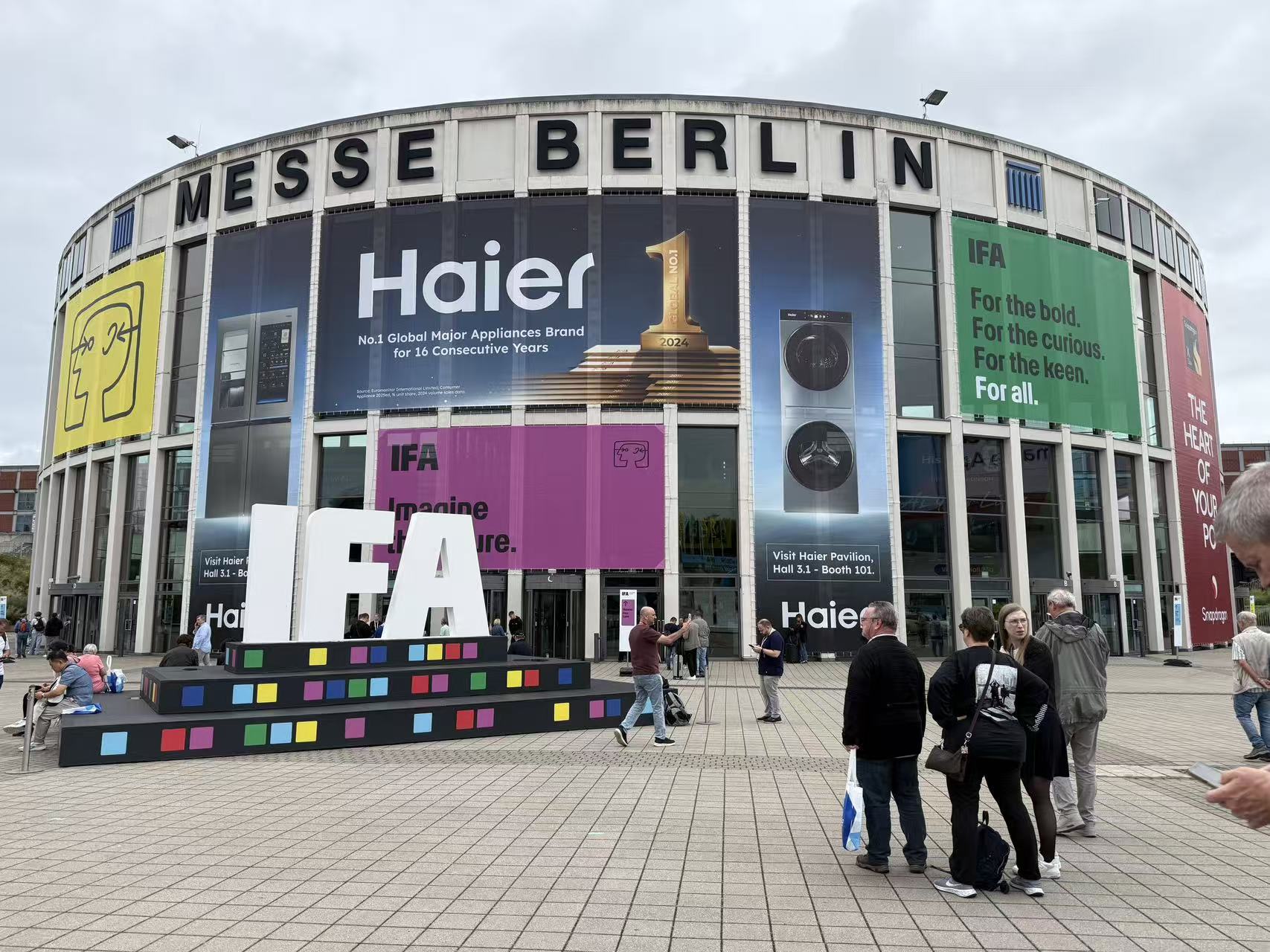
Core Insights - AI has become a focal point at the IFA exhibition, with Chinese leading companies leveraging innovative products and sports marketing to enhance their global market influence, particularly in Europe [1][3]. Group 1: AI and Product Innovation - Chinese companies showcased a range of AI-driven products at IFA, including smart appliances and advanced display technologies, moving away from a growth model solely based on cost-effectiveness [5]. - Haier presented innovative appliances such as a smoke machine that prevents overflow and a washing machine that recognizes fabric types, while Midea displayed humanoid robots [5][6]. - Hisense introduced RGB-Mini LED TVs, and Skyworth showcased a global smart screen operating system capable of AI interaction in 77 languages [5]. Group 2: Sports Marketing Strategies - Major Chinese brands like Midea and Haier have signed partnerships with European football clubs to strengthen their presence in the market through sports marketing [8]. - Midea has a long-term agreement with FC Barcelona, while Haier has become a global partner of Liverpool FC and Paris Saint-Germain [8][9]. Group 3: Financial Performance and Market Growth - Haier's sales revenue in Europe reached 17.995 billion yuan in the first half of the year, marking a 24.07% increase [9]. - Hisense's European revenue grew by 22%, with significant increases in air conditioning and washing machine sales [11]. - TCL's television shipments in Europe rose by 13.3%, with notable growth in larger screen sizes and Mini LED TVs [11]. Group 4: Strategic Market Positioning - Chinese companies are focusing on "mergers and local production" strategies to gain a competitive edge in the European market, aiming to transition from price competition to value competition [12]. - The expectation is for Chinese brands to gradually increase their market share in the European home appliance sector [12].
从欧洲杯到世界杯:海信冰箱持续叩响世界顶级体育营销大门
Huan Qiu Wang· 2025-09-05 09:55
Group 1 - Hisense Refrigerator has been officially designated as the global official refrigerator for the 2026 FIFA World Cup, continuing its strategy of marketing through top-tier global sports events [1][4] - This partnership builds on Hisense's previous sponsorships, including the UEFA Euro 2016, the 2018 FIFA World Cup in Russia, and the 2022 FIFA World Cup in Qatar, making it the first Chinese home appliance brand to sponsor two consecutive World Cups [4] - The collaboration is expected to enhance Hisense's brand recognition and reputation in the global market, laying a solid foundation for its overseas market expansion [4] Group 2 - Hisense Refrigerator features a breakthrough vacuum magnetic field preservation technology that combines vacuum preservation with magnetic field control, significantly inhibiting food oxidation [4] - The core principle of this technology is based on the magneto-biological effect, which promotes the orderly arrangement of water molecules in food, effectively reducing enzyme activity and delaying spoilage [4] - Laboratory tests indicate that this technology can achieve an exceptional preservation effect, maintaining "first-class freshness" for up to 7 days, greatly improving the storage quality of meat, seafood, and various vegetables [4]

市场竞争加剧,海外面板厂/TV品牌厂获利承压
WitsView睿智显示· 2025-09-05 08:38
Core Viewpoint - The rise of Chinese panel manufacturers and TV brands is intensifying competition for overseas companies, impacting their market share and profitability [2]. Group 1: Profitability of Major Companies - Samsung's VD/DA business reported an operating profit margin of 1.4% in Q2 2025, down 0.7 percentage points quarter-on-quarter and 2.0 percentage points year-on-year. The company plans to improve profitability by capitalizing on peak season demand and developing high-end TVs [4]. - LG Electronics' MS business experienced an operating profit margin of -4.4% in Q2 2025, a decline of 4.5 percentage points quarter-on-quarter and 6.9 percentage points year-on-year, facing challenges from Chinese TV brands. LG aims to enhance its WebOS platform and expand its influence in the Southern Hemisphere [4]. - Hisense's TV business is performing well, with continuous growth in shipment volume and market share, maintaining an operating profit margin around 5% in recent quarters [4]. Group 2: Panel Manufacturers' Performance - Samsung Display's (SDC) operating profit margin was 7.8% in Q2 2025, although it has decreased both quarter-on-quarter (by 0.7 percentage points) and year-on-year (by 5.4 percentage points) [7]. - AUO reported an operating profit margin of 2.2% in Q2 2025, remaining positive for two consecutive quarters, while Innolux (INX) had an operating profit margin of -1.4%, remaining negative for four consecutive quarters [7]. - BOE, as a leading domestic panel manufacturer, continues to maintain a positive operating profit margin in its TV panel business [7]. Group 3: Market Trends and Challenges - Domestic flexible AMOLED smartphone panel manufacturers are actively expanding capacity and increasing shipments, achieving a combined market share of over 50% by 2024, which is impacting SDC's profitability [10]. - SDC's quarterly profitability is subject to significant seasonal fluctuations, with operating profit margins decreasing from 12.4% in H1 2023 to 10.4% in H1 2024, and further down to 8.1% in H1 2025 [10]. - AUO's profitability has outperformed INX in recent quarters, attributed to a lower proportion of traditional display business, which has a lower gross margin compared to commercial and automotive displays [10]. Group 4: Strategic Developments - Innolux is actively developing Micro-LED and FOPLP businesses, although these new ventures are unlikely to generate profits in the short term. The company announced the acquisition of Japan's Pioneer in June 2025 to strengthen its automotive display business, which may improve profitability post-acquisition [11].

再过几年,日本人或许只能购买中国电视机了
创业邦· 2025-09-05 03:18
Core Viewpoint - The article discusses the decline of Japanese television manufacturing and the rise of Chinese brands, highlighting the shift in global manufacturing dynamics and the competitive advantages of Chinese companies over their Japanese counterparts [5][8]. Group 1: Historical Context of Japanese Television Industry - The Japanese television industry experienced a golden era, dominating the global market with brands like Sony and Panasonic, which accounted for over 40% of global TV shipments in 1990 [10][12]. - Japan's manufacturing prowess was built on technological advancements and brand reputation, with significant market shares in the high-end segment during the 1980s and 1990s [14][15]. - The shift towards liquid crystal technology in the early 2000s marked a turning point, as Japanese companies failed to adapt, leading to significant losses and market share decline [16][17]. Group 2: Decline of Japanese Brands - By 2024, Japanese brands' global TV shipment share is projected to drop to 9%, down from 28% in 2010, with Panasonic's domestic market share falling from 16.8% in 2018 to 8.8% in 2024 [21][23]. - The inability to pivot from traditional technologies and the slow decision-making processes contributed to the decline of Japanese manufacturers [18][30]. - Japanese companies are now struggling to compete in high-end markets, with many having exited the consumer TV market altogether [17][34]. Group 3: Rise of Chinese Television Brands - Chinese brands have captured nearly 50% of the Japanese TV market by 2024, with Hisense leading at 25.4% market share, marking a significant shift in consumer preferences [23][25]. - Chinese companies like TCL and Xiaomi have also gained substantial market shares, leveraging technology and localization strategies to appeal to Japanese consumers [20][26]. - The global shipment share of Chinese TV brands reached 30.2% in 2024, surpassing that of South Korean competitors for the first time [21][22]. Group 4: Competitive Advantages of Chinese Brands - Chinese manufacturers have developed a complete television industry chain, enabling rapid response to market changes and cost reductions [28][30]. - Innovations such as Hisense's self-developed chips and TCL's advanced display technologies have allowed Chinese brands to outperform traditional Japanese offerings in quality [25][37]. - The ability to quickly adapt to consumer demands, such as energy efficiency standards, has given Chinese brands a competitive edge over their Japanese counterparts [30][38]. Group 5: Broader Implications for Manufacturing - The decline of Japanese manufacturing is indicative of broader trends, where efficiency, innovation speed, and market responsiveness are critical for success in global competition [38]. - The article suggests that without breaking free from path dependency and improving decision-making speed, Japanese companies may continue to lose competitiveness across various industries [39].


再过几年,日本人或许只能购买中国电视机了
Hu Xiu· 2025-09-05 02:39
Core Viewpoint - The article discusses the significant shift in the global television market, highlighting the decline of Japanese brands and the rise of Chinese brands, particularly in Japan, where Chinese brands now hold nearly half of the market share [3][18][24]. Industry Overview - Japanese television brands, once dominant in the global market, have seen their global shipment share drop from 28% in 2010 to an estimated 9% in 2024 [15]. - The decline of Japanese brands is attributed to their slow adaptation to technological changes, particularly the shift to LCD technology, while competitors like Samsung and LG quickly embraced new technologies [14][12]. Market Dynamics - In 2024, Chinese television brands accounted for 30.2% of global shipments, surpassing Korean brands for the first time [20][22]. - Chinese brands, including Hisense, TCL, and Xiaomi, collectively hold a 31.3% market share, exceeding the combined total of Samsung and LG [20][22]. Competitive Strategies - Chinese brands have successfully penetrated the Japanese market by leveraging technology and localization strategies, such as optimizing products for local preferences and providing localized customer service [25][28]. - Hisense's self-developed X chip and TCL's ADS Pro technology have allowed them to meet specific Japanese consumer needs, enhancing their competitive edge [27][31]. Challenges and Opportunities - Japanese manufacturers face challenges due to their "path dependence" and slow decision-making processes, which hinder their ability to innovate and respond to market changes [16][39]. - The article suggests that for Japanese companies to regain competitiveness, they must break free from traditional practices and improve their decision-making speed [49]. Future Outlook - The shift in market dynamics indicates a broader trend of global manufacturing power moving towards China, driven by integrated supply chains and rapid innovation capabilities [50]. - The article concludes that the future of the television industry will depend on the ability of companies to adapt to changing market demands and technological advancements [48].
青岛上市公司半年报出炉,29家公司实现营收与净利润双增长
Sou Hu Cai Jing· 2025-09-04 23:24
Core Insights - The financial reports of 64 listed companies in Qingdao show overall stable performance, with 40 companies achieving revenue growth and 29 companies achieving both revenue and net profit growth in the first half of the year [1][15] - Haier Smart Home leads in both revenue and profit among Qingdao listed companies, reporting revenue of 156.49 billion yuan and net profit of 12.03 billion yuan [1][9] - Emerging industries such as new-generation information technology and artificial intelligence are highlighted as key growth areas, supported by policies like "old-for-new" [3][20] Industry Performance - New-generation information technology and artificial intelligence are prioritized industries in Qingdao, with companies like Hisense achieving revenue of 27.23 billion yuan, a 6.95% increase, and net profit of 1.06 billion yuan, a 26.63% increase [3][16] - The logistics sector shows strong performance, with companies like LeCang Logistics achieving a revenue increase of 20% and a net profit increase of 898.4% [13][12] - The automotive market continues to thrive, with companies like Sanxiang Technology reporting revenue of 5.29 billion yuan, a 22.3% increase, and net profit of 0.39 billion yuan, an 88.9% increase [6][20] Emerging Industries - 36 out of 64 listed companies are involved in emerging industries such as smart connected new energy vehicles, green energy, and intelligent equipment, accounting for over 56% of the total [20] - In the green energy sector, companies like Teruid achieve revenue of 6.255 billion yuan, a 16.72% increase, and net profit of 0.327 billion yuan, a 69.32% increase [7][21] Advantageous Industries - The three main advantageous industries in Qingdao are smart home appliances, high-end chemicals and new materials, and modern light industry, which show strong resilience and stability [8][22] - The smart home appliance sector benefits from the "old-for-new" policy, with Haier Smart Home's overseas business growing significantly in regions like South Asia and the Middle East [9][22] Service Sector - The service sector contributes nearly 60% to Qingdao's economic growth, with financial and logistics industries maintaining growth, while the retail sector undergoes significant adjustments [12][13] - Qingdao Bank reports a net profit of 3.152 billion yuan, a 16.25% increase, reflecting stable growth in a complex market environment [12][13]



AI智能语音、AI智能省电 空调行业 “卷” 向 AI
Mei Ri Shang Bao· 2025-09-04 22:20
Core Insights - The rise of AI-enabled air conditioners is gaining attention, with brands like Midea, Gree, Hisense, and Haier actively developing AI features to capture market opportunities [1][2] - Midea's "singing" air conditioner, priced at 4999 yuan, is marketed as a smart air conditioning and health device, although its actual AI capabilities may not fully align with promotional claims [1] - The introduction of AI energy-saving features is becoming a key selling point across various brands, with Gree's AI air conditioner reportedly achieving a 13.6% annual energy savings [2] Group 1 - The "singing" air conditioner from Midea has gone viral on social media, highlighting the potential of AI in the air conditioning market [1] - Competitors are also launching their own AI air conditioners, indicating a growing trend towards AI integration in home appliances [1] - The actual functionalities of many AI air conditioners are being questioned, with some consumers perceiving them as traditional smart devices rebranded with AI features [2] Group 2 - The air conditioning market is becoming increasingly competitive, with a significant price drop of 17.2% in the average price of popular 1.5 HP models expected by 2025 [3] - Haier has initiated the first industry standard for AI air conditioners, focusing on evaluating AI energy-saving algorithms and user interaction capabilities [3] - Brands must innovate and upgrade their products to attract consumers in a market characterized by price competition and consumer downgrade trends [3]
