
CEA(600115)

Search documents
换季首日 东航浙江分公司多条浙江始发航线顺利首航
Zhong Guo Min Hang Wang· 2025-10-27 08:09
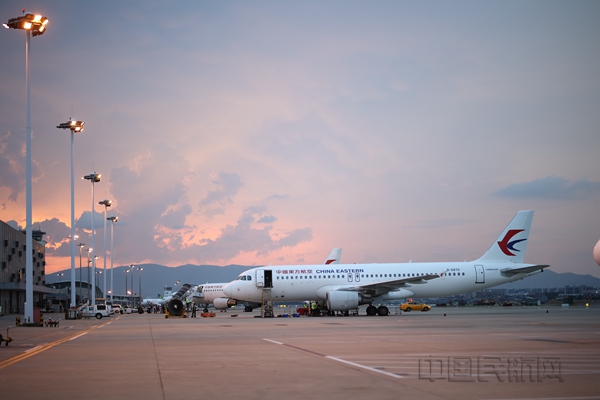
Core Insights - The winter-spring flight schedule commenced on October 26, with Eastern Airlines Zhejiang branch operating 274 flights, transporting over 20,000 passengers with an average seat occupancy rate of 72% [1][2] Flight Operations - Eastern Airlines Zhejiang branch plans to operate 71 domestic routes and 15 international and regional routes, increasing weekly flights to 904 to enhance travel options for Zhejiang tourists [1][2] - New routes include direct flights from Hangzhou to Urumqi and from Wenzhou to Tianjin, with additional routes planned to popular destinations such as Jieyang, Xishuangbanna, and Foshan [2][3] Popular Destinations - The newly launched Hangzhou-Urumqi route has a flight time of approximately 5 hours and 25 minutes, with the first flight achieving a seat occupancy rate of over 85%, indicating strong demand for travel to Xinjiang [3] - The flight from Ningbo to Foshan is scheduled to operate daily, with initial flights nearly sold out, reflecting the popularity of winter escape travel among Zhejiang tourists [2] International Expansion - In response to the recovering outbound travel demand, Eastern Airlines Zhejiang branch is increasing international flights, including four weekly flights from Ningbo to Singapore and a total of 16 weekly flights to Southeast Asia [4] - The winter-spring schedule will continue to support routes to Seoul, Sydney, Auckland, Budapest, Madrid, and Rome, enhancing the connectivity and convenience for travelers [4]


9月快递行业业务量增长12.7%,民航新航季启动:—交通运输行业周报(2025年10月20日-2025年10月26日)-20251027
Hua Yuan Zheng Quan· 2025-10-27 07:00
Investment Rating - The investment rating for the transportation industry is "Positive" (maintained) [4] Core Views - The express delivery industry shows resilient demand, with a year-on-year growth of 12.7% in September, indicating a steady expansion of the market [4][25] - The logistics sector is witnessing technological advancements, with JD Logistics planning to procure 3 million robots and 100,000 unmanned vehicles over the next five years, which may enhance supply chain efficiency [5] - The shipping market is expected to benefit from geopolitical factors and trade negotiations, potentially increasing demand for oil transportation and bulk shipping [6][10] - The aviation sector is experiencing growth, with a 10.8% increase in international flight volumes for the upcoming winter-spring season, reflecting a recovery in air travel [10][12] Summary by Sections Express Delivery - In September 2025, the express delivery business volume reached 16.88 billion pieces, a 12.7% year-on-year increase, with revenue of 127.37 billion yuan, up 7.2% [4][25] - Major players like SF Express and JD Logistics are expected to benefit from cyclical recovery and cost control, with significant growth potential [14] Shipping and Ports - The VLCC market may benefit from U.S. sanctions on Russian oil, potentially increasing long-distance shipping demand [6] - The shipping market is expected to see a recovery driven by environmental regulations and geopolitical stability, with recommendations to focus on companies like China Shipping and COSCO [14][15] Aviation - The aviation industry is projected to maintain steady growth, with a 10.3% increase in total transport turnover and a 5.2% rise in passenger transport volume in the first three quarters of 2025 [10] - Airbus has opened a new A320 assembly line in Tianjin, marking a significant milestone in Sino-European cooperation [9] Road and Rail - National logistics operations are running smoothly, with rail freight increasing by 2.33% and highway freight truck traffic rising by 24.72% [13] - Strategic partnerships in the highway sector are being formed to enhance service offerings and operational efficiency [13] Overall Market Performance - From October 20 to October 24, 2025, the transportation sector index increased by 1.12%, underperforming the Shanghai Composite Index, which rose by 2.88% [20][23]


探索“咖啡+文旅” 星巴克云南咖啡主题航班完成首航
Bei Jing Shang Bao· 2025-10-27 06:12
Core Insights - Starbucks China and China Eastern Airlines have launched the "Yunnan Coffee Themed Flight," marking a new collaboration in the "coffee + travel" sector [1][3] - The inaugural flight features a cabin theme of "Every Cup, From Yunnan," showcasing the journey of Yunnan coffee from bean to cup [1] - Passengers on the inaugural flight received exclusive gifts and enjoyed cold brew coffee made from Starbucks' selected Yunnan Menglian sun-dried Bourbon coffee beans [1] Group 1 - The partnership between Starbucks China and China Eastern Airlines aims to leverage complementary resources, focusing on co-creation in the Yunnan coffee sector [3] - The Yunnan coffee themed flight is a significant part of this collaboration, which was officially announced in July [3] - Starbucks has been exploring the integration of "coffee + cultural tourism," with initiatives such as the "Shared Value Beautiful Star Village" project in Yunnan, which received over 17 million yuan in donations [3] Group 2 - In August 2024, Starbucks plans to launch the "Shared Value Seeking Beans Yunnan" project to support ten coffee-growing villages in the Pu'er region, focusing on talent and cultural revitalization [3] - The company has also opened several intangible cultural heritage concept stores in cities like Hangzhou, Nanjing, and Suzhou, and established themed stores in popular tourist destinations such as Dunhuang and Jiuzhaigou [3]


银发族购票更优惠 东航重阳节升级“银翼长者”产品
Zhong Guo Min Hang Wang· 2025-10-27 04:33
Core Insights - Eastern Airlines is launching an upgraded "Silver Wing Elder" product from October 27 to November 4, 2025, aimed at providing more targeted and affordable travel options for the elderly during the Chongyang Festival [1] Group 1: Product Offerings - The upgraded offerings include "Silver Wing Elder Chongyang Leisure Tour" and "Silver Wing Elder Chongyang Friends Happy Journey" [1] - Discounts for passengers aged 55 and above will be increased to a maximum of 12% on individual ticket purchases, with additional benefits for group travel [1] - The current "Silver Wing Elder" series includes "Silver Wing Elder Benefit," "Silver Wing Elder Small Group," and "Silver Wing Health Tour," with discounts ranging from 8% to 20% depending on group size and ticket type [2] Group 2: Service Enhancements - Eastern Airlines has introduced a new "Accompaniment Service" for travelers aged 55-70, which includes ground guidance and full-process assistance to ease travel challenges [2] - The first batch of these services is available at 16 airports, including major hubs like Shanghai and Beijing [2] Group 3: Future Strategy - The company plans to continue innovating products and upgrading services to enhance convenience, cost-effectiveness, and comfort for elderly travelers [3]
中印恢复直航
第一财经· 2025-10-27 00:49
Core Viewpoint - The resumption of direct flights between mainland China and India marks a significant step in enhancing bilateral relations and facilitating trade and travel between the two nations, benefiting over 2.8 billion people [3][10]. Summary by Sections Resumption of Direct Flights - The first direct flight, operated by Indigo Airlines, landed in Guangzhou on October 27, 2025, after a five-year hiatus, significantly reducing travel time for passengers who previously had to transit through other countries [3][6]. - The Indian Ministry of External Affairs announced the consensus to restore direct flights, which was confirmed by Chinese officials, highlighting the importance of this development in improving Sino-Indian relations [6][10]. Economic Impact - The restoration of direct flights is welcomed by the Indian business community, as it is expected to enhance trade activities and reduce logistics and transit times [7][10]. - Prior to the pandemic, there were over 500 direct flights monthly between China and India, indicating a robust travel and trade relationship that was disrupted by COVID-19 [9]. Airline Operations - Indigo Airlines, the largest airline in India with over 60% market share in domestic routes, has announced the launch of direct flights from Kolkata to Guangzhou, with plans for additional routes [6][9]. - China Eastern Airlines is also set to resume flights between Shanghai and Delhi, increasing the number of direct routes between the two countries to three [9]. Trade Relations - China has maintained its position as India's largest trading partner, with bilateral trade reaching $138.478 billion in 2024, reflecting a year-on-year growth of 1.7% [10].

首个航班已降落广州,时隔5年中印正式恢复直航
第一财经网· 2025-10-27 00:37
Group 1: Restoration of Direct Flights - The direct flight between Kolkata, India, and Guangzhou, China, has resumed after a five-year hiatus, significantly reducing travel time to just over three hours [1][3] - Indigo Airlines, the largest airline in India by market share, operates the inaugural flight, marking a positive step in improving India-China relations [1][3] - The restoration of direct flights is seen as a response to the economic benefits experienced by Indian businesses in their trade with China [1][4] Group 2: Economic Implications - The direct flight will enhance trade activities by reducing logistics and transit times, benefiting commercial exchanges [4] - Prior to the pandemic, there were over 500 direct flights monthly between India and China, indicating a strong pre-existing travel and trade relationship [5] - The resumption of direct flights is expected to further boost India-China economic cooperation, with China remaining India's largest trading partner [6] Group 3: Future Developments - Indigo Airlines plans to launch a second direct route from Delhi to Guangzhou starting November 10, 2025, indicating a rapid expansion of connectivity [5] - China Eastern Airlines will also begin flights from Shanghai to Delhi, increasing the number of direct routes between the two countries to three [5] - The Indian government has resumed accepting tourist visa applications from Chinese citizens, which is anticipated to further enhance bilateral exchanges [5]

冬航季江苏机场航班量稳中有增
Xin Hua Ri Bao· 2025-10-26 20:58
Core Viewpoint - The 2025 winter flight season for civil aviation has commenced, with significant optimization in the airport route network and a steady increase in flight volume, enhancing air transport capacity [1] Flight Operations - The Eastern Airport Group plans to operate over 9,300 flights weekly, representing a year-on-year increase of 3.6% [1] - Weekly passenger flights are set at 8,729, with a growth of 3.4%, while cargo flights will be 577, increasing by 6.7% [1] New Routes - New routes have been added, including connections from Changzhou to Xishuangbanna, Ganzhou, and Lhasa, as well as from Huai'an to Luzhou, Xi'an, and Wenzhou [1] - Other new routes include Salt City to Taizhou and Xishuangbanna, and Yangtai to Nanchang, Zhoushan, Quanzhou, and Mianyang [1] - The Nanjing to Paris route will operate throughout the season, with 22 routes including Nanjing to Sydney, Melbourne, Tokyo, and Seoul continuing operations [1] International Operations - Eastern Airlines Jiangsu Company will operate 15 international routes, covering 13 destinations, with 89 weekly flights, accounting for 60% of Nanjing Airport's international route points [1] - The international operations have fully recovered to the levels seen in 2019 [1]
民航冬春航季启动!广州新增多条国际航线
2 1 Shi Ji Jing Ji Bao Dao· 2025-10-26 14:19
Core Points - The 2025/26 winter-spring flight schedule will be implemented from October 26, 2025, to March 28, 2026, with multiple airlines announcing their flight adjustments [1] - A total of 210 domestic and international airlines plan to operate 119,500 passenger and cargo flights weekly, reflecting a 1.3% increase compared to the same period last year, indicating a stable and positive development trend [3] Group 1: China Southern Airlines (南航) - China Southern Airlines plans to execute approximately 470,000 passenger flights, with new and enhanced domestic and international routes [3] - The airline is focusing on strengthening its route network from hubs like Guangzhou, Beijing Daxing, and Urumqi, with new routes such as Beijing Daxing to Xishuangbanna and increased frequencies on several domestic routes [3] - Internationally, new routes from Guangzhou to Madrid and Darwin will commence, with a 30% year-on-year increase in flights to Australia [3] Group 2: China Eastern Airlines (东航) - From October 30, 2025, China Eastern Airlines will gradually transition its flights in Guangzhou to the T3 terminal, operating approximately 205 flights daily across 104 routes [6][7] - The airline has added 15 new routes and increased frequencies on 12 routes within Guangdong province compared to the previous winter-spring season [6] Group 3: Spring Airlines (春秋航空) - Spring Airlines will increase the frequency of flights from Guangzhou to Bangkok from 7 to 10 per week starting October 28, 2025, to meet rising travel demand [9] - The introduction of a permanent visa exemption policy between China and Thailand from March 1, 2024, is expected to boost tourism and facilitate travel planning for Chinese tourists [9]



冬春航季开启,航司加码“一冷一暖”旅游航线运力
Sou Hu Cai Jing· 2025-10-26 12:56
Core Points - The new winter-spring flight schedule for 2025-2026 in China's civil aviation will officially start on October 26, lasting for 154 days until March 28, 2026, with a total of 11.95 million flights planned weekly, representing a 1.3% increase compared to the same period last year [1] Domestic Flight Plans - Domestic airlines are focusing on increasing capacity for winter tourism routes, with Air China planning to open four new routes and increase flights on over 40 existing routes, resulting in a 15% year-on-year increase in flight frequency [3] - Eastern Airlines is launching 38 new domestic routes, particularly targeting popular winter tourism areas, while Southern Airlines is enhancing its network from major hubs like Guangzhou and Beijing Daxing [3] - A total of 59 airlines are expected to operate 98,000 domestic flights weekly, remaining stable compared to last year [3] International Flight Plans - Internationally, 191 airlines are set to operate 21,427 flights weekly, marking a 10.8% increase year-on-year, with services to 83 countries [5] - Air China is increasing flights on 17 routes and launching a new route to Hanoi, while Southern Airlines is opening new routes to Darwin and Madrid [5][6] - Beijing's two airports plan to add multiple international routes, with the capital airport executing an average of 166 international flights daily [6][8] Industry Developments - The international route network is expanding, with major hubs like Beijing, Shanghai, and Guangzhou accounting for 52.1% of international passenger flights, an increase of 8.6 percentage points year-on-year [8] - The volume of passenger flights to countries involved in the "Belt and Road" initiative has reached 73.5%, with significant growth in routes to Latin America and Africa [8]




中国民航冬春新航季开启 南航新开复航多条国际航线
Zhong Guo Xin Wen Wang· 2025-10-26 11:02
Core Insights - The new winter-spring flight schedule for 2025/26 has been implemented by Chinese civil aviation, with airlines optimizing route networks and capacity arrangements to enhance travel and global supply chain support [1][2] Group 1: China Southern Airlines (南航) - China Southern Airlines plans to operate approximately 470,000 passenger flights in the new season, focusing on strengthening the route network from hubs like Guangzhou, Beijing Daxing, and Urumqi [1] - New routes include a daily flight from Beijing Daxing to Xishuangbanna and increased frequencies on several domestic routes such as Guangzhou to Hangzhou, Wenzhou, and Fuzhou [1] - Internationally, new long-haul routes from Guangzhou to Madrid and Darwin will commence, along with the resumption of direct flights to Perth and Adelaide, increasing the number of flights to Oceania by 30% year-on-year [1] Group 2: China Eastern Airlines (东航) - China Eastern Airlines will execute an average of 3,130 flights daily, a 0.4% increase compared to the previous winter-spring season, with international and regional flights increasing by 11.65% to 3,220 weekly [2] - The airline is launching 38 new domestic routes, particularly targeting popular winter destinations in Northeast China and Xinjiang [2] - Notably, the new Shanghai Pudong to Auckland and Buenos Aires route, starting on December 4, will set a record for the longest single-route flight globally [2]