
CSSC Holdings(600150)

Search documents
中船系板块早盘拉升 中船特气涨超10%
Xin Lang Cai Jing· 2025-08-06 01:38
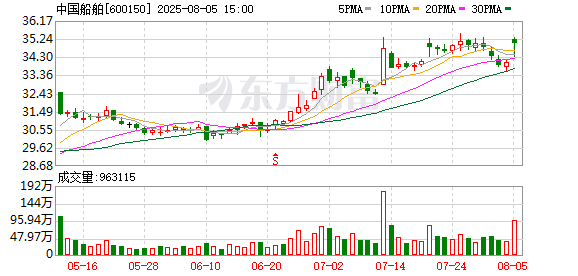
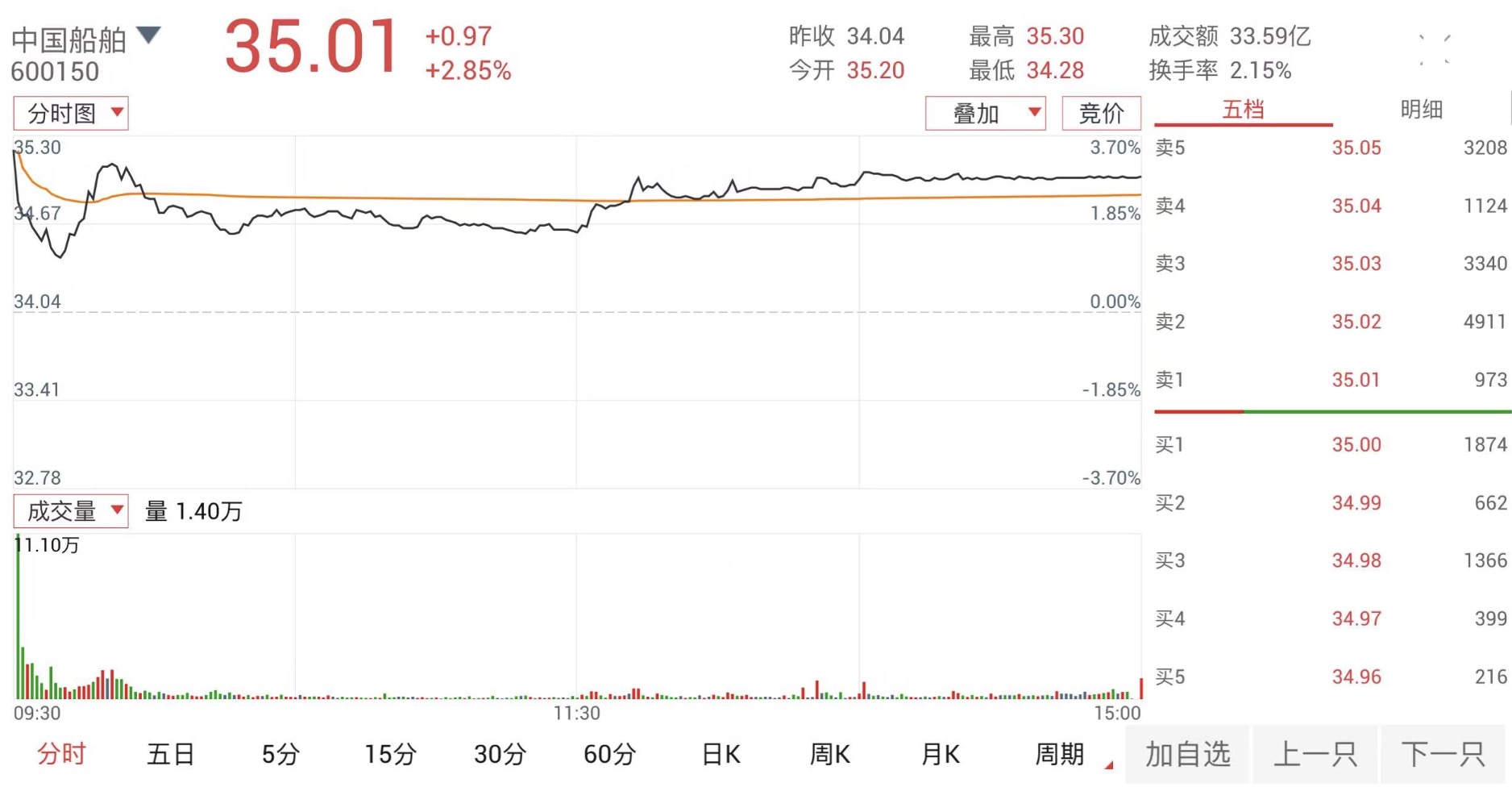
中船系板块早盘拉升,中船特气涨超10%,中国船舶、中国重工、中船防务、中船科技跟涨。 ...




专项债发行创年内新高,A股7月新开户增长70.5% | 财经日日评
吴晓波频道· 2025-08-06 00:30
Group 1: Special Bonds and Infrastructure Investment - In July, the issuance of new special bonds reached a record high of 616.936 billion yuan, increasing by 89.842 billion yuan from the previous month [2] - The cumulative issuance progress of new special bonds as of the end of June was 49%, significantly lower than the average level of 63.2% for the same period from 2022 to 2024 [2] - The main direction of special bond funding is expected to shift towards infrastructure and real estate, with a notable project being the 1.2 trillion yuan Yarlung Tsangpo River downstream hydropower project [2] Group 2: Real Estate Market Trends - Shenzhen's second-hand housing market showed signs of recovery, with a 5.2% increase in recorded transactions and a 17% rise in store signing volume [3] - The average listing price for second-hand homes in Shenzhen rose by 0.2% to 62,706 yuan per square meter in July [3] - The overall real estate market remains in a state of fluctuation, with a need for more policy stimulus to stabilize prices [4] Group 3: Hema's Business Adjustments - Hema X membership stores will cease operations, with the last store closing on August 31, indicating a strategic shift to focus on Hema Fresh and Hema NB [5][6] - Hema's overall GMV is projected to exceed 75 billion yuan in the 2025 fiscal year, with plans to open nearly 100 new stores [5] - The membership store model faced challenges due to lack of differentiation and competition with established brands like Sam's Club [6] Group 4: Mergers and Acquisitions in the Shipbuilding Industry - China Shipbuilding intends to absorb and merge with China Shipbuilding Heavy Industry, marking the largest merger in A-share history [7] - Post-merger, China Shipbuilding's total assets are expected to exceed 400 billion yuan, with revenues surpassing 130 billion yuan [7] - The merger is part of a broader trend of state-owned enterprise consolidation in sectors with overlapping businesses [8] Group 5: Nio's Restructuring Efforts - Nio is seeking restructuring investors, with 56 potential investors showing interest after filing for bankruptcy [9] - The company has reported significant losses over the past few years, highlighting its reliance on low-price competition [9] - Despite challenges, Nio's production base and core personnel remain valuable assets for potential investors [10] Group 6: A-share Market Developments - In July, A-share new accounts increased by 70.5% year-on-year, with a total of 1.9636 million new accounts opened [13] - The A-share market experienced significant gains, with major indices showing upward trends, including a 3.74% increase in the Shanghai Composite Index [13] - The current market environment is characterized by a lack of substantial participation from external funds, leading to a different dynamic compared to previous bull markets [14]


“两船”完成合并在即,总资产超4000亿元
2 1 Shi Ji Jing Ji Bao Dao· 2025-08-06 00:00
Core Viewpoint - The merger between China Shipbuilding and China State Shipbuilding has received official approval from the China Securities Regulatory Commission, marking a significant step in the restructuring of China's shipbuilding industry [2][5]. Group 1: Merger Details - The merger involves a share swap where China Shipbuilding will absorb China State Shipbuilding, leading to the latter's delisting [2]. - The stock of both companies will be suspended from trading starting August 13, with no specified date for resumption [2][4]. - Dissenting shareholders have the option to cash out at prices of 30.01 yuan per share for China Shipbuilding and 4.03 yuan per share for China State Shipbuilding, with total values of 5.56 billion yuan and 13.02 billion yuan respectively [5]. Group 2: Financial and Operational Impact - The combined total assets of the two companies will exceed 400 billion yuan by the end of 2024, surpassing the 300 billion yuan asset scale of the previous "South-North Train" merger [7]. - In 2024, China Shipbuilding and China State Shipbuilding are projected to achieve revenues of 78.58 billion yuan and 55.44 billion yuan, respectively, with combined annual revenues exceeding 100 billion yuan [7]. - The order backlog includes 322 vessels for China Shipbuilding valued at 216.96 billion yuan and 216 vessels for China State Shipbuilding valued at 233.77 billion yuan, totaling 15% of the global order backlog [8]. Group 3: Market Context and Future Outlook - The merger is seen as a response to the ongoing consolidation trend in the state-owned enterprise sector, with a streamlined approval process taking only 71 days [8]. - The merger is expected to enhance resource synergy, improve bargaining power, and facilitate the integration of green ship technology and military-civilian fusion experiences [7][11]. - Analysts predict that the Chinese shipbuilding industry will remain busy due to a long-term supply-demand imbalance, benefiting from a new cycle of demand in the global shipbuilding market [11].
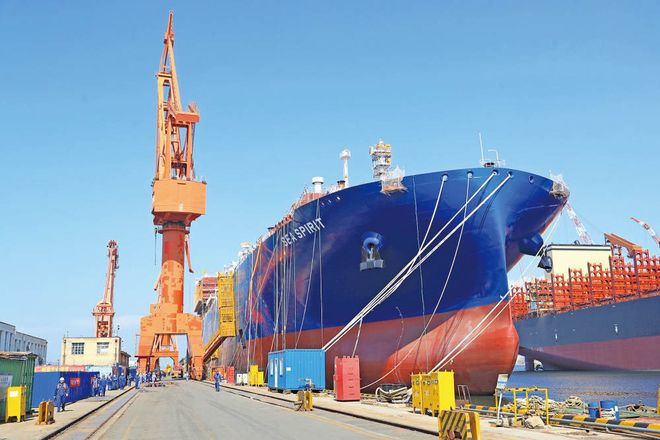
中国船舶拟吸并中国重工总资产超4000亿 披露异议股东行权价格股票将双双停牌
Chang Jiang Shang Bao· 2025-08-05 23:49
Core Viewpoint - The merger between China Shipbuilding Industry Corporation (CSIC) and China Shipbuilding Heavy Industry Company (CSIC) marks a significant development in the shipbuilding industry, aiming to create the largest publicly listed shipbuilding company globally and reshape the competitive landscape of the industry [1][2]. Group 1: Merger Details - On August 4, CSIC and CSIC announced plans to implement a cash option for dissenting shareholders as part of the merger process, with stock trading for both companies set to be suspended on August 13 [1][3]. - The merger involves CSIC absorbing CSIC through a share exchange, with an estimated transaction value of 115.15 billion yuan, and a share exchange ratio of 0.1339 shares of CSIC for each share of CSIC [2][3]. - The merger has received approval from the China Securities Regulatory Commission, marking it as the largest absorption merger in A-share history [1][2]. Group 2: Financial Projections - Post-merger, the combined total assets of CSIC are projected to exceed 400 billion yuan, with annual revenue surpassing 130 billion yuan, positioning it as the largest shipbuilding company globally [1][5]. - For the first half of 2025, CSIC expects a net profit between 2.8 billion to 3.1 billion yuan, representing a year-on-year increase of 98.25% to 119.49%, while CSIC anticipates a net profit of 1.5 billion to 1.8 billion yuan, reflecting a growth of 181.73% to 238.08% [5][6]. Group 3: Market Position and Strategy - The merger aims to consolidate resources, including assets, orders, and technological capabilities, into a more powerful entity, enhancing competitiveness in the global shipbuilding market [1][5]. - As of the end of 2024, CSIC holds 322 civil ship orders valued at 216.96 billion yuan, while CSIC has 216 orders valued at 233.76 billion yuan, indicating a strong order backlog that will support future growth [6][7]. - The merger is expected to resolve internal competition issues within the China Shipbuilding Group and significantly impact the global shipbuilding industry's competitive landscape [7].
“两船”完成合并在即,总资产超4000亿元
21世纪经济报道· 2025-08-05 23:47
Core Viewpoint - The merger between China Shipbuilding and China State Shipbuilding has received regulatory approval, marking a significant step in the restructuring of China's shipbuilding industry, with the aim of enhancing resource synergy and market competitiveness [1][4][8]. Group 1: Merger Details - The merger involves a share swap where China Shipbuilding will absorb China State Shipbuilding, leading to the latter's delisting [1][4]. - The merger has been in the works for over a year, with the approval process taking only 71 days, indicating strong support for state-owned enterprise consolidation [8]. - Following the merger, both companies will halt trading on August 13, with a resumption date yet to be determined [1][3]. Group 2: Financial and Operational Impact - Combined assets of the two companies will exceed 400 billion yuan, surpassing the asset scale of previous major mergers in the industry [7]. - In 2024, the two companies are projected to achieve combined revenues exceeding 1 trillion yuan and net profits over 50 billion yuan [7]. - The order backlog for China Shipbuilding stands at 322 vessels with a total weight of 24.61 million tons, valued at 216.96 billion yuan, while China State Shipbuilding has 216 vessels valued at 233.77 billion yuan, together accounting for 15% of the global order backlog [7]. Group 3: Strategic Advantages - The merger will facilitate the integration of complementary technologies and enhance bargaining power in the market [7][11]. - The consolidation is expected to reduce internal competition and improve supply chain resilience, positioning the new entity to better capitalize on the upcoming shipbuilding cycle [11]. - The merger aligns with the trend of state-owned enterprises leveraging capital markets for integration, potentially leading to more M&A activities in the future [8][11].
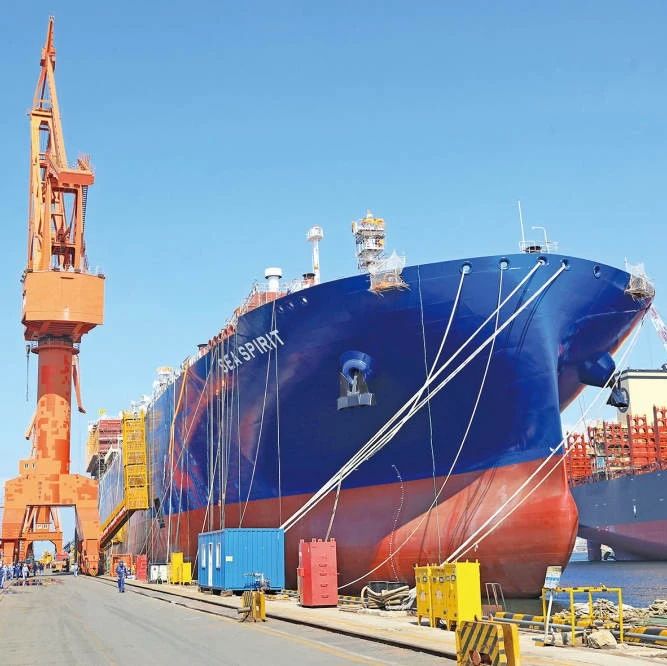
“全球最大上市船企”来了
Mei Ri Shang Bao· 2025-08-05 23:04
Core Viewpoint - The merger between China Shipbuilding (600150) and China Heavy Industry (601989) marks a significant development in the A-share market, with China Shipbuilding set to absorb China Heavy Industry through a share exchange, making it the largest merger in A-share history [1][4]. Group 1: Merger Details - China Shipbuilding will issue A-shares to all shareholders of China Heavy Industry, leading to a continuous suspension of trading for both companies starting August 13, 2025, with the last trading day for China Heavy Industry being August 12, 2025 [1][2]. - The merger is a continuation of the 2019 "South-North Ship" central enterprise restructuring, with the plan announced in September 2024 and approved by the China Securities Regulatory Commission in July 2025 [3]. Group 2: Financial Impact - Post-merger, China Shipbuilding's total assets are expected to exceed 400 billion yuan, with projected revenues over 130 billion yuan and a backlog of orders exceeding 450 billion yuan, positioning it as the largest shipbuilding enterprise globally in terms of asset scale and order volume [4]. - For the first half of 2025, China Shipbuilding anticipates a net profit attributable to shareholders between 2.8 billion and 3.1 billion yuan, reflecting a year-on-year increase of 98.25% to 119.49%, while China Heavy Industry expects a net profit between 1.5 billion and 1.8 billion yuan, representing a growth of 181.73% to 238.08% [4]. Group 3: Market Reaction - Following the merger announcement, shares of China Shipbuilding and related "Chinese character" stocks surged, with over 110 concept stocks rising, indicating strong market sentiment towards the merger [5]. - The stock price of China Shipbuilding increased by 38% over the past three months, reflecting market expectations regarding the merger [4].
第二艘国产大型邮轮即将“上线” 中国邮轮产业发展持续向“新”向好
Yang Shi Wang· 2025-08-05 14:14
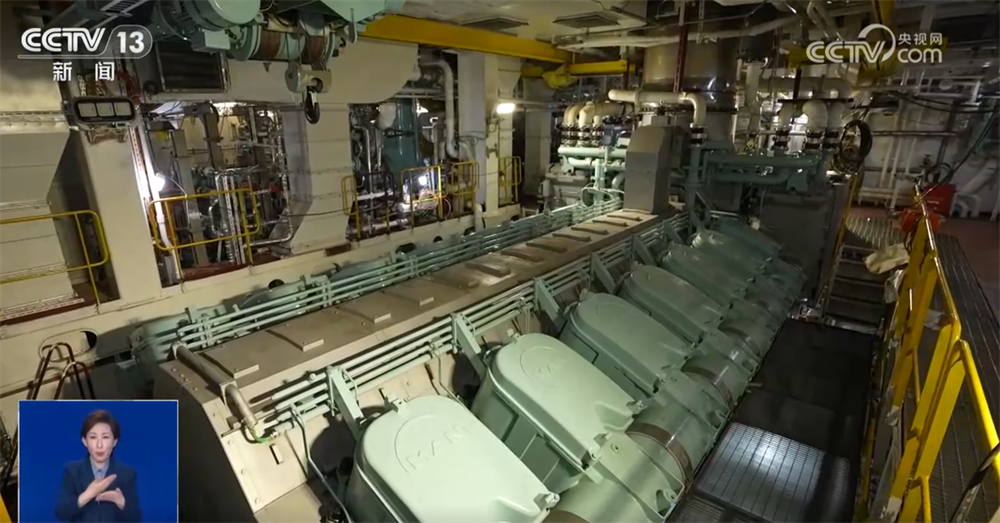
Core Viewpoint - The construction of the second domestically produced large cruise ship "Aida Huacheng" has entered the equipment debugging and system function verification stage, with over 80% of the overall progress completed and a planned delivery date in 2026 [4][8]. Group 1: Construction Progress - The main generator of the cruise ship has officially started generating power, marking a significant milestone in the construction process [1][4]. - The project is now focusing on interior engineering and equipment system debugging to ensure the ship is launched smoothly by March 2026 and completed by the end of the year [4][6]. Group 2: Technical Specifications - "Aida Huacheng" is equipped with five high-power generators, each capable of outputting 16.8 megawatts, equivalent to the main engine power of a 100,000-ton cargo ship [3][4]. - The main generator is crucial for the ship's power distribution and propulsion systems, and its successful debugging lays a solid foundation for subsequent system tests [1][6]. Group 3: Industry Impact - The construction of large cruise ships has created a multiplier effect of 1:14 on related industries, involving over 500 global suppliers in the design and construction process [8]. - The experience gained from building two large cruise ships has enabled China to establish a standard system for large cruise ship design and construction [8]. Group 4: Market Trends and Future Plans - The global cruise market remains a significant growth area, with major European cruise builders having orders extending to 2030, indicating a need for China to enhance its cruise ship production capabilities [10][12]. - The company is actively exploring new trends and technologies to meet customer demands for future cruise ships, aiming for breakthroughs in international orders [10][12].
“两船”完成合并在即,全球最大上市船企来了
2 1 Shi Ji Jing Ji Bao Dao· 2025-08-05 13:49
Core Viewpoint - The merger between China Shipbuilding and China State Shipbuilding has received regulatory approval, marking a significant consolidation in the Chinese shipbuilding industry, with implications for resource synergy and market positioning [2][3][4]. Group 1: Merger Details - The merger transaction has been approved by the China Securities Regulatory Commission, with stock suspension starting from August 13 [2]. - China Shipbuilding will absorb China State Shipbuilding through a share swap, leading to the latter's delisting [2]. - Dissenting shareholders have the option for cash compensation, with total values of approximately 5.56 billion yuan and 13.02 billion yuan for China Shipbuilding and China State Shipbuilding respectively [2]. Group 2: Financial and Operational Impact - The combined total assets of the two companies will exceed 400 billion yuan by the end of 2024, surpassing the asset scale of the previous "South-North Car" merger [5]. - Projected revenues for 2024 are 785.84 billion yuan for China Shipbuilding and 554.36 billion yuan for China State Shipbuilding, with combined profits expected to exceed 50 billion yuan [5]. - The order backlog will total 54.92 million deadweight tons, representing 15% of the global order volume, making the merged entity the largest single shipbuilding entity globally [5]. Group 3: Market Context and Future Outlook - The merger aligns with the trend of central enterprise integration in China's shipbuilding industry, with a streamlined approval process taking only 71 days [6]. - The merger is expected to enhance the competitive position of the new entity in the global market, particularly as the shipbuilding industry enters a new growth cycle [8][9]. - Analysts predict that the merger will lead to further consolidation in the industry, benefiting from a long-term demand cycle for ship orders [8].
千亿级央国企整合加速,A股创新性并购重组案例涌现
Di Yi Cai Jing· 2025-08-05 13:42
Core Insights - The future M&A market will see a clearer logic of industrial integration and transformation upgrades [1] - The A-share market is experiencing active M&A restructuring, with significant developments from central state-owned enterprises (SOEs) and innovative M&A cases emerging [1][4] - The "M&A Six Guidelines" have been implemented to enhance the M&A market, leading to increased activity and diverse payment methods in transactions [4][9] Group 1: Major M&A Transactions - China Shipbuilding Industry Corporation (CSIC) and China State Shipbuilding Corporation (CSSC) have received approval for a share-swap merger, with the transaction amounting to 115.15 billion yuan [5][6] - China Shenhua Energy Company plans to acquire coal and related assets from the State Energy Group, involving over 13 companies [7] - Since the introduction of the "M&A Six Guidelines," three major M&A transactions exceeding 100 billion yuan have been recorded in the A-share market [6] Group 2: Trends in M&A Activity - The integration of central SOEs and hard technology acquisitions are identified as two core trends in the current M&A wave [5] - The M&A market is shifting towards rational behavior focused on industrial integration and transformation, moving away from previous speculative practices [13] - Various companies, including China Power and Sinochem Equipment, have announced significant acquisition plans, indicating a trend towards industry consolidation and upgrades [7][8] Group 3: Diverse Payment Methods - The revised "Major Asset Restructuring Management Measures" introduced innovative payment mechanisms, including installment payments and simplified review processes [9][10] - The use of convertible bonds as a payment tool has gained traction, providing flexibility for both parties in M&A transactions [10][11] - Companies are increasingly utilizing various financing methods, such as equity issuance and acquisition loans, to facilitate M&A activities [10][12] Group 4: Institutional Participation in M&A - Private equity firms and investment banks are actively engaging in the M&A market, adjusting their strategies to focus on M&A activities [13][14] - Investment institutions view selling project companies to listed firms as a significant exit channel, benefiting from the accommodating regulatory environment [13] - Securities firms are enhancing their M&A service capabilities, including valuation, transaction execution, and post-merger integration [14][15]

东兴证券晨报-20250805
Dongxing Securities· 2025-08-05 10:49
Economic News - The Ministry of Commerce reported that China's service trade import and export totaled 38,872.6 billion yuan in the first half of the year, a year-on-year increase of 8.0% [1] - The China Logistics and Purchasing Federation announced that the logistics industry prosperity index for July was 50.5, indicating continued expansion but a slight slowdown in growth [1] - The People's Bank of China and six other departments stated that by 2027, the financial system supporting the high-end, intelligent, and green development of manufacturing will be basically mature [1] - The National Healthcare Security Administration announced that 55 types of drugs will be included in the 11th batch of centralized procurement, with rational bidding from enterprises [1] - The Supreme People's Court reported that 1,156 cases of medical insurance fraud were concluded in 2024, recovering over 400 million yuan in losses [1] - The Shanghai Stock Exchange revealed that the number of new A-share accounts in July increased by 71% year-on-year, reflecting a recovery in the A-share market [1] Company News - China Shipbuilding Industry Corporation plans to absorb and merge China Shipbuilding Heavy Industry Company, leading to the latter's delisting [5] - Green通科技 intends to use 45,040 million yuan of raised funds to acquire a 46.92% stake and invest 8,000 million yuan in Damo Semiconductor, resulting in a 51% stake in the company [5] - Shanghai Washba established a joint venture with Yuyuan Rare Earth New Materials Co., with a registered capital of 200 million yuan [5] - Maiwei Bio's chairman received an administrative penalty from the China Securities Regulatory Commission for suspected short-term trading [5] Bond Market Analysis - The Ministry of Finance announced that starting August 8, 2025, interest income from newly issued government bonds will be subject to VAT, reversing previous exemptions [7] - The policy aims to narrow the tax burden differences in the bond market and is expected to help alleviate fiscal pressure, as public budget revenue decreased by 0.3% year-on-year in the first half of the year [8] - The impact of the VAT restoration on 10-year government bonds is estimated to be around 10 basis points for self-operated accounts and 5 basis points for asset management products [9] - The new tax policy may lead to a widening of the yield spread between new and old bonds, with credit bonds potentially becoming more attractive [10] - The bond market is expected to experience fluctuations in the short term, with a projected yield range of 1.6% to 1.8% [12]

