TONGWEI CO.,LTD(600438)

Search documents
首场活动对接校友企业超100家
Xin Lang Cai Jing· 2026-02-17 18:40
Group 1 - The "Rong Inertia" alumni investment initiative was officially launched, with the first event connecting over 100 alumni enterprises [1] - The event attracted over 100 distinguished alumni and industry investors from fields such as artificial intelligence, integrated circuits, biomedicine, and new energy [1] - Chengdu's investment promotion bureau presented the investment environment for the artificial intelligence industry, and notable alumni shared insights on topics like technology transfer and financing support [1] Group 2 - Chengdu plans to conduct a series of "1+3+N" activities this year, including a launch ceremony and specialized events focused on technology transfer and alumni enterprise discussions [2] - The initiative aims to leverage the talent resources from Chengdu's 66 universities and 152 national-level innovation platforms to enhance industrial development [1] - A new model of "alumni recommending businesses and businesses attracting businesses" is being established through the creation of a key alumni enterprise database and regular communication mechanisms [1]


2025年前五大电池片供货商的全球总出货量195GW,通威股份连续九年蝉联第一
Jin Rong Jie· 2026-02-14 07:29
Core Insights - Tongwei Co., Ltd. has maintained its position as the world's largest solar cell supplier for nine consecutive years, showcasing strong industry competitiveness amid rapid technological advancements and increasing market competition [1][4]. Group 1: Market Performance - In 2025, the total global shipment of the top five solar cell suppliers is approximately 195 GW, representing a year-on-year growth of about 19.8% compared to 2024 [1]. - Tongwei's consistent performance is attributed to its mature domestic and international channel layout, collaborative advantages across the entire industry chain, and continuous product technology upgrades [1]. Group 2: Technological Development - Tongwei has established a comprehensive research and development matrix through its global innovation R&D center, focusing on mainstream technologies such as TOPCon, HJT, BC, and perovskite/silicon tandem cells [4][5]. - In 2025, Tongwei's self-developed TNC components have set power records five times, while THC components have set world records for heterojunction components nine times [5]. Group 3: Business Expansion and Achievements - Tongwei's cumulative global solar cell shipment has surpassed 300 GW, with its Meishan facility becoming the first lighthouse factory in the global photovoltaic cell industry [4]. - The company has accelerated its global layout of high-efficiency components, with cumulative shipments exceeding 100 GW [4]. - The "Fish-Light Integration" power station has achieved a cumulative grid-connected scale of over 5 GW, contributing to rural revitalization [4]. Group 4: Brand and Industry Influence - Tongwei has been listed in the Fortune Global 500 for three consecutive years, with its brand value exceeding 250 billion yuan, maintaining its position as the global leader in both photovoltaic and aquaculture industries [5]. - The company successfully hosted the 8th China International Photovoltaic and Energy Storage Industry Conference, showcasing China's strength and innovative achievements in the energy storage industry [5].

通威股份有限公司关于“通22转债”预计满足转股价格修正条件的提示性公告
Shang Hai Zheng Quan Bao· 2026-02-13 17:26
Core Viewpoint - The company announced that the "Tong 22 Convertible Bond" is expected to meet the conditions for a price adjustment, which may affect its conversion price in the future [1] Group 1: Issuance Overview - The company issued 120 million convertible bonds on February 24, 2022, with a total value of 12 billion yuan and a maturity of 6 years [2] - The initial conversion price was set at 39.27 yuan per share, which has been adjusted to 34.60 yuan per share due to annual profit distributions [2] Group 2: Price Adjustment Terms - The conversion price can be adjusted downwards if the company's stock price closes below 85% of the current conversion price for 15 out of 30 consecutive trading days [3] - The adjusted conversion price must not be lower than the average trading price of the company's stock over the 20 trading days prior to the shareholders' meeting [3] Group 3: Expected Trigger Situations - The company decided not to adjust the conversion price during specific periods, including from November 8, 2023, to May 7, 2024, and subsequent periods [5][6][7] - As of February 1, 2026, the company's stock has had 10 trading days with closing prices below 29.41 yuan, which could trigger the price adjustment if conditions are met [8]
通威股份(600438) - 通威股份有限公司关于“通22转债”预计满足转股价格修正条件的提示性公告
2026-02-13 08:01
经上海证券交易所自律监管决定书[2022]61 号文同意,公司本次发行的 1,200,000.00 万元可转换公司债券于 2022 年 3 月 18 日起在上海证券交易所挂牌交 易,债券简称"通 22 转债",债券代码"110085"。 | 股票代码:600438 | 股票简称:通威股份 | | 公告编号:2026-008 | | --- | --- | --- | --- | | 债券代码:110085 | 债券简称:通 转债 | 22 | | 通威股份有限公司关于 "通 22 转债"预计满足转股价格修正条件的提示性公告 本公司董事会及全体董事保证本公告内容不存在任何虚假记载、误导性陈 述或者重大遗漏,并对其内容的真实性、准确性和完整性承担法律责任。 一、"通 22 转债"发行上市概况 经中国证券监督管理委员会证监许可[2021]4028 号文核准,公司于 2022 年 2 月 24 日公开发行了 12,000 万张可转换公司债券,每张面值 100 元,共计 120 亿 元。本次可转债期限 6 年,自 2022 年 2 月 24 日起至 2028 年 2 月 23 日止,票面 利率为第一年 0.20%、第二 ...
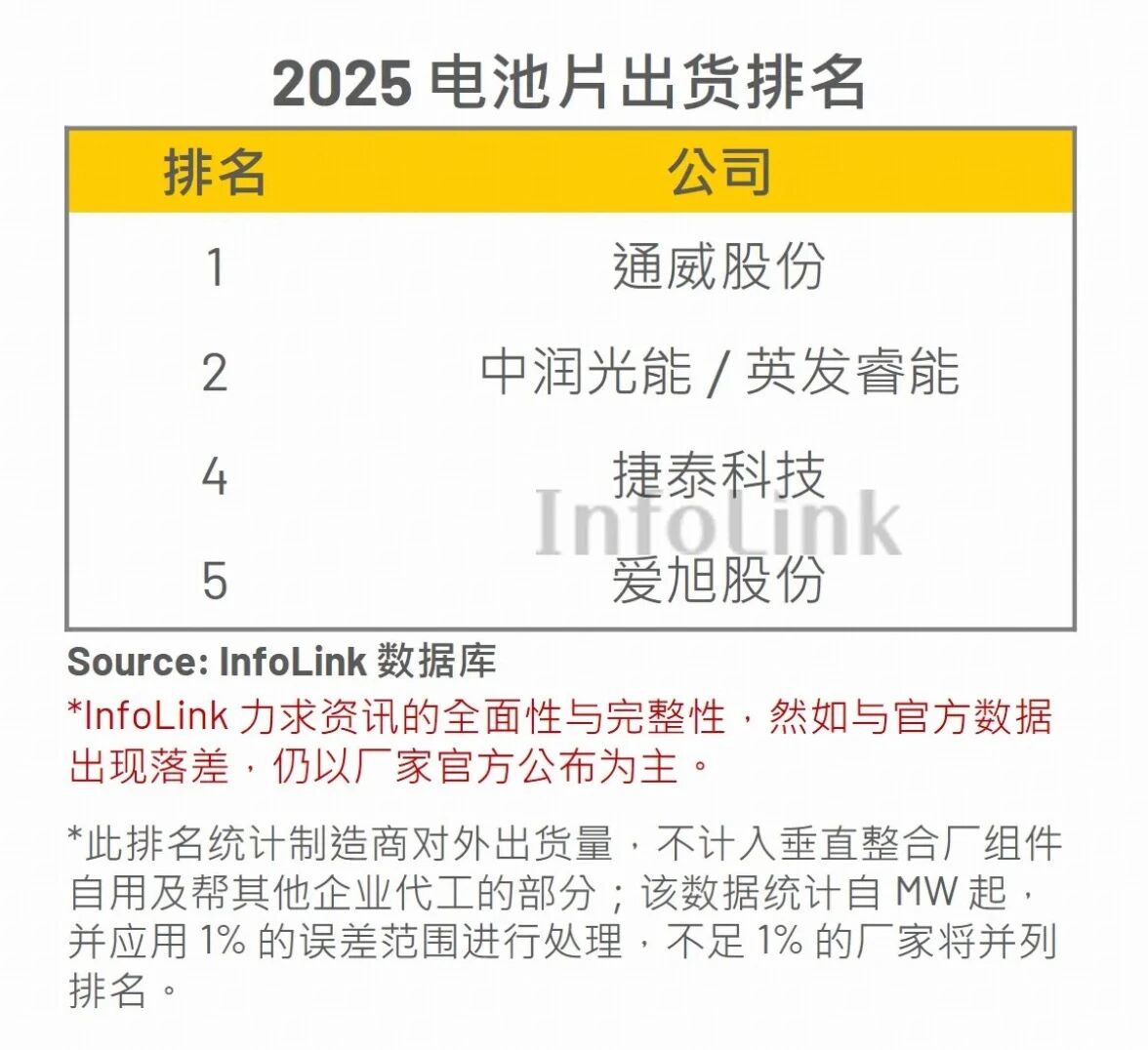
InfoLink 2025全年电池片出货排名出炉,通威蝉联全球第一
Xin Lang Cai Jing· 2026-02-13 07:12
Core Viewpoint - Tongwei Co., Ltd. has maintained its position as the world's largest battery cell supplier for nine consecutive years, showcasing strong industry competitiveness despite rapid technological advancements and increasing market competition [1] Group 1 - Tongwei Co., Ltd. ranked first in global battery cell shipments for the year 2025 according to InfoLink [1] - The company has demonstrated stable shipment performance amidst an evolving industry landscape [1] - The ongoing technological iteration and market competition have not hindered Tongwei's strong market presence [1]
研判2026!中国太阳能扩散炉行业概述、产业链、市场规模、竞争格局、发展趋势分析:光伏产业推动,太阳能扩散炉市场规模持续增长[图]
Chan Ye Xin Xi Wang· 2026-02-13 03:30
Core Viewpoint - The solar diffusion furnace industry in China is experiencing significant growth, with the market size expected to reach 6.05 billion yuan by 2025, reflecting an 11% year-on-year increase, driven by the expansion of the photovoltaic industry and supportive government policies [1][6]. Industry Overview - Solar diffusion furnaces are essential for producing crystalline silicon solar cells, specifically for forming PN junctions, which are critical for enhancing cell efficiency [2]. - The main types of solar diffusion furnaces are vertical and horizontal, each offering distinct advantages in terms of production efficiency and space utilization [2]. Industry Chain - The upstream of the solar diffusion furnace industry includes quartz components, heating systems, temperature control systems, and gas control systems, with quartz components being crucial for stability and efficiency [3]. - The midstream involves the manufacturing of solar diffusion furnaces, while the downstream primarily serves the photovoltaic industry, specifically in solar cell and module production [3]. Current Development - The solar diffusion furnace market is benefiting from China's commitment to renewable energy, with solar power generation capacity increasing significantly from 204.2 GW in 2019 to an expected 1,161.2 GW by the end of 2025, marking a 41.90% year-on-year increase [4][5]. - The production of solar cells is projected to reach 83,274.3 MW by 2025, a 7.60% increase from the previous year, driven by government subsidies and technological advancements [5]. Competitive Landscape - The solar diffusion furnace industry has high entry barriers, making it difficult for new entrants to compete. Leading companies leverage technology, supply chains, and customer resources to maintain competitive advantages [7]. - Key players in the industry include North Huachuang, Jiejia Weichuang, and Jing Sheng Machinery, among others, with North Huachuang reporting a revenue increase of 32.97% year-on-year for the first nine months of 2025 [7][8]. Industry Trends - The rapid development of the solar diffusion furnace industry is leading to accelerated industry consolidation, with smaller companies lacking core technologies being phased out, while stronger companies invest in R&D and improve production processes [9]. - Domestic companies are increasingly focusing on international markets, expanding their presence through partnerships and participation in global trade shows, capitalizing on their competitive pricing and responsive service [10].




通威股份2025年业绩预亏扩大,股价震荡走弱
Jing Ji Guan Cha Wang· 2026-02-12 11:29
Group 1 - The core viewpoint of the news is that Tongwei Co., Ltd. (600438) is forecasting a significant increase in net losses for 2025, estimating losses between 9 billion to 10 billion yuan, primarily due to industry supply-demand imbalance and asset impairment provisions [1] - In contrast, institutional forecasts predict a net loss of 5.86 billion yuan for 2025, indicating a discrepancy with the company's projections, which will need to be confirmed by formal announcements [1] - The Q3 report for 2025 showed signs of improvement, with a single-quarter loss narrowing to 315 million yuan, a year-on-year reduction of 62.69%, attributed to a rebound in photovoltaic industry chain prices [1] Group 2 - Over the past week, Tongwei's stock price has experienced a volatile decline, with a cumulative drop of 5.83%, closing at 18.42 yuan on February 12, down 1.34% for the day [2] - The financial outlook appears weak, with a net outflow of 24.52 million yuan in principal funds on February 12, while the financing balance remains high at 2.697 billion yuan [2] - Trading volume saw a spike on February 9 due to movements in the photovoltaic sector, but subsequent corrections led to overall performance lagging behind industry indices [2] Group 3 - On February 11, the State Council released a document on the construction of a unified national electricity market system, aiming to establish a unified market by 2030, which is expected to benefit energy storage and renewable energy demand in the long term [3] - On February 9, the photovoltaic sector experienced fluctuations due to news of Elon Musk's inspection of the industry chain, with Tongwei being mentioned as a leading company, although the overall industry still faces significant loss pressures [3] Group 4 - Huatai Securities reported on February 12 that the construction of a unified electricity market will empower investments in energy storage and the grid, highlighting structural growth opportunities in the renewable energy sector [4] - The comprehensive target price for Tongwei Co., Ltd. is set at 28.00 yuan, indicating a potential upside of 47.21% from the current stock price, although the sentiment remains neutral with a predominant hold rating [4]
电力设备行业周报:北美CSP大厂资本开支再加速,国内AI应用裂变进入“商业化拐点期”
Huaxin Securities· 2026-02-10 00:45
Investment Rating - The report maintains a "Recommended" rating for the power equipment sector [4][15]. Core Insights - North American CSP companies are significantly increasing their capital expenditures, with Meta's Q4 2025 capex reaching $22.14 billion and projected to rise to $115-135 billion in 2026. Microsoft, Amazon, and Google are also increasing their capex, indicating a robust demand for AI training and inference [3][12][13]. - Domestic AI applications are entering a commercialization inflection point, with companies like Tencent and Alibaba launching significant promotional campaigns to stimulate user engagement and application usage [12][13]. - The AI industry is transitioning from a focus on computational power to a collaborative expansion involving infrastructure and application ecosystems, benefiting sectors such as servers, power equipment, data centers, and liquid cooling systems [14]. Summary by Sections Investment Views - The report suggests focusing on the IDC sector, highlighting companies like Kehua Data and Jinpan Technology due to their growth potential. It also recommends monitoring high-voltage circuit breakers and power supply sectors, with specific mentions of companies like Liangxin and Sunshine Power [4][14]. Industry Dynamics - The report notes that the domestic data center sector is beginning to expand and upgrade, with significant opportunities in direct current power supply equipment. The power equipment sector is expected to benefit from these trends [4][17]. - The report highlights that the State Grid's fixed asset investment grew by over 35% year-on-year in January, indicating strong infrastructure investment [18][19]. Key Companies and Earnings Forecast - The report provides earnings forecasts for several companies, including Kehua Data, Liangxin, and Sunshine Power, with specific EPS and PE ratios outlined for 2024 to 2026 [7][16].





通威股份有限公司关于“通22转债”付息公告
Shang Hai Zheng Quan Bao· 2026-02-09 19:19
Core Viewpoint - Tongwei Co., Ltd. announces the interest payment details for its convertible bonds "Tong 22 Convertible Bonds" which will begin on February 24, 2026, covering the interest period from February 24, 2025, to February 23, 2026 [2][4] Group 1: Convertible Bond Issuance Overview - The company issued 120 million convertible bonds on February 24, 2022, with a total value of 1.2 billion yuan, each with a face value of 100 yuan [2][3] - The bonds have a six-year term, maturing on February 23, 2028, with a tiered interest rate structure: 0.20% for the first year, 0.40% for the second year, 0.60% for the third year, 1.50% for the fourth year, 1.80% for the fifth year, and 2.00% for the sixth year [2][3] Group 2: Interest Payment Details - The interest payment method is annual, with the first payment scheduled for February 24, 2026, at a rate of 1.50% (including tax), resulting in an interest payment of 1.50 yuan per bond [8][11] - The interest payment record date is February 13, 2026, and the ex-dividend date is February 24, 2026 [9] Group 3: Tax Implications - Individual investors are subject to a 20% tax on interest income, resulting in a net payment of 1.20 yuan per bond after tax [11] - Resident enterprises are responsible for their own tax payments on bond interest, with the gross amount remaining at 1.50 yuan per bond [12] - Non-resident enterprises will be exempt from corporate income tax on bond interest from January 1, 2026, to December 31, 2027, maintaining the gross amount at 1.50 yuan per bond [13]
马斯克“带货” 光伏市值涨超2000亿元
Bei Jing Shang Bao· 2026-02-09 17:07
Core Viewpoint - The recent surge in the photovoltaic sector is significantly influenced by Elon Musk's support for space solar power, which has ignited investor interest and led to substantial gains in the A-share photovoltaic market [1][5][12]. Industry Overview - The photovoltaic industry is currently experiencing an oversupply, with the ground-mounted solar segment facing intense competition and a decline in growth prospects. The China Photovoltaic Industry Association projects a decrease in new installed capacity for 2023, estimating between 180-240 GW, a year-on-year decline of 23.81%-42.86% [1][11]. - The emergence of space solar power is seen as a potential solution to the industry's search for new growth avenues, driven by the expanding commercial space market [2][11]. Market Dynamics - Following Musk's endorsement of space solar power, the photovoltaic sector saw a collective market recovery of over 200 billion yuan from January 23 to February 9, with leading companies like GCL-Poly and TCL Zhonghuan experiencing significant stock price increases [1][4][6]. - As of February 9, the photovoltaic equipment sector showed strong performance, with multiple stocks hitting their daily price limits, indicating a clear profit-making trend among investors [4][6]. Corporate Developments - Tesla is reportedly evaluating locations in the U.S. to expand its solar cell manufacturing, which could open opportunities for Chinese equipment manufacturers to enter Tesla and SpaceX's supply chains [5][12]. - Companies like GCL-Poly and Trina Solar have confirmed that they are exploring technologies related to space solar power, although they have not yet secured any related orders [7][9]. Financial Performance - A significant portion of photovoltaic companies are forecasting losses for 2025, with 73.47% of the 49 companies that disclosed earnings predictions expecting net losses. Notable companies like TCL Zhonghuan and Trina Solar are projected to face substantial losses [9][10]. - The total market capitalization of 70 photovoltaic stocks increased from approximately 1.79 trillion yuan to about 1.99 trillion yuan during the recent surge, reflecting strong investor interest [6][9]. Future Outlook - While space solar power presents exciting possibilities, it remains in the early stages of technological exploration and faces challenges related to market conditions, policy, and technological development [2][12][14]. - Experts believe that advancements in commercial space technology and photovoltaic innovations could position space solar power as a new growth driver for the industry [14].