
ACC(600585)

Search documents
国资委公布中国铁建等14户中央企业11名领导人员职务任免


Xin Lang Cai Jing· 2026-02-13 12:08
Group 1 - The State-owned Assets Supervision and Administration Commission announced personnel changes for 14 central enterprises, including leadership appointments and removals [1][2][3][4][5][6][7][8][9][10][11] - Pei Mingshan was appointed as the Deputy Secretary and Director of China Railway Construction Corporation Limited, nominated as the candidate for General Manager [1] - Hou Xiao was appointed as the Deputy Secretary and Director of China National New Group Corporation, nominated as the candidate for General Manager [2] - Dong Baoliang was appointed as the Deputy Secretary and Director of China Railway Signal and Communication Group, nominated as the candidate for General Manager [3] - Zheng Weili was appointed as a member of the Standing Committee of China Coal Technology and Engineering Group, nominated as the candidate for Chief Accountant [4] - Zhang Deyong was appointed as a member of the Standing Committee of China Electrical Equipment Group, nominated as the candidate for Chief Accountant [5] - Qu Xiaoli was appointed as a member of the Standing Committee of China CNR Corporation Limited, removed from the Standing Committee of China National Building Material Group [6] - Hu Naimin was removed from the Standing Committee of China Energy Conservation and Environmental Protection Group and retired [7] - Ma Shizhi was removed from the Standing Committee of China Coal Energy Group and retired [8] - Wu Xiangong was removed from the Standing Committee of China Chemical Engineering Group and retired [9] - Wang Shiqi was removed from the Deputy Secretary and Standing Committee of China Railway Engineering Group and retired [10] - Sun Lixia was removed from the Standing Committee and Discipline Inspection Commission of China Poly Group and retired [11]
14户央企领导职务任免


Zhong Guo Ji Jin Bao· 2026-02-13 09:29
Core Viewpoint - The State-owned Assets Supervision and Administration Commission (SASAC) announced personnel changes in 14 central enterprises, involving 11 leadership appointments and removals. Group 1: Leadership Appointments - Pei Mingshan appointed as Deputy Secretary of the Party Committee and Director of China Railway Construction Group, nominated as General Manager candidate [1] - Hou Xiao appointed as Deputy Secretary of the Party Committee and Director of China National New Group, nominated as General Manager candidate [2] - Dong Baoliang appointed as Deputy Secretary of the Party Committee and Director of China Railway Signal and Communication Group, nominated as General Manager candidate [3] - Zheng Weili appointed as Member of the Standing Committee of the Party Committee of China Coal Technology and Engineering Group, nominated as Chief Accountant candidate [4] - Zhang Deyong appointed as Member of the Standing Committee of the Party Committee of China Electrical Equipment Group, nominated as Chief Accountant candidate [5] - Qu Xiaoli appointed as Member of the Standing Committee of the Party Committee of China CRRC Group, removed from the same position at China National Building Material Group [6] Group 2: Leadership Removals - Hu Naimin removed from the Standing Committee of the Party Committee of China Energy Conservation and Environmental Protection Group, retired [7] - Ma Shizhi removed from the Standing Committee of the Party Committee of China Coal Energy Group, retired [8] - Wu Xiangong removed from the Standing Committee of the Party Committee of China Chemical Engineering Group, retired [9] - Wang Shiqi removed from the Deputy Secretary and Standing Committee of the Party Committee of China Railway Engineering Group, retired [10] - Sun Lixia removed from the Standing Committee and Discipline Inspection Secretary of China Poly Group, retired [11]
成本改善叠加渠道红利!借道建材ETF(159745) 把握板块盈利修复双主线
Sou Hu Cai Jing· 2026-02-13 03:55
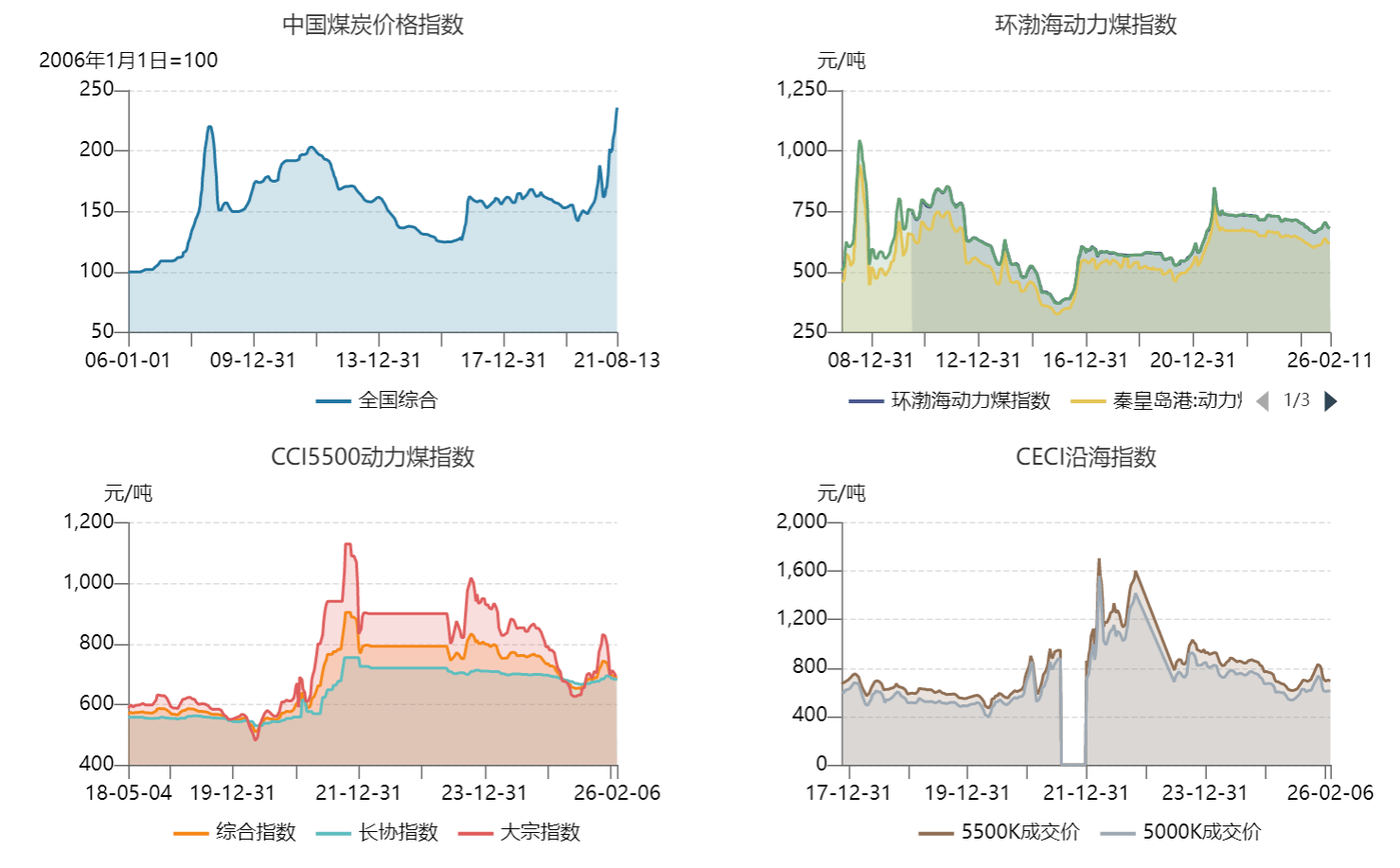
Core Viewpoint - The construction materials industry is experiencing profit improvement driven by two main paths: cost-side improvements leading to profit elasticity release and a revaluation of channel value in the C-end retail transformation [1][2]. Group 1: Cost-side Improvement - The construction materials industry, being resource-intensive, has over 60% of its production costs attributed to energy and raw materials, making it sensitive to price fluctuations of commodities like coal, natural gas, soda ash, and PVC [2]. - Following the high volatility of global energy prices in 2022-2023, current coal supply policies have stabilized price levels, and international natural gas prices have significantly decreased from historical peaks, providing relief on the cost side for construction material companies [2][4]. - The recent decline in coal prices indicates a potential weakening in market demand, which could further impact profit margins positively [4]. Group 2: C-end Retail Transformation - The real estate sector is transitioning into a stock update era, fundamentally changing the demand structure, with a shift from new housing development to renovation and upgrading of existing properties [4][5]. - This shift compels construction material companies to move from a reliance on B-end bulk procurement to a dual-channel strategy that includes both B and C-end operations, enhancing cash flow quality and brand premium capabilities [4][5]. - C-end retail offers advantages such as stable cash flow, higher profit margins, and strong customer loyalty compared to B-end business, which is characterized by longer payment terms and slower receivables [4][5]. Group 3: Market Sentiment and Investment Trends - Institutional investors are increasingly aligning their portfolios with the construction materials sector, as evidenced by a rising proportion of active equity funds in the industry since Q2 2025, indicating a clear left-side layout for the industry cycle [6][10]. - By late January 2026, there was a significant increase in net inflows for construction materials ETFs, marking a transition from active institutional allocation to passive market resonance, suggesting an improvement in liquidity conditions [7][10]. - The construction materials ETF (159745) tracks the CSI Construction Materials Index, which includes leading companies across the entire industry chain, reflecting the overall performance of the sector [10][12].


海螺水泥:公司将持续抓好生产经营,实施精准有效投资
Zheng Quan Ri Bao· 2026-02-12 12:16
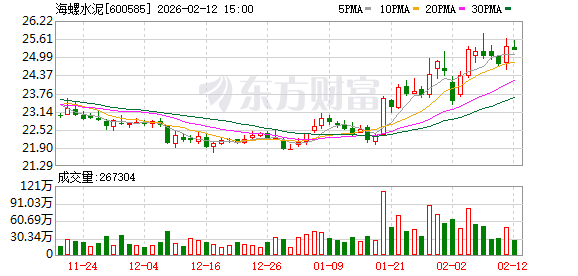
Group 1 - The company emphasizes its commitment to enhancing production operations and implementing precise and effective investments [2] - The company aims to strengthen innovation-driven initiatives and promote low-carbon green circular development [2] - The company is actively managing its market value and responding to market concerns to continuously create value for shareholders [2]
海螺水泥:公司已建立财务共享中心
Zheng Quan Ri Bao Zhi Sheng· 2026-02-12 10:13
Group 1 - The company has established a financial shared service center that covers core business scenarios and coordinates operational entities, enhancing financial collaboration across various business segments [1] - This initiative supports the company's high-quality development by continuously empowering its business units [1]
十万亿化债资金开闸!财政组合拳重塑建材板块逻辑,建材ETF(159745)早周期配置窗口开启
Sou Hu Cai Jing· 2026-02-12 03:28
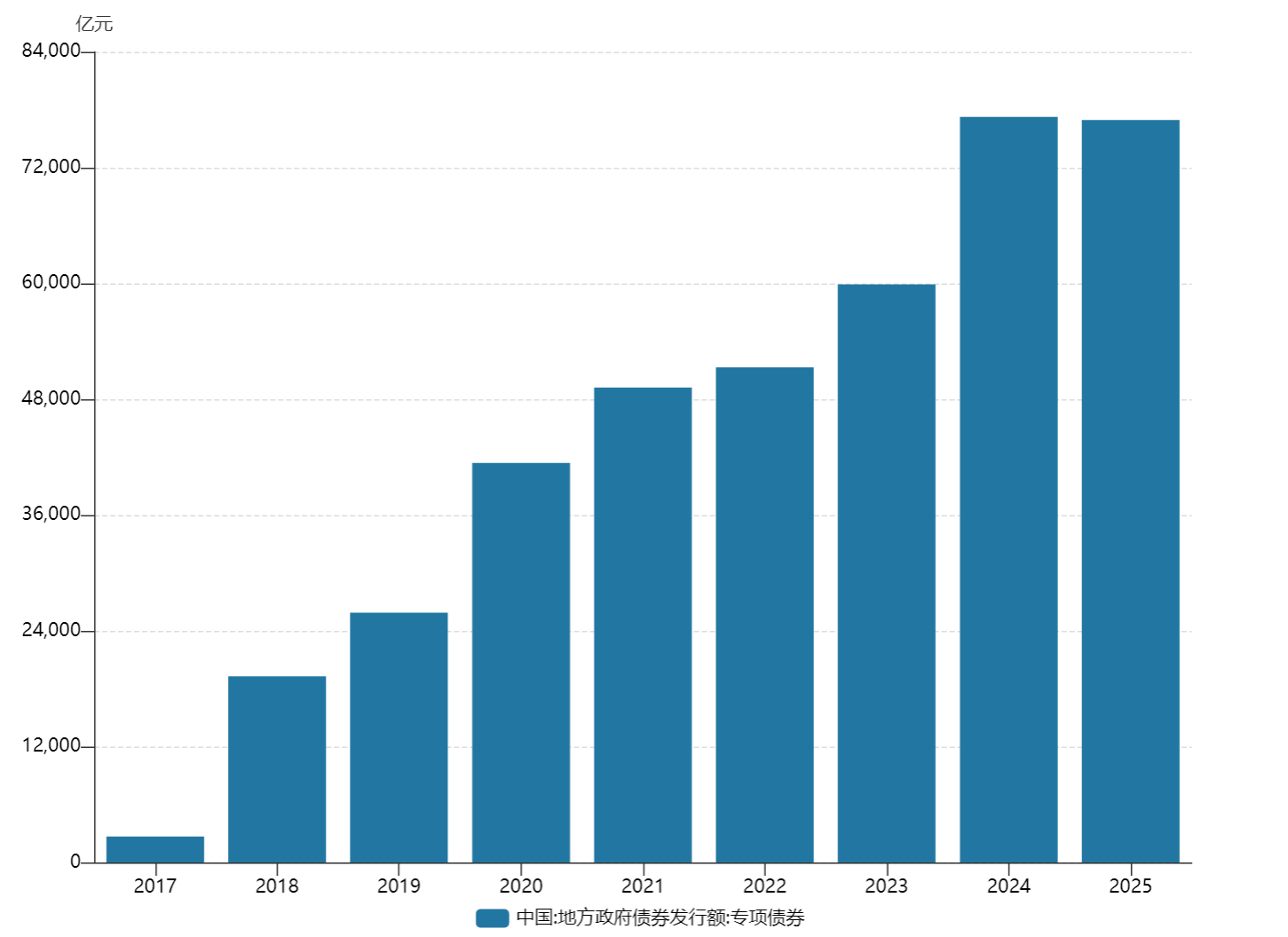
Core Viewpoint - The construction materials industry is experiencing a sustainable growth momentum due to unprecedented debt resolution actions, which are expected to improve market expectations and drive investment recovery in infrastructure and real estate sectors [1] Fiscal Perspective - The current debt resolution measures, including debt swaps and the expansion of special bonds, have systematically alleviated liquidity constraints for local governments, improving fiscal space for infrastructure investments [1] - Special bonds issued by local governments have been increasing annually since 2017, with projections for 2024 and 2025 to exceed 7 trillion yuan, and the total issuance in 2025 expected to surpass 10 trillion yuan for the first time in history [1][4] Infrastructure Investment - The issuance of special bonds is expected to lead to a significant increase in construction activity in transportation, municipal, and water conservancy sectors, with a projected surge in physical work volume in the first half of 2025 [4][6] - Despite a decline in infrastructure investment growth, the sector still holds a significant share of fixed asset investment, indicating its critical role in the overall economy [4] Policy Transition - The policy environment is shifting from "debt replacement" to "investment stimulation," which is likely to further enhance demand for construction materials [5] Demand Dynamics - The demand structure for construction materials is changing, with traditional materials benefiting from infrastructure support and renovation materials gaining from the demand for upgrading existing properties [6] - The dual drivers of infrastructure and real estate are expected to provide a solid foundation for the construction materials sector during this debt resolution cycle [6] Profitability and Market Outlook - The profitability of the cement industry is recovering, with expectations of improved margins due to supply-side adjustments and a favorable demand outlook from real estate policies [8] - The construction materials sector is characterized by high cash flow and potential for stable dividends, with forecasts indicating overall profit recovery by 2026 [8] Investment Opportunities - The construction materials ETF (159745) tracks the performance of the construction materials index, providing investors with a tool to efficiently allocate resources in the sector [8][11] - The sector is viewed as a core cyclical investment opportunity, especially in the context of a market shift towards undervalued, high-dividend stocks [11]
财政"万亿级"弹药就位!基建复苏打响估值修复战,建材ETF(159745)锁仓顺周期龙头
Sou Hu Cai Jing· 2026-02-11 09:28
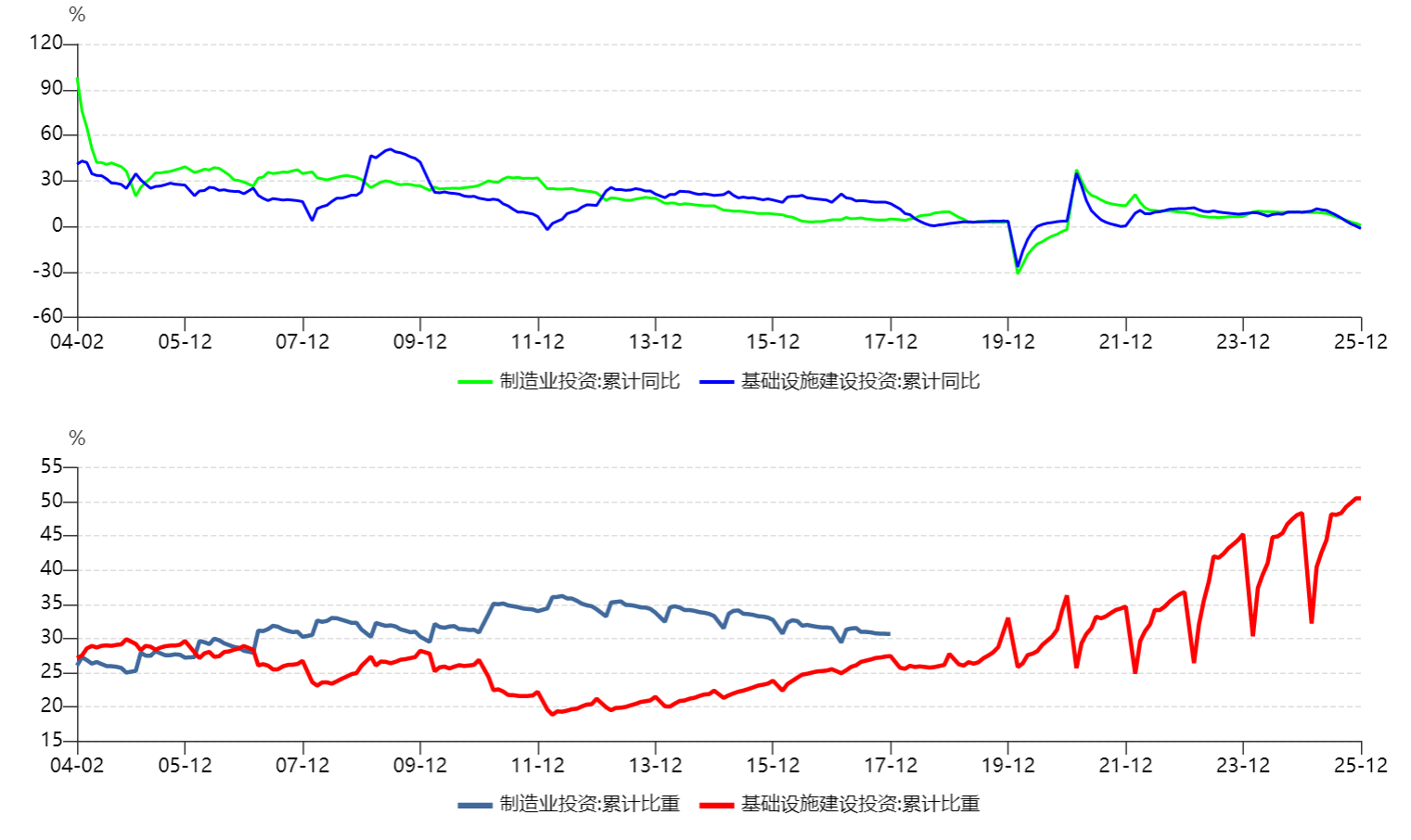
Core Viewpoint - Current infrastructure investment is becoming a crucial support for the economy, with fiscal policies continuously strengthening, leading to a configuration window driven by infrastructure recovery in the building materials sector [1] Group 1: Infrastructure Investment Dynamics - The "14th Five-Year Plan" is entering its final year, accelerating the implementation of major engineering projects, which is providing solid support for the improvement of the industry fundamentals through the demand pull of infrastructure [1] - Since the second half of 2024, active fiscal policies have significantly increased, with the pace of special bond issuance accelerating and the launch of ultra-long special government bonds injecting ample funds into infrastructure investment [1] - Infrastructure investment has a clear policy orientation and planning, unlike the endogenous fluctuations of real estate investment, with 2025 being a key year for the transition between the "14th" and "15th" Five-Year Plans [1][4] Group 2: Investment Trends and Performance - Despite a year-on-year decline in cumulative infrastructure construction investment to -1.48% in December, the cumulative proportion of infrastructure investment remained high at 50.49% in December 2025, reflecting its significant position in fixed asset investment [1][4] - Key areas for current infrastructure investment include urban agglomerations, metropolitan areas, and the connectivity of infrastructure along the "Belt and Road" [4] - Major infrastructure projects are expected to drive demand for cement, pipes, waterproof materials, and other building materials, with a focus on water conservancy and disaster prevention projects [4][5] Group 3: Building Materials Sector Outlook - The building materials industry is currently in a low operating state after inventory destocking, and the concentrated release of infrastructure demand is expected to trigger price elasticity [5] - The profitability transmission from infrastructure recovery is anticipated to drive the development of the building materials sector, with a notable improvement in gross profit margins due to supply-side discipline and cost pressure relief [6] - The building materials sector is characterized by "valuation repair + profit improvement," with the risk of a cliff-like decline in demand eliminated by infrastructure support, leading to a systematic uplift in valuation [8] Group 4: Investment Vehicles and Strategies - The building materials ETF (159745) tracks the CSI All-Share Building Materials Index, covering leading enterprises across the entire industry chain, providing an efficient tool for investors to layout in the building materials sector [8][9] - The top ten holdings in the ETF reflect a high concentration in leading companies across various segments of the building materials industry, accounting for over 60% of the total holdings [9] - The building materials sector is highlighted as a core cyclical investment, with low valuations and high dividends, making it attractive for investors during market shifts towards cyclical stocks [12]



建材行业周报:关注春节后的涨价预期与地产催化
GUOTAI HAITONG SECURITIES· 2026-02-10 13:30
Investment Rating - The report assigns an "Accumulate" rating for the building materials industry [5] Core Insights - The report emphasizes the expectation of price increases post-Spring Festival and the potential catalyst from the real estate sector. It highlights that the consumption building materials sector may begin to show fundamentals independent of real estate from 2025-2026, with a focus on the resilience of the real estate market after the Spring Festival [2][7] - The report recommends leading companies in the consumption building materials sector that have independent growth logic and sufficient dividend valuation support, particularly in the waterproof materials sub-sector [5][7] Summary by Sections Building Materials Industry Investment Strategy - The consumption building materials sector is anticipated to benefit from potential macroeconomic improvements, with a focus on the resilience of the real estate market post-Spring Festival. The report highlights the importance of observing second-hand housing transactions for signs of market recovery [7] - Recommended companies include Oriental Yuhong, Beixin Building Materials, Weixing New Materials, and others that are expected to perform well due to their growth strategies and market positions [7] Market Review - From February 2 to February 6, 2026, the building materials sector increased by 0.70%, with specific segments like glass manufacturing rising by 5.32% [10] - The report notes significant individual stock movements, with companies like Hanjian Heshan and Jinjing Technology showing notable weekly gains [17] Cement Industry - The national cement market price decreased by 1% week-on-week, with significant price drops in regions like Henan and Hubei. The average shipment rate for cement companies fell by approximately 8 percentage points [24][25] - The report anticipates a stabilization in cement prices as the market enters a holiday period, with a focus on the execution of production restrictions in 2026 [7][24] Glass Industry - The average price of domestic float glass increased to 1154.49 RMB/ton, reflecting a week-on-week rise of 9.69 RMB/ton. However, demand is expected to weaken as downstream processing plants shut down for the holiday [42] - The report recommends leading companies in the glass sector, including Fuyao Glass and Xinyi Glass, due to their strong market positions and dividend yields [42][43] Fiberglass Industry - The report indicates that the fiberglass market is experiencing price increases, particularly in the electronic yarn segment, driven by tight supply and steady demand [55] - Recommended companies in this sector include China Jushi and Zhongcai Technology, which are expected to benefit from structural demand upgrades [55]



建材行业周报:关注春节后的涨价预期与地产催化-20260210
GUOTAI HAITONG SECURITIES· 2026-02-10 11:15
Investment Rating - The report assigns an "Accumulate" rating for the building materials industry [5]. Core Insights - The report emphasizes the expectation of price increases post-Spring Festival and the potential catalyst from the real estate sector. It highlights that the consumption building materials sector may begin to show fundamentals independent of real estate from 2025-2026, with a focus on the resilience of the real estate market after the Spring Festival [2][7]. - The report recommends leading companies in the consumption building materials sector that have independent growth logic and sufficient dividend valuation support, particularly in the waterproof materials sub-sector [5][7]. Summary by Sections Investment Strategy - The consumption building materials sector is anticipated to benefit from potential macroeconomic improvements, with a focus on the resilience of the real estate market post-Spring Festival. The report highlights the importance of observing the transaction data in the real estate market for signs of sustained improvement [7]. - Recommendations include companies like Oriental Yuhong, Beixin Building Materials, and Weixing New Materials, which are expected to perform well due to their growth strategies and market positioning [7]. Market Review - The building materials sector saw a 0.70% increase, with cement manufacturing up 0.15%, glass manufacturing up 5.32%, and glass fiber manufacturing down 1.81% during the period from February 2 to February 6, 2026 [10]. - The report notes significant individual stock movements, with Han Jian He Shan and Jin Jing Technology showing notable weekly gains [17]. Cement Industry - The national cement market price decreased by 1% week-on-week, with significant price drops in regions like Henan and Hubei. The average shipment rate for cement companies in key regions fell by approximately 8 percentage points [24]. - The report anticipates a stabilization in cement prices as the market enters a holiday period, with a focus on the potential for price increases post-holiday [24][25]. Glass Industry - The average price of domestic float glass increased to 1154.49 CNY/ton, reflecting a week-on-week rise of 9.69 CNY/ton. However, demand is expected to weaken as downstream processing plants shut down for the holiday [42]. - The report suggests that companies like Fuyao Glass and Xinyi Glass are well-positioned due to their high dividend yields and global market presence [42][43]. Glass Fiber Industry - The report indicates that the price of glass fiber is on an upward trend, supported by tight supply and steady demand. The market for electronic yarn remains strong, with prices for certain products increasing [55]. - Leading companies in this sector, such as China Jushi and Zhongcai Technology, are recommended due to their competitive advantages and market positioning [55].
建材行业2025年年报业绩前瞻:周期建材分化,消费建材个股修复
Shenwan Hongyuan Securities· 2026-02-10 10:31
Investment Rating - The report rates the construction materials industry as "Overweight," indicating an expectation for the industry to outperform the overall market [2][12]. Core Insights - Domestic cement prices are expected to show a trend of high prices followed by a decline, with an average price of 372.8 RMB/ton in 2025, a decrease of 12.6 RMB/ton year-on-year. Cement production is projected to decline by 7.2% in 2025, with a gradual recovery in profitability anticipated in 2026 due to supply-side improvements [4]. - The glass sector continues to face pressure, with the average price of flat glass expected to drop to 1323.3 RMB/ton in 2025, a significant decrease of 383.4 RMB/ton year-on-year. The industry is entering a period of accelerated cold repairs, which may enhance profitability in the future [4]. - The fiberglass yarn market remains relatively stable, with an expected average price of 3866 RMB/ton in 2025, reflecting a year-on-year increase of 174 RMB/ton. The demand for specialty electronic fabrics is anticipated to grow rapidly, contributing positively to the sector's performance [4]. - Consumer building materials are expected to show strong performance, with companies like Sanke Tree and Han Gao Group maintaining excellent revenue and profit due to strong channel development and brand advantages [4]. Summary by Sections Cement Industry - The average cement price in 2025 is projected at 372.8 RMB/ton, down 12.6 RMB/ton from the previous year. The first quarter's average price is expected to be 400.8 RMB/ton, declining to 358.0 RMB/ton by the fourth quarter. Cement production is expected to decrease by 7.2% in 2025, with a recovery in profitability anticipated in 2026 due to supply-side improvements [4]. Glass Industry - The average price of flat glass is expected to be 1323.3 RMB/ton in 2025, a decrease of 383.4 RMB/ton year-on-year. The industry is entering a cold repair cycle, with daily melting capacity dropping below 150,000 tons. This may lead to improved profitability in the future [4]. Fiberglass Sector - The average price of fiberglass yarn is projected to be 3866 RMB/ton in 2025, an increase of 174 RMB/ton year-on-year. The demand for specialty electronic fabrics is expected to accelerate, contributing positively to the sector's performance [4]. Consumer Building Materials - Companies such as Sanke Tree and Han Gao Group are expected to perform strongly due to their robust channel development and brand advantages. Other companies in the sector are also expected to maintain good operational quality, with potential for significant performance recovery in 2026 [4]. Investment Recommendations - The report suggests focusing on companies with improving quarterly reports and those benefiting from supply-side adjustments. Recommended companies include Conch Cement, Huaxin Cement, and Tianshan Shares in the cement sector, as well as China Jushi and Zhongcai Technology in the fiberglass sector. In consumer building materials, companies like Dongfang Yuhong and Kezhong Shares are highlighted for their strong performance [4].