Shanxi Xinghuacun Fen Wine Factory (600809)

Search documents
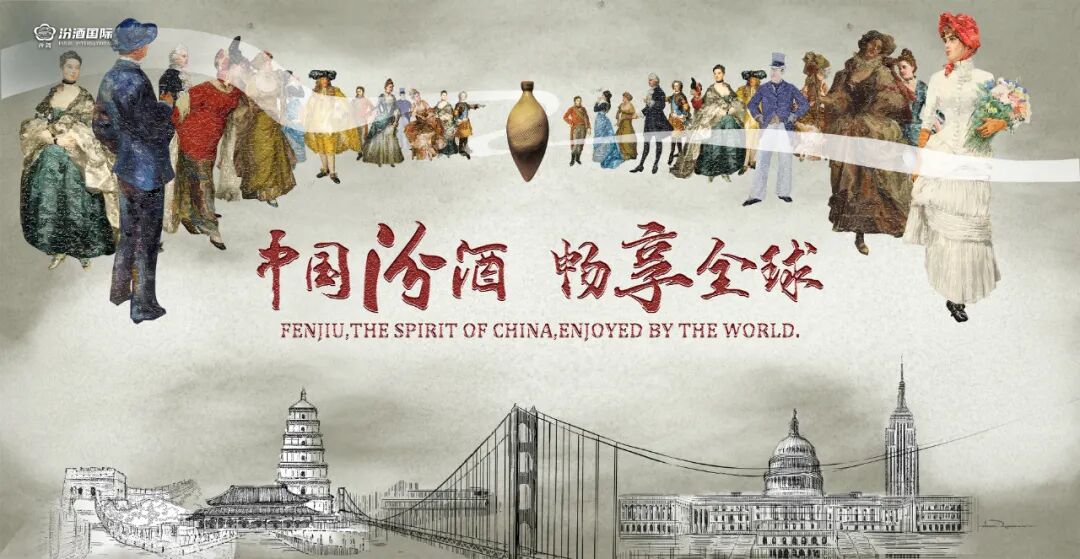
汾酒阿联酋体验店隆重开业
Zhong Guo Jin Rong Xin Xi Wang· 2026-01-04 06:51
新浪财经"酒价内参"重磅上线 知名白酒真实市场价尽在掌握 开业仪式上,汾酒国际相关负责人、庞学禹董事长共同为"汾酒阿联酋体验店"揭幕,红色绸布缓缓落下,标志着体验店正式面向公众开放。 在热烈的掌声中,汾酒国际相关负责人、庞学禹董事长还与阿联酋中华工商总会第一执行会长宋弘、阿联酋湖南商会终身荣誉会长陈陵辉、光迅国际联合 创始人郑丽君、拉斯海马酒窖Premium Cellars店面经理Sreejith Keekaroth等特邀嘉宾共同执起金剪,为"汾酒阿联酋体验店"启动剪彩。现场气氛庄重而喜 庆,嘉宾移步店内参观,听取工作人员对汾酒酿造工艺与文化故事的细致讲解。 山西杏花村汾酒国际贸易有限责任公司(后称汾酒国际)相关负责人在致辞中表示,汾酒阿联酋体验店的落地不仅是汾酒深耕中东市场、拓展国际布局的 重要一步,更搭建起一座连接中阿文化与经贸合作的桥梁。公司将以纯正的汾酒品质为核心,以专业服务为依托,让迪拜及周边地区的朋友近距离感受中 华白酒的醇香魅力,读懂背后深厚的东方文化内涵。未来,汾酒将携手拉斯海马酒庄深化合作,精准贴合本地消费需求,做好产品供应与文化传播,让汾 酒成为中阿友人共叙情谊、共享美好的优选佳酿,也为两 ...


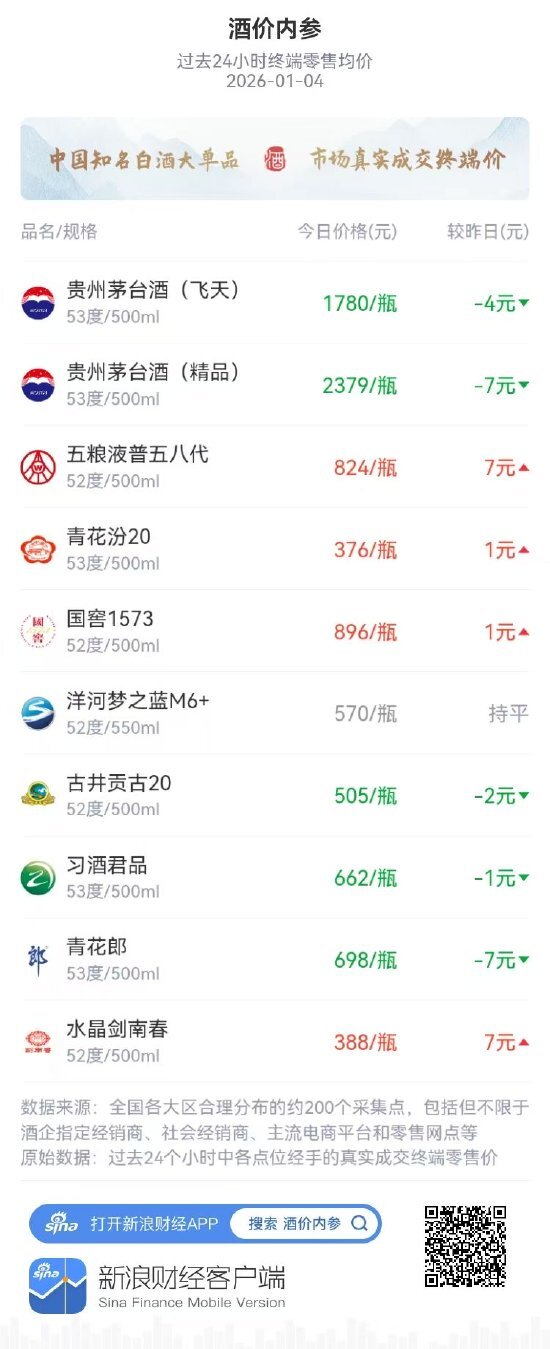
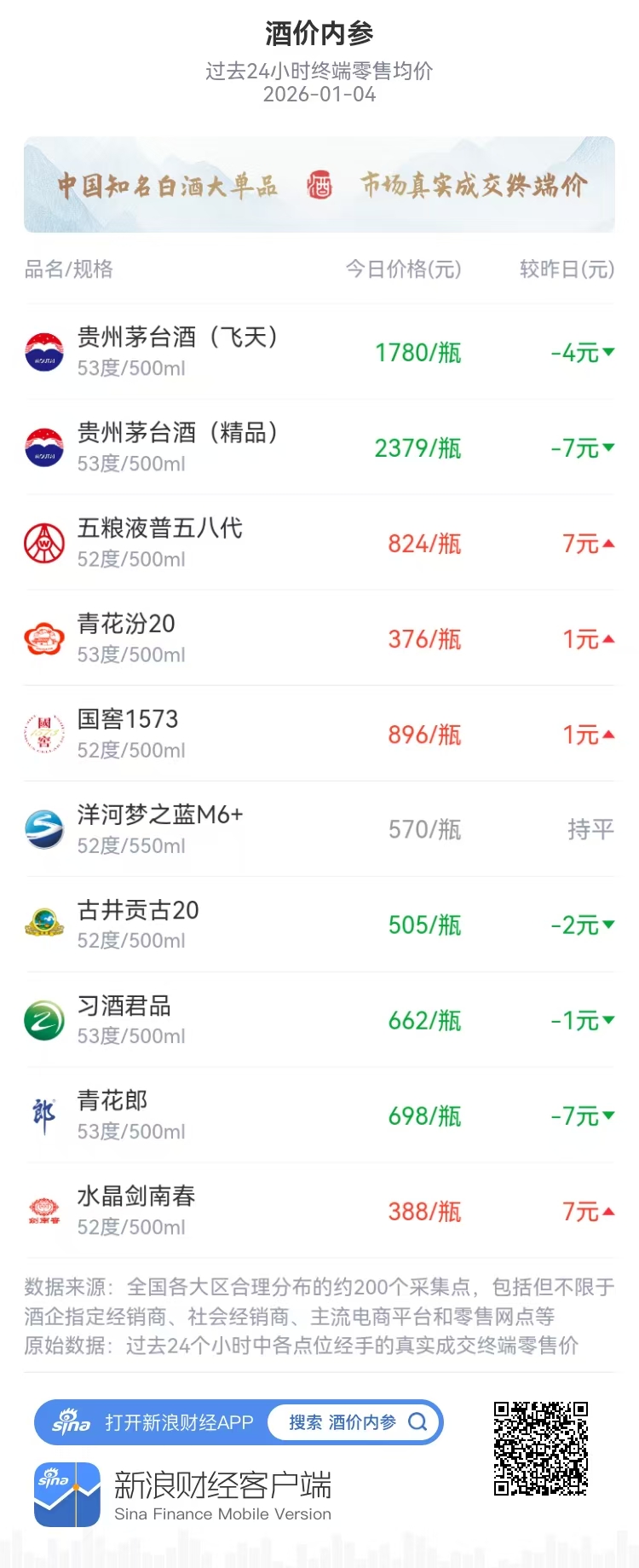
酒价内参1月4日价格发布,青花汾20微涨1元
Xin Lang Cai Jing· 2026-01-04 01:41
来源:酒业内参 sma 打开新浪财经APP 搜索 酒价内参 Q 新浪财经客户端 Sina Finance Mobile Version 白酒业的重要新闻方面,在元旦假期销售客户数超过十万名之后,茅台旗下数字营销平台"i茅台"于1月 3日宣布了一项关键调整:为迎接春节旺季并满足更广泛消费者的需求,自1月4日至春节前,将每位用 户每日购买53%vol 500ml飞天茅台(2026)的最高限额从12瓶下调至6瓶。此次调整将持续至春节前, 此举旨在通过更均衡的投放,让更多消费者能在节日期间购买到飞天产品。 | 1 1 | | --- | | | 国窖1573 52度/500ml | 896/瓶 | 1元A | | --- | --- | --- | --- | | 1 - 1 | 洋河梦之蓝M6+ | 570/瓶 | 持本 | | | 52度/550ml | | | | | 古井贡古20 | 505/瓶 | -2元▼ | | | 52度/500ml | | | | 2 | 习酒君品 53度/500ml | 662/瓶 | -1元▼ | | | 青花郎 53度/500ml | 698/瓶 | -7元▼ | | | 水晶 ...





酒价内参1月4日价格发布,青花郎下跌7元
Xin Lang Cai Jing· 2026-01-04 01:24
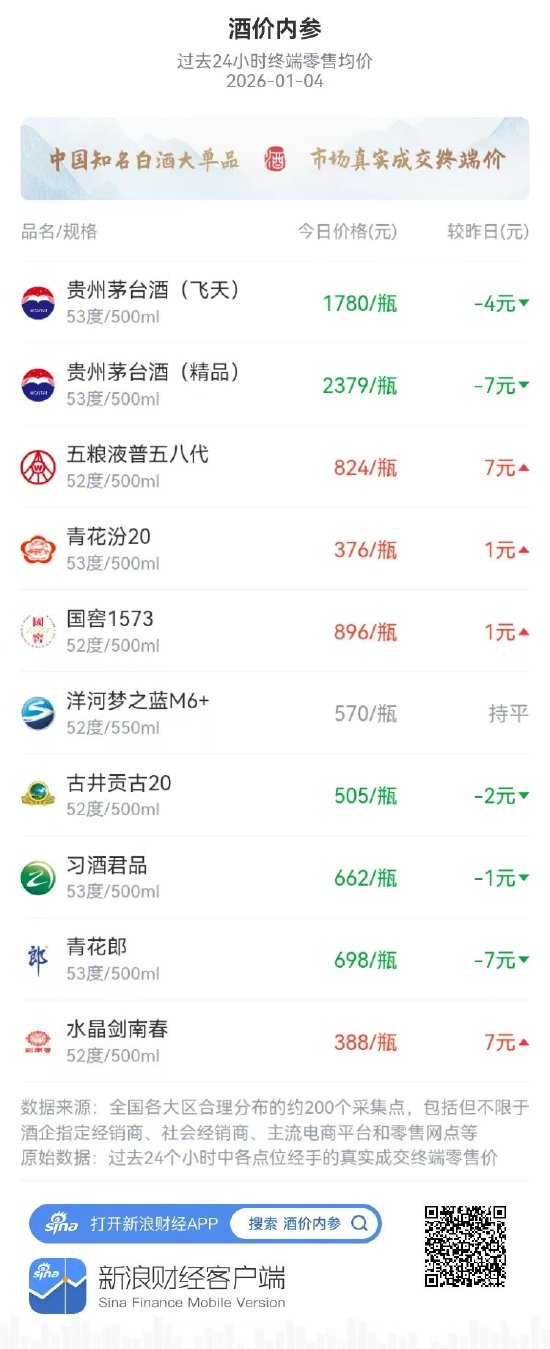
Core Insights - The core viewpoint of the article highlights the ongoing decline in the retail prices of major Chinese liquor brands, with the overall market sentiment remaining cautious as prices continue to slowly decrease [1][4]. Price Trends - The average retail price of the top ten Chinese liquor products on January 4 is reported at 9,078 yuan, down 5 yuan from the previous day, marking a new low for four consecutive trading days [1][4]. - The market shows a mixed performance with five products declining, four increasing, and one remaining stable [1][4]. Price Changes of Specific Products - Notable price increases include: - Wuliangye Pu Wubai: up 7 yuan per bottle [1][4] - Shuijingfang Jianan Chun: up 7 yuan per bottle [1][4] - Qinghua Fen 20: up 1 yuan per bottle [1][4] - Guojiao 1573: up 1 yuan per bottle, achieving four consecutive days of price increases [1][4] - Significant price decreases include: - Premium Moutai: down 7 yuan per bottle [1][4] - Qinghua Lang: down 7 yuan per bottle [1][4] - Feitian Moutai: down 4 yuan per bottle [1][4] - Gujing Gong Gu 20: down 2 yuan per bottle [1][4] - Xijiu Junpin: down 1 yuan per bottle [1][4] Market Data Collection - The data for the "Liquor Price Reference" is sourced from approximately 200 collection points across various regions, including designated distributors, social distributors, mainstream e-commerce platforms, and retail outlets, aiming to provide objective and traceable market price data [2][5]. Industry News - In a significant industry update, Moutai's digital marketing platform "i Moutai" announced a reduction in the daily purchase limit for the 53% vol 500ml Feitian Moutai from 12 bottles to 6, effective from January 4 until the Spring Festival, to better meet consumer demand during the holiday season [2][5].
酒价内参1月4日价格发布,国窖1573微涨1元实现四连阳
Xin Lang Cai Jing· 2026-01-04 01:24
新浪财经"酒价内参"重磅上线 知名白酒真实市场价尽在掌握 新浪财经"酒价内参"过去24小时中收集的数据显示,中国白酒市场十大单品的终端零售均价在1月4日延 续弱势整理,整体价格继续小幅下行。如果十大单品各取一瓶整体打包售卖,今日总售价为9078元,较 昨日回落5元,连续第四个交易日创下近期新低。市场整体情绪依然谨慎,价格中枢在低位持续且缓慢 下移。 今日市场格局分化,五跌四涨一平。上涨产品中,五粮液普五八代表现亮眼,环比上涨7元/瓶,领涨市 场。水晶剑南春价格同样上涨7元/瓶。青花汾20与国窖1573价格分别微涨1元/瓶,后者已经实现四连 阳。洋河梦之蓝M6+价格则与昨日持平。下跌产品方面,精品茅台的价格回调幅度居前,下跌7元/瓶。 青花郎价格下跌7元/瓶。飞天茅台价格下跌4元/瓶。古井贡古20价格下跌2元/瓶。习酒君品价格微跌1 元/瓶。市场缺乏明确的上涨主线,多数产品均在窄幅区间内波动整理。 "酒价内参"的每日数据源自全国各大区均有合理分布的约200个采集点,包括但不限于酒企的指定经销 商、社会经销商、主流电商平台和零售网点等,原始取样数据为过去24个小时中各点位经手的真实成交 终端零售价格,力求为社会各 ...
酒价内参1月4日价格发布,水晶剑南春上涨7元领涨
Xin Lang Cai Jing· 2026-01-04 01:24
新浪财经"酒价内参"重磅上线 知名白酒真实市场价尽在掌握 新浪财经"酒价内参"过去24小时中收集的数据显示,中国白酒市场十大单品的终端零售均价在1月4日延 续弱势整理,整体价格继续小幅下行。如果十大单品各取一瓶整体打包售卖,今日总售价为9078元,较 昨日回落5元,连续第四个交易日创下近期新低。市场整体情绪依然谨慎,价格中枢在低位持续且缓慢 下移。 今日市场格局分化,五跌四涨一平。上涨产品中,五粮液普五八代表现亮眼,环比上涨7元/瓶,领涨市 场。水晶剑南春价格同样上涨7元/瓶。青花汾20与国窖1573价格分别微涨1元/瓶,后者已经实现四连 阳。洋河梦之蓝M6+价格则与昨日持平。下跌产品方面,精品茅台的价格回调幅度居前,下跌7元/瓶。 青花郎价格下跌7元/瓶。飞天茅台价格下跌4元/瓶。古井贡古20价格下跌2元/瓶。习酒君品价格微跌1 元/瓶。市场缺乏明确的上涨主线,多数产品均在窄幅区间内波动整理。 "酒价内参"的每日数据源自全国各大区均有合理分布的约200个采集点,包括但不限于酒企的指定经销 商、社会经销商、主流电商平台和零售网点等,原始取样数据为过去24个小时中各点位经手的真实成交 终端零售价格,力求为社会各 ...
酒价内参1月4日价格发布 市场弱势整理整体价格继续下探
Xin Lang Cai Jing· 2026-01-04 01:09
Core Viewpoint - The Chinese liquor market is experiencing a slight downward trend in retail prices for the top ten products, with the overall market sentiment remaining cautious and prices continuing to decline slowly [1]. Price Trends - The average retail price of the top ten liquor products on January 4 is 9,078 yuan, down 5 yuan from the previous day, marking the fourth consecutive day of decline [1]. - The market shows a mixed performance with five products increasing in price, four decreasing, and one remaining stable [1]. Price Changes of Key Products - Notable price increases include: - Wuliangye Pu Wubai: up 7 yuan per bottle [1][3]. - Shuijing Jian Nan Chun: up 7 yuan per bottle [1][4]. - Guojiao 1573: up 1 yuan per bottle, achieving four consecutive days of price increases [1][3]. - Price decreases include: - Premium Moutai: down 7 yuan per bottle [1][3]. - Qinghua Lang: down 7 yuan per bottle [1][4]. - Feitian Moutai: down 4 yuan per bottle [1][3]. - Gujing Gonggu 20: down 2 yuan per bottle [1][4]. - Xijiu Junpin: down 1 yuan per bottle [1][4]. Market Sentiment - The overall market sentiment remains cautious, with a lack of clear upward trends and most products fluctuating within narrow price ranges [1].
现在的年轻人,基本上已远离了白酒,2个根本原因,其他都是借口
Sou Hu Cai Jing· 2026-01-02 08:43
Core Viewpoint - The decline in liquor consumption, particularly in the high-end segment, is primarily attributed to economic conditions and policy changes rather than a shift in young people's drinking habits [1][31]. Economic Environment - The liquor industry, especially high-end liquor, is categorized as an "elastic consumption" good, meaning it is not a necessity and is more likely to be cut from budgets during economic downturns [14][18]. - The turning point for the liquor industry occurred in 2020, with stocks of major brands like Moutai and Wuliangye reaching historical peaks in early 2020 but subsequently declining for over five years [3][5]. - By the third quarter of 2025, even industry giants like Wuliangye reported significant profit declines, a scenario previously unimaginable [5]. - Economic pressures have led to reduced consumer spending, with a notable decrease in the business liquor market, which dropped by 32% year-on-year in 2024 [18][20]. Consumer Demographics - The primary consumer base for liquor has historically been middle-aged individuals, with those under 30 accounting for less than 15% of total consumption, while those over 35 represent 72.8% [9][12]. - The notion that young people are the cause of declining sales overlooks the fact that the main consumer group is facing economic challenges, leading to reduced spending [12][31]. Policy Impact - Recent policy changes, such as the revised regulations on government consumption of alcohol, have significantly altered the consumption landscape, particularly in the business sector [20][22]. - The 2025 revision of the "Regulations on Saving and Opposing Waste in Party and Government Agencies" expanded restrictions on all alcoholic beverages, contributing to a short-term decline of 2%-3% in the liquor sector [22][28]. - Local policies, like those from Guizhou province aimed at transforming the liquor industry, indicate a need for adaptation in response to changing market conditions [24][28]. Market Dynamics - The inventory levels of liquor companies have surged, with 20 listed liquor firms reporting stock levels of 168.39 billion yuan, an increase of 19.29 billion yuan year-on-year [26]. - Many distributors are experiencing price inversions, where the selling price is lower than the manufacturer's suggested price, further dampening market enthusiasm [26][28]. - The combination of economic pressures and policy regulations has compressed the consumption space for high-end liquor, which previously relied heavily on government and corporate events [30][31]. Conclusion - The decline in liquor consumption is fundamentally linked to economic conditions and regulatory changes rather than a simple shift in consumer preferences among younger demographics [31][37]. - The industry must adapt to these economic and policy shifts to meet evolving consumer demands, rather than attributing the decline to younger consumers [35][37].
寒意加剧!中小酒企将加速洗牌
Qi Lu Wan Bao· 2026-01-01 16:31
Core Viewpoint - The adjustment trend in the liquor industry is becoming increasingly severe, as evidenced by the third-quarter financial reports of 20 A-share liquor companies, indicating significant declines in revenue and net profit [1] Financial Performance - The total revenue of 20 liquor companies in the third quarter reached 77.976 billion yuan, a year-on-year decline of 18.47% [1] - The net profit for these companies was 28.011 billion yuan, reflecting a year-on-year drop of 22.22%, marking a new low for this cycle [1] Industry Dynamics - The "Matthew Effect" is becoming more pronounced, with only Kweichow Moutai and Shanxi Fenjiu achieving growth in both revenue and net profit, while the performance decline of the other 18 companies has worsened compared to the second quarter [1] - Over half of the liquor companies reported a year-on-year decline in net profit, with regional companies facing particularly severe challenges [1] Regional Company Challenges - Kuozi Jiao's net profit plummeted by 92.55%, nearing a loss, while several companies like Jiu Gui Jiu and Huang Tai Jiu Ye have also fallen into losses [1] - Jinzhongzi Jiu experienced a slight revenue increase of 3.73%, but still reported a net loss, failing to reverse the industry's downturn [1] Market Trends - The industry is witnessing a dual pressure from top-tier companies and the inherent brand and channel weaknesses of regional firms, leading to a shrinking survival space [1] - The trend towards lower alcohol content and targeting younger consumers is becoming irreversible in the liquor industry, with the market for low-alcohol beverages expected to exceed 74 billion yuan by 2025, with a compound annual growth rate of 25%, significantly outpacing the overall liquor industry [1] - Both top-tier and regional liquor companies need to optimize product structures and cultivate younger customer bases to explore new growth avenues [1]


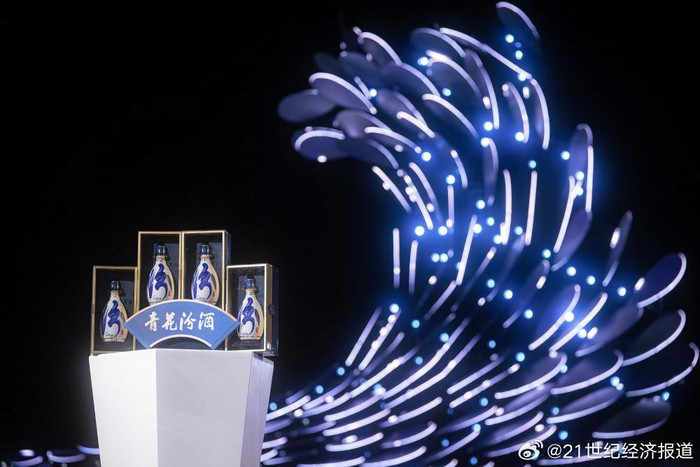
2026大湾区新年音乐会在珠海上演,汾酒冠名奏响时代乐章
2 1 Shi Ji Jing Ji Bao Dao· 2025-12-31 15:05
Group 1 - The 2026 New Year Concert titled "Sailing Towards the Blue" was held at Zhuhai Xiangzhou Port and broadcasted on multiple CCTV channels, showcasing the development of the Guangdong-Hong Kong-Macao Greater Bay Area through music [1] - The concert featured a narrative line of "Music Tour Bus" intertwined with classic and original pieces, divided into four movements, highlighting the dynamic and progressive spirit of the Bay Area [1] - The concert was exclusively sponsored by Fenjiu, which has maintained steady growth even during industry adjustments, aligning with its reform blueprint known as the "Revitalization Program" [1] Group 2 - Fenjiu disclosed six achievements during the 2025 Global Distributor Conference, including the systematic construction of the Fenxiang Benefits system and enhanced operational resilience [1] - The product structure has become more scientific, with a stable foundation for the "Four-Wheel Drive" strategy and clearer positioning of the "Three Major Brand Strategies" [1] - The "Fenjiu+" creative marketing model has gained traction, and cultural products are increasingly resonating with users' emotions [1] Group 3 - The collaboration with CCTV is a key part of Fenjiu's brand strategy, integrating core channel resources to promote its 6000-year brewing culture and quality commitment [2] - By launching the concert at the beginning of the New Year in the Greater Bay Area, Fenjiu aims to use music as a bridge to convey blessings to the national audience and share the story of Chinese brands with the world [2]
2025白酒年度事件大盘点:告别高增长,行业挑战下的变革与新机
Sou Hu Cai Jing· 2025-12-31 14:12
Core Insights - The Chinese liquor industry is entering an adjustment phase in 2025, facing challenges such as the "ban on alcohol," rising inventory pressure, and declining profits, yet opportunities for growth are emerging through innovation and market expansion [2][4]. Policy Impact - A strict "ban on alcohol" policy was introduced, prohibiting public officials from consuming alcohol during workdays and even at home gatherings, with severe penalties for violations [2][4]. - This policy aims to curb corruption and address public health concerns related to alcohol consumption [4]. Digital Transformation - Leading liquor companies are advancing their digital transformation from isolated upgrades to comprehensive collaborative development, with initiatives like the first "lighthouse factory" by Luzhou Laojiao and 5G-connected factories by Shede [5]. - The Ministry of Industry and Information Technology has released guidelines for digital transformation in the liquor industry, with companies actively contributing to industry mapping [5]. ESG Practices - ESG efforts among listed liquor companies have shifted from compliance to value creation, with companies like Zhenjiu Li Du setting ambitious carbon neutrality goals and achieving high water recycling rates [7]. - Companies are integrating ESG principles into performance assessments and utilizing blockchain for product traceability [7]. Market Dynamics - The liquor market is experiencing severe inventory issues, with major companies implementing supply control measures and channel reforms to reshape pricing structures [8][10]. - In the first three quarters of 2025, liquor exports reached $704 million, a 5.3% increase year-on-year, indicating a growing international market [8][10]. Young Consumer Trends - The younger generation is increasingly favoring low-alcohol and flavored beverages, with participation rates among Gen Z rising from 66% in 2023 to 73% in 2025 [12]. - Major companies are launching low-alcohol products to cater to this demographic, with Wuliangye and Luzhou Laojiao leading the way [12]. Personnel Changes - The liquor industry is undergoing significant personnel changes, with over 20 companies experiencing nearly 30 key position shifts, indicating a trend towards younger management [14][16]. - The new management is expected to focus on refined operations and innovation to navigate industry pressures [16]. Financial Performance - In the first nine months of 2025, only two companies, Kweichow Moutai and Shanxi Fenjiu, reported positive net profit growth, while the average profit of 20 liquor companies fell by 39.2% [18]. - The average inventory turnover days for these companies surged to 1456.29 days, marking a significant increase from the previous year [18]. Health-Oriented Products - The health-oriented liquor market is gaining traction, with sales of functional products like Jinjian's red label liquor increasing by 50% in the first half of the year [20]. - However, the market faces challenges such as product homogeneity and compliance risks, with a projected market size exceeding 58 billion yuan [22]. Price Fluctuations - Moutai's price fell below the official guidance price of 1499 yuan per bottle in December 2025, raising concerns about future price trends [22]. - Following a price drop, Moutai's wholesale prices rebounded due to supply control measures and increased market demand during the peak season [24].