
CMS(600999)

Search documents
如何做好金融“五篇大文章”?中信、银河、中信建投等顶级券商“掌舵人”齐聚上海:要打破“单打独斗”模式
Xin Lang Zheng Quan· 2025-10-20 02:12
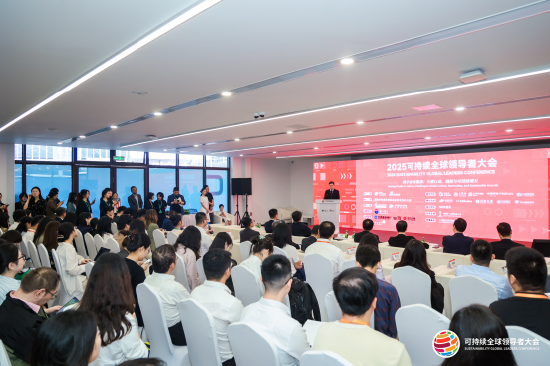
Group 1: Conference Overview - The 2025 Sustainable Global Leaders Conference will be held from October 16 to 18 in Shanghai, focusing on "Facing Challenges Together: Global Action, Innovation, and Sustainable Growth" as its core theme, aiming to explore new paths for sustainable development and inject "Chinese momentum" into global governance [1] - The conference is co-hosted by the World Green Design Organization (WGDO) and Sina Group, with support from the IFRS Foundation and the Shanghai Huangpu District People's Government [1] Group 2: Financial Sector Insights - Discussions at the conference highlighted the importance of the "Five Major Articles" in constructing a new ecosystem for sustainable development in the securities industry, emphasizing collaboration among banks, securities, and insurance institutions to provide comprehensive services [3][7] - China Galaxy Securities' Chairman Wang Sheng noted that innovation is the primary driving force for development, with a focus on technology finance as the first of the "Five Major Articles," indicating that the capital market has formed a multi-level service system for technology finance [5] - CITIC Securities' General Manager Zou Yingguang emphasized the need for continuous investment in technology finance and the exploration of innovative products in green finance to support the "dual carbon" goals [10] - The ESG strategy of China Merchants Securities aims to create a capital cycle that supports low-carbon transformation and enhance social welfare, integrating the "Five Major Articles" with ESG development [12] - Guangda Securities' President Liu Qiuming discussed the importance of integrating the "Five Major Articles" into the company's strategy and achieving positive progress in supporting innovation and financing for high-tech enterprises [15] - Guo Chuanzhou, Chairman of Yuekai Securities, highlighted the company's efforts in promoting inclusive finance and knowledge property transactions to support small and medium-sized enterprises [19] Group 3: Wealth Management Trends - Guo Xiaobo, President of Guolian Minsheng Securities, pointed out that wealth management has a significant impact on the valuation and market value of securities firms, with a notable shift towards wealth management and asset management in the global securities industry [17]






关于新增山西证券股份有限公司 为建信旗下部分基金产品 销售机构的公告
Zhong Guo Zheng Quan Bao - Zhong Zheng Wang· 2025-10-19 22:39
Group 1 - The announcement states that Shanxi Securities Co., Ltd. will start selling funds managed by CCB Fund Management Co., Ltd. from October 20, 2025 [1][2] - Investors can conduct business related to the funds at the sales outlets of the mentioned institutions, following the relevant business rules and processes [1][4] - CCB Fund Management Co., Ltd. provides contact information for customer service and its website for further inquiries [2][6] Group 2 - The announcement also mentions that from October 20, 2025, China Merchants Securities Co., Ltd. will act as a subscription and redemption agent for certain exchange-traded open-end index funds managed by CCB Fund [4][6] - Similar to the previous announcement, investors can handle fund-related business at the sales outlets of the new institution, adhering to the established rules and processes [4][6] - CCB Fund Management Co., Ltd. reiterates the importance of reading legal documents such as the fund contract and prospectus for detailed information about the funds [1][4] Group 3 - CCB Fund Management Co., Ltd. announces a system maintenance period on October 26, 2025, from 00:00 to 08:00, during which various services will be temporarily unavailable [6] - The maintenance will affect online trading, customer service calls, and real-time account opening services across multiple banks and platforms [6] - The company apologizes for any inconvenience caused during this maintenance period [6] Group 4 - CCB Fund Management Co., Ltd. announces a dividend distribution for the CCB CSI 1000 Index Enhanced Initiation Fund, with the distribution date set for the last working day of the third quarter [8][9] - The fund will distribute at least 10% of the available profit per share, with options for cash dividends or reinvestment [9][10] - Investors must be aware of the eligibility criteria for receiving dividends based on their transaction activities on the record date [10][11]

富国恒益3个月持有期混合型基金中基金(ETF-FOF)基金份额发售公告
Zhong Guo Zheng Quan Bao - Zhong Zheng Wang· 2025-10-19 22:36
Group 1 - The fund is named "Fuguo Hengyi 3-Month Holding Period Mixed Fund of Funds (ETF-FOF)" and is a mixed fund of funds type [15] - The fund will be publicly offered from October 27, 2025, to November 7, 2025, with the possibility of adjusting the fundraising period based on subscription conditions [4][20] - The minimum subscription amount for the fund is set at RMB 10, including subscription fees, while the minimum for direct sales is RMB 50,000 for the first subscription [3][25] Group 2 - The fund has a minimum total subscription amount of 200 million units and a minimum fundraising amount of RMB 200 million [21] - The fund operates as a contract-based open-end fund with an indefinite duration [15][16] - Investors must open a fund account with the management company to subscribe, and only one account per investor is allowed [6][17] Group 3 - The fund's management company is Fuguo Fund Management Co., Ltd., and the custodian is China Merchants Securities Co., Ltd. [52] - The fund's net value may fluctuate due to market volatility, and the management company does not guarantee profits or minimum returns [8][14] - The fund will invest primarily in securities approved by the China Securities Regulatory Commission [10][11]
招商证券:投资者逢低加仓意愿较强 市场有望重拾升势
Zheng Quan Shi Bao Wang· 2025-10-19 15:05
Core Viewpoint - The current market is experiencing a strong inflow of incremental funds, with investors showing a strong willingness to accumulate positions on dips, indicating a potential recovery in market momentum [1] Short-term Strategy - Focus on previously popular sectors such as domestic computing power, semiconductor self-sufficiency, controllable nuclear fusion, military industry, and commercial aerospace, which may rebound as risk appetite increases [1] Long-term Strategy - Long-term investments should consider the potential economic resonance between China and the U.S. in 2026 and the trend of rising Producer Price Index (PPI), with an emphasis on allocating resources to low-position cyclical sectors [1]
A股趋势与风格定量观察:量能超预期走弱,暂时调降看好程度
CMS· 2025-10-19 09:11
- The "Growth-Value Style Rotation Model" suggests overweighting growth stocks based on quantitative economic cycle analysis, where a high profit cycle slope and strong credit cycle favor growth, while high interest rate levels favor value. The model combines signals from fundamentals, valuation, and sentiment to recommend growth allocation[29][30][31] - The "Growth-Value Style Rotation Strategy" has achieved an annualized return of 13.10% since 2012, outperforming the benchmark's 7.77% annualized return. The strategy's annualized excess return is 5.33%, with a maximum drawdown of 43.07% compared to the benchmark's 44.13%[30][32] - The "Small-Cap vs Large-Cap Style Rotation Model" is constructed using 11 effective rotation indicators, including market sentiment concentration, Beta dispersion, and volatility risk. Currently, 7 indicators favor large-cap stocks, maintaining a recommendation to overweight large-cap style[33][34] - The "Small-Cap vs Large-Cap Style Rotation Strategy" has delivered an annualized excess return of 9.91% this year, with a shift from small-cap allocation in the first half to large-cap allocation in the second half. Since 2014, the strategy has consistently generated positive excess returns annually[34][35] - The "Short-Term Timing Strategy" integrates signals from fundamentals, valuation, sentiment, and liquidity. This week, the strategy turned cautious due to weak manufacturing PMI, high PE and PB valuation levels, and subdued market sentiment. Liquidity signals remain neutral[19][20][21] - The "Short-Term Timing Strategy" has achieved an annualized return of 16.52% since 2012, significantly outperforming the benchmark's 4.73%. The strategy's annualized excess return is 11.79%, with a maximum drawdown of 15.49% compared to the benchmark's 31.41%. This year, the strategy has delivered a return of 23.22%, with an excess return of 11.16%[21][24][27]
ETF基金周度跟踪:商品ETF表现强劲,资金大幅流入商品与港股TMT板块-20251018
CMS· 2025-10-18 11:38
1. Report Industry Investment Rating - No industry investment rating information is provided in the report. 2. Core Viewpoints of the Report - The report focuses on the performance of the ETF fund market from October 13th to October 17th, summarizing the performance and fund flows of the overall ETF market, different popular segmented ETF funds, and innovative theme and segmented industry ETF funds for investors' reference [1]. - During this period, most stock ETFs declined. Commodity ETFs had the largest increase, with an average gain of 9.05% for funds above a certain scale. Conversely, Hong Kong TMT ETFs, A-share TMT ETFs, and Hong Kong mid - stream manufacturing ETFs had significant drops, with average declines of 7.71%, 6.93%, and 6.93% respectively for funds above a certain scale [2][5]. - Funds flowed significantly into commodity ETFs and Hong Kong TMT ETFs, with net inflows of 20.745 billion yuan and 16.662 billion yuan respectively for the whole week. In contrast, bond ETFs and A-share large - cap ETFs had significant outflows, with net outflows of 13.897 billion yuan and 10.668 billion yuan respectively for the whole week [3][7]. 3. Summaries According to Relevant Catalogs 3.1 ETF Market Overall Performance - **Market Performance**: Most stock ETFs declined. Commodity ETFs led the increase, while Hong Kong TMT ETFs, A-share TMT ETFs, and Hong Kong mid - stream manufacturing ETFs had large drops [2][5]. - **Fund Flows**: Commodity ETFs and Hong Kong TMT ETFs saw large inflows, while bond ETFs and A-share large - cap ETFs had large outflows [3][7]. 3.2 Different Popular Segmented Type ETF Fund Market Performance - **A - share ETFs**: Include various types such as broad - based index (full - market, large - cap/super large - cap, small - and medium - cap, science and technology/growth enterprise board), industry (TMT, new energy, consumption, medicine, cycle, finance and real estate), SmartBeta (value, growth, dividend, free cash flow), and theme ETFs. Each type has different performance in terms of fund scale, weekly fund flow, weekly return, recent one - month return, and year - to - date return [15][16][17]. - **Hong Kong ETFs**: Comprise broad - based index, industry (TMT, mid - stream manufacturing, consumption, medicine, finance and real estate), SmartBeta (dividend), and theme ETFs, with different performance indicators [30][31][32]. - **Shanghai - Hong Kong - Shenzhen ETFs**: Include industry and theme ETFs, showing different performance [38][39]. - **US Stock ETFs**: Divided into broad - based index and industry ETFs, with corresponding performance [40][41]. - **Other QDII - ETFs (excluding Hong Kong/US stocks)**: Have different performance in terms of fund scale, weekly fund flow, etc. [42]. - **Bond ETFs**: Show different performance in terms of fund scale, weekly fund flow, and return [43]. - **Commodity ETFs**: Generally performed well, with significant inflows and high returns [44]. 3.3 Innovative Theme and Segmented Industry ETF Fund Market Performance - **TMT Innovative Themes**: Include themes such as animation and games, film and television, fintech, etc., with different weekly and year - to - date returns [46]. - **Consumption Segmented Industries**: Such as liquor, food and beverage, household appliances, etc., have different performance [47]. - **Medicine Segmented Industries**: Include vaccine biotechnology, traditional Chinese medicine, innovative drugs, etc., with different returns [48]. - **New Energy Themes**: Such as power utilities, green power, photovoltaic industry, etc., have different performance [49]. - **Central and State - owned Enterprise Themes**: Include various central and state - owned enterprise - related themes, with different weekly and year - to - date returns [50][51]. - **Stable Growth Themes**: Such as coal, real estate, non - ferrous metals, etc., have different performance [52]. - **Shanghai - Hong Kong - Shenzhen/Hong Kong Stock Connect Segmented Industries**: Include internet, securities, medicine, etc., with different returns [53]. - **Dividend/Dividend Low - Volatility Index Families**: Different dividend - related indexes have different performance [54]. - **Growth Enterprise Board Index Families**: Different growth enterprise board - related indexes have different performance [55].
北京能源国际与招商证券及其他承销商订立承销协议
Zhi Tong Cai Jing· 2025-10-17 15:01
Core Viewpoint - Beijing Energy International (00686) has entered into an underwriting agreement with China Merchants Securities and other underwriters for the issuance of its notes, indicating a strategic move to raise capital through debt instruments [1] Group 1: Underwriting Agreement - The company appointed China Merchants Securities and other underwriters as the lead underwriters for its issued or to-be-issued notes, with specific terms to be agreed upon at a later date [1] - The company issued notifications to China Merchants Securities on September 10, 2025, and October 17, 2025, appointing them as the lead underwriter for the third and fifth batches of notes, respectively [1] Group 2: Note Issuance Details - The principal amount for the third batch of notes is set at 1 billion yuan, fully underwritten by China Merchants Securities [1] - The total principal amount for the fifth batch of notes is 1.5 billion yuan, with China Merchants Securities underwriting 1.05 billion yuan [1]
北京能源国际(00686)与招商证券及其他承销商订立承销协议
智通财经网· 2025-10-17 14:58
Core Viewpoint - Beijing Energy International (00686) has entered into an underwriting agreement with China Merchants Securities and other underwriters for the issuance of its notes, indicating a strategic move to raise capital through debt instruments [1] Group 1: Underwriting Agreement - The company appointed China Merchants Securities and other underwriters as the lead underwriters for its issued or to-be-issued notes, with specific terms to be agreed upon for each batch of notes [1] - The company issued notifications to China Merchants Securities on September 10, 2025, and October 17, 2025, appointing them as the lead underwriters for the third and fifth batches of notes, respectively [1] Group 2: Issuance Details - The third batch of notes has a principal amount of 1 billion yuan, fully underwritten by China Merchants Securities [1] - The fifth batch of notes has a total principal amount of 1.5 billion yuan, with China Merchants Securities underwriting 1.05 billion yuan [1]
创新药出海黄金时代,科创板抢占弹性先机|2025招商证券“招财杯”ETF实盘大赛
Sou Hu Cai Jing· 2025-10-17 11:18
Core Insights - The article discusses the growth and potential of China's innovative drug industry, highlighting its transition from generic to innovative drug development, particularly in the context of global competition and market dynamics [1][2][3] Group 1: Innovative Drug Definition and Market Position - Innovative drugs are defined as medications that are first to be launched globally, requiring novel efficacy and mechanisms of action [2] - The distinction between innovative drugs and generic drugs lies in the former's unique patents and superior therapeutic effects [2][3] - China's innovative drug sector has made significant advancements, particularly in CAR-T therapies and bispecific antibodies, positioning itself competitively against the US [1][3] Group 2: Pipeline Importance and Development Challenges - The pipeline of innovative drug companies is a critical asset, with multiple projects often pursued simultaneously to mitigate risks [4][5] - The development cycle for innovative drugs can span 10 to 20 years, with a global success rate of less than 7% from discovery to market [4][6] - China's innovative drug companies are noted for their efficiency and progress in pipeline development, often leading globally [5][6] Group 3: Market Environment and Policy Support - Recent policy changes have improved the R&D and market environment for innovative drug companies in China, including better collaboration between medical insurance and commercial insurance [9][10] - The government has allocated significant funds to support innovative drugs, with 360 billion yuan redirected from generic drug payments to support innovative drug development [10] - The introduction of commercial insurance for innovative drugs is expected to enhance market access and payment structures [10][11] Group 4: Globalization and Collaboration Models - The collaboration model for Chinese innovative drug companies has evolved from outright buyouts to co-development partnerships with multinational corporations [12][13] - New models, such as joint ventures, are emerging, reflecting the increasing global recognition of Chinese innovative assets [13][14] - Successful examples, like the drug Zebutinib, demonstrate the potential for significant revenue generation from international markets [15] Group 5: Role of the Science and Technology Innovation Board - The Science and Technology Innovation Board (STAR Market) plays a crucial role in supporting innovative drug companies by providing access to capital for R&D [16][17] - The STAR Market's index includes a concentrated number of high-potential innovative drug companies, enhancing investment opportunities [17][18] - The index's structure allows for better risk management and investment in the innovative drug sector [18][19] Group 6: Future Growth Potential - The innovative drug sector in China is expected to experience substantial growth over the next 3 to 5 years, driven by increasing domestic demand and improved payment mechanisms [20][21] - The current market dynamics suggest a shift towards more innovative products, with a growing number of first-in-class drugs anticipated [22][23] - The potential for large contracts and partnerships indicates a robust future for the innovative drug industry in China [23][24]
赛力斯跌3.41% 招商证券等4券商节后唱多
Zhong Guo Jing Ji Wang· 2025-10-17 09:27
Core Viewpoint - The stock price of Seres (601127.SH) closed at 155.08 yuan, with a decline of 3.41% on October 17 [1] Group 1: Analyst Recommendations - Research analysts from various firms continue to strongly recommend Seres, highlighting its potential in the market [1] -招商证券 maintains a strong recommendation for Seres, emphasizing its collaboration with Volcano Engine and the development of embodied intelligence [1] -国联民生证券 reaffirms a "buy" rating for Seres, noting stable growth in September sales and steady progress in its Hong Kong listing [1] -西南证券 also maintains a "buy" rating, focusing on the empowerment from Huawei and the expected new growth opportunities for Seres [1] -开源证券 updates its report on Seres, emphasizing the deepening of its embodied intelligence layout and the acceleration of its Hong Kong IPO, while also maintaining a "buy" rating [1]
