PING AN OF CHINA(601318)

Search documents
107股连续5日或5日以上获融资净买入
Zheng Quan Shi Bao Wang· 2026-01-21 03:24
Group 1 - The core point of the article highlights that as of January 20, a total of 107 stocks in the Shanghai and Shenzhen markets have experienced net buying through financing for five consecutive days or more [1] - The stock with the longest consecutive net buying days is Huatian Hotel, which has seen net buying for 12 consecutive trading days [1] - Other notable stocks with significant consecutive net buying days include China Merchants Bank, Ping An Bank, Focus Media, New China Life Insurance, Hongfuhuan, Kaile Shares, New Industry, and China Ping An [1]





上证180指数上涨0.08%,上证180ETF指数基金(530280)实现4连涨
Sou Hu Cai Jing· 2026-01-21 01:55
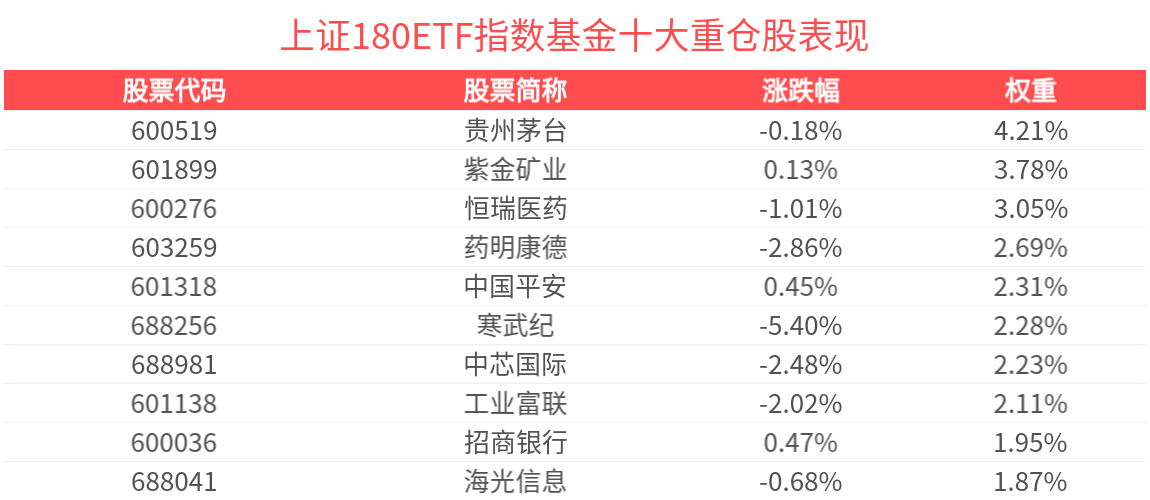
Core Viewpoint - The Shanghai 180 ETF Index Fund closely tracks the Shanghai 180 Index, which reflects the overall performance of 180 large-cap and liquid stocks in the Shanghai securities market [2] Group 1: Index Performance - As of January 20, 2026, the Shanghai 180 Index rose by 0.08%, with notable increases in constituent stocks such as China Chemical (+10.01%), China Power Construction (+7.02%), and Hengli Petrochemical (+6.62%) [1] - The Shanghai 180 ETF Index Fund achieved a four-day consecutive increase, with the latest price reported at 1.26 yuan [1] - The fund's average daily trading volume over the past year was 256.26 million yuan, with a turnover rate of 0.11% on January 20, 2026 [1] Group 2: Fund Metrics - The fund's Sharpe ratio since inception is 2.13, indicating a favorable risk-adjusted return [1] - The maximum drawdown for the fund year-to-date is 1.30%, with a relative benchmark drawdown of 0.06% [1] - The management fee for the fund is 0.15%, and the custody fee is 0.05% [1] Group 3: Top Holdings - As of December 31, 2025, the top ten weighted stocks in the Shanghai 180 Index account for 25.29% of the index, including Kweichow Moutai, Zijin Mining, and China Ping An [2] - The top ten stocks by weight are Kweichow Moutai (4.21%), Zijin Mining (3.78%), and China Ping An (2.31%), among others [3]






未成年人关注呼吸道疾病 中青年群体警惕重大疾病
Jin Rong Shi Bao· 2026-01-21 01:44
Core Insights - The total claims amount for life insurance companies in 2025 has increased significantly, with four companies exceeding 10 billion yuan in claims [1] - The data reflects not only the payout capabilities of insurance companies but also the health risks faced by different demographics [2] Group 1: Claims Data Overview - China Life Insurance reported over 62.24 million claims totaling over 100.4 billion yuan; Ping An Life paid out 4.958 million claims amounting to 41.51 billion yuan; Taiping Life had 4.243 million claims totaling 20.1 billion yuan; and Xinhua Insurance processed 5.01 million claims totaling 14.7 billion yuan [1] - The trend indicates that commercial insurance has shifted from being a low-frequency rescue tool to a high-frequency payment method for everyday medical expenses [3] Group 2: Medical Insurance Insights - Medical insurance claims are predominantly high-frequency and low-amount, with Taiping Life's medical claims accounting for 94.4% of total claims, and 93% of Taikang Life's claims being medical [3] - The age distribution of medical claims shows that the under-17 demographic accounts for 39.4% of claims, primarily due to respiratory infections and accidental injuries [4] Group 3: Critical Illness Insurance Analysis - Critical illness insurance remains the highest payout category among life insurance companies, with Ping An Life's payouts exceeding 20.86 billion yuan, accounting for over 50% of total claims [5] - The report indicates that male policyholders should be cautious of lung cancer, thyroid cancer, and liver cancer, while female policyholders should focus on thyroid cancer, breast cancer, and lung cancer [5] - The average payout for critical illness claims is notably low, with many claims falling below 300,000 yuan, highlighting a significant gap between average payouts and actual treatment costs [6][7]


6元钱保障 守护牧民最珍贵的“家人”
Jin Rong Shi Bao· 2026-01-21 01:44
Core Viewpoint - The article highlights the efforts of the insurance company, Ping An, to promote yaks insurance in Tibet, addressing the challenges faced by herders in adopting electronic identification for their livestock while ensuring their financial protection against risks like infectious diseases and natural disasters [1][2]. Group 1: Insurance Promotion and Adoption - The government and insurance companies are actively promoting yak insurance to protect herders' interests amid increasing risks from infectious diseases and natural disasters [1]. - A significant barrier to adoption is the cultural perception of yaks as family members, making herders reluctant to accept ear tagging as it is seen as harmful [1]. - Ping An's team, led by Badu Qiuza, engages with herders to explain the benefits of ear tags as a form of protection and a key to quick claims processing [1]. Group 2: Technological Integration and Service Improvement - Since 2022, herders only need to pay 6 yuan per yak annually, supported by central government subsidies, to receive coverage for various risks [2]. - Ping An has developed a Tibetan language version of the "Ai Nong Bao" app to provide weather alerts and help herders prepare for adverse conditions, thereby reducing livestock mortality [2]. - The use of advanced technology, including "cow face recognition" and electronic ear tags, has streamlined the claims process, allowing for claims to be settled within 24 hours of reporting [2]. Group 3: Performance Metrics and Future Commitment - As of November 2025, Ping An's local branch has processed 2,891 claims, disbursing 15.095 million yuan, with a 100% claim closure rate and an average claim processing time of just 6.6 days [2]. - By August 2025, over 230,000 yaks in Tibet had been tagged, achieving a tagging rate of over 95% [2]. - Ping An is committed to its mission of serving the public through financial services, leveraging its dual strategy of comprehensive finance and technology to support rural revitalization and high-quality economic development [2].
平安产险为冰雪大世界游客保驾护航
Xin Lang Cai Jing· 2026-01-20 21:54
Core Insights - Harbin Ice and Snow World is experiencing its most prosperous tourism season ever, with Ping An Property & Casualty Insurance providing 5.7 billion yuan in accident and public liability insurance coverage for construction workers, staff, and visitors [1][2] Group 1: Insurance Coverage and Risk Management - Ping An Property & Casualty Insurance is the exclusive underwriter for the 27th Ice and Snow World, offering comprehensive accident insurance [1] - The company has developed a three-dimensional protection system focusing on risk reduction, emergency response, and claims service [1] - The insurance coverage includes measures tailored to the unique risks of low temperatures, slippery roads, and high foot traffic in the park [1] Group 2: Safety Measures and Public Education - Ping An Property & Casualty Insurance implements a dual approach of "source prevention + safety education" to mitigate risks [1] - Physical safety measures include installing anti-slip facilities and increasing warning signs in key areas of the park [1] - Behavioral guidance is provided through on-site personnel promoting easy-to-learn anti-slip techniques and reinforcing safety knowledge among visitors [1] Group 3: Emergency Response and Healthcare Collaboration - The company has established a "medical insurance linkage" emergency rescue system in collaboration with nearby top-tier hospitals [2] - A 24-hour green channel is available for critically ill visitors, ensuring high-quality medical care through expert teams [2] - The initiative aims to protect visitors' health while minimizing economic losses from accidents by reducing emergency service fees and guiding precise treatment [2]
内险股盘中拉升 个险和银保开门红均超预期 上市险企首份业绩预告出炉
Zhi Tong Cai Jing· 2026-01-20 14:43
Group 1 - The insurance stocks experienced a significant increase, with China Life rising by 4% to HKD 33.3, China Pacific up by 3.51% to HKD 23.6, China Taiping increasing by 2.41% to HKD 39.06, and Ping An rising by 1.61% to HKD 69.5 [2] - In the first week of January 2026, listed insurance companies reported impressive premium income from the bancassurance channel, with China Life, Ping An Life, and PICC Life achieving over 100% year-on-year growth [2] - Individual insurance premium income also saw a general increase of over 30% year-on-year [2] Group 2 - On January 19, China Taiping released the first earnings forecast among listed insurance companies, projecting a substantial net profit increase of 215% to 225% for the year 2025 [2] - According to Open Source Securities, the performance of individual insurance and bancassurance exceeded expectations, indicating a potential continuation of catalysts on both the liability and asset sides [2] - Citigroup's research report anticipates a historic opportunity for the life insurance industry in 2026, driven by retail investors seeking higher reinvestment returns for maturing bank deposits [2] - Citigroup favors industry leaders such as China Life and Ping An in their 2026 outlook [2]
券商“跨界”突围 保险代销进入下半场
Hua Er Jie Jian Wen· 2026-01-20 14:13
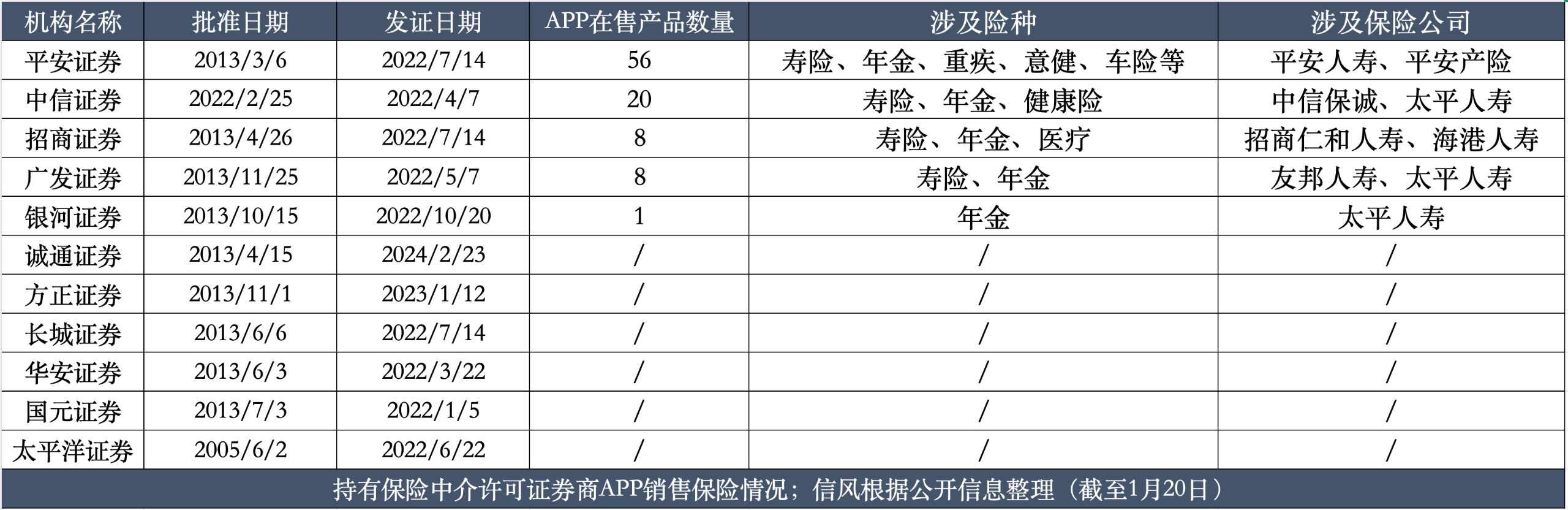
Core Viewpoint - The article highlights the increasing trend of securities firms in China to sell insurance products, driven by regulatory support and the need for wealth management transformation amid operational pressures [1][5][18]. Group 1: Regulatory Changes and Market Trends - Starting from 2025, the China Securities Association (CSRC) aims to promote more compliant securities firms to obtain licenses for selling bank wealth management and insurance products [1]. - The presence of insurance products on the shelves of securities firms has been steadily increasing, indicating a shift towards insurance sales [4][6]. - Major securities firms like CITIC Securities, China Merchants Securities, and Ping An Securities have launched insurance sections on their apps, showcasing a variety of insurance products alongside traditional financial offerings [3][10]. Group 2: Sales Pressure and Employee Experiences - Employees at leading securities firms are experiencing significant pressure to meet insurance sales targets, leading to a growing emphasis on insurance sales in their daily work [2][22]. - The performance metrics for insurance sales have become a focal point, with employees often feeling overwhelmed during peak sales periods [2][22]. Group 3: Product Offerings and Market Position - As of now, the number of securities firms holding insurance intermediary licenses remains unchanged from 2022, with only 11 firms licensed to sell insurance [6]. - Despite the limited number of licensed firms, major players are actively expanding their insurance product offerings, with Ping An Securities offering 56 products and CITIC Securities offering 20 [8][10]. - The insurance products being sold are primarily focused on life insurance and annuities, reflecting a trend towards financial products with investment attributes rather than pure risk coverage [10][19]. Group 4: Competitive Landscape and Challenges - The competitive landscape for insurance sales is evolving, with securities firms leveraging their existing client bases and expertise in asset management to penetrate the insurance market [20][22]. - However, the dominance of banks in the insurance distribution channel remains a significant challenge for securities firms, as banks have extensive networks and established customer relationships [22]. - Regulatory scrutiny is increasing, with upcoming regulations aimed at ensuring appropriate management of cross-industry sales, which may pose additional challenges for securities firms [24].




平安好医生升级“岁岁平安”守护服务,护航居家养老安全
Cai Jing Wang· 2026-01-20 13:14
Core Insights - The article discusses the launch of the "Sui Sui An Ping" protection plan by Ping An, aimed at enhancing home care safety for elderly individuals, particularly those living alone [1][4] - The plan upgrades the traditional daily check-in model by integrating a complete feedback loop of "identification-response-rescue," combining technology alerts with offline intervention [1][2] Group 1: Service Features - The "Sui Sui An Ping" plan allows elderly users to check in daily for safety and choose reminder cycles of 3 or 5 days; if they fail to check in, emergency contacts are notified through various communication methods [1] - The "Ping An Butler" service brand offers a comprehensive service system that includes smart devices, platform monitoring, and human assistance, enabling rapid response to emergencies [2] - The system can identify risks such as falls or unconsciousness and coordinate immediate offline rescue services, ensuring a seamless transition from online check-ins to real-life assistance [2] Group 2: Strategic Direction - Under the "14th Five-Year Plan," addressing population aging and promoting the coordinated development of the elderly care industry is a key strategic direction for the country [3] - Ping An is committed to deepening its "comprehensive finance + medical care and elderly care" strategy, leveraging over a decade of experience in insurance and healthcare to create a professional ecosystem for family doctors and elderly care [3] - The company aims to implement a "Four Arrivals + Six Bests" healthcare service model, ensuring that clients receive the most suitable medical care and experience [3] Group 3: Market Impact - As a flagship member of Ping An's elderly care service ecosystem, Ping An Good Doctor has responded to national policy initiatives by developing a dual service model of "family doctor + elderly care manager" [4] - The "Ping An Butler" service has expanded to cover 100 cities nationwide, with over 240,000 elderly individuals qualifying for services, achieving a 100% response rate for smart alerts [4] - The service recently received a five-star rating from the China Quality Certification Center (CQC), marking it as a leader in home elderly care services [4]

2026年格隆汇“下注中国”十大核心资产之中国平安
Ge Long Hui A P P· 2026-01-20 10:13
Core Insights - China Ping An has been recognized as one of the top ten core assets in the "Betting on China" list for 2026, reflecting its comprehensive strength and industry leadership [1] - The year 2025 marked a strong recovery for China Ping An, with A-shares increasing by 37% and H-shares by over 50%, indicating a reassessment of its long-term value due to its unique "comprehensive finance + healthcare and elderly care" ecosystem [1] - Major institutions like Morgan Stanley and CITIC Securities have identified China Ping An as a top choice in the industry, anticipating further valuation increases as the company enters a new growth cycle [1] Group 1: Market Position and Trends - China Ping An's market position is bolstered by its understanding of the structural changes in wealth allocation and the long-term trends of an aging society, positioning itself as a core platform for comprehensive family needs [2] - The shift in asset allocation among Chinese residents is moving from singular appreciation to comprehensive planning for "protection, retirement, health, and inheritance," driven by two main trends [3][4] - The restructuring of the "balance sheet" is attracting interest in insurance products that offer stable long-term returns and retirement planning, with the wealth management industry expected to grow by 8% in 2026 [4] Group 2: Demand for Health and Retirement Services - The rise in demand for health services is driven by accelerated aging and increased health awareness, making "insurance + services" products a necessity for families [6] - The total scale of China's pension system is projected to reach 15.66 trillion yuan by the end of 2024, indicating significant growth potential in pension finance [6] - The health service ecosystem is expected to expand, with the market for comprehensive health services projected to reach 11.8 trillion yuan by 2029, growing at a compound annual growth rate of 7.7% from 2024 to 2029 [6] Group 3: Strategic Advantages - China Ping An's unique competitive advantage lies in its dual strengths of comprehensive finance and healthcare, supported by technology, creating a difficult-to-replicate strategic triangle [10] - The comprehensive financial model allows for deep customer value extraction and risk diversification, with nearly 250 million personal customers and a high retention rate of 97.5% for clients holding four or more contracts [11] - The healthcare and elderly care ecosystem has evolved into a growth engine, with significant contributions to new business value, showcasing a shift from a cost center to a profit driver [15] Group 4: Technological Empowerment - Technology plays a crucial role in enhancing efficiency and creating a competitive edge, with a vast database supporting AI capabilities that improve customer service and operational efficiency [16][17] - The "super AI entry" has facilitated over 12.92 billion service interactions, significantly increasing operational efficiency and enhancing customer engagement [17] - The integration of AI in sales and risk management has led to substantial improvements in sales assistance and fraud prevention, demonstrating the transformative impact of technology on business growth [17] Group 5: Financial Performance and Valuation - China Ping An's financial performance is on a clear recovery path, with diversified revenue sources and improved income quality, supported by deep customer engagement and the healthcare ecosystem's contributions [18] - The company is expected to benefit from favorable regulatory conditions and increased insurance capital inflows into the stock market, enhancing its recovery momentum [19] - Market valuation is shifting from traditional models to a higher-dimensional view of China Ping An as a composite ecological giant, with expectations for double-digit growth in new business value and improved return on equity [20][21]

A股重磅!宽基ETF连续出现净赎回,有“巨无霸”份额回落至“924”行情之前,多只科创、创业板系ETF份额缩水,发生了啥?
Jin Rong Jie· 2026-01-20 08:57
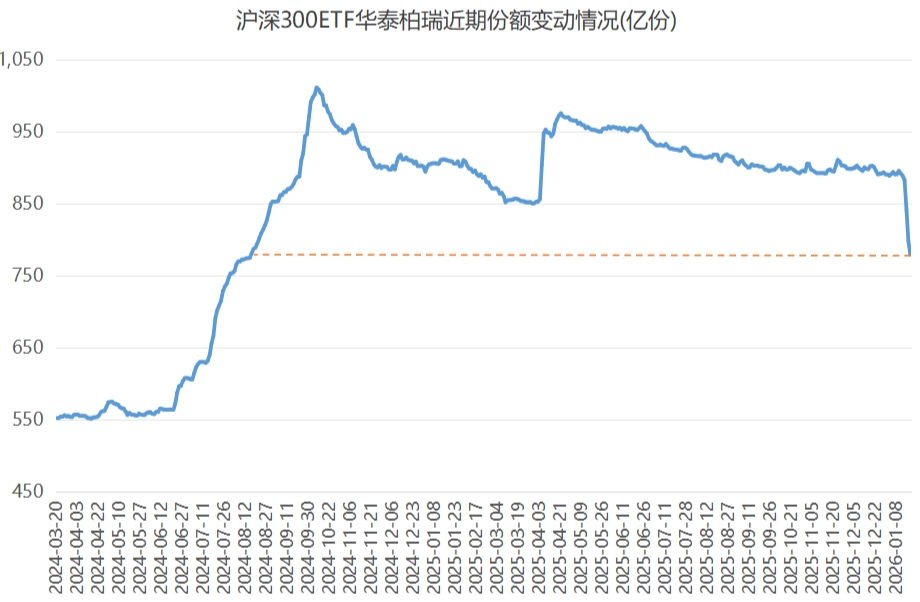
Group 1 - Recent net redemptions in A-share broad-based ETFs have drawn market attention, with significant outflows recorded on January 15 and 16, totaling 687 billion and 863 billion respectively, marking the highest single-day outflows in history [1] - As of January 19, four out of six major broad-based ETFs saw their shares decline by over 10% in the last three trading days, with the largest, Huatai-PB CSI 300 ETF, dropping to 778.63 billion shares, a scale of approximately 369.2 billion, the lowest since August 2024 [1] - The ChiNext and STAR Market ETFs also experienced significant declines, with the E Fund STAR 50 ETF and E Fund ChiNext ETF seeing share reductions of 34.55% and 20.22% respectively [3] Group 2 - In contrast to the outflows from broad-based ETFs, certain commodity, cross-border, and narrow-based ETFs attracted significant inflows, with the Southern Nonferrous ETF being the only product to receive over 10 billion in net inflows, totaling 100.87 billion, driven by rising base metal prices [3] - Other ETFs such as Yongying Satellite ETF, Harvest Software ETF, and GF Media ETF also received net inflows exceeding 6 billion [3] - According to CITIC Securities, the impact of ETF redemptions on individual stocks was significant, with main board, ChiNext, and STAR Market stocks experiencing sell-offs of 946 billion, 334 billion, and 265 billion respectively during the peak outflow days [3] Group 3 - Regulatory measures have been implemented to cool down the market following rapid price increases and overheated sentiment, including raising the minimum margin requirement for margin trading from 80% to 100% [5][6] - The China Securities Regulatory Commission emphasized the need for comprehensive market monitoring and timely counter-cyclical adjustments to maintain market stability and prevent excessive volatility [6] - There are differing views on the long-term outlook for A-shares, with some analysts suggesting the potential for a slow bull market due to reforms, while others remain skeptical about escaping historical volatility patterns [7]