Bank of Chengdu(601838)

Search documents
成都银行(601838) - 成都银行股份有限公司关于实际控制人控制的股东增持计划进展公告
2025-07-08 10:15
证券代码:601838 证券简称:成都银行 公告编号:2025-038 成都银行股份有限公司 关于实际控制人控制的股东增持计划进展公告 本公司董事会及全体董事保证本公告内容不存在任何虚假记载、 误导性陈述或者重大遗漏,并对其内容的真实性、准确性和完整性承 担法律责任。 重要内容提示: 已披露增持计划情况: 成都银行股份有限公司(以下简称"成都银行")于 2025 年 4 月 9 日披露了《成都银行股份有限公司关于实际控制人控制的股东增持 计划公告》,成都银行实际控制人成都市国有资产监督管理委员会(以 下简称"成都市国资委")实际控制的企业成都产业资本控股集团有 限公司(以下简称"成都产业资本集团")、成都欣天颐投资有限责任 公司(以下简称"成都欣天颐"),拟自 2025 年 4 月 9 日起 6 个月内, 通过上海证券交易所系统以集中竞价等合法合规方式增持成都银行 A 股普通股股份。增持价格不超过截至增持计划公告披露日成都银行 除权除息后的历史最高股价 17.59 元/股,在上述增持价格上限范围内, 两家增持主体拟增持的股份数量合计不超过 79,588,706 股,占成都银 行股份总数(4,238,435,3 ...
银行深度:历次存款整改和利率下调回顾与复盘
China Post Securities· 2025-07-08 09:44
Industry Investment Rating - The industry investment rating is maintained at "Outperform" [1] Core Insights - The report discusses the impact of deposit rate adjustments on banks, indicating that the adjustments have a limited impact on financial outflows [4][7] - The establishment of a market-oriented deposit rate adjustment mechanism aims to align deposit rates with market rates, thereby reducing banks' funding costs and facilitating lower loan rates [14][17] - The report highlights a significant shift in deposit structures due to regulatory changes, with a notable migration of deposits from large banks to smaller banks and non-bank financial institutions [6][37] Summary by Sections 1. Reasons for Deposit Rate Adjustments - The adjustments are aimed at promoting interest rate marketization and improving policy transmission, breaking the rigid link between deposit rates and benchmark rates [4][14] - The adjustments are expected to lower banks' funding costs, which constitute over 70% of their liabilities, thereby creating room for loan rate reductions [17][18] 2. Review of Past Adjustments - Historical adjustments include the reduction of structured deposits from CNY 15.4 trillion to zero between 2019 and 2020, and the optimization of deposit rate ceilings in June 2021 [5][22] - The establishment of a market-oriented adjustment mechanism in April 2022 has led to multiple rounds of deposit rate reductions, with long-term deposit rates decreasing more than short-term rates [23][24] 3. Market Impact Review - The report notes that during the initial adjustment phases, there was a significant outflow of structured deposits to wealth management and insurance products [6][37] - The adjustments have generally resulted in a shift of deposits from large banks to smaller banks, as well as a migration towards wealth management and insurance products [6][37] 4. Future Outlook and Investment Recommendations - The report anticipates a significant volume of maturing fixed-term deposits in the third quarter, with potential outflows to non-bank institutions [7] - It suggests focusing on banks that may benefit from reduced funding costs and improved net interest margins, highlighting specific banks such as Bank of Communications and Chongqing Bank as potential investment targets [7]



四川首例村镇银行“村改分”落地! 成都银行雅安分行挂牌
Zhong Guo Jing Ji Wang· 2025-07-08 09:20
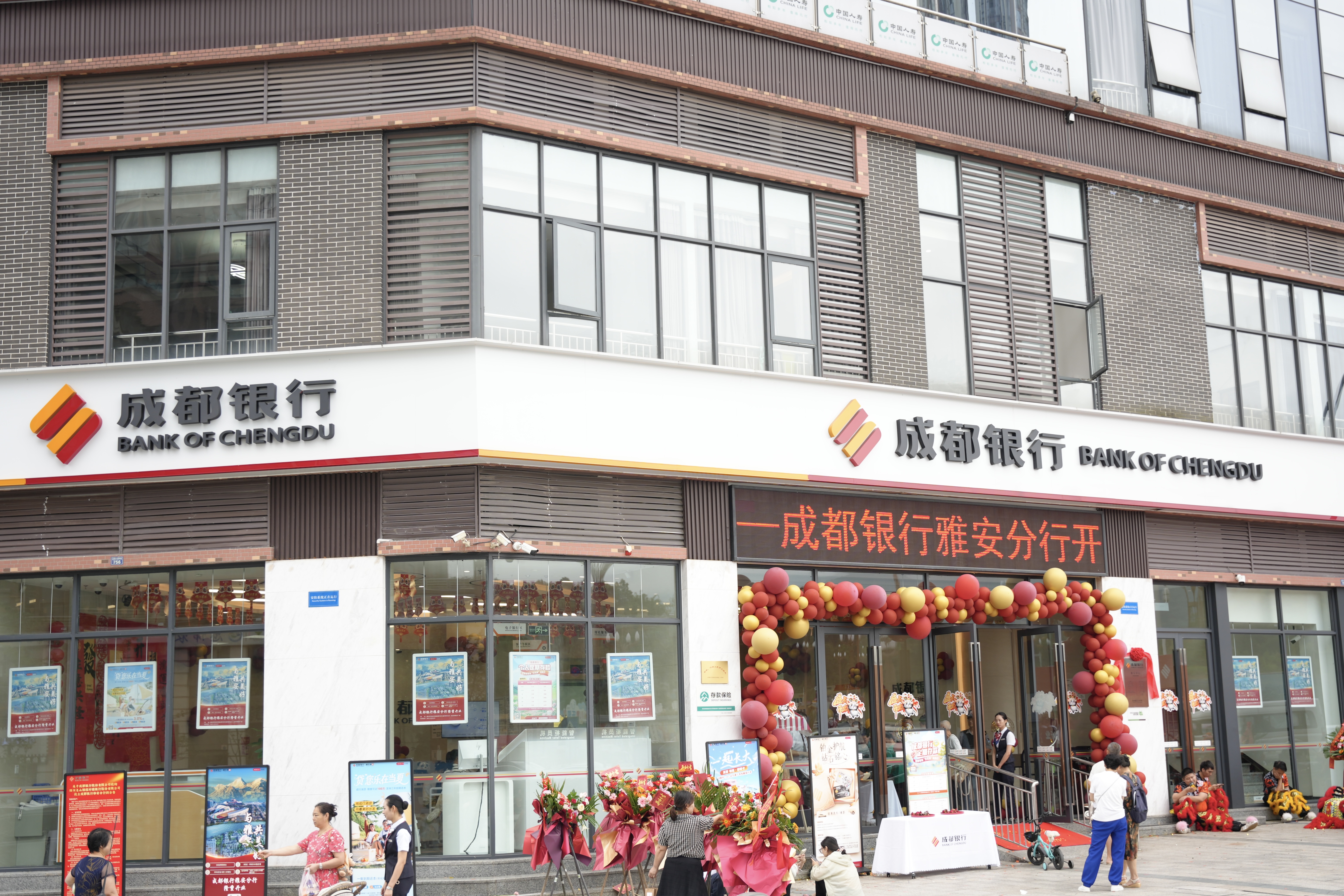
Core Viewpoint - The establishment of Chengdu Bank's Ya'an branch marks the first transformation of a village bank into an urban commercial bank branch in Sichuan, aimed at enhancing inclusive financial services and supporting regional economic development through strategic integration with local resources and national initiatives [1][4]. Group 1: Establishment and Purpose - Chengdu Bank's Ya'an branch officially opened on July 8, 2023, after a year-long restructuring process from the original Mingshan Jincheng Village Bank [4]. - The new branch will focus on bridging the financial service gap in rural areas and leverage opportunities from the Sichuan-Tibet Railway and the Sichuan-Tibet Economic Cooperation Experimental Zone [1][3]. Group 2: Strategic Integration and Development - The branch aims to integrate local resources and national strategies, enhancing its role as a "financial main force" in supporting the local economy [5][7]. - The transformation from a village bank to a branch of Chengdu Bank allows for greater business permissions, improved service capabilities, and a broader operational scope [5][6]. Group 3: Economic and Environmental Focus - Ya'an is rich in natural resources, with a forest coverage rate exceeding 69%, and is positioned as a key area for green development and ecological tourism [7]. - The branch will support core industries such as big data, advanced materials, and high-end equipment manufacturing, while also promoting clean energy and environmental sustainability [8]. Group 4: Financial Products and Services - The branch will implement inclusive financial products like "Tianfu Industry Loan" and "Huiqi Loan" to better serve small and micro enterprises, simplifying approval processes and lowering barriers [8]. - Chengdu Bank's digital transformation initiatives will enhance the operational efficiency and risk management capabilities of the Ya'an branch, providing a more accessible and user-friendly banking experience [8].

成都银行已完成对“名山村镇银行”的收购
Jin Tou Wang· 2025-07-08 03:19
Core Points - Chengdu Bank has completed the acquisition of Sichuan Mingshan Jincheng Village Bank, approved by the Sichuan Regulatory Bureau of the National Financial Supervision Administration [1] - Mingshan Village Bank will be dissolved, and all its business assets, liabilities, and rights will be inherited by Chengdu Bank's Yaan Branch [1] Group 1: Service Transition - Customers of the former Mingshan Village Bank can continue their banking services at Chengdu Bank's Yaan Branch, with existing accounts and cards remaining valid [2] - Customers will need to replace their passbooks, while personal business media can be exchanged at any Chengdu Bank outlet [2] - Company-related business media must be replaced at the original account opening location [2] Group 2: Yaan Branch Information - Chengdu Bank's Yaan Branch is located at 756 Huangcha Avenue, Mingshan District, Yaan City, with a contact number of 0835-3225528 [3] - The branch will operate under the supervision of the People's Bank of China Yaan Branch and the Sichuan Regulatory Bureau to protect the rights of depositors and other clients [3]
投资面再讨论银行周期属性:银行股:从“顺周期”到“弱周期”
ZHONGTAI SECURITIES· 2025-07-06 12:39
Investment Rating - The report maintains an "Overweight" rating for the banking sector [2] Core Insights - The banking sector is transitioning from a "pro-cyclical" model to a "weak cyclical" model, indicating a shift in operational dynamics [2][4] - The report emphasizes the stability of bank dividend yields, which are expected to remain attractive even as risk-free interest rates decline [2][4] - The influx of non-freely circulating funds, such as from state-owned enterprises and insurance capital, is expected to provide a stable source of investment in bank stocks [2][4] Summary by Sections From the Perspective of Risk-Free Interest Rates - Bank dividend yields are characterized by strong certainty and sustainability, with interest margins expected to decline more slowly than risk-free rates [5][12] - The correlation between banks and fiscal policies has strengthened, providing a safety net for core assets [12] - If risk-free interest rates decline, the attractiveness of stable bank dividends will increase, especially in a context of economic weak recovery and asset scarcity [8][18] From the Perspective of Funding Allocation to Bank Stocks - Major funding sources for bank stocks include non-freely circulating funds from fiscal authorities, state-owned enterprises, and insurance capital [5][12] - Non-freely circulating market capitalization accounts for approximately 70% of the banking sector, providing a stabilizing effect [5][12] - Insurance capital is projected to significantly increase its allocation to bank stocks, with an estimated annual inflow exceeding 350 billion [5][12] Investment Recommendations - The report continues to recommend the banking sector, particularly focusing on banks with regional advantages and strong dividend yields [4][12] - Specific recommendations include regional banks in areas like Jiangsu, Shanghai, and Chengdu, as well as major banks such as Agricultural Bank of China, China Construction Bank, and Industrial and Commercial Bank of China [4][12]






银行业2025年度中期投资策略:价值重估的下半场
Changjiang Securities· 2025-07-06 09:42
Core Insights - The banking sector is currently undergoing a trend of value reassessment, driven by expectations of fundamental stability, with banks' earnings resilience consistently exceeding expectations due to regulatory support and the establishment of risk bottom lines in key areas such as local government financing and real estate [4][8] - The current market rally is fundamentally a reflection of the stability of the banking sector rather than a reliance on macroeconomic recovery, marking a systematic value reassessment and correction of historically unreasonable low valuations [8][23] Summary by Sections Fundamental Outlook: Maintaining Earnings Stability - The net interest margin (NIM) is expected to stabilize as regulatory policies aim to maintain it by reducing banks' funding costs to offset the impact of loan interest rate cuts, with NIM currently at a low point [9][26] - Since 2022, multiple rounds of deposit rate cuts have been implemented, and as a significant amount of fixed-term deposits mature in 2025, the repricing of deposit costs will accelerate [9][26] - The overall non-performing loan (NPL) ratio of listed banks is expected to remain stable, supported by rapid asset expansion and write-offs, with a stable provision coverage ratio across most banks [9][37] Capital Market Dynamics: Increased Institutional Investment - Various capital entities, including state-owned enterprises and insurance companies, have been increasing their holdings in bank stocks, driven by the value reassessment of undervalued banks amid an asset scarcity environment [10][45] - The shift in investment strategy among active funds towards bank stocks is anticipated due to their significant index weight and long-standing underallocation, with a focus on quality banks with strong fundamentals [10][45] Investment Recommendations - The report recommends focusing on high-quality city commercial banks and dividend-paying banks, highlighting the investment value of state-owned banks listed in Hong Kong due to their lower valuations [11][10] - Specific banks recommended include Hangzhou Bank, Chengdu Bank, Jiangsu Bank, Qilu Bank, and Qingdao Bank, with a focus on their regional economic performance, asset quality, and growth rates [11][10]
A股银行:躺平收息还是搏命增长?2025年,选“乌龟”还是选“兔子”!
雪球· 2025-07-03 07:51
Core Viewpoint - The article discusses the divergent investment opportunities within the A-share banking sector, highlighting the choice between stable, high-dividend state-owned banks and high-growth regional banks [2][11]. Group 1: Overview of the Banking Sector - The banking industry is experiencing a slowdown in growth, with structural pressures leading to reduced profit margins and slower overall growth rates [3][4]. - Major banks like Industrial and Commercial Bank of China (ICBC) and Shanghai Pudong Development Bank have shown negative revenue growth over the past five years, indicating a challenging environment for traditional banking [3][4]. Group 2: Investment Strategies - For conservative investors, the recommendation is to focus on large state-owned banks, which offer stable dividends and lower risk, providing a reliable cash flow [12]. - For aggressive investors seeking total returns, the focus should be on smaller, high-growth regional banks, which present higher risks but also the potential for significant returns through earnings growth and valuation recovery [13]. - A balanced approach can be taken by combining investments in both large state-owned banks and high-growth regional banks to achieve stability and growth [14]. Group 3: Performance Metrics - Key performance metrics for major banks include: - ICBC: PB of 0.68, TTM dividend yield of 5.87%, and a 5-year profit compound growth of 3.22% [19]. - Chengdu Bank: PB of 0.98, TTM dividend yield of 3.94%, and a 5-year profit compound growth of 18.29% [19]. - Hangzhou Bank: PB of 0.85, TTM dividend yield of 4.27%, and a 5-year profit compound growth of 20.80% [19]. - The article emphasizes the importance of understanding the different growth trajectories and risk profiles of these banks when making investment decisions [18].



一日惊魂之后,如何看待当前的银行股行情?
3 6 Ke· 2025-07-02 01:16
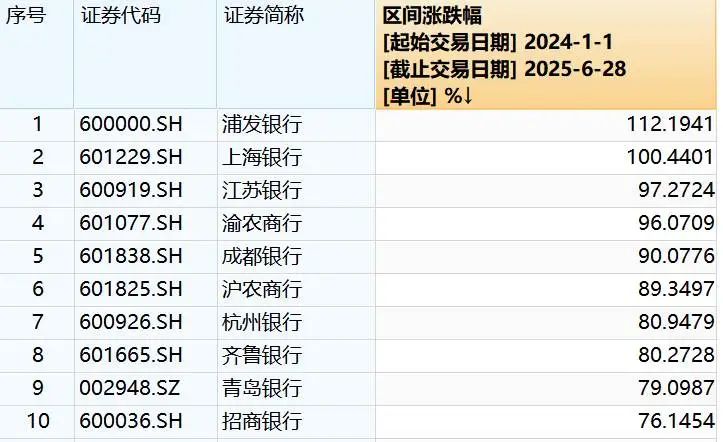
Core Viewpoint - The banking sector in A-shares has seen significant growth, with various banks experiencing substantial increases in stock prices despite a declining fundamental performance [1][3]. Group 1: Stock Performance - Since early 2025, shares of joint-stock banks, rural commercial banks, and city commercial banks have surged nearly 20%, leading the markets in Shanghai, Shenzhen, and Beijing [1]. - From 2024 onwards, specific banks like Shanghai Pudong Development Bank and Shanghai Bank have seen stock price increases exceeding 100%, while others like Jiangsu Bank and Chongqing Rural Commercial Bank have risen over 90% [1][2]. - Even the "Big Four" banks have shown over 50% growth, continuously reaching new historical highs [1]. Group 2: Fundamental Analysis - As of Q1 2025, the 42 listed banks in A-shares reported a year-on-year decline in revenue and net profit attributable to shareholders by 1.7% and 1.2%, respectively [3][5]. - The net interest margin for commercial banks hit a record low of 1.43% in Q1 2025, below the acceptable level of 1.8% as indicated by the central bank [5][3]. - The non-performing loan ratio stood at 1.51%, indicating ongoing challenges in the banking sector [5]. Group 3: Market Dynamics - The rally in bank stocks began around the end of 2023, driven by state-owned entities ("national team") actively stabilizing the market and encouraging other funds to invest in banks [9][12]. - By the end of 2024, the "national team" held over 1 trillion yuan in A-share ETFs, significantly increasing their market presence [9][12]. - The influx of funds into ETFs, particularly those weighted heavily in banking stocks, has contributed to the sector's performance [10][11]. Group 4: Future Outlook - Despite the current bullish trend, the fundamental decline in bank performance suggests that the upward trajectory may not be sustainable, leading to potential valuation corrections [15][16]. - The banking sector's price-to-book ratio (PB) is currently at 0.71, with some banks exceeding a PB of 1, indicating a potential for overvaluation [15][16]. - Future investment strategies may focus on selecting city commercial banks with growth potential and lower bad debt ratios, while avoiding poorly performing smaller banks [16][17].


中证红利新加坡元指数上涨0.7%,前十大权重包含中远海控等
Jin Rong Jie· 2025-07-01 14:29
Group 1 - The core index, the China Securities Dividend Singapore Dollar Index, increased by 0.7% to 5199.8 points with a trading volume of 6.888 billion [1] - Over the past month, the index has decreased by 1.59%, by 4.20% over the last three months, and by 7.49% year-to-date [2] - The index comprises 100 stocks with high cash dividend yields and stable dividends, reflecting the overall performance of high dividend yield companies [2] Group 2 - The top ten weighted stocks in the index include COSCO Shipping Holdings (2.59%), Jizhong Energy (1.81%), and Ningbo Huaxiang (1.76%) [2] - The index's holdings are primarily from the Shanghai Stock Exchange (81.48%), followed by the Shenzhen Stock Exchange (17.78%) and the Beijing Stock Exchange (0.74%) [2] Group 3 - The industry composition of the index shows that finance accounts for 28.24%, industrials 19.03%, and energy 18.41% [3] - Other sectors include materials (12.07%), consumer discretionary (11.78%), communication services (4.12%), utilities (2.35%), healthcare (1.59%), real estate (1.54%), and consumer staples (0.87%) [3] Group 4 - The index samples are adjusted annually, with the next adjustment scheduled for the trading day following the second Friday of December [4] - Criteria for sample inclusion include a cash dividend yield greater than 0.5% over the past year and ranking within the top 90% for average total market capitalization and trading volume [4] - Adjustments typically do not exceed 20% of the sample, unless more than 20% of the original samples are disqualified due to the cash dividend yield criterion [4]



金工定期报告20250701:预期高股息组合跟踪
Soochow Securities· 2025-07-01 09:03
Quantitative Models and Construction Methods 1. Model Name: Expected High Dividend Portfolio - **Model Construction Idea**: The model uses a two-stage process to construct the expected dividend yield indicator. The first stage calculates the dividend yield based on annual report profit distribution data, while the second stage predicts and calculates the dividend yield using historical dividend data and fundamental indicators. Additionally, two short-term factors—reversal factor and profitability factor—are used to assist in stock selection. The portfolio is optimized within the CSI 300 constituents[4][9] - **Model Construction Process**: 1. Exclude suspended and limit-up stocks from the CSI 300 constituents to form the initial stock pool[14] 2. Remove the top 20% of stocks with the highest short-term momentum (21-day cumulative returns)[14] 3. Exclude stocks with declining profitability (quarterly net profit growth rate < 0)[14] 4. Rank the remaining stocks by expected dividend yield and select the top 30 stocks to construct an equal-weighted portfolio[10] - **Model Evaluation**: The model demonstrates a systematic approach to identifying high-dividend stocks, leveraging both historical data and fundamental analysis for robust stock selection[4][9] --- Model Backtesting Results 1. Expected High Dividend Portfolio - **Cumulative Return**: 358.90% relative to the CSI 300 Total Return Index from February 2, 2009, to August 31, 2017[12] - **Cumulative Excess Return**: 107.44% over the same period[12] - **Annualized Excess Return**: 8.87%[12] - **Maximum Drawdown of Rolling One-Year Excess Return**: 12.26%[12] - **Monthly Excess Win Rate**: 60.19%[12] --- Quantitative Factors and Construction Methods 1. Factor Name: Expected Dividend Yield Factor - **Factor Construction Idea**: This factor predicts dividend yield by combining historical dividend data with fundamental indicators. It is used to identify stocks with high expected dividend yields[4][15] - **Factor Construction Process**: 1. Calculate dividend yield based on annual report profit distribution data[4][9] 2. Predict and calculate dividend yield using historical dividend data and fundamental indicators[4][9] - **Factor Evaluation**: The factor effectively integrates historical and fundamental data to predict dividend yields, providing a solid foundation for high-dividend stock selection[4][15] 2. Factor Name: Reversal Factor - **Factor Construction Idea**: This factor identifies stocks with short-term price reversals, which may impact dividend yield predictions[4][15] - **Factor Construction Process**: Measure short-term momentum using 21-day cumulative returns and exclude the top 20% of stocks with the highest momentum[14] - **Factor Evaluation**: The factor helps mitigate the impact of short-term price surges, ensuring a focus on stable dividend yield predictions[4][15] 3. Factor Name: Profitability Factor - **Factor Construction Idea**: This factor screens out stocks with declining profitability, ensuring the selection of fundamentally strong companies[4][15] - **Factor Construction Process**: Exclude stocks with quarterly net profit growth rates less than 0[14] - **Factor Evaluation**: The factor ensures the portfolio is composed of financially sound companies, enhancing the reliability of dividend yield predictions[4][15] --- Factor Backtesting Results 1. Expected Dividend Yield Factor - **June 2025 Average Return**: 1.84%[15] - **Excess Return Relative to CSI 300**: -0.83%[15] - **Excess Return Relative to CSI Dividend Index**: 2.40%[15] 2. Reversal Factor - **Impact**: Excluded the top 20% of stocks with the highest short-term momentum, ensuring stability in the portfolio's dividend yield predictions[14] 3. Profitability Factor - **Impact**: Excluded stocks with declining profitability, maintaining a focus on fundamentally strong companies[14]