PETROCHINA(601857)

Search documents
EIA原油库存骤降,大炼化板块迎催化;化工行业ETF易方达(516570)覆盖“三桶油”,一键打包石化龙头
Sou Hu Cai Jing· 2026-02-05 02:51
Group 1 - The China Petroleum and Chemical Industry Index (H11057) decreased by 1.2% as of 10:05, with major stocks like Wanhua Chemical down 0.8%, China Petroleum down 1.52%, and China Petrochemical down 1.38% [1] - The index has increased by 45.87% over the past year, indicating strong performance in the chemical sector [1] - The E Fund Chemical Industry ETF (516570), which tracks the index, has seen a net inflow of over 1.3 billion yuan over the past 10 days, with its latest fund size reaching 1.631 billion yuan [1] Group 2 - The U.S. Energy Information Administration (EIA) reported a decrease of 3.455 million barrels in U.S. crude oil inventories last week, compared to a previous decrease of 2.295 million barrels, indicating further inventory consumption [1] - Western Securities predicts that global oil prices may surge by 2026, leading to a price reassessment of chemical products, with the refining sector expected to replicate the upward trend seen in the non-ferrous sector [1]



中国石油2月4日获融资买入1.99亿元,融资余额20.03亿元
Xin Lang Cai Jing· 2026-02-05 01:17
来源:新浪证券-红岸工作室 分红方面,中国石油A股上市后累计派现8752.80亿元。近三年,累计派现2470.78亿元。 机构持仓方面,截止2025年9月30日,中国石油十大流通股东中,中国证券金融股份有限公司位居第四 大流通股东,持股10.20亿股,持股数量较上期不变。香港中央结算有限公司位居第五大流通股东,持 股5.21亿股,相比上期减少3.36亿股。华夏上证50ETF(510050)位居第七大流通股东,持股2.16亿 股,相比上期减少586.44万股。华泰柏瑞沪深300ETF(510300)位居第十大流通股东,持股1.93亿股, 相比上期减少955.40万股。易方达上证50增强A(110003)退出十大流通股东之列。 声明:市场有风险,投资需谨慎。本文基于第三方数据库自动发布,不代表新浪财经观点,任何在本文 出现的信息均只作为参考,不构成个人投资建议。如有出入请以实际公告为准。如有疑问,请联系 biz@staff.sina.com.cn。 2月4日,中国石油涨0.86%,成交额19.20亿元。两融数据显示,当日中国石油获融资买入额1.99亿元, 融资偿还1.46亿元,融资净买入5261.72万元。截至2 ...
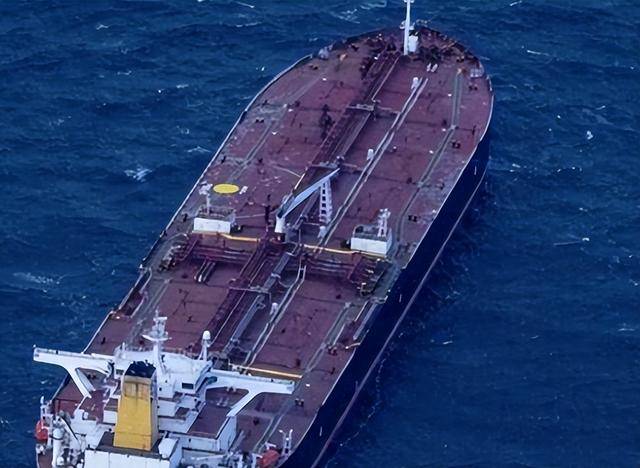
委内瑞拉石油不能靠岸,特朗普这才察觉不对劲!中国已发出禁令?
Sou Hu Cai Jing· 2026-02-04 12:22
Core Viewpoint - The article discusses China's strategic decision to halt oil purchases from Venezuela, positioning it as a significant move against U.S. attempts to control global resource pricing and influence [1][3][15]. Group 1: China's Strategic Position - China has refused to participate in a U.S.-led pricing and contract system regarding Venezuelan oil, asserting its independence in energy transactions [3][11]. - The halt in oil purchases is not a sign of dependency but rather reflects China's diversified energy supply channels, including sources from Russia, the Middle East, Africa, and Brazil [6][9]. - China's actions signify a rejection of unilateral pricing mechanisms imposed by the U.S., emphasizing the need for mutual agreement in international energy transactions [12][15]. Group 2: U.S. Response and Implications - The U.S. initially attempted to present its strategy as a "sanction relief + free trade" arrangement, but China's ban revealed the underlying motives of resource manipulation and political leverage [5][11]. - Trump's response to the situation indicates a shift in U.S. strategy, now requiring acceptance of new rules for cooperation [3][12]. - The inability of the U.S. to convert Venezuelan oil resources into marketable assets in China highlights the failure of its strategy to control the energy market [11][13]. Group 3: Future Trends and Global Dynamics - The article suggests a shift towards a multipolar pricing system and a move away from dollar-denominated transactions in global energy markets, with China playing a pivotal role [15][17]. - China's position as the largest energy consumer and clearing center strengthens its influence in determining global energy pricing and rules [17][18]. - The ongoing developments indicate a trend where more countries in South America, Africa, and Eurasia may begin trading under Chinese terms, further diluting U.S. influence [17][18].

392家新公司,509亿资本,央企重兵集结,储能赛道火药味渐浓
3 6 Ke· 2026-02-04 11:18
Core Insights - In 2025, central enterprises registered an average of over one new energy storage company daily, totaling 392 companies with a registered capital exceeding 50 billion [1] - The collective action of state-owned enterprises (SOEs) reflects a strategic move not just to meet carbon neutrality goals but to assert control over the future energy system [1][2] Group 1: Strategic Moves by Central Enterprises - The establishment of a joint venture between China National Petroleum Corporation and CATL to produce energy storage systems signifies a deeper logic: the competition is for discourse power in the energy transition era, not merely market share [2] - Traditional energy companies face an identity crisis as power generation shifts from traditional plants to distributed energy sources, making control over energy storage crucial for maintaining operational authority [2] - The formation of 54 subsidiaries by the State Grid in the energy storage sector is a strategic move to reinforce its core position amid the trend of grid intelligence [2][3] Group 2: Investment Strategies and Market Dynamics - Two contrasting capital strategies are evident among central enterprises: significant investments in core strategic areas and smaller, exploratory investments in emerging markets [3] - Major investments, such as the 1 billion yuan registered capital of China Yajiang Group's new energy company, signal a shift of energy storage from a trial business to a core strategic focus [3] - Conversely, smaller subsidiaries with registered capital as low as 100,000 yuan are being established to test the waters in regions like Xinjiang and Gansu, reflecting a cautious approach to market entry [3] Group 3: Challenges and Market Structure - Despite the rapid expansion of energy storage projects led by central enterprises, there are underlying profitability challenges, as many projects rely on bundled development rather than independent market operations [5][6] - The geographical concentration of these projects, particularly in Hebei, Xinjiang, and Shandong, indicates a strategic alignment with local resource endowments and policy support [5] - The current focus on electrochemical storage technologies raises concerns about the lack of diversification in technological pathways, which could hinder the long-term health of the energy storage industry [6] Group 4: Future Implications - The competitive landscape is shifting, with central enterprises reshaping the power structure of the energy storage industry, compelling private companies to reconsider their roles [6] - The success or failure of the 392 newly registered companies will significantly influence the future power dynamics of China's energy system [6] - The transition from traditional energy systems to new power systems is critical, and the ongoing competition in energy storage represents a pivotal battle in this transformation [6]

中石油经研院解析国内外油气行业“六变八稳”发展格局
Jing Ji Wang· 2026-02-04 10:38
Core Insights - The reports highlight that the global oil and gas industry is entering a period of profound transformation by 2025, characterized by intensified turmoil, system restructuring, and a reconfiguration of the landscape due to geopolitical conflicts, economic restructuring, and energy transition [1][2] Group 1: Global Oil and Gas Industry Trends - The global oil and gas sector is facing a complex "new situation" with increasing volatility and a reshaped framework, driven by intertwined geopolitical conflicts and economic changes [1] - By 2026, the global economy is expected to exhibit "low growth, high differentiation, and increased turmoil," posing severe challenges to global energy security and market stability [1] - The oil market is anticipated to shift from a tight balance to a state of oversupply, with Brent crude prices projected to range from $60 to $65 per barrel under normal conditions, and potentially rise to $70 to $75 per barrel amid geopolitical tensions [3] Group 2: China's Oil and Gas Industry Developments - China's oil and gas industry is demonstrating strategic confidence and resilience, aiming for progress while maintaining stability, with a focus on achieving the goals set for the 14th Five-Year Plan [1][4] - By 2025, China's energy self-sufficiency is projected to reach 84.4%, with non-fossil energy consumption accounting for 21.8% of total energy use, and this is expected to rise to over 23% by 2026 [4] - Oil and gas production in China is set to reach a historical high of 420 million tons of oil equivalent by 2025, with crude oil production expected to stabilize at 200 million tons in 2026 [4][5] Group 3: Energy Security and Policy Implications - The global energy security landscape is becoming increasingly complex, with the report indicating that while fossil energy remains relatively secure, the risks associated with electricity supply are rising [6] - The report calls for a more inclusive and cooperative approach to energy security, emphasizing the need for multilateralism and practical collaboration across various sectors, including energy investment and climate governance [6] - China's energy security situation is improving, marking a new phase in its journey towards becoming an energy powerhouse [6]
Venezuela tells China oil prices won't be set by the U.S., seeks to reassure investment after Maduro capture
CNBC· 2026-02-04 08:54
Core Viewpoint - Venezuela has assured China that its oil pricing will remain independent of U.S. influence, emphasizing the security of Chinese investments in the country [2][5]. Oil Pricing and U.S. Influence - Venezuelan ambassador to China, Remigio Ceballos, stated that Venezuela will not adhere to U.S. arrangements regarding oil pricing, asserting the right to make independent decisions based on international market prices [3][4]. - Reports indicated that the U.S. was considering exerting control over Venezuela's state-run oil company, PDVSA, potentially lowering prices to $50 per barrel [2][3]. China-Venezuela Relations - China has condemned the U.S. military actions against Venezuela and reaffirmed its commitment to the partnership with Venezuela, which is based on mutual trust [4][5]. - Ceballos emphasized that Chinese investments in Venezuela, including those in the petroleum sector, will continue unaffected by external pressures [5][6]. Chinese Investments in Venezuela - China National Petroleum Corporation has joint ventures with PDVSA, and China Concord Resources Corp. plans to invest over $1 billion in a Venezuelan oil project, aiming for a production target of 60,000 barrels per day by the end of 2026 [6]. - Despite Venezuela's significant oil reserves, its crude output has been hindered by mismanagement and U.S. sanctions [6]. U.S. Actions and Responses - The Trump administration has promoted U.S.-led reforms to boost oil production and attract foreign investment in Venezuela, which is seen as beneficial for both the country and American consumers [7]. - The U.S. has returned $500 million from an initial oil sale to Venezuela and is reportedly moving to ease sanctions to revive the energy sector [8]. Diplomatic Developments - Following the military operation against Maduro, the U.S. reportedly urged Venezuela to sever economic ties with China and other nations, although Trump later indicated that Chinese investment would be welcomed [9]. - Chinese President Xi Jinping expressed a commitment to working with Latin American countries, emphasizing the importance of sovereignty and development goals [10].
化工行业ETF易方达(516570)上涨0.37%,成交额超4000万元
Xin Lang Cai Jing· 2026-02-04 07:36
Core Viewpoint - The chemical industry ETF managed by E Fund has shown positive performance, with significant inflows and growth in both scale and shares, reflecting strong investor interest in the sector [1][2]. Group 1: Index Performance - As of February 4, 2026, the China Petroleum Industry Index (H11057) increased by 0.41%, with key stocks like Sinopec rising by 3.17% and Wanhua Chemical by 3.09% [1]. - Over the past two weeks, the E Fund chemical industry ETF has accumulated a rise of 0.55%, ranking in the top half among comparable funds [1]. Group 2: Liquidity and Trading Volume - The E Fund chemical industry ETF had a turnover rate of 3.05% during the trading session, with a transaction volume of 48.77 million yuan [1]. - The average daily trading volume over the past week reached 160 million yuan [1]. Group 3: Fund Size and Shares - The latest size of the E Fund chemical industry ETF reached 1.595 billion yuan, marking a one-year high [1]. - The total shares of the ETF have also reached 1.466 billion, which is a one-year high [1]. Group 4: Net Inflows - The E Fund chemical industry ETF has seen continuous net inflows for 13 days, with the highest single-day net inflow reaching 391 million yuan, totaling 1.371 billion yuan in net inflows [1]. - The average daily net inflow stands at 105 million yuan [1]. Group 5: Top Holdings - As of January 30, 2026, the top ten weighted stocks in the China Petroleum Industry Index account for 55.71% of the index, including companies like Wanhua Chemical and Sinopec [2].


港股石油股午后走高,中国石油化工股份(00386.HK)、中国海洋石油(00883.HK)、中国石油股份(00857.HK)均涨超2%。
Jin Rong Jie· 2026-02-04 05:46
Group 1 - The core viewpoint of the article highlights that Hong Kong oil stocks experienced an afternoon rally, with significant gains observed in major companies [1] Group 2 - China Petroleum & Chemical Corporation (00386.HK) saw its stock price increase by over 2% [1] - CNOOC Limited (00883.HK) also reported a rise of more than 2% in its stock value [1] - China National Petroleum Corporation (00857.HK) experienced a similar increase, with its shares up by over 2% [1]
石油ETF(561360)开盘涨1.42%,重仓股中国石油涨2.01%,中国海油涨1.98%
Xin Lang Cai Jing· 2026-02-04 04:56
Group 1 - The core viewpoint of the article highlights the performance of the Oil ETF (561360), which opened with a gain of 1.42% at 1.431 yuan on February 4 [1] - Major holdings of the Oil ETF include China National Petroleum Corporation, which rose by 2.01%, China National Offshore Oil Corporation by 1.98%, and Sinopec by 0.79% [1] - The Oil ETF's performance benchmark is the CSI Oil and Gas Industry Index return, managed by Guotai Fund Management Co., Ltd., with a return of 41.01% since its establishment on October 23, 2023, and a return of 14.47% over the past month [1] Group 2 - The article lists other notable stocks within the Oil ETF, including Jereh Group (up 0.98%), China Merchants Energy Shipping (up 1.56%), Guanghui Energy (up 1.30%), COSCO Shipping Energy (up 0.82%), Hengli Petrochemical (up 1.82%), Rongsheng Petrochemical (up 0.79%), and Intercontinental Oil and Gas (up 2.24%) [1]


能源央企负责人激励收入公布!
中国能源报· 2026-02-04 03:52
Core Viewpoint - The article discusses the incentive compensation for executives of major state-owned enterprises in the energy sector in China for the 2022-2024 term, highlighting the amounts allocated to various leaders within these companies [1][3][4]. Group 1: Central Enterprises and Their Incentive Compensation - The State-owned Assets Supervision and Administration Commission (SASAC) has released the incentive compensation details for executives of central enterprises, which include companies like China National Petroleum Corporation (CNPC), China Petroleum & Chemical Corporation (Sinopec), and State Grid Corporation of China [1][3]. - The incentive compensation consists of annual salary and term incentive income, with the latter being distributed every three years [1]. Group 2: Individual Executive Compensation - For CNPC, the chairman Dai Houliang is set to receive an incentive income of 86.21 million RMB for the 2022-2024 term [3]. - In Sinopec, chairman Ma Yongsheng's incentive income is 84.81 million RMB, while other executives like Zhao Dong and Zhang Shaofeng have amounts of 83.23 million RMB and 75.35 million RMB respectively [4]. - China National Offshore Oil Corporation (CNOOC) chairman Wang Dongjin will receive 86.06 million RMB, with other executives like Zhou Xinhai and Huojian receiving 49.43 million RMB and 76.86 million RMB respectively [5]. Group 3: Summary of Other Major Enterprises - State Grid Corporation of China chairman Zhang Wei will receive 78.17 million RMB, while other executives like He Zhongwen and Jiang Changliang will receive 48.54 million RMB and 70.14 million RMB respectively [7]. - China Southern Power Grid's chairman Meng Zhenping is set to receive 83.54 million RMB, with other executives like Qian Chaoyang receiving 26.35 million RMB [10]. - China Huaneng Group's chairman Wenshu Gang will receive 63.47 million RMB, while other executives like Zhang Wenfeng and Dong Jianling will receive 39.02 million RMB and 67.79 million RMB respectively [11]. Group 4: Additional Notable Executives - In China Datang Corporation, chairman Zou Lei will receive 80.02 million RMB, while Liu Mingsheng and Zhang Chuanjiang will receive 44.23 million RMB and 17.78 million RMB respectively [12]. - China Huadian Corporation's chairman Jiang Yi will receive 63.24 million RMB, with other executives like Ye Xiangdong receiving 84.32 million RMB [14]. - National Energy Investment Group's former chairman Wang Xiangshi received 16.46 million RMB for his term, while other executives like Feng Laifa and Xu Xinfeng will receive 60.97 million RMB and 39.94 million RMB respectively [18].