
CICC(601995)

Search documents
水下机器人厂商深之蓝科创板IPO获受理 拟募资15亿元 保荐机构为中金公司
Xin Lang Cai Jing· 2025-12-29 08:01
Company Overview - Deep Blue Ocean Technology Co., Ltd. (referred to as Deep Blue) has recently had its IPO application accepted by the Shanghai Stock Exchange, with China International Capital Corporation as the sponsor [1] - Established in 2013, Deep Blue specializes in underwater robotics, providing products and solutions for various sectors including marine safety, engineering, emergency rescue, hydropower, scientific research, and marine tourism [1] IPO Details - Deep Blue plans to raise 1.5 billion yuan through its IPO, with at least 10% of the total share capital to be newly issued [2] - The fundraising allocation includes 865 million yuan for expanding the underwater robot production base, 399 million yuan for upgrading research and experimental centers, and 235 million yuan for supplementing working capital [2] Financial Performance - The company's revenue for the years 2022 to the first half of 2025 is reported as 141 million yuan, 235 million yuan, 251 million yuan, and 141 million yuan, respectively, with a compound annual growth rate of 33.23% over the last three years [2] - The proportion of overseas revenue has increased significantly, from 49.5% in 2022 to 79.75% in 2025 [2] - Gross profit margins for the same periods were 35.97%, 41.97%, 38.34%, and 43.96%, indicating an improvement in profitability [2] Profitability and Expenses - Despite the growth in revenue, Deep Blue has not yet achieved profitability, primarily due to high sales, management, and R&D expenses, as well as significant stock option compensation costs [3] - The earliest expected time for the company to achieve profitability is projected to be 2026, contingent on revenue, gross margin, and expense management [3] Shareholding Structure - The controlling shareholder, Wei Jiancang, holds 23.6393% of the total share capital, controlling 41.3427% of the voting rights [3] - Other shareholders include Yuanxing Capital, TEDA Technology, and Shunwei Capital [3] R&D and Workforce - As of the first half of 2025, Deep Blue employed 69 R&D personnel, accounting for 15.5% of the total workforce, with 26.64% holding master's degrees and 73.91% holding bachelor's degrees [3] Industry Trends - The underwater robotics sector is gaining momentum, with significant investments in companies like Shihang Intelligent and Shandong Future Robotics [5] - The global market for industrial cable-controlled and autonomous underwater robots is projected to reach $2.1 billion and $7.1 billion, respectively, by 2024, with a compound annual growth rate of nearly 40% over the next six years [5] - The consumer-grade underwater booster market is expected to reach $1.18 million globally by 2024, with a domestic market size of approximately 0.57 million yuan [5] Competitive Landscape - The underwater robotics market is characterized by higher certainty and clearer application scenarios compared to surface unmanned vessels [6] - Key competitive factors include acoustic sensors and navigation positioning systems, with traditional marine nations currently leading in sensor technology [6] - The ongoing development of domestic underwater robotics manufacturers like Deep Blue is expected to open up new opportunities in this sector [7]
中金:料明年铝供应前低后高 整体增量仍有限
智通财经网· 2025-12-29 07:33
Core Viewpoint - The report from CICC indicates that aluminum prices have significantly underperformed copper prices during the current wave of rising non-ferrous metals, with LME copper rising by 27.2% and LME aluminum by only 11.2% since the beginning of the year, leading to a copper-aluminum ratio increase to 4.4 [1] Group 1: Market Dynamics - CICC attributes the disparity in performance to two main factors: copper's stronger financial attributes under favorable macro conditions and the global inventory imbalance caused by the U.S. siphoning effect [1] - From a balance sheet perspective, CICC anticipates that aluminum may perform tighter than copper by 2026, with liquidity benefits potentially already priced in [1] Group 2: Supply Forecast - CICC forecasts that aluminum supply will initially be low and then increase, but the overall increment will remain limited, with a projected net increase of approximately 1.1 million tons of electrolytic aluminum in 2026, representing a year-on-year growth of 1.5% [1] - The report highlights that the pace of future electrolytic aluminum projects in Indonesia may be slower than expected due to power supply constraints, despite the apparent sufficiency of planned capacity [2] Group 3: Long-term Constraints - CICC emphasizes that the supply constraints in electrolytic aluminum reflect the scarcity of an efficient industrial system, which is an external factor to the industry [2] - The report suggests that while short-term capital expenditure issues in mining may be resolved through price incentives, the construction pace of the industrial system is not influenced by electrolytic aluminum prices, indicating a more rigid long-term supply constraint [2] Group 4: Demand and Cost Factors - On the demand side, aluminum benefits from its cost-effectiveness, facing weaker negative feedback from downstream sectors, with scenarios of substituting aluminum for copper expanding into air conditioning applications [2] - The report notes that concerns about demand overextension in the first half of the year have not materialized, driven by export demand for end products, and that the Carbon Border Adjustment Mechanism (CBAM) will slightly increase the overall cost curve for the industry [2]
中国证券行业2025年十大新闻
券商中国· 2025-12-29 04:28
Core Viewpoint - 2025 is a pivotal year for the Chinese securities industry, focusing on deepening functional positioning and high-quality development, with an emphasis on mergers and acquisitions, international expansion, and technological innovation, particularly through AI applications [1][2]. Mergers and Acquisitions - The year marks a critical phase for mergers and acquisitions in the securities industry, with major firms like Guotai Junan and Haitong Securities merging to form Guotai Haitong Securities, and other significant consolidations such as Guolian Securities and Minsheng Securities [3][4]. - The competitive landscape is shifting, with Guotai Haitong leading in net profit, and Guolian Minsheng's ranking improving significantly from around 40th to the top 20 [3]. - New merger cases are emerging, such as CICC's plan to merge with Xinda Securities and Dongxing Securities, potentially creating a new entity with over 1 trillion yuan in total assets [3]. Industry Integration Logic - Two main integration strategies are evident: resource consolidation under the same actual controller and market-driven mergers aimed at enhancing national influence [4]. - Analysts suggest that resource integration may become the most important way for securities firms to quickly enhance scale and comprehensive strength [4]. Classification Evaluation Reform - A significant revision of the classification evaluation for securities firms is underway, emphasizing the need for firms to enhance their functional roles and professional capabilities [5][6]. - The new regulations aim to shift focus from revenue expansion to improving operational efficiency and professional skills, thereby enhancing overall industry competitiveness [5]. Margin Trading Market - The margin trading market is heating up, with a record balance of 2.54 trillion yuan, reflecting a 36.6% increase from the beginning of the year [7]. - Several firms have raised their margin trading limits, and a price war on interest rates has begun, with some firms offering rates below 4% [8][9]. Investment Banking and Technology - The securities industry is adapting to a new era of "hard technology," with reforms aimed at providing more inclusive financing paths for tech companies [10][11]. - Securities firms are establishing research institutes focused on emerging industries and enhancing their service capabilities through collaboration and talent development [11]. AI Integration - The adoption of AI technologies is rapidly transforming the industry, with applications expanding across various business functions, significantly improving efficiency [12][13]. - Firms are moving towards an "AI-native" model, enhancing client engagement and operational management through AI tools [12]. Internationalization of Securities Firms - The internationalization of Chinese securities firms is accelerating, with a focus on comprehensive service capabilities and participation in global market competition [14][15]. - This trend is driven by the growing demand for cross-border services and the strategic goal of building first-class investment banks [14]. Asset Management Transformation - The public offering process for asset management is at a turning point, with firms reassessing their positioning in the broader asset management landscape [16][17]. - The industry is witnessing a decline in the rush for public fund licenses, with many firms withdrawing applications, indicating a shift in focus towards existing business optimization [16]. Impact of Fund Fee Reforms - The implementation of public fund fee reforms is pushing securities firms to enhance their research and wealth management capabilities, with a notable decline in commission revenues [18]. - Firms are transitioning towards a buyer advisory model, focusing on asset management and providing comprehensive solutions rather than merely selling products [18]. Regulatory Environment - Regulatory signals indicate a potential easing of capital requirements for high-quality institutions, aimed at improving capital utilization efficiency [19]. - Analysts suggest that enhancing leverage and capital efficiency could drive growth in high-value capital-intensive businesses [19]. Name Changes Reflecting Strategic Shifts - A wave of name changes among securities firms signifies strategic realignments and resource restructuring following mergers and acquisitions [20][21]. - These changes reflect deeper integration and the influence of new stakeholders, indicating a shift in strategic focus and operational capabilities [20].




中金:铝价具备较大的补涨空间,推动铜铝比向中枢回归
Ge Long Hui· 2025-12-29 03:55
Core Viewpoint - The supply constraints for aluminum in the coming year are expected to be strong, while long-term power bottlenecks will continue to limit capacity growth [1] Supply Side - The supply constraints for aluminum are confirmed for the next year, with ongoing power bottlenecks expected to restrict capacity expansion in the long term [1] Demand Side - Aluminum is experiencing weak negative feedback from downstream sectors due to its cost-effectiveness, and the substitution of aluminum for copper is gradually expanding into the air conditioning sector [1] - The concerns regarding demand overextension in the first half of the year have not materialized, driven by export demand for end products [1] Trade Dynamics - The Carbon Border Adjustment Mechanism (CBAM) is expected to slightly increase the overall cost curve for the industry [1] Price Dynamics - Despite the current price increase being influenced by the financial premium of copper and the absorption effect of U.S. copper, the long-term co-integration relationship between copper and aluminum is not expected to easily break down, indicating significant potential for aluminum price increases and a return of the copper-aluminum ratio to its mean [1]
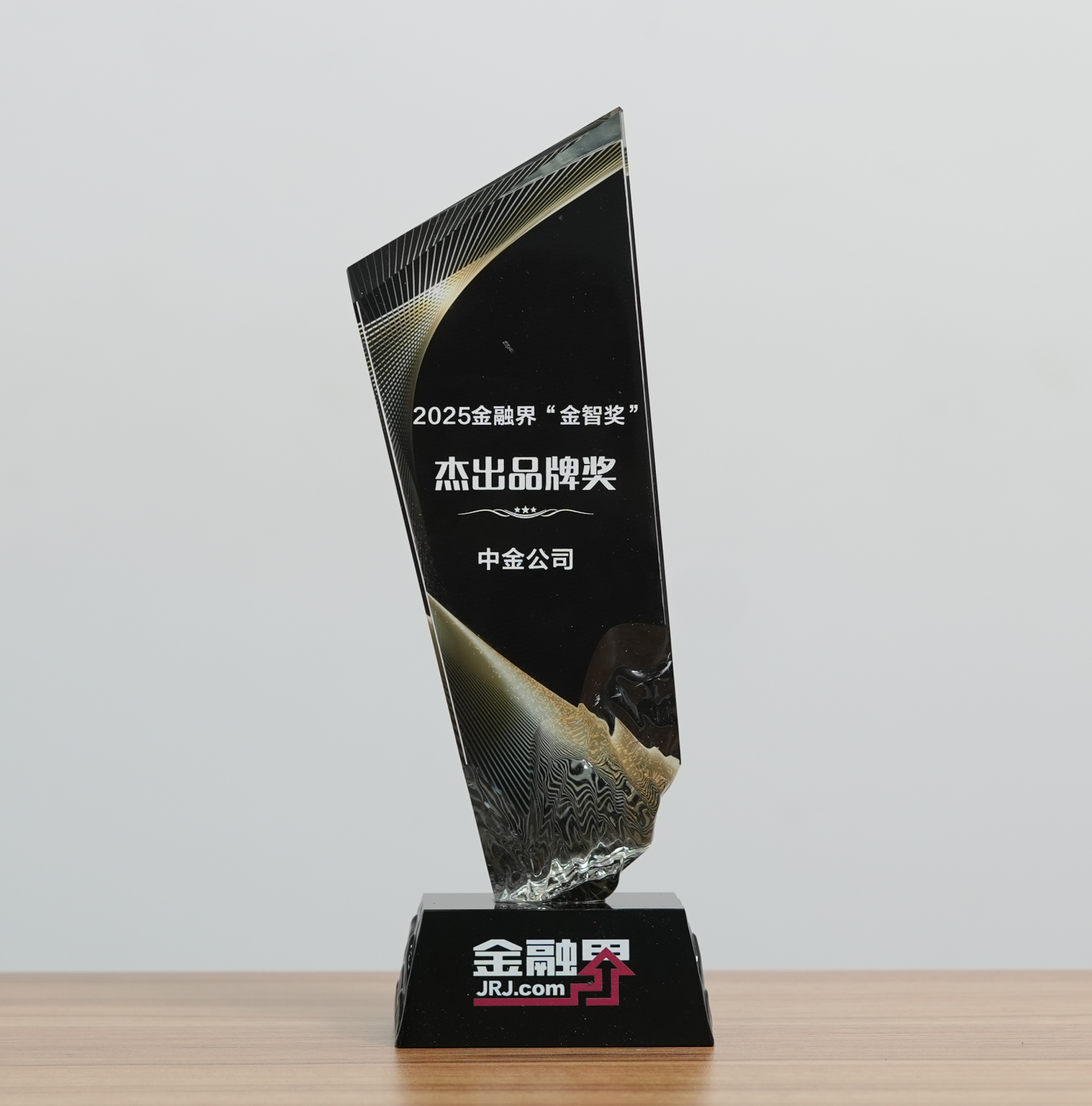
中金公司荣获第十四届金融界“金智奖”杰出品牌奖
Jin Rong Jie· 2025-12-29 03:01
Group 1 - The "Qihang·2025 Financial Summit" was successfully held in Beijing, focusing on the theme of "New Starting Point, New Momentum, New Journey," gathering hundreds of leaders and guests from regulatory bodies, industry associations, financial institutions, listed companies, and media [1] - The 14th "Golden Wisdom Award" results were announced, with China International Capital Corporation (CICC) winning the "Outstanding Brand Award" [1][3] - The "Golden Wisdom Award" aims to establish benchmarks for high-quality development, guiding listed companies to focus on their main businesses, innovate continuously, and fulfill social responsibilities [3] Group 2 - The "Outstanding Brand Award" evaluates comprehensive brand strength based on market recognition, product service innovation, industry influence, and social responsibility, aiming to set industry quality and innovation benchmarks [4] - CICC is celebrating its 30th anniversary in 2025, showcasing brand strength through excellent performance across all business lines and continuous innovation [4] - In the investment banking sector, CICC participated in 7 out of the top 10 A-share IPOs in the past five years and 14 out of the top 20 Hong Kong projects in 2025, maintaining a leading market position [4] - In 2023, CICC facilitated over 1.3 trillion yuan in transactions related to technology finance through equity financing, bond financing, and M&A services, reinforcing the strength of state-owned financial institutions [4] - As of September 2025, CICC's net assets reached 115.5 billion yuan, with multiple core indicators ranking among the industry's top [4] - In December, CICC announced a share-swap merger with Dongxing Securities and Cinda Securities, which is expected to significantly expand the combined entity's net assets and net capital, providing strong support for business expansion and further solidifying brand influence [4]
A股指数涨跌不一,创业板指跌0.19%,风电、贵金属等板块涨幅居前
Feng Huang Wang Cai Jing· 2025-12-29 01:36
凤凰网财经讯 12月29日,三大指数开盘涨跌不一,沪指高开0.02%,深成指几乎平开,创业板指低开 0.19%,有色金属、风电、贵金属等板块指数涨幅居前,造纸、医药商业、酒店餐饮等板块指数跌幅居 前。 机构观点: 华泰证券:A股短期或仍偏震荡 华泰证券研报表示,上周A股市场"八连阳"收涨,接近11月中旬高点,红包行情能否持续是投资者关注 的重点之一。我们认为目前虽然海外环境相比11月中旬已有一定改善,但考虑到市场仍处于政策和业绩 的真空期、各类资金尚未形成合力,短期A股或仍偏震荡,但逆势资金流入下,A股在12月中旬点位或 具备一定支撑。向后看,险资等配置意愿存在回升动力,春季行情仍具备一定基础,关注1月中旬年报 预告披露及1月可能的降准催化。配置侧,建议继续布局春季行情,在关注电池、部分化工品、军工、 大众消费等景气改善方向的基础上,在主题内部做高切低,挖掘具备涨价及政策逻辑中的低位方向。 中信证券研报表示,近期头部酒企陆续召开重要会议,传递调整、改革、渠道再平衡决心,有利于行业 长期健康发展。今年四季度以来,白酒头部企业均采取持续控制发货、为经销商减负、促进开瓶动销等 措施,以降低渠道库存。综合考虑到动销已 ...





12月29日A股分红日历:5股红利发放到账,5股分红转增登记




Sou Hu Cai Jing· 2025-12-29 01:05
Core Viewpoint - The article reports on the dividend distribution announcements from several A-share listed companies, detailing the amounts and types of dividends being issued to shareholders [1] Dividend Distribution - China International Capital Corporation (中金公司) announced a dividend of 0.90 yuan per 10 shares (after tax: 0.81 yuan) [1] - CITIC Publishing (中信出版) declared a dividend of 1.60 yuan per 10 shares (after tax: 1.44 yuan) [1] - Biyin Lefen (比音勒芬) issued a dividend of 0.20 yuan per 10 shares (after tax: 0.18 yuan) [1] - Longyuan Power (龙源电力) announced a dividend of 1.00 yuan per 10 shares (after tax: 0.90 yuan) [1] - Yanjing Beer (燕京啤酒) declared a dividend of 1.00 yuan per 10 shares (after tax: 0.90 yuan) [1] Equity Registration for Dividend Distribution - Heshun Petroleum (和顺石油) set a registration date for a dividend of 1.00 yuan per 10 shares (after tax: 0.90 yuan) [1] - Southwest Securities (西南证券) announced a registration date for a dividend of 0.10 yuan per 10 shares (after tax: 0.09 yuan) [1] - Sanyuan Biological (三元生物) set a registration date for a dividend of 5.00 yuan per 10 shares (after tax: 4.50 yuan) [1] - *ST Zhongzhuang (ST中装) announced a stock conversion of 10 shares to 10.31 shares [1] - *ST Dongyi (ST东易) set a stock conversion of 10 shares to 12.67 shares [1]
中金公司 _ 航空2026年展望 - 步步为营,峰回路转
中金· 2025-12-29 01:04
Investment Rating - The industry investment rating is not explicitly stated in the provided content, but the analysis suggests a cautious outlook for 2026 due to supply constraints and demand resilience. Core Insights - The report indicates that 2026 is expected to be a turning point for the aviation industry, with a genuine reversal in supply and demand dynamics anticipated [60][64]. - Supply constraints are highlighted, with aircraft manufacturers Boeing and Airbus expected to continue facing delivery delays, impacting overall capacity [9][12]. - Demand remains resilient, with a projected growth rate of approximately 5% for 2026, despite supply limitations [36][56]. Supply Summary - Aircraft manufacturers are experiencing capacity shortages, with Boeing and Airbus not expected to return to pre-pandemic delivery levels [9][10]. - The report notes that the delivery volume for Boeing's B737MAX and Airbus's A320NEO remains below pre-pandemic figures, with 2026 targets still not reaching those levels [10]. - Engine issues are affecting the industry, with an increase in grounded aircraft expected in 2026 due to problems with Pratt & Whitney engines [16][17]. - The aircraft utilization rate is projected to increase slightly in 2026, but the growth potential is limited [21]. Demand Summary - The demand for air travel is expected to show resilience, with a projected passenger turnover growth of 8% in 2025, leading to a 5% growth in 2026 [37][56]. - Domestic air travel demand is anticipated to outpace rail travel, with increasing flight distances to counter competition from high-speed rail [41][44]. - The report suggests that the passenger load factor is expected to reach historical highs, with a forecasted increase to 87% in 2026 [50][56]. - Potential demand growth is expected to exceed 5%, but actual demand growth will be constrained by supply limitations [53][56]. Conclusion - The aviation industry is poised for a significant shift in 2026, with supply constraints likely to create a supply-demand imbalance, leading to increased ticket prices and a focus on capacity management [60][66].
聚焦格局更优的细分领域-证券行业2026年度投资策略
2025-12-29 01:04
Summary of the Securities Industry Conference Call Industry Overview - The securities industry is expected to continue a slow bull market in 2026, supported by proprietary and brokerage businesses, despite a decline in commission rates from 0.195% at the end of last year to approximately 0.17% by the end of this year [1][5] - The overall valuation of the securities sector has decreased to around 1.4 times, which is at the 30th percentile of the past decade [3][4] Key Points Performance in 2025 - The securities sector underperformed compared to other financial sub-sectors like insurance and banking, despite a significant profit growth of over 60% in the first three quarters, driven mainly by brokerage and proprietary trading [1][4] - Major brokerages such as Dongfang Caifu, CITIC Securities, Guosen Securities, and Galaxy Securities achieved a return on equity (ROE) of approximately 9%-10% [1][4] Focus Areas for 2026 - Investment strategies should focus on the following areas: - **Asset Management (AM)**: Expected to see a positive growth rate in 2025, but the net income growth was only 4% in the first three quarters. The introduction of new public fund commission regulations is anticipated to boost revenue growth in 2026 [2][11] - **Investment Banking (IB)**: Currently at the bottom of the cycle, with a potential recovery as the market improves [9][13] - **International Business**: High concentration among leading firms like CITIC, CICC, and Huatai, with expected growth in 2026 as these firms leverage their competitive advantages in Hong Kong [2][12] Market Conditions - The A-share IPO market remains tight, with a focus on balancing investment and financing, leading to a smaller number and scale of IPOs. The suspension of IPOs since the end of 2023 continues [1][8] - The Hong Kong IPO and refinancing market has recovered quickly, but the profitability of these activities is not as robust as that of A-share IPOs [10] Future Projections - The overall ROE for the securities industry is projected to be around 7.5% in 2025, with leading firms achieving approximately 10%. The growth in profitability is expected to be modest, reaching around 8% [2][13] - The proprietary trading business is shifting towards OCI accounts, which may enhance the stability of the profit statement but reduce its elasticity [6] Additional Insights - The focus on investment banking, asset management, and international business is crucial due to their potential for growth and improvement in market conditions [7][9] - The concentration of international business among a few leading firms indicates a strong competitive barrier, which may benefit these firms in the long run [12][14]
中金公司:美元贬值和季节性因素或是人民币当前升值的直接推动力
Di Yi Cai Jing· 2025-12-29 00:22
Core Viewpoint - The report from CICC indicates that the RMB exchange rate has been appreciating continuously since late November, recently reaching new highs for the year, with the offshore RMB rate surpassing 7.0, accelerating in its appreciation [1]. Summary by Relevant Sections - **Exchange Rate Movement** - The offshore RMB exchange rate broke the 7.0 mark on December 25, reaching its highest level since September 2024, while the onshore RMB rate is also close to the 7.0 threshold, marking its highest since May 2023 [1]. - **Drivers of Appreciation** - The depreciation of the US dollar and seasonal factors are identified as direct drivers of the current appreciation of the RMB. However, monetary authorities have moderately restrained the pace of this appreciation [1]. - **Market Expectations** - Overall, the year-end appreciation of the RMB is not unexpected, although the extent of the appreciation has slightly exceeded expectations. The primary factors contributing to this rapid appreciation in the short term are the significant decline of the US dollar and the resonance of seasonal factors [1].