
Proya(603605)

Search documents
盘点最年轻金鸡奖影帝商业价值
第一财经· 2025-11-17 07:35
Core Viewpoint - The article highlights the recent achievement of Yi Yang Qianxi, who won the Best Actor award at the 38th China Golden Rooster Awards for his role in "Little Me," making him the youngest recipient of this award at the age of 24 [1][3]. Group 1: Awards and Recognition - Yi Yang Qianxi has been nominated four times for the Best Actor award at the Golden Rooster Awards, with this win marking a significant milestone in his career [1][3]. - The Central Academy of Drama congratulated Yi Yang Qianxi on his achievement, emphasizing his status as the youngest Golden Rooster Best Actor [1][3]. Group 2: Box Office Performance - The total box office revenue for films starring Yi Yang Qianxi has reached 19.7 billion [5]. Group 3: Business Associations - Yi Yang Qianxi is directly associated with two companies: Beijing Jiumude Cultural Development Co., Ltd. and Beijing Jiumude Cultural Media Center, the latter of which has been deregistered [6]. - Beijing Jiumude Cultural Development Co., Ltd. was established in December 2018, with Yi Yang Qianxi and Yi Shangjie each holding a 50% stake; Yi Shangjie is identified as Yi Yang Qianxi's father [6]. - Yi Yang Qianxi's associated company, Beijing Yangzhizhu Cultural Media Co., Ltd., has registered multiple trademarks and websites, although he does not hold direct shares in this company [6]. Group 4: Endorsements - Yi Yang Qianxi endorses over ten brands, including Li Xiang Automobile, Proya, Luckin Coffee, Huawei Nova, and Fila [6].





化妆品行业跟踪报告:大盘平稳,国货领先、高端改善
Haitong Securities International· 2025-11-17 06:05
Investment Rating - The report suggests a positive investment outlook for the cosmetics industry, highlighting strong growth potential for specific companies [29]. Core Insights - The 2025 Double 11 event showed steady double-digit growth, with total GMV reaching RMB 1.695 trillion, a 14% increase from 2024. Instant retail demonstrated significant growth, with comprehensive e-commerce and community group buying also contributing positively [29][4]. - The beauty category maintained robust growth across multiple platforms, with skincare and makeup categories achieving growth rates between 5-15%. Domestic brands like PROYA and Winona performed particularly well, with PROYA maintaining the top position in Tmall's beauty rankings [29][14][17]. - The report emphasizes the trend of full-chain integration and one-stop services across platforms, with Tmall achieving its best growth in four years, driven by high-value user contributions from 88VIP [29][8]. Summary by Sections Double 11 Performance - The 2025 Double 11 event recorded a total GMV of RMB 1.695 trillion, marking a 14% increase from the previous year. Instant retail grew significantly, with GMV for comprehensive e-commerce at RMB 1.6191 trillion, and community group buying at RMB 90 billion [4][29]. - Tmall's performance was highlighted as the best in four years, with significant contributions from 88VIP and other platforms like JD.com and Douyin also showing strong growth [11][12]. Brand Performance - Companies such as Guangzhou Ruoyuchen Technology Co., Ltd. and Shanghai Chicmax Cosmetic Co., Ltd. reported impressive growth during Double 11, with Zhenjia's GMV increasing by 80% year-on-year and Feicui's GMV growing 35 times [25][29]. - The report notes that domestic brands excelled in the beauty category, with PROYA and other brands maintaining strong positions in the market [22][29]. Investment Recommendations - The report recommends focusing on high-growth brands such as Ruoyuchen, Chicmax, and Mao Geping, as well as companies with stable fundamentals like Dentium and Shanghai Jahwa United. It also identifies companies expected to bottom out, such as PROYA and Lafang [29][38].



化妆品医美行业周报:双11国货天猫抖音持续霸榜,整体稳中有进-20251116
Shenwan Hongyuan Securities· 2025-11-16 12:44
Investment Rating - The report maintains a "Positive" outlook on the cosmetics and medical beauty industry, highlighting strong performance in the sector [2]. Core Insights - The cosmetics and medical beauty sector outperformed the market, with the Shenwan Beauty Care Index rising by 3.7% from November 7 to November 14, 2025, surpassing the market average [3][4]. - The Double 11 shopping festival saw significant sales for domestic brands, with Proya leading sales on Tmall for three consecutive years, indicating a sustained rise of domestic brands [9][30]. - Proya has re-entered the men's skincare market, launching a new product line aimed at addressing various skincare needs, which is seen as a strategic move to enhance revenue and compete with international brands [30]. - Marubi Biotech announced plans for an H-share listing in Hong Kong to strengthen its capital base and international strategy, following similar moves by other domestic beauty brands [31]. Summary by Sections Industry Performance - The Shenwan Beauty Care Index increased by 3.7%, with the cosmetics index up by 2.5% and personal care index up by 3.7%, indicating strong sector performance [3][4]. - The Double 11 sales event resulted in high single-digit growth in online GMV for beauty products, second only to home appliances and clothing [9]. Key Company Developments - Proya's Q3 2025 revenue reached 7.098 billion yuan, a year-on-year increase of 1.89%, with a net profit of 1.026 billion yuan, reflecting a stable performance despite a slight decline in Q3 [10][11]. - Marubi Biotech's revenue for the first three quarters of 2025 was 2.45 billion yuan, a 25.51% increase year-on-year, indicating strong growth potential [31]. Market Trends - The cosmetics retail sector saw a 9.6% year-on-year growth in October 2025, driven by the Double 11 shopping festival, which boosted consumer demand [25][27]. - Domestic brands are gaining market share, with Proya and other local brands performing well against international competitors [34]. E-commerce Insights - Data from October 2025 shows that Proya achieved a GMV of 21.5 billion yuan across Tmall and Douyin, despite a 9% decline year-on-year, indicating resilience in a competitive market [24]. - The report highlights the importance of e-commerce channels for domestic brands, which are leveraging their advantages in pricing and local market insights to capture market share [34].


商贸零售行业周报:双十一电商大促落幕,美妆、珠宝表现亮眼-20251116
KAIYUAN SECURITIES· 2025-11-16 11:48
Investment Rating - The industry investment rating is "Positive" (maintained) [7] Core Insights - The 2025 Double Eleven e-commerce promotion concluded with a total online sales of 1,695 billion yuan, representing a 14.2% increase compared to 2024. Tmall led in overall e-commerce sales, while JD reported record high transaction volumes with a 40% increase in the number of orders and nearly 60% growth in order volume [3][26] - The jewelry sector performed exceptionally well, with gold products favored by younger consumers. The demand for gold has evolved from a singular focus on value preservation to a multifaceted need for cultural recognition and emotional value, indicating higher growth potential for aesthetically and culturally rich gold jewelry [3][29] - The beauty sector achieved a total GMV of 132.5 billion yuan, with skincare and fragrance/cosmetics sales reaching 99.1 billion yuan and 33.4 billion yuan, respectively. Domestic brands like Proya and Han Shu dominated the sales charts, showcasing the strength of local brands [3][32] - The integration of AI technology in retail is enhancing consumer experiences, creating a virtuous cycle among consumers, merchants, and platforms [3][42] Summary by Sections Retail Market Review - The retail industry index rose by 4.06% during the week of November 10-14, 2025, outperforming the Shanghai Composite Index, which fell by 0.18%. The retail sector ranked third among 31 primary industries [5][14] - The supermarket sector saw the highest increase, with a weekly growth of 7.09%, while the jewelry sector led the year-to-date performance with a 23.66% increase [18][21] Retail Insights: Double Eleven Promotion - The Double Eleven e-commerce event showed resilience in growth, with significant sales increases across platforms. Tmall's comprehensive e-commerce sales reached 16,191 billion yuan, while instant retail sales soared by 138.4% [26] - Gold jewelry sales saw a remarkable increase, with the flagship store of Lao Pu Gold achieving over 3 billion yuan in sales within 10 minutes of opening on Tmall [29] - The beauty category's GMV reached 132.5 billion yuan, with domestic brands capturing significant market share, particularly in skincare and cosmetics [32] Focus on High-Growth Sectors - Investment recommendations include focusing on high-quality companies in sectors driven by emotional consumption themes, such as gold jewelry, offline retail, cosmetics, and medical aesthetics [6][48] - Specific companies highlighted for investment include Lao Pu Gold, Proya, and Aimeike, among others, which are expected to benefit from current market trends [49]


双11”收官 国货凭实力“圈粉
Zheng Quan Ri Bao Wang· 2025-11-16 10:45
Group 1 - The core observation is that during the 2025 "Double 11" shopping season, domestic brands dominated sales across multiple platforms, indicating a significant shift in consumer preference towards local products [1] - Data from Tmall shows that the Chinese brand Proya ranked first in beauty sales, while two out of the top three positions in apparel sales were also occupied by Chinese brands [1] - According to JD's data, Chinese brands held two of the top three positions in cumulative mobile phone sales, and Douyin reported that domestic brands topped the lists for trendy menswear and fashionable womenswear [1] Group 2 - The change in consumer preferences is supported by a report from Accenture, which indicates that around 60% of consumers now prefer domestic products, a significant increase from previous years [1] - In the home appliance category, the preference for domestic brands rose from 55% in 2021 to 69% in 2025, while in the beauty and skincare category, the preference increased from approximately 12% to 43% during the same period [1] - This trend reflects a broader shift in consumption patterns from international brand dominance to a comprehensive rise of domestic products, marking the "Double 11" event as a natural culmination of these changes [1] Group 3 - The performance of domestic brands during "Double 11" is attributed to changes in consumption structure and industrial upgrades, with consumers prioritizing quality and experience [2] - The success of domestic brands is also linked to continuous investments in brand enhancement and R&D, which have been ongoing for several years [2] - The growth in brand orders has stimulated demand for local components, materials, and manufacturing services, creating a positive cycle that enhances domestic economic momentum [2] Group 4 - Industry experts believe that domestic brands have transitioned from being "alternatives" to competing on equal footing with international brands, driven by sustained investments in quality, technology, and branding [3] - Future success for domestic brands will depend on continuous improvements in product strength, innovation, and global capabilities, rather than relying solely on promotional events [3]
深度 | 36天长跑,2025双十一折射出美妆行业下一轮变革
FBeauty未来迹· 2025-11-15 09:03
Core Insights - The 2025 Double Eleven event concluded with a total transaction volume of 169.5 billion yuan, marking a year-on-year growth of 14.2% [3] - The event has shifted from a "single-point explosive promotion mechanism" to a "long-cycle comprehensive operational test" [4][25] - The importance of omnichannel operational capabilities has been emphasized, with brands and platforms undergoing significant transformations [4] Sales Performance - Household appliances and mobile digital devices contributed the most to overall growth, with clothing in third place and personal care and beauty products maintaining a steady fourth position with an 8.2% market share [5] - The beauty and skincare category dominated with sales of 99.1 billion yuan, showing a year-on-year growth rate of 11.65% [9] Market Dynamics - The top brands in the beauty and skincare category remained stable, indicating strong brand power and supply chain resilience [10] - Significant changes were observed from the second to fifth positions, with brands like 修丽可 and 赫莲娜 entering the top ranks, reflecting a shift towards a new competitive landscape [12] - In the fragrance and makeup categories, foreign brands maintained dominance, while domestic brands like 毛戈平 and 卡姿兰 began to establish their presence [14] Channel Strategies - Tmall's beauty rankings are dominated by international brands, while Douyin showcases a strong presence of domestic brands, indicating a divergence in channel strategies [16] - The growth structure of beauty brands has evolved to include "influencer-driven hits + brand self-broadcasting + big-ticket items" [17] Promotional Strategies - The promotional period for Double Eleven has extended beyond 30 days, with brands focusing on pre-sale strategies to optimize inventory and marketing efforts [21][22] - The sales curve has diversified, with brands employing strategies to create peaks in sales during different phases of the promotional cycle [24] AI Integration - AI has begun to permeate consumer decision-making and merchant operations, enhancing the shopping experience and operational efficiency [27][28] - Platforms like Tmall and JD have introduced AI-driven services to assist consumers and merchants, significantly improving operational capabilities [30][32][35] - The integration of AI is reshaping the competitive landscape, emphasizing the importance of technological efficiency over resource density [39][40] Industry Evolution - The Double Eleven event has evolved into a cultural phenomenon, reflecting broader trends in consumer behavior and brand strategies [41] - Platforms are increasingly differentiating their strategies, with Tmall focusing on a comprehensive consumption platform and Douyin emphasizing content-driven commerce [42] - User engagement is shifting from transactional relationships to long-term asset accumulation, with brands leveraging membership tools to enhance customer loyalty [43] - The value of Double Eleven is transitioning from mere transaction efficiency to ecosystem empowerment, fostering a more rational and long-term relationship among platforms, brands, and consumers [45]

珀莱雅化妆品股份有限公司关于不向下修正“珀莱转债”转股价格的公告
Shang Hai Zheng Quan Bao· 2025-11-14 20:00
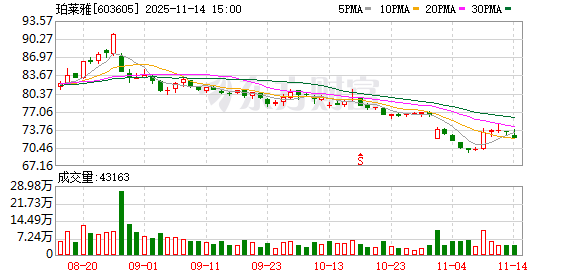
Core Viewpoint - The company has decided not to adjust the conversion price of its convertible bonds, despite triggering conditions for a downward adjustment due to stock price performance [2][10][12]. Group 1: Convertible Bond Overview - The company issued 7,517,130 convertible bonds on December 8, 2021, with a total amount of 75.1713 million yuan, at a face value of 100 yuan each, with a maturity of six years [3]. - The bonds were listed on the Shanghai Stock Exchange on January 4, 2022, with the bond code "113634" and a ticket rate that increases over the years, starting from 0.30% in the first year to 2.00% in the sixth year [3]. Group 2: Conversion Price Adjustments - The initial conversion price was set at 195.98 yuan per share, which has been adjusted multiple times due to various corporate actions, with the latest adjustment bringing it to 95.46 yuan per share as of October 17, 2025 [4][5][11]. - The conversion price has been adjusted downwards due to the company's annual profit distribution plans and stock incentive plans, with the most recent adjustment occurring on October 23, 2025 [5][6][11]. Group 3: Downward Adjustment Clause and Trigger Conditions - The downward adjustment clause allows for a price reduction if the stock price falls below 85% of the current conversion price for at least 15 out of 30 consecutive trading days [10]. - The company confirmed that from October 27 to November 14, 2025, the stock price met the criteria for triggering the downward adjustment clause [10][12]. Group 4: Board Decision on Adjustment - The company's board of directors held a meeting on November 14, 2025, and unanimously decided not to adjust the conversion price of the convertible bonds [12]. - The board expressed confidence in the company's long-term development and internal value, stating that the conversion price would remain unchanged for the next six months, even if the adjustment conditions are met again [12].
珀莱雅(603605) - 珀莱雅化妆品股份有限公司关于不向下修正“珀莱转债”转股价格的公告
2025-11-14 16:02
| 证券代码:603605 | 证券简称:珀莱雅 | 公告编号:2025-075 | | --- | --- | --- | | 债券代码:113634 | 债券简称:珀莱转债 | | 珀莱雅化妆品股份有限公司 关于不向下修正"珀莱转债"转股价格的公告 本公司董事会及全体董事保证本公告内容不存在任何虚假记载、误导性陈述 或者重大遗漏,并对其内容的真实性、准确性和完整性承担法律责任。 重要内容提示: 2025 年 10 月 27 日至 2025 年 11 月 14 日,珀莱雅化妆品股份有限公司 (以下简称"公司")股票在连续三十个交易日中有十五个交易日的收盘价低于 当期转股价格的 85%(81.14 元/股),已触发"珀莱转债"转股价格向下修正条 款。 经公司第四届董事会第十次会议审议通过,公司董事会决定本次不向下 修正"珀莱转债"转股价格。并且在未来六个月内(即 2025 年 11 月 15 日至 2026 年 5 月 14 日),若"珀莱转债"触发向下修正条款,公司亦不向下修正"珀莱转 债"的转股价格。以 2026 年 5 月 14 日之后的首个交易日重新计算,若"珀莱转 债"再次触发向下修正条款,公司董事 ...
珀莱雅:公司将夯实多元化品牌矩阵和全渠道布局
Zheng Quan Ri Bao· 2025-11-14 13:39
Core Viewpoint - The company, Proya, stated that its stock price fluctuations are influenced by multiple factors, but its operational management activities are normal [2] Group 1: Company Strategy - The company will continue to enhance its operational management and solidify its diversified brand matrix and omnichannel layout [2] - Proya aims to optimize its core product matrix to improve brand strength, product quality, and technological capabilities [2] - The focus is on enhancing the company's core competitiveness and profitability to promote stable and high-quality development [2] Group 2: Investor Relations - The company is committed to actively rewarding investors and striving to create more value for shareholders [2] - Relevant information should be verified through disclosures on the Shanghai Stock Exchange [2]
珀莱雅:公司在定期报告中披露各报告期末股东总数信息
Zheng Quan Ri Bao· 2025-11-14 13:13
证券日报网讯珀莱雅11月14日在互动平台回答投资者提问时表示,根据信息披露相关法律法规规定,公 司在定期报告中披露各报告期末股东总数信息,详情请查阅公司披露的定期报告。 (文章来源:证券日报) ...