
Bloomage Biotech(688363)

Search documents
市值蒸发300亿后,陕西女首富“认输”了,但市场仍在追问真相
凤凰网财经· 2025-07-02 13:50
Core Viewpoint - The article discusses the recent controversy surrounding Juzhi Biotechnology (巨子生物) and its admission of limitations in quality standards and testing methods, which has raised further questions about the integrity of its products and the broader implications for the industry [2][4][10]. Group 1: Company Response and Market Impact - Juzhi Biotechnology acknowledged its limitations in quality standards and testing methods, marking a significant shift from its previous defensive stance against accusations regarding its collagen products [4][10]. - Following the controversy, Juzhi's stock price fell from 87.1 HKD to 53.9 HKD, resulting in a market capitalization loss of over 330 billion HKD [10]. - The company's internal investor meeting indicated confidence in recovering from short-term impacts, despite the ongoing public skepticism [4][11]. Group 2: Industry Context and Competition - The controversy highlights a broader "ingredient war" between Juzhi Biotechnology and Huaxi Biotechnology (华熙生物), with both companies competing in the collagen and hyaluronic acid markets [14][15]. - Huaxi Biotechnology, a leader in the hyaluronic acid market, has criticized Juzhi's claims about collagen superiority, emphasizing the lack of scientific basis for such assertions [15][16]. - The article suggests that the current lack of unified testing standards in the collagen industry poses challenges for quality control and consumer trust [17][19]. Group 3: Consumer Trust and Market Dynamics - The incident has led to a decline in consumer trust, particularly among core users who prioritize ingredient efficacy, which could have long-term repercussions for Juzhi's brand reputation [12][13]. - The article notes a shift in consumer behavior towards more informed purchasing decisions, moving from concept-driven marketing to a focus on ingredient transparency and scientific validation [23][24]. - The controversy may catalyze regulatory changes and industry standards, potentially leading to a market reshuffle where companies lacking core R&D capabilities may struggle to survive [22][24].



净利润下降70.59%!华熙生物最新2024年财报
思宇MedTech· 2025-07-02 09:44
Core Viewpoint - The company is undergoing a strategic upgrade focusing on glycoscience and cell biology, leveraging its advantages in synthetic biology for health solutions [6] Financial Performance - Total revenue for 2024 is approximately 5.37 billion, a decrease of 11.61% compared to 2023 [2] - Net profit attributable to shareholders is about 174 million, down 70.59% from the previous year [2] - Net profit after deducting non-recurring gains and losses is approximately 107 million, a decline of 78.13% year-on-year [2] - Operating cash flow for the year is around 564 million, a decrease of 19.32% from 2023 [2] - The company's net assets at the end of 2024 are approximately 6.81 billion, a decrease of 1.93% compared to the end of 2023 [2] Profit Distribution - The company plans to distribute a cash dividend of 0.11 yuan per 10 shares (including tax) [3] R&D Investment - Total R&D investment is approximately 466 million, representing an increase of 1.33 percentage points in relation to total revenue [4] Business Operations - Revenue from raw materials is approximately 1.24 billion, showing a year-on-year growth of 9.47% [5] - Medical terminal business revenue is about 1.44 billion, an increase of 32.03% [11] - Revenue from skin science innovation transformation business is approximately 2.57 billion, down 31.62% year-on-year [11] - Basic earnings per share are 0.36 yuan, a decrease of 70.73% compared to the previous year [5] Strategic Focus - The company is focusing on management transformation, including business process restructuring, organizational and talent changes, and performance system reforms [6] - The company aims to continue technological innovation and optimize its business structure to enhance operational efficiency and achieve high-quality development [6] Market Position - The company is a leading player in the global hyaluronic acid market, with significant presence in Europe, Japan, and the Americas [13] - The company is transitioning from rapid growth to high-quality development, increasing investments in synthetic biology and regenerative medicine [13]
预见2025:《2025年中国医美注射材料行业全景图谱》(附市场现状、竞争格局和发展趋势等)
Qian Zhan Wang· 2025-07-02 03:44
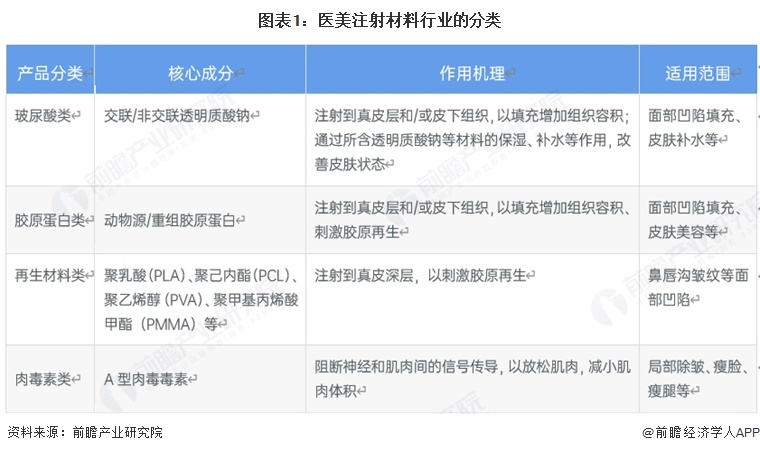
Industry Overview - The medical beauty injection products mainly include hyaluronic acid, collagen, regenerative materials, and botulinum toxin, with hyaluronic acid and collagen being classified as medical devices, while botulinum toxin is categorized as a toxic medical drug [1][2][5] Industry Chain Analysis - The upstream of the medical beauty injection materials includes raw materials and equipment manufacturing, while the midstream focuses on product research and manufacturing, and the downstream consists of sales channels such as public hospitals and private chains [2][5] Industry Development History - The Chinese medical beauty injection materials market has evolved from reliance on imports to self-innovation, with significant milestones including the approval of the first domestic hyaluronic acid filler in 2009 and the emergence of domestic leaders like Huaxi Biological, Aimeike, and Haohai Biological by 2015 [6][8] Industry Policy Background - Regulatory measures have been strengthened since 2019, with guidelines issued for the clinical trial of hyaluronic acid products and stricter management of medical beauty injection materials to enhance product quality and safety [9][11][12] Current Industry Status - The market size of China's medical beauty injection materials is projected to reach approximately 34.6 billion yuan in 2024, reflecting a year-on-year growth of 28.6% and a CAGR of 31.3% from 2021 to 2024 [14][16] Market Structure - Hyaluronic acid and botulinum toxin dominate the market, with hyaluronic acid accounting for about 36% and botulinum toxin for about 29% of the total market share [17][19] Competitive Landscape - Major competitors in the hyaluronic acid market include Huaxi Biological, Aimeike, and Haohai Biological, while the botulinum toxin market is primarily represented by Lanzhou Biological, which is currently the only domestic company with approved products [23][25] Future Industry Outlook - The medical beauty injection materials market is expected to reach 93.7 billion yuan by 2030, driven by technological advancements, compliance, and the rise of male consumers [28][30] Industry Development Trends - Key trends include the long-lasting and precise application of materials, the rise of intelligent and customized solutions, and increased regulatory scrutiny leading to higher approval thresholds for injection materials [32]

A股大消费产业链支付账期大观——“医美”篇:“玻尿酸三巨头”华熙生物支付账期最长 上市至今延长了4个月
Xin Lang Zheng Quan· 2025-07-02 02:53
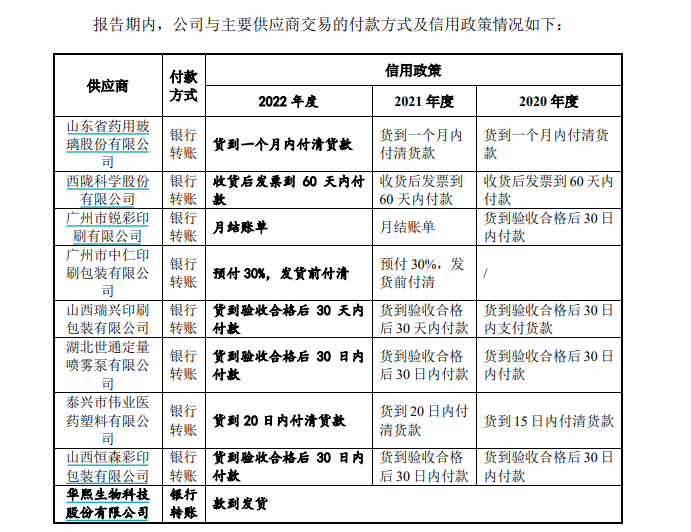
Core Viewpoint - The article discusses the extended payment terms in the automotive and beauty care industries in China, highlighting the impact on suppliers, particularly small and medium enterprises, and the implications of the revised regulations aimed at improving payment practices [1][2]. Group 1: Payment Terms in Automotive Industry - Domestic automotive companies have an average payment term exceeding 170 days, with some exceeding 240 days, effectively transferring financial pressure to suppliers [1]. - The revised "Regulations on Payment for Small and Medium Enterprises" mandates that large enterprises must pay small and medium suppliers within 60 days of delivery [2]. Group 2: Payment Terms in Beauty Care Industry - The beauty care industry has an average payment term of 101 days, which has increased by one week compared to the previous year [3]. - The medical beauty sector shows significantly longer payment terms, with some companies like Huaxi Biological having payment terms of 197 days, an increase of 25 days year-on-year [4][12]. Group 3: Financial Health of Companies - Huaxi Biological's accounts payable balance reached 820 million yuan, a year-on-year increase of 18.22%, indicating a growing reliance on extended payment terms despite having a relatively high liquidity position [12][14]. - Jinbo Biological reported a payment term of 166 days in 2024, with a notable increase in overdue accounts payable, suggesting liquidity challenges [9][10]. Group 4: Industry Dynamics and Competition - The medical beauty industry faces high regulatory barriers and concentrated market power, leading to extended payment terms as companies leverage their bargaining power over suppliers [5][6]. - The competitive landscape in the hyaluronic acid market has intensified, impacting Huaxi Biological's revenue and profit margins, which have seen significant declines in recent years [13]. Group 5: Comparison Among Major Players - Among the "three giants" in the hyaluronic acid market, Huaxi Biological and Aimeike have payment terms exceeding 100 days, while Haohai Biological maintains a stable payment term of under 30 days, indicating a stark contrast in financial practices [14][15].
重组胶原蛋白之争未休:巨子生物承认局限性,华熙生物送检润百颜
Xin Jing Bao· 2025-07-02 01:19
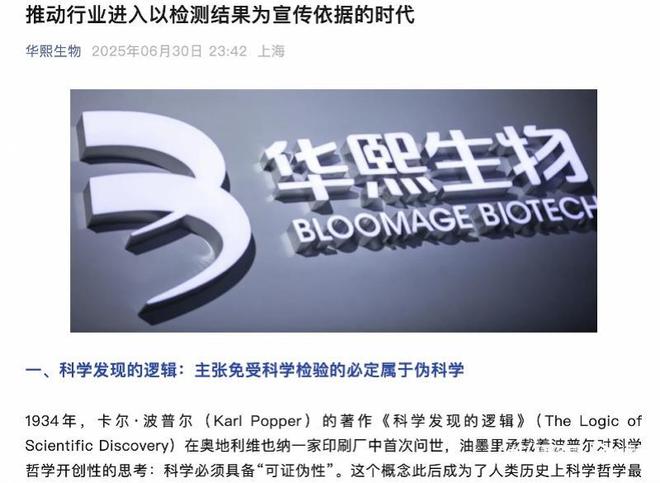
Core Viewpoint - The ongoing debate between two major companies regarding the restructuring of collagen detection methods highlights the industry's need for standardized testing protocols and the challenges posed by varying product quality in the market [1][4][6]. Group 1: Company Actions and Statements - Huaxi Biological published an article asserting the need for industry standards based on testing results, revealing that their product "Runbaiyan" was tested for collagen content using advanced HPLC-HRMS technology, yielding a result of 0.60 mg/g (0.06%) for type III collagen [2][3]. - Huaxi Biological emphasized that their testing method effectively eliminates matrix interference and ensures accurate detection of recombinant collagen, addressing concerns about the reliability of their results [2][3]. - Juzhi Biological acknowledged the limitations of their existing quality standards and testing methods, stating the need for continuous optimization to meet industry advancements and consumer expectations [5][6]. Group 2: Industry Implications - The debate over collagen measurement methods has been ongoing since May, with Huaxi Biological criticizing misleading conclusions from industry reports and calling for a unified testing standard [4][6]. - Juzhi Biological has committed to collaborating with research institutions to enhance detection methods and to gradually disclose key technical parameters and quality control data to foster industry development and transparency [5]. - The lack of a unified detection method has been described as a strategy to evade scrutiny, highlighting the industry's regulatory challenges and the necessity for verifiable solutions [6].
华熙生物:今年皮肤科学创新转化业务有望触底回升
Cai Jing Wang· 2025-07-01 15:32
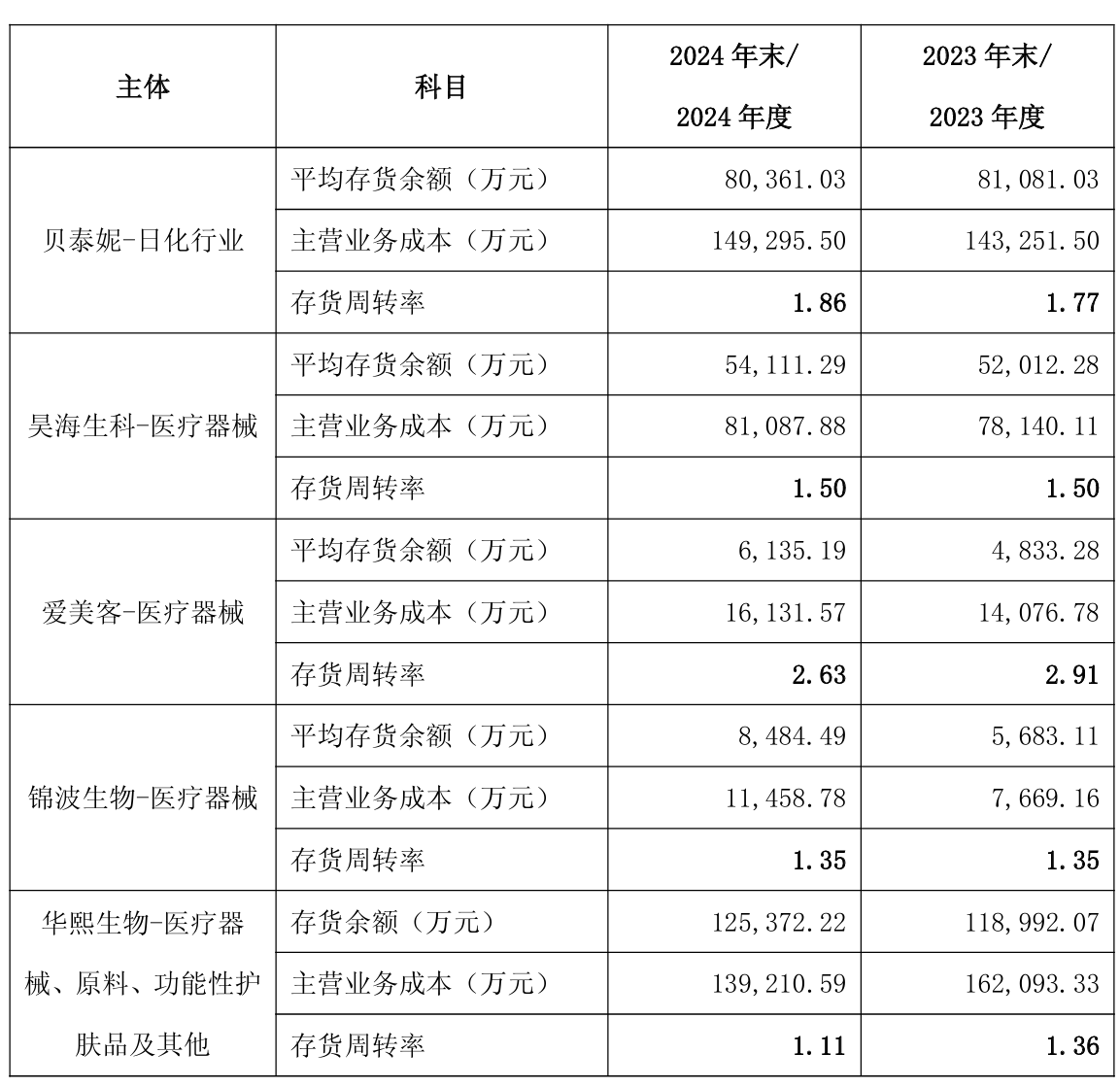
Core Viewpoint - Huaxi Biological's 2024 annual report indicates significant growth in both domestic and international raw material business revenues, with a focus on expanding overseas operations and enhancing product certifications to capture market opportunities [1][2]. Group 1: Revenue Growth - In 2024, the raw material business achieved revenue of 1.236 billion yuan, with domestic revenue at 628 million yuan (up 2.61%) and international revenue at 608 million yuan (up 17.60%) [1]. - The sales volume of the Furst brand HA reached 143.12 tons (up approximately 22%), while Huaxi Biological brand HA sales volume reached 261 tons (up approximately 13%) [3]. - The medical terminal business generated revenue of 1.44 billion yuan, a year-on-year increase of 32.03%, driven by a 43.57% increase in skin-related medical products [3]. Group 2: International Expansion - The company has deepened its overseas business layout by localizing operations, including hiring foreign sales teams and participating in international raw material exhibitions [1]. - In 2024, the company participated in 27 overseas exhibitions and held 8 seminars, establishing connections with various international associations [1]. Group 3: Sales Strategy - The sales strategy involves a two-phase approach: initially targeting customers with the Furst brand for cost-effective products, followed by introducing Huaxi Biological's high-end products to meet upgraded customer needs [2]. - The direct sales channel accounted for over 65% in 2023 and is expected to exceed 75% in 2024, with a goal of reaching 80% by 2025 [4]. Group 4: Inventory Management - The company has implemented a plan to manage inventory effectively, with a significant reduction in over one-year-old inventory from 185 million yuan to 112 million yuan by the end of 2024 [5]. - The inventory turnover rate for Huaxi Biological was 1.11, slightly lower than some peers, attributed to its self-production model [6][7]. Group 5: Market Positioning - The company’s online sales accounted for 43.92% of revenue, indicating a strong digital presence compared to competitors [7][8]. - The overseas sales revenue accounted for 16.56% of total revenue, highlighting the company's commitment to international markets [8].
化妆品医美行业25Q2业绩前瞻:新消费长坡厚雪,美护板块强者恒强
Shenwan Hongyuan Securities· 2025-07-01 14:55
Investment Rating - The report rates the cosmetics and medical beauty industry as "Positive" [2][3] Core Viewpoints - The cosmetics retail sales growth for January to May 2025 is 4.1%, an increase of 2 percentage points compared to the same period last year, indicating a steady recovery in demand [3] - The performance of leading brands remains strong, with double-digit growth, supported by the theme of self-care in new consumption trends, leading to a positive outlook for the first half of 2025 [3] - The 618 shopping festival saw strong performances from domestic brands, with notable rankings on platforms like Tmall and Douyin [3] Summary by Sections Cosmetics Industry Outlook - The report anticipates significant revenue and net profit growth for major companies in Q2 and H1 2025, with specific forecasts: - Up Beauty Co. is expected to see a revenue increase of 16% and a net profit increase of 25% [3] - Marubi is projected to grow revenue by 22% and net profit by 28% in Q2 2025 [3] - Proya is expected to achieve a revenue growth of 10% and net profit growth of 15% in Q2 2025 [3] Key Companies Performance - Notable companies and their expected performance include: - Mao Geping is projected to have a revenue increase of 38% and net profit increase of 35% in H1 2025 [3] - Ruibin is expected to see a revenue increase of 15% and net profit increase of 15% in Q2 2025 [3] - Huaxi Biological is expected to maintain stable performance with a 0% revenue growth and a 10% net profit increase in Q2 2025 [3] Investment Recommendations - The report recommends focusing on companies with strong brand matrices and comprehensive product layouts, such as Up Beauty Co., Marubi, and Proya, which are expected to benefit from the live e-commerce traffic [3] - It also highlights the importance of niche market players like Ruibin and Mao Geping, who are positioned to capitalize on the rise of personal care and domestic beauty trends [3] - For the medical beauty sector, the report suggests focusing on companies with high R&D barriers and strong profitability, recommending companies like Aimeike and Langzi [3] E-commerce and Other Segments - The report suggests monitoring e-commerce companies like Ruibin, which is expected to see significant growth in revenue and net profit [3] - In the maternal and infant sector, Kid King is projected to exceed market expectations with a revenue increase of 10% and a net profit increase of 70% in Q2 2025 [3]


巨子生物承认检测方法有局限,华熙生物发文暗指其“伪科学”
Nan Fang Du Shi Bao· 2025-07-01 12:11
Core Viewpoint - The article discusses the ongoing dispute between Huaxi Biological and Juzhi Biological regarding the measurement and standards of recombinant collagen products, emphasizing the importance of scientific validation and the need for reliable testing methods [1][5][7]. Group 1: Huaxi Biological's Position - Huaxi Biological published an article asserting that claims without scientific testing are pseudoscience, specifically targeting the lack of unified testing methods for recombinant collagen [1][7]. - The company argues that if the actual content of recombinant collagen cannot be accurately measured, then claims about its presence or efficacy become unverifiable, thus lacking scientific credibility [7][8]. - Huaxi Biological emphasizes the need for collaborative efforts to explore the limitations of current testing methods and to develop more precise standards, rather than evading verification [7][8]. Group 2: Juzhi Biological's Response - Juzhi Biological acknowledged the limitations of its existing quality standards and testing methods in a statement, indicating a need for continuous optimization to meet industry advancements [5][6]. - The company defended its testing methods by referencing national standards, claiming that the methods used by critics were not validated and therefore produced inaccurate results [6][8]. Group 3: The Role of "Big Mouth Doctor" - The influencer "Big Mouth Doctor" (Hao Yu) has been involved in the dispute, previously criticizing Juzhi Biological for alleged false claims regarding recombinant collagen content [1][6]. - Despite being silenced on social media, "Big Mouth Doctor" published an article aligning with Huaxi Biological's views on the standards of scientific validation, quoting philosophers on the nature of science [9][12]. - There are speculations about a potential conflict of interest between "Big Mouth Doctor" and Huaxi Biological due to their financial connections, suggesting that the dispute may have underlying commercial motivations [12].
【前瞻分析】2014-2023年全球医疗美容疗程量变化情况
Sou Hu Cai Jing· 2025-07-01 08:41
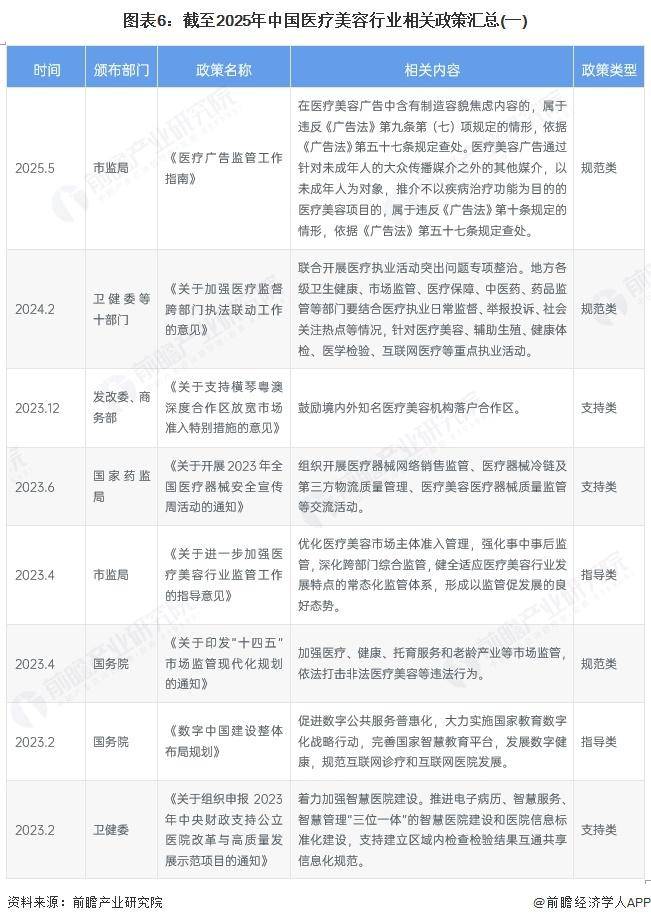
Industry Overview - The medical beauty industry is under strict government regulation, with a series of targeted policies aimed at ensuring safe and reliable medical services for consumers [1][2][3] - Key companies in the industry include Aimeike (300896), Haohai Biological (688366), Huaxi Biological (688363), Aoyuan Meigu (000615), Huadong Pharmaceutical (000963), Langzi Co., Ltd. (002612), and Huahan Plastic Surgery (430335) [1] Policy Direction - The government has implemented comprehensive management measures covering operational standards for medical beauty institutions, including establishment criteria, personnel requirements, and equipment maintenance [1] - Enhanced regulatory measures include establishing supervision mechanisms, increasing enforcement checks, and raising penalties for violations [1][2] Market Development - The "China City Medical Beauty Industry Development Index (2024)" indicates that cities like Beijing, Shenzhen, Chengdu, Guangzhou, Shanghai, Jinan, Changsha, Ningbo, Hangzhou, and Chongqing are leading in medical beauty industry performance [4] - Notably, Ningbo has risen from 23rd to 8th place, benefiting from its "246" trillion-level industrial cluster planning, which emphasizes biomedicine [4] Global Trends - According to ISAPS, the total number of surgical and non-surgical procedures globally increased by 3.4% in 2023, reaching 34.9 million procedures [5] - The United States remains the leader in plastic surgery, performing over 6.1 million procedures in 2023, followed by Brazil with 3.3 million [10]

华熙和巨子这场女首富之间的“脸面”之争,结果由“里子”决定
Sou Hu Cai Jing· 2025-07-01 04:42
Core Insights - The article discusses a significant commercial battle in the beauty industry, particularly focusing on the competition between two major players, Huaxi Biological and Juzhi Biological, over the standards of recombinant collagen products [3][4][8] - The conflict highlights deeper issues within the biotechnology sector, such as the lack of research and development (R&D) investment and the prevalence of concept marketing over scientific validation [9][13][20] Group 1: Industry Competition - The battle over recombinant collagen standards has been ongoing for over a month, revealing a struggle for market share and consumer trust in the beauty sector [3][4] - The conflict was ignited by a report from beauty blogger "Big Mouth Doctor" questioning the amino acid content in Juzhi Biological's product, leading to public scrutiny [4][6] - Juzhi Biological's stock price fell by 37.12% from its peak on May 20 to June 23, resulting in a market value loss of 33.2 billion HKD, while Huaxi Biological's stock saw a slight increase of approximately 1.9% during the same period [8] Group 2: Research and Development Shortcomings - Juzhi Biological admitted to the limitations of its current testing methods, indicating a lack of adequate R&D investment, which was only 1.9% of its revenue in 2024, down from 2.1% in 2023 [9][10] - In contrast, Huaxi Biological and Jinbo Biological had R&D expense ratios of 8.68% and 10.89% respectively, showcasing a significant disparity in investment in innovation [9] - The article emphasizes the need for Juzhi Biological to enhance its R&D efforts to avoid future crises and to better respond to market challenges [10][13] Group 3: Industry Standards and Consumer Trust - The absence of national standards for recombinant collagen testing has led to confusion among consumers, as different companies use varying testing methods, resulting in inconsistent product quality [6][15] - The article argues that the reliance on concept marketing rather than scientific validation is unsustainable and can lead to significant reputational damage for companies [16][20] - The ongoing battle serves as a wake-up call for the industry to prioritize scientific rigor and consumer trust over short-term marketing gains [17][21]
