
LZLJ(000568)

Search documents
1月10日投资早报|证监会对天普股份涉嫌重大遗漏立案调查,绿地控股2025年归母净利润预计亏损160亿元—190亿元,泸州老窖拟10股派13.58元
Sou Hu Cai Jing· 2026-01-10 00:41
Market Performance - On January 9, 2026, the A-share market saw all three major indices close higher, with the Shanghai Composite Index at 4120.43 points, up 0.92%, the Shenzhen Component Index at 14120.15 points, up 1.15%, and the ChiNext Index at 3327.81 points, up 0.77%. Over 3900 stocks rose, with a total trading volume of 3.12 trillion yuan, an increase of 320 billion yuan from the previous trading day [1] - The Hong Kong stock market experienced fluctuations but closed higher, with the Hang Seng Index rising 0.32% to 26231.79 points and a total trading volume of 245.13 billion HKD. For the week, the Hang Seng Index fell 0.41% [1] - In the US market, the Dow Jones increased by 0.61% to 47716.42 points, the S&P 500 rose by 0.54% to 6849.09 points, and the Nasdaq Composite gained 0.65% to 23365.69 points [1] Regulatory Developments - The China Securities Regulatory Commission (CSRC) has significantly increased the rewards for whistleblowers reporting securities and futures violations, raising the reward percentage from 1% to 3% of the penalties collected. The maximum reward for providing major violation leads has been increased from 100,000 yuan to 500,000 yuan, with cases of significant national impact or involving internal informants eligible for rewards up to 1 million yuan [1] - The CSRC has initiated an investigation into Ningbo Tianpu Rubber Technology Co., Ltd. for significant omissions in their announcements regarding abnormal stock price fluctuations, aiming to maintain market stability [3] - The State Council, led by Premier Li Qiang, emphasized the need for coordinated fiscal and financial policies to stimulate domestic demand, including measures to enhance consumer spending and support private investment through various financial incentives [4]


喜娜AI速递:昨夜今晨财经热点要闻|2026年1月10日
Xin Lang Cai Jing· 2026-01-09 23:12
Group 1 - The China Securities Regulatory Commission (CSRC) has launched an investigation into Tianpu Co., Ltd. for significant omissions in its stock price fluctuation announcements, reflecting the regulatory body's commitment to maintaining market stability and warning investors against speculative trading [2][7] - The CSRC and the Ministry of Finance have announced new regulations to enhance the whistleblower reward system for securities and futures violations, increasing the reward cap from 100,000 yuan to 1 million yuan, thereby encouraging the reporting of illegal activities [2][7] - In December 2025, the Consumer Price Index (CPI) showed a year-on-year increase of 0.8%, while the Producer Price Index (PPI) decreased by 1.9%, indicating mixed trends in price movements influenced by international commodity prices and domestic policies [2][7] Group 2 - The Shanghai Composite Index has risen for 16 consecutive days, surpassing 4,100 points for the first time in a decade, with total trading volume in the Shanghai and Shenzhen markets exceeding 3 trillion yuan [3][8] - Starting April 1, 2026, the export tax rebate for photovoltaic products will be canceled, and the rebate rate for battery products will be reduced from 9% to 6%, which is expected to help the industry eliminate outdated capacity and create investment opportunities in valuation recovery and new technologies [3][8] - Multiple listed companies are undergoing changes in controlling stakes, with significant transactions such as the transfer of shares in Asia-Pacific Pharmaceutical and plans for fundraising for new drug development, drawing market attention to their future strategies [3][9] Group 3 - Foreign investment is optimistic about the Chinese economy and market, with firms like Goldman Sachs and UBS predicting increases in the MSCI China Index and the CSI 300 Index, highlighting technology innovation and AI industries as core growth areas [4][9] - Copper prices have surged by 22% in a month due to factors like U.S. stockpiling and AI trends, prompting Goldman Sachs to raise its price forecast for copper in the first half of 2026 to $12,750 per ton, while maintaining a year-end forecast of $11,200 per ton [4][5][9] - Employees at Shenwan Hongyuan Futures faced a violent incident while protesting significant cuts to year-end bonuses, indicating potential challenges and restructuring within the futures industry amid salary constraints [10]


泸州老窖,拟分红约20亿元
Zheng Quan Shi Bao· 2026-01-09 23:07
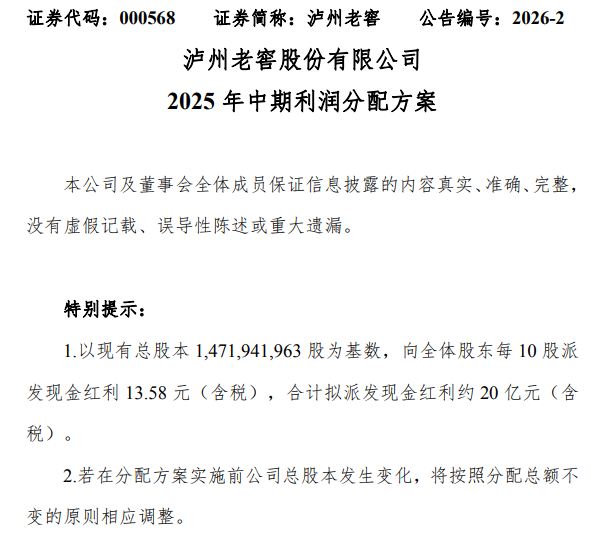
Group 1 - Luzhou Laojiao announced a mid-term profit distribution plan for 2025, proposing a cash dividend of 13.58 yuan per 10 shares, totaling approximately 2 billion yuan [1] - Kweichow Moutai's mid-term profit distribution plan for 2025 was approved, with a cash dividend of 23.957 yuan per share, amounting to a total distribution of 30 billion yuan [1] - The record date for Kweichow Moutai's dividend is December 18, 2025, with the payment date set for December 19, 2025 [1] Group 2 - Wuliangye announced its mid-term profit distribution plan for 2025, agreeing to a cash dividend of 25.78 yuan per 10 shares, totaling 10 billion yuan [2] - The record date for Wuliangye's dividend is December 17, 2025, with the payment date on December 18, 2025 [2] - Wuliangye will not issue bonus shares or increase capital from reserves in this distribution [2]
泸州老窖 拟分红约20亿元
Zheng Quan Shi Bao· 2026-01-09 15:50
Group 1 - Luzhou Laojiao announced a mid-term profit distribution plan for 2025, proposing a cash dividend of 13.58 yuan per 10 shares, totaling approximately 2 billion yuan [2] - Kweichow Moutai's mid-term profit distribution plan for 2025 was approved, with a cash dividend of 23.957 yuan per share, amounting to a total of 30 billion yuan [5] - Wuliangye's board approved a mid-term profit distribution plan for 2025, proposing a cash dividend of 25.78 yuan per 10 shares, totaling approximately 10 billion yuan [8] Group 2 - The record date for Kweichow Moutai's dividend is December 18, 2025, with the ex-dividend date and payment date on December 19, 2025 [5][6] - Wuliangye's record date is December 17, 2025, with the ex-dividend date on December 18, 2025 [8]


泸州老窖,拟分红约20亿元
证券时报· 2026-01-09 15:39
Group 1 - Luzhou Laojiao announced a mid-term profit distribution plan for 2025, proposing a cash dividend of 13.58 yuan (including tax) for every 10 shares, totaling approximately 2 billion yuan (including tax) [1] - Kweichow Moutai's mid-term profit distribution plan for 2025 was approved, with a cash dividend of 23.957 yuan (including tax) per share, amounting to a total distribution of 30 billion yuan (including tax) [4] - Wuliangye announced a mid-term profit distribution plan for 2025, agreeing to distribute a cash dividend of 25.78 yuan (including tax) for every 10 shares, totaling approximately 10 billion yuan (including tax) [5]
千亿龙头 拟分红约20亿元
Zhong Guo Zheng Quan Bao· 2026-01-09 14:43
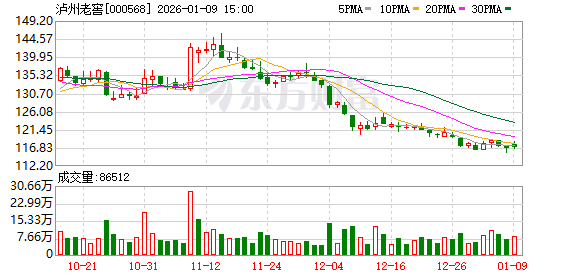
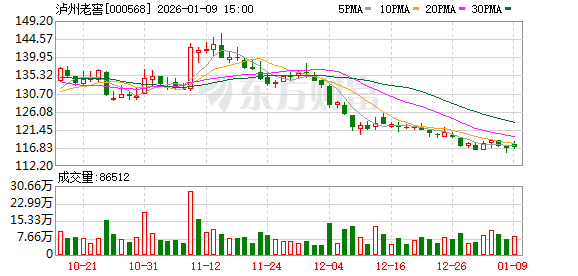
Core Viewpoint - Luzhou Laojiao announced a mid-term profit distribution plan for 2025, proposing a cash dividend of 13.58 yuan per 10 shares, totaling approximately 2 billion yuan [2][6]. Financial Performance - For the first three quarters of 2025, Luzhou Laojiao achieved an operating income of 23.127 billion yuan and a net profit attributable to shareholders of 10.762 billion yuan, with a net cash flow from operating activities of 9.823 billion yuan [6]. - As of September 30, 2025, the company's undistributed profits amounted to approximately 24.021 billion yuan [6]. Dividend Policy - Luzhou Laojiao's dividend plan for 2024-2026 includes a gradual increase in cash dividend ratios, set at no less than 65%, 70%, and 75% respectively, with absolute amounts not less than 8.5 billion yuan each year [7]. - The recent mid-term dividend of approximately 2 billion yuan is seen as a routine measure to fulfill the company's commitment to high dividends, supported by over 10 billion yuan in net profit and ample cash flow [7]. Business Strategy - The high-end product, Guojiao 1573, has established a scale of over 20 billion yuan, serving as a cornerstone for the company's performance [7]. - Luzhou Laojiao is actively exploring younger and lower-alcohol markets while maintaining the value of its high-end brands, with the 38-degree Guojiao 1573 becoming a billion-level product [7]. - The company introduced six major shifts in thinking during its annual dealer recognition and marketing meeting to guide sales teams and dealers in adapting to market changes [7]. Market Performance - On January 9, Luzhou Laojiao's stock rose by 0.23%, closing at 116.86 yuan per share, with a total market capitalization of 172.01 billion yuan [7].
千亿龙头,拟分红约20亿元
Zhong Guo Zheng Quan Bao· 2026-01-09 14:37
Group 1 - The core point of the article is that Luzhou Laojiao announced a mid-term profit distribution plan, proposing a cash dividend of 13.58 yuan per 10 shares, totaling approximately 2 billion yuan [1][4] - For the first three quarters of 2025, Luzhou Laojiao achieved an operating income of 23.127 billion yuan and a net profit attributable to shareholders of 10.762 billion yuan, with a net cash flow from operating activities of 9.823 billion yuan [3] - The company has a profit distribution plan for 2024-2026, with cash dividend ratios set to increase annually, not less than 65%, 70%, and 75%, with absolute amounts not less than 8.5 billion yuan each year [3] Group 2 - Luzhou Laojiao's high-end product, Guojiao 1573, has established a scale of over 20 billion yuan, serving as a cornerstone for the company's performance [3] - The company is adapting its product strategy to market changes by focusing on high-end brand value while also targeting younger and lower-alcohol markets, exemplified by the 38-degree Guojiao 1573 becoming a billion-level product [3] - Industry analysts view the 2 billion yuan mid-term dividend as a routine measure to fulfill high dividend commitments, supported by the company's over 10 billion yuan net profit and ample cash flow [4]
泸州老窖:第十一届董事会第二十次会议决议公告
Zheng Quan Ri Bao· 2026-01-09 13:38
证券日报网讯 1月9日,泸州老窖发布公告称,公司第十一届董事会第二十次会议审议通过《2025年中 期利润分配方案》。 (文章来源:证券日报) ...
A股公告精选 | 派现超255亿元 招商银行(600036.SH)公布2025年半年度分红方案
智通财经网· 2026-01-09 12:03
分组1 - China Merchants Bank plans to distribute a cash dividend of approximately 25.548 billion yuan for the first half of 2025, with a per-share dividend of 1.013 yuan (tax included) [1] - Luzhou Laojiao proposes a cash dividend of 13.58 yuan per 10 shares, totaling around 2 billion yuan (tax included) for the mid-2025 profit distribution [3] - Tongfu Microelectronics intends to raise up to 4.4 billion yuan through a private placement to enhance its packaging capacity for storage chips and other emerging applications [2] 分组2 - Xibu Gold announces that its shareholder, Turpan Jinyuan Mining Co., plans to reduce its stake by up to 1% due to funding needs [4] - Jiaoyun Co. is planning a significant asset restructuring by swapping its automotive sales and service assets with the cultural and tourism-related assets of its controlling shareholder [5] - Guo Sheng Technology expects a negative net profit for the fiscal year 2025, leading to a stock resumption after a period of trading suspension [8] 分组3 - North Rare Earth adjusts its first-quarter rare earth concentrate trading price to 26,834 yuan per ton, reflecting a 2.4% increase from the previous quarter [11] - Baotou Steel plans to set the same trading price for rare earth concentrate at 26,834 yuan per ton for the first quarter of 2026, also indicating a 2.4% increase [12] - Wanbangde's subsidiary has been selected for a national major science and technology project for Alzheimer's drug development, which is expected to positively impact its clinical development and long-term business growth [13]



泸州老窖披露2025年中期利润分配方案:拟派发现金红利约20亿元
Sou Hu Cai Jing· 2026-01-09 11:53
据大智慧VIP,截至1月9日收盘,泸州老窖报116.86元/股,涨0.23%。 据公告,2025年前三季度,泸州老窖实现归属于母公司股东的净利润107.62亿元,未提取法定公积金和 任意公积金。截至2025年9月30日,合并报表未分配利润为413.45亿元,母公司未分配利润为240.21亿 元,按照母公司与合并财务报表数据孰低原则,公司可供股东分配利润为240.21亿元。 1月9日,泸州老窖股份有限公司(泸州老窖,000568.SZ)披露2025年中期利润分配方案,经董事会决 议,拟以现有总股本14.72亿股为基数,向全体股东每10股派发现金红利13.58元(含税),合计拟派发 现金红利约20亿元(含税)。本次利润分配不送红股,不以资本公积金转增股本。 ...