
LZLJ(000568)

Search documents
2026年如何提振白酒消费 三家四川酒企这样说
Sou Hu Cai Jing· 2026-02-28 02:14
Core Insights - The Chinese liquor market is undergoing significant adjustments and value reconstruction in 2026, with changing consumption scenarios and challenges facing traditional channels [1] - Industry leaders, including representatives from Luzhou Laojiao, Langjiu, and Sichuan Liquor Group, discussed strategies to boost liquor consumption at the 24th China International Wine Expo [1] Group 1: Luzhou Laojiao - Luzhou Laojiao emphasizes creating an immersive brand experience that fosters a symbiotic relationship with consumers [1] - The annual sealing ceremony will take place at the East Gate Wharf in Luzhou, highlighting the connection between the brand and the local culture [4] - The ceremony will feature interactive experiences that showcase the journey of sorghum to liquor, celebrating the cultural heritage of Luzhou [4] Group 2: Langjiu Group - Langjiu Group is set to open the Longma Winery, a world-class facility that will enhance the liquor consumption market [8] - The Longma Winery, covering approximately 5,000 acres, will include various facilities aimed at providing a comprehensive experience for consumers [8] - The winery aims to become a significant destination for liquor enthusiasts and contribute to local economic development [9] Group 3: Sichuan Liquor Group - Sichuan Liquor Group is focusing on enhancing the quality of raw liquor, customized liquor, and staple liquor as part of its strategic initiatives [10] - The group aims to establish a modern raw liquor system and create a "Chinese liquor online dream factory" to ensure transparency and quality [13] - Customized liquor will serve as a bridge between the industry and consumers, with plans to make it more accessible and affordable [13][14]



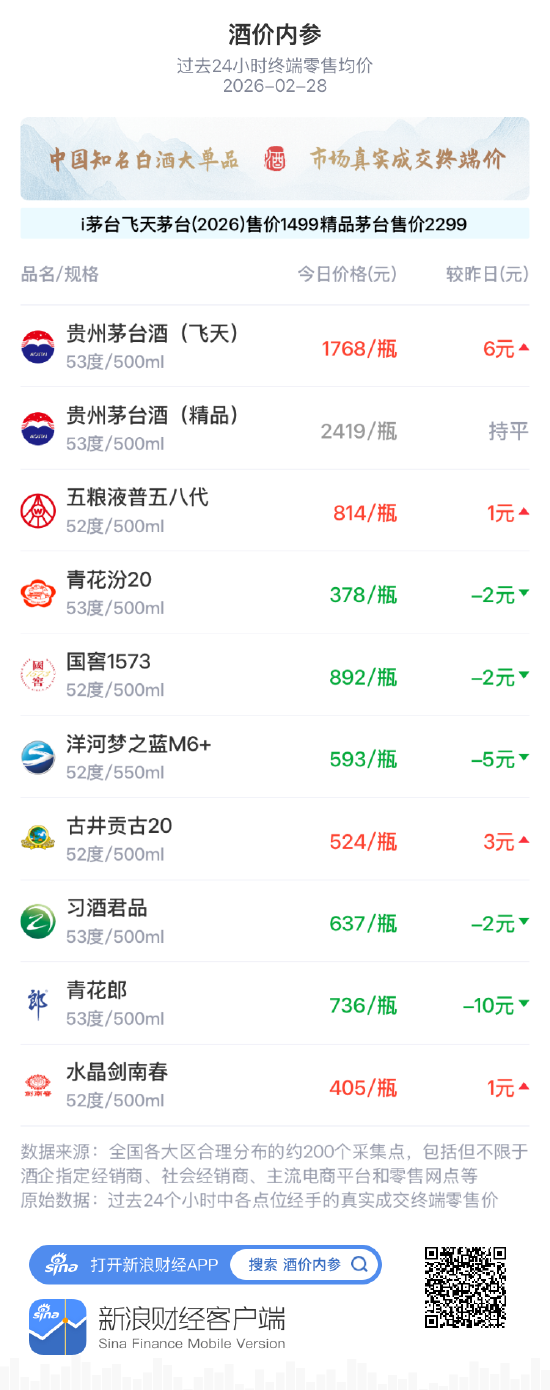
酒价内参2月28日价格发布,青花郎回落10元领跌
Xin Lang Cai Jing· 2026-02-28 01:14
Core Insights - The Chinese white liquor market is experiencing a price adjustment, with the average retail price of the top ten products dropping to 9,166 yuan, a decrease of 10 yuan from the previous day, marking a new low since early February [1][6][7] - The market shows a mixed performance with four products increasing in price, five decreasing, and one remaining stable, indicating a structural adjustment rather than a uniform market trend [1][7] Price Movements - The price of Feitian Moutai increased by 6 yuan per bottle, supported by solid demand and tight supply [1][7] - Other products that saw price increases include Gujing Gong 20 (up 3 yuan) and Wuliangye Pu 58 (up 1 yuan) [1][7] - Notable price decreases include Qinghua Lang (down 10 yuan), Yanghe Dream Blue M6+ (down 5 yuan), and several others down by 2 yuan [1][7][10] Market Analysis - Data collection for the price report comes from approximately 200 points across various regions, including designated distributors and e-commerce platforms, ensuring a comprehensive and objective view of the market [2][8] - The market is expected to see a structural recovery during the 2026 Spring Festival, particularly for sauce-flavored and budget-friendly liquors, with a notable increase in sales for high-end products like Moutai [2][8] - Despite some positive indicators, the industry is still facing weak demand, with the impact of reduced government and business banquets not fully dissipated [2][8]




2026春节五粮液降价vs国窖挺价:谁赢了市场?
Sou Hu Cai Jing· 2026-02-27 12:37
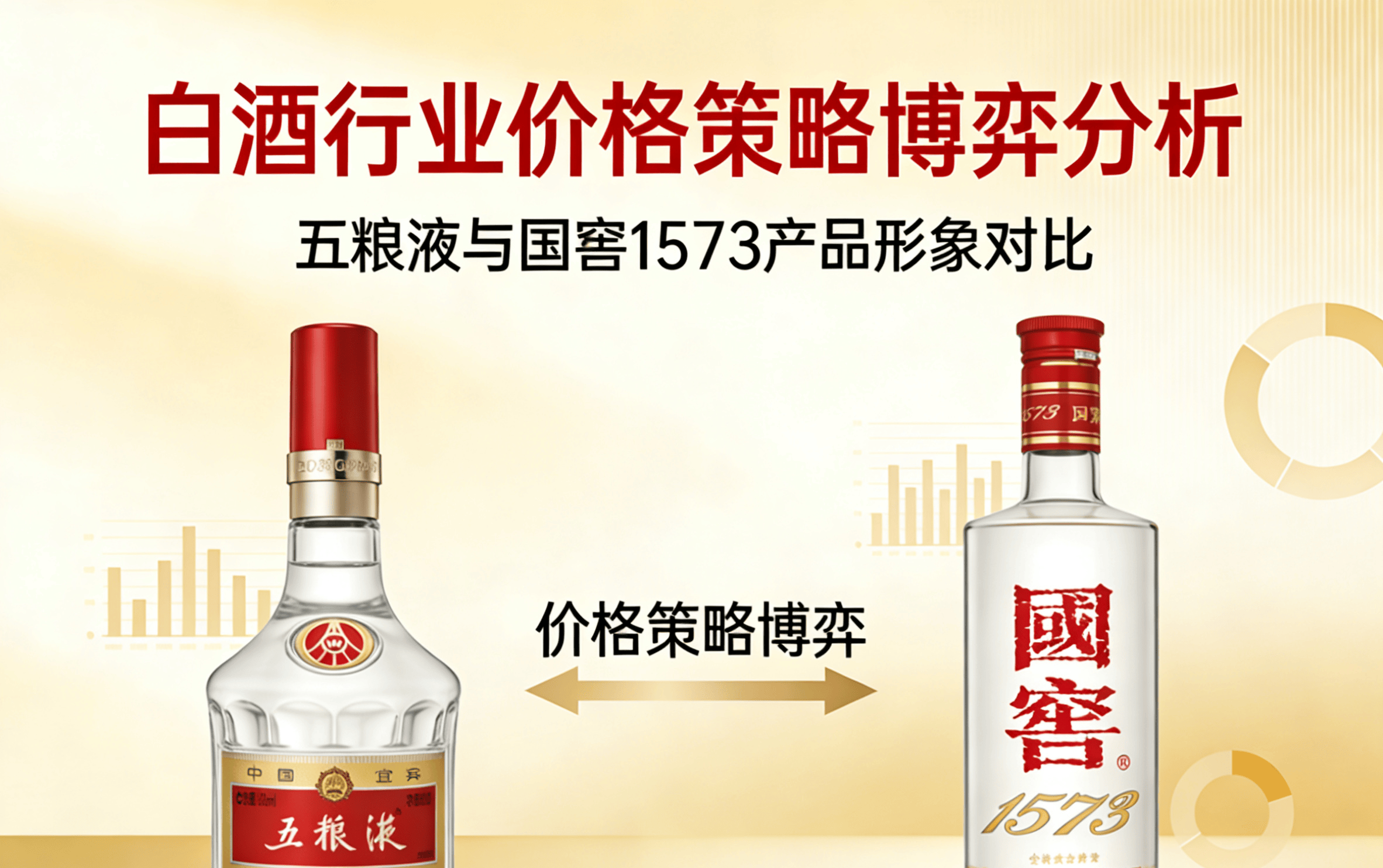
Core Insights - The ultra-premium liquor market in China is characterized by a "one super, two strong, and multiple poles" oligopoly structure, with market concentration reaching historical highs by the end of 2025 [2] - Moutai holds over 60% market share, further increasing from 58% in 2021 to 63% by 2025, establishing itself as the pricing anchor and value benchmark in the ultra-premium segment [2] - Wuliangye and Luzhou Laojiao dominate the core price range of 800-1200 RMB, collectively accounting for about 35% of the ultra-premium market [2][3] Market Dynamics - The CR3 (Moutai, Wuliangye, Luzhou Laojiao) accounts for over 94% of the ultra-premium market, indicating a highly consolidated industry landscape [3] - The 2026 Spring Festival period is expected to show a K-shaped differentiation in the liquor industry, with overall sales down by approximately 10-15% [3] - Wuliangye adopts a strategy of maintaining factory prices while providing channel subsidies to lower terminal prices, while Luzhou Laojiao focuses on controlling supply to maintain brand value [3][5] Pricing Strategies - Wuliangye's strategy involves indirect price reductions through channel subsidies, keeping the official factory price stable at 969 RMB per bottle [5][6] - Luzhou Laojiao maintains its factory price at 980 RMB, emphasizing strict control over distribution and pricing to uphold brand integrity [7][8] Sales Performance - Wuliangye's sales during the Spring Festival period show a year-on-year increase of 5-12%, successfully capturing market share despite overall industry contraction [9][10] - Luzhou Laojiao experiences a decline in sales volume by 15-20% during the same period, missing opportunities in the market [14][15] Inventory and Channel Management - Post-Spring Festival, Wuliangye's inventory levels are reported to be at a healthy range of 45-60 days, significantly lower than the industry average [16] - Luzhou Laojiao faces challenges with inventory management, particularly in weaker regions where stock levels exceed three months [19] Brand Positioning - Wuliangye's pricing strategy has led to a reduction in brand premium, with terminal prices dropping to the 800 RMB range, potentially affecting its high-end positioning [22] - Luzhou Laojiao's strategy of maintaining higher prices reinforces its high-end brand image, although it risks losing market share in price-sensitive segments [25][26] Future Outlook - The competition between Wuliangye and Luzhou Laojiao will depend on their ability to sustain their respective strategies post-Spring Festival, with Wuliangye focusing on volume and channel health, while Luzhou Laojiao aims to maintain brand value [26]
2025中国酒业百强榜发布,五粮液反超茅台登顶
Xin Lang Cai Jing· 2026-02-27 09:59
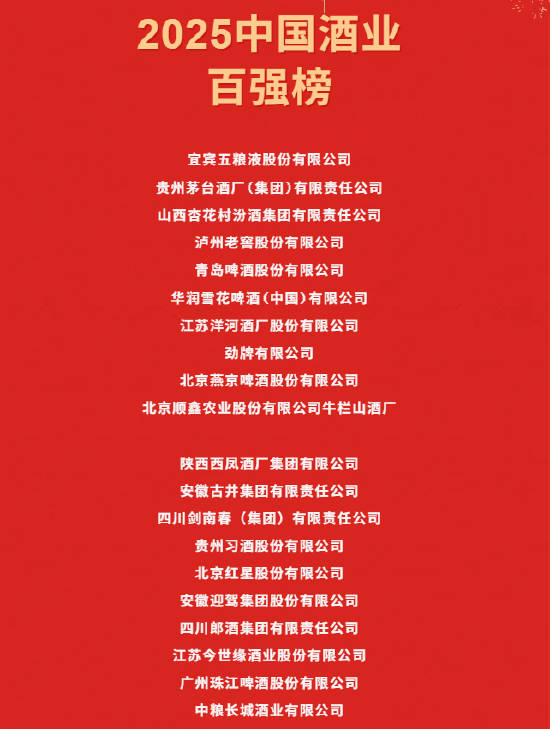
Core Insights - The "Top 100 Chinese Liquor Producers 2025" list was recently released by Jiutong Society in collaboration with "China Alcohol Industry," with Wuliangye surpassing Moutai to take the top position, while Moutai ranks second [1][6] - The rankings from third to tenth place include Fenjiu, Luzhou Laojiao, Qingdao Beer, China Resources Snow Beer, Jiangsu Yanghe, Jinjiu, Yanjing Beer, and Shunxin Agriculture [1][6] Company Rankings - The top ten companies in the liquor industry are as follows: 1. Wuliangye 2. Moutai 3. Fenjiu 4. Luzhou Laojiao 5. Qingdao Beer 6. China Resources Snow Beer 7. Jiangsu Yanghe 8. Jinjiu 9. Yanjing Beer 10. Shunxin Agriculture [1][6] Additional Companies Listed - Other notable companies in the rankings include: - Yantai Changyu Pioneer Wine Co., Ltd. - Sijiu Liquor Co., Ltd. - Hubei Daohua Xiang Liquor Co., Ltd. - Taishan Liquor Group Co., Ltd. - Guizhou Guotai Intelligent Liquor Group Co., Ltd. - Henan Yangshao Liquor Co., Ltd. - Guangxi Danquan Liquor Co., Ltd. - Budweiser Investment (China) Co., Ltd. - Guangdong Jiujiang Distillery Co., Ltd. - Chongqing Beer Co., Ltd. [2][8]

春节后,飞天茅台价格不降反升?消费ETF(159928)、港股通消费ETF汇添富(159268)双双再度回调!机构:春节餐饮消费回暖
Xin Lang Cai Jing· 2026-02-26 09:34
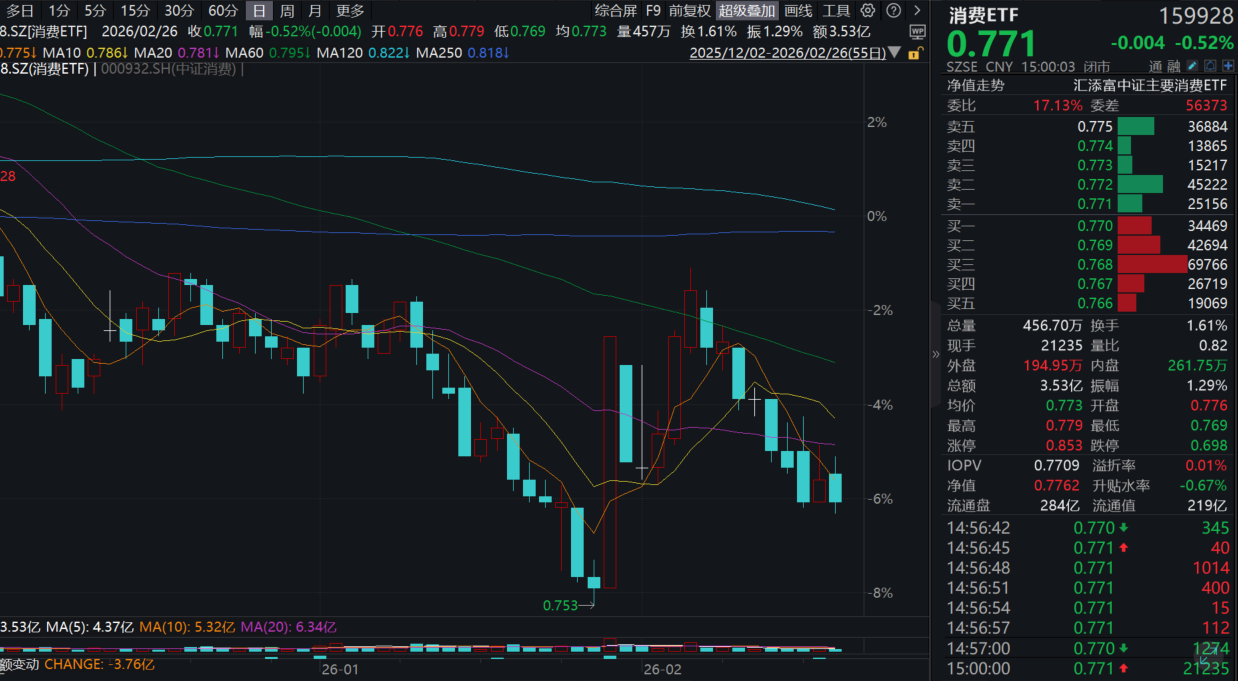
Group 1 - The A-share market is experiencing a narrow consolidation, with the leading consumption ETF (159928) declining by 0.52% and a total trading volume exceeding 350 million yuan, while net inflows over the past 60 days have surpassed 2.1 billion yuan [1] - The Shanghai government has introduced new real estate policies, reducing the social security requirement for non-local residents to purchase homes within the outer ring from 3 years to 1 year, and allowing families with a residence permit for 5 years to buy one property without social security [3] - During the recent Spring Festival, there were reports of shortages of premium liquor, with some distributors indicating that they could not meet demand, leading to an increase in prices instead of the usual post-holiday decline [3] Group 2 - The Spring Festival has seen a significant recovery in restaurant consumption, with key retail and restaurant enterprises reporting a daily sales increase of 5.7% year-on-year, and foot traffic in 78 key pedestrian streets rising by 6.7% [5] - The demand for dining experiences during the holiday surged, with Meituan's New Year's Eve dinner reservations increasing by 105% and Douyin's group purchases rising by 185%, indicating strong consumer vitality [5] - The frozen food and seasoning sectors are benefiting from the recovery in restaurant consumption, with B-end product sales increasing due to the resurgence of dining scenes during the Spring Festival [6] Group 3 - The overall consumption trend during the Spring Festival aligns with expectations, showing a division between material and service consumption, with emotional consumption demonstrating resilience [7] - The consumption ETF (159928) is characterized by its essential and domestic demand attributes, showing significant profitability resilience across economic cycles, with the top ten constituent stocks accounting for over 68.55% of the index [8] - The restaurant supply chain is expected to see improvements in inventory and sales, driven by the strong performance of downstream dining consumption, which is likely to enhance the profitability of leading companies in the sector [6][7]



19只白酒股下跌 贵州茅台1466.21元/股收盘
Bei Jing Shang Bao· 2026-02-26 09:00
Group 1 - The core point of the article indicates that the liquor sector, particularly the baijiu stocks, experienced a decline, with the Shanghai Composite Index closing at 4146.63 points, down 0.01% [1] - The baijiu sector index closed at 2223.89 points, down 1.17%, with 19 out of 19 baijiu stocks declining [1] - Specific stock performances include Kweichow Moutai closing at 1466.21 CNY per share, down 1.71%; Wuliangye at 103.88 CNY, down 1.23%; Shanxi Fenjiu at 161.38 CNY, down 1.55%; Luzhou Laojiao at 111.00 CNY, down 1.70%; and Yanghe Distillery at 53.25 CNY, down 1.39% [1] Group 2 - Tianfeng Securities' report suggests that the baijiu sector may be in the final stage of fundamental clearing, with the stabilization of Moutai's wholesale price being a positive signal for marginal improvement [1] - The report also indicates that the valuation recovery of the sector may precede the recovery of performance [1]
中国必选消费品2月价格报告:高端白酒批价环比回升,液态奶与调味品折扣减小
Haitong Securities International· 2026-02-26 03:03
Investment Rating - The investment rating for the consumer staples sector in China is "Outperform" for multiple companies including Moutai, Wuliangye, and others [1]. Core Insights - Premium baijiu wholesale prices have rebounded month-on-month, while discounts on liquid milk and condiments have narrowed [1][11]. - The report highlights the resilience of consumer stocks amidst a volatile market, emphasizing their value [3]. Summary by Relevant Sections Baijiu Pricing - Moutai's wholesale prices for Feitian (case and single bottle) are 1700 and 1650 yuan respectively, with month-on-month increases of +100 and +70 yuan. Year-to-date changes are +100 and +60 yuan, but year-on-year changes are -530 and -560 yuan [10][40]. - Wuliangye's eighth-generation price remains stable at 830 yuan, with a year-to-date increase of +10 yuan and a year-on-year decrease of -105 yuan [4][40]. - Luzhou Laojiao's Guojiao 1573 price is 870 yuan, up by +20 yuan month-on-month and +20 yuan year-to-date, with a year-on-year increase of +10 yuan [4][40]. - Other notable prices include Shanxi Fenjiu and various products from Yanghe and Gujing Gongjiu, showing mixed trends in pricing [10][40]. Discounts on Consumer Products - Discounts on liquid milk products have decreased from an average of 62.8% to 61.4% and from 63.4% to 61.7% for median values [19][37]. - Discounts on condiments have also narrowed from 87.1% to 85.0% (average) and from 88.2% to 84.9% (median) [19][37]. - Conversely, discounts on convenience foods have slightly increased, with average discounts moving from 94.8% to 94.6% [20][37]. - Beer, soft drinks, and infant formula discounts have remained stable, with slight variations in average and median rates [21][38].



酒价内参2月26日价格发布,青花郎上涨4元
Xin Lang Cai Jing· 2026-02-26 01:13
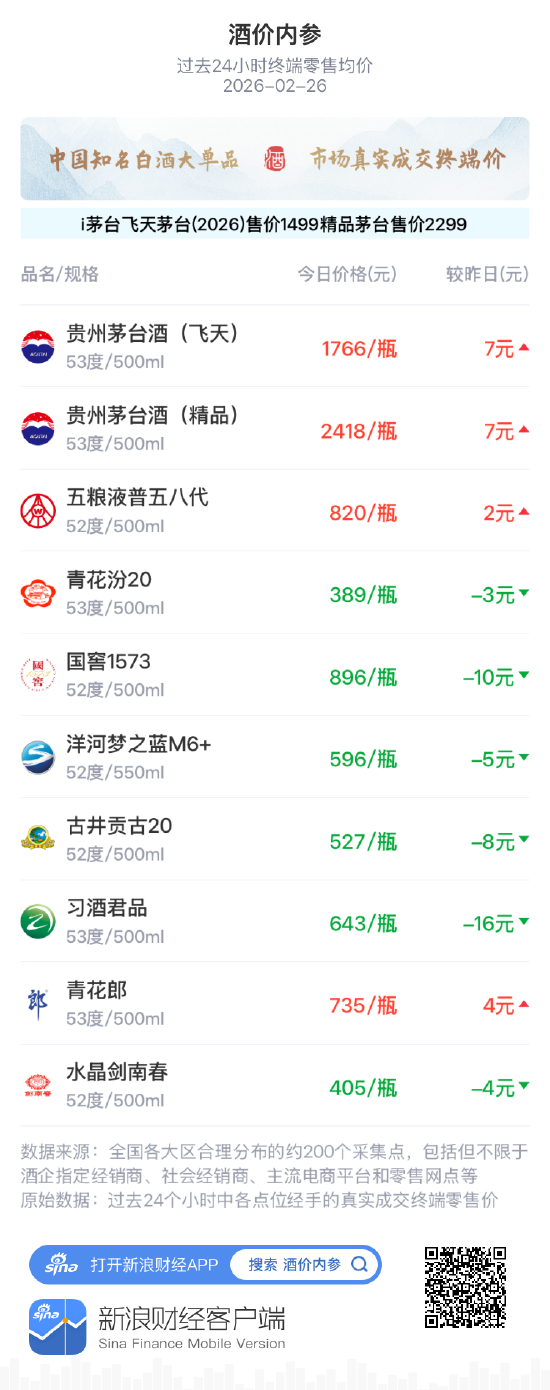
Core Insights - The Chinese liquor market is experiencing significant price fluctuations, with the average retail price of the top ten liquor products dropping to 9195 yuan, a decrease of 26 yuan from the previous day, marking a new low in the past ten days [1][6]. Price Movements - Among the top ten products, four saw price increases while six experienced declines. The price support is mainly concentrated on leading brands, while mid-tier products are under pressure [1][7]. - Notable price increases include: - Feitian Moutai and Jingpin Moutai, both up by 7 yuan per bottle [1][7]. - Qinghualang, which increased by 4 yuan per bottle [1][7]. - Wuliangye Pu Wubai, which saw a slight increase of 2 yuan per bottle [1][7]. - Products that declined in price include: - Xijiu Junpin, down by 16 yuan per bottle [1][7]. - Guojiao 1573, which fell by 10 yuan per bottle, marking two consecutive days of significant declines [1][7]. - Gujinggong 20, down by 8 yuan per bottle, and Yanghe Dream Blue M6+ decreased by 5 yuan per bottle [1][7]. - Shuangjiao Jian Nan Chun and Qinghua Fen 20 dropped by 4 yuan and 3 yuan per bottle, respectively [1][7]. Market Data Collection - The daily data for liquor prices is sourced from approximately 200 collection points across various regions, including designated distributors, social distributors, e-commerce platforms, and retail outlets, aiming to provide an objective and traceable overview of the market [2][7]. Pricing Strategy and Market Response - Moutai officially denied rumors of a price increase for Feitian Moutai, which was speculated to rise from 1169 yuan to 1299 yuan per bottle. The official suggested retail price remains at 1499 yuan [2][8]. - Analysts suggest that current market conditions do not support a price increase for Moutai in the short term, with the last price adjustment occurring in November 2023, when the factory price was raised by approximately 20% [2][8].
酒业渠道数字化全景盘点:五粮液、瓶子星球、剑南春等七家企业的协同变革
Sou Hu Cai Jing· 2026-02-25 10:39
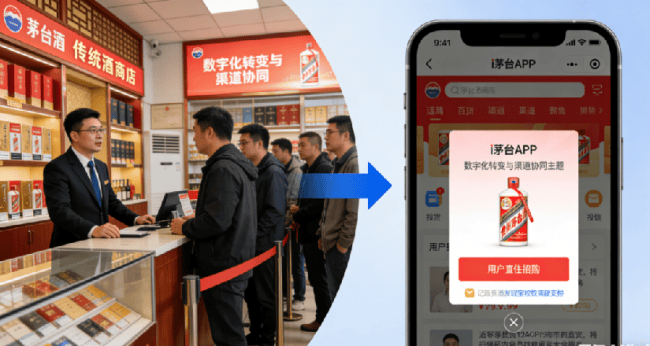
Core Insights - The liquor industry is undergoing a profound transformation from scale expansion to quality and efficiency, with AI technology playing a crucial role in optimizing channel operations and inventory management [1] Group 1: Moutai - Moutai utilizes a digital platform, "i Moutai," which has over 76 million registered users, with online sales accounting for 60% of direct sales revenue [2] - The company employs AI algorithms to analyze consumer data, dynamically adjusting product strategies to enhance purchasing experiences [2] - Moutai's smart store management system monitors inventory and sales data in real-time, supporting precise replenishment and dynamic pricing [2] - The company is investing heavily in upgrading its ERP system to achieve full-process digital management [2] Group 2: Wuliangye - Wuliangye has built a data governance platform named "Zhishu Cloud Hub" to integrate various independent systems for unified data analysis [4] - The platform includes nearly 200 business metrics to support management decisions regarding channels and marketing [4] - It monitors channel status using sales data to generate visual reports and trigger alerts for abnormal sales patterns [5] Group 3: Luzhou Laojiao - Luzhou Laojiao focuses on systematic transformation of offline stores by creating a unified middle platform to address data fragmentation [6] - The new system integrates core business capabilities, supporting flexible operations and multi-channel business expansion [6] - The company has implemented a full-process "logistics code" management system for product traceability and anti-diversion [6] Group 4: Shanxi Fenjiu - Shanxi Fenjiu has established a dynamic inventory monitoring and alert mechanism to manage channel inventory effectively [8] - The company optimized its expense allocation and verification processes to enhance the targeting of marketing expenses [9] - An intelligent warehousing system is in place to optimize supply chain responsiveness based on sales data [9] Group 5: Bottle Planet - Bottle Planet has developed an AI digital channel collaboration platform to address challenges in channel diversification and market responsiveness [10] - The platform features a real-time data center that integrates data from various sources, breaking down information silos [10] - Intelligent predictive models guide operational decisions, ensuring optimal product distribution across channels [11] Group 6: Jian Nan Chun - Jian Nan Chun has invested significantly in digital and intelligent upgrades of its supply chain logistics, collaborating with professional supply chain companies [13] - The company has built a "smart warehousing and distribution network" for unified inventory management [13] - Continuous automation and intelligence upgrades in logistics enhance responsiveness and cost optimization [13] Group 7: Jiu Gui Jiu - Jiu Gui Jiu has implemented a marketing digital reform centered on "BC linkage," utilizing "one code per item" technology for precise channel control [14] - The company has established a digital identity for each bottle, enabling full traceability from production to consumer [14] - Real-time consumer data is leveraged for targeted marketing and market insights [14] Group 8: Industry Outlook - The application of AI in the liquor industry has evolved from isolated initiatives to comprehensive collaboration across the supply chain [16] - Future advancements in technologies like large models and IoT will further clarify the landscape of channel intelligence [17] - This data-driven revolution is seen as a foundation for building long-term competitive advantages in the liquor industry [17]

撒红包、促动销、争上桌……春节白酒动销战 行业已有底部信号
2 1 Shi Ji Jing Ji Bao Dao· 2026-02-25 08:35
Core Viewpoint - The Chinese liquor industry, particularly the baijiu segment, has shown resilience during the Spring Festival, with sales slightly better than expected despite previous concerns about consumer demand [1][4][18]. Group 1: Sales Performance - Baijiu sales during the Spring Festival are expected to decline by double digits year-on-year, but the decline is less severe than in the second half of the previous year, indicating potential bottom signals in the industry [1][18]. - Leading brands like Moutai and Wuliangye are projected to perform well, with Moutai expected to see double-digit growth and Wuliangye experiencing single to double-digit growth [1][2][13]. - The performance of high-end baijiu products remains strong, while mid-tier products are experiencing a downturn [2][16]. Group 2: Marketing Strategies - Baijiu companies have shifted their marketing focus to encourage consumer engagement through "open bottle" promotions and QR code scanning activities, which have become increasingly popular [3][10]. - Major brands have invested heavily in marketing during the Spring Festival, with significant promotional activities including cash prizes and high-value rewards to stimulate sales [3][11]. - Eight liquor brands participated in the Spring Festival Gala, maintaining high visibility and marketing efforts comparable to previous years [6][7][9]. Group 3: Consumer Trends - The consumption pattern shows a "two extremes" scenario, where high-end products perform well while mid-tier offerings lag behind [2][16]. - The demand for products priced below 300 yuan, especially around the 100 yuan mark, has seen positive growth due to favorable conditions such as extended holiday periods and good weather [16]. - The trend of "open bottle" promotions has been effective in driving consumer engagement and sales, with many brands reporting high participation rates in these activities [10][11]. Group 4: Market Outlook - Analysts suggest that the baijiu industry may stabilize this year, with expectations of a recovery in the second half of 2026, driven by improved pricing stability from leading brands [18]. - International institutions have shifted their outlook on the baijiu sector to a more neutral and positive stance, indicating potential for valuation recovery [18].