GUJING(000596)

Search documents
白酒业“最差季报”背后:坦诚与理性的投资回归
Mei Ri Jing Ji Xin Wen· 2025-10-31 11:45
Core Insights - The white liquor industry has reported its worst quarterly performance in nearly a decade for Q3 2025, leading to a mixed market reaction, with some stocks rising despite the poor results [1][2] - The decline in performance is attributed to a weak macroeconomic environment, reduced business dining, high inventory turnover days of up to 900, and widespread price inversions [1][2] - The transparency shown by companies in disclosing their true performance figures is seen as a courageous step, indicating a willingness to accept the industry's adjustment cycle [2][3] Industry Performance - Many liquor companies experienced accelerated declines in performance, with some regional firms reporting net profit drops nearing 100%, exemplified by Kuaizhou's 92.6% drop in net profit [1][2] - The industry is transitioning from a phase of rapid growth to a more stable and mature high-quality development cycle, with increasing concentration as leading firms capture more market share [2][3] Investment Perspective - The core value of the white liquor industry is shifting from explosive growth to resilience and stable dividend attributes, prompting investors to reassess the investment value of the sector [3] - Despite a slowdown in overall demand growth, high-end liquor and collectible old liquor maintain solid demand, providing a stable foundation for the industry [3] - Leading companies continue to benefit from strong brand power, addictive consumption patterns, and cultural premiums, with high gross margins (e.g., Kweichow Moutai at 91.29% and Luzhou Laojiao at 87.11%) supporting their cash flow stability [3]




古井贡酒(000596):深度调整,轻装前行
Ping An Securities· 2025-10-31 10:57
公 司 报 告 食品饮料 2025年10月31日 古井贡酒(000596.SZ) 深度调整,轻装前行 推荐 ( 维持) 股价:151.35元 行情走势图 相关研究报告 平安观点: 公 司 季 报 点 评 券 研 究 报 告 张晋溢 投资咨询资格编号 S1060521030001 ZHANGJINYI112@pingan.com.cn 王星云 投资咨询资格编号 S1060523100001 BVG933 | | 2023A | 2024A | 2025E | 2026E | 2027E | | --- | --- | --- | --- | --- | --- | | 营业收入(百万元) | 20,254 | 23,578 | 20,041 | 21,244 | 22,943 | | YOY(%) | 21.2 | 16.4 | -15.0 | 6.0 | 8.0 | | 净利润(百万元) | 4,589 | 5,517 | 4,514 | 4,737 | 5,224 | | YOY(%) | 46.0 | 20.2 | -18.2 | 4.9 | 10.3 | | 毛利率(%) | 79.1 | 79.9 | ...
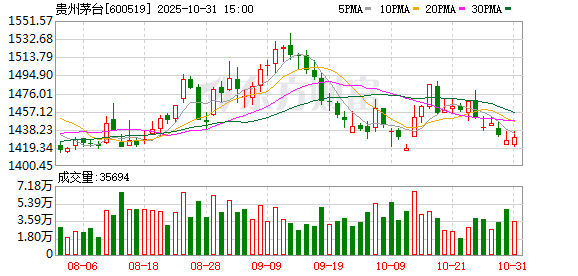
19只白酒股上涨 贵州茅台1430.01元/股收盘
Bei Jing Shang Bao· 2025-10-31 08:57
Group 1 - The core index of Shanghai Composite Index closed at 3954.79 points, down 0.81% on October 31 [2] - The liquor sector closed at 2282.45 points, up 1.24%, with 19 liquor stocks rising, led by Gujing Gongjiu with a 6.38% increase [2] - Notable individual stock performances include: - Kweichow Moutai at 1430.01 CNY per share, up 0.23% - Wuliangye at 118.99 CNY per share, up 0.44% - Shanxi Fenjiu at 190.50 CNY per share, up 1.32% - Luzhou Laojiao at 134.54 CNY per share, up 3.59% - Yanghe Brewery at 70.80 CNY per share, down 0.03% [2] Group 2 - Dongwu Securities reported that the liquor industry is accelerating its bottoming process, with market pessimism already reflected in current expectations [3]




深度调整期的韧性答卷:古井贡酒以“渠道健康+电商突围”夯实业绩
Sou Hu Cai Jing· 2025-10-31 08:52
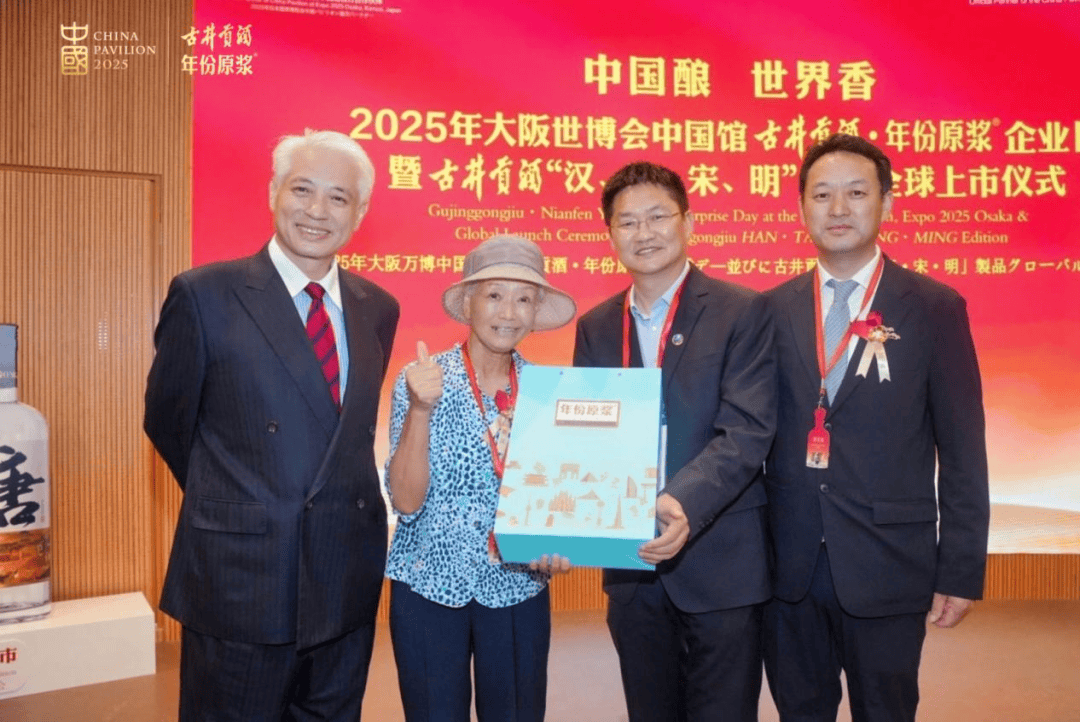
Core Viewpoint - The company, Gujinggongjiu, is strategically slowing down its operations to relieve pressure while maintaining a solid operational foundation amidst a challenging environment in the liquor industry [1][3]. Group 1: Operational Strategy - The company is controlling channel inventory and stabilizing pricing to ensure a solid operational baseline [1]. - Gujinggongjiu's digital management system, "Digital Gujing," effectively covers production, marketing, and management, allowing for agile responses to market changes [3]. - The company is actively reducing inventory and easing financial burdens on distributors, optimizing their quotas to alleviate financial pressure [5]. Group 2: Marketing and Sales Performance - The company is focusing on "hard marketing" to activate terminal sales, enhancing resource allocation and improving the effectiveness of marketing expenditures [5]. - In the core market of Central China, revenue has steadily increased, with the "Year Original Sauce" series showing a year-on-year growth of 1.59% [5]. - The company is leveraging e-commerce as a growth engine, with online revenue reaching 573 million yuan in the first half of 2025, a year-on-year increase of 40.19% [7]. Group 3: Global Expansion - Gujinggongjiu is utilizing the Osaka World Expo to enhance global brand recognition, launching a series of "Guochao" products to target different overseas consumer segments [7]. - The company is employing a dual strategy of channel innovation and global layout to navigate the intensified competition in the industry [7][8]. - The brand's internationalization efforts are supported by a clear strategic logic, aiming to enhance brand awareness and reach diverse consumer groups [7].
白酒板块10月31日涨0.81%,古井贡酒领涨,主力资金净流入11.3亿元
Zheng Xing Xing Ye Ri Bao· 2025-10-31 08:41
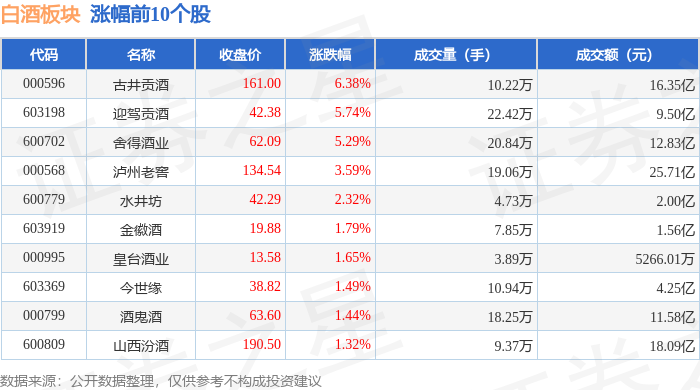
Core Insights - The liquor sector experienced a rise of 0.81% on October 31, with Gujing Gongjiu leading the gains [1] - The Shanghai Composite Index closed at 3954.79, down 0.81%, while the Shenzhen Component Index closed at 13378.21, down 1.14% [1] Liquor Sector Performance - Gujing Gongjiu saw a closing price of 161.00, with a significant increase of 6.38% and a trading volume of 102,200 shares, amounting to 1.635 billion yuan [1] - Other notable performers included: - Yingjia Gongjiu: closed at 42.38, up 5.74% with a trading volume of 224,200 shares, totaling 950 million yuan [1] - Shede Jiuye: closed at 62.09, up 5.29% with a trading volume of 208,400 shares, totaling 1.283 billion yuan [1] - Luzhou Laojiao: closed at 134.54, up 3.59% with a trading volume of 190,600 shares, totaling 2.571 billion yuan [1] Capital Flow Analysis - The liquor sector saw a net inflow of 1.13 billion yuan from main funds, while retail funds experienced a net outflow of 319 million yuan [2] - Key stocks with significant capital flow included: - Wuliangye: main fund net inflow of 534 million yuan, retail net outflow of 308 million yuan [3] - Shede Jiuye: main fund net inflow of 153 million yuan, retail net outflow of 52.68 million yuan [3] - Luzhou Laojiao: main fund net inflow of 145 million yuan, retail net inflow of 914,110 yuan [3]
暴涨!黄仁勋,突然引爆!
中国基金报· 2025-10-31 07:59
Market Overview - On October 31, A-shares experienced a divergence where the three major indices fell, with the Shanghai Composite Index down 0.81%, the Shenzhen Component down 1.14%, and the ChiNext Index down 2.31. However, nearly 4,000 companies saw their stock prices rise, indicating a market where individual stocks performed well despite overall index declines [1][3]. Stock Performance - A total of 76 stocks hit the daily limit up, while 148 stocks rose more than 7%. The overall increase in stock prices was 38.13%, with a total trading volume of approximately 23498.13 billion [3]. - The AI application sector showed resilience against the market downturn, with stocks like Fushi Holdings hitting the daily limit up [3]. - Pharmaceutical stocks collectively surged, with companies like Shutai Shen and Lianhuan Pharmaceutical reaching their daily limits [5]. Sector Analysis - The lithium battery sector continued its upward trend, with stocks such as Enjie Co. and Tianji Co. hitting the daily limit up [6]. - In contrast, CPO and computing hardware stocks faced adjustments, with companies like Tianfu Communication and Zhongji Xuchuang dropping over 7% [6][7]. - The recent trend showed that stocks with declining performance, particularly in the liquor industry, experienced a rebound despite poor earnings reports, while technology stocks faced significant declines [8][9]. Notable Events - A viral moment occurred when NVIDIA CEO Jensen Huang was seen dining with prominent South Korean business leaders, leading to a surge in related stocks. For instance, Kyochon F&B's stock price soared by 20%, and Cherrybro's stock hit the daily limit up with a 30% increase [12][14]. - NVIDIA announced a significant agreement with major South Korean companies to provide over 260,000 accelerator chips to support AI projects, marking a strategic expansion in AI infrastructure [20][21].



古井贡酒:优先渠道健康助力动销、年轻化国际化着眼长远
2 1 Shi Ji Jing Ji Bao Dao· 2025-10-31 07:53
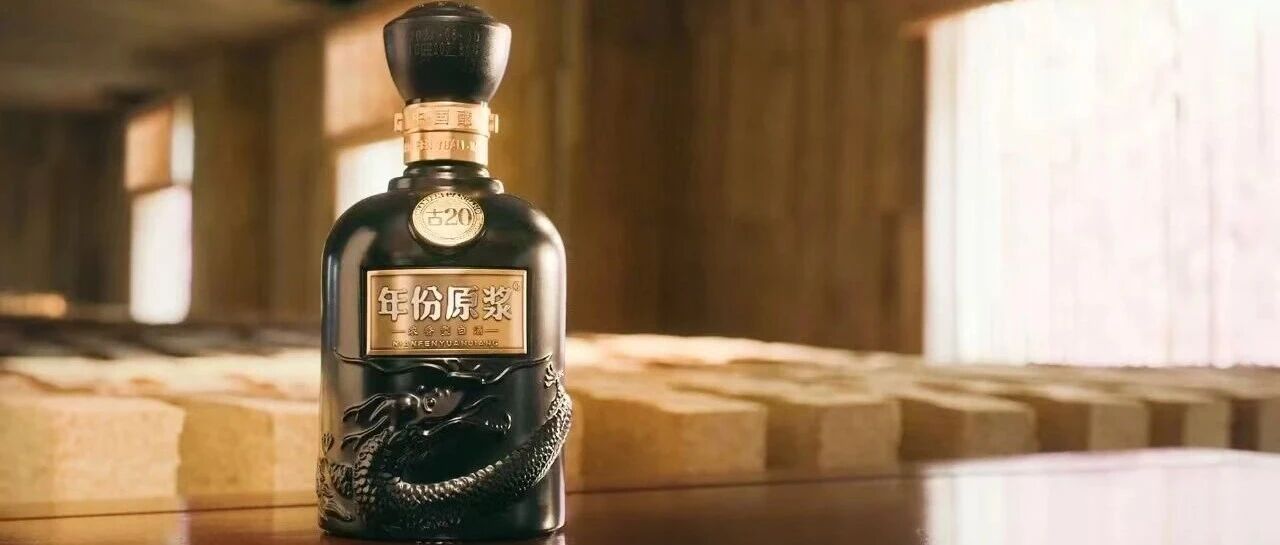
Core Insights - Gujing Gongjiu has demonstrated resilience in its performance despite the challenges posed by the deep adjustment period in the liquor industry, maintaining its position among leading liquor companies [1][2] Performance and Strategy - The company has shifted its focus from short-term explosive growth to long-term sustainable quality development, aligning with the industry's consensus on slower growth [2] - Gujing Gongjiu continues to implement its "nationalization and next-high-end" strategy, actively investing in channel health, brand internationalization, and product youthfulness during the industry adjustment period [2][4] Channel Management and Sales - The Year Original Series remains a cornerstone for stable performance, particularly in Anhui and surrounding markets, with products like Gu16 and Gu20 performing well in the mid-to-high-end banquet market [3] - The company has prioritized channel health and market regulation, utilizing its "Smart Channel Management System" for real-time monitoring of sales data and inventory, which helps mitigate channel risks [4][6] - Gujing Gongjiu's proactive channel management has led to revenue growth in certain county markets, contributing significantly to overall performance stability [6][7] Marketing and Consumer Engagement - The company has refined its marketing expenditures to focus on effective terminal sales support and consumer cultivation, enhancing the efficiency of resource allocation [8] - Gujing Gongjiu's online sales initiatives have yielded impressive results, with a 160% year-on-year increase in GMV during a promotional event on JD.com [9] Product Development and Brand Positioning - The company has introduced a low-alcohol product, "Gujing Gongjiu Year Original Light Gu20," to cater to the rising health consciousness among consumers, aligning with modern consumption trends [11] - Gujing Gongjiu is also reviving classic products to strengthen emotional connections with older consumers, successfully launching products that resonate with nostalgic sentiments [13] - The brand is enhancing its cultural presence and international influence through initiatives like participation in the Osaka World Expo and cultural events that connect with local heritage [15]

古井贡酒:优先渠道健康助力动销、年轻化国际化着眼长远
21世纪经济报道· 2025-10-31 07:42
Core Viewpoint - Gujing Gongjiu demonstrates strategic determination in response to the challenges posed by the deep adjustment period in the liquor industry, maintaining its position among leading liquor companies despite adverse external factors [2]. Group 1: Performance and Strategy - In the face of industry-wide adjustments and changing consumer environments, the liquor industry consensus has shifted from pursuing short-term speed to focusing on long-term quality development [2]. - Gujing Gongjiu adheres to its "nationalization and mid-to-high-end" strategy, actively engaging in channel health, brand internationalization, and product youthfulness during this adjustment period [2][4]. - The company's performance remains stable, supported by its strong market competitiveness and consumer recognition, particularly in the mid-to-high-end segment [4]. Group 2: Channel Management and Sales - Gujing Gongjiu emphasizes channel health to support sales growth, implementing a "smart channel management system" for real-time monitoring of sales data and inventory across its national network [4][6]. - The company has adjusted its development pace to focus on quality and channel health, enhancing market regulation to ensure a stable and healthy market environment [4][6]. - Efforts in county markets have led to revenue growth, contributing significantly to the overall stability of Gujing Gongjiu's performance [6]. Group 3: Product Development and Consumer Engagement - Gujing Gongjiu has introduced a low-alcohol product, "Gujing Gongjiu·Yearly Original Light 20," to align with the rising health consciousness among consumers [8]. - The company is reviving classic products to strengthen emotional connections with older consumers, successfully launching products like "Old Porcelain Tribute" and "Old Glass Tribute" [10][11]. - Gujing Gongjiu is enhancing its brand value through cultural engagement and international exposure, participating in events like the Osaka World Expo to elevate its global presence [11][13]. Group 4: Cultural Integration and Brand Positioning - The company is deepening its cultural roots by connecting its brand with local heritage and traditional craftsmanship, enhancing consumer recognition and loyalty [13]. - Gujing Gongjiu's initiatives, such as the "Peach Blossom Spring Festival," invite consumers to experience traditional brewing techniques, reinforcing its identity as a cultural liquor brand [13]. - The brand is navigating the competitive landscape by focusing on value and cultural competition, positioning itself as a quality benchmark in the liquor industry [11][13].
古井贡酒:以质为舟,行业深度调整中的“定”与“进”
Di Yi Cai Jing· 2025-10-31 07:41
Core Viewpoint - The Chinese liquor industry is undergoing a significant "value return," shifting focus from "speed and scale" to "quality and health" due to changes in the macro environment and consumer structure [1] Group 1: Company Performance - Gujinggong Liquor reported a revenue of 16.425 billion yuan and a net profit of approximately 3.96 billion yuan for the first three quarters of 2025, demonstrating resilient growth despite market challenges [1] - The company is recognized as one of the most stable brands in the industry, actively adjusting its strategy to focus on "driving sales, reducing inventory, expanding channels, and stabilizing prices" [3] Group 2: Market Environment - The liquor industry is still in a deep adjustment phase, with domestic liquor sales declining by 15% to 20% during the recent holiday season, indicating a slow recovery in the consumption market [3] - The current adjustment is primarily driven by demand-side factors, necessitating a slowdown to adapt to the new market environment influenced by uncertainties and changing consumer preferences [5] Group 3: Strategic Initiatives - Gujinggong Liquor has implemented the "Three Connections Project" (road connection, store connection, and person connection) to enhance market control and respond to real market demands, effectively addressing competition in a saturated market [5] - The company is leveraging digital empowerment to gain precise insights into market dynamics, allowing for "demand-based production and precise delivery," which helps control inventory and pricing risks [5] Group 4: Brand and Marketing Strategies - Gujinggong Liquor is embracing new retail and e-commerce channels, achieving a 160% year-on-year growth in GMV during a promotional event on JD.com, indicating successful brand penetration into new consumer segments [7] - The company is focusing on enhancing product competitiveness and channel efficiency through refined terminal collaboration, while also engaging in "hard marketing" to boost channel confidence during challenging times [8] Group 5: Product Innovation - The company has introduced a "light" concept in response to the trend towards lower alcohol content, successfully integrating modern lifestyle elements into traditional liquor offerings [10] - Gujinggong Liquor is reviving classic products to evoke nostalgia, strengthening emotional connections with both existing and younger consumers, thereby achieving intergenerational resonance [10] Group 6: Industry Outlook - The deep adjustment in the liquor industry presents opportunities for reshaping the market landscape, with Gujinggong Liquor demonstrating strategic resilience and a commitment to steady growth [10]
科技集体回调,大消费逆市走强,古井贡酒大涨6%,食品饮料ETF(159843)涨超1%
2 1 Shi Ji Jing Ji Bao Dao· 2025-10-31 07:12
Group 1 - The core viewpoint of the articles indicates that the liquor industry, particularly the white liquor sector, is in a "supply clearing" phase, with expectations for accelerated clearing as Q3 earnings reports are released [1][2] - Leading companies in the food and beverage sector, such as Kweichow Moutai and Wuliangye, have released their Q3 earnings reports, which are anticipated to reflect the industry's recovery [1] - Pacific Securities suggests that the current phase of the liquor industry shows strong similarities to the adjustment period from 2013 to 2015, indicating a potential buying opportunity [1][2] Group 2 - The valuation recovery of the liquor sector is expected to occur in two stages, with the first stage driven by improved demand and market expectations for performance and pricing [1][2] - The second stage of valuation recovery is anticipated when the supply-demand relationship improves, leading to a return of market confidence in the long-term value of liquor assets, with an expected industry PE central of 30x by Q4 2026 [2] - The current PE ratio of the National Food Index is approximately 21 times, which is lower than over 90% of the time in the past five years, indicating potential for valuation recovery [2]