WLY(000858)

Search documents
禁酒令下,白酒惨烈
虎嗅APP· 2025-09-07 23:52
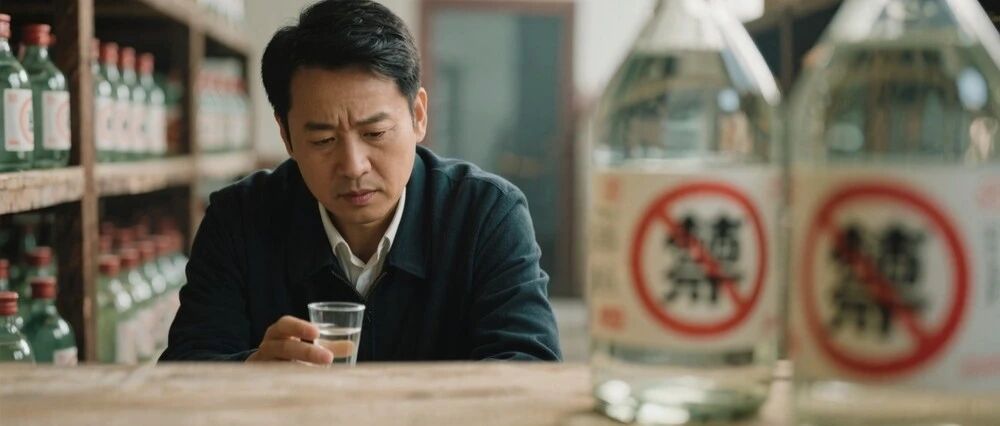
Core Viewpoint - The Chinese liquor industry is undergoing significant challenges due to the impact of the alcohol ban, leading to declining production, sales, and profits across various companies [4][6][10]. Group 1: Industry Overview - Liquor consumption has decreased, with production falling nearly 6% after eight consecutive years of decline [5]. - The average price range for main consumer segments has shifted from 300-500 RMB to 100-300 RMB [6]. - The total profit for the industry has decreased by 10% compared to the same period last year, with over 100 companies shutting down [6]. Group 2: Impact of the Alcohol Ban - The alcohol ban has particularly affected high-end liquor sales, with sales in regions like Henan dropping by 50% during June and July [9][10]. - The ban has altered the underlying logic of the liquor industry, affecting over 10% of the national workforce and potentially impacting consumption worth hundreds of billions [10][11]. - The relationship between central and local governments is complex, with national policies like the alcohol ban reshaping the competitive landscape and local economies [11]. Group 3: Company Performance - Among 20 listed liquor companies, only 6 reported positive revenue growth in their mid-year reports [14]. - Major players like Moutai and Wuliangye are experiencing pressure, with Wuliangye's net profit declining by 7.58% and Shanxi Fenjiu by 13.5% in Q2 [15][17]. - The average net profit decline for many companies in Q2 is around 60%, with some companies like Shendao experiencing a staggering 62.66% drop [15][16]. Group 4: Market Dynamics - Moutai's revenue from its flagship product grew by 10.99%, while its series liquor saw a decline of 6.53% [20]. - Wuliangye's sales volume increased by 12.7%, but the average price fell by 7.2%, indicating a reliance on volume to maintain revenue [25][28]. - The market for low-alcohol products is projected to grow significantly, with a compound annual growth rate of 25% expected to reach 74 billion RMB by 2025 [38]. Group 5: Future Outlook - The alcohol ban has accelerated changes in consumer habits, with a notable decline in high-end dining and business-related alcohol consumption [34][35]. - Companies are adapting by introducing lower-alcohol products to attract younger consumers, although the effectiveness of this strategy remains uncertain [39][40]. - The liquor industry is heavily reliant on local economies, with companies like Moutai contributing significantly to local tax revenues and economic stability [48][50].







亮相联合国日内瓦总部,五粮液交出中国酒企可持续发展答卷
Qi Lu Wan Bao· 2025-09-07 12:48
Group 1 - The "Sustainable Business Global Tour" event held in Geneva focuses on creating sustainable businesses and brands, providing a high-level platform for global sustainable development dialogue [1][4] - Wuliangye, a leading Chinese liquor company, is designated as the official liquor for the "Sustainable Brand Vision" China Night 2025 and plays a significant role in advocating for sustainable development practices [3][4] - The event marks a critical period for the UN's 2030 Sustainable Development Agenda, emphasizing the importance of the business sector in achieving sustainability goals [4] Group 2 - Wuliangye's chairman, Zeng Songqin, participated in the initiative's launch, highlighting the company's commitment to sustainable development and its role in sharing best practices globally [6][12] - The "Creating Sustainable Brands" initiative aims to integrate sustainability into business and brand value creation, reflecting a commitment to a sustainable future through innovation and practice [4][9] - Wuliangye emphasizes that sustainability is a collective effort among all enterprises, not just a singular initiative [8] Group 3 - Wuliangye is implementing a comprehensive approach to sustainability, focusing on ecological, low-carbon, and circular economy principles across its production and supply chain [9][10] - The company aims for a "zero-carbon" goal by establishing a circular economy system that redefines waste as a resource, significantly reducing carbon footprints and enhancing agricultural income [9][10] - Wuliangye's ecological initiatives include a purification system that exceeds emission standards and contributes to local water ecosystems, demonstrating its commitment to environmental protection [10][12] Group 4 - The participation of Wuliangye in the UN event serves as a showcase of its sustainable practices and a step towards global collaboration in sustainability [12] - Industry experts recognize Wuliangye's efforts in transforming sustainability into a competitive advantage, positioning the company towards becoming a world-class enterprise [12]

鹰眼观酒 丨白酒进入调整期,从“二八”向“一九”演进
Da Zhong Ri Bao· 2025-09-07 05:48
Core Insights - The Chinese liquor industry is experiencing a dual drive of consumption recovery and structural upgrades, leading to a pronounced trend of "the strong getting stronger and increased differentiation" [2][3] Group 1: Financial Performance - In the first half of the year, 19 A-share listed liquor companies reported a total revenue of 235.21 billion yuan, a year-on-year decrease of 0.5%, and a total net profit of 94.39 billion yuan, down 0.92% [2] - The top six liquor companies, including Kweichow Moutai and Wuliangye, accounted for 89.82% of the total revenue of A-share listed liquor companies, with a combined revenue of 211.25 billion yuan [2][3] - Kweichow Moutai achieved a main revenue of 89.39 billion yuan, while Wuliangye reported 52.77 billion yuan, and Shanxi Fenjiu reached 23.96 billion yuan in the first half of 2025 [3] Group 2: Market Dynamics - The market share of the top six liquor brands increased from 86.82% in 2022 to 89.82% in mid-2025, indicating a shift from the "80/20 rule" to the "90/10 rule" [4] - Kweichow Moutai's revenue share of the industry increased from 36.37% in 2022 to 38% in the first half of 2025, showcasing its strong brand moat and pricing power [4] - Shanxi Fenjiu has become a notable disruptor in the industry, achieving double-digit growth in revenue and net profit for eight consecutive years, increasing its market share from 7.68% in 2022 to 10.19% in the first half of 2025 [4] Group 3: Industry Challenges and Strategies - The liquor industry is entering a deep adjustment period characterized by policy adjustments, consumption changes, and intensified competition, where stability is deemed more important than growth [5] - Many liquor companies are enhancing promotional efforts, such as Shanxi Fenjiu's strategic branding initiatives through high-profile media appearances and cultural events [5] - The industry is shifting focus towards providing genuine value to consumers, particularly the younger generation, as blind expansion and price increases pose increasing risks [6] Group 4: Consumer Complaints - Consumer complaints in the liquor industry are primarily concentrated in three areas: product quality, marketing irregularities, and consumer experience [8] - Issues related to product quality include the prevalence of counterfeit high-end liquor and deceptive practices surrounding "vintage liquor" [8] - Marketing concerns involve false advertising in live-streaming sales and misleading pricing strategies during promotional events [8]

买方大佬被怒怼:买你的白酒去吧,老登
Ge Long Hui A P P· 2025-09-07 05:44
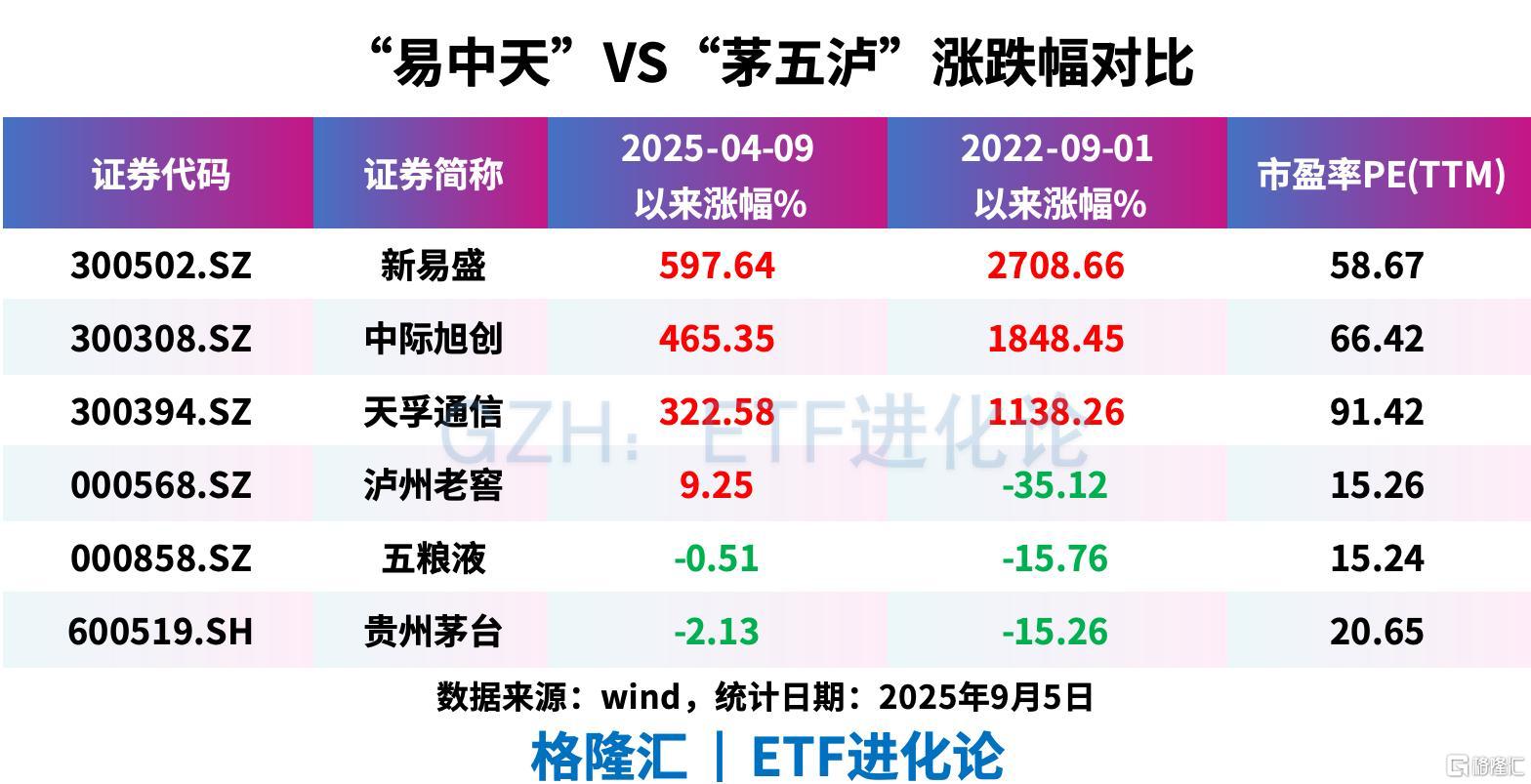
Group 1 - The stock prices of optical module companies have surged significantly, with New Ease rising 597% since April 8, and its stock price increasing 27 times over the past three years [1][3] - Zhongji Xuchuang's stock has increased by 465% since April 8, with a 18-fold increase over the last three years [1][3] - Tianfu Communication's stock has risen by 322% since April 8, and its stock price has increased 11 times in the past three years [1][3] Group 2 - The liquor sector has faced significant declines, with major brands like Moutai, Wuliangye, and Luzhou Laojiao averaging a 22% drop over the past three years [1][3] - A market debate arose regarding Zhongji Xuchuang's projected profit of 25 billion by 2027, with skepticism about the feasibility of such high profits for a component manufacturing company [3][4][6] - Analysts argue that the profit forecast is based on confirmed production capacity and the company's commitment to not lowering prices, leading to a projected net profit margin of around 30% [6]


从元明古窖到联合国总部:五粮液用700年传承对话全球可持续未来
Zhong Jin Zai Xian· 2025-09-07 02:47
Core Viewpoint - The "Sustainable Business Global Tour" event in Geneva emphasizes the importance of creating sustainable businesses and brands, showcasing global sustainable development practices [1][4]. Group 1: Event Overview - The event took place on September 3-4, 2025, at the United Nations headquarters in Geneva, initiated by the Sustainable Business Leaders Forum (SBLF) [1]. - It gathered high-level representatives from various UN agencies and Chinese enterprises in the sustainable business sector to foster dialogue between Chinese practices and global perspectives [4]. Group 2: Company Involvement - Wuliangye, a leading Chinese liquor company, was designated as the official beverage for the "Sustainable Brand Vision" China Night and played a key role in advocating for sustainable development [3]. - The company signed and presented the "Creating Sustainable Brands" vision initiative at a high-level dialogue hosted by UNCTAD and UNFSS, marking its commitment to global sustainable governance [4]. Group 3: Sustainable Practices - Wuliangye's chairman emphasized the importance of sharing successful experiences and learning from global best practices in sustainable development [6]. - The company has integrated sustainability into its core business model, focusing on ecological, low-carbon, and circular economy principles across its operations [9]. Group 4: Production and Environmental Impact - Wuliangye aims to achieve "zero-carbon" status by establishing a circular economy system that redefines waste as a resource, significantly reducing carbon footprints [10]. - The company has implemented an ecological wetland purification system that exceeds emission standards and contributes to local biodiversity, recognized by the Ministry of Ecology and Environment [10][11]. Group 5: Global Collaboration - Wuliangye's participation in the UN event represents a significant step in its commitment to global sustainable collaboration, transforming sustainability into a competitive advantage and tangible business value [13].

6家增长,14家下滑,3家亏损!白酒行业大洗牌,中小酒企面临雪崩
Sou Hu Cai Jing· 2025-09-06 11:40
Core Viewpoint - The Chinese liquor industry is experiencing significant polarization, with major players like Moutai thriving while others, such as Jinzhongzi, face severe losses, indicating a challenging market environment for many companies [1][8]. Industry Overview - The white liquor industry is undergoing accelerated differentiation, with 21 listed liquor companies showing mixed results: 6 companies are struggling to grow, 14 are experiencing declines, and 3 are nearing losses [3]. - The average inventory turnover days in the liquor industry have reached 900 days, indicating a significant inventory pressure on distributors [12]. Company Performance - Moutai reported a revenue of 893.89 billion with a net profit of 454.03 billion, showing a year-on-year growth of 8.89% [5][6]. - Gujing Gongjiu achieved a revenue of 138.8 billion, with a 0.54% increase in net profit to 36.62 billion, largely due to its online sales strategy [6][24]. - Jinzhongzi reported a loss of 72 million, with a staggering year-on-year decline of 750.54% [8][19]. - Other companies like Jiugui Jiu and Yanghe experienced significant revenue declines of 43.54% and 35.32%, respectively [6][19]. Market Trends - The introduction of new regulations limiting alcohol consumption in government settings has drastically reduced the share of business banquet wines from 35% to 18%, impacting high-end liquor sales [19]. - There is a growing consumer preference for lower-priced, simpler packaging products, leading to a rise in sales of light bottle wines priced between 60-80 yuan [21][24]. - Companies are innovating their product lines, with some introducing herbal liquors and health-oriented products to attract younger consumers [22][27]. Strategic Responses - Moutai is leveraging its by-products for new revenue streams, converting waste into organic fertilizers and biogas [15][17]. - Gujing Gongjiu's online sales have surged by 40.19%, demonstrating the effectiveness of digital marketing strategies during this downturn [24]. - Companies are focusing on channel innovation and deepening market penetration to maintain resilience amid industry adjustments [24][26].


五粮液亮相“可持续商业全球行”展企业样本
Xin Lang Cai Jing· 2025-09-06 09:11
Core Insights - The event "Sustainable Business Global Tour" 2025 was held in Geneva, Switzerland, with Wuliangye, a leading Chinese liquor company, participating as a representative of Chinese enterprises [1] - The initiative aims to provide a platform for Chinese business leaders to engage in deep dialogue with international organizations and industry partners, promoting sustainable business practices [1] - Wuliangye's chairman emphasized the importance of creating commercial value through sustainable branding, highlighting the company's commitment to sustainability and its unique low-carbon industrial chain [1][2] Group 1 - The "Sustainable Business Global Tour" is initiated by the Sustainable Business Leaders Forum (SBLF) to foster dialogue among global business leaders [1] - Wuliangye signed the "Sustainable Brand Vision Initiative" alongside other prominent Chinese companies, committing to higher standards of sustainable development [1] - The company has a 700-year history of fermentation and traditional brewing techniques, which contribute to its sustainable development model [1] Group 2 - Wuliangye's innovative "Soil, Heat, Electricity, Water" circular system is a key component in creating sustainable brands [1] - The company aims to transform sustainability into a competitive advantage and innovation driver while deepening global cooperation [2] - The event featured a toast to global sustainable development, symbolizing Wuliangye's commitment to sharing Eastern wisdom on harmony [1]
贴标假冒名酒流入市场,警方斩断产销链条
Huan Qiu Wang· 2025-09-06 08:23
Group 1 - The article reports on a successful operation by the police in Anfu County, Ji'an City, which led to the bust of a counterfeit liquor case involving fake branded spirits such as "Flying Moutai" and "Wuliangye" [1][3] - The investigation began after receiving a tip-off about a local specialty store selling counterfeit products, leading to the identification of the store owner, Wang, who had been purchasing and selling these fake liquors since 2024 [1][3] - The total value of the counterfeit goods involved in the case is over 170,000 yuan, prompting law enforcement to take criminal coercive measures against Wang [1][5] Group 2 - The investigation expanded as police traced the supply chain, identifying an accomplice named Hu located in Hunan Province, who was arrested with the assistance of local law enforcement [3][5] - Hu has also been subjected to criminal coercive measures, and the case is still under further investigation [5]

五粮液亮相“可持续商业全球行” 以“和美”之道贡献企业样本
Xin Hua Cai Jing· 2025-09-06 07:45
Core Viewpoint - The event "Sustainable Business Global Tour" 2025 held in Geneva showcased Wuliangye as a representative of Chinese enterprises, emphasizing its commitment to sustainable development and brand strength on an international stage [2][3]. Group 1: Event Overview - The "Sustainable Business Global Tour" aims to provide a platform for Chinese business leaders to engage in deep dialogue with international organizations and leading global enterprises [2]. - The event coincided with the 80th anniversary of the United Nations, featuring high-level dialogues on creating sustainable businesses and brands [2]. Group 2: Wuliangye's Commitment - Wuliangye's chairman emphasized that a true "sustainable brand" must create business value while promoting inclusive growth and contributing to a better future [3]. - The company signed the "Creating Sustainable Brand" vision initiative with other leading Chinese enterprises, committing to higher standards of sustainable development [3]. Group 3: Sustainable Practices - Wuliangye has developed a low-carbon industrial chain based on a 700-year-old fermentation tradition, showcasing its unique "Soil, Heat, Electricity, Water" circular system as a model for sustainable practices [4]. - The company aims to integrate environmental management with operational efficiency, providing a practical blueprint for the transition to a circular economy [4]. Group 4: Future Outlook - Wuliangye plans to continue advancing international sustainable brand development, transforming sustainability into a competitive advantage through global cooperation and industry exchange [5].
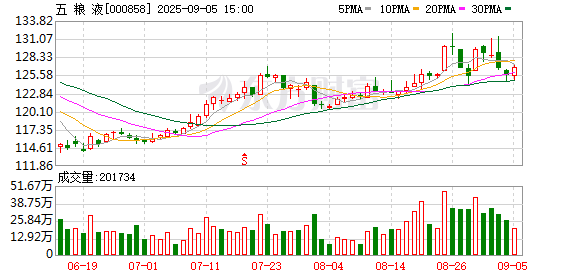
稀缺!机构盯上的筹码大幅集中滞涨股曝光,仅15只
Zheng Quan Shi Bao· 2025-09-06 00:17
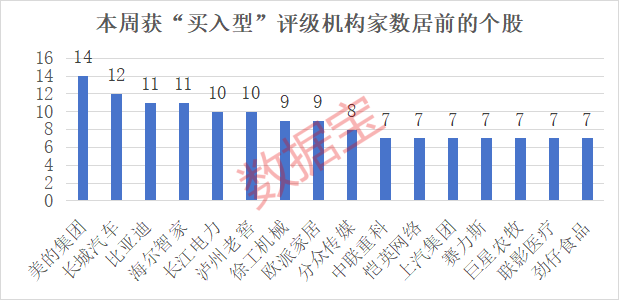
Core Viewpoint - The pharmaceutical and technology sectors continue to receive positive attention from institutional investors, with significant interest in specific stocks and a favorable outlook for the pharmaceutical industry due to recent policy changes and innovation [1][2]. Group 1: Institutional Ratings and Sector Performance - A total of 59 institutions conducted 1,678 "buy" ratings covering 929 stocks from September 1 to September 5, with the pharmaceutical sector having 94 stocks rated positively [2]. - The pharmaceutical industry is transitioning from "Made in China" to "Created in China," with a strong performance expected in the coming quarters due to the commercialization of innovative products and overseas expansion potential [2]. - 51 stocks received attention from five or more institutions, with major companies like Midea Group and Great Wall Motors leading in institutional interest [2]. Group 2: Company Performance Highlights - Midea Group reported a net profit of 26.014 billion yuan for the first half of the year, a year-on-year increase of 25.04%, marking the highest growth rate since 2016 [4]. - BYD's net profit increased by nearly 14% in the first half of the year, with new factories in Brazil and Thailand contributing to its growth [4]. - Companies in the food and beverage sector, including Luzhou Laojiao, Wuliangye, Shanxi Fenjiu, and Haitian Flavoring, also received multiple "buy" ratings from institutions [4]. Group 3: Shareholder Concentration and Stock Performance - Among the stocks rated "buy," 89 saw a decrease in shareholder numbers compared to the end of the second quarter, with 41 stocks experiencing a decline of over 10% [5]. - Igor's shareholder count dropped by nearly 38%, while the company achieved a revenue of 2.467 billion yuan, a year-on-year increase of 20.16% [5]. - The average increase in stock prices for the 41 stocks with concentrated holdings exceeded 20%, with six stocks, including Aosaikang and Tengya Precision, seeing gains over 50% [7]. Group 4: Underperforming Stocks - 15 stocks underperformed compared to the Shanghai Composite Index, with Zhejiang Dingli experiencing the largest decline of nearly 18% despite a net profit increase of 27.63% [8]. - Wuliangye and ZTE both received "buy" ratings from six institutions, with Wuliangye's stock price down over 5% year-to-date [8][9]. - ZTE's shareholder count decreased by over 14%, with a net profit decline of nearly 12% in the first half of the year, although revenue grew by 14.51% [9].