WLY(000858)

Search documents
本周获“买入型”评级且筹码大幅集中的滞涨股(名单)
Zheng Quan Shi Bao Wang· 2025-09-06 00:12
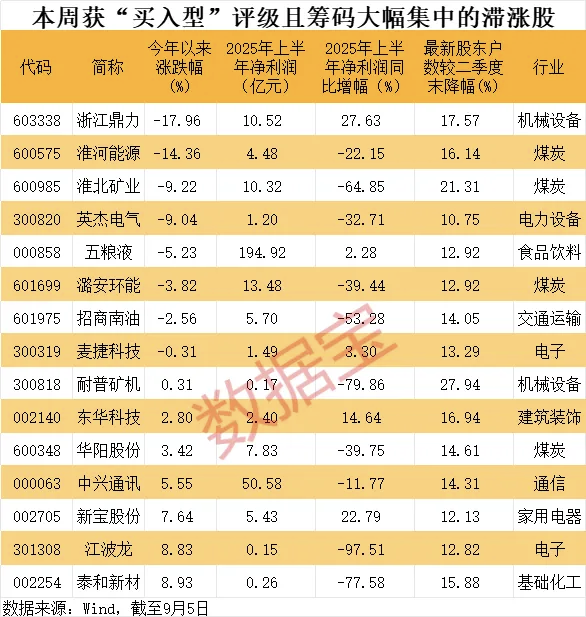
Group 1 - A total of 59 institutions conducted 1,678 "buy" ratings covering 929 stocks from September 1 to September 5 [1] - Among the stocks rated "buy," 89 saw a decrease in shareholder accounts compared to the end of Q2, with 41 stocks experiencing a decline of over 10% [1] - The 41 stocks with significant concentration of shares had an average increase of over 20% year-to-date, with 6 stocks, including Aosaikang and Tengya Precision, rising over 50% [1] Group 2 - 15 stocks underperformed the Shanghai Composite Index, which had a year-to-date increase of 13.75%, with 8 stocks, including Zhejiang Dingli, Huaihe Energy, and Huaibei Mining, experiencing a decline in stock price [1][2] - Specific companies such as Zhejiang Dingli and Huaihe Energy reported significant drops in net profit, with declines of 17.96% and 14.36% respectively [2] - The coal industry showed notable underperformance, with companies like Huaihe Energy and Huaibei Mining reporting net profit decreases of 22.15% and 64.85% respectively [2]



稀缺!机构盯上的筹码大幅集中滞涨股曝光,仅15只!
Zheng Quan Shi Bao· 2025-09-05 23:47
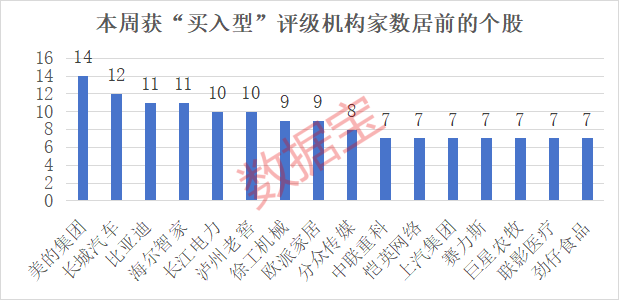
Group 1: Industry Overview - The pharmaceutical and biotechnology sectors continue to receive positive attention from institutions, with 94 stocks in the pharmaceutical sector being highlighted [2] - The electronics and power equipment industries also have over 50 stocks receiving attention, with more than 80 stocks in the electronics sector [2] - The pharmaceutical industry has seen significant policy developments and commercialization of innovative drug research, leading to strong performance in the first half of the year [2] Group 2: Company Performance - Midea Group achieved a net profit of 26.014 billion yuan in the first half of the year, a year-on-year increase of 25.04%, marking the highest growth rate for the same period since 2016 [4] - BYD's net profit increased by nearly 14% in the first half of the year, with new factories in Brazil and Thailand contributing to expected delivery growth [4] - Zhejiang Dingli's net profit for the first half of the year was 1.052 billion yuan, with a year-on-year increase of 27.63%, despite a year-to-date stock price decline of nearly 18% [8] Group 3: Institutional Ratings - A total of 51 stocks received attention from five or more institutions, with Midea Group and Great Wall Motors leading with 14 and 12 "buy" ratings, respectively [2] - Other companies such as BYD, Haier Smart Home, and Changjiang Electric Power also received significant institutional interest, each with over 10 "buy" ratings [2] - The food and beverage sector, including Luzhou Laojiao, Wuliangye, Shanxi Fenjiu, and Haitian Flavoring, also saw multiple stocks receiving "buy" ratings from five or more institutions [4] Group 4: Shareholder Concentration - Among the stocks rated as "buy," 89 saw a decrease in shareholder numbers compared to the end of the second quarter, with 41 stocks experiencing a decline of over 10% [5] - Specific stocks like Igor saw a nearly 38% drop in shareholder numbers, while companies like Gongchuang Turf and Ganhua Science & Technology also reported significant decreases [5] - The average increase in stock prices for the 41 stocks with concentrated holdings exceeded 20% year-to-date, with six stocks showing gains over 50% [7]




食品饮料周报:25Q2软饮料表现居前,看好白酒释压期预期先行-20250905
Tianfeng Securities· 2025-09-05 15:28
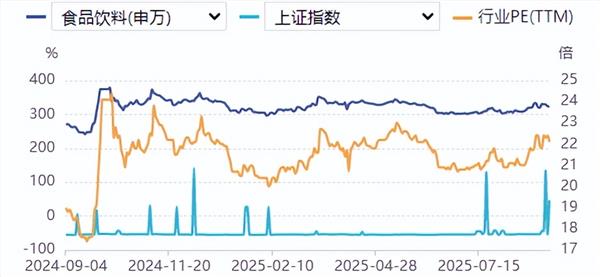
Investment Rating - Industry rating is maintained at "Outperform" [6] Core Views - The beverage sector showed a positive performance with a 2.13% increase, outperforming the Shanghai Composite Index [1][21] - The liquor segment, particularly white liquor, is entering a release period, with strong brands like Guizhou Moutai and Shanxi Fenjiu showing resilience despite industry adjustments [2][13] - Soft drinks and snacks are highlighted as sectors with strong performance and investment opportunities, driven by favorable market conditions and company-specific growth strategies [4][15] Summary by Sections Market Performance Review - From August 25 to August 29, the food and beverage sector increased by 2.13%, with snacks leading at +10.20% and beer slightly declining at -0.02% [1][21] Weekly Updates - White liquor saw a +2.14% increase, with companies like Shede Liquor and Jinhui Liquor performing well due to strong Q2 results. The sector's revenue and net profit decreased by 5.01% and 7.50% year-on-year, respectively [2][13] - The soft drink sector showed strong performance with a revenue increase of 17.8% and net profit increase of 18.8% in Q2 [16] Investment Recommendations - For the liquor sector, strong alpha companies such as Shanxi Fenjiu and Guizhou Moutai are recommended, while beta concept stocks include Luzhou Laojiao and Jingjia Gongjiu [20] - In the consumer goods sector, companies that focus on cost reduction and market share growth are favored, including Dongpeng Beverage and Salted Fish [20] Sector and Stock Performance - The food and beverage sector's dynamic P/E ratio is 22.0, with snacks having the highest valuation increase of +10.20% [28] - The top-performing stocks include Wancheng Group (+41.10%) and Ziyuan Food (+18.79%) [23][24]





如何应对行业周期?白酒企业集体转向“三低”市场
Sou Hu Cai Jing· 2025-09-05 10:07
Core Insights - The Chinese liquor industry is undergoing a deep adjustment, with companies shifting their focus towards low-alcohol, low-priced products, and lower-tier markets due to macroeconomic pressures and changing consumer behaviors [1][6]. Group 1: Low-Alcohol Products - Several liquor companies have recently launched low-alcohol products targeting younger consumers, with notable releases including Gujing's 26-degree "Light Gu20," Wuliangye's 29-degree "Wuliangye Yijian Qingxin," and Shede's 29-degree "Shede Zizai" [2]. - The China Alcoholic Drinks Association predicts that the low-alcohol market will exceed 74 billion yuan by 2025, with a compound annual growth rate of 25% [3]. - Companies like Luzhou Laojiao are actively developing lower-alcohol products, with their 38-degree offerings now making up 50% of sales in the Guojiao 1573 series, which has surpassed 20 billion yuan in sales [3]. Group 2: Consumer Trends - The younger demographic, particularly those born in the 1980s and 1990s, along with young women, are emerging as key consumer groups, favoring personalized, low-alcohol, and aesthetically pleasing products for casual social settings [2]. - The shift in consumer preferences emphasizes a move from traditional social drinking to a focus on personal enjoyment and experience [3]. Group 3: Pricing and Market Dynamics - The demand for mid-range products is recovering slowly, while low-priced products are showing resilience, with some even experiencing growth [6]. - Wuliangye reported a production increase of 11.56% and sales growth of 12.75% for its products in the first half of 2025, driven by consumer preference for mid to low-priced options [7]. - The market is seeing a trend where high-end liquor prices are declining, and consumers are increasingly valuing cost-effectiveness, leading to a preference for lower-priced options [9]. Group 4: Market Competition and Strategy - The industry is facing intensified competition as major brands penetrate lower-priced segments, which could squeeze local brands out of their traditional markets [10][11]. - Local liquor companies are responding by launching competitively priced products, with some offering prices 20%-40% lower than similar premium products [11]. - Analysts suggest that local brands should leverage their regional advantages and focus on differentiation rather than competing on price with larger brands [11].


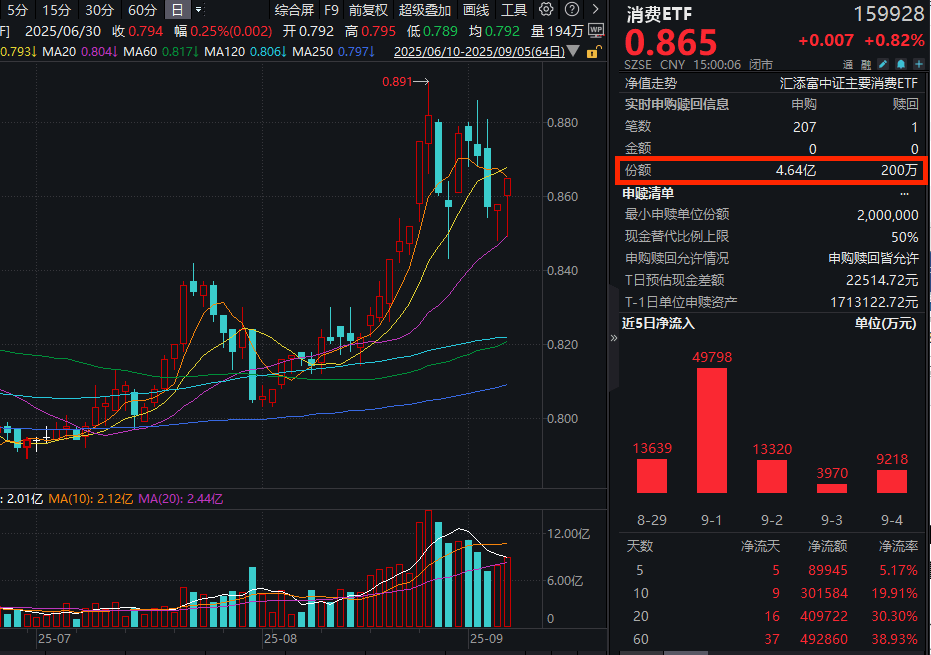
扩大服务消费若干政策有望近日推出!消费ETF(159928)强势两连阳,全天资金疯狂净申购超4.6亿份!
Sou Hu Cai Jing· 2025-09-05 08:56
Group 1 - The A-share market has shown a significant recovery, with the consumption ETF (159928) rising by 0.82% and achieving a total transaction volume of 8.91 billion yuan, indicating a strong inflow of funds [1] - The consumption ETF (159928) has seen a net subscription of 462 million units, accumulating over 3 billion yuan in the last ten days, with a total share exceeding 21.3 billion, leading its peers [1] - New policies aimed at expanding service consumption are expected to be announced soon, with inbound tourism consumption anticipated to boost domestic demand [3] Group 2 - The food and beverage sector is showing signs of marginal improvement, with a projected consumption recovery in the second half of 2025, as indicated by a 5.6% year-on-year revenue growth in Q2 2025, up from 4.6% in Q1 [6] - The report highlights a divergence in performance among companies, with leading brands like Kweichow Moutai and Haitian Flavoring maintaining stable growth, while some second-tier brands are experiencing revenue declines [9] - The beverage sector has shown resilience, with many snack companies performing well, suggesting a gradual recovery in demand across various industries in the latter half of 2025 [9] Group 3 - The white liquor sector is beginning to show signs of bottoming out, with market liquidity supporting a rise in valuations, despite short-term consumption pressures from regulatory restrictions [10] - The report indicates that the white liquor industry is undergoing a cleansing phase, with performance under pressure but showing signs of improvement, particularly in August [10] - High-end liquor brands are maintaining resilience through effective brand management and channel control, while second-tier brands are more directly affected by policy changes [11] Group 4 - The consumption ETF (159928) is characterized by its strong demand and resilience across economic cycles, with over 68% of its top ten holdings in essential consumer goods [12] - The report emphasizes the importance of focusing on leading companies in the consumer sector, particularly those with strong growth potential and innovative distribution channels [9][12] - The Hong Kong Stock Connect Consumption 50 ETF (159268) is highlighted as an efficient investment option for accessing the consumer sector, particularly for younger consumers [12]



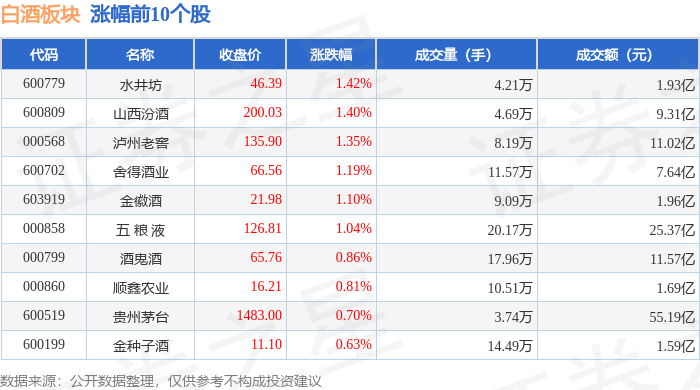
白酒板块9月5日涨0.81%,水井坊领涨,主力资金净流出7746.05万元
Zheng Xing Xing Ye Ri Bao· 2025-09-05 08:56
Group 1 - The liquor sector experienced a rise of 0.81% on September 5, with Shuijingfang leading the gains [1] - The Shanghai Composite Index closed at 3812.51, up 1.24%, while the Shenzhen Component Index closed at 12590.56, up 3.89% [1] - Key stocks in the liquor sector showed the following closing prices and percentage changes: Shuijingfang at 46.39 (+1.42%), Shanxi Fenjiu at 200.03 (+1.40%), and Luzhou Laojiao at 135.90 (+1.35%) [1] Group 2 - The liquor sector saw a net outflow of 77.46 million yuan from institutional investors, while retail investors experienced a net outflow of 67.44 million yuan [2] - Notable net inflows from speculative funds included Wuliangye with 12.8 million yuan, while it faced a net outflow of 101 million yuan from retail investors [2] - Other stocks like Shuijingfang and Luzhou Laojiao also experienced mixed fund flows, with Shuijingfang seeing a net inflow of 1.36 million yuan from institutional investors [2]


食品饮料周报:名酒保住增长,白酒业即将穿越周期?
Zheng Quan Zhi Xing· 2025-09-05 07:24
Core Viewpoint - The food and beverage industry is experiencing a mixed performance, with some companies showing growth while others face challenges due to market adjustments and inventory pressures [2][8][9]. Market Performance - The Shanghai and Shenzhen 300 Index fell by 0.81%, while the Shenwan Food and Beverage Index decreased by 1.5% during the specified period [1]. - The top five gaining stocks included Huanlejia, Gaisi Food, Qianwei Yangchu, Baihe Co., and Huifa Food [1]. Institutional Insights - Open-source Securities suggests focusing on three lines: national mid-to-high-end recovery, regional leaders, and high-end liquor valuation recovery [2]. - Key companies to watch include Shede Liquor, Shanxi Fenjiu, Gujing Gongjiu, and Moutai, with a focus on new consumption trends and channels [2]. - Huachuang Securities recommends exploring new opportunities in the health product sector, particularly H&H International and Xianle Health [3]. Industry Trends - The liquor industry is undergoing a rational adjustment, with companies like Moutai and Zhenjiu Liudu exploring new paths to enhance market reach [7]. - The white liquor sector is seeing a significant inventory issue, with 20 listed liquor companies holding nearly 170 billion yuan in inventory, leading to cash flow pressures for some mid-tier companies [9]. Company Developments - Wuliangye has launched a promotional campaign allowing car buyers to purchase its liquor at a 25% discount [10][11]. - Yingjia Gongjiu has established a new sales company to enhance its market presence [12]. - Jiusuan Co. has adjusted its growth strategy, focusing on maintaining market share rather than absolute growth [13]. Macro Events - The Chinese warehousing index for August was reported at 49.3%, indicating a decline in new orders and a slowdown in goods turnover, which may impact the food and beverage sector [4]. - The emergence of H5N1 avian influenza in the UK could have implications for poultry-related food products [5]. Financial Metrics - The financial performance of the liquor industry shows a significant disparity, with 15 out of 21 listed companies reporting revenue declines, while only six managed to achieve growth [8]. - The industry is expected to face continued challenges, with some analysts predicting a prolonged adjustment period before recovery [8]. Inventory and Capacity Issues - Many liquor companies are struggling with high inventory levels, with some facing a six-year inventory turnover cycle, which could further strain cash flow [9]. - Despite low capacity utilization rates, some companies continue to expand production, raising concerns about future inventory management [9].


飞天茅台等高端名酒下挫,“价格焦虑”仍在,白酒如何“鏖战”中秋
Nan Fang Du Shi Bao· 2025-09-05 02:23
Core Insights - The latest monitoring report indicates a downward trend in the prices of high-end liquor, with 9 out of 14 mainstream products experiencing price declines, leading to a collective "price anxiety" in the industry [1][2] - The second quarter of 2025 saw a slowdown in growth or even a decline in net profits for major liquor companies, marking the first drop in nearly a decade for some leading brands [1][2] - The price fluctuations are attributed to a combination of "inventory reduction" and "promotional wars," as companies increase promotional efforts to capture market share ahead of the Mid-Autumn Festival [1][2] Price Trends - Major brands such as Moutai, Wuliangye, and Guojiao 1573 have reported price declines compared to previous periods, reflecting a broader trend of insufficient demand [2][11] - The average retail prices for various liquor brands as of September 4 include: Moutai at 2223, Wuliangye at 964.92, and Guojiao at 320.34 [11] Supply and Demand Dynamics - The industry is currently in a deep adjustment phase, with weak demand in key consumption scenarios such as banquets and business gatherings exacerbating inventory issues [2][4] - High inventory levels have led to a reduction in the number of distributors for major brands like Wuliangye and Luzhou Laojiao, indicating a contraction in the distribution network [4] Inventory Management Strategies - To alleviate channel pressure, many companies are shifting from traditional inventory pressure tactics to "controlled supply" methods, aiming to stabilize terminal prices [5] - However, this strategy has resulted in increased inventory levels at the production end, with the average inventory turnover days rising to 900 days, a 10% year-on-year increase [5] Upcoming Market Events - As the traditional peak season of Mid-Autumn Festival approaches, companies are preparing marketing campaigns, although this year's promotional activities appear less aggressive compared to previous years [6][8] - The subdued marketing efforts may be linked to last year's disappointing sales performance during the same period, where demand for business banquets and gifting declined [8] Policy Environment - Recent local policies, such as those in Shaoxing, are aimed at boosting consumption by providing subsidies for banquet expenditures, which may positively impact the liquor market [10]
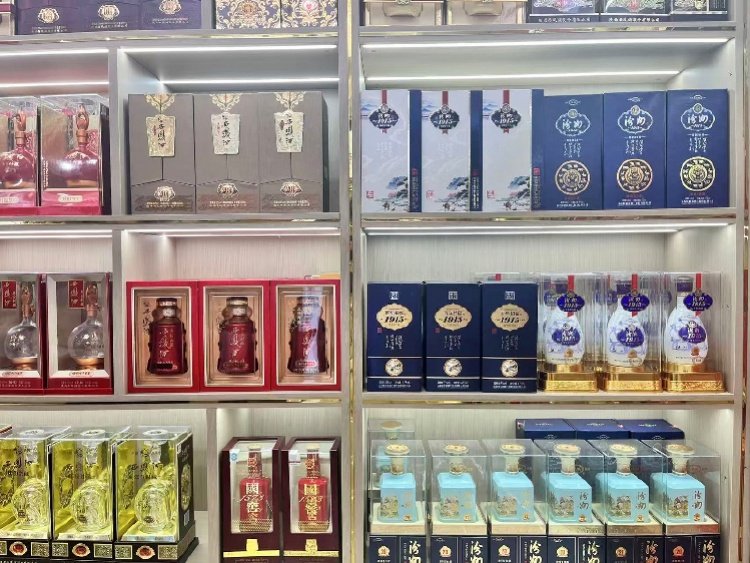
五粮液(000858)2025年半年报点评:白酒竞争激烈价格下降 公司销量增长巩固品牌地位
Xin Lang Cai Jing· 2025-09-05 00:42
Group 1 - The company's revenue and net profit growth rates have declined in the first half of 2025, with a significant pressure in the second quarter [1] - The company achieved a revenue of 52.771 billion yuan, up 4.19% year-on-year, and a net profit of 19.492 billion yuan, up 2.28% year-on-year [1] - The gross margin for the first half of 2025 was 76.83%, a decrease of 0.53% year-on-year, while the net margin was 38.16%, a decrease of 0.99% year-on-year [1] Group 2 - In the first half of 2025, the company’s liquor prices fell while sales volume increased significantly, with revenue from Wuliangye reaching 40.998 billion yuan, up 4.57% year-on-year [2] - The sales volume for Wuliangye was 273,000 tons, an increase of 12.75% year-on-year, while the average price per ton decreased by 8.35% [2] - The company is enhancing its product system with a focus on both high-end and mid-to-low-end markets, launching new products to meet diverse consumer needs [2] Group 3 - The company has optimized its channel structure and achieved significant results in digital transformation, with 1,768 exclusive stores and 7,990 new supply terminals [3] - The implementation of a "direct delivery" model in 20 core cities has improved channel efficiency and market responsiveness [3] - The company is focusing on brand management and performance reform to enhance market adaptability and drive high-quality development [3] Group 4 - Revenue forecasts for the company are 90.3 billion yuan, 94.8 billion yuan, and 100.7 billion yuan for 2025, 2026, and 2027, respectively, with corresponding net profits of 32 billion yuan, 33.6 billion yuan, and 35.4 billion yuan [4] - The current price-to-earnings ratio (PE) is 15 times, with future PE ratios projected at 15.6, 14.8, and 14.1 for the next three years [4] - The company maintains a strong recommendation rating based on its performance outlook [4]
调整期行业结构未见变化 优势向谁集中?
Nan Fang Du Shi Bao· 2025-09-04 23:07
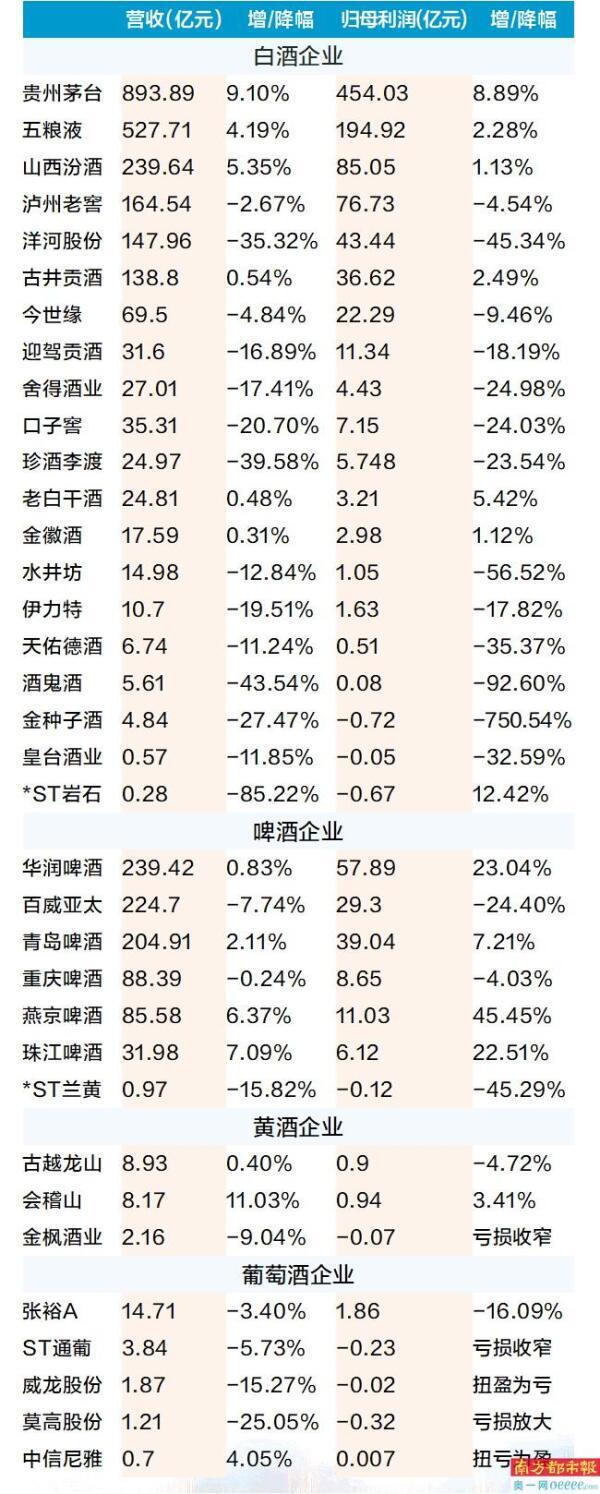
Summary of Key Points Core Viewpoint - The alcoholic beverage industry in China is undergoing a significant adjustment phase, with varying performance across different segments such as baijiu, beer, yellow wine, and wine. While some companies are experiencing declines, others are managing to maintain or grow their revenues through strategic adjustments and market focus [3][4][14]. Baijiu Industry - The baijiu sector is the most affected by the adjustment phase, with 13 out of 20 listed companies reporting declines in both revenue and net profit. Only 6 companies showed growth in both metrics [4][5]. - Major players like Kweichow Moutai, Wuliangye, and Shanxi Fenjiu have managed to maintain growth, while smaller companies face more significant declines [4][5]. - Companies are adopting strategies to address inventory issues and optimize product channels, attributing performance declines to proactive adjustments rather than market weakness [5][6]. Beer Industry - The beer industry is showing signs of recovery, with leading companies like China Resources Beer and Qingdao Beer reporting growth in both revenue and net profit. In contrast, foreign companies like Budweiser APAC are experiencing declines [6][7]. - The high-end segment continues to be a focal point, with companies competing in the premium market, while the 8 yuan price range is emerging as a new growth driver [7][8]. - Beer companies are also diversifying into other beverage sectors to seek new growth opportunities [8][9]. Yellow Wine Industry - The yellow wine sector is struggling to achieve collective growth, with only a few companies like Kuaijishan showing positive performance. The market remains heavily concentrated in the Jiangsu and Zhejiang regions [10][11]. - Despite the introduction of new products aimed at younger consumers, overall performance remains lackluster, with traditional products still driving most sales [10][11]. Wine Industry - The wine market is in a deep adjustment phase, with most companies reporting revenue declines. The market is heavily impacted by the increasing share of imported wines, which continue to challenge domestic brands [12][13]. - Companies are exploring new sales channels, such as live e-commerce, to boost performance and adapt to changing consumer preferences [13][14]. - The emotional value of wine consumption, such as "self-drinking" and "social drinking," is seen as a potential avenue for recovery in the domestic market [13][14].