WLY(000858)

Search documents
《陈年五粮液图鉴》正式发布、官方抖音店上线,五粮液持续引领千亿级陈年酒市场
Xin Lang Cai Jing· 2025-12-17 14:20
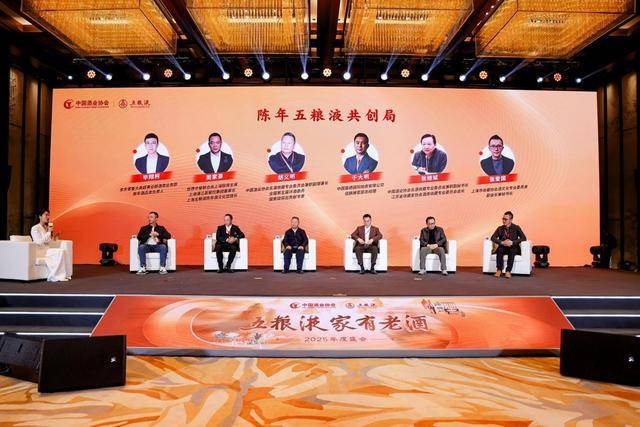
Core Insights - The "Home with Old Wine" series by Wuliangye serves as a cultural bridge connecting the past and present, emphasizing the emotional significance of aged liquor as a witness to time and memory [4][24]. Group 1: Event Overview - The 2025 annual event of "Home with Old Wine" was held in Yibin, marking seven years of Wuliangye's focus on aged liquor, showcasing a cultural journey that intertwines beauty, quality, and value [6][26]. - This year's event transitioned from a closed-door meeting for collectors to a more open cultural experience, inviting broader public participation and interaction [6][26]. Group 2: Cultural Significance - Aged Wuliangye is described as "liquid gold" and "drinkable antiques," embodying living culture and emotional containers that resonate with consumers [7][29]. - The initiative aims to evoke nostalgia and memories, allowing each bottle of aged liquor to return to its roots, symbolizing cherished family moments [9][29]. Group 3: Value Proposition - Wuliangye's three main propositions for the value development of aged liquor include: 1. Time as an axis for long-term value, emphasizing the importance of traditional brewing techniques and the historical significance of their production [9][30]. 2. Culture as a core element, promoting deep interaction with consumers and immersive experiences that blend history, art, and aesthetics [10][30]. 3. Faith as a guiding light, where collecting aged liquor represents a commitment to quality, culture, and future trust [12][32]. Group 4: Market Development - The release of the "Aged Wuliangye Illustrated Guide" aims to standardize and clarify the market for aged liquor, providing a comprehensive reference for collectors and industry researchers [14][34]. - Wuliangye has launched its official flagship store on Douyin, enhancing its online presence and reaching a wider consumer base through innovative sales strategies [14][34]. Group 5: Industry Trends - The Chinese aged liquor market has surpassed 100 billion yuan in transaction volume, with projections indicating it will exceed 150 billion yuan in the next five years, highlighting Wuliangye's leadership in this growth [19][39]. - The event featured discussions among experts to further activate the market dynamics of aged Wuliangye, emphasizing its cultural and emotional value [15][35].



政策暖风拂面,“禁酒令”松绑还是精准纠偏?
Sou Hu Cai Jing· 2025-12-17 13:46
两大信号直指内需提振,让争议已久的"禁酒令" 松绑话题瞬间冲上行业热搜。在酒业面临近十年最差 季度业绩的背景下,无疑是一剂"强心针",但"禁酒令"真的会松绑吗? 近日,在北京召开的2025年中央经济工作会议明确提出,"清理消费领域不合理限制措施"、"全方位扩 大国内需求",加之《求是》发表的《扩大内需是战略之举》重磅文章。 层层加码,从"公务禁酒"到"全面受限" 2025年5月,新版《党政机关厉行节约反对浪费条例》正式生效,其中"公务接待不上酒"的规定引发行 业震荡。 "禁酒令"核心是针对公职人员违规吃喝的纪律约束,其初衷是遏制公款消费、权力寻租等乱象,并非禁 止正常酒类消费。正如人民网评论指出:"禁止违规吃喝,不是吃喝都违规。" 但在部分地区执行过程中,"层层加码""一刀切"现象时有发生,不仅让政务、商务宴请等合法消费场景 受限,更导致消费者产生心理顾虑,"不敢喝、不愿喝"的氛围直接冲击酒类市场。 数据显示,2025年前三季度,18家白酒上市企业实现营收总额3176.58亿元,同比下降5.84%;净利润总 额1226.90亿元,同比下降6.88%。而第三季度单季表现更糟,18家企业营收总额仅779.40亿元 ...

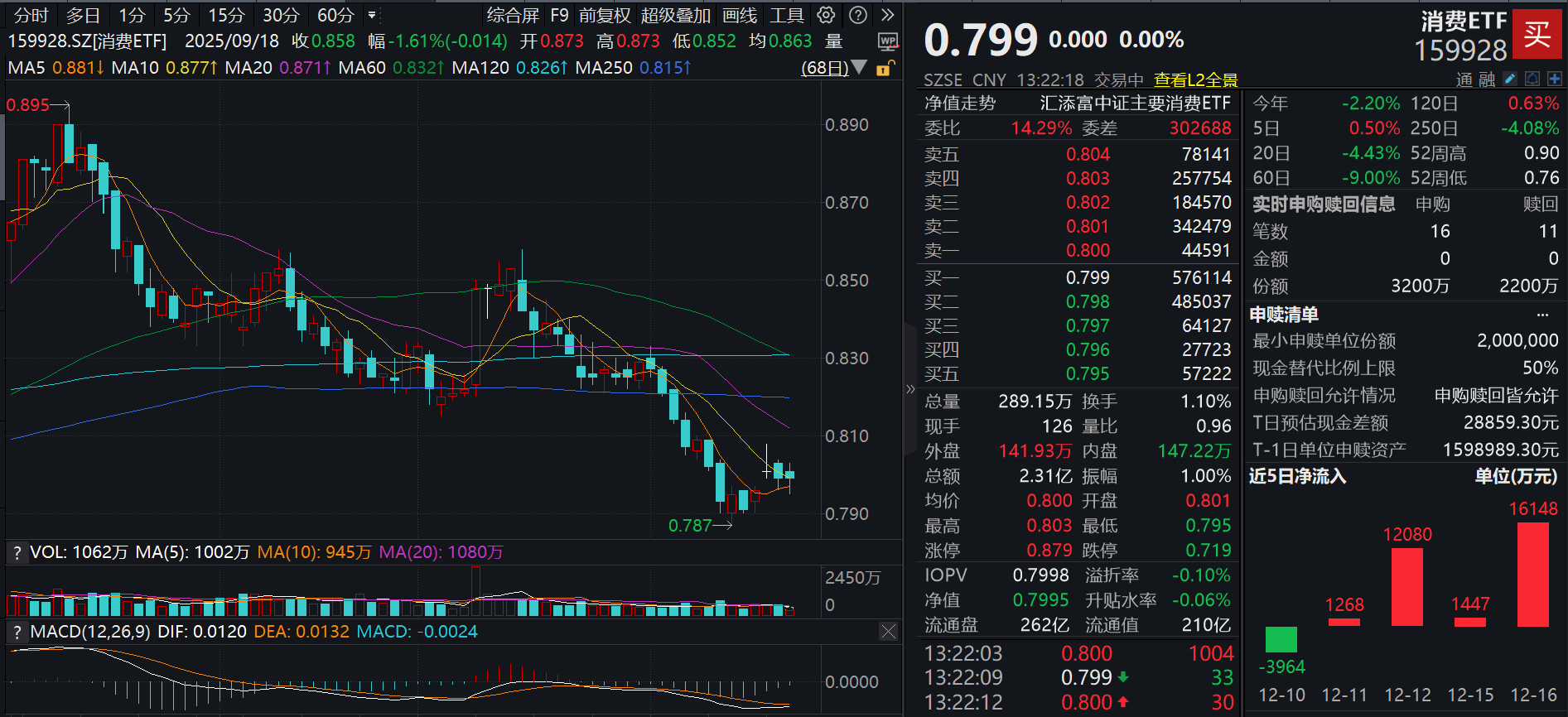
股价腰斩!五粮液到底什么情况?
Sou Hu Cai Jing· 2025-12-17 13:11
Core Viewpoint - The leading Chinese liquor company Wuliangye is facing significant challenges, with its stock price halving from its peak and a substantial decline in revenue and profit, raising concerns about its future direction [2][5][19]. Financial Performance - As of December 17, Wuliangye's stock price was around 113 CNY, with a market capitalization of approximately 440.2 billion CNY and a dynamic P/E ratio of 15.48 [2]. - For the first three quarters of 2025, Wuliangye reported a revenue of 609.45 billion CNY, a year-on-year decline of 10.26%, and a net profit of 215.11 billion CNY, down 13.72% [4][12]. - The third quarter of 2025 saw a drastic drop in revenue to 81.74 billion CNY, a 52.66% decrease year-on-year, and a net profit of 20.19 billion CNY, down 65.62% [10][12]. Market Dynamics - Wuliangye's core product, the eighth generation of its flagship liquor, has seen a significant price drop, with wholesale prices falling to around 780 CNY, below the official price of 899 CNY [8][10]. - The overall liquor market is experiencing a structural adjustment, with a decline in both production and consumption, leading to excess capacity [16]. Consumer Behavior - The demand for traditional high-end liquor is weakening, particularly among younger consumers who prefer craft beers and whiskeys, indicating a shift in consumer preferences [10][16]. - The introduction of strict regulations on liquor consumption has further impacted sales, particularly in government and business settings [10][16]. Strategic Recommendations - Wuliangye should focus on stabilizing prices and clearing inventory by reducing reliance on distributors and enhancing direct sales [19]. - Innovation in product offerings to appeal to younger consumers, such as developing lower-alcohol options and modern packaging, is essential [19]. - Expanding into international markets could provide new growth opportunities, leveraging the brand's heritage and quality [21]. Financial Health - Despite recent challenges, Wuliangye maintains a relatively strong financial position with a low debt ratio of 19.26% and a solid cash flow situation [15][12]. - The company has committed to a high dividend payout ratio of at least 70% from 2024 to 2026, which may attract long-term investors [12][21].
从8万到103.5万,酒类拍卖背后的价值分化与行业信号
Xin Lang Cai Jing· 2025-12-17 12:59
Core Insights - The auction results reflect a significant shift in the perception of high-end Chinese liquor from mere consumer goods to collectible assets, as evidenced by record-breaking sales at major auctions [2][11]. Group 1: High-Value Transactions and Market Dynamics - The auction market for liquor in 2025 continues to showcase the strong value appeal of top brands, with a 100% sales rate for 133 bottles of aged Wuliangye at Sotheby's [3][12]. - Notable sales include a limited edition Wuliangye 1909 artist series sold for 190,000 HKD (approximately 237,500 HKD with fees) and a 1990 Moutai fetching 1,035,000 HKD [2][12]. - Online auction platforms are gaining traction, with special edition Wuliangye zodiac wines achieving significant sales, indicating a growing interest in collectible liquor [4][12]. Group 2: Trends and Market Significance - The auction market is experiencing a rationalization phase, moving away from speculative bubbles towards a focus on genuine consumption and collection [8][17]. - The contribution of spirits to auction sales has slightly decreased, indicating a cooling market, yet Moutai's market share has doubled, reflecting its status as a safe asset [8][17]. - The market is becoming more stratified, with high-value unique items at the top, reliable mainstream aged brands in the middle, and more liquid newer products at the bottom, enhancing price mechanisms [8][17]. Group 3: Strategic Implications for the Industry - The rationalization and diversification of the auction market provide strategic value benchmarks for companies, encouraging them to enhance their "old liquor strategies" to stabilize pricing and prepare for market recovery [9][18]. - The high performance of auctioned aged liquor supports narratives of value appreciation, motivating consumers to "store new liquor, drink old liquor," thus activating inventory turnover [9][18]. - As the auction market matures, the understanding of liquor value is evolving, incorporating cultural, investment, and social attributes into assessments [9][18].

15只白酒股下跌 贵州茅台1433.10元/股收盘
Bei Jing Shang Bao· 2025-12-17 12:12
北京商报讯(记者 刘一博 冯若男)12月17日尾盘,沪指3870.28点上涨1.19%。白酒板块2180.07点收盘 下跌0.34%,其中15只白酒股下跌,贵州茅台1433.10元/股收盘。 从个股来看,贵州茅台收盘价达1433.10元/股,上涨0.78%;五粮液收盘价达113.40元/股,上涨0.35%; 山西汾酒收盘价达177.67元/股,下跌0.06%;泸州老窖收盘价达122.11元/股,下跌0.61%;洋河股份收 盘价达62.38元/股,上涨0.00%。 国金证券研报指出,当下至明年春节前是行业价盘最为承压的时期,市场对白酒行业价盘的悲观预期有 望环比修正,进一步夯实市场对白酒行业筑底的认知。考虑到此轮周期的动销底逐步探明,表观业绩压 力正加速释放,动销反馈环比持续改善确定性强、当下正值自上而下政策窗口期,叠加年末资金端有配 置再平衡的诉求,看好白酒板块的配置价值。 ...



五粮液“家有老酒”年度盛会 突显中国名酒老酒价值与消费认可
Sou Hu Cai Jing· 2025-12-17 10:20
Core Insights - The article highlights the growing significance of aged liquor, particularly Chen Nian Wu Liang Ye, in the high-end consumption and collection market, emphasizing its quality, cultural heritage, and unique charm over time [1][2] Group 1: Event Overview - The "Home with Aged Liquor" annual event hosted by Wu Liang Ye took place on December 16, 2025, in Yibin, showcasing the release of the "Chen Nian Wu Liang Ye Illustrated Guide" [1] - This event aims to promote the standardization and transparency of the aged liquor market, marking a significant step in the development of the industry [2] Group 2: Cultural and Economic Value - The "Chen Nian Wu Liang Ye Illustrated Guide" serves as a systematic overview of Wu Liang Ye's development and a valuable snapshot of the evolution of China's liquor industry, focusing on product iteration, brewing techniques, and flavor analysis [2] - Experts discussed the four key values of aged Wu Liang Ye: historical, cultural, drinking, and investment value, which form the foundation of its collectability [5][6] Group 3: Market Trends and Consumer Insights - The market for aged Wu Liang Ye is characterized by a strong consensus on its quality, with nearly 100% transaction rates at auctions, indicating robust market demand [6] - There is a notable trend of younger consumers (under 35) increasingly engaging with aged liquor, with significant sales growth in lower-tier cities [8] Group 4: Digital and Sales Strategy - Wu Liang Ye has expanded its online presence by launching an official flagship store on Douyin, enhancing its direct reach to a broader consumer base [9][10] - The new sales model integrates content, interaction, and sales, aiming to deepen the understanding of the time, cultural, and collectible value of aged Wu Liang Ye [10] Group 5: Future Outlook - Wu Liang Ye is committed to maintaining its craftsmanship and cultural heritage while driving the aged liquor market towards a more standardized and prosperous future [10]
以文明温度彰显活态力量 五粮液古窖泥捐赠中国国家博物馆20周年纪念活动圆满举行
Xin Hua Cai Jing· 2025-12-17 09:17
Core Insights - The event commemorating the 20th anniversary of the donation of Wuliangye ancient cellar mud to the National Museum of China emphasizes the dual value of cultural heritage and production materials, promoting the active inheritance of Chinese traditional culture [1][2][4] Group 1: Event Overview - The event titled "The Temperature of Civilization and the Power of Living" was held in Yibin, featuring speeches, gift exchanges, and cultural salons to highlight Wuliangye's leadership in the liquor industry [1] - The event was guided by the China Alcoholic Drinks Association and the National Museum of China, with support from the Sichuan Museum Association [1] Group 2: Cultural Significance - Wuliangye has been deeply involved in the research of ancient cellar mud microorganisms for 20 years, achieving breakthroughs in scientific innovation that enhance the concept of "living inheritance" [2] - The ancient cellar group of Wuliangye, known as "Dongxinhe," is recognized as one of the oldest and best-preserved fermentation sites in China's liquor industry [2] Group 3: Historical Context - The ancient cellar group of Wuliangye is traced back to the Yuan Dynasty in 1276, making it one of the earliest fermentation sites in the history of Chinese liquor [3] - A commemorative wine, "Archaeological Wuliangye," was introduced, showcasing archaeological findings and traditional designs from the Yuan Dynasty [3] Group 4: Cultural Exchange - The event included the donation of a replica of Huang Tingjian's poem to Wuliangye, symbolizing the connection between historical figures and the brand [3] - The publication of "Wuliang and Beauty Theory" was announced, which explores the historical, cultural, and aesthetic dimensions of Wuliangye [4] Group 5: Future Vision - Wuliangye aims to continue safeguarding the temperature of civilization and enhancing the power of living inheritance, aspiring to elevate Chinese liquor heritage on the global stage [5]
680万雇主,利润超五粮液,BOSS直聘赵鹏从逆袭走入迷茫
Xin Lang Cai Jing· 2025-12-17 08:43
Core Viewpoint - BOSS Zhipin has achieved impressive growth in a challenging job market, with revenue of 21.6 billion yuan, a year-on-year increase of 13%, and a net profit of 7.8 billion yuan, up 67% year-on-year [28][3] Group 1: Company Performance - In Q3 2025, BOSS Zhipin reported revenue of 21.6 billion yuan, a 13% increase compared to the previous year, and a net profit of 7.8 billion yuan, reflecting a 67% growth [28][3] - The online recruitment service revenue from corporate clients reached 21.47 billion yuan, a 13.6% year-on-year increase, maintaining a long-term revenue share of approximately 99% [34][10] - The total number of paid corporate clients reached 6.8 million, contributing to revenue growth [34][10] Group 2: Market Position and Challenges - BOSS Zhipin has become a leading platform for job seekers, with a market share of 44.4% as of March 2022, surpassing its competitors [36][10] - User growth is under pressure, with only a 20,000 increase in active users in Q3, indicating a need for new growth strategies in a saturated market [36][13] - The growth rate of paid corporate clients has slowed, with a year-on-year increase of 13.3% compared to 22.4% in the previous year, primarily due to budget cuts from small and medium-sized enterprises [37][14] Group 3: Governance Issues - The direct communication model of BOSS Zhipin poses governance challenges, as it can lead to the emergence of inappropriate job postings and scams [39][16] - High-profile incidents, such as the "Li Wenxing case," highlight the risks associated with the platform's open communication model [40][17] - BOSS Zhipin has implemented measures to address governance issues, including banning nearly 2,000 accounts involved in sexual harassment and inappropriate job postings [45][22] Group 4: Technological Impact - The integration of AI in operations has led to a 7% reduction in total operating costs, contributing to improved profit margins, with a gross margin of 85.8% and a net profit margin of 35.8% in Q3 [45][22] - Despite technological advancements, challenges remain in effectively monitoring and managing user interactions to prevent misuse [46][23]

世界品牌实验室发布2025年世界品牌500强,谷歌、微软、苹果排前三
Qi Lu Wan Bao· 2025-12-17 07:19
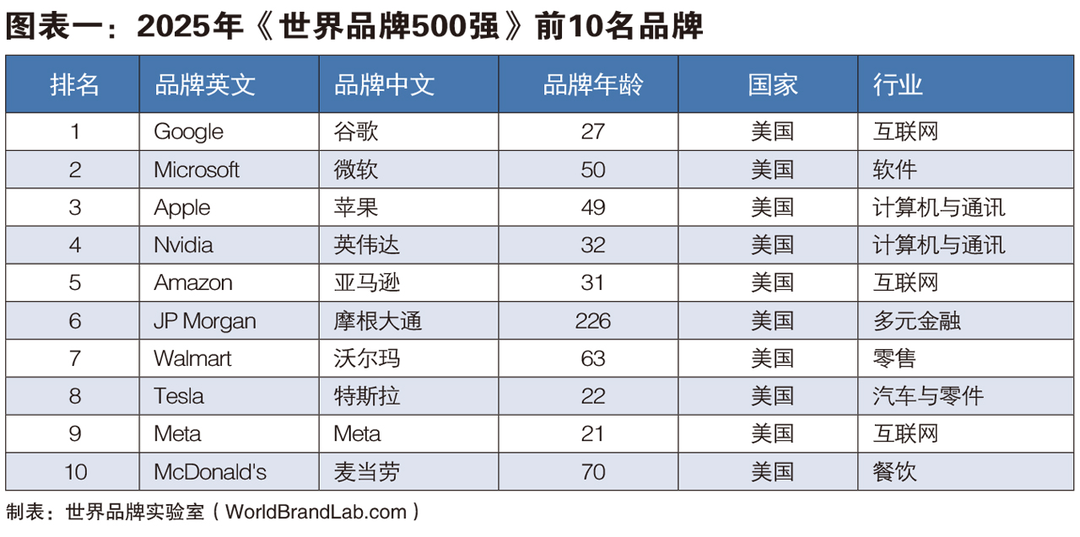
Core Insights - The 2025 World's 500 Most Influential Brands list was released on December 17, with Google ranking first, followed by Microsoft and Apple [1][3] - The United States leads with 184 brands in the list, while China ranks third with 50 brands, surpassing Japan's 40 [1][4] - The report highlights the impact of artificial intelligence on brand creativity and the dual-edged sword effect it presents [1][12] Brand Rankings - Google (27 years, USA, Internet) is ranked first, followed by Microsoft (50 years, USA, Software) and Apple (49 years, USA, Computer & Communications) [2] - Other notable brands in the top 10 include Nvidia, Amazon, JP Morgan, Walmart, Tesla, Meta, and McDonald's [2] Brand Influence Criteria - The ranking is based on brand influence, which includes market share, brand loyalty, and global leadership [3][14] - The evaluation involved approximately 8,000 well-known brands, with metrics from iTrust Rating and ESG databases [3] Brand Representation by Country - The United States has 184 brands, France 51, China 50, Japan 40, and the UK 34 [5] - Germany, Switzerland, and Italy represent the third tier of brand countries [4] Industry Representation - The automotive sector leads with 33 brands, followed by energy and food & beverage sectors with 30 brands each [6] - The banking sector has 29 brands, while retail and computer & communications each have 27 brands [6] New Entrants - A total of 23 new brands made the list, with Elevance Health (173rd) being the highest-ranked newcomer [6][7] - Notable new entrants from China include CATL, China Unicom, and Tongding, reflecting advancements in new energy and telecommunications [6] Brand Age Insights - The average age of brands in the list is 98.46 years, with 221 brands over 100 years old [7] - The oldest brand is Saint-Gobain (360 years), followed by Aviva and Moutai [8] AI and Brand Strategy - The report emphasizes the need for brands to adapt to AI-driven changes in marketing and decision-making [10][11] - AI is seen as a transformative tool that can enhance brand performance but also poses challenges in management and evaluation [10][12]



扩大内需是明年排在首位的重点任务!消费ETF(159928)盘中翻红再获资金青睐,昨日流入超1.6亿元!食品饮料已连跌五年,反转关注哪些机会?
Sou Hu Cai Jing· 2025-12-17 05:52
Market Overview - The Shanghai Composite Index experienced a slight rebound, with significant inflows into consumer ETFs, indicating a positive sentiment in the consumer sector [1] - The Consumer ETF (159928) saw a 0.38% increase, with trading volume exceeding 230 million yuan, and a net subscription of 10 million units during the day [1] Economic Policy Insights - The 2025 Economic Work Conference emphasized expanding domestic demand as a top priority, focusing on boosting consumption and stabilizing the real estate market through targeted measures [3] - The supply side will control new increments and activate existing stock, while the demand side will implement measures to release rigid and improvement needs of residents [3] Sector Performance - The Hong Kong stock market's new consumer sector also showed positive performance, with the Hong Kong Consumer 50 ETF (159268) rising nearly 1% and attracting over 40 million yuan in net inflows over the past five days [3] - Key consumer stocks such as Li Ning and Anta Sports saw gains of over 4%, while others like Haidilao experienced slight increases [3] Investment Strategy - China Galaxy Securities suggests focusing on defensive sectors, high dividends, and consumer recovery themes in December, given the backdrop of important policy meetings and potential interest rate cuts [6] - The market may enter a wide fluctuation phase, with an emphasis on defensive and consumer sectors in the short term, while TMT and advanced manufacturing sectors are recommended for mid-term focus [6] Industry Trends - The food and beverage sector has faced five consecutive years of decline, but historical trends suggest potential for reversal after prolonged downturns [7] - The Consumer ETF (159928) is currently at a TTM P/E ratio of 19.39, indicating a high valuation attractiveness compared to historical levels [8] Future Outlook - Looking ahead to 2026, structural opportunities are expected to arise from channel differentiation and supply upgrades, with a moderate recovery in overall demand [13] - Consumer confidence is gradually improving, with notable growth in specific categories such as electrolyte drinks and health foods, indicating potential growth areas [20] Fund Performance - The food and beverage sector is currently at a historical low in terms of valuation and fund holdings, highlighting its potential investment value [18] - The Consumer ETF (159928) is characterized by its resilience across economic cycles, with significant weight in leading consumer stocks [21]