
TZE(002129)

Search documents
2026年首笔光伏整合并购案:TCL中环或入主一道新能
2 1 Shi Ji Jing Ji Bao Dao· 2026-01-19 23:05
Core Viewpoint - TCL Zhonghuan announced a significant equity acquisition of Yida New Energy Technology Co., Ltd. to enhance its integration strategy and competitive edge in the photovoltaic industry [2][4] Group 1: Investment Details - TCL Zhonghuan plans to invest in Yida New Energy through share transfer, voting rights delegation, and capital increase, with specific terms to be agreed upon later [2] - The investment aims to optimize the production capacity of photovoltaic battery components and diversify product and customer structures [2][6] Group 2: Yida New Energy's Capacity - Yida New Energy has established a production capacity of 30GW for high-efficiency batteries and components, projected to increase to 40GW by the end of 2025 [3] - In contrast, TCL Zhonghuan's production capacity for components is only 24GW as of mid-2025, indicating a significant gap [3] Group 3: Market Context - The investment is seen as a market-driven response to the current downturn in the photovoltaic industry, with industry leaders advocating for mergers and acquisitions as a means to reduce excess capacity [4] - Previous attempts at similar investments, such as Tongwei's planned acquisition of Runyang, highlight the challenges in the current market environment [4][5] Group 4: Shareholding Structure - Yida New Energy's major shareholders include Qizhou Zhida Enterprise Management Partnership and founder Liu Yong, holding approximately 30% of the company [5] - The investment framework is currently a non-binding agreement, with TCL Zhonghuan's potential to gain control of Yida New Energy depending on the final terms [5][6] Group 5: Financial Outlook - TCL Zhonghuan anticipates a loss of between 8.2 billion to 9.6 billion yuan for the fiscal year 2025, although this represents an improvement from 2024 [6] - The investment is expected to enhance both companies' technological capabilities and support advancements in new technologies like BC batteries [6][7]


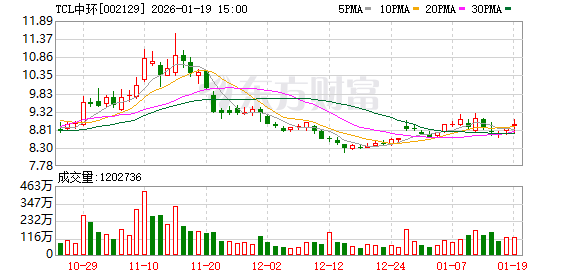
TCL科技集团股份有限公司关于2026年度日常关联交易预计情况的公告
Shang Hai Zheng Quan Bao· 2026-01-19 19:51
Group 1 - The company expects to engage in daily related transactions amounting to 33.5 billion yuan in 2026, which represents 62.97% of the company's latest audited net assets [2][3] - The actual related transactions from January to October 2025 with the mentioned parties amounted to 22.16 billion yuan, accounting for 41.68% of the company's latest audited net assets [2] - The board of directors approved the proposal for the expected daily related transactions for 2026 during the meeting held on January 19, 2026, with independent directors expressing their agreement [3][21] Group 2 - The company plans to conduct various types of related transactions, including procurement, sales, and labor services, with TCL Industrial Holdings and its subsidiaries [2][4] - The company will seek authorization from the shareholders' meeting to adjust the transaction amounts based on actual business needs [4] Group 3 - TCL Industrial Holdings has stable development and good operating conditions, with total assets of 150.584 billion yuan and net assets of 26.353 billion yuan as of September 30, 2025 [7][63] - The company has signed a framework agreement for daily related transactions with TCL Industrial Holdings, which is necessary for its daily operations [18][66] Group 4 - The daily related transactions are essential for the company's ongoing production and operations, supporting growth and efficiency [19][67] - The conditions of the related transactions are fair and reasonable, ensuring no harm to the interests of the company and minority shareholders [19][67] Group 5 - The company has cumulatively engaged in related transactions amounting to approximately 22.05 billion yuan with TCL Industrial Holdings and its subsidiaries from January to October 2025 [20][68] - Independent directors have reviewed the related transactions and deemed them beneficial for leveraging advantages and resources, ensuring mutual benefits [21][68]

白银价格再创新高 光伏行业成本攀升
Xin Lang Cai Jing· 2026-01-19 18:12
Core Viewpoint - The surge in silver prices is significantly impacting the photovoltaic (PV) industry, leading to increased operational pressures and projected losses for major companies in the sector [1][2]. Group 1: Silver Price Impact - International silver prices have recently surpassed $94 per ounce, contributing to heightened costs for PV companies already facing two years of losses [1]. - The cost of silver has increased over threefold in the past year, now accounting for 29% of the total cost of solar panels, compared to 3.4% in 2023 and 14% last year [2]. Group 2: Company Performance Forecasts - Tongwei Co. anticipates a net loss of approximately 9 billion to 10 billion yuan for 2025, citing rising silver prices and declining product prices as key factors [1]. - TCL Zhonghuan, a leading PV silicon wafer manufacturer, expects a net loss between 8.2 billion to 9.6 billion yuan, attributing this to ongoing supply-demand imbalances despite growth in new installations [2]. - Longi Green Energy forecasts a net loss of 6 billion to 6.5 billion yuan for 2025, with significant cost increases in silver paste and silicon materials further straining operations [2]. Group 3: Industry Response - Some component manufacturers have raised prices to reflect the increased costs of silver, while the industry is also exploring technological adjustments to mitigate these pressures [2]. - Longi Green Energy has completed pilot tests for replacing silver paste with cheaper materials and is beginning large-scale production of these alternatives [2].



超300份预告折射产业冷暖,业绩驱动取代概念博弈成市场主线
第一财经网· 2026-01-19 10:13
Core Viewpoint - The A-share market is experiencing a clear divergence in industry performance as over 350 companies have released their 2025 earnings forecasts, highlighting strong growth in the semiconductor and non-ferrous metals sectors, while the photovoltaic industry faces significant losses due to overcapacity and price competition [1] Semiconductor Industry - The semiconductor sector is benefiting from the global AI infrastructure wave and rising storage chip prices, with leading companies like 澜起科技 (Lianqi Technology) forecasting a net profit of 2.15 billion to 2.35 billion yuan for 2025, representing a year-on-year growth of 52.29% to 66.46% [2] - 佰维存储 (Baiwei Storage) expects to achieve record revenue of 10 billion to 12 billion yuan, with a net profit forecast of 850 million to 1 billion yuan, reflecting a staggering year-on-year growth of 427.19% to 520.22% [2] Photovoltaic Industry - The photovoltaic sector is struggling with overcapacity, low prices, and rising raw material costs, leading to significant losses among leading companies. 通威股份 (Tongwei Co.) anticipates a net loss of 9 billion to 10 billion yuan, while TCL中环 (TCL Zhonghuan) expects a loss of 8.2 billion to 9.6 billion yuan [3] - The total projected losses for major photovoltaic companies have exceeded 32 billion yuan, with several firms reporting substantial deficits [3] Real Estate Industry - The real estate sector is also under pressure, with companies like 华夏幸福 (China Fortune Land Development) forecasting a net loss of 16 billion to 24 billion yuan, attributed to insufficient market demand and weak social expectations [4] Non-Ferrous Metals Industry - The non-ferrous metals sector has seen significant price increases, benefiting from global monetary easing and fiscal expansion, with companies reporting strong earnings growth. For instance, 紫金矿业 (Zijin Mining) expects a net profit of 51 billion to 52 billion yuan, a year-on-year increase of 59% to 62% [5][6] - The performance of the rare earth sector is also notable, with 北方稀土 (Northern Rare Earth) projecting a net profit of 2.176 billion to 2.356 billion yuan, reflecting a year-on-year growth of 116.67% to 134.60% [7] Concept Stocks and Emerging Industries - Emerging sectors like commercial aerospace and AI applications are facing challenges, with many companies reporting losses despite previous market enthusiasm. For example, 上海瀚讯 (Shanghai Hanxun) and 三维通信 (Sanwei Communication) are expected to incur losses in 2025 [8][9] - 中文在线 (Zhongwen Online) anticipates a net loss of 580 million to 700 million yuan, driven by high promotional costs in its overseas short drama business [9]


5家光伏龙头总计预亏超289亿元,通威股份预亏最高达百亿元
Xin Lang Cai Jing· 2026-01-19 00:58
Core Viewpoint - Multiple leading photovoltaic companies have recently announced expected losses for 2025, with a total estimated loss of 28.9 billion to 32.8 billion yuan among five companies [1]. Group 1: Company Performance Forecasts - Longi Green Energy (隆基绿能) expects a net loss attributable to shareholders of 6 billion to 6.5 billion yuan for 2025, with a loss of 6.8 billion to 7.4 billion yuan when excluding non-recurring items [1]. - Tongwei Co., Ltd. (通威股份) anticipates a net loss of 9 billion to 10 billion yuan for 2025, also excluding non-recurring items [2]. - Aiko Solar Energy (爱旭股份) projects a net loss of 1.2 billion to 1.9 billion yuan for 2025, with a loss of 1.6 billion to 2.3 billion yuan when excluding non-recurring items [2]. - TCL Zhonghuan (TCL中环) expects a net loss of 8.2 billion to 9.6 billion yuan for 2025 [4]. - JA Solar Technology (晶澳科技) forecasts a net loss of 4.5 billion to 4.8 billion yuan for 2025 [4]. Group 2: Industry Challenges - The photovoltaic industry is facing a mismatch in supply and demand, with low operating rates and ongoing price competition leading to a challenging business environment [1]. - The industry has experienced a significant increase in costs for silver paste and silicon materials, which has further pressured the profitability of companies [1]. - The overall installed capacity growth in the photovoltaic sector has slowed down in the second half of the year, contributing to a phase of oversupply [2]. - The structural overcapacity in the industry has not improved significantly, with core raw material prices continuing to rise while product prices remain low [4]. - The Ministry of Industry and Information Technology has indicated that 2026 will see intensified efforts to regulate capacity and manage photovoltaic manufacturing projects to achieve a dynamic balance in capacity [4].
5家光伏龙头合计预亏超289亿元
2 1 Shi Ji Jing Ji Bao Dao· 2026-01-18 23:19
Core Viewpoint - Several leading photovoltaic companies have announced significant expected losses for 2025, indicating ongoing challenges in the industry due to supply-demand imbalances and rising raw material costs [1][2][3]. Company Summaries - Tongwei Co., Ltd. (通威股份) expects a net loss of 9 billion to 10 billion yuan for 2025, citing unresolved supply-demand issues and rising prices of core raw materials [1]. - Longi Green Energy (隆基绿能) anticipates a net loss of 6 billion to 6.5 billion yuan for 2025, highlighting ongoing low operating rates and increased costs due to rising prices of silver paste and silicon materials [1]. - Aiko Solar Energy (爱旭股份) projects a net loss of 1.2 billion to 1.9 billion yuan for 2025, attributing this to structural overcapacity and sustained low product prices [1]. - TCL Zhonghuan (TCL中环) expects a net loss of 8.2 billion to 9.6 billion yuan for 2025 [2]. - JA Solar Technology (晶澳科技) forecasts a net loss of 4.5 billion to 4.8 billion yuan for 2025, contributing to a total expected loss of over 28.9 billion yuan for these five leading companies [3]. Industry Overview - The photovoltaic industry has faced significant price fluctuations since 2025, leading to widespread losses among companies [4]. - The Chinese government plans to strengthen capacity regulation and manage photovoltaic manufacturing projects to address the ongoing challenges in the industry [4]. - Experts suggest that merely relying on government initiatives may not be sufficient, and additional measures may be necessary to stabilize the industry [4][5]. - The industry has experienced a continuous loss trend for eight quarters, with a 33% reduction in workforce in 2024, and an increase in average interest-bearing debt ratio from 23% to 31% [5].
5家光伏龙头合计预亏超289亿元
21世纪经济报道· 2026-01-18 23:15
Core Viewpoint - The photovoltaic industry is facing significant challenges, with multiple leading companies announcing substantial expected losses for 2025 due to ongoing supply-demand imbalances and price declines in key materials [1][2][4]. Group 1: Company Performance - Tongwei Co., Ltd. anticipates a net loss of 9 billion to 10 billion yuan for 2025, citing unresolved supply-demand issues and rising raw material costs [1]. - Longi Green Energy expects a net loss of 6 billion to 6.5 billion yuan for 2025, attributing this to persistent low operating rates and increased costs in the fourth quarter [1]. - Aiko Solar predicts a net loss of 1.2 billion to 1.9 billion yuan for 2025, impacted by structural overcapacity and ongoing price pressures [1]. - TCL Zhonghuan forecasts a net loss of 8.2 billion to 9.6 billion yuan for 2025, while JA Solar projects a loss of 4.5 billion to 4.8 billion yuan [2]. - Collectively, these five leading photovoltaic companies are expected to incur losses exceeding 28.9 billion yuan for 2025 [2]. Group 2: Industry Trends - The photovoltaic supply chain has experienced significant price fluctuations since 2025, leading to widespread losses among industry players [4]. - The Chinese government is expected to implement stricter capacity controls and project management to address the ongoing issues in the photovoltaic sector [4]. - Experts suggest that merely relying on government initiatives may not suffice, and more decisive measures may be necessary to stabilize the industry [4][5]. - The industry has been in a loss cycle for eight consecutive quarters, with a projected 33% reduction in workforce in 2024 [5]. - The average interest-bearing debt ratio in the industry has increased from 23% to 31% due to financial pressures [5].

最高亏损达百亿元,9家光伏龙头齐发预亏公告
DT新材料· 2026-01-18 16:05
Core Viewpoint - The photovoltaic industry is facing significant losses, with major companies like Longi Green Energy, Tongwei Co., and Aiko Solar all forecasting substantial net losses for 2025, indicating a challenging market environment driven by overcapacity and rising raw material costs [1][2]. Group 1: Company Performance - Longi Green Energy expects a net loss of approximately 60 billion to 65 billion yuan for 2025, citing increased costs of silver paste and silicon materials as key factors [1]. - Tongwei Co. is projected to incur a net loss of 82 billion to 96 billion yuan for 2025, with product prices remaining low and insufficient cost transmission impacting profitability [1]. - Aiko Solar anticipates a net loss of 45 billion to 48 billion yuan for 2025, while TCL Zhonghuan expects a loss of 12 billion to 19 billion yuan, both companies highlighting the impact of structural overcapacity on their operations [2]. Group 2: Industry Trends - The photovoltaic sector has experienced nine consecutive quarters of losses since Q4 2023, with ongoing supply-demand imbalances exacerbating the situation [2]. - Industry experts emphasize the need for capacity clearing and structural optimization, suggesting that companies must move beyond simple production cuts to enhance competitive advantages through technology and product differentiation [2]. - TCL Zhonghuan's acquisition of Yida Energy marks a significant step towards industry consolidation, aiming to optimize resources and foster collaboration, which could help the sector transition from low-level competition to value co-creation [2].

光伏硅片龙头TCL中环拟投资一道新能源
Bei Jing Shang Bao· 2026-01-18 15:11
Core Viewpoint - TCL Zhonghuan is making a strategic investment in Yidao New Energy Technology Co., Ltd., focusing on N-type solar battery components, which is seen as a key move towards vertical integration in the photovoltaic industry [1][4]. Group 1: Investment Details - TCL Zhonghuan plans to invest in Yidao New Energy through share acquisition, voting rights delegation, and capital increase, with specific terms to be agreed upon later [3]. - The investment is not expected to constitute a related party transaction or a major asset restructuring [3]. - TCL Zhonghuan is a leading company in the photovoltaic silicon wafer market, maintaining a market share of 24GW in component capacity by mid-2025 [3]. Group 2: Industry Context - The photovoltaic industry is currently facing overcapacity, and mergers and acquisitions are seen as a potential solution to this issue [4][5]. - The investment by TCL Zhonghuan is aimed at enhancing its market position and optimizing its production capacity in solar battery components [4]. - Yidao New Energy has a significant production capacity of 30GW for high-efficiency batteries and components in 2023, with plans to expand to 40GW each by 2025, surpassing TCL Zhonghuan's projected capacity [3][4]. Group 3: Financial Outlook - TCL Zhonghuan's earnings forecast indicates a reduced loss in 2025, with expected net losses between 8.2 billion to 9.6 billion yuan, compared to 9.818 billion yuan in the previous year [5]. - Yidao New Energy's financial data shows a high debt-to-asset ratio, with figures of 87.71%, 86.54%, and 86.89% from 2021 to 2023, indicating financial pressure [5].
电新周报:太空应用强化美国光伏自主可控诉求,海风与电网设备迎重大催化 1 / 15-20260118
SINOLINK SECURITIES· 2026-01-18 13:05
Investment Rating - The report maintains a positive outlook on the "space photovoltaic" sector, indicating it as a key investment theme for 2026, driven by strong demand and geopolitical narratives [7][8]. Core Insights - The space photovoltaic industry is experiencing significant advancements, primarily among companies already established in the sector, highlighting the high barriers to entry [7][8]. - The Chinese photovoltaic supply chain is expected to accelerate the growth of the space photovoltaic market, benefiting from the U.S. demand for "self-sufficiency" in solar products [7][8]. - The wind power and grid equipment sectors have also received substantial positive catalysts, with notable developments in offshore wind projects and significant investments planned by the State Grid [7][8]. Summary by Relevant Sections Space Photovoltaics - Recent developments in the space photovoltaic sector include strategic partnerships and investments by companies like JunDa and Dongfang Risen, focusing on advanced technologies such as perovskite and HJT cells [8][9]. - The U.S. is facing a critical need for domestic solar supply chains due to trade barriers, which presents a significant opportunity for Chinese companies to capitalize on this demand [11][12]. Wind Power - The UK government has signed contracts for 8.4GW of offshore wind projects, exceeding market expectations, which strengthens the outlook for domestic supply chain exports [13][14]. - The auction results indicate a favorable pricing environment for developers, enhancing the profitability of future projects [14]. Grid Equipment - The State Grid's investment plan of 4 trillion yuan for the 14th Five-Year Plan represents a 40% increase from the previous plan, establishing a strong foundation for long-term growth in the grid sector [3][15]. - The aging infrastructure in North America is driving demand for new transformers and grid solutions, creating opportunities for companies like Siyuan Electric and Jinpan Technology [17][19]. Lithium Batteries - New regulations on battery recycling are set to take effect in April 2026, emphasizing the importance of a comprehensive management system for used batteries [22][23]. - Companies like Fulin Precision are expanding their production capabilities in lithium iron phosphate batteries, indicating a positive trend in the lithium battery market [25][26]. Hydrogen and Fuel Cells - The hydrogen industry is poised for growth, with significant policy support and increasing sales of hydrogen vehicles expected in the coming years [4][5].


