IFLYTEK(002230)

Search documents
科大讯飞在北京成立数字科技公司
Zheng Quan Shi Bao Wang· 2025-12-02 08:00
Core Insights - Recently, Xunfei Digital Technology (Beijing) Co., Ltd. was established with a registered capital of 10 million yuan [1] - The company is wholly owned by iFLYTEK (002230) through indirect shareholding [1] - The business scope includes artificial intelligence industry application system integration services, sales of artificial intelligence hardware, general application systems for artificial intelligence, and sales of integrated circuit chips and products [1]

海内外利好密集来袭,AI算力链迎四大增量,云计算ETF(159890)涨1.85%
Sou Hu Cai Jing· 2025-12-02 01:13
Core Insights - The article highlights the strong performance of sectors such as consumer electronics, components, and communication devices, with a focus on AI infrastructure and applications driving growth in cloud computing ETFs [1] Group 1: AI Computing Developments - Google's TPU has introduced a new direction for AI computing with its OCS next-generation optical interconnect solution, designed specifically for accelerating AI and machine learning tasks, marking it as a significant support following GPUs [6] - Alibaba has raised its AI investment guidance, confirming a potential increase in capital expenditures to 380 billion yuan over the next three years, with cloud business growth reported at 34% [7] - Beijing has launched a "space computing" plan to build large-scale data centers in low Earth orbit, aiming to transfer substantial AI computing power to space [8][9] Group 2: Market Growth Projections - According to the China Academy of Information and Communications Technology, the global computing power scale is projected to grow to over 16 ZFLOPS by 2030, with a compound annual growth rate exceeding 50% [3] - The global cloud computing market is expected to reach $692.9 billion in 2024, reflecting a year-on-year growth of 20.3%, while China's cloud computing market is anticipated to grow to 828.8 billion yuan, a 34.4% increase [3] - The cloud computing ETF (159890) tracks the CSI Cloud Computing and Big Data Theme Index, which includes leading companies in optical modules, electronic terminals, and software development [3][13] Group 3: Investment Opportunities - The investment landscape for computing power is evolving, with new stock offerings from companies like Moore Threads and Muxi indicating a potential shift in the investment paradigm [2] - The demand for AI computing infrastructure is expected to remain robust, with significant opportunities in the supply chain for optical modules and related technologies [18][19]



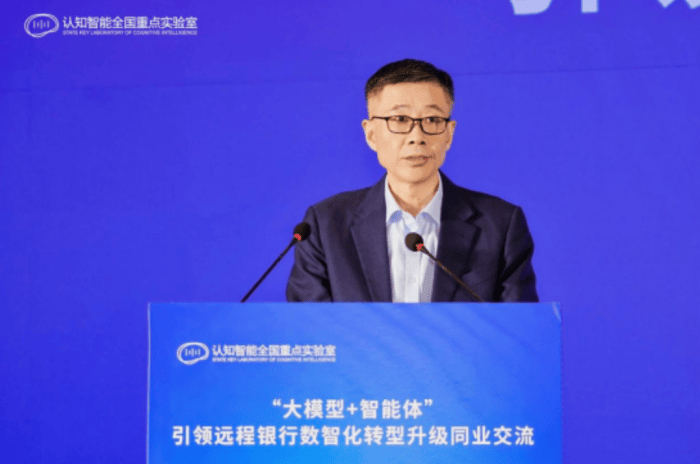
聚焦合肥,科大讯飞以大模型技术赋能远程银行数智化升级
Sou Hu Cai Jing· 2025-12-01 15:43
Core Viewpoint - The event highlighted the role of "large models + intelligent agents" in leading the digital transformation of remote banking, with iFlytek as a key technical contributor [1] Group 1: Technological Advancements - iFlytek has made significant breakthroughs in large model technology, successfully applying it to remote banking scenarios [1] - The company emphasizes the importance of a "good technology, safe and controllable" approach, establishing a comprehensive security governance system for the financial industry's intelligent transformation [1] Group 2: Industry Collaboration - iFlytek collaborates with partners such as Huawei and Huishang Bank to create an open and shared communication platform [1] - The deep sharing by iFlytek's research institute vice president identified industry pain points, providing valuable references for peers [1] Group 3: Future Directions - iFlytek aims to continue developing large model and intelligent agent technologies, offering more mature solutions to empower the digital transformation of remote banking [1] - The company's technological practices and transformation strategies provide diverse reference paths for banking institutions [1]
科大讯飞的“AI叙事”
YOUNG财经 漾财经· 2025-12-01 11:00
Core Viewpoint - The article discusses the challenges and opportunities faced by iFlytek, particularly in the context of its AI model "Xunfei Spark" and the competitive landscape of the AI industry, highlighting the need for new growth points beyond its traditional education business [4][12]. Group 1: Company Performance and Market Sentiment - iFlytek's stock price has been volatile, experiencing a decline since October 9, despite the company's ambitious plans for its AI model [4][11]. - The company has seen significant fluctuations in its stock price during previous market cycles, often linked to external market conditions and technological advancements in AI [6][10][11]. - iFlytek's current market valuation is high compared to industry peers, with a TTM P/E ratio of approximately 137, indicating potential overvaluation [15][16]. Group 2: Business Challenges and Financial Health - iFlytek has faced challenges in profitability, recording substantial net losses in recent quarters, with a cumulative loss exceeding 10 billion [16][18]. - The company's high accounts receivable, which increased from 5.733 billion to 15.9 billion from 2020 to Q3 2025, poses risks to cash flow and increases the likelihood of bad debt [20][21]. - Government subsidies have played a crucial role in supporting iFlytek's financial stability, with cumulative subsidies amounting to 1.735 billion from 2021 to 2024 [19][20]. Group 3: Strategic Focus and Future Growth - iFlytek is pivoting towards its AI model as a key growth driver, with plans to enhance its capabilities across various sectors, including education and healthcare [12][24]. - The company aims to strengthen its C-end business, which has shown significant growth, contributing to 32% of total revenue with a year-on-year increase of 38% [26][30]. - iFlytek's management recognizes the need to address quality control issues in its C-end products to ensure sustainable growth and market expansion [30].

计算机行业年度策略:AI应用加快,全球格局重塑中
Zhongyuan Securities· 2025-12-01 08:16
Group 1 - The computer industry is showing signs of improvement in both revenue and profit for 2025, with software business revenue reaching 11.11 trillion yuan, a year-on-year increase of 13.0% [11][13] - The overall revenue for the computer industry in the first three quarters of 2025 is 1.51 trillion yuan, with a growth rate of 10.1% after excluding the high proportion of Industrial Fulian [13][16] - The net profit for the industry in the first three quarters of 2025 is 184 billion yuan, reflecting a year-on-year increase of 57.4% [16] Group 2 - The "14th Five-Year Plan" emphasizes self-sufficiency in key areas such as integrated circuits and basic software, with increased government procurement for domestic innovation [25][26] - The EDA sector has become a focal point of U.S. export controls, accelerating the demand for domestic alternatives [29][30] - The release of HarmonyOS 6 marks a significant milestone for Huawei, with terminal numbers surpassing 23 million, indicating a strong growth trajectory for domestic operating systems [38][41] Group 3 - The AI and computing concepts have shown significant growth, with the AI computing demand driving the "East Data West Computing" concept to rise by 146.8% in 2025 [20][21] - The overall valuation of the computer industry is above historical averages, with a TTM valuation of 55.33 times as of November 27, 2025 [21][24] - Domestic AI chip manufacturers are experiencing accelerated growth, with companies like Cambrian and Haiguang reporting substantial revenue increases [48][49] Group 4 - The integration of AI applications is expected to enhance the competitive advantage of integrated AI manufacturers, with DeepSeek collaborating with domestic chip manufacturers to optimize performance [4][4] - The demand for AI servers is increasing, requiring manufacturers to enhance their overall system design capabilities [3][3] - The trend towards liquid cooling technology is becoming mainstream as AI chip performance continues to improve [3][3]



智能车板块走强,广和通20cm涨停,拓普集团涨超4%,智能汽车ETF基金(159795)涨超2%冲击3连涨,中国智能汽车产业链迎来全球化机遇
Sou Hu Cai Jing· 2025-12-01 07:03
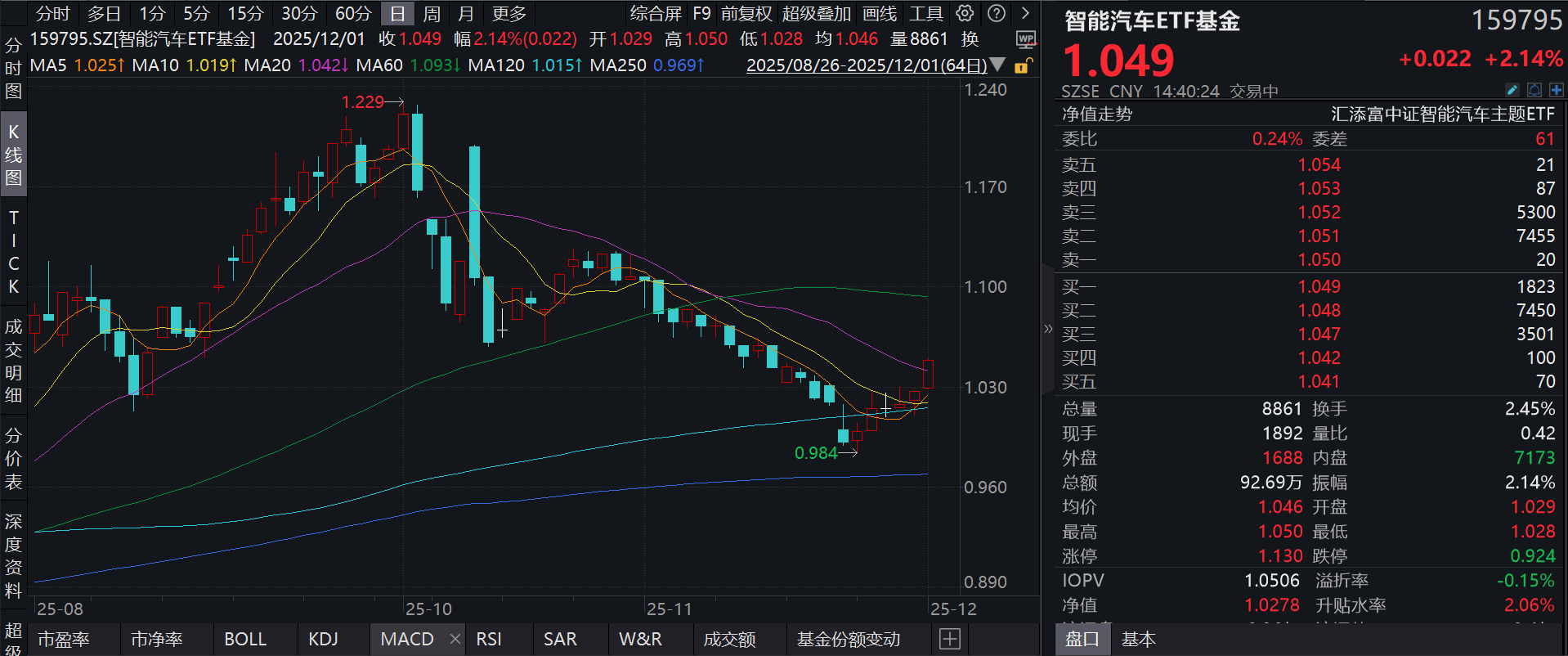
Group 1: Market Performance - The China Securities Intelligent Vehicle Theme Index (930721) rose by 2.20% as of December 1, 2025, with component stocks such as Guanghetong (300638) increasing by 20.01% and Beijing Junzheng (300223) by 17.04% [1] - The Intelligent Vehicle ETF Fund (159795) also saw a rise of 2.14%, marking its third consecutive increase, with a latest price of 1.05 yuan [1] - Over the past week, the Intelligent Vehicle ETF Fund has accumulated a rise of 3.63% [1] Group 2: Company Developments - Leap Motor reported a record high delivery of 70,327 units in November, representing a year-on-year growth of over 75%, maintaining a growth trend for nine consecutive months [3] - Xiaomi Group announced the launch of its embodied AI model MiMo-Embodied, which integrates autonomous driving and embodied intelligence, with Xiaomi's vehicle deliveries exceeding 40,000 units in November [3] - Great Wall Motors introduced the VLA auxiliary driving model and previewed a new generation of the auxiliary driving system, CPMaster [3] Group 3: Investment Insights - Ideal Auto plans to invest 12 billion yuan in R&D for 2025, with over 6 billion yuan allocated to AI [4] - According to GF Securities, as overseas automakers lose market share, they are accelerating their smart technology advancements to enhance competitiveness, while Chinese brands are positioned to benefit from global opportunities in the intelligent vehicle supply chain [4] - The integration of intelligent vehicles and robotics is expected to expand the valuation ceiling of the sector, with the Intelligent Vehicle ETF Fund closely tracking the performance of leading companies in intelligent vehicle applications [4] Group 4: Index Composition - As of September 9, 2025, the top ten weighted stocks in the China Securities Intelligent Vehicle Theme Index (930721) include Chipone (688521), Luxshare Precision (002475), and Top Group (601689), collectively accounting for 48.47% of the index [4][5]





智谱AI发布清影2.0对标Sora,人工智能AIETF(515070)盘中涨1.04%
Mei Ri Jing Ji Xin Wen· 2025-12-01 03:39
Core Insights - The A-share market opened higher with the Shanghai Composite Index up 0.14%, Shenzhen Component Index up 0.42%, and ChiNext Index up 0.26. The precious metals and film sectors led the gains, while insurance, internet e-commerce, and software development sectors lagged behind [1] Group 1: AI Developments - Zhiyu AI released Qingying 2.0, capable of generating 1080P HD videos with a maximum length of 10 seconds, showing significant improvements in image quality and stability compared to OpenAI Sora. The upgrade reduces reasoning costs by 30% and has already generated over one million videos in its first month [1] - CITIC Securities analysis indicates that the focus of AI model development is shifting from sheer parameter scale to achieving higher "capability density" and better architectural efficiency. This transition is expected to lower the computational threshold, enabling more small and medium-sized enterprises to access AI technology at reduced costs, thus creating broader industrial applications and investment opportunities [1] Group 2: AI ETF Overview - The AI ETF (515070) tracks the CS AI Theme Index (930713), selecting stocks that provide technology, basic resources, and applications in the AI sector, focusing on the midstream of the AI industry chain. The top ten weighted stocks include leading domestic tech companies such as Zhongji Xuchuang, Xinyisheng, and others [2] - Related products include the AI ETF (515070), the Huaxia ChiNext AI ETF (159381), and the Huaxia Sci-Tech AI ETF (589010) [2]


一周要闻·阿联酋&卡塔尔|迪拜、香港联手举办第二届气候金融联合会议/Vodafone Qatar联合科大讯飞与DVTT推动AI应用
3 6 Ke· 2025-11-30 23:01
Group 1: Climate Finance and Innovation - The second Climate Finance Joint Conference was held in Dubai on November 26, focusing on financial risks and innovative opportunities related to climate change, attracting nearly 250 participants [2] - The conference discussed a joint research report on expanding the sustainable debt market in emerging markets, highlighting the role of sustainable debt instruments in climate financing [2] Group 2: Industrial Land Supply and Real Estate - Abu Dhabi and Dubai are planning to release a significant amount of industrial land to alleviate rental pressures caused by long-term supply shortages, with Dubai's industrial real estate rents increasing by approximately 30% over the past two years [3] - The "300 billion action" plan aims to increase the industrial sector's contribution to GDP from 133 billion dirhams in 2021 to 300 billion dirhams (approximately 82 billion USD) by 2031 [3] Group 3: Virtual Assets and Regulation - The Dubai Virtual Assets Regulatory Authority (VARA) anticipates that local virtual asset trading volume will reach approximately 681 billion dirhams (681 billion USD) by 2025, reflecting significant progress in establishing Dubai as a global virtual asset economic hub [3] - A new federal law in the UAE has been enacted to regulate digital assets and decentralized finance (DeFi), requiring all related businesses to obtain central bank licenses [4] Group 4: Industry Exhibitions and Sustainable Development - The BIG5 Global 2025 exhibition in Dubai focuses on supply chain resilience, technological advancements, and sustainable construction, featuring a sustainable China Pavilion made from recyclable materials [4] Group 5: AI in Investment Management - A survey by Alpheya revealed that approximately 73% of UAE investors plan to use AI instead of human advisors, with 70.8% willing to let AI manage their investment portfolios [5] - High-net-worth individuals showed a satisfaction rate of 52% with AI wealth management, significantly higher than the 37% satisfaction rate among regular investors [5] Group 6: Smart and Sustainable City Development in Qatar - Qatar is advancing smart and sustainable city initiatives, with plans to launch over 30 national-level smart solutions in the next two years [7] - The "Smart Qatar – Tasmu" initiative aims to create a national digital twin system supported by sovereign data centers and advanced connectivity infrastructure [7] Group 7: Local Value Certification Growth in Qatar - The number of companies certified for local value (ICV) in Qatar increased by 33% this year, reaching 3,484, reflecting the government's focus on enhancing local economic contributions [8] Group 8: Strategic Projects and Investment Services in Qatar - The Ministry of Commerce and Industry in Qatar has partnered with PwC to launch a multi-year strategic project aimed at upgrading investor services to a more integrated and data-driven platform [9]

计算机行业周报:AI Infra:重点关注数据层软件及MaaS-20251129
Shenwan Hongyuan Securities· 2025-11-29 15:20
Investment Rating - The report rates the industry as "Overweight," indicating a positive outlook for the sector's performance compared to the overall market [61]. Core Insights - The report emphasizes the importance of AI Infrastructure (AI Infra) as a foundational system for AI workloads, which includes computing power, storage, and networking [5][11]. - The AI Infra market in China is projected to grow significantly, reaching CNY 3.45 billion in 2024 and CNY 6.73 billion in 2025, representing a year-on-year growth of 95.1% [7][10]. - Key players in the AI Infra space include both domestic and international companies, with a focus on data layer software and models [4][36]. Summary by Sections AI Infra Overview - AI Infra is defined as the hardware and software systems designed to support AI workloads, aiming for efficient and large-scale AI model training and inference [5][11]. - The infrastructure consists of several layers, including computing, storage, and networking, with a focus on optimizing AI model performance [8][11]. Market Growth and Trends - The AI Infra market is expected to see rapid growth, with a significant increase in the number of AI applications anticipated in 2024 [29][32]. - The demand for private deployment and data integration solutions is rising, particularly in sectors with stringent data security requirements [29][36]. Key Players and Technologies - Major players in the AI Infra market include Alibaba Cloud, Huawei Cloud, and various startups focusing on Machine as a Service (MaaS) [12][13]. - Technologies such as virtualization and containerization are central to the computing management layer, enhancing resource utilization and efficiency [12][22]. Investment Opportunities - The report identifies several investment targets across different categories, including AIGC applications, digital economy leaders, and data infrastructure [52][53]. - Companies like Snowflake and MongoDB are highlighted as international benchmarks for data layer software, with strong revenue growth trends [36][38]. Future Outlook - AI infrastructure providers are expected to maintain high growth potential due to their critical role in supporting AI applications and the increasing integration of AI into traditional industries [51].



“AI+自贸港”打开全新想象空间
Hai Nan Ri Bao· 2025-11-29 00:01
Core Viewpoint - The integration of AI and the Hainan Free Trade Port (FTP) is expected to create new opportunities and innovative products, enhancing the competitiveness of various industries [4][11]. Group 1: Strategic Importance of Hainan FTP - Hainan FTP plays a crucial role in the global strategy of iFlytek, serving as a platform for the company's research, business, and ecosystem development [5]. - The establishment of iFlytek's headquarters in Sanya's Yazhou Bay Science and Technology City is driven by the area's advanced planning and the advantages of being a latecomer in development [5][7]. - iFlytek has already attracted over 20 companies to establish operations in Hainan, with many more in discussions [7]. Group 2: Investment and Development Plans - iFlytek plans to increase investment in Hainan, expanding the scale of its research center and prioritizing the launch of globally distributed products in the region [8]. - The company aims to leverage Hainan's advantages in data security and international data flow to enhance the training and application of its AI models [9]. Group 3: AI as a Pillar for Development - The development of AI is seen as essential for Hainan's key industries, with the potential to significantly enhance productivity across various sectors [10]. - iFlytek is actively exploring AI applications in education, healthcare, and smart city initiatives, aiming to improve the quality and efficiency of these services [12]. Group 4: Vision for the Future - The expectation is for Hainan FTP to evolve into a vibrant and sustainable "Smart Free Trade Port," attracting global partners and fostering new development models [14].