
Binjiang Group(002244)

Search documents
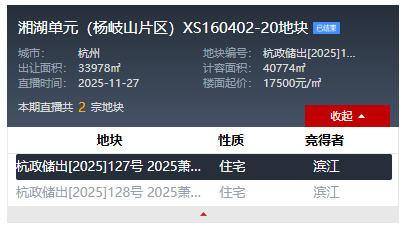
市北也降温了,滨江房产包揽萧山两宗地后,在杭新房项目达32个
Sou Hu Cai Jing· 2025-11-27 23:05
Core Insights - The recent land auctions in Xiaoshan District, where Binhai Real Estate acquired two low-density residential plots, indicate a cooling real estate market with lower bidding prices and reduced competition [1][3][7] Group 1: Land Auction Results - The Xiaoshan North plot was sold at a premium of 11.78%, with a transaction floor price of 22,355 yuan/m², while the Xianghu plot had a premium of 18.92% and a floor price of 20,811 yuan/m² [1][3] - The price difference between the newly acquired Xiaoshan North plot and a nearby plot acquired by Binhai in December 2024 is significant, with a gap of 3,835 yuan/m² [3][6] Group 2: Market Dynamics - The number of residential plots supplied in the Xiaoshan North area has increased, with four plots auctioned in the past year, leading to heightened competition among new housing projects [7][8] - Binhai Real Estate now has a total of 32 projects in Hangzhou, with 16 available for sale and 16 pending sale, indicating a robust project pipeline despite market challenges [1][8] Group 3: Competitive Landscape - Recent sales data from Binhai's projects show declining success rates in new home sales, with multiple rounds of sales requiring no lottery for buyers, reflecting increased market pressure [7][8] - The Xianghu New City area remains active with several projects, but uncertainty regarding future land supply may impact market stability [7][8]


滨江集团现身杭州土拍 溢价逾10%包揽两宗地
Zheng Quan Shi Bao· 2025-11-27 19:31
Core Insights - Binjiang Group successfully acquired two residential land parcels in Hangzhou for a total price of 2.462 billion yuan, indicating strong confidence from brand real estate companies in core areas and premium segments of Hangzhou [1][2] Group 1: Land Acquisition Details - The two land parcels are located in Xiaoshan North and Xianghu areas, covering a total area of 62,800 square meters and a planned construction area of 112,900 square meters, with a starting price of 2.157 billion yuan [1] - The Xianghu parcel underwent 28 bidding rounds, achieving a floor price of 20,811 yuan per square meter and a premium rate of 18.92%, attributed to its low density and proximity to ecological resources [1] - The Xiaoshan North parcel had 18 bidding rounds, with a floor price of 22,355 yuan per square meter and a premium rate of 11.78%, despite a decrease compared to similar parcels in the same area from the first half of 2025 [2] Group 2: Market Trends and Company Strategy - The competitive bidding reflects a trend where state-owned enterprises dominate land acquisition, while private companies like Binjiang Group focus on strategic areas, with 14 out of 16 new land reserves in Hangzhou this year [2] - As of June 30, 2023, 73% of Binjiang Group's land reserves were in Hangzhou, with a total land expenditure of 33.272 billion yuan [2] - The contrasting outcomes of land auctions on November 25 and November 27 highlight a market trend where core assets remain resilient while peripheral areas face pressure, suggesting a continued demand for premium land [3]
太平洋房地产日报:杭州2宗宅地出让-20251127
Tai Ping Yang Zheng Quan· 2025-11-27 15:22
2025 年 11 月 27 日 行业日报 中性/维持 房地产 房地产 太平洋房地产日报(20251127): 杭州 2 宗宅地出让 | 和运营 | | | --- | --- | | 房 地 产 开 发 房地产服务 | 无评级 无评级 | 推荐公司及评级 相关研究报告 <<太平洋房地产日报(20251126):苏 州成功出让一宗高新区宅地>>-- 2025-11-26 <<太平洋房地产日报(20251125):武 汉 12 宗地块总成交价约 39.7 亿>>-- 2025-11-25 <<太平洋房地产日报(20251124):上 海九批次土拍收金 173.33 亿元>>-- 2025-11-24 2025 年 11 月 27 日,今日权益市场各板块多数下跌,上证综指上 涨 0.29%,深证综指下跌 0.11%,沪深 300 和中证 500 分别下跌 0.05% 和 0.20%。申万房地产指数下跌 0.63%。 个股表现: 房地产板块个股涨幅较大的前五名为万通发展、信达发展、天保 基 建 、 市 北 高 新 、 市 北 B 股 , 涨 幅分别为 10.02%/9.89%/5.94%/4.01%/2.87%; ...
热度骤升!杭州本土开发商“一日双响”,市场意外升温?
Sou Hu Cai Jing· 2025-11-27 13:15
Core Viewpoint - The land auction market in Hangzhou is experiencing significant fluctuations, with developers showing varying levels of enthusiasm for different plots of land, indicating a shift in market sentiment [1][9]. Group 1: Market Dynamics - The recent land auctions in Hangzhou have shown a stark contrast, with some areas like Weike and Shiqiao seeing low enthusiasm, while the Xihu and Xingshan areas are witnessing intense competition among developers [1][9]. - The North District and Xianghu plots attracted considerable interest, with over 10 developers bidding for the North District plot and 5 for the Xianghu plot, reflecting a positive outlook from developers [1][9]. Group 2: Auction Results - The North District plot was sold to Binjiang Real Estate for approximately 1.613 billion yuan, with a floor price of 22,355 yuan per square meter and a premium rate of 11.78% [5]. - The Xianghu plot, also acquired by Binjiang Real Estate, had a total transaction price of about 848 million yuan, a floor price of 20,811 yuan per square meter, and a premium rate of 18.92% [6]. Group 3: Market Challenges - Despite the high demand for new plots, the overall new housing market is facing challenges, with many new projects showing signs of fatigue in sales, leading to a prolonged sales cycle [5][9]. - The price gap between new and second-hand homes is narrowing, which is diminishing the competitive advantage of new properties, further complicating the market landscape [9].
最高溢价率18.92%!杭州土拍现分化格局
券商中国· 2025-11-27 12:53
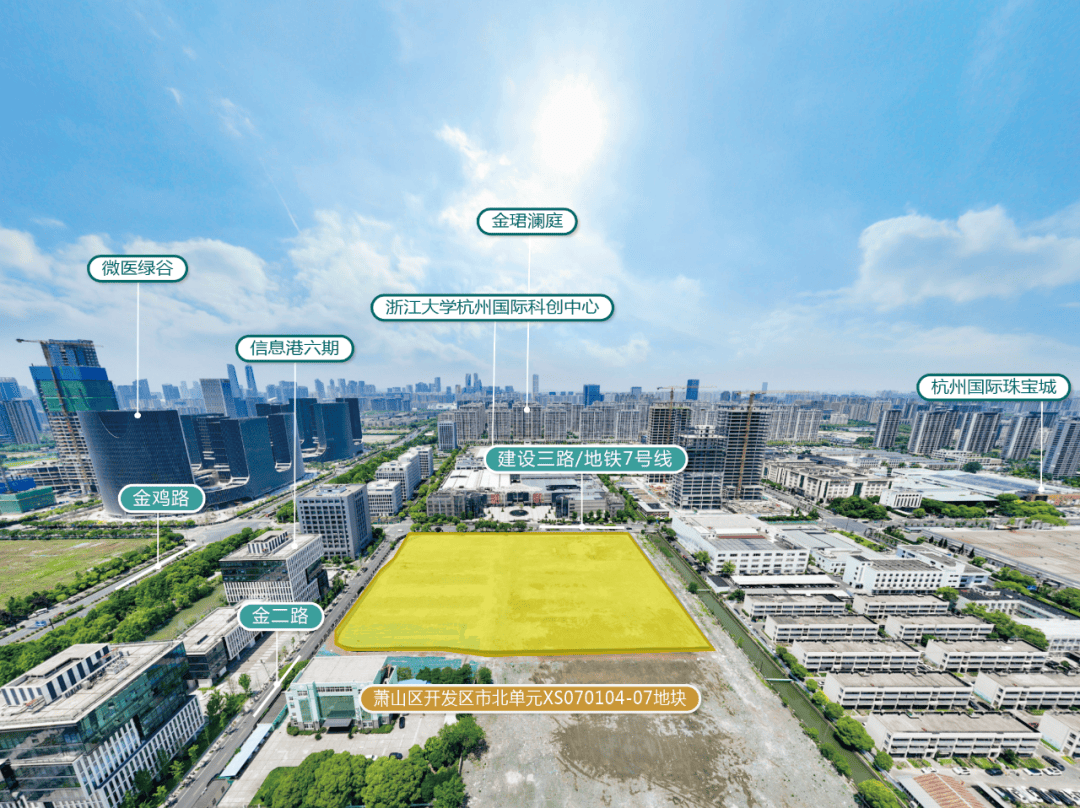
Core Viewpoint - The recent land auction in Hangzhou reflects a divergence in the real estate market, with core assets maintaining value while peripheral areas face pressure, indicating a selective recovery in land acquisition activity [2][6]. Group 1: Hangzhou Land Auction Results - On November 27, two residential plots in Xiaoshan District, Hangzhou, were sold to Binjiang Group at a total transaction amount of 2.462 billion yuan, with a maximum premium rate of 18.92% [1][4]. - The two plots had a total land area of 62,800 square meters and a total planned construction area of 112,900 square meters, with both plots achieving over 10% premium rates [4][6]. - The auction results contrast sharply with the previous auction on November 25, where three plots were sold at the base price, highlighting the market's selective interest in high-quality land [2][5]. Group 2: Market Analysis and Trends - The overall land auction in November in Hangzhou included two auctions with five plots sold for a total of 6.79 billion yuan, indicating a mixed sentiment in the market [3][6]. - The successful bids for the two plots demonstrate that strong local developers like Binjiang Group are still willing to invest in core areas, reflecting confidence in premium locations despite a general cooling in the market [6]. - The auction results indicate a growing divide in the market, with core areas like the low-density Xianghu plot and the well-equipped North City plot attracting attention, while more remote or homogeneous areas face significant challenges [5][6]. Group 3: Other City Auctions - In Beijing, a residential plot in Tongzhou District was sold to China Overseas for 1.248 billion yuan, with a floor price of 22,929 yuan per square meter and a premium rate of 0.97% [3][7]. - In Nanjing, two residential plots in Jiangbei New District were sold at the base price, totaling 862 million yuan, indicating a lack of competitive bidding in that area [3][8].

最高溢价率18.92%,滨江集团包揽杭州2宗宅地,中海12.48亿元竞得北京1宅地
Zheng Quan Shi Bao· 2025-11-27 12:02
Core Insights - The recent land auction in Hangzhou saw two residential plots in Xiaoshan District acquired by Binjiang Group at a total transaction amount of 2.462 billion yuan, with a maximum premium rate of 18.92% [2][4][6] - This auction contrasts sharply with the previous auction on November 25, where three plots were sold at the base price, highlighting a divergence in the Hangzhou land market characterized by "core assets resisting decline while peripheral areas face pressure" [5][7] Summary by Category Hangzhou Land Auction - On November 27, two residential plots in Xiaoshan District were sold, with a total land area of 62,800 m² and a total planned construction area of 112,900 m², starting from a price of 2.157 billion yuan [4] - The first plot, located in Xianghu Unit, was acquired for 849 million yuan after 28 rounds of bidding, resulting in a floor price of 20,811 yuan/m² and a premium rate of 18.92% [4] - The second plot in the North City Unit was acquired for 1.613 billion yuan after 18 rounds of bidding, with a floor price of 22,355 yuan/m² and a premium rate of 11.78% [4][5] Market Analysis - According to industry experts, the successful premium sales of the two plots indicate a strong market recognition for high-quality low-density land, particularly the Xianghu plot, which is near scenic areas and established resources [5][6] - The overall land auction in November in Hangzhou has seen five plots sold for a total of 6.79 billion yuan, reflecting a mixed sentiment in the market where established firms like Binjiang Group continue to invest in core areas despite a general cooling trend [6][7] Other Cities - In Beijing, a residential plot in Tongzhou District was sold for 1.248 billion yuan with a floor price of 22,929 yuan/m² and a premium rate of 0.97%, indicating a competitive bidding environment [8] - In Nanjing, two plots in Jiangbei New District were sold at the base price, totaling 862 million yuan, reflecting a more subdued market compared to Hangzhou [9]

最高溢价率18.92%,滨江集团包揽杭州2宗宅地,中海12.48亿元竞得北京1宅地
证券时报· 2025-11-27 11:41
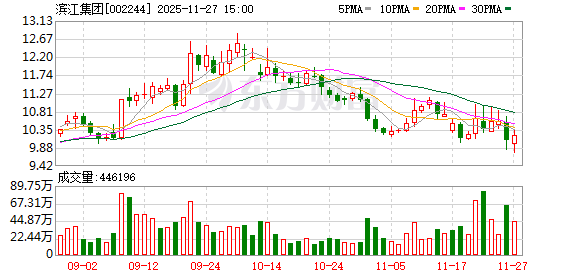
11月27日,杭州有2宗萧山区宅地出让,最终均由滨江集团溢价竞得,总成交金额24.62亿元,最高溢价率18.92%。 业内人士认为,此次土拍与11月25日3宗地块全部底价成交的冷淡局面形成鲜明对比,印证了杭州土地市场"核心资产抗跌、外围承压"的分化格局。 市北单元地块规划建筑面积72172.5㎡,容积率2.5,起始价14.43亿元,起始楼面价20000元/㎡。经过18轮竞价,最终滨江集团以总价16.13亿元竞得地块,成交楼面 价22355元/㎡,溢价率11.78%。 中指研究院华东大区常务副总高院生指出,此次2宗宅地均溢价10%以上成交,与11月25日3宗地块全部底价成交的冷淡局面形成鲜明对比。其中,湘湖低密地块紧 邻湘湖风景区,定山广场等生态配套环伺,湘湖金融小镇、贺知章学校等成熟资源加持,更坐享湘湖新城"中国视谷"产业红利,最终溢价18.92%成交,显示出市场 对优质低密地块的认可。市北地块周边配套齐全,交通便利,邻近地铁2号线和7号线,最终经溢价11.78%成交,但较2025年上半年同板块内的几宗地块楼面价仍有 下降(最低降幅在2000元/㎡),反映出土拍市场热度明显降温。 至此,11月杭州共进行2次土 ...

滨江集团“独美”今日杭州土拍 溢价拿地加码区域布局
Zheng Quan Shi Bao Wang· 2025-11-27 09:43
Core Insights - Binjiang Group successfully acquired two residential land parcels in Hangzhou for a total price of 2.462 billion yuan, indicating strong confidence from brand real estate companies in core areas and premium segments with unique resources [1][2] Group 1: Land Acquisition Details - The two land parcels are located in Xiaoshan North and Xianghu areas, covering a total area of 62,800 square meters and a planned construction area of 112,900 square meters, with a starting price of 2.157 billion yuan [1] - Both parcels were won by Binjiang Group after competitive bidding, with a premium rate exceeding 10% for each [1] - The Xianghu parcel had a particularly intense bidding process, going through 28 rounds, with a final floor price of 20,811 yuan per square meter and a premium rate of 18.92% [1] Group 2: Market Analysis - The Xiaoshan North parcel was acquired after 18 rounds of bidding, with a final floor price of 22,355 yuan per square meter and a premium rate of 11.78% [2] - The surrounding area of Xiaoshan North is well-equipped with amenities and convenient transportation, indicating a slight decline in floor prices compared to similar parcels sold in early 2025, reflecting a cooling in the land auction market [2] - Binjiang Group's active land acquisition in these areas demonstrates the company's strong financial position and ongoing confidence in Hangzhou's core regions [2] Group 3: Market Trends - The recent land auction results contrast sharply with the previous auction on November 25, where three parcels were sold at base prices, totaling 4.332 billion yuan [3] - This disparity highlights a market trend where core assets remain resilient while peripheral areas face pressure, a pattern observed in the national land auction market [3] - Despite a cautious approach to land acquisition among real estate companies as the year ends, competition for scarce premium land remains intense, suggesting a continued differentiated market landscape [3]
滨江集团(002244.SZ):竞得土地使用权
Ge Long Hui A P P· 2025-11-27 08:36
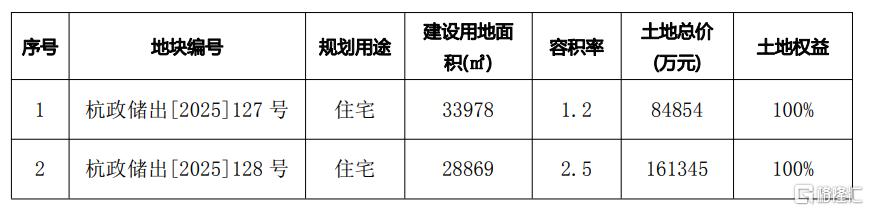
| 序号 | 地块编号 | 规划用途 | 建设用地面 积(㎡) | 容积率 | 士地总价 (万元) | 土地权益 | | --- | --- | --- | --- | --- | --- | --- | | I | 杭政储出[2025]127 号 | 住宅 | 33978 | 1.2 | 84854 | 100% | | 2 | 杭政储出[2025]128 号 | 住宅 | 28869 | 2.5 | 161345 | 100% | | | | | | | | 上開發 | 格隆汇11月27日丨滨江集团(002244.SZ)公布,11月27日,公司竞得下述地块的国有建设用地使用权: ...
滨江集团竞得两块住宅用地 土地总价合计24.62亿元
Zhi Tong Cai Jing· 2025-11-27 08:36
滨江集团(002244)(002244.SZ)公告,公司于2025年11月27日竞得两处地块国有建设用地使用权,编 号为:杭政储出[2025]127号、杭政储出[2025]128号,均为住宅用地,土地总价分别为8.49亿元、16.13 亿元。 ...