Yanghe(002304)

Search documents
A股白酒股普涨,酒鬼酒、泸州老窖涨超2%
Ge Long Hui A P P· 2025-07-30 03:08
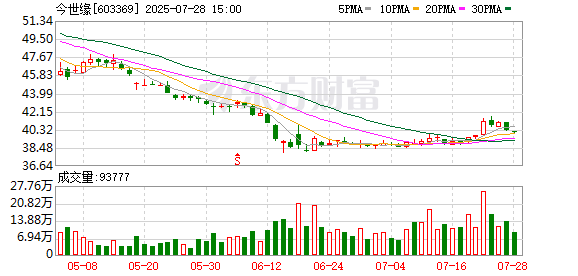
Group 1 - The A-share market saw a general rise in liquor stocks, with notable increases in stocks such as JiuGuiJiu and LuZhouLaoJiao, which rose over 2% [1] - Other companies like YingJiaGongJiu, YangHe股份, ShunXin Agriculture, GuJingGongJiu, and JinShiYuan experienced increases of over 1%, while Moutai, KouZiJiao, and WuLiangYe rose nearly 1% [1] Group 2 - Specific stock performance includes LuZhouLaoJiao with a rise of 2.17% and a total market value of 186.9 billion, while JiuGuiJiu increased by 2.07% with a market value of 16.1 billion [2] - YingJiaGongJiu rose by 1.48% with a market value of 34.5 billion, and YangHe股份 increased by 1.46% with a market value of 103.8 billion [2] - Other notable performances include GuJingGongJiu up by 1.42% (market value 75.7 billion), and ShanXiFenJiu up by 1.25% (market value 226.1 billion) [2]





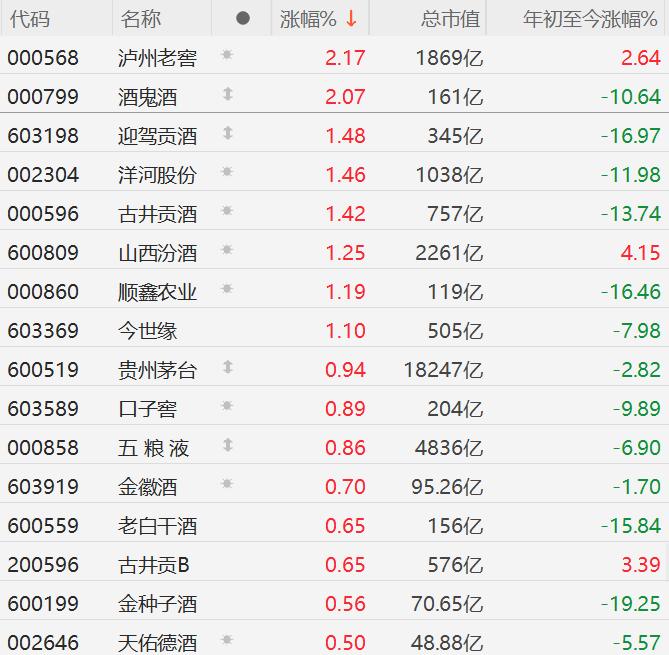
A股白酒股普涨,酒鬼酒、泸州老窖涨超2%,迎驾贡酒、洋河股份、今世缘涨超1%,贵州茅台、口子窖、五粮液涨近1%
Ge Long Hui· 2025-07-30 02:56
| 代码 | 名称 | | 涨幅% ↓ | 总市値 | 年初至今涨幅%。 | | --- | --- | --- | --- | --- | --- | | 000568 | 泸州老窖 | 来 | 2.17 | 1869亿 | 2.64 | | 000799 | 酒鬼酒 | 4 | 2.07 | 161亿 | -10.64 | | 603198 | 迎驾贡酒 | 1 | 1.48 | 345亿 | -16.97 | | 002304 | 洋河股份 | -06- | 1.46 | 1038亿 | -11.98 | | 000596 | 古井贡酒 | 来 | 1.42 | 757亿 | -13.74 | | 600809 | 山西汾酒 | 来 | 1.25 | 2261亿 | 4.15 | | 000860 | 顺鑫农业 | 张 | 1.19 | 119亿 | -16.46 | | 603369 | 今世缘 | | 1.10 | 505亿 | -7.98 | | 600519 | 贵州茅台 | 1 | 0.94 | 18247亿 | -2.82 | | 603589 | 口子窖 | -306- | 0.89 | ...

今世缘营销海报引争议 加速冲刺全国化
Zhong Guo Jing Ying Bao· 2025-07-29 14:51
Core Viewpoint - The recent marketing strategies and advertising campaigns by Jiangsu-based liquor companies, particularly Jinshiyuan and Yanghe, have sparked significant industry discussions, highlighting the competitive landscape in the Chinese liquor market [2][4]. Group 1: Marketing Strategies - Jinshiyuan's recent advertisements, which include slogans that indirectly reference Yanghe's new product launch, have been interpreted as a direct challenge to Yanghe's marketing approach [3][4]. - Yanghe's new product, priced at 59 yuan, has gained rapid market traction, with reports of immediate sell-outs and high demand from distributors [3][4]. - Jinshiyuan has been actively increasing its marketing efforts, with a 50.88% year-on-year increase in sales expenses in 2023, reaching 2.097 billion yuan [8]. Group 2: Financial Performance - In 2024, Yanghe's revenue in Jiangsu province is projected to decline by 11.43% to 12.748 billion yuan, while Jinshiyuan is expected to achieve a 16% growth, reaching 10.553 billion yuan [6]. - The revenue gap between Yanghe and Jinshiyuan in Jiangsu is narrowing, currently standing at 2.2 billion yuan, indicating intensifying competition [6]. Group 3: National Expansion Plans - Jinshiyuan has set ambitious national expansion goals, aiming for 2 billion yuan in revenue from outside Jiangsu by 2025, which would account for approximately 13.3% of total revenue [9][10]. - Despite the slow progress in national expansion, Jinshiyuan's revenue from outside Jiangsu was 926 million yuan in 2024, making up only 8.02% of total revenue [10]. - The company plans to leverage its strong brand presence in Jiangsu to penetrate surrounding markets and establish itself as a well-known liquor brand nationally [10].
消费主权时代,白酒产业步入变革重构新阶段
Sou Hu Cai Jing· 2025-07-29 13:05
Core Viewpoint - The Chinese liquor industry is undergoing a significant transformation driven by changing consumer preferences, with product innovation being just the starting point for future competition [1][8]. Group 1: Product Innovation Trends - The industry is witnessing a resurgence in low-alcohol, small-packaged, and light-bottle products, which have become hot topics among major liquor companies [1][2]. - Major companies like Wuliangye and Luzhou Laojiao are launching low-alcohol products, with Luzhou Laojiao announcing the development of a 28-degree version of its flagship product [3][5]. - The rise of the Z generation is influencing the market, leading to increased demand for small-capacity liquor products, with companies like Yanghe and Shui Jing Fang introducing new small-packaged offerings [5][12]. Group 2: Consumer-Centric Changes - The shift towards a consumer-driven market is evident, with companies needing to adapt to the evolving consumer landscape to maintain sales and growth [7][9]. - The traditional business banquet and gift market for liquor is declining, while new consumption scenarios like family gatherings and personal enjoyment are emerging as growth areas [12][13]. - The industry is experiencing a significant drop in sales for business banquets, with a reported decline of 60%-80% in volume for this segment [12]. Group 3: Channel and Market Dynamics - The liquor distribution landscape is undergoing a transformation, moving from a "channel-driven" model to one focused on "user sovereignty," leading to challenges for traditional distribution channels [10][12]. - New sales channels, including direct purchases from supermarkets and e-commerce platforms, are becoming increasingly important as traditional distribution methods struggle [10][12]. - Companies are exploring innovative consumption scenarios and product expressions to better meet diverse consumer needs, as seen with Wuliangye's targeted product for the "golden list" celebration [12][13]. Group 4: Quality Expression and Branding - The industry faces challenges in effectively communicating the quality and value of its products to consumers, necessitating improvements in the quality expression system [13][15]. - The internationalization and youth-oriented strategies of liquor brands are critical, with companies actively seeking to engage younger consumers through low-alcohol products [15].

白酒不行了?不,是市场太急了
Sou Hu Cai Jing· 2025-07-29 12:15
Core Viewpoint - The Chinese liquor industry is currently undergoing a deep adjustment period, with overall market performance being sluggish and many companies reporting significant declines in revenue and profit [1][3][4]. Industry Overview - The liquor industry is experiencing a noticeable slowdown in growth, with many companies reporting declines in both revenue and net profit, and some even turning from profit to loss [1][3]. - The adjustment in the industry is characterized by a systemic pressure affecting all companies, rather than isolated operational issues [3][4]. Company Performance - Jiu Gui Jiu's net profit for the first half of the year is expected to be between 8 million and 12 million yuan, a decline of 90.08% to 93.39% compared to 121 million yuan in the same period last year, with revenue expected to drop by approximately 43% to around 560 million yuan [1]. - Shui Jing Fang anticipates a net profit of 105 million yuan for the first half of the year, down 56.52% year-on-year, with revenue expected to decrease by 12.84% to 1.498 billion yuan, despite a 14.54% increase in sales volume [1]. - Shunxin Agriculture expects a net profit of 155 million to 195 million yuan, a decline of 53.85% to 63.32% year-on-year, due to decreased sales volume impacting overall revenue and profit levels [3]. - Jinzhongzi forecasts a net loss of 60 million to 90 million yuan for the first half of the year, attributing this to the industry's deep adjustment and ongoing decline in production [3]. Market Dynamics - The industry faces multiple challenges, including shrinking consumption scenarios, soft market demand, and a shift in consumer preferences towards fruit wines and low-alcohol beverages [4]. - High inventory levels and serious price inversion issues are exacerbating industry pressures, with over 58% of distributors reporting increased inventory and more than half facing price inversion problems [4]. - The average inventory turnover days have reached 900 days, an increase of 10% year-on-year, indicating significant supply chain inefficiencies [4]. Future Outlook - Despite the current challenges, leading companies like Kweichow Moutai and Wuliangye are still achieving relatively stable growth, with Moutai reporting a 9% year-on-year revenue increase [7]. - The low-alcohol beverage market is emerging as a new growth point, with companies exploring new product lines and sales channels [7]. - Industry experts predict a full recovery by 2027, with new development opportunities arising in 2028, suggesting that patience and understanding are needed for the industry's transformation [8][9].




今世缘海报遭热议,顾祥悦不允许讲别人坏话
Sou Hu Cai Jing· 2025-07-29 10:43
Core Viewpoint - The competition between Yanghe and Jinshiyuan in the liquor market is intensifying, with Yanghe's new product, the "High-Line Light Bottle Wine," facing criticism from Jinshiyuan, which has led to a focus on their respective market strategies and financial performance [2][4][6]. Group 1: Product Launch and Marketing - Yanghe launched the "High-Line Light Bottle Wine" in June, priced at 59 yuan, emphasizing its quality with 100% three-year aged base liquor [2]. - The product achieved significant sales success, selling out over 10,000 bottles within 48 hours of online pre-sale and experiencing explosive demand in offline channels [4]. Group 2: Competitive Dynamics - Jinshiyuan's recent marketing campaign appears to mock Yanghe's "true vintage" strategy and "brotherhood" marketing approach, indicating a competitive response to Yanghe's positioning [6]. - Jinshiyuan's chairman emphasized a focus on promoting their own products rather than disparaging competitors, reflecting a strategic shift in the industry [6]. Group 3: Financial Performance - Jinshiyuan's revenue is projected to grow from 78.88 billion yuan in 2022 to 115.46 billion yuan in 2024, with net profits increasing from 25.03 billion yuan to 34.12 billion yuan during the same period [6]. - In contrast, Yanghe's revenue is expected to decline from 301.05 billion yuan in 2022 to 288.76 billion yuan in 2024, with net profits dropping from 93.78 billion yuan to 66.73 billion yuan [7]. - In Q1 2025, Jinshiyuan reported a revenue increase of 9.17% to 50.99 billion yuan, while Yanghe's revenue fell by 31.92% to 110.66 billion yuan [7]. Group 4: Strategic Changes - Yanghe has undergone leadership changes, with the departure of former chairman Zhang Liandong and the appointment of Gu Yu, indicating potential shifts in strategic direction [8].

洋河股份:2021至24年投资现金流净额为正主要系理财收回及新增投资减少
Xin Lang Cai Jing· 2025-07-29 10:40
免责声明:本信息由新浪财经从公开信息中摘录,不构成任何投资建议;新浪财经不保证数据的准确性,内容仅供参考。 尊敬的投资者,您好!主要系投资理财收回、新增投资减少。感谢您的关注! 查看更多董秘问答>> 投资者提问: 尊敬的董秘您好!看到财报里,茅台汾酒五粮液等近十年投资现金流净额都为负,而洋河股份自2021至24年都为正,主要原因是什么呢?谢谢回复, 董秘回答(洋河股份SZ002304): ...

洋河股份:投资者提白酒调整周期应对策略,董秘表示感谢
Xin Lang Cai Jing· 2025-07-29 10:40
查看更多董秘问答>> 免责声明:本信息由新浪财经从公开信息中摘录,不构成任何投资建议;新浪财经不保证数据的准确性,内容仅供参考。 投资者提问: 尊敬的公司董秘您好!针对目前白酒调整周期,应对策略分析:1.增加新畅销品种稳住现金流,控货提质主力品种。2.光瓶酒的火爆销售启发之一是:白酒低谷来临的时候,增加空白畅销品种 董秘回答(洋河股份SZ002304): 尊敬的投资者,您好!感谢您的建议与关注! ...
食品饮料行业周报:第二季度白酒超配比例环比下降关注板块中报业绩情况-20250728
Guoxin Securities· 2025-07-28 13:07
Investment Rating - The report maintains an "Outperform the Market" rating for the food and beverage sector [5][6][79]. Core Views - The second quarter saw a decrease in the allocation ratio for the liquor sector, reflecting weak fundamental expectations. The white liquor index rose by 1.0%, but the allocation ratio for actively managed equity funds fell by 2.07 percentage points to 4.50% [2][14]. - The beverage sector is entering a peak season, with strong performance expected from leading companies in basic condiments. The report recommends focusing on companies that are accelerating nationalization and platformization, such as Dongpeng Beverage [3][20]. Summary by Sections 1. Liquor Sector - The allocation ratio for the liquor sector has decreased, indicating weak expectations for fundamentals. The white liquor price index remained stable at 100.00, with a slight increase in the index [2][12]. - Major liquor companies are focusing on market health, with strategies aimed at destocking and promoting sales in the short term, while emphasizing consumer engagement and internationalization in the long term [2][14]. - Recommended stocks include leading companies with proven risk resilience like Kweichow Moutai, Shanxi Fenjiu, and Wuliangye, as well as those with improving digital strategies like Luzhou Laojiao [2][14]. 2. Consumer Goods - The beer sector is entering a peak season, with a slight decrease in fund allocation ratios. Yanjing Beer is prioritized for recommendation due to ongoing internal reforms [3][15]. - The snack sector has seen an increase in fund allocation, with a focus on companies like Salted Fish and Wanchen Group. The report highlights the importance of product differentiation and channel penetration [3][16]. - In the condiment sector, leading companies are expected to perform steadily, with a focus on the upcoming mid-year performance reports. Recommended stocks include Haitian Flavoring and Yihai International [3][17]. 3. Frozen Foods and Dairy - The frozen food sector is stable, with companies actively developing new products to cater to both B-end and C-end markets. Recommendations include stable operators like Anjijia and Qianwei Central Kitchen [3][18]. - The dairy sector is expected to recover gradually, with potential policy catalysts and improved supply-demand dynamics anticipated in 2025. The report recommends focusing on leading dairy companies with a safety margin in valuations [3][19]. 4. Beverage Sector - The beverage industry is expected to maintain its growth momentum, particularly in the no-sugar tea and energy drink segments. Dongpeng Beverage is highlighted for its strong performance, with a reported revenue increase of 36% year-on-year [3][20].

今世缘谋划全国化“前夜” 基酒之问被“旧事重提”
2 1 Shi Ji Jing Ji Bao Dao· 2025-07-28 10:41
Core Viewpoint - The recent marketing controversy surrounding Jiangsu Jinshiyuan has sparked significant discussion in the liquor industry, particularly regarding its competition with Yanghe and the implications of their marketing strategies [2][3]. Group 1: Marketing Controversy - A widely circulated poster questioned the value of original and vintage liquors, seemingly targeting competitors like Gujing Gongjiu and Yanghe, which have strong associations with family gatherings and vintage concepts [2]. - Jinshiyuan denied that the controversial poster was officially released, attributing its spread to distributors [2]. - The marketing strategy has been interpreted as an attempt to undermine Yanghe's reputation, leading to public backlash [3]. Group 2: Production Capacity and Inventory - Jinshiyuan's actual production capacity is 60,000 tons per year, with an additional 20,000 tons of original liquor capacity under construction, while its semi-finished liquor inventory stands at 161,768 kiloliters [6][7]. - In contrast, Yanghe's production capacity exceeds 140,000 tons, with a semi-finished liquor inventory nearing 700,000 tons, highlighting a significant competitive advantage in terms of scale and storage [8][9]. Group 3: Market Position and Strategy - Jinshiyuan's revenue growth has primarily come from within Jiangsu, with only 8% of its 2024 revenue generated from outside the province, indicating a need for expansion beyond its home market [10][12]. - The company aims to penetrate surrounding markets such as Shanghai, Zhejiang, and Anhui, as it seeks to establish a national presence [12]. - Jinshiyuan's product strategy has focused on premium offerings, with over 90% of its main revenue coming from products priced above 100 yuan, while Yanghe has introduced more affordable options to compete in the mass market [13][14]. Group 4: Product Comparison - Jinshiyuan's flagship product, Guoyuan Danya, is positioned in the 100-300 yuan price range, competing directly with Yanghe's Hai Zhi Lan, which is priced similarly but emphasizes its three-year aging certification [14][16]. - The lack of clear aging information for Guoyuan Danya compared to Yanghe's transparent aging claims may affect consumer perception and loyalty in a highly competitive market [16][17].