SF Holding(002352)

Search documents
7月17日交银国企改革灵活配置混合A净值增长1.04%,近6个月累计上涨8.76%
Sou Hu Cai Jing· 2025-07-17 12:10
Group 1 - The core viewpoint of the news is the performance and holdings of the Jiao Yin State-Owned Enterprise Reform Flexible Allocation Mixed A Fund, which has shown a recent net value increase of 1.04% [1] - The fund's recent one-month return is -0.06%, ranking 71 out of 73 in its category, while its six-month return is 8.76%, ranking 19 out of 72 [1] - Year-to-date, the fund has achieved a return of 6.18%, ranking 26 out of 72 in its category [1] Group 2 - The top ten stock holdings of the fund account for a total of 50.78%, with significant positions in SF Express (9.90%), China Chemical (6.04%), and ShouLve Hotel (5.44%) [1] - The fund was established on June 10, 2015, and as of March 31, 2025, it has a total scale of 1.802 billion yuan [1] - The fund manager is Shen Nan, who has been in this role since the fund's inception [2]



深圳新增8款备案大模型,上市公司顺丰、彩讯股份在列
news flash· 2025-07-17 06:43
Core Insights - The National Internet Information Office has released information on generative artificial intelligence services registered from April to June 2025, indicating a growing trend in the sector [1] - Shenzhen has seen the addition of 8 new generative AI services, including models from SF Technology Co., Ltd. and CaiXun Technology Co., Ltd., both of which are publicly listed companies in A-shares [1] - As of June 30, 2025, a total of 439 generative AI services have completed registration, with 233 applications or functions officially recorded [1] Company Insights - SF Technology Co., Ltd. has launched the Fengyu large model, contributing to the expansion of generative AI services in Shenzhen [1] - CaiXun Technology Co., Ltd. has introduced the Ruichi large model, further enhancing the competitive landscape of generative AI in the region [1] - Both CaiXun Technology (300634) and SF Holdings (002352) are publicly traded companies, indicating potential investment opportunities in the generative AI sector [1] Industry Insights - The generative AI sector is experiencing rapid growth, with a significant number of services being registered and recognized by regulatory bodies [1] - The cumulative registration of 439 generative AI services reflects the increasing adoption and integration of AI technologies across various applications [1] - The registration of 233 applications or functions highlights the diverse functionalities being developed within the generative AI space [1]
等待新一轮政策信号前的结构性机会
2025-07-16 06:13
Summary of Conference Call Industry or Company Involved - The conference call primarily discusses the macroeconomic environment, policy signals, and various industry sectors including oil and gas, chemicals, construction materials, and transportation. Core Points and Arguments 1. **Policy Signals and Economic Outlook** - The discussion highlights the anticipation of new policy signals before identifying structural opportunities in the market. The recent easing of tariffs between the US and China is noted, although uncertainty remains regarding future negotiations [1][2][3]. 2. **Impact of Tariffs on Trade** - In April, the US collected approximately $1-2 billion in additional tariffs from China, which is insufficient to offset the fiscal risks posed by tax cuts. This indicates a potential expansion risk in the US fiscal situation [2]. 3. **Domestic Economic Conditions** - The domestic economy shows signs of slowing down, particularly in exports to the US, which have declined due to tariff tensions. There is a concern that the temporary boost in exports may not be sustainable [3][4]. 4. **Fiscal Policy and Debt Issuance** - The Chinese government has been proactive in fiscal policy, issuing a significant amount of debt to stimulate the economy. Approximately 2 trillion yuan of bonds were issued in the last quarter, with expectations for continued issuance [4][5][6]. 5. **Monetary Policy Outlook** - The potential for further monetary easing is discussed, especially as inflation indicators (CPI and PPI) are expected to decline. This could provide more room for liquidity support in the economy [7][8]. 6. **Oil and Gas Sector Analysis** - The oil and gas sector is experiencing a decline in capital expenditure, with a noted 18% drop in the previous year. Demand uncertainties, particularly due to US-China trade relations, are highlighted as a significant concern [10][11]. 7. **Construction Materials and Steel Industry** - The construction materials sector is entering a seasonal downturn, with prices under pressure. However, there are expectations for a rebound in demand as the market transitions from a slow to a peak season [24][26]. 8. **Transportation Sector Insights** - The shipping industry has seen a significant price increase, with container shipping rates doubling in the past month. However, a potential decline in demand is anticipated as the rush for shipping eases [31][32]. 9. **Investment Recommendations** - The call suggests focusing on companies with strong dividend yields and stable fundamentals, particularly in the construction materials and transportation sectors. Specific companies like China Shenhua and Shaanxi Coal are recommended for their strong dividend attributes [29][36]. Other Important but Possibly Overlooked Content 1. **Emerging Opportunities in New Materials** - Companies involved in domestic substitutes for new materials are highlighted as long-term investment opportunities [24]. 2. **Market Sentiment and Stock Performance** - The performance of small-cap stocks is noted, with fluctuations indicating a lack of strong market direction. However, some stocks have shown resilience and potential for recovery [24]. 3. **Global Economic Factors** - The call acknowledges ongoing global uncertainties, including geopolitical tensions and their potential impact on market dynamics, particularly in the commodities sector [19][20]. 4. **Sector-Specific Risks** - The chemical sector faces challenges due to demand uncertainties and potential overcapacity, which could hinder price recovery despite favorable cost conditions [11][12]. 5. **Future Monitoring of Policy Changes** - The need for ongoing observation of policy developments, particularly in fiscal and monetary areas, is emphasized as critical for future investment strategies [6][8].




交通运输行业7月投资策略:快递和航空有望受益“反内卷”,关注东南亚快递市场机会
Guoxin Securities· 2025-07-16 01:49
Group 1: Shipping Industry - The shipping industry is expected to see a divergence in freight rates, with crude oil rates softening while refined oil rates are recovering, indicating a potential bottoming out of oil shipping rates during the summer [1] - The current supply-demand dynamics suggest that marginal changes in demand could have a multiplier effect on freight rates, leading to a recommendation for companies like COSCO Shipping Energy and China Merchants Energy [1] - The container shipping sector is facing pressure on profitability due to ongoing tariff policies and a subdued economic outlook in Europe and the US, with a recommendation to monitor COSCO Shipping Holdings for potential alpha opportunities [1][2] Group 2: Aviation Industry - The aviation sector has entered the peak summer travel season, with domestic flight volumes increasing by 3.1% compared to the previous week, and overall flight volumes reaching 112.3% of 2019 levels [2] - The average ticket price for domestic routes has decreased by 6.6% year-on-year, while the passenger load factor has improved by 1.4 percentage points to 84.1% [2] - Investment recommendations include closely tracking ticket price performance during the summer peak and considering opportunities in airlines such as Air China, China Eastern Airlines, and Spring Airlines [2][5] Group 3: Express Delivery Industry - The "anti-involution" policy released on July 1 aims to curb excessive competition in the express delivery sector, which is currently characterized by severe price competition [3] - The introduction of unmanned logistics vehicles is expected to significantly reduce costs for leading companies like SF Express and ZTO Express, with potential cost savings of approximately 2000 yuan per vehicle per month for SF Express [3][4] - Investment recommendations focus on SF Express due to its strong recovery in revenue growth and cost-saving measures, while also monitoring ZTO Express and Yunda Holdings for potential opportunities [3][5][6] Group 4: Overall Investment Recommendations - The report suggests focusing on domestic demand and high-dividend sectors, recommending companies with stable operations and controllable risks, including SF Express, ZTO Express, and China Southern Airlines [5] - The express delivery sector is projected to maintain a growth rate of 21.5% for the year, driven by strong demand from e-commerce platforms [6] - The report emphasizes the importance of monitoring price changes and the stability of franchisees in the express delivery industry to capitalize on the effects of the "anti-involution" policy [6]


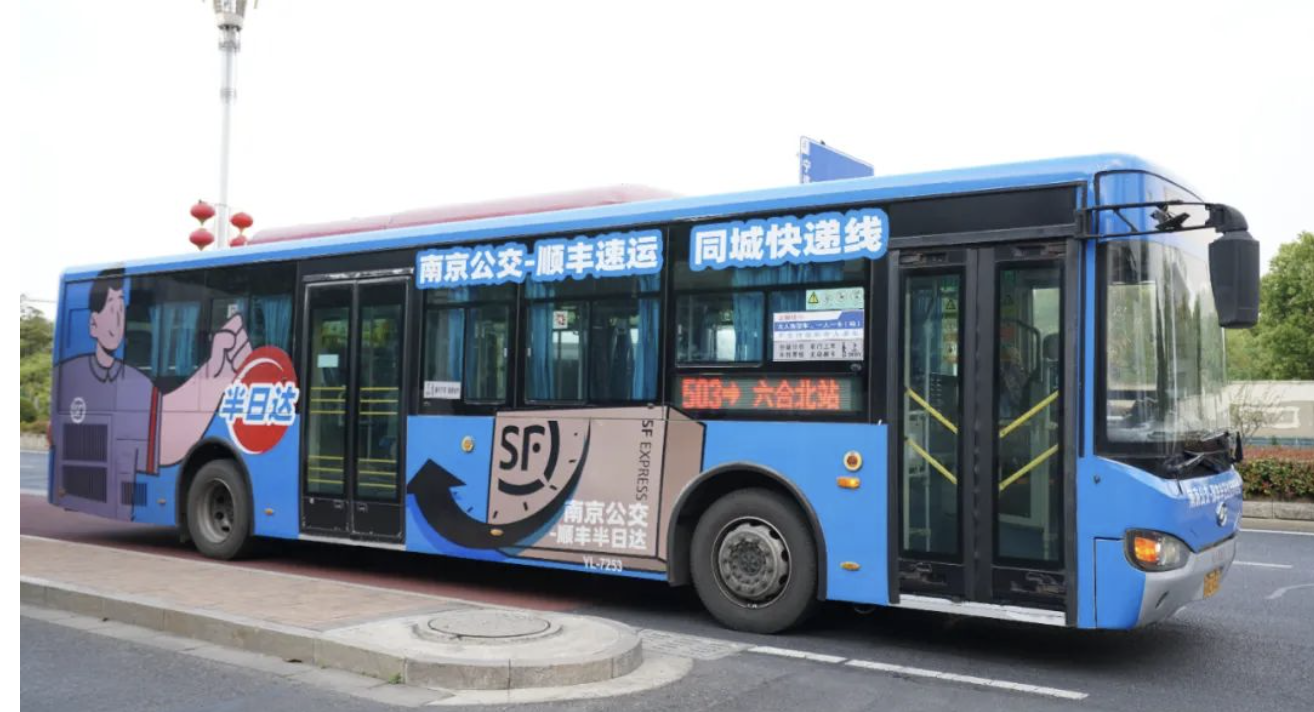
用公交送快递,司机也能收派件!传统交通“试水”新业务
第一财经· 2025-07-16 00:31
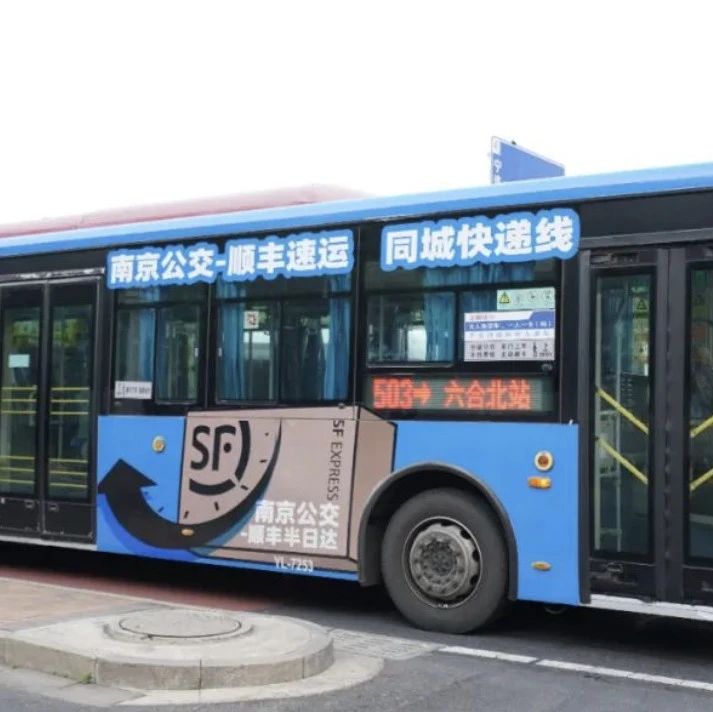
Core Viewpoint - The article discusses the innovative collaboration between public transportation and express delivery services in China, particularly focusing on the "503 route" in Nanjing, which integrates passenger transport with express delivery of local agricultural products and fresh food, significantly improving delivery efficiency and creating new revenue streams for public transport companies [2][3][4]. Summary by Sections Public Transport and Express Delivery Integration - The 503 route in Nanjing has started a new service combining passenger transport and express delivery, allowing for faster delivery of goods within 2 to 2.5 hours to the city center [2][4]. - This model is being replicated in other cities such as Xi'an, Wuhan, Lanzhou, Zhengzhou, and Chengdu, indicating a growing trend in the integration of public transport and logistics services [2][10][11]. Challenges in Traditional Delivery - Traditional express delivery faces challenges such as high costs, low efficiency, and traffic congestion, which the integration with public transport aims to address by utilizing the extensive network and stable schedules of buses [3][4]. Operational Process - The operational process involves collection and sorting of packages by express delivery personnel, followed by transportation via buses, and final delivery by the same personnel at designated stops [4][8]. - The collaboration allows for real-time tracking of packages and efficient unloading at specific bus stops, enhancing the overall delivery experience [4][8]. Resource Sharing and Collaboration - In Wuhan, the collaboration includes sharing bus stations for sorting operations, with a focus on optimizing resource allocation and improving operational efficiency [7][8]. - The partnerships often involve sharing human resources, where bus drivers are trained to assist in delivery tasks, thus expanding the workforce for logistics [7][10]. Expansion of Services - The collaboration is not limited to express delivery; public transport companies are exploring new business models, such as themed transport services and maintenance shops, to diversify their revenue streams [15][13]. - The article highlights that the integration of logistics services into public transport is a strategic move to revitalize the industry and create new profit opportunities [10][11].

用公交送快递,司机也能收派件!传统交通“试水”新业务
Di Yi Cai Jing· 2025-07-15 14:46
Core Viewpoint - The collaboration between SF Express and public transport groups is rapidly expanding across various cities in China, focusing on revitalizing existing resources and creating new profit points for public transport operators [1][9]. Group 1: Collaboration Model - The 503 bus route in Nanjing has integrated a new task of transporting local agricultural products and fresh food to the city, significantly reducing delivery time from the previous next-day service to within two to two and a half hours [2][5]. - SF Express is implementing the "express delivery + public transport" model in multiple cities, including Xi'an, Wuhan, Lanzhou, Zhengzhou, and Chengdu, to enhance logistics efficiency [2][9]. - The collaboration allows public transport companies to utilize their extensive networks and resources, thereby lowering delivery costs and improving service efficiency [3][8]. Group 2: Operational Details - The operational process for the 503 route involves collection, sorting, bus transport, and final delivery, with real-time tracking and monitoring of the delivery status [5][12]. - In Wuhan, SF Express has begun using public transport stations for sorting operations, optimizing resource allocation while ensuring public transport operations remain unaffected [7][8]. - The partnership includes sharing human resources, with SF Express hiring bus drivers to assist with logistics tasks, thereby enhancing delivery capabilities [7][9]. Group 3: Expansion and Future Plans - The collaboration model is being replicated in various cities, with agreements signed in places like Lanzhou and Zhengzhou to utilize public transport resources for logistics [9][10]. - Future plans include transforming bus stations into multifunctional logistics hubs, integrating public transport and express delivery services [10][12]. - Public transport companies are also exploring new business models, such as themed services and vehicle maintenance partnerships, to diversify their offerings [12][13].
男子邮递价值107万元加油卡遭快递员变卖,警方以诈骗立案,当事人:5个包裹每个保价5万,却只赔偿2500元
Huan Qiu Wang· 2025-07-15 13:19
Core Viewpoint - A significant incident involving the loss of fuel cards valued at 1.07 million RMB during delivery has raised concerns about the security and management practices of the courier company involved, leading to legal action by the affected party [1][2][10]. Group 1: Incident Overview - The affected individual, Mr. Liang, reported that several packages containing fuel cards went missing during transit, with evidence suggesting potential collusion between the courier and the buyer [1][4]. - Mr. Liang had previously established a business relationship with a client posing as a 4S shop, who later defaulted on payments, prompting Mr. Liang to recall the packages [2][4]. - Upon recalling the packages, Mr. Liang discovered that all the packages were empty, raising suspicions of theft [5][6]. Group 2: Legal and Financial Implications - Mr. Liang has filed a lawsuit against the courier company, seeking compensation for the total loss incurred, which he claims amounts to 1.07 million RMB [2][10]. - The courier company has offered a minimal compensation of 2,500 RMB, which is significantly lower than the insured value of the packages [9][10]. - The police have initiated a criminal investigation into the matter, confirming that the courier bypassed security protocols to deliver the packages to the buyer [6][8]. Group 3: Company Response and Management Issues - The courier company has not proactively contacted Mr. Liang to provide explanations or apologies regarding the incident, which has further aggravated the situation [9][10]. - There are serious concerns about the management and security practices within the courier company, as employees were able to circumvent established security measures [10].

物流行业迎来无人技术的“DeepSeek时刻”
Changjiang Securities· 2025-07-15 11:10
Investment Rating - The report maintains a "Positive" investment rating for the logistics industry [12] Core Insights - The logistics industry is experiencing a "DeepSeek moment" with significant technological breakthroughs across various segments, including branch, trunk, terminal, and management [4][7] - The report emphasizes the importance of adopting new technologies to enhance operational efficiency and reduce costs, particularly in the express delivery sector [11][28] Summary by Sections Introduction: The Arrival of the "DeepSeek Moment" in the Logistics Industry - The logistics industry is witnessing substantial advancements due to improved algorithm efficiency and rapid technological iterations, leading to significant breakthroughs in various operational segments [7][18] - Key drivers for these advancements include the massive scale of the Chinese express delivery market, intense competition, and high labor cost ratios [28] Branch Segment: The Growth Year for Unmanned Logistics Vehicles - Leading express companies are initiating a surge in unmanned logistics vehicle orders, driven by reduced core component costs and improved algorithm efficiency [8][33] - The monthly operational cost of unmanned logistics vehicles can be as low as 2000 yuan, significantly lower than the average monthly salary of drivers [33][40] Trunk Segment: Smart Assisted Driving Initiates Mass Production - Smart assisted driving trucks are being deployed on a large scale by leading express companies, addressing safety and cost issues in traditional trunk transportation [9][32] - The potential market space for smart trucks is substantial, with projected sales of 1.03 million heavy trucks in 2024 [9] Terminal Segment: Mode Transformation Drives Cost Reduction - Express companies are innovating their terminal operations to reduce costs significantly, with models like direct linking from transfer centers to terminal stations [10][32] - The report highlights that if the direct link ratio reaches 40%, terminal costs could be reduced by 0.12 yuan per package [10] Management Segment: Digital Decision-Making Promotes Cost Reduction - Leading companies are developing industry-specific AI models to enhance management efficiency and reduce operational costs [10][32] - The integration of big data and AI technologies is driving improvements in decision-making and resource utilization [10] Investment Recommendations: Technological Waves Reshape Logistics Costs - The report recommends prioritizing investments in direct logistics companies and leading express firms, as well as components and operators related to unmanned commercial vehicles [11][32] - Companies like SF Express and Aneng Logistics are highlighted as key players benefiting from these technological advancements [11]
顺丰控股收盘下跌1.10%,滚动市盈率22.66倍,总市值2377.44亿元
Sou Hu Cai Jing· 2025-07-15 08:56
Core Viewpoint - SF Holding's stock closed at 46.96 yuan, down 1.10%, with a rolling PE ratio of 22.66 times and a total market value of 237.744 billion yuan [1] Company Summary - SF Holding Co., Ltd. specializes in comprehensive express logistics services, including time-sensitive express, economy express, freight, cold chain, pharmaceutical delivery, same-city instant delivery, international express, international freight and agency, and supply chain [1] - The company achieved a revenue of 69.85 billion yuan in Q1 2025, representing a year-on-year increase of 6.90%, and a net profit of 2.234 billion yuan, up 16.87%, with a gross profit margin of 13.30% [1] - In 2024, the company received multiple international awards and national-level case certifications in logistics technology, and it was the only Chinese representative to reach the finals of the 2025 Franz Edelman Award [1] Industry Summary - The average PE ratio for the logistics industry is 24.90 times, with a median of 28.59 times, placing SF Holding at 29th in the industry ranking [2] - As of Q1 2025, there are 167 institutions holding shares in SF Holding, including 159 funds, 5 others, and 3 brokerages, with a total shareholding of 3,327.6453 million shares valued at 143.488 billion yuan [1]
追踪报道 | 8家快递7家改了,禁止“消火栓签收快递”
Bei Jing Ri Bao Ke Hu Duan· 2025-07-14 09:49
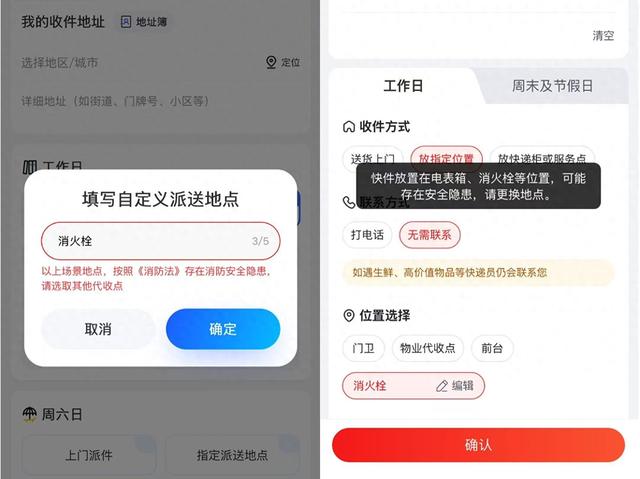
Group 1 - Major express delivery companies have removed the option for users to set "fire hydrant" as a delivery point in their WeChat mini-programs due to violations of fire safety laws [1][2] - Seven out of eight major express companies have corrected their practices, with only Cainiao Express yet to comply fully [1] - Companies like JD Express and SF Express have implemented warnings in their systems to inform users about the safety hazards of using "fire hydrant" as a delivery location [1][2] Group 2 - Some companies still retain options for "water meter box" and "electric meter box" in their delivery preferences, which may also pose safety risks [2] - Customer service representatives from various companies have indicated that delivery personnel are trained to avoid placing packages in unsafe locations, and will refuse requests to deliver to fire hydrants [3] - If customers insist on using "fire hydrant" for delivery, some companies will remind them of the safety risks, while others may allow for complaints if the delivery is not made as requested [3]