
BYD(002594)

Search documents
荣耀机器人“太空步”秀巴展,小米机器人上岗汽车工厂,小鹏升级自动驾驶,比亚迪颠覆技术,谁会走得更远?
3 6 Ke· 2026-03-03 09:59
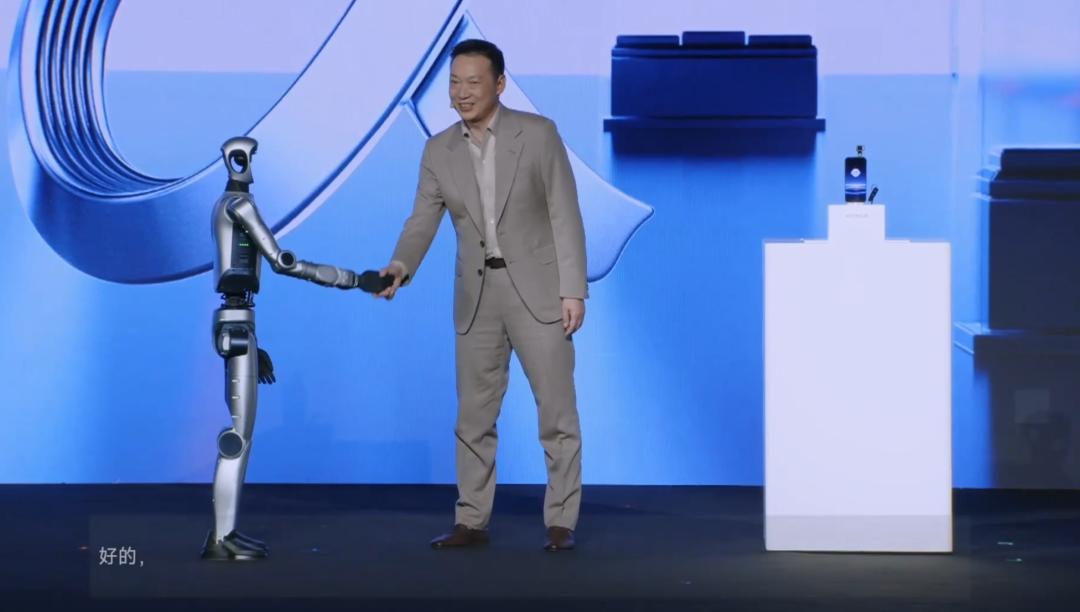
Core Viewpoint - The technology industry is increasingly characterized by cross-industry collaboration, particularly in the robotics sector, where major players from various fields are entering the market, driven by advancements in AI and robotics technology [2][4]. Group 1: Robotics Market Trends - The robotics market is expected to see significant growth, with companies like Yushu Technology, ZhiYuan Robotics, and others becoming key players following their successful launches in 2025 [2]. - The 2026 Spring Festival Gala featured performances incorporating robots, further boosting interest and investment in the robotics market [2]. - Industry leaders from various sectors, including mobile, automotive, and internet, are predicted to join the robotics market, indicating a competitive landscape [2][4]. Group 2: Company Innovations - Honor launched its humanoid robot, marking its entry into the consumer humanoid robotics market, and aims to integrate smartphone technology with robotics for enhanced user experience [4][6]. - Xiaomi has begun deploying its humanoid robots in automotive manufacturing, showcasing practical applications of robotics in production environments [10][15]. - Xiaopeng Motors announced the upcoming release of its second-generation VLA model, aimed at achieving fully autonomous driving within the next 1-3 years, with plans for global testing and deployment [18][20]. Group 3: Upcoming Developments - BYD is set to unveil a "disruptive technology" on March 5, 2026, with expectations that it may involve advancements in battery technology or smart driving [21]. - Predictions suggest that BYD may also introduce new robotics products based on its electric vehicle technology [24].




英杰电气(300820.SZ):近年来与比亚迪公司无直接业务合作
Ge Long Hui· 2026-03-03 09:55
Group 1 - The core point of the article is that Yingjie Electric (300820.SZ) has stated that its subsidiary, Yingjie New Energy, previously sold multimedia charging pile products to overseas companies through BYD, but there has been no direct business cooperation with BYD in recent years [1] Group 2 - Yingjie Electric's subsidiary engaged in sales of charging products through a partnership with BYD in the past [1] - The company has clarified that it does not currently have any direct business dealings with BYD [1]
比亚迪海外销量首次超越国内
Zhong Guo Xin Wen Wang· 2026-03-03 09:50
Core Insights - BYD reported a total vehicle sales of 190,190 units in February, with passenger vehicle sales reaching 187,782 units, marking a significant growth in sales [1] - The overseas sales of passenger vehicles and pickups amounted to 100,151 units, representing a year-on-year increase of 41.4% [1] - This marks the first time that BYD's overseas sales have surpassed its domestic sales [1]
电车需求跟踪(2月):产品力推动单车带电量显著提升
Minmetals Securities· 2026-03-03 09:45
Investment Rating - The report rates the automotive industry as "Positive" [5] Core Insights - The demand for electric vehicles (EVs) is expected to recover in March due to the opening of the trade-in application channels and the launch of new products, following a decline in February caused by policy rollbacks and the Spring Festival [2][14] - The single vehicle battery capacity has significantly increased, with a year-on-year rise of 22.7% in January, indicating a focus on enhancing product capabilities among manufacturers [3][44] Monthly Focus - February retail sales are projected to decline by double digits year-on-year due to the Spring Festival and consumer hesitation, with approximately 119,000 vehicles sold in the first week of February [1][14] - The opening of trade-in application channels in March is expected to alleviate consumer hesitation and stimulate market recovery [2][14] Key Data Tracking - In January, domestic retail sales of new energy vehicles decreased by 20% year-on-year, while the penetration rate slightly dropped to 39% [3][20] - The single vehicle battery capacity for new energy vehicles reached 59.5 kWh in January, reflecting a significant year-on-year increase [44] - Exports of new energy vehicles in January reached 302,000 units, a year-on-year increase of 101%, with significant growth in both battery electric vehicles (BEVs) and plug-in hybrid electric vehicles (PHEVs) [31][37] Industry and Company Changes - The China-Europe electric vehicle tariff negotiations have progressed, with agreements to implement measures to replace tariffs with minimum pricing [4][66] - SAIC Motor Corporation expects a substantial increase in net profit for 2025, while companies like JAC Motors and BAIC BluePark are forecasting losses [67][68][69][70] - The launch of Tesla's Cybercab, designed for autonomous taxi services, marks a significant development in the industry [4]
【乘用车2月月报】内需静待改善,出口韧性较强
东吴汽车黄细里团队· 2026-03-03 09:10
Investment Highlights - The electric vehicle (EV) market in January 2026 showed a slight decline in industry sentiment, with the implementation of the vehicle trade-in policy still ongoing across many provinces, leading to a significant year-on-year drop in retail performance [2][6] - The retail penetration rate for new energy vehicles (NEVs) in January was 37.4%, reflecting a year-on-year decrease of 2.2 percentage points and a month-on-month decrease of 11.3 percentage points [2][14] - In January, the wholesale volume of NEVs was 86.4 million units, with a year-on-year decline of 2.8% and a month-on-month decline of 44.7% [18] Globalization Data Tracking - In January 2026, the Southeast Asian market's NEV penetration rate exceeded expectations, primarily driven by the strong stimulus from Thailand's EV subsidy policy, which ended on January 31 [3][36] - Chinese automakers exported a total of 589,000 passenger vehicles in January, with 264,000 being NEVs, resulting in a penetration rate of 44.8% for NEVs [3][59] - BYD's export performance in January was better than expected, with a total of 96,900 units exported, marking a year-on-year increase of 46.0% [82] Passenger Vehicle Market Outlook - Short-term outlook indicates that the industry subsidy policies have been implemented, and there is optimism for a recovery in passenger vehicle sentiment in Q1 2026 as demand transitions from observation to action [4][7] - For the entire year, the focus should be on domestic companies that are resilient to policy fluctuations, such as Jianghuai Automobile, and those expected to see growth in the high-end electric vehicle segment, including Geely, Great Wall Motors, and others [4][7] - Export strategies should prioritize established companies with proven execution capabilities, such as BYD, Great Wall Motors, and Chery [4][7] Market Share Dynamics - In January 2026, the competitive landscape for NEVs shifted, with BYD's market share at 13.7%, down 11.3 percentage points month-on-month, while Geely's market share increased to 21.2%, up 11.2 percentage points [2][25] - The market share of Chinese brands in Southeast Asia reached 24.6%, reflecting a significant increase, primarily due to contributions from BYD and Chery [49][61] Price Segment Performance - In January, sales of NEVs in the price segments of 0-5 million, 15-20 million, 20-25 million, and above 40 million increased, with month-on-month changes of +293.62%, +4.31%, +26.63%, and +78.3% respectively [30] - The penetration rate for NEVs in the price segment above 40 million rose significantly, reaching 62%, with a month-on-month increase of 13.51 percentage points [30]



一周一刻钟,大事快评(W145):详解“里程费”
Shenwan Hongyuan Securities· 2026-03-03 08:45
Investment Rating - The report rates the automotive industry as "Overweight," indicating an expectation for the industry to outperform the overall market [11]. Core Insights - The report discusses the increasing focus on "mileage fees" for new energy vehicles, analyzing the core logic, real motivations, and future implementation prospects within the context of China's fiscal and tax structure [3][4]. - It highlights a significant funding gap for road maintenance, estimated at approximately 300 billion yuan, exacerbated by the rising penetration of new energy vehicles, which is projected to exceed 57% by 2025 [4][5]. - The report anticipates that Hainan will likely be the first region to pilot the mileage fee policy due to its unique free trade port advantages, with initial trials expected to focus on commercial and operational vehicles [5]. - A proposed solution to the funding gap is the implementation of a "free-flow charging mechanism" based on Beidou positioning technology, which aims to replace fuel taxes and ensure fair road usage fees [5]. Summary by Sections Section: Mileage Fee Analysis - The report emphasizes that the current tax system is a core funding source for road construction and maintenance, with fuel taxes integrated into the price of gasoline [4]. - It notes that the rapid increase in new energy vehicle adoption is leading to a growing mismatch between traditional fuel tax revenues and the funding needs for road maintenance [4]. Section: Policy Implementation - The report outlines that while the reform of road maintenance funding is urgent, the comprehensive rollout of mileage fee policies will take time, with Hainan expected to lead pilot programs [5]. - It suggests that the initial implementation will likely target commercial vehicles, with private car adoption contingent on trial outcomes and market acceptance [5]. Section: Technological Solutions - The report identifies the Beidou positioning system as a potential technological solution for implementing a fair and efficient mileage fee system, which could effectively address the funding shortfall for road maintenance [5]. - It mentions that the Beidou free-flow system has already achieved full coverage and large-scale application in Hainan, providing a solid technical foundation for future pilot projects [5]. Section: Investment Recommendations - The report recommends focusing on companies involved in the Beidou free-flow charging project and those that have established operational management platforms, such as Information Development [3]. - It highlights investment opportunities in various segments of the automotive industry, including new energy vehicle manufacturers and key component suppliers, emphasizing the importance of AI and automation trends [3].


【新能源周报】新能源汽车行业信息周报(2026年2月23日-3月1日)
乘联分会· 2026-03-03 08:38
Industry Information - Huawei's QianKun intelligent driving system has expanded to cover 100,000 to 1 million vehicle models, with various versions catering to different price segments [8] - The National Energy Administration reported that during the 2026 Spring Festival, electric vehicle charging reached a record high, with 602.1 million charging instances and a total charging volume of 14,976.75 million kWh, marking a 52.01% increase compared to the previous year [8] - Anhui province plans to implement over 300 application scenarios for the quantum information industry by 2026, with financial incentives for new projects [9] - The State Taxation Administration noted a significant increase in charging sales revenue during the Spring Festival, up 163.9% year-on-year [10] - EVE Energy established a new subsidiary in Hefei with a registered capital of 500 million yuan [10] - Wuhan Economic Development Zone aims to cultivate six billion-level vehicle enterprises over the next five years [10] - EVE Energy is accelerating its global expansion, with projects in Malaysia, Hungary, and the USA [11] - Huawei's QianKun intelligent driving system recorded over 470 million kilometers of assisted driving during the Spring Festival [12] - Weilai Energy reported a record high in battery swap services during the Spring Festival, with over 2 million swaps [15] - The total number of electric vehicle charging facilities in China reached 20.698 million, a 49.6% increase year-on-year [14] Policy Information - Henan province launched a plan to promote the replacement of 500,000 vehicles by the end of 2026 [24] - Guangdong province is encouraging cooperation between state-owned enterprises and charging service providers [25] - The city of Hefei has issued guidelines for the construction and operation of electric vehicle charging infrastructure [26] - Fujian province announced details for its vehicle replacement program, offering up to 15,000 yuan in subsidies for new energy vehicles [29] - Shanghai has begun distributing car purchase vouchers, offering up to 3,000 yuan for new vehicle purchases [30] - Anhui province plans to build over 150,000 new charging and swapping facilities by 2026 [31] Company Information - Ideal Auto joined the EU-China Chamber of Commerce to enhance trade cooperation [41] - Tesla's Model Y L has received approval for sale in Australia, indicating accelerated exports from its Shanghai factory [41] - Changan Automobile is progressing with its solid-state battery project, expected to validate its use in robots by Q3 2026 [41] - NIO's battery subsidiary completed a financing round exceeding 2.2 billion yuan, enhancing its capacity for high-end chip development [15][16] - EVE Energy and CITIC signed a strategic cooperation agreement for a two-year supply of 12 GWh of energy storage batteries [20] - NIO established a battery technology company in Shanghai with a registered capital of 100 million yuan [19]






【联合发布】2026年1月OTA监测月报
乘联分会· 2026-03-03 08:38
Core Insights - The article discusses the significant increase in OTA (Over-the-Air) updates in the automotive industry, highlighting the rapid growth in functionality updates across various brands during January 2026, particularly around the Chinese New Year holiday [5][10][12]. Industry Overview - In January 2026, a total of 1,969 features were updated across the industry, a substantial increase from 1,397 in the previous month, driven by 32 brands focusing on enhancing travel experiences and safety during the holiday season [5]. - New force brands contributed 839 updated features, a significant rise from 216 in the previous month, with notable upgrades in smart driving capabilities and user experience enhancements [7][8]. - Domestic brands updated 1,080 features, slightly down from 1,144, indicating a trend towards a layered technology system, with top-tier brands like BYD and Geely focusing on self-research and high-end brand differentiation [10]. - Joint venture and luxury brands updated 50 features, up from 37, with a focus on central control ecosystems and general settings, exemplified by Nissan's N7 enhancing personalized smart driving features [12]. New Forces - The new force brands, including NIO, Xpeng, and Li Auto, have made significant strides in OTA updates, with NIO adjusting its smart driving strategy and Xpeng enhancing cabin experiences [7][8]. Domestic Brands - Domestic brands are showing a clear division in technology capabilities, with first-tier brands achieving significant advancements in smart driving and cabin services, while second-tier brands are collaborating with partners like Huawei to fill technological gaps [10]. Joint Venture & Luxury Brands - Joint venture and luxury brands are focusing on enhancing user experience through OTA updates, with Nissan's N7 introducing new smart driving features that allow for personalized settings [12]. OTA Operations - The OTA operations for the "Hongmeng Smart Travel" platform emphasize a unified rhythm in information dissemination, with significant engagement from users during promotional activities [19][24]. - The platform has established a mature operational process, leading to high trust and participation rates among car owners [25]. User Feedback - User feedback indicates a significant improvement in smart driving efficiency and decision-making capabilities post-OTA updates, with many users reporting enhanced experiences in complex driving scenarios [35][41]. - Users have expressed satisfaction with the new features, particularly in terms of efficiency and decision-making during driving, although some concerns about safety and comfort remain [36][40]. Future OTA Updates - Upcoming OTA updates are scheduled for various models, with enhancements in smart driving capabilities and user interface improvements expected throughout 2026 [30].
争夺未来话语权!从试点落地到多元布局,宝马、比亚迪、特斯拉等车企加码人形机器人
Hua Xia Shi Bao· 2026-03-03 08:33
Group 1 - BMW officially launched a humanoid robot pilot project at its Leipzig plant, marking the introduction of Physical AI into its European production system [2][4] - The pilot project aims to explore the application of humanoid robots in the entire automotive production process, focusing on areas such as component assembly, material handling, and high-risk job replacement [2][3] - The project leverages BMW's engineering capabilities and quality control systems, aiming to enhance production efficiency and product quality through effective collaboration between robots and human workers [3][4] Group 2 - The Leipzig plant, established in 2005, has a production capacity of over 300,000 vehicles annually and has accumulated significant experience in digital and intelligent manufacturing [5] - BMW's previous successful implementation of humanoid robots in its Spartanburg plant in the U.S. serves as a foundation for expanding this technology to Europe [5][6] - Analysts suggest that if the Leipzig pilot is successful, BMW may gradually roll out humanoid robots across its global production bases within the next 3 to 5 years [6] Group 3 - Over 20 major automotive companies globally are investing in humanoid robot technology, including Tesla, Hyundai, and leading Chinese manufacturers like BYD and Xpeng [3][8] - Tesla's Optimus project aims for mass production of humanoid robots, with initial annual production targets set between 50,000 to 100,000 units, and a long-term goal of over 1 million units [6][7] - Hyundai has acquired Boston Dynamics to enhance its humanoid robot technology and plans to implement Atlas robots in its factories by 2024-2025 [8] Group 4 - Chinese automakers are rapidly entering the humanoid robot sector, with companies like Xpeng and Chery making significant advancements [8][9] - Xpeng's IRON robot project has shown a 30% increase in production efficiency and a 35% reduction in labor costs since its introduction [9] - Chery has quickly established a dedicated robotics company and achieved global scale delivery of its humanoid robots [9][10] Group 5 - The global automotive industry is experiencing accelerated development in humanoid robots, driven by technological advancements, supply chain support, and favorable policies [10] - The integration of humanoid robots is seen as a strategic move for automakers to address industry challenges and secure a competitive edge in future technology [10]


中国汽车行业-能否从上一轮大宗商品上行周期中吸取经验?-China Auto Sector_ Can lessons be learnt from the last commodity upcycle_
2026-03-03 08:28
Summary of the China Auto Sector Conference Call Industry Overview - The conference call focused on the **China Auto Sector**, particularly the electric vehicle (EV) market and the impact of commodity cost inflation on the industry [1][7]. Key Insights and Arguments Commodity Cost Inflation - Commodity cost inflation is a significant challenge for China's EV sector, especially amid weak current demand [1][4]. - Historical analysis from the last commodity upcycle (2021/22) shows that most carmakers faced declines in market share, margins, and valuation multiples, with only CATL maintaining pricing power [1][2]. Company Strategies During Previous Upcycle - **Tesla**: Increased vehicle prices to pass on costs, resulting in initial strong demand but a subsequent loss of market share from 14% in 2021 to 8% in 2024/25 [2][11]. - **BYD**: Focused on DM-i plug-in hybrid technology, leading to significant sales growth (1.5x from 740,000 in 2021 to 1.87 million in 2022) and a 4.5x increase in net profit [13][14]. - **GWM**: Scaled back on low-end BEV models, leading to a drop in sales and market share, with a share price decline of approximately 60% in 2022 [17][18]. - **Nio and XPeng**: Experienced slowed growth and widening losses due to lack of ICE or PHEV options, with significant declines in gross profit margins [21][22]. Current Market Conditions - The current commodity cost spike is less severe than in the previous cycle, with lithium prices not exceeding Rmb200,000/tonne compared to over Rmb500,000/tonne previously [3][35]. - Domestic EV market demand is weak, making it challenging for companies to pass on higher costs to consumers [3][4]. - Companies with established overseas exposure, like CATL, BYD, and GWM, are better positioned to mitigate current challenges compared to mass-market OEMs like XPeng and LeapMotor, which have only about 10% overseas exposure [4][35]. Future Outlook - The sector remains cautious due to ongoing commodity inflation and weak demand, particularly in the economy segment, which is more vulnerable to price sensitivity [4][35]. - The competitive landscape remains fierce, with significant fundamental challenges for carmakers despite some potential positives, such as less demanding valuations compared to the last cycle [3][4]. Additional Important Points - The report highlights the importance of overseas sales for mitigating commodity cost inflation, which was not a factor in the last cycle [35]. - The potential for efficiency gains is diminishing as companies have already optimized many processes [35]. - Risks to the traditional internal combustion engine (ICE) sector include economic slowdown, excessive capacity, and regulatory changes, while risks to the new-energy vehicle (NEV) sector include changes in government policies and potential overcapacity in the battery industry [38][39]. Conclusion - The China Auto Sector is navigating significant challenges due to commodity cost inflation and weak demand, with varying strategies among key players. Companies with strong overseas exposure and innovative technologies are better positioned to weather these challenges.
