
BYD(002594)

Search documents
「数据看盘」军工ETF连续三周份额大减 多路资金激烈博弈天际股份
Sou Hu Cai Jing· 2025-12-29 10:28
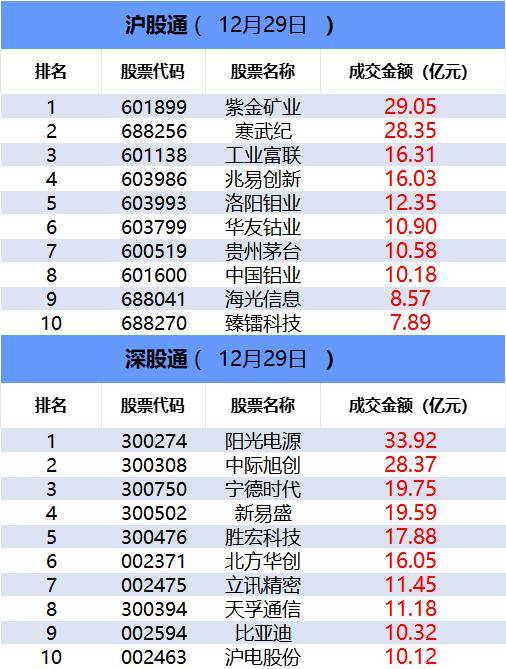
Group 1: Market Activity - The total trading amount for the Shanghai Stock Connect was 103.2 billion, while the Shenzhen Stock Connect reached 121.98 billion [2] - The top traded stocks in the Shanghai Stock Connect included 601899 (29.05 billion), 688256 (28.35 billion), and 601138 (16.31 billion) [3] - In the Shenzhen Stock Connect, the leading stocks were 300274 (33.92 billion), 300308 (28.37 billion), and 300750 (19.75 billion) [4] Group 2: Sector Performance - The carbon fiber and robotics sectors showed significant gains, while the battery, dairy, and electric power sectors experienced declines [5] - The banking sector had a net inflow of 10.66 billion, leading among sectors, while the new energy sector faced the highest net outflow of 122.81 billion [6][7] Group 3: Stock Specific Activity - Tianji Co. (天际股份) saw a strong interest from institutional investors, with two institutions buying 1.68 billion and northbound funds purchasing 3.21 billion [12][14] - Several aerospace concept stocks faced heavy selling from institutions, including Jin Feng Technology (金风科技) with 3.74 billion sold, Tongyu Communication (通宇通讯) with 3.14 billion, and Aerospace Development (航天发展) with 3.18 billion [13][14] - The top stocks with net inflows included Tuo Wei Information (拓维信息) with 16.59 billion and Lei Ke Defense (雷科防务) with 10.17 billion [8] - Conversely, stocks with significant net outflows included Zhongji Xuchuang (中际旭创) at -15.45 billion and Yangguang Electric (阳光电源) at -13.62 billion [9] Group 4: ETF Trading - The top ETFs by trading volume included A500ETF Huatai Baichuan (137.98 billion) and A500ETF Fund (134.18 billion), with the latter showing a decrease of 10.93% compared to the previous trading day [10] - The ETF with the highest increase in trading volume was Hang Seng Medical ETF, which surged by 400.70% [11]





比亚迪辟谣将推出飞行汽车;零跑CEO朱江明回应一汽股权投资:公司抗风险能力更强,会保持创始团队控制权丨汽车交通日报
创业邦· 2025-12-29 10:11
Group 1 - Didi has invested in New Stone Technology, which specializes in AI application software development and IoT device manufacturing [2] - Leap Motor's CEO, Zhu Jiangming, stated that the company will maintain control by the founding team despite the investment from FAW Group, enhancing stability and risk resistance [2] - XPeng Motors announced the new P7+ model with an extended range version achieving 1550 kilometers and a pure electric version reaching 725 kilometers [2] - BYD has denied rumors about launching a flying car, clarifying that there are no such plans [2]



盐湖提锂概念下跌1.89%,11股主力资金净流出超亿元
Zheng Quan Shi Bao Wang· 2025-12-29 09:33
Group 1 - The lithium extraction concept from salt lakes experienced a decline of 1.89%, ranking among the top losers in the concept sector, with Hualian Holdings hitting the daily limit down [1] - Major stocks within the salt lake lithium extraction sector that saw significant declines include Hualian Holdings, Xinhua Lithium Energy, and China Aluminum International, with respective drops of 9.99%, 6.19%, and 7.17% [1][2] - Conversely, stocks that gained in this sector included Fumiao Technology, ST Zhengping, and Longhua Technology, with increases of 6.96%, 5.03%, and 4.53% respectively [1][3] Group 2 - The salt lake lithium extraction sector faced a net outflow of 4.73 billion yuan, with 39 stocks experiencing net outflows, and 11 stocks seeing outflows exceeding 100 million yuan [1] - The stock with the highest net outflow was Luoyang Molybdenum, with a net outflow of 1.10 billion yuan, followed by Tianqi Lithium and Ganfeng Lithium with outflows of 689 million yuan and 603 million yuan respectively [1] - Stocks with the highest net inflows included BYD, Longhua Technology, and Chuanheng Shares, with inflows of 109 million yuan, 35 million yuan, and 30 million yuan respectively [1][3]


“龙哥讲电车”等账号侵权比亚迪,判赔200万元!
和讯· 2025-12-29 09:21
Core Viewpoint - BYD has successfully defended its brand reputation through legal action against malicious online attacks, highlighting the importance of protecting corporate integrity in the rapidly evolving electric vehicle industry [1][6]. Group 1: Legal Actions and Outcomes - Recently, BYD won a lawsuit against social media accounts "Long Ge Talks Electric Cars" and "Full Charge New Energy," which were found guilty of spreading false information that harmed BYD's brand reputation, resulting in a compensation of 2 million yuan [1]. - This is not the first instance of BYD using legal means to protect its rights; previous cases include a ruling against "Wang Wukong Talks Cars," which resulted in a compensation of 313,800 yuan, and "Long Zhu - Collect Cars," which was ordered to pay 2,018,700 yuan for defamation [3][4]. Group 2: Industry Context and Implications - The malicious defamation incidents involving accounts like "Long Ge Talks Electric Cars" and "Wang Wukong Talks Cars" are indicative of a broader issue within the electric vehicle sector, where leading companies face frequent online attacks [6]. - The Central Cyberspace Administration of China has taken action against accounts that distort facts and maliciously defame car companies, emphasizing the need for a clearer regulatory environment to protect corporate reputations [6]. - Analysts suggest that BYD's legal victories not only safeguard its brand but also set a precedent for the industry, establishing a boundary for online discourse and promoting a healthier competitive landscape in the electric vehicle market [7].
乘用车板块12月29日跌0.33%,海马汽车领跌,主力资金净流出4.35亿元
Zheng Xing Xing Ye Ri Bao· 2025-12-29 09:06
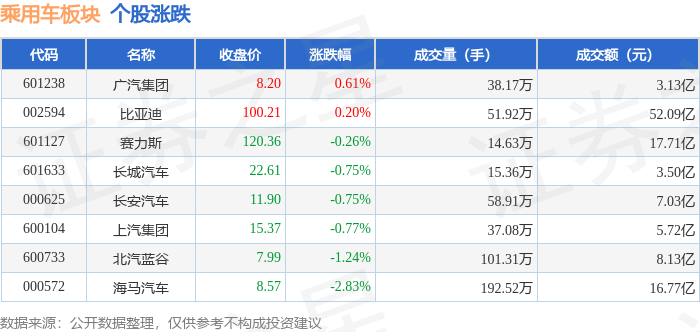
Group 1 - The passenger car sector experienced a decline of 0.33% on December 29, with Haima Automobile leading the drop [1] - The Shanghai Composite Index closed at 3965.28, up 0.04%, while the Shenzhen Component Index closed at 13537.1, down 0.49% [1] - Major stocks in the passenger car sector showed mixed performance, with GAC Group rising by 0.61% and Haima Automobile falling by 10.22% [1] Group 2 - The net outflow of main funds in the passenger car sector was 435 million yuan, while retail investors saw a net inflow of 469 million yuan [1] - Specific stock fund flows indicated that BYD had a main fund net inflow of 158 million yuan, but a net outflow from speculative funds of 214 million yuan [2] - Haima Automobile faced a significant main fund net outflow of 171 million yuan, with retail investors contributing a net inflow of 186 million yuan [2]





11月湖南车险上牌量发布,新能源车占比较上月增11%
Chang Sha Wan Bao· 2025-12-29 09:04
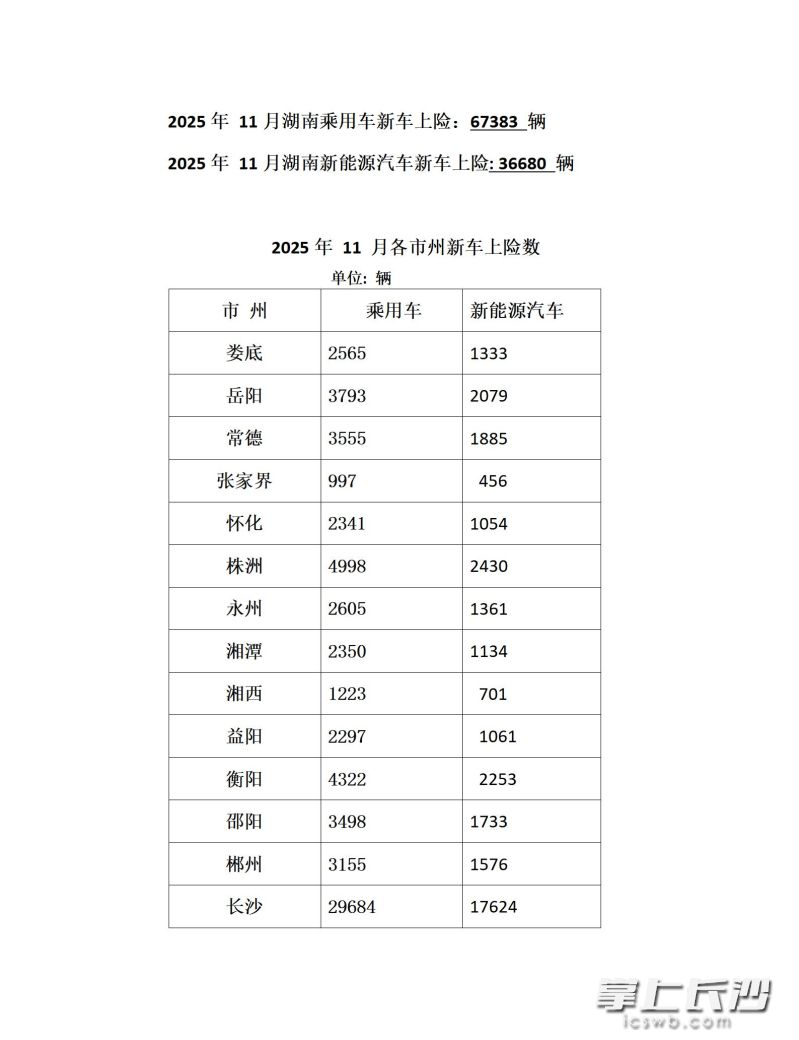
Core Insights - The report highlights a significant increase in new car registrations in Hunan Province, with a total of 67,383 vehicles registered in November, of which 36,680 were new energy vehicles (NEVs), representing 54.44% of the total, up from 43.33% the previous month [1][4]. Group 1: New Car Registrations - In November, Hunan Province saw a total of 67,383 new car registrations, with 36,680 being new energy vehicles, marking a month-over-month increase [1]. - The city of Changsha led the province with 29,684 new car registrations, followed by Zhuzhou with 4,998 and Hengyang with 4,322 [4]. Group 2: New Energy Vehicle Market - The proportion of new energy vehicles in Hunan's total new car registrations rose significantly, with seven cities reporting NEV registration rates above 50% in November [4]. - Changsha recorded the highest NEV registration rate at 59.37%, followed by Xiangxi Autonomous Prefecture at 57.32% and Yueyang at 54.81% [4]. Group 3: Leading Models and Brands - The top-selling model in November was the Wuling Hongguang MINI with 2,708 registrations, followed by the Nissan Sylphy with 1,607 and the Xiaomi YU7 with 1,007 [5]. - Notably, BYD secured six positions in the top 16 new car registrations, indicating its strong market presence despite no single model making it to the top three [5][8]. Group 4: Regional Performance - In Changsha, the Xiaomi YU7 was the best-selling model with 998 registrations, while the Wuling Hongguang MINI followed with 867 [9]. - Traditional fuel vehicles like the Nissan Sylphy and Toyota Camry continue to show strong demand, with the Camry ranking sixth in the overall provincial new car registration list [8].


2025/12/22-2025/12/28汽车周报:补贴落地践行渐进,看好预期修复下的交易机会-20251229
Shenwan Hongyuan Securities· 2025-12-29 09:00
Investment Rating - The report maintains a positive outlook on the automotive industry, particularly focusing on the mid-to-high-end and used car markets, with specific recommendations for companies like BYD and Geely [1]. Core Insights - The upcoming subsidies are expected to alleviate previous concerns regarding the total market volume for 2026, enhancing demand for mid-to-low-end vehicles [1]. - The report highlights the potential for significant performance improvements in parts manufacturers due to subsidy support, recommending companies with strong fundamentals and low valuations [1]. - The report emphasizes the advantages of new energy vehicle companies like Xpeng, NIO, and Li Auto, as well as key Tier 1 suppliers such as Desay SV and Jingwei Hirain [1]. - The report notes a positive trend in the used car market, benefiting from the industry's recovery and improved profitability for dealers, recommending companies like Uxin [1]. Industry Update - According to the China Passenger Car Association, the average daily retail sales of passenger cars in the third week of December reached 77,000 units, a year-on-year decrease of 11% but a month-on-month increase of 9% [1]. - The automotive industry recorded a total transaction value of 582.81 billion yuan, with the automotive index rising by 2.74% during the week, outperforming the Shanghai Composite Index [1][4]. - The report indicates that 172 automotive stocks rose while 94 fell, with the largest gainers being Chaojie Co., Longi Machinery, and Zhejiang Sebao, which saw increases of 41.6%, 33.7%, and 33.3% respectively [1][9]. Market Conditions - The report highlights a rise in traditional and new energy raw material price indices, with traditional vehicle raw material prices increasing by 1.3% and 1.0% over the past week and month, respectively, while new energy vehicle raw material prices rose by 5.6% and 6.8% [1][54]. - The automotive industry’s price-to-earnings ratio stands at 29.17, ranking 19th among all primary industries, indicating a moderate valuation compared to the Shanghai Composite Index's 14.15 [6]. Key Events - The report discusses the optimization of toll road policies and the improvement of autonomous driving regulations, which are expected to enhance the operational efficiency of the transportation system [2][3]. - The report notes significant developments in the automotive sector, including the launch of new models and strategic partnerships aimed at enhancing market competitiveness [17][18][19].


比亚迪将推出飞行汽车?李云飞回应
Guan Cha Zhe Wang· 2025-12-29 08:16
Group 1 - BYD Group's General Manager of Brand and Public Relations, Li Yunfei, denied rumors about the company launching flying cars, stating that the information is false and that there are no such plans or arrangements [1] - Li emphasized the importance of restraint in the face of public interest and speculation [1] Group 2 - XPeng Huizhou has initiated trial production at its electric vertical takeoff and landing (eVTOL) flying car production base in Guangzhou, which is the first in the country with a capacity of tens of thousands [2] - GAC High Domain announced that its Guangzhou production base is set to officially start trial production next month, while also advancing the airworthiness certification and mass production of flying cars [2] - The multi-rotor flying car product, GOVY AirCab (GAC-A6), has received multiple orders and is undergoing full-process airworthiness review, with plans to complete certification by the end of 2026 and begin market delivery [2]

2025汽车大事记:全年超十次精准出手 监管重拳整治汽车行业乱象
Zhong Guo Jing Ji Wang· 2025-12-29 07:32
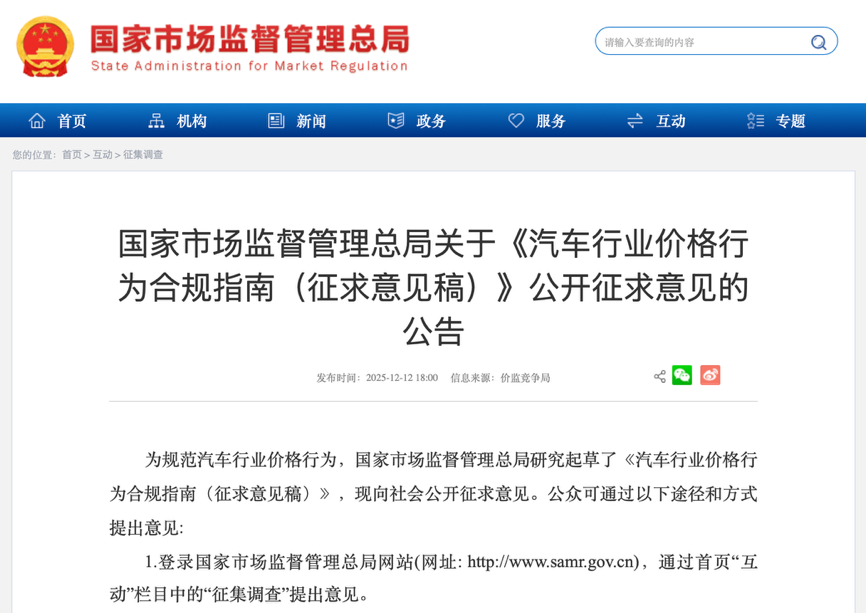
Core Viewpoint - The Chinese automotive industry is undergoing a significant transformation towards new energy and intelligence, facing intense competition and regulatory scrutiny to ensure healthy development [1] Regulatory Policies and Market Dynamics - The National Market Supervision Administration has solicited opinions on the "Guidelines for Compliance of Price Behavior in the Automotive Industry," which prohibits loss sales, requires clear pricing, and bans price fraud [2] - The introduction of these guidelines aims to curb the detrimental effects of price wars, which have severely impacted industry profitability, with the automotive industry's sales profit margin dropping to 3.9% in October, the lowest in five years [4][6] - The government has emphasized the importance of addressing "involution-style" competition in the 2025 government work report, highlighting a commitment to restoring healthy development in the automotive sector [4] Industry Response to Price Wars - Major automotive companies, including BYD and Great Wall, have pledged to adhere to the pricing guidelines and eliminate unfair competition practices [4] - The China Automotive Industry Association has called for fair competition and has initiated measures to prevent price dumping and misleading advertising [6] Regulatory Interventions and Compliance - A series of regulatory measures have been implemented to address issues such as production consistency and payment terms, with the Ministry of Industry and Information Technology launching checks on production consistency to ensure quality [8][9] - The average accounts payable turnover days for listed automotive companies reached 182 days in 2024, creating significant financial pressure on suppliers [9][11] - A commitment from 17 automotive companies to adhere to a 60-day payment term for suppliers has been established to alleviate financial strain [11] Addressing Network and Marketing Issues - The government has initiated a campaign to combat online misinformation and negative publicity affecting automotive companies, with actions taken against accounts spreading false information [12] - The Ministry of Industry and Information Technology has proposed new standards for intelligent driving systems to enhance safety and consumer protection [14][17] Innovation and Safety Concerns - The automotive industry faces challenges related to "involution" in technological innovation, where companies may compromise safety and quality to reduce costs and accelerate product development [13] - Recent incidents have raised concerns about the safety of new energy vehicles, particularly regarding their acceleration capabilities and the risks associated with hidden door handle designs [15][16] Conclusion on Industry Health - The regulatory environment in 2025 has seen over ten significant policy introductions aimed at addressing competition issues, with a focus on maintaining market order and promoting healthy competition among automotive companies [18][19] - The proactive measures taken by regulatory bodies and the automotive industry indicate a collective effort to navigate the challenges of transformation while ensuring sustainable growth [20]
汽车周报:补贴落地践行渐进,看好预期修复下的交易机会-20251229
Shenwan Hongyuan Securities· 2025-12-29 07:16
Investment Rating - The report maintains a positive outlook on the automotive industry, particularly focusing on the mid-to-high-end and used car markets, as well as the impact of new subsidies [2]. Core Insights - The upcoming subsidies are expected to alleviate previous concerns regarding the total market volume for 2026, with a focus on companies like BYD and Geely, which cater primarily to mid-to-low-end demand [2]. - The report highlights the potential for significant performance improvement in parts manufacturers in the first half of 2026 due to subsidy support, recommending companies with strong fundamentals and low valuations [2]. - The report identifies new energy vehicle companies such as XPeng, NIO, and Li Auto, which have advantages in AI and robotics, as potential investment opportunities [2]. - The report notes a positive trend in the used car market and overall dealer profitability, recommending companies like Uxin [2]. - The report emphasizes the importance of state-owned enterprise reforms, particularly for SAIC and Dongfeng, as a key area to watch [2]. Industry Update - According to the China Passenger Car Association, the average daily retail sales of passenger cars in the third week of December reached 77,000 units, a year-on-year decrease of 11% but a month-on-month increase of 9% [2]. - The automotive industry recorded a total transaction value of 582.81 billion yuan for the week, with an industry index increase of 2.74%, outperforming the Shanghai Composite Index [6]. - The report indicates that 172 automotive stocks rose while 94 fell, with the largest gainers being Chaojie Co., Longi Machinery, and Zhejiang Sebao [11]. Market Conditions - The report notes that traditional and new energy raw material price indices have risen recently, with traditional vehicle raw materials increasing by 1.3% week-on-week and 1.0% month-on-month, while new energy vehicle raw materials rose by 5.6% week-on-week and 6.8% month-on-month [62]. - The automotive industry’s price-to-earnings ratio stands at 29.17, ranking 19th among all sectors, indicating a moderate valuation compared to the Shanghai Composite Index's 14.15 [8][10]. Key Events - The report highlights the optimization of toll road policies and the improvement of autonomous driving regulations as significant developments that will enhance the operational efficiency of the transportation system [3][4]. - The report mentions the launch of the first L3 autonomous driving license plate in China, awarded to Changan Automobile, marking a milestone in the industry [24][44].

