
BYD(002594)

Search documents
比亚迪两地 “闪充”实测观察丨第二代刀片电池充电时长压缩至10分钟级
Cai Jing Wang· 2026-03-16 04:06
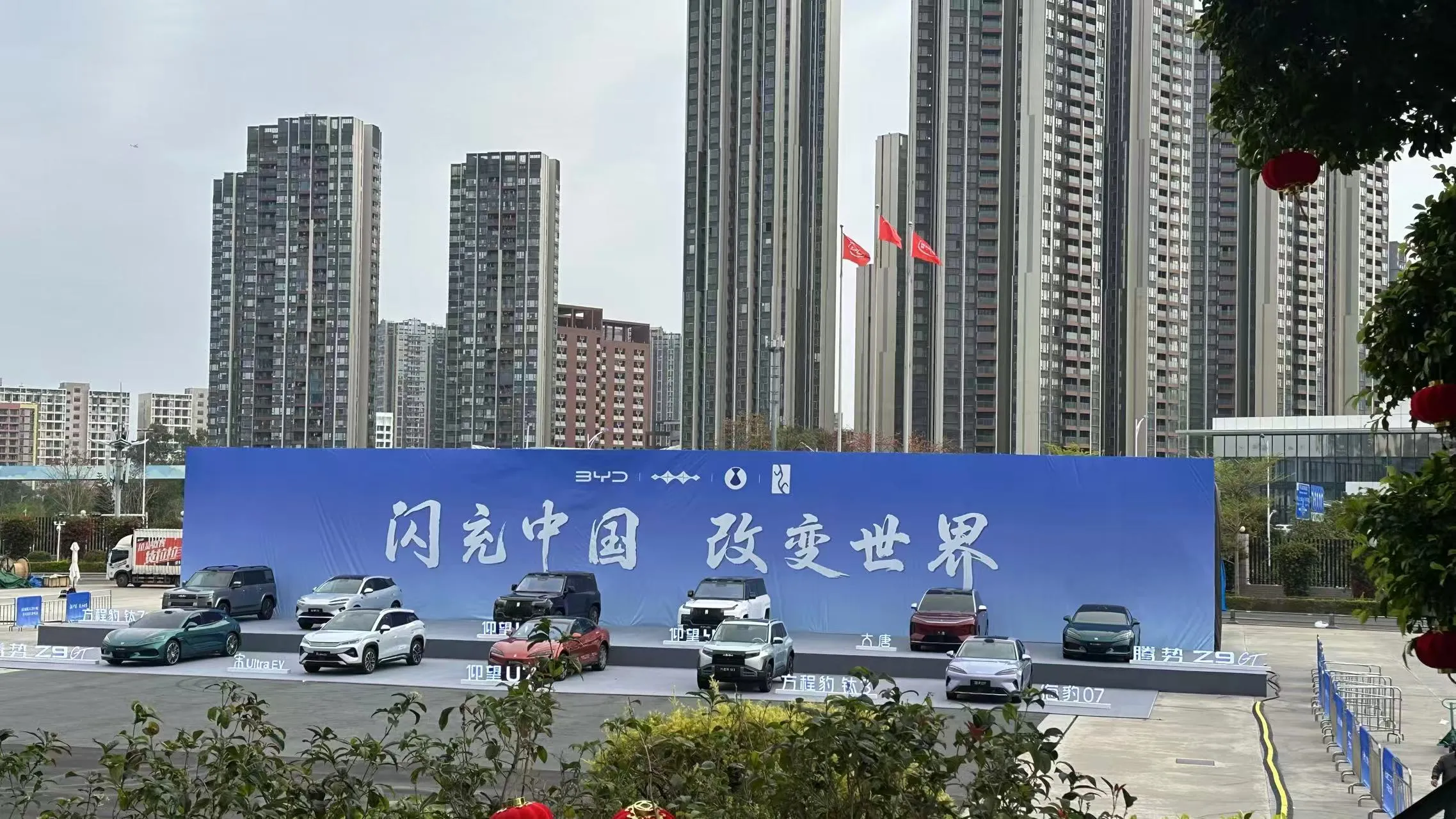
Core Viewpoint - The recent charging tests conducted by BYD in Beijing and Harbin demonstrate significant improvements in electric vehicle charging efficiency in low-temperature environments, addressing a major pain point for northern users during winter [1][5][13]. Group 1: Charging Performance in Low Temperatures - In Beijing's low-temperature environment, 8 models charged from 19%-20% battery level in a time range of 9 minutes 42 seconds to 10 minutes 22 seconds, with the Song Ultra taking 9 minutes 42 seconds and the Tengshi N9 taking 10 minutes 22 seconds [3][9]. - In Harbin at -20°C, 10 models charged from 18%-20% battery level to 97% in 10 minutes 21 seconds to 11 minutes 34 seconds, with the Song Ultra at 10 minutes 21 seconds and the Tengshi N9 at 11 minutes 34 seconds [3][9]. - The tests indicate a shift from "hour-level" to "minute-level" charging efficiency, significantly reducing the time cost for winter charging, making it comparable to refueling traditional gasoline vehicles [3][10]. Group 2: Testing Methodology and Sample Diversity - The tests were designed to simulate real-world conditions, with vehicles left in extreme cold for 24 hours to ensure batteries were fully frozen, reflecting the worst-case scenarios for northern users [5][8]. - The testing included a diverse range of models from BYD's various brands, enhancing the reliability of the results and showcasing the performance consistency across different vehicle types [8][9]. Group 3: Technological Integration and User Experience - The improvement in charging efficiency is attributed to the integration of the second-generation blade battery and flash charging technology, which together form the core of the low-temperature fast charging capability [10][11]. - The T-type flash charging station design addresses user pain points by simplifying the charging process and reducing physical strain, thus enhancing the overall user experience in harsh winter conditions [11][13].


比亚迪巴西工厂获阿根廷墨西哥10万辆订单;碧桂园等成立机器人公司丨智能制造日报
创业邦· 2026-03-16 03:46
Group 1 - BYD's factory in Brazil has secured export orders totaling 100,000 vehicles from Argentina and Mexico, with production set to begin on July 1, 2025 [2] - The orders will be evenly split, with each country receiving 50,000 vehicles [2] Group 2 - The first humanoid robot 4S store in Henan has opened, providing a new venue for the public to learn about robots, offering sales, rental, after-sales, and feedback services [2] Group 3 - The semiconductor industry is experiencing a new wave of price increases, with companies like UMC, World Advanced, and Powerchip planning to raise wafer foundry prices by up to 10% starting in April [2] - UMC has not confirmed the price increase rumors but mentioned that the current pricing environment is more favorable than before [2] - Powerchip has confirmed that it has already begun raising prices this season, focusing on product lines with lower profit margins [2] Group 4 - A new robotics company, Zero Resident (Shenzhen) Robotics Co., Ltd., has been established, co-owned by Country Garden and another management service company, focusing on AI hardware sales and robotics development [2]

港股异动 | 比亚迪股份(01211)午前涨超5% 据报巴西工厂获得阿根廷及墨西哥共计10万辆大单
智通财经网· 2026-03-16 03:40
Core Viewpoint - BYD's stock price increased by over 5% following the announcement of significant export orders and investment plans in Brazil [1] Group 1: Export Orders - BYD's Brazilian factory has secured a total of 100,000 vehicle export orders from Argentina and Mexico, with each country ordering 50,000 vehicles [1] - The factory, located in Camaçari, Bahia, currently has an annual production capacity of 150,000 vehicles, with plans to gradually increase this capacity to 600,000 vehicles [1] Group 2: Investment Plans - BYD will invest 300 million Brazilian Reais (approximately 53 million USD) to build a research and development center in Rio de Janeiro, with construction expected to start this year and completion projected for 2028 [1] - The R&D center will be equipped with facilities for vehicle dynamics, range capability, and extreme environment testing, focusing on data collection for tropical climates to support local product adaptation [1]
比亚迪股份午前涨超5% 据报巴西工厂获得阿根廷及墨西哥共计10万辆大单
Zhi Tong Cai Jing· 2026-03-16 03:39
Core Viewpoint - BYD has secured a total of 100,000 vehicle export orders from Argentina and Mexico, with each country ordering 50,000 vehicles, indicating strong demand for its products in the Latin American market [1] Group 1: Export Orders - BYD's Brazilian factory has received export orders for 100,000 vehicles from Argentina and Mexico, with each country ordering 50,000 vehicles [1] - The Brazilian factory is located in Camaçari, Bahia, and currently has an annual production capacity of 150,000 vehicles, with plans to gradually increase this capacity to 600,000 vehicles [1] Group 2: Investment Plans - BYD plans to invest 300 million Brazilian Reais (approximately 53 million USD) to build a research and development center in Rio de Janeiro, with construction expected to start this year and completion anticipated by 2028 [1] - The R&D center will be equipped with facilities for vehicle dynamics, range capability, and extreme environment testing, focusing on data collection for tropical climates to support local product adaptation [1]
花旗:给予比亚迪目标价174港元及“买入”评级 预期3月国内外销量同比扩张
Zhi Tong Cai Jing· 2026-03-16 03:35
Core Viewpoint - Citigroup has issued a report giving BYD (002594)(01211) a target price of HKD 174 and a "buy" rating, indicating positive expectations for the company's performance in the near term [1] Group 1: Sales and Inventory - In February, the number of new vehicle registrations for BYD was approximately 87,300, which is similar to the domestic wholesale sales of about 89,600, reflecting stable overall inventory levels among domestic dealers [1] - For March, Citigroup anticipates that BYD's export and domestic sales will expand year-on-year, with a total expected volume of around 220,000 to 250,000 vehicles [1] Group 2: Production and Product Launches - The company is likely to focus on inventory reduction in March and April, controlling production levels before the next product cycle begins in mid-April [1] - Recently, BYD launched the Fangchengbao Titanium 3 fast-charging version, which Citigroup estimates could achieve monthly sales of 8,000 to 9,000 units once the model matures [1] - The Leopard 7 is set to officially launch in April [1]
2026年1月OTA监测月报
乘联分会· 2026-03-16 03:35
Investment Rating - The report does not explicitly provide an investment rating for the industry Core Insights - In January 2026, the industry updated a total of 1,969 features, a significant increase from 1,397 in the previous month, driven by 32 brands focusing on enhancing travel experience and safety during the Spring Festival [4] - New force brands updated 839 features, a substantial rise from 216 in the previous month, with significant upgrades in intelligent driving capabilities and user experience enhancements [7] - Domestic brands updated 1,080 features, showing a slight decrease from 1,144 in the previous month, indicating a trend towards a layered technology system [10] - Joint venture and luxury brands updated 50 features, an increase from 37 in the previous month, focusing on central control ecology and general settings [13] Summary by Sections Industry Overview - The industry saw a total of 1,969 feature updates in January 2026, with a focus on improving travel experiences and safety during the Spring Festival [4] - The updates included enhancements in entertainment and interaction for multi-passenger scenarios, making family vehicles more user-friendly [4] New Force Brands - New force brands collectively updated 839 features, marking a significant increase from the previous month [7] - Key upgrades included improvements in intelligent driving capabilities and the introduction of features aimed at enhancing the festive atmosphere for families [7] Domestic Brands - Domestic brands updated 1,080 features, slightly down from the previous month [10] - The first-tier brands (BYD, Geely, Great Wall) are entering a harvest period with significant advancements in their high-end brands' intelligent capabilities [10] Joint Venture and Luxury Brands - Joint venture and luxury brands updated 50 features, with a focus on central control ecology and general settings [13] - Notable updates included Nissan's N7, which introduced personalized intelligent driving features [13] OTA Frequency Overview - In January, 9 new force brands pushed OTA updates, with a focus on intelligent driving as a core competitive area [17] - 19 domestic brands also pushed OTA updates, indicating a shift towards a self-research and ecological cooperation technology system [18] - Only 2 joint venture brands pushed OTA updates, with Buick focusing on system stability and Nissan enhancing intelligent driving experiences [20] User Feedback - Users reported significant improvements in intelligent driving efficiency and decision-making capabilities following OTA updates, with a notable increase in satisfaction levels [41]



花旗:给予比亚迪(01211)目标价174港元及“买入”评级 预期3月国内外销量同比扩张
智通财经网· 2026-03-16 03:33
Core Viewpoint - Citigroup has set a target price of HKD 174 for BYD (01211) and assigned a "Buy" rating, indicating a positive outlook for the company's stock performance [1] Sales Performance - In February, the number of new vehicle registrations for BYD was approximately 87,300, which is similar to the domestic wholesale sales of about 89,600, reflecting stable inventory levels among domestic dealers [1] - For March, Citigroup expects BYD's combined domestic and export sales to expand year-on-year, reaching approximately 220,000 to 250,000 units [1] Inventory and Production Strategy - The company is likely to focus on inventory reduction in March and April, controlling production levels before the next product cycle begins in mid-April [1] Product Launches - BYD recently launched the Fangchengbao Titanium 3 fast-charging version, with Citigroup estimating that once sales mature, it could achieve monthly sales of 8,000 to 9,000 units [1] - The Leopard 7 model is set to officially launch in April [1]
中国企业占EV电池全球份额的7成
日经中文网· 2026-03-16 03:06
Core Viewpoint - The market share of Chinese companies in the EV battery sector is expected to exceed 70% by 2025, up from nearly 50% in 2021, indicating a strengthening monopoly in the industry. CATL, the largest player, is expanding orders in China and Europe, achieving record profits, while Korean companies are struggling in the U.S. market [2][4]. Group 1: Market Dynamics - By 2025, the global EV battery installation volume is projected to increase by 32% compared to 2024, reaching 1,187 GWh, with approximately 60% of this volume coming from the Chinese market [6]. - Chinese companies occupy six of the top ten global positions in EV battery production, with a combined market share of 70.4% in 2025, an increase of about 4 percentage points from 2024 [8]. - The overall EV sales are still growing despite a slowdown in certain regions like the U.S., driven by high subsidies from the Chinese government promoting the adoption of EVs [6]. Group 2: Company Performance - CATL's net profit for the fiscal year ending December 2025 is expected to grow by 42% year-on-year, reaching 72.2 billion yuan, marking a new profit high [4]. - Korean companies, particularly LG Energy Solution, are facing significant challenges, with a 76% year-on-year decrease in net profit, dropping to 80.8 billion won, which is less than 1% of CATL's profit [8][9]. - SK On and Samsung SDI are also experiencing losses, prompting a reevaluation of their strategies in the U.S. market [9]. Group 3: Strategic Developments - Chinese companies are expanding their production capabilities overseas, with CATL completing the installation of its first production line in Hungary by the end of 2025 [10]. - The Japanese company Panasonic ranks seventh globally but holds less than 4% market share, with production timelines for its Kansas plant still uncertain due to declining sales from major client Tesla [10]. - As EV sales slow down, major automotive players in the U.S. and Japan are adjusting their strategies, while Chinese firms like BYD are striving to increase global sales and maintain competitive advantages [10].


2月国内电池装机
数说新能源· 2026-03-16 03:02
Core Viewpoint - The article provides an overview of the current state of the domestic battery production and sales in China, highlighting significant growth in production and sales of both power and energy storage batteries, while also noting fluctuations in month-over-month performance [2][3][4]. Group 1: Battery Production - In February, the domestic production of power and other batteries reached 141.6 GWh, representing a year-on-year increase of 41.3% but a month-on-month decrease of 15.7%. The production of ternary and lithium iron phosphate batteries was 26.9 GWh and 114.6 GWh, accounting for 19.0% and 80.9% respectively [2]. - Cumulatively, from January to February, the domestic production of power and other batteries totaled 309.7 GWh, up 48.8% year-on-year, with ternary and lithium iron phosphate production at 58.2 GWh and 251.3 GWh, making up 18.8% and 81.2% of the total [2]. Group 2: Battery Sales - In February, the sales of domestic power and energy storage batteries were 74.5 GWh and 38.6 GWh, showing year-on-year increases of 11.4% and 67.3%, but month-on-month declines of 27.4% and 16.2% respectively. Cumulatively, from January to February, the sales reached 177.2 GWh and 84.8 GWh, reflecting year-on-year growth of 36.5% and 108.9% [3]. Group 3: Battery Exports - In February, the exports of domestic power and energy storage batteries were 16.9 GWh and 7.0 GWh, with year-on-year increases of 31.9% and decreases of 15.5%, and month-on-month changes of -4.6% and +9.3% respectively. Cumulatively, from January to February, the exports totaled 34.6 GWh and 13.5 GWh, with year-on-year increases of 44.6% and decreases of 8.2% [4]. Group 4: Battery Installation - In February, the domestic power battery installation amounted to 26.3 GWh, down 24.6% year-on-year and 37.4% month-on-month. The installation of ternary and lithium iron phosphate batteries was 5.7 GWh and 20.6 GWh, representing 21.7% and 78.3% of the total [4]. - From January to February, the cumulative installation of domestic power batteries was 68.3 GWh, reflecting a year-on-year decrease of 7.2%, with ternary and lithium iron phosphate installations at 15.1 GWh and 53.3 GWh, accounting for 22.1% and 77.9% respectively [4]. Group 5: Market Leaders - The top three companies in domestic power battery installation for February were CATL with 12.90 GWh (49.1% market share), BYD with 3.56 GWh (13.6%), and Zhongxin Innovation with 1.58 GWh (6.0%) [4]. - Cumulatively, from January to February, the top three companies were CATL with 33.82 GWh (49.5%), BYD with 10.89 GWh (15.9%), and Guoxuan High-Tech with 3.93 GWh (5.8%) [4].

大行评级丨花旗:预期3月比亚迪国内外销量均会按月扩张,评级“买入”
Ge Long Hui· 2026-03-16 03:01
Group 1 - The core viewpoint of the report is that BYD is expected to see both export and domestic sales expand month-on-month in March, reaching approximately 220,000 to 250,000 units combined [1] - The company is likely to focus on inventory reduction in March and April, controlling production before the next product cycle begins in mid-April [1] - BYD recently launched the Fangchengbao Titanium 3 fast-charging version, with expected monthly sales of 8,000 to 9,000 units once the model matures [1] Group 2 - The Leopard 7 model is set to officially launch in April [1] - Citigroup has set a target price of HKD 174 for BYD and maintains a "Buy" rating [1]