
CATL(300750)

Search documents
宁德时代发布轻型商用车行业首款量产钠电池
Bei Jing Shang Bao· 2026-01-22 12:17
Core Viewpoint - Contemporary Amperex Technology Co., Limited (CATL) has launched the Tianxing II light commercial industry customized solution series, featuring the industry's first mass-produced sodium battery [1] Group 1: Product Features - The light commercial low-temperature version utilizes a sodium battery with a capacity of 45 kWh, compatible with various models including small vans and micro trucks [1] - The sodium battery can achieve plug-and-charge functionality even when fully frozen at -30°C, maintaining 90% usable capacity at -40°C [1]


主力资金丨机器人概念热门股尾盘遭主力大幅砸盘
Zheng Quan Shi Bao Wang· 2026-01-22 12:16
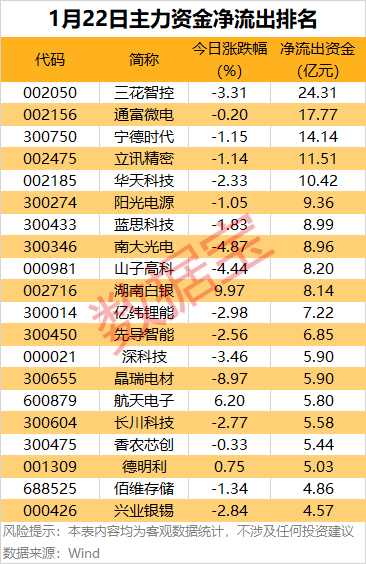
Market Overview - On January 22, A-shares saw all three major indices rise collectively, with significant gains in sectors such as aerospace, mining, shipbuilding, glass fiber, gas, oil, photovoltaic equipment, coal, and cement [1] - The main funds in the Shanghai and Shenzhen markets experienced a net outflow of 10.442 billion yuan, while 14 industries saw net inflows [1] Sector Performance - The telecommunications, defense, and non-bank financial sectors had the highest net inflows, amounting to 7.884 billion yuan, 2.916 billion yuan, and 1.371 billion yuan respectively [1] - In contrast, the electronics, power equipment, non-ferrous metals, and basic chemicals sectors faced the largest net outflows, totaling 7.979 billion yuan, 5.42 billion yuan, 2.773 billion yuan, and 2.077 billion yuan respectively [1] Individual Stock Highlights - A total of 51 stocks received net inflows exceeding 200 million yuan, with nine stocks seeing inflows over 600 million yuan [1] - The top three stocks attracting main fund inflows were New Yisheng, Zhongji Xuchuang, and Tianfu Communication, with net inflows of 2.193 billion yuan, 2.188 billion yuan, and 1.337 billion yuan respectively [1] Earnings Forecast - Tianfu Communication announced an earnings forecast for 2025, expecting a net profit attributable to shareholders of approximately 1.881 billion to 2.15 billion yuan, representing a year-on-year growth of 40% to 60% [2] Tail-End Fund Movements - In the tail-end trading session, the main funds saw a net inflow of 1.797 billion yuan, with the telecommunications sector leading with over 1 billion yuan in inflows [5] - Notable stocks with significant tail-end inflows included China Great Wall, New Yisheng, and Industrial Fulian, each exceeding 200 million yuan [5] Notable Outflows - The robot concept stock Sanhua Intelligent Control experienced a net outflow exceeding 400 million yuan, while other companies like Ningde Times and Tongfu Microelectronics also saw significant outflows [7]




技术为人而生,宁德时代发布天行 II 轻商系列动力电池
Xin Lang Cai Jing· 2026-01-22 11:57
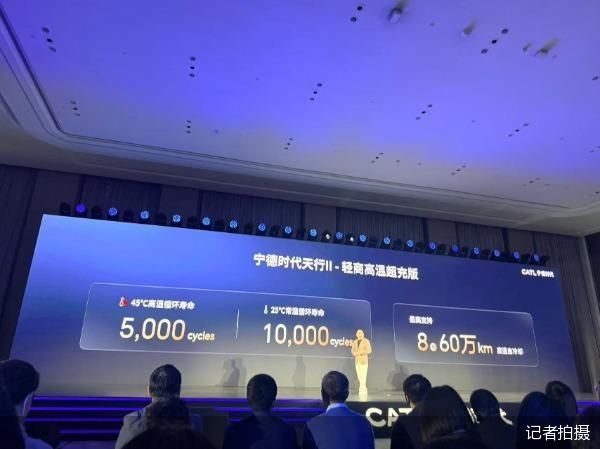
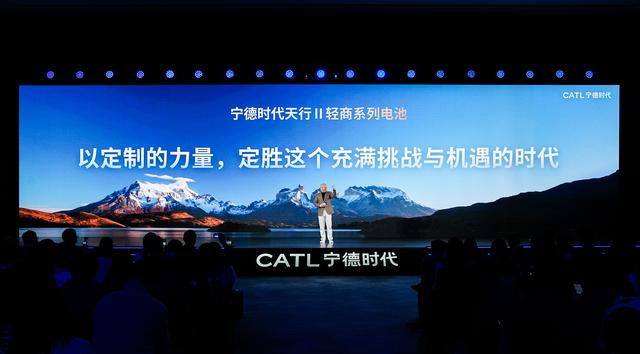
Core Viewpoint - Ningde Times has launched the "Tianxing II Light Commercial Vehicle Customization Series Solutions" and the industry's first intelligent battery management application "Battery Butler" to enhance the operational efficiency and profitability of light commercial vehicles through a comprehensive ecosystem of hardware, software, and services [1][8]. Group 1: Product Innovations - The Tianxing II series offers four customized solutions tailored for various operational scenarios, including urban distribution, intercity transport, last-mile delivery, and cold-region transportation, addressing the need for precision in energy solutions [3]. - The Tianxing II Light Commercial Super Charging Version features significant upgrades in cold resistance, power output, and lifespan, allowing for a 30% faster charging time from 20% to 80% in just 30 minutes [5][6]. - The Long Range Version of the Tianxing II series incorporates the world's first hybrid chemical system battery, achieving a maximum single-pack capacity of 253 kWh, enabling a range of 800 kilometers, and reducing vehicle weight by over 260 kg [6][7]. Group 2: Technological Advancements - The High-Temperature Super Charging Version is designed for last-mile logistics, supporting peak charging of 4C, allowing for a 60% charge in just 18 minutes, and reducing annual charging costs by 500 yuan [7]. - The Low-Temperature Version is the first mass-produced sodium-ion battery in the light commercial vehicle sector, maintaining over 92% usable capacity at -20°C and ensuring safety under extreme conditions [7]. Group 3: Intelligent Management Solutions - The "Battery Butler" app provides users with real-time monitoring of battery lifecycle, maximizing profitability and enabling precise management of assets [8][9]. - The app features proactive alerts for potential risks, direct connection to official service platforms, and emergency charging modes tailored to operational demands [9][11]. Group 4: Market Strategy and Vision - Ningde Times aims to redefine the ecosystem of the light commercial vehicle industry by aligning product offerings with user needs and enhancing service collaboration [11][13]. - The company is committed to continuously developing sustainable, replicable solutions that leverage cutting-edge technology to drive the electrification of light commercial vehicles towards greater efficiency and reliability [13].
宁德时代发布天行+II+轻商系列解决方案,轻型商用车行业迈入定制化精细运营新阶段
Jin Rong Jie· 2026-01-22 11:22
Core Viewpoint - CATL has launched the "Tianxing II Light Commercial All-Scenario Customization Series Solutions" and the industry's first intelligent battery management application "Battery Butler" Tianxing version, aiming to enhance the efficiency and profitability of light commercial vehicles through a comprehensive ecosystem of hardware, software, and services [1][10]. Group 1: Product Innovations - The Tianxing II series offers customized solutions for various operational scenarios, including urban distribution, intercity transport, and cold-region logistics, addressing the limitations of standardized solutions in the light commercial vehicle sector [3][5]. - The Tianxing II Super Charging version features significant upgrades in cold resistance, power output, and lifespan, allowing for a 30-minute charge from 20% to 80% and a 30% increase in discharge power, supporting high-speed driving under full load in cold conditions [5][6]. - The Tianxing II Long Range version incorporates a unique hybrid chemical battery cell, achieving a maximum single-pack capacity of 253 kWh, enabling a range of 800 kilometers, and reducing vehicle weight by over 260 kg [6][8]. - The Tianxing II High-Temperature Super Charging version addresses the volatility in end logistics operations, allowing for a 60% charge in just 18 minutes and reducing annual charging costs by 500 yuan [8][10]. - The Tianxing II Low-Temperature version is the first mass-produced sodium-ion battery in the light commercial sector, maintaining over 92% usable capacity at -20°C and ensuring safety under extreme conditions [8][10]. Group 2: Intelligent Management Solutions - The "Battery Butler" Tianxing version app provides users with real-time monitoring of battery lifecycle, maximizing profitability and management precision [10][12]. - The app features proactive risk alerts and direct connections to CATL's service platform, ensuring quick response times for maintenance and support [10][12]. - The app offers three charging modes tailored to different scenarios, enhancing operational flexibility for users [10][12]. Group 3: Strategic Vision - CATL aims to redefine the ecosystem of the light commercial vehicle industry by aligning product development with user needs and operational scenarios, focusing on sustainable and predictable long-term value [13][15]. - The company plans to continue leveraging cutting-edge technology to create scalable and sustainable solutions in collaboration with industry partners [15].
海外收入占比猛增、与宁德时代关系密切,恒翼能闯关创业板
Bei Jing Shang Bao· 2026-01-22 11:04
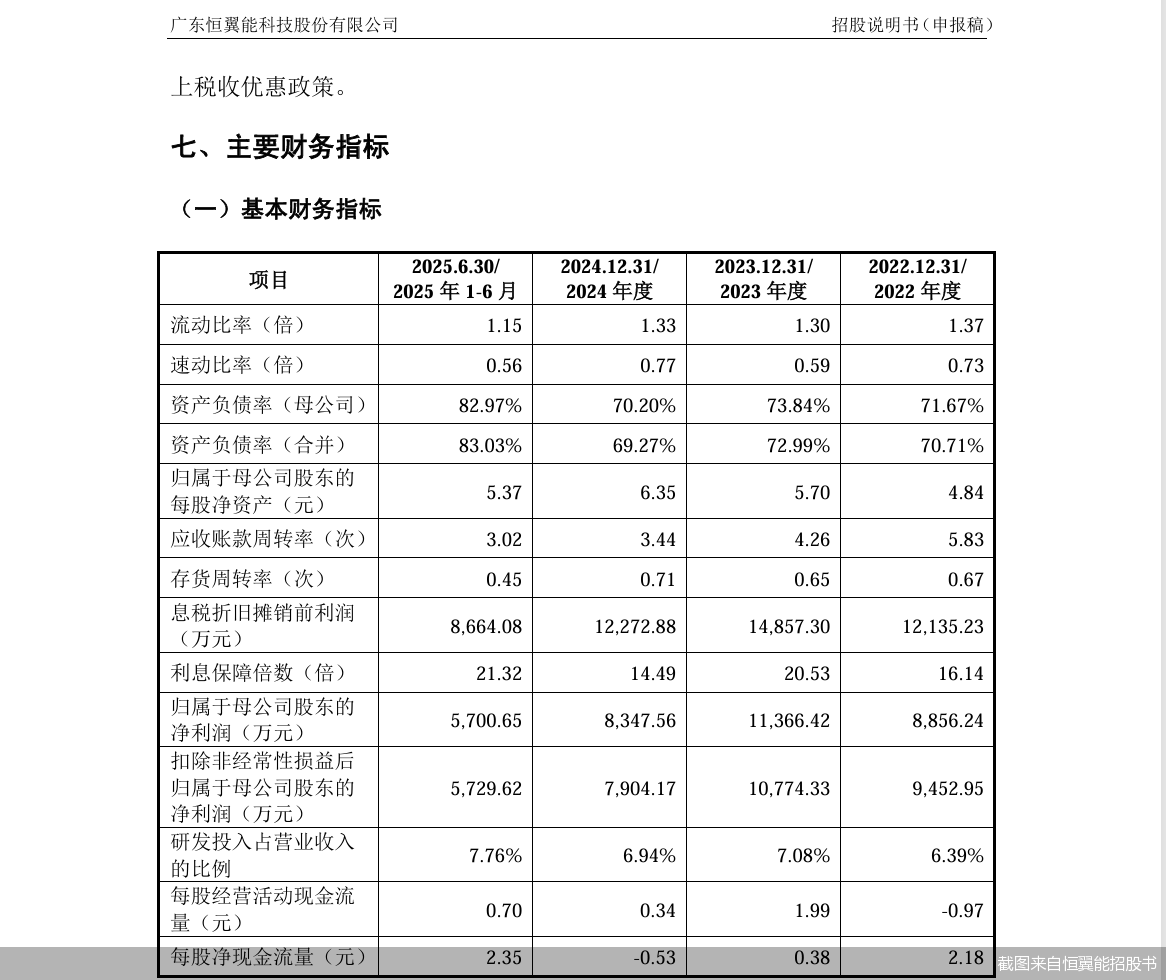
Core Viewpoint - Guangdong Hengying Energy Technology Co., Ltd. (referred to as "Hengying Energy") is making a push for an IPO on the A-share market, entering the inquiry stage, while experiencing significant fluctuations in net profit during the reporting period [1][3] Financial Performance - Revenue growth has been consistent, with reported revenues of approximately 923 million yuan, 1.105 billion yuan, 1.241 billion yuan, and 595 million yuan for the years 2022 to 2025 H1 respectively [3] - Net profit figures for the same periods were approximately 88.56 million yuan, 114 million yuan, 83.48 million yuan, and 57.01 million yuan, indicating volatility in profitability [3] - The company's asset-liability ratio reached 83.03% by mid-2025, significantly higher than the industry average of 58.5% [4] International Business Expansion - The proportion of overseas business revenue has surged, with overseas income accounting for 80.23% of the main business revenue in the first half of 2025, up from just 0.17% in 2022 [3] - The increase in foreign sales is attributed to early market expansion and significant revenue growth from major overseas clients [3] Client Relationships - Hengying Energy has a close relationship with CATL (Contemporary Amperex Technology Co., Ltd.), which holds approximately 5.96% of the company's shares and has been a major customer [5][6] - In the first half of 2025, ACC became the largest customer, with sales revenue of approximately 474 million yuan, representing 79.72% of total sales [4][6] - The company’s top five customers contributed over 90% of total revenue during the reporting period, indicating a high customer concentration [6][7] Future Funding and Projects - Hengying Energy plans to raise approximately 839 million yuan through the IPO, which will be allocated to the establishment of a lithium battery equipment manufacturing base, a research and development center, and to supplement working capital [4]
公募基金2025年四季报全扫描【国信金工】
量化藏经阁· 2026-01-22 10:58
Fund Position Monitoring - The median position of ordinary equity funds is 91.51%, and for mixed equity funds, it is 90.42%, showing a slight decrease compared to the previous quarter. The current positions are at historical percentiles of 92.19% and 95.31% respectively [1][6] - The average Hong Kong stock allocation for ordinary equity funds is 11.89%, down by 1.1% from the previous quarter, while for mixed equity funds, it is 14.56%, down by 2.54% [11][6] - The number of funds investing in Hong Kong stocks is 243 for ordinary equity funds and 1692 for mixed equity funds, with a total allocation ratio of 59.59% [11][9] Fund Holding Concentration Monitoring - The proportion of heavy-weight stocks in equity allocation is 55.03%, remaining stable compared to the previous period. The total number of stocks held by fund managers increased to 2467 from 2379, indicating greater diversity in stock holdings [10][6] Sector Allocation Monitoring - The disclosed allocation weights for the main board, ChiNext, and Sci-Tech Innovation Board are 49.04%, 20.96%, and 13.89% respectively, with a significant decrease in Hong Kong stock allocation to 16.11% [21][23] - The allocation to large cycle sectors increased by 4.3% to 26.13%, while technology and pharmaceutical sectors saw reductions of 2.94% and 1.59% respectively [23][21] Industry Allocation Monitoring - The top three industries by allocation weight are electronics (23.01%), communication (11.08%), and electric power equipment and new energy (9.28%) [26][25] - The industries with the most active increases in allocation are non-ferrous metals (1.22%), basic chemicals (1.13%), and non-bank financials (0.81%), while the most reduced allocations are in computing (-1.34%), media (-0.98%), and national defense and military industry (-0.75%) [27][25] Individual Stock Allocation Monitoring - The stocks with the highest absolute market value allocations are Zhongji Xuchuang (768 billion), Xinyi Sheng (638 billion), and Ningde Times (630 billion) [30][29] Performance Fund and Billion Fund Industry Allocation Monitoring - The top three industries allocated by performance funds are communication (32.74%), electronics (27.73%), and non-ferrous metals (12.72%) [34][35] - The top three industries allocated by billion-scale funds are electronics (27.21%), communication (13.47%), and pharmaceuticals (10.45%) [34][35]




40亿!宁德时代“落子”北京
起点锂电· 2026-01-22 10:53
Core Viewpoint - The competition in the electric vehicle (EV) market in 2025 is characterized by "one leader and many strong players, differentiation among new forces, technology-driven advancements, accelerated overseas expansion, and ecological integration" [2] Group 1: Market Dynamics - The market competition is intensifying, with automakers and battery companies increasingly collaborating across technology, supply chains, capital, and standards to address market challenges and technological changes [2] - The establishment of joint ventures remains a common strategy in the industry, exemplified by the rapid progress of the 4 billion yuan, 15GWh capacity battery factory by CATL and BAIC [2][4] Group 2: Joint Ventures and Production Capacity - CATL holds a 51% stake in the newly established Beijing Times Power Battery Co., which is set to be built in two phases and aims for production by 2026, serving major clients like BAIC and Xiaomi [4][5] - The factory is located in Beijing's Yizhuang Economic Development Zone, a core area for the automotive industry, which generates over 200 billion yuan annually, accounting for nearly 60% of Beijing's automotive output [5] Group 3: Strategic Collaborations - CATL's strategy includes not only battery manufacturing but also expanding into battery swapping and industry chain collaboration, with plans to establish around 40 battery swap stations in Beijing by the end of 2025 [6] - The company has formed deep partnerships with various automakers, ensuring stable battery supply while enhancing customer loyalty and market share [7][17] Group 4: Market Position and Challenges - In 2025, CATL maintained its leading position in the power battery market with a domestic installed capacity of 333.57GWh and a market share of 43.42%, despite a slight decline in market share compared to the previous year [16] - The company supplied batteries for 445 vehicle models from 37 automakers, representing 38% of the total models announced, with a notable increase in collaboration with automakers [16][19] Group 5: Future Outlook - CATL is transitioning from a battery supplier to an "energy + chassis solution provider," collaborating with automakers on battery recycling and vehicle-to-grid (V2G) interactions, exploring new business models and growth points [19] - Despite fluctuations in market share, CATL continues to maintain deep collaborations with numerous automakers, extending its cooperation model beyond simple product supply to include technology collaboration and ecological co-construction [19]
宁德时代发布轻型商用车领域首款量产钠电池
Bei Jing Ri Bao Ke Hu Duan· 2026-01-22 10:48
Core Viewpoint - The penetration rate of new energy vehicles in the passenger car sector has surpassed 50%, and the transition to new energy in the commercial vehicle sector is accelerating, highlighted by CATL's recent product launch for light commercial vehicles [1]. Group 1: Product Launch and Features - CATL launched customized battery products and solutions for light commercial vehicles, including the industry's first mass-produced sodium-ion battery [2][3]. - The sodium-ion battery has a capacity of 45 kWh, suitable for various models like small vans and micro trucks, with exceptional low-temperature performance, maintaining 90% usable capacity at -40°C [3]. - Other battery versions include a supercharging version that can charge from 0% to 80% in 30 minutes at -15°C, a long-range version with a maximum capacity of 253 kWh and a range of 800 km, and a high-temperature supercharging version that can charge from 0% to 60% in 18 minutes [3]. Group 2: Market Impact and Predictions - Since the launch of the Tianxing light commercial series in July 2024, CATL has partnered with 46 automakers, resulting in 678 models and over 210,000 units shipped [4]. - The company predicts that sales of new energy light commercial vehicles will exceed 900,000 units by 2026, aided by a battery swapping model that reduces initial vehicle purchase costs by 10% and operational costs by another 10% [4]. - Industry analysts note that addressing issues like range limitations, charging efficiency, and environmental adaptability in battery products will enhance the penetration of electric light commercial vehicles in logistics [4].
宁德时代发布四款轻商系列动力电池新品 低温版采用行业首款量产钠电池
Zhi Tong Cai Jing· 2026-01-22 10:23
Core Insights - CATL (Contemporary Amperex Technology Co., Limited) launched the Tianxing II light commercial vehicle series solutions, which include four core scenarios: urban distribution, intercity transport, last-mile delivery, and cold climate applications [1] - The Tianxing II series features the industry's first mass-produced sodium battery, which operates effectively in extreme cold conditions, enhancing reliability for cold region operations [1] - The long-range version of the Tianxing II battery offers a maximum capacity of 253 kWh and a range of up to 800 km, while the ultra-fast charging version can charge from 0% to 80% in 18 minutes [1] Product Features - The sodium battery can function at temperatures as low as -30°C and retains 90% of its usable capacity at -40°C, making it suitable for various small and micro truck models [1] - The long-range battery reduces vehicle weight by approximately 260 kg while maintaining the same energy capacity [1] - The ultra-fast charging version supports 4C peak charging, significantly improving charging times compared to previous generations [1] Market Outlook - The sales of new energy light commercial vehicles are expected to exceed 900,000 units by 2026, indicating significant growth potential in the market [2] - CATL's "battery swapping" model has reduced initial vehicle purchase costs by 10% and operational costs by another 10%, creating substantial growth opportunities for small trucks and vans [2] - Since the launch of the Tianxing light commercial series, CATL has partnered with 46 automakers, achieving a total shipment of over 210,000 units [2]
宁德时代(03750)发布四款轻商系列动力电池新品 低温版采用行业首款量产钠电池
智通财经网· 2026-01-22 10:23
Core Insights - CATL launched the Tianxing II light commercial vehicle battery series, which includes four core scenarios and various battery products tailored for different operational needs [1][2] - The sodium-ion battery, a first in the industry, is designed for low-temperature performance, maintaining 90% usable capacity at -40°C, enhancing reliability for cold-region operations [1] - The long-range version of the battery offers a maximum capacity of 253 kWh and a range of up to 800 km, while the ultra-fast charging version can charge from 0% to 80% in 30 minutes [1] Product Features - The Tianxing II series includes ultra-fast, long-range, high-temperature, and low-temperature battery versions, catering to diverse operational scenarios [1] - The sodium-ion battery is compatible with various small vans and micro trucks, providing significant operational advantages in extreme temperatures [1] - The Tianxing II long-range battery reduces vehicle weight by approximately 260 kg while maintaining the same energy capacity [1] Market Outlook - The sales of new energy light commercial vehicles are expected to exceed 900,000 units by 2026, indicating strong growth potential in this segment [2] - CATL's battery swapping model has reduced initial vehicle purchase costs by 10% and operational costs by another 10%, creating significant growth opportunities for small trucks and vans [2] - Since the launch of the Tianxing light commercial series, CATL has partnered with 46 automakers, achieving a total shipment of over 210,000 units [2]