CATL(300750)

Search documents
中际旭创,登顶公募第一重仓股!AI硬件成焦点!
券商中国· 2026-01-22 15:05
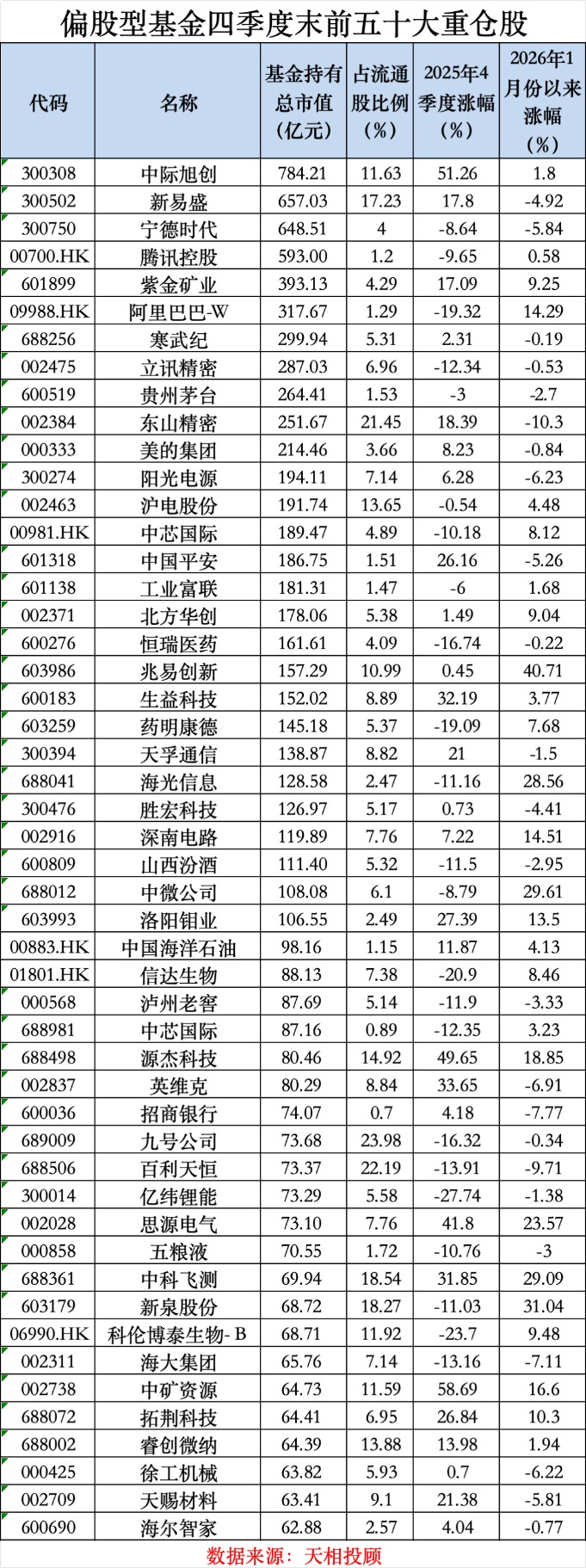
数据显示,公募基金2025年四季度仓位聚焦电子、电力设备等核心赛道,光模块龙头中际旭创和新易盛,超越 宁德时代和腾讯控股,成为主动权益基金前两大重仓股。 中际旭创登顶主动权益基金头号重仓股 天相投顾数据显示,截至2025年四季度末,中际旭创登顶主动权益基金头号重仓股,位列第二到第十大重仓股 的分别是新易盛、宁德时代、腾讯控股、紫金矿业、阿里巴巴-W、寒武纪-U、立讯精密、贵州茅台、东山精 密,覆盖AI、新能源、互联网、消费、电子等方向。 与2025年三季度末相比,光模块龙头中际旭创和新易盛,超越宁德时代和腾讯控股,成为主动权益基金前两大 重仓股。寒武纪-U、东山精密新进前十大重仓股,工业富联、中芯国际退出前十大重仓股。 从公募基金的全市场统计口径来看,个股层面,据Wind数据,公募基金2025年四季度末新进个股超600只,利 通科技、星图测控、超捷股份、大丰实业、力星股份、达意隆等个股,基金持股总量占流通A股比例均超 4%,其中星图测控、超捷股份1月以来股价涨幅均超两成,成为新进标的中的亮点。 增持与减持阵营均呈现规模化特征,四季度基金增持个股超1300只,恒勃股份、迈为股份、天华新能、普蕊 斯、斯菱智驱等个 ...



“宁王”发布!钠电池新品,7月量产
Zhong Guo Zheng Quan Bao· 2026-01-22 14:47
Core Viewpoint - CATL has launched a series of customized products for light commercial vehicles, including the industry's first mass-produced sodium-ion battery, which is expected to be commercially available by July 2026 [1][2]. Group 1: Product Launch and Features - The new "Tianxing 2nd Generation Light Commercial" series includes various models tailored for different transportation scenarios, such as urban distribution and extreme weather conditions [1]. - The sodium-ion battery, specifically the low-temperature version, retains over 92% usable capacity at -20°C and can operate in extreme conditions, demonstrating significant safety features [2]. - The battery's high power discharge performance allows for a temperature rise of no more than 5 degrees at a 5C charging rate, eliminating the need for additional cooling systems [2]. Group 2: Market Trends and Projections - The commercial vehicle market is expected to see a dual growth in domestic demand and exports, with a projected 65.5% year-on-year increase in new energy commercial vehicle sales, reaching 954,000 units by 2025 [3]. - The light commercial vehicle sector is anticipated to enter a new phase of large-scale application, with sales expected to exceed 600,000 units in 2025 and 900,000 units in 2026 [3]. - The sodium-ion battery market is expected to transition from the initial commercialization phase to large-scale application by 2025, driven by the advantages of resource abundance and safety [4]. Group 3: Industry Insights - Industry experts predict that by 2028, the sodium-ion battery market will reach a scale of 100 GWh, marking a significant transition from commercialization to large-scale production [5].
“宁王”发布!钠电池新品 7月量产
Zhong Guo Zheng Quan Bao· 2026-01-22 14:44
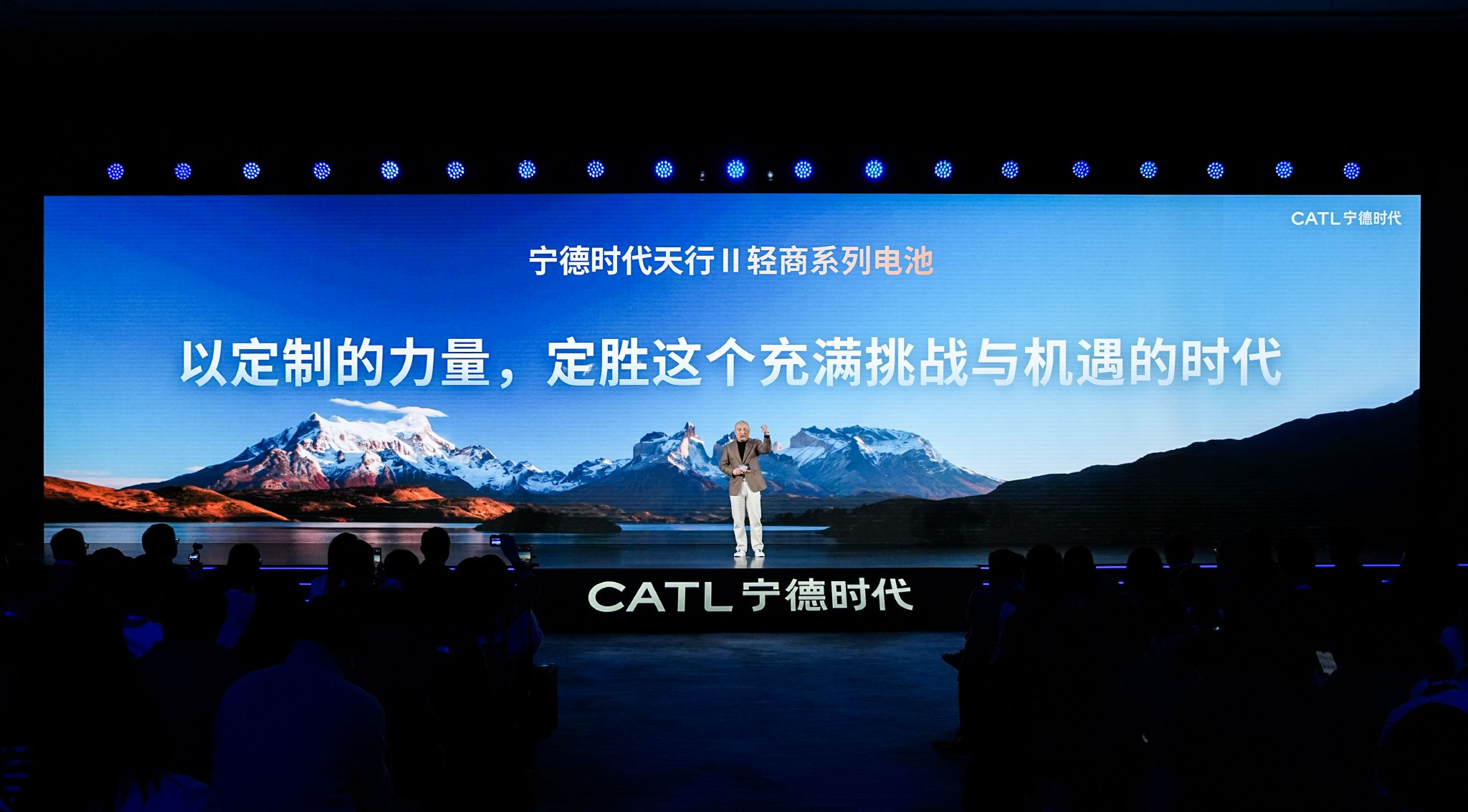
宁德时代表示,除性能外,轻商行业首款量产钠离子电池,经过电池锯断、电钻穿透、多向挤压测试 后,不起火、不爆炸,锯断后仍可正常放电,保障了用车安全。 高焕补充说:"钠电池高功率放电性能好,在5C充电倍率下,电池温升不会超过5度,不需要额外降温 处理,热管理系统可以做到进一步精简。"他表示,钠电池从实验室到量产落地,意味着电池低温性能 的难题正在被攻克。 1月22日,宁德时代在"天行二代轻商"新品发布会上,发布了"轻商"(轻型商用车)定制化系列产品, 包括天行二代轻商超充版、长续航版、高温超充版、低温版,分别适用城配、城际、末端配送、寒区等 多元的轻型商用车运输场景。 其中,天行二代轻商低温版电池,为行业首款量产钠离子电池,备受市场关注。中国证券报记者独家获 悉,宁德时代钠电池已在江淮小卡和中VAN(面包车)完成冬标测试,将于2026年7月批量量产,充电 和换电模式同步推出。 同时,宁德时代首席技术官高焕在接受中国证券报记者采访时表示,宁德时代钠电池预计在今年二季度 推广至乘用车,首款搭载车型为埃安旗下一款车型。随着产能拓展,逐渐会规模化推广至乘用车、商用 车,以及储能甚至工程机械等领域。目前,仍有成本等难题待破 ...
中际旭创,公募第一大重仓股


Mei Ri Jing Ji Xin Wen· 2026-01-22 14:37
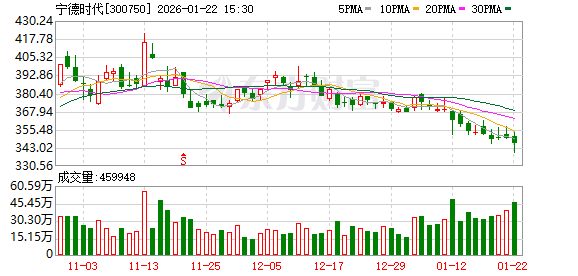
Core Insights - In the fourth quarter of 2025, public equity funds revealed their top holdings, with Zhongji Xuchuang (300308) and Xinyi Sheng (300502) replacing CATL (300750) and Tencent Holdings as the top two holdings [1] Group 1 - Zhongji Xuchuang and Xinyi Sheng emerged as the first and second largest holdings in public equity funds for Q4 2025 [1] - CATL and Tencent Holdings dropped to the third and fourth positions respectively in the ranking of public equity fund holdings [1]
见证历史!第一重仓股变了 中际旭创登顶偏股型基金第一大重仓股
Zhong Guo Ji Jin Bao· 2026-01-22 14:17
Group 1 - The core focus of the news is the shift in the top holdings of public funds, with Zhongji Xuchuang and Xinyi Sheng replacing CATL and Tencent as the top two holdings [1][5] - In the fourth quarter of last year, the information technology sector saw significant increases in fund holdings, with four out of the top five increased stocks belonging to this sector [1][6] - Zhongji Xuchuang's market value held by public funds increased from 55.81 billion to 78.42 billion, despite a reduction in shares held [5][9] Group 2 - The top ten holdings of public funds at the end of the fourth quarter included Zhongji Xuchuang, Xinyi Sheng, CATL, Tencent, Zijin Mining, Alibaba-W, Cambricon, Luxshare Precision, Kweichow Moutai, and Dongshan Precision [2] - The increase in holdings for Zhongji Xuchuang was the highest at 22.6 billion, followed by China Ping An and Dongshan Precision, both exceeding 10 billion [9] - Several stocks that saw significant price increases in the fourth quarter, such as Tianhua New Energy and Maiwei Co., also experienced substantial increases in fund holdings [9] Group 3 - The fourth quarter saw a reduction in holdings for major tech stocks, including Alibaba-W, Tencent, and SMIC, indicating a trend of public funds reducing exposure to these stocks [10][11] - The top ten stocks with reduced holdings included Alibaba-W, Industrial Fulian, CATL, and Tencent, with significant decreases in their market values held by funds [11] - The overall trend indicates a shift in investment focus towards sectors like information technology, non-ferrous metals, and chemicals, reflecting fund managers' latest strategies [6][9]

见证历史!第一重仓股,变了
Zhong Guo Ji Jin Bao· 2026-01-22 14:16
Core Viewpoint - The report highlights the significant changes in the top holdings of equity funds at the end of the fourth quarter, with Zhongji Xuchuang and Xinyi Sheng replacing CATL and Tencent as the top two holdings, reflecting a shift in investment focus towards technology stocks [1][7]. Group 1: Top Holdings - Zhongji Xuchuang emerged as the largest holding for equity funds, with a total market value of 78.42 billion yuan, despite a reduction in shares held by 970,140 shares, a decrease of 7.02% from the previous quarter [4][7]. - Xinyi Sheng ranked second with a market value of 65.70 billion yuan, also experiencing a slight reduction in holdings but benefiting from a stock price increase of 17.8% [4][7]. - CATL and Tencent fell to third and fourth positions, with market values of 64.85 billion yuan and 59.30 billion yuan, respectively, both experiencing declines in share prices [4][7]. Group 2: Sector Performance - The information technology sector saw significant increases in fund holdings, with four out of the top five increased holdings belonging to this sector [1][9]. - China Ping An was the only new entrant in the top twenty holdings, moving up from 41st to 15th place, indicating a growing interest in the insurance sector [7][12]. Group 3: Fund Activity - Equity funds increased their holdings in several sectors, particularly in information technology, non-ferrous metals, and chemicals, reflecting a strategic shift in investment focus [8][9]. - The top five stocks with the largest increases in holdings included Zhongji Xuchuang, China Ping An, and Dongshan Precision, with increases in market value exceeding 100 billion yuan for several stocks [10][12]. Group 4: Reduction in Holdings - Many leading stocks in the Hang Seng Technology Index, such as Alibaba, Tencent, and SMIC, faced reductions in holdings by equity funds, indicating a cautious approach towards these stocks amid a weak performance of the index [13][14]. - The top ten stocks with the largest reductions included Alibaba, Tencent, and CATL, with significant declines in their market values [15][16].
见证历史!第一重仓股,变了
中国基金报· 2026-01-22 14:11
Core Viewpoint - The article highlights the significant changes in the top holdings of equity funds at the end of the fourth quarter, with Zhongji Xuchuang and Xinyi Sheng replacing CATL and Tencent as the top two holdings, reflecting a shift towards technology stocks driven by a prolonged bull market in the sector [2][3][8]. Group 1: Top Holdings - As of the end of the fourth quarter, the top ten holdings of 5,458 actively managed equity funds included Zhongji Xuchuang, Xinyi Sheng, CATL, Tencent, Zijin Mining, Alibaba-W, Cambricon, Luxshare Precision, Kweichow Moutai, and Dongshan Precision [4][8]. - Zhongji Xuchuang emerged as the largest holding with a market value of 78.42 billion yuan, despite a reduction in shares held by 970,140 shares, a decrease of 7.02% from the previous quarter [5][8]. - Xinyi Sheng also saw a similar trend, with a slight reduction in holdings but a significant increase in market value due to stock price appreciation [8]. Group 2: Sector Trends - The information technology sector received substantial increases in fund allocations, with four out of the top five increased holdings belonging to this sector, alongside significant investments in the insurance sector, particularly in China Ping An [2][10]. - The article notes that the top five increased holdings in equity funds were Zhongji Xuchuang, China Ping An, Dongshan Precision, Xinyi Sheng, and others, indicating a strong preference for technology and financial sectors [11][12]. Group 3: Fund Activity - The article reports that the fourth quarter saw a general trend of reduced holdings in major tech stocks, with Alibaba-W, Tencent, and others being among the most significantly reduced [16][18]. - The reduction in holdings for these stocks was attributed to their poor performance in the Hang Seng Tech Index, with Alibaba-W and Tencent seeing reductions of 183.46 million yuan and 106.18 million yuan, respectively [17][18]. - Conversely, several stocks that doubled in price during the fourth quarter, such as Tianhua New Energy and Maiwei, experienced significant increases in fund holdings, reflecting a shift in investment strategy towards high-growth potential stocks [14].

2030年中国新型储能累计装机有望达到3.7亿千瓦 未来储能收益结构将显著转型
Zheng Quan Shi Bao Wang· 2026-01-22 13:48
Core Insights - As of December 2025, China's cumulative installed capacity for energy storage reached 213.3 GW, marking a 54% year-on-year increase [1] - The market share of pumped storage is 31.3%, while new energy storage, represented by lithium batteries, has seen a significant growth, accounting for over two-thirds of the total installed capacity [1] - New energy storage installations reached 144.7 GW, an 85% increase year-on-year, with the cumulative capacity being 45 times that of the end of the 13th Five-Year Plan [1] Installed Capacity and Market Trends - By the end of 2025, new energy storage installations included 66.43 GW and 189.48 GWh, with power and energy scales increasing by 52% and 73% respectively [1] - The top ten provinces in terms of installed capacity each exceeded 5 GWh, collectively accounting for nearly 90% of the total, with western provinces leading the way [1] Bidding and Pricing Dynamics - In 2025, the number of bidding sections for energy storage systems decreased by 10.4% to 690, while EPC bidding sections increased by 4.5% to 1,536 [2] - The bidding scale for energy storage systems reached 121.5 GWh, a 140.1% increase, and EPC bidding scale was 206.3 GWh, up 125.5% [2] - The procurement prices for lithium iron phosphate systems ranged from 391.14 to 913.00 yuan/kWh, with significant price variations based on system duration [2] Policy and Market Reforms - In 2025, 869 new policies related to energy storage were released, a 13% increase year-on-year, indicating a high level of policy activity [3] - The "14th Five-Year" planning goals for new energy storage across provinces exceed 91.6 GW, with most provinces having met their targets [3] - The market is transitioning towards a more market-oriented approach, with commercial energy storage expected to gradually move towards market participation [3] Future Outlook - The commercial energy storage sector is expected to maintain stable growth, with a shift from fixed price arbitrage to a more diversified revenue model [4] - The revenue structure for energy storage is anticipated to transform significantly, with energy arbitrage becoming the dominant revenue source [5] - The average duration of new energy storage installations is projected to increase from 2.58 hours in 2025 to 3.47 hours by 2030, reflecting advancements in technology and market demand [6]



被贴脸开大了
表舅是养基大户· 2026-01-22 13:45
Market Overview - The market is currently experiencing a situation of short-term liquidity excess, with the micro-cap stock index continuously reaching new highs compared to the declining performance of the Shanghai 50 index, indicating a combination of liquidity surplus and structural cooling [22][25]. - The financing market has shown signs of recovery, with net buying returning after two consecutive days of net selling, which aligns with historical patterns observed since the 924 market [15][18]. Company Cases - Liou Co., which had a significant funding order of over 10 billion, continued to hit the limit down, with the sell order value decreasing from over 100 billion to around 80 billion due to market conditions [4][5]. - Guosheng Technology, which previously faced five consecutive limit downs, experienced a dramatic turnaround, hitting the limit down in the morning and then reaching the limit up in the afternoon [5][6]. - Xunwei Communication saw a significant price increase of 10% due to a rumor about a large order with SpaceX, which was later debunked, yet the stock price remained unaffected [9][11]. ETF and Fund Trends - The wide-based ETFs have seen net selling exceeding 100 billion, with cumulative net selling surpassing 410 billion since last Thursday, indicating a significant outflow of capital [18][19]. - The chemical sector has gained increased attention from fund managers, with notable inflows into chemical ETFs, reflecting a growing interest in this sector [34][35]. Future Market Strategies - The market may implement various strategies to address the current liquidity situation, including enhancing short-selling mechanisms, accelerating the pace of share reductions, and managing the current internet trading practices [27][28]. - The overall sentiment suggests a cautious approach towards investment, emphasizing the importance of quality equity investments and maintaining a balanced portfolio [30][31].



宁德时代发布天行II 轻商系列解决方案
Xin Lang Cai Jing· 2026-01-22 13:44
Core Viewpoint - CATL has launched the "Tianxing II Light Commercial All-Scenario Customization Series Solutions" and the industry's first intelligent battery management application "Battery Butler" Tianxing version, aiming to enhance the efficiency and profitability of light commercial vehicles through a comprehensive ecosystem of hardware, software, and services [1][11]. Group 1: Product Innovations - The Tianxing II series offers four customized solutions targeting various operational scenarios such as urban distribution, intercity transport, last-mile delivery, and cold-region logistics, addressing the need for more precise operational requirements in the light commercial vehicle sector [3]. - The Tianxing II Light Commercial Super Charging Version features significant upgrades in cold resistance, power output, and lifespan, allowing for a 30% reduction in charging time from 20% to 80% in just 30 minutes, and a 30% increase in discharge power [5]. - The Tianxing II Light Commercial Long-Endurance Version boasts a battery capacity of 253 kWh, enabling a range of 800 kilometers, and incorporates a unique hybrid chemical system for enhanced safety and energy density [6]. - The Tianxing II Light Commercial High-Temperature Super Charging Version supports peak charging at 4C, allowing for a 60% charge in just 18 minutes, and features technology that reduces energy consumption by 5% [8]. - The Tianxing II Light Commercial Low-Temperature Version is the first mass-produced sodium-ion battery, maintaining over 92% usable capacity at -20°C and ensuring safety under extreme conditions [9]. Group 2: Intelligent Management Solutions - The "Battery Butler" Tianxing version app provides users with real-time monitoring of battery lifecycle, maximizing profitability and management precision through transparent data visualization [11]. - The app includes proactive risk assessment features, allowing users to receive alerts on potential issues and connect directly with CATL's service network for rapid support [11]. - The app offers three charging modes tailored to different scenarios, including an emergency fast-charging mode to ensure operational continuity during peak demand periods [11]. Group 3: Market Strategy and Future Outlook - CATL is committed to redefining the ecosystem of the light commercial vehicle industry by aligning product development with user needs and real-world applications, as stated by the company's logistics division president [13]. - The company aims to continue leveraging cutting-edge technology to create sustainable, replicable solutions in collaboration with industry partners, driving the electrification of light commercial vehicles towards greater efficiency and reliability [14].