CATL(300750)

Search documents
我国储能出海爆发年,2025年新增海外订单366GWh
Xin Jing Bao· 2026-01-22 10:00
Group 1 - The core viewpoint is that 2025 will be a significant year for the overseas expansion of China's energy storage industry, with a projected increase in overseas orders by 144% to 366 GWh [1] - Over 70 Chinese energy storage companies are expanding internationally, with battery manufacturers being the primary players in this trend [1] - The orders from Chinese energy storage companies are expected to cover over 60 countries and regions, with emerging markets in the Middle East, South America, and Southeast Asia showing significant potential [1] Group 2 - Notable energy storage companies have secured large overseas contracts, including CATL as the preferred supplier for a 19 GWh battery storage project in the UAE and BYD signing a contract for a 12.5 GWh project in Saudi Arabia [2] - The Hong Kong stock market is becoming a key platform for Chinese energy storage companies to support their global capacity expansion, with several companies successfully listing and others in the pipeline [3] - The diversification of technology routes for Chinese energy storage companies is evident, with lithium batteries, flow batteries, and sodium batteries all gaining traction in international markets [3] Group 3 - The essence of Chinese companies' overseas expansion is part of a global industrial chain shift, moving from product exports to a comprehensive system of "capacity + brand + channel" [4] - The overseas demand for energy storage solutions is expected to be more resilient than market expectations in 2026 [4]



数据复盘丨132股获主力资金净流入超1亿元 龙虎榜机构抢筹16股
Zheng Quan Shi Bao Wang· 2026-01-22 09:50
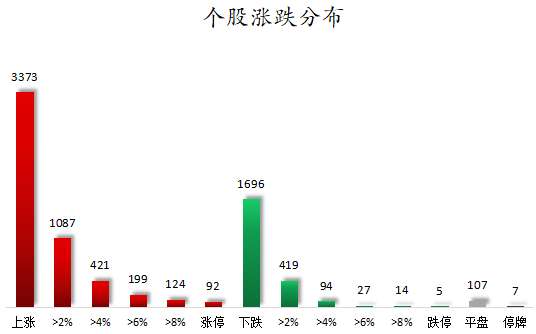
Market Overview - The Shanghai Composite Index closed at 4122.58 points, up 0.14%, with a trading volume of 1201.8 billion yuan [1] - The Shenzhen Component Index closed at 14327.04 points, up 0.5%, with a trading volume of 1489.968 billion yuan [1] - The ChiNext Index closed at 3328.65 points, up 1.01%, with a trading volume of 686.176 billion yuan [1] - The STAR Market 50 Index closed at 1541.64 points, up 0.41%, with a trading volume of 114.5 billion yuan [1] - The total trading volume of the Shanghai and Shenzhen markets was 2691.768 billion yuan, an increase of 91.051 billion yuan compared to the previous trading day [1] Sector Performance - Strong sectors included construction materials, defense and military, oil and petrochemicals, telecommunications, coal, steel, chemicals, and environmental protection [2] - Active concepts included oil and gas services, helium, aircraft carriers, nanomaterials, commercial aerospace, 6G, glyphosate, controlled nuclear fusion, and marine economy [2] - Weak sectors included beauty and personal care, non-ferrous metals, precious metals, pharmaceuticals and biotechnology, insurance, and automotive [2] Individual Stock Performance - A total of 3373 stocks rose, while 1696 stocks fell, with 107 stocks remaining flat and 7 stocks suspended [2] - Among the stocks that hit the daily limit, 92 stocks rose to the limit, while 5 stocks fell to the limit [2] - The stock with the most consecutive limit-ups was Fenglong Co., with 17 consecutive limit-ups [5] Capital Flow - The net outflow of main funds in the Shanghai and Shenzhen markets was 10.442 billion yuan [6] - The communication sector saw the highest net inflow of main funds, amounting to 7.884 billion yuan [6] - The defense and military, non-bank financial, and machinery sectors also experienced significant net inflows of 2.916 billion yuan, 1.371 billion yuan, and 689 million yuan, respectively [6] Notable Stocks - 132 stocks received net inflows of over 1 billion yuan, with Xinyi Sheng receiving the highest net inflow of 2.193 billion yuan [8] - The stocks with the highest net outflows included Sanhua Intelligent Control, with a net outflow of 2.431 billion yuan [11] - Institutional investors net bought 16 stocks, with Hunan Baiyin being the most purchased stock at approximately 363.341 million yuan [14]


宁德时代:率先推出量产轻商钠离子电池
Ge Long Hui A P P· 2026-01-22 09:31
格隆汇1月22日|据21财经,宁德时代在广州发布天行 II 轻商行业全场景定制化系列解决方案。其中, 轻商低温版采用行业首款量产钠电池。该款钠电池45kWh适配中小VAN、小微卡多种车型,在零下 30℃,即使电芯完全冻透下,可即插即充;在零下20℃,电池依然保有92%以上的可用电量。 ...
电力设备行业资金流出榜:宁德时代等25股净流出资金超亿元
Zheng Quan Shi Bao Wang· 2026-01-22 09:25
Market Overview - The Shanghai Composite Index rose by 0.14% on January 22, with 22 out of the 28 sectors experiencing gains. The top-performing sectors were building materials and defense, with increases of 4.09% and 3.23% respectively. Conversely, the beauty care and banking sectors saw declines of 0.76% and 0.43% respectively [1] Capital Flow Analysis - The main capital flow showed a net outflow of 21.612 billion yuan across the two markets. However, 12 sectors experienced net inflows, with the telecommunications sector leading at a net inflow of 8.019 billion yuan and a daily increase of 2.83%. The defense sector also performed well, with a net inflow of 5.713 billion yuan and a daily increase of 3.23% [1] Electric Power Equipment Sector Performance - The electric power equipment sector declined by 0.11%, with a net outflow of 7.206 billion yuan. Out of 365 stocks in this sector, 188 rose, 172 fell, and 4 hit the daily limit up while 1 hit the limit down. Notably, 128 stocks had net inflows, with 12 stocks receiving over 100 million yuan in net inflows, led by KOTAI Power with 431 million yuan [2] Top Gainers in Electric Power Equipment - The top gainers in the electric power equipment sector included: - KOTAI Power: +11.20%, 21.69% turnover, 431.07 million yuan inflow - LONGi Green Energy: +2.15%, 2.53% turnover, 353.53 million yuan inflow - Zhongchao Holdings: +10.04%, 4.61% turnover, 353.51 million yuan inflow [2] Top Losers in Electric Power Equipment - The top losers in the electric power equipment sector included: - CATL: -1.15%, 1.08% turnover, -1.444 billion yuan outflow - TBEA: -2.36%, 8.66% turnover, -991 million yuan outflow - Sungrow Power: -1.05%, 3.64% turnover, -909 million yuan outflow [3]


“双十”基金经理最新调仓:朱少醒再买紫金矿业,谢治宇加码科技
Sou Hu Cai Jing· 2026-01-22 09:21
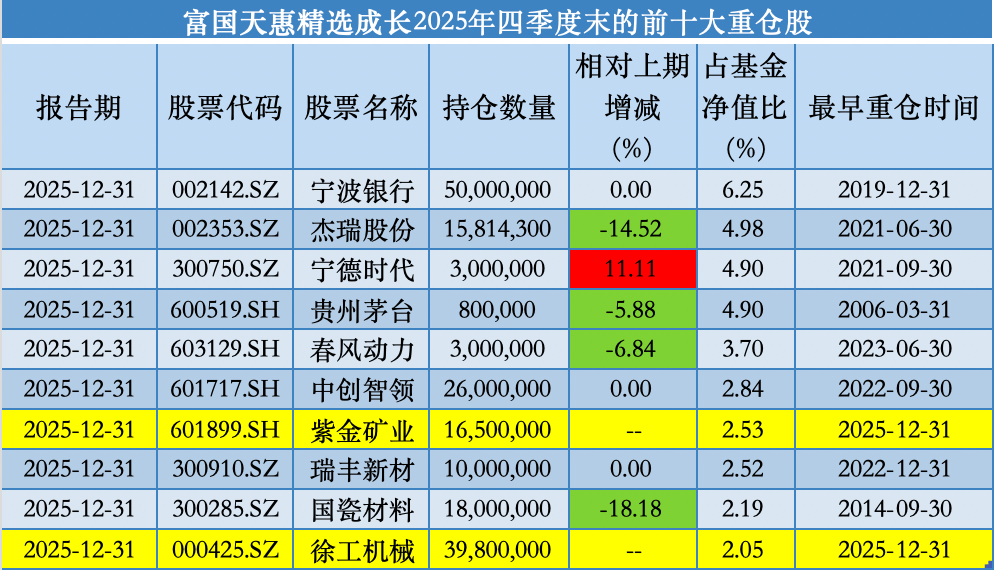
Core Viewpoint - The latest quarterly reports reveal significant adjustments in the portfolios of renowned fund managers Zhu Shaoxing and Xie Zhiyu, highlighting their investment strategies and stock selections for Q4 2025. Group 1: Zhu Shaoxing's Investment Strategy - Zhu Shaoxing's fund, Fuqun Tianhui Select Growth, increased its holdings in Ningde Times and made a notable "reverse operation" by selling Zijin Mining in the first half of 2025 and repurchasing it in the second half [2][3] - As of the end of Q4 2025, the fund's net asset value was 22.484 billion yuan, with top ten holdings including Ningbo Bank, Jerry Holdings, Ningde Times, and Guizhou Moutai [3][4] - Zhu's portfolio adjustments indicate a focus on sectors benefiting from anti-involution policies, suggesting a positive outlook for the A-share market despite rising valuations [4][5] Group 2: Xie Zhiyu's Investment Strategy - Xie Zhiyu's fund, Xingquan Helun, reported a total fund size of 38.618 billion yuan, with significant new investments in stocks like Baiwei Storage, Tuojing Technology, and Huahai Qingke [6][7] - The fund increased its position in Ningde Times while reducing holdings in several other stocks, including East Mountain Precision and Lixun Precision [6][7] - Xie expressed optimism about the domestic supply chain's growing influence in international markets and highlighted opportunities in the storage and semiconductor sectors driven by AI-related capital expenditures [7][8]


“联姻”宁德时代 天华新能冲刺港股
2 1 Shi Ji Jing Ji Bao Dao· 2026-01-22 09:19
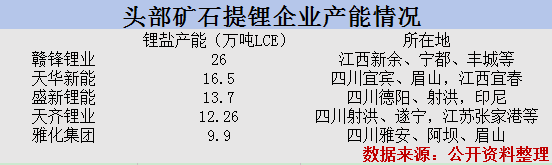
Core Viewpoint - Tianhua New Energy is initiating its Hong Kong listing plan shortly after strategic investment from CATL, aiming to enhance its international presence and capital capabilities in the lithium industry [1][2][4]. Group 1: Company Overview - Tianhua New Energy, formerly known as Tianhua Super Clean, is a major lithium salt producer in China, with a combined production capacity of 165,000 tons of lithium hydroxide and lithium carbonate [3][8]. - The company has shifted its focus to lithium battery materials, with over 88% of its revenue coming from this segment as of the first half of 2025 [10]. Group 2: Market Context - The timing for the Hong Kong listing is favorable, as the lithium industry has seen a rebound since the second half of 2025, with companies like Ganfeng Lithium and Tianqi Lithium experiencing significant stock price increases [4][21]. - The A/H premium for lithium companies has been decreasing, with Ganfeng Lithium's A/H premium dropping from approximately 1.85 times to 1.19 times as of January 21, 2026 [5][28]. Group 3: Production Capacity and Challenges - Tianhua New Energy's lithium salt production capacity is concentrated in Yibin, Meishan, and Yichun, with notable capacities of 75,000 tons/year and 60,000 tons/year for battery-grade lithium hydroxide [10][11]. - The company faces challenges in securing high-quality lithium resources, relying heavily on imported lithium concentrate, which affects its cost structure compared to integrated lithium salt producers [12][16]. Group 4: Strategic Partnerships and Financials - The company has established a significant partnership with CATL, with expected sales and processing service revenues reaching approximately 1.5 billion yuan in 2025 [20]. - Tianhua New Energy plans to increase its lithium salt production capacity to 250,000-260,000 tons/year in response to market demand [17].

锂电池行业专题研究:新型储能产业链之河南概况(三)
Zhongyuan Securities· 2026-01-22 09:03
Investment Rating - The report maintains an "Outperform" rating for the lithium battery industry relative to the CSI 300 index [2]. Core Insights - The new energy storage market is experiencing significant growth, with global new energy storage installations expected to reach 74.1 GW/177.8 GWh by the end of 2024, representing year-on-year growth of 62.5% and 61.9% respectively. In China, the new energy storage capacity is projected to increase by 103% and 136% to 43.7 GW/109.8 GWh [10][17]. - Lithium batteries are expected to dominate the energy storage technology landscape, with shipments in China reaching 430 GWh in the first three quarters of 2025, marking a year-on-year increase of 99.07% [10][24]. - The report highlights the supportive policy environment for the energy storage industry, with multiple initiatives launched by the Chinese government to promote the development of new energy storage technologies [10][35]. Summary by Sections 1. Energy Storage Industry Overview - The global energy system is undergoing significant changes to meet carbon neutrality commitments, with a focus on increasing the share of renewable energy [15][16]. - Energy storage technologies are categorized into mechanical and electrochemical storage, with pumped storage being the most mature technology [16][22]. 2. Energy Storage Policies - Since 2021, the Chinese government has introduced a series of policies to support the development of energy storage, including the "New Energy Storage Manufacturing High-Quality Development Action Plan" [35][36]. - The goal is to achieve over 100 million kW of new energy storage capacity by 2027, with significant investments expected [36][37]. 3. Electrochemical Energy Storage - Lithium-ion batteries are highlighted as the most mature and widely used technology in energy storage, with a market share of 97.5% in new energy storage technologies [24][29]. - The report discusses the advantages of lithium batteries, including high energy density and long lifespan, while also noting safety risks [22][24]. 4. Mechanical Energy Storage - Pumped storage remains a significant part of the energy storage landscape, accounting for 54.3% of total storage capacity as of the end of 2024 [24][29]. - Other mechanical storage technologies, such as compressed air and flywheel storage, are also discussed, highlighting their respective advantages and limitations [22][24]. 5. Henan Province Energy Storage Overview - Henan Province has implemented policies to accelerate the development of new energy storage technologies, aiming for a scale of over 15 million kW by 2030 [10][36]. - Key companies in the Henan energy storage sector include multiple firms specializing in lithium, sodium, and flow batteries [10][36].

宁德时代首席技术官高焕表示,宁德时代计划在未来两到三年做到钠电池比现在的锂电池更具经济性
Xin Lang Cai Jing· 2026-01-22 09:01
宁德时代 首席技术官高焕表示,宁德时代计划在未来两到三年做到 钠电池 比现在的 锂电池 更具经济 性。 ...
华安证券:北美缺电逻辑演绎 储能成为核心解法
智通财经网· 2026-01-22 08:42
Group 1: Core Insights - The report from Huazhong Securities indicates that the U.S. energy storage capacity is steadily increasing, with an expected installation of 52.5 GWh by 2025 [1] - The next five years are identified as a critical window for data center expansion, with energy storage expected to be a key solution for electricity shortages in U.S. data centers before 2030 [1][3] Group 2: Current Status of U.S. Energy Storage - In the first 11 months of 2025, the U.S. added 36.23 GWh of large-scale energy storage, with contributions from emerging states like Arizona, in addition to Texas and California [1] - U.S. energy storage can be categorized into three types: arbitrage-driven, capacity contract-driven, and load-driven [1] Group 3: Advantages of Energy Storage in the AI Era - The mismatch between power supply and transmission construction, coupled with the retirement of traditional energy sources, has led to increased demand from data centers [2] - Energy storage can serve multiple roles, including acting as a dispatchable unit on the grid side and as flexible load on the user side, enhancing reliability and reducing dependency on diesel generators [2] Group 4: Economic Viability of Energy Storage - According to Lazard's 2025 report, the cost of solar-plus-storage in the U.S. ranges from $0.05 to $0.13 per kWh, making it economically advantageous compared to nuclear, coal, and gas power [2] - Data centers utilizing four-hour storage can achieve an internal rate of return (IRR) of 20.5%, with a payback period of only 4.76 years [2] Group 5: Future Projections and Strategic Importance - Energy storage is expected to become a core solution for electricity shortages in U.S. data centers, with projections indicating that installations may exceed 110 GWh by 2027 [3] - The ability to bypass long grid connection queues and connect to distribution networks or behind-the-meter (BTM) solutions is highlighted as a significant advantage for energy storage [3] Group 6: Recommended Stocks - The report recommends several companies as potential investment opportunities: Sungrow Power Supply (300274.SZ), Shuneng Electric (300827.SZ), Canadian Solar (688472.SH), and CATL (300750.SZ, 03750) [4]


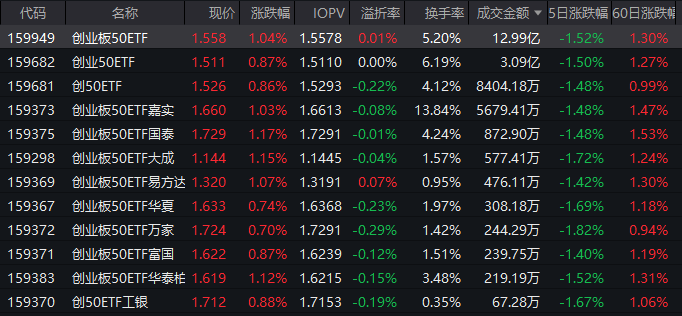
如何一键布局创业板核心资产?创业板50ETF(159949)单日成交近13亿 流动性居市场前列
Xin Lang Cai Jing· 2026-01-22 08:29
Market Performance - On January 22, the A-share market experienced a morning surge followed by a pullback, with the three major indices closing in the green, and the ChiNext Index rising nearly 1% [1][6] - The ChiNext 50 ETF (159949) increased by 1.04%, closing at 1.558 yuan, with a turnover rate of 5.20% and a transaction volume of 1.299 billion yuan, ranking first among similar ETFs [1][6] Liquidity and Trading Data - As of January 22, the ChiNext 50 ETF (159949) recorded a cumulative transaction amount of 38.006 billion yuan over the last 20 trading days, with an average daily transaction amount of 1.900 billion yuan; since the beginning of the year, the cumulative transaction amount over 14 trading days was 27.332 billion yuan, with an average daily transaction amount of 1.952 billion yuan [2][7] - The circulating scale of the ChiNext 50 ETF was 24.900 billion yuan as of January 21, 2026 [2][7] Fund Holdings and Performance - The latest quarterly report indicates that the top ten holdings of the ChiNext 50 ETF (159949) showed mixed performance, including stocks like CATL, Zhongji Xuchuang, and Mindray Medical [3][8] - The fund manager noted that the fourth quarter saw a return to structural market trends, with significant divergence in the ChiNext, particularly in sectors like AI and new energy [10] Investment Outlook - The ChiNext 50 ETF is viewed as a convenient tool for long-term investors interested in China's technology growth sector, with a three-year return of 35.16%, outperforming its benchmark and ranking 526th among 1,633 similar products [5][11] - Recommendations for investors include adopting a dollar-cost averaging strategy or phased investment to smooth out short-term volatility while closely monitoring the performance of constituent stocks and relevant policy developments [5][11]