Mindray(300760)

Search documents
AI医疗重构诊疗流程,效率与市场增长下的投资机会
Caixin Securities· 2025-05-15 02:25
Investment Rating - The report maintains an investment rating of "Outperform the Market" for the medical device industry [2]. Core Insights - The report emphasizes that AI in healthcare is restructuring diagnostic and treatment processes, creating investment opportunities driven by efficiency and market growth. The global healthcare sector faces challenges such as aging populations and uneven distribution of medical resources, which AI can address by optimizing the healthcare value chain and promoting equitable access to medical resources [5][6]. Summary by Sections 1. AI Healthcare Development Environment - The domestic AI healthcare development environment is mature, supported by data resources and services that enhance algorithm accuracy and generalization [11]. - AI technology is breaking the uneven distribution of medical resources, addressing the growing demand for healthcare services due to an aging population [18][19]. 2. AI Medical Imaging - AI medical imaging is the most mature application of AI in healthcare, with a complete ecosystem covering various imaging modalities such as CT, MRI, and X-ray. The market for AI medical imaging in China is projected to reach 6.17 billion yuan by 2025 [5][39]. - Companies like Mindray and United Imaging are leveraging hardware advantages to build "device + AI" ecosystems, while pure AI companies focus on lesion recognition and cross-disease generalization capabilities [5][39]. 3. AI In Vitro Diagnostics - The AI in vitro diagnostics market is rapidly growing, with applications in hematology, microbiology, and pathology. Companies like BGI and Anbiping are innovating with AI-driven solutions to enhance diagnostic efficiency [5][6]. 4. AI Wearable Devices - AI wearable devices are transforming health management by providing real-time monitoring and data analysis, becoming essential for chronic disease management. The market for smart wearable devices in China is expected to exceed 15 billion yuan in 2023 and reach 33 billion yuan by 2026, with a compound annual growth rate of 18.1% [6]. 5. Investment Recommendations - The report suggests that the industry is poised for multidimensional development, transitioning from scale expansion to higher-level growth. It highlights long-term investment opportunities in leading companies like Mindray, United Imaging, Yuyue Medical, and Kefu Medical, which are early adopters of AI healthcare solutions [6].




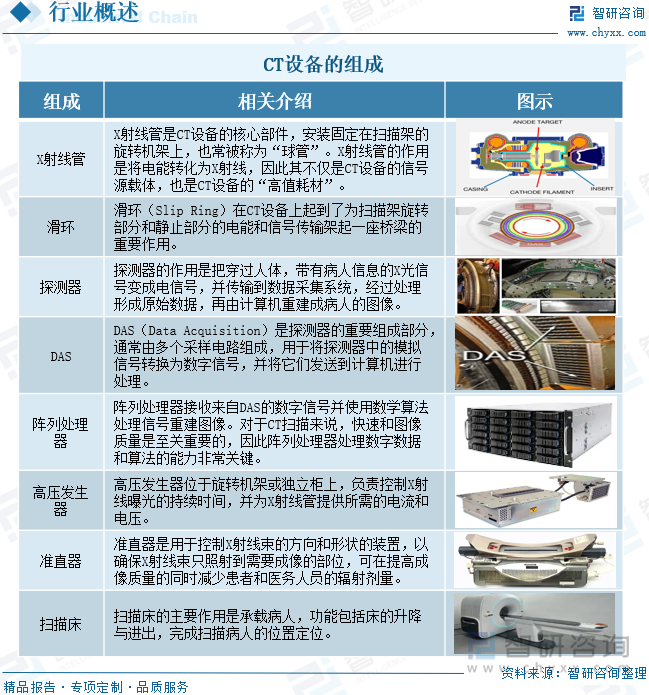
趋势研判!2025年中国CT设备行业产业链、保有量、市场规模、竞争格局及前景展望:CT设备市场保持高速发展,优秀国产CT设备占比超6成[图]
Chan Ye Xin Xi Wang· 2025-05-15 01:33
Core Insights - The CT equipment market in China is projected to reach approximately 25.5 billion yuan in 2024, driven by increasing clinical demand due to an aging population and rising chronic disease prevalence [1][20] - The market is expected to maintain rapid growth as investments in healthcare increase and the implementation of hierarchical medical care continues [1][20] Industry Overview - CT, or computed tomography, is a medical imaging technology that utilizes X-rays to create detailed images of the body's internal structures, widely used for diagnosing various diseases [3][7] - The CT equipment industry is characterized by high technical barriers, requiring long-term technological accumulation for both core component development and complete device manufacturing [16] Market Dynamics - The demand for CT equipment is increasing due to the aging population and the growing need for medical examinations, with the number of CT devices in China expected to reach approximately 55,133 units by 2024 [21] - The domestic CT equipment market's localization rate is projected to be around 53% in 2024, with over 66% of sales coming from high-quality domestic brands [23] Competitive Landscape - The CT equipment industry in China exhibits a tiered competitive structure, with leading companies like GE Healthcare, United Imaging, and Siemens dominating the high-end market, while domestic firms are rapidly catching up through technological innovation [26][28] - Companies such as United Imaging and Wandong Medical are focusing on high-performance imaging equipment and innovative solutions to enhance their market presence [28][30] Policy Environment - The Chinese government has implemented strict regulatory frameworks for medical devices, promoting high-quality development and technological innovation in the CT equipment sector [9][11] - Recent policies aim to enhance the regulatory system for medical devices, ensuring safety and effectiveness while fostering innovation and competitiveness in the industry [9][11] Future Trends - The industry is witnessing a shift towards technological innovation and domestic substitution, with local manufacturers making significant strides in core component production and image quality [32] - The demand for CT equipment in grassroots medical institutions is expected to grow, driven by the hierarchical medical care policy and the increasing number of private hospitals [33] - The integration of AI and digital technologies in CT equipment is anticipated to enhance diagnostic capabilities and operational efficiency, aligning with the industry's move towards sustainability and environmental compliance [34]


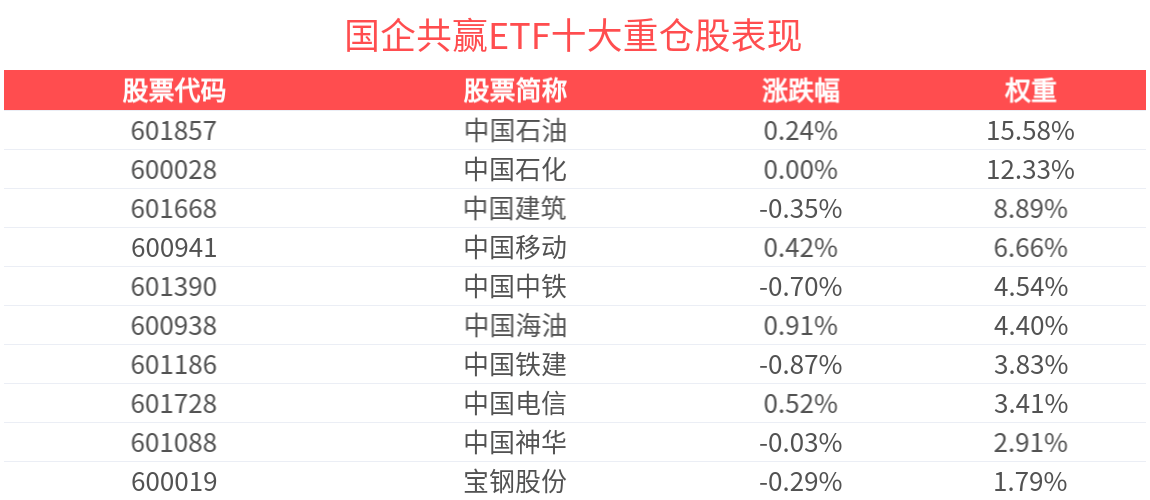
中证全指医疗保健设备与服务指数下跌0.23%,前十大权重包含联影医疗等
Sou Hu Cai Jing· 2025-05-14 15:39
Core Viewpoint - The China Securities Index for Healthcare Equipment and Services has shown a slight decline of 0.23% recently, reflecting a mixed performance over different time frames, with a year-to-date decrease of 0.88% [1]. Group 1: Index Performance - The China Securities Index for Healthcare Equipment and Services closed at 13,568.19 points with a trading volume of 15.409 billion yuan [1]. - Over the past month, the index has increased by 2.13%, while it has decreased by 5.63% over the last three months [1]. - The index has a year-to-date decline of 0.88% [1]. Group 2: Index Composition - The index is composed of listed companies in the healthcare sector, selected from the broader China Securities Index to reflect the overall performance of healthcare-related securities [1]. - The top ten weighted companies in the index include Mindray Medical (9.73%), Aier Eye Hospital (8.29%), and United Imaging Healthcare (7.73%) [1]. - The index is primarily composed of companies listed on the Shenzhen Stock Exchange (61.00%) and the Shanghai Stock Exchange (39.00%) [1]. Group 3: Fund Tracking - Several public funds track the China Securities Index for Healthcare Equipment and Services, including Southern Asset Management's various funds and Tianhong's ETF [2].




医药指数基金投资指南(精品课程)
银行螺丝钉· 2025-05-14 13:46
Core Viewpoint - The article discusses the common pharmaceutical indices in A-shares and Hong Kong stocks, their classifications, current valuations, and available funds for investment opportunities in the pharmaceutical sector [1]. Group 1: Classification of Indices - The common indices in A-shares and Hong Kong stocks are categorized into four types: broad-based indices, strategy indices, industry indices, and thematic indices [5][6][7][8][9]. - Broad-based indices select stocks based on market capitalization and cover various industries [6]. - Strategy indices are based on broad-based indices but apply specific investment strategies, catering to diverse investor needs [7]. - Industry indices focus on specific sectors, such as pharmaceuticals, and are essential for long-term societal development [8]. - Thematic indices are related to specific themes like technology and renewable energy, covering multiple industries but not as extensively as broad-based indices [9]. Group 2: Pharmaceutical Industry Insights - The pharmaceutical industry is highlighted as a naturally profitable sector due to its essential nature in human life [11][12]. - Demand for pharmaceuticals remains stable regardless of economic downturns or natural disasters [13]. - Over decades, the pharmaceutical industry has consistently performed well, with the CSI Pharmaceutical Index (code 000933) showing a growth of over six times from 1000 points in December 2004 to 7602 points by April 2025 [15][16]. Group 3: Sub-industry Indices - The pharmaceutical sector includes three main sub-industry indices: medical services, biotechnology, and innovative drugs [18]. - The medical industry comprises medical services and devices, with a significant number of funds available for investment [19]. - Biotechnology focuses on gene diagnostics, biopharmaceuticals, blood products, and human biotechnology, showing comparable long-term returns to the medical sector [20]. - Innovative drugs primarily involve pharmaceutical companies, with many firms operating in both biotechnology and innovative drugs [22]. Group 4: A-shares and Hong Kong Stocks Pharmaceutical Indices - A summary of common pharmaceutical indices in A-shares and Hong Kong stocks is provided, including representative indices and their respective sub-indices [26]. - The CSI Pharmaceutical Index represents large and mid-cap pharmaceutical stocks, while the Full Pharmaceutical Index covers a broader range of companies [28][30]. - The Hong Kong Hang Seng Medical Care Index is the primary pharmaceutical index in Hong Kong, with similar definitions to the A-share pharmaceutical indices [33][34]. Group 5: Historical Performance and Valuation - The A-share pharmaceutical industry has experienced several bull and bear markets, with annualized returns of 10.5% for the CSI Pharmaceutical Index and 10.91% for the Full Pharmaceutical Index [42]. - The pharmaceutical indices are currently at relatively low valuation levels, with price-to-earnings ratios generally higher than price-to-book ratios due to fluctuations in industry profitability [47][48]. - The historical performance of the CSI Medical Index shows an annualized return of 9.47%, indicating potential for higher long-term returns as it rebounds from current lows [60]. Group 6: Index Funds - Various index funds related to pharmaceutical indices are available in both A-shares and Hong Kong stocks, with similar fee structures [51]. - The scale of these funds is generally small, reflecting their recent establishment [52].



医药生物周报(25年第19周):美国药品价格改革回顾
Guoxin Securities· 2025-05-14 07:45
Investment Rating - The report maintains an "Outperform" rating for the pharmaceutical and biotechnology sector [7][4]. Core Views - The pharmaceutical sector underperformed the overall market this week, with a 1.01% increase compared to the total A-share market's 2.29% rise. The medical device sector led the gains [1][31]. - The report highlights the U.S. government's recent administrative order aimed at providing "Most Favored Nation" pricing for prescription drugs, which may face judicial challenges similar to previous attempts in 2020 [2][28]. - The U.S. healthcare spending reached $4.46 trillion in 2022, accounting for 17.5% of GDP, with government-funded programs like Medicare and Medicaid being significant contributors to this expenditure [16]. Summary by Sections Market Performance - The overall A-share market increased by 2.29%, with the Shanghai and Shenzhen 300 index rising by 2.00%. The biotechnology sector's performance was weaker, with a 1.01% increase [1][31]. - Individual stocks showed significant variances, with JinHao Medical leading with a 24.38% increase, while ST HuLuWa faced an 18.29% decline [35][31]. U.S. Drug Pricing Reform - The U.S. government issued an executive order on May 12, 2025, promoting "Most Favored Nation" pricing for prescription drugs, which aims to lower U.S. drug prices based on international benchmarks [15][28]. - The report notes that the implementation of this order may be limited in the short term due to potential legal challenges and the need for further details [2][28]. Company Ratings and Predictions - Key companies rated as "Outperform" include: - Mindray Medical: Strong R&D and sales capabilities, benefiting from domestic medical infrastructure [42]. - WuXi AppTec: A comprehensive service platform for new drug development, poised to benefit from the global outsourcing market [42]. - New Industries: A leader in chemiluminescence immunoassay, with strong growth prospects [42]. - Other notable mentions include Aide Biological, ZhenDe Medical, and Kangfang Biological, all rated "Outperform" [4][42][44]. Valuation Metrics - The TTM P/E ratio for the pharmaceutical and biotechnology sector is 32.26x, compared to the overall A-share market's 18.43x. Sub-sectors like chemical pharmaceuticals and biological products have higher P/E ratios of 37.86x and 38.40x, respectively [37][38].
浦银、信达等券商发布研报:迈瑞医疗高研发与分红彰显长期价值
Jiang Nan Shi Bao· 2025-05-14 07:32
Core Viewpoint - Mindray Medical (300760) is gaining significant attention from the market and various brokerages due to its strong R&D capabilities, innovative achievements, and robust market competitiveness, maintaining its leadership position in the medical device industry [1][2][3][4][5][6]. Group 1: Financial Performance and Projections - Mindray's domestic revenue is expected to decline in 2024 but is projected to recover in 2025, driven by improvements in local fiscal funding and medical project updates [1]. - The company's EPS forecasts for 2025-2027 are adjusted to 11.10, 12.77, and 14.75 yuan, reflecting a positive outlook for long-term growth [2]. - Revenue projections for 2025-2027 are estimated at 409.28 billion, 482.12 billion, and 568.81 billion yuan, with corresponding net profits of 132.03 billion, 156.88 billion, and 186.29 billion yuan, indicating strong growth rates [5][8]. Group 2: Market Expansion and International Performance - In 2024, Mindray's international revenue is expected to reach approximately 164.3 billion yuan, accounting for about 44.7% of total revenue, with a year-on-year growth of around 21.3% [4]. - The Asia-Pacific region is projected to grow nearly 40% in 2024, driven by markets like Australia, Thailand, and India, while the European market is rebounding with over 30% growth [4]. - The international business has shown a compound annual growth rate exceeding 15% over the past two years, with developing countries experiencing close to 19% growth [4]. Group 3: Innovation and R&D Investment - Mindray has maintained high levels of R&D investment, amounting to 40.08 billion yuan in 2024, which is 10.91% of its revenue [7]. - The company has filed approximately 12,000 patents, with a significant number being invention patents, showcasing its commitment to innovation [7]. - Mindray's AI-enabled solutions are expected to enhance its competitive edge in the medical device industry, contributing to increased market share and brand recognition [3]. Group 4: Dividend Policy and Shareholder Returns - Mindray has a strong track record of cash dividends, with a total cash dividend of 76.02 billion yuan in 2024, reflecting a cash dividend ratio of 65.15% [7]. - The company plans to distribute a cash dividend of 17.10 billion yuan in 2025, demonstrating its commitment to shareholder returns [7].
多家央国企积极开展回购增持计划,国企共赢ETF(159719)、大湾区ETF(512970)配置机遇备受关注
Sou Hu Cai Jing· 2025-05-14 02:28
Group 1 - The National Enterprise Win ETF (159719) has seen a slight decline of 0.13% as of May 14, 2025, with a latest price of 1.51 yuan, while it has accumulated a rise of 1.96% over the past week as of May 13, 2025 [1] - The liquidity of the National Enterprise Win ETF shows a turnover of 0.74% during the day, with a transaction volume of 895,000 yuan, and an average daily transaction of 24.76 million yuan over the past week [1] - The CSI Guangdong-Hong Kong-Macao Greater Bay Area Development Theme Index (931000) has decreased by 0.08% as of May 14, 2025, with component stocks showing mixed performance [1] Group 2 - Over 300 listed companies have publicly disclosed share repurchase and increase plans since April 2025, with a total amount exceeding 100 billion yuan, including both private enterprises and state-owned enterprises [2] - As of the end of April 2025, the proposed share repurchase loan amount disclosed by listed companies has surpassed 110 billion yuan, with financial institutions signing contracts for approximately 200 billion yuan [2] - Analysts predict that value cycle stocks represented by central state-owned enterprises will yield significant excess returns in the current policy environment aimed at expanding domestic demand and stabilizing assets [2] Group 3 - The National Enterprise Win ETF closely tracks the FTSE China National Enterprise Open Win Index, which reflects the performance of Chinese state-owned enterprises listed in mainland China and Hong Kong, focusing on globalization and sustainable development [2] - The FTSE China National Enterprise Open Win Index consists of 100 constituent stocks, including 80 A-share companies and 20 companies listed in Hong Kong [2] Group 4 - As of April 30, 2025, the top ten weighted stocks in the CSI Guangdong-Hong Kong-Macao Greater Bay Area Development Theme Index account for 53.26% of the index, with companies like BYD, China Ping An, and Midea Group among the leaders [5]






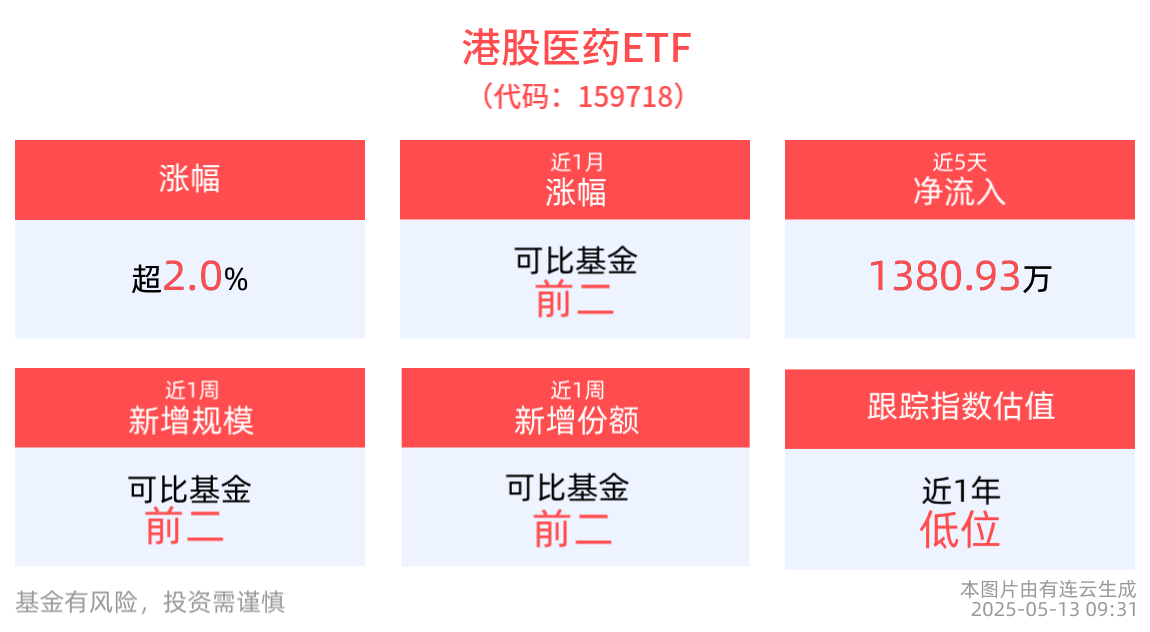
大幅反弹!港股医药ETF(159718)高开高走涨超2%!医疗创新ETF(516820)小幅拉升
Xin Lang Cai Jing· 2025-05-13 01:56
Core Viewpoint - The recent policy announced by Trump to align U.S. drug prices with the lowest global prices could lead to a significant decrease in prescription drug prices in the U.S., potentially by 30% to 80%, raising concerns among pharmaceutical companies, especially those exporting to the U.S. [1][2] Group 1: Market Performance - As of May 13, 2025, the CSI Hong Kong Stock Connect Pharmaceutical and Healthcare Composite Index (930965) rose by 2.42%, with notable increases in stocks such as BeiGene (06160) up 4.15% and Innovent Biologics (01801) up 3.14% [1] - The Hong Kong Pharmaceutical ETF (159718) opened high and increased by 2.04%, with a latest price of 0.70 yuan, and a one-month cumulative increase of 3.32% [1] - The CSI Pharmaceutical and Medical Device Innovation Index (931484) increased by 0.87%, with stocks like East China Pharmaceutical (000963) rising by 2.23% [4] Group 2: Trading Volume and Liquidity - The Hong Kong Pharmaceutical ETF had a turnover of 1.72% during the trading session, with a transaction volume of 4.0999 million yuan, and an average daily transaction volume of 95.7602 million yuan over the past month [1] - The latest scale of the Medical Innovation ETF (516820) reached 1.588 billion yuan [4] Group 3: Index Composition - The top ten weighted stocks in the CSI Hong Kong Stock Connect Pharmaceutical and Healthcare Composite Index accounted for 60.54% of the index, including BeiGene (06160) and WuXi Biologics (02269) [5] - The top ten weighted stocks in the CSI Pharmaceutical and Medical Device Innovation Index represented 66.51% of the index, featuring companies like Hengrui Medicine (600276) and WuXi AppTec (603259) [8]
医药生物行业跨市场周报:看好生命科学上游高端试剂国产替代-20250512
EBSCN· 2025-05-12 13:17
Investment Rating - The report maintains an "Accumulate" rating for the pharmaceutical and biotechnology sector [5]. Core Viewpoints - The report is optimistic about the domestic substitution of high-end reagents in the upstream life sciences sector, driven by factors such as product quality, emerging demands in oncology and CAR-T therapies, policy support, and the increasing emphasis on supply chain security amid rising global protectionism [2][24]. Summary by Sections Market Review - Over the past two weeks, the pharmaceutical and biotechnology index increased by 1.50%, underperforming the CSI 300 index by 0.06 percentage points and the ChiNext index by 2.80 percentage points, ranking 16th among 31 sub-industries [1][17]. - The Hong Kong Hang Seng Healthcare Index fell by 1.48%, lagging behind the Hang Seng China Enterprises Index by 4.31 percentage points [1][17]. Company Updates - Recent clinical application updates include new undertakings for injectable BG-C9074 by BeiGene and HDM2005 by Huadong Medicine, as well as IND applications for BGB-45035 tablets by BeiGene [27]. - Companies such as Enhua Pharmaceutical and Bide Pharmaceutical are currently in Phase III clinical trials for NH600001 and BL-M07D1, respectively [27]. Investment Recommendations - The report suggests focusing on companies like Titan Technology, Novozymes, Aladdin, Bide Pharmaceutical, Baipusais, and Yiqiao Shenzhou, which are well-positioned to benefit from the domestic substitution trend in high-end life science reagents [2][24]. Financial Forecasts and Valuations - Key company forecasts include: - Hengrui Medicine: EPS of 1.07 in 2025E with a PE of 48, rated as "Accumulate" [4]. - Mindray Medical: EPS of 10.62 in 2025E with a PE of 22, rated as "Buy" [4]. - United Imaging Healthcare: EPS of 2.39 in 2025E with a PE of 59, rated as "Buy" [4]. - Yuyue Medical: EPS of 2.32 in 2025E with a PE of 15, rated as "Buy" [4].
医药行业周报:关注血透、药房等细分领域投资机遇
Minsheng Securities· 2025-05-12 10:23
Investment Rating - The report maintains a positive investment rating for the healthcare sector, particularly focusing on specific companies and segments within the industry [3]. Core Insights - The report emphasizes the recovery of medical device tenders and highlights investment opportunities in segments such as blood dialysis and ultrasound, with a focus on domestic replacements [1][2]. - It suggests that leading companies in the chain pharmacy sector are likely to increase market share due to the exit of smaller players [1]. - The report identifies several key areas for investment, including innovative drugs, CXO services, traditional Chinese medicine, vaccines, and medical devices, among others [1]. Summary by Sections 1. CXO Sector - The CXO sector is expected to see valuation recovery due to supportive innovation policies and a reduction in geopolitical risks [7]. 2. Innovative Drugs - The report notes a slight increase in the A-share chemical preparation sector and highlights recent approvals for innovative drugs, suggesting a focus on ongoing R&D progress [12][67]. 3. Traditional Chinese Medicine - The performance of the traditional Chinese medicine sector has lagged behind broader market indices, indicating potential for future growth [20]. 4. Blood Products - The report highlights the strong pricing power of manufacturers in the blood products sector, driven by increased demand for immunoglobulin products [22]. 5. Vaccine Sector - The vaccine sector is facing challenges due to low birth rates, but there are opportunities in specific areas such as HPV vaccines [26]. 6. Upstream Pharmaceutical Supply Chain - The report suggests focusing on companies with strong brand recognition and overseas growth potential in the chemical and biological reagent sectors [28]. 7. IVD Sector - The IVD sector is expected to benefit from the implementation of centralized procurement policies, which may accelerate domestic replacements [31]. 8. Medical Devices - The report recommends attention to the domestic continuous glucose monitoring (CGM) market, particularly in relation to GLP-1 drugs [37]. 9. Medical Services - The report suggests focusing on eye and dental medical service companies, anticipating a boost from consumer stimulus policies [42]. 10. Offline Pharmacies - The report indicates that leading pharmacy chains are stabilizing, with a recommendation to focus on companies with strong supply chain capabilities [45]. 11. Raw Materials - The report emphasizes the importance of quality and cost management in the raw materials sector, suggesting a focus on companies with strong product capabilities [48]. 12. Innovative Instruments - The report highlights the potential for AI applications in the medical device sector, particularly in surgical navigation and pathology screening [51]. 13. Instrument Equipment - The report notes that the scientific instrument sector is expected to recover as demand improves and more domestic support policies are introduced [56]. 14. Low-value Consumables - The report suggests that the low-value consumables sector may see investment opportunities as the industry cycle improves [59].