ASML Holding(ASML)

Search documents
AI狂浪席卷之下 长期低调的半导体设备终于藏不住了! 这家EUV链条的“核心之眼”单日暴涨超20%
智通财经网· 2025-10-30 08:01
Group 1: AI Chip Industry Overview - The global AI chip industry is experiencing a bullish market atmosphere, driven by significant investments from major tech companies like Microsoft, Google, and Meta in AI computing infrastructure [1][7] - NVIDIA has reached a market capitalization of $5 trillion, becoming the first company to achieve this milestone [1] - Semiconductor equipment suppliers have seen substantial stock price increases, reflecting the growing demand for AI chip manufacturing capabilities [1][4] Group 2: Lasertec's Market Performance - Lasertec's stock surged by 21%, reaching a market value of $17.5 billion, marking its largest increase in over a year [2] - Analysts expect Lasertec's revenue to grow by 27%, positioning it as a key beneficiary in the AI chip wave [2][3] - The company specializes in EUV mask actinic inspection, which is critical for the AI chip supply chain [2][3] Group 3: Semiconductor Equipment Demand - The demand for semiconductor equipment is rising due to the expansion of AI computing needs and significant investments in AI infrastructure [7][8] - Companies like ASML, Applied Materials, and KLA are expected to benefit from the increasing complexity and performance requirements of advanced CPU/GPU packaging [9] - The AI infrastructure investment wave is projected to reach $2 trillion to $3 trillion, indicating a robust growth trajectory for the semiconductor equipment sector [7][8]


光刻机拆解传闻:逆向工程思维应休矣,自主创新需夯实
Tai Mei Ti A P P· 2025-10-30 03:37
Core Insights - A recent incident involving a failed reverse engineering attempt of ASML's DUV lithography machine has sparked significant discussion in the domestic semiconductor industry, highlighting the challenges faced by China's lithography machine sector [1][12] - The complexity of high-end industrial equipment has shifted from mere part replication to a focus on "implicit knowledge" and "system synergy," making reverse engineering increasingly ineffective [2][4] Industry Challenges - The failure of the reverse engineering attempt illustrates the systemic barriers in high-precision industrial equipment, where even precise measurements cannot recreate the necessary stress balance due to design tolerances and assembly dynamics [3][4] - ASML's latest EUV systems contain around 100,000 components sourced from over 5,000 suppliers, indicating the high level of complexity and integration required in such systems [5][7] Dependency on ASML - Despite the restrictions imposed by the US and its allies on the sale of advanced lithography machines to China, ASML remains a crucial supplier, with China accounting for 41% of ASML's revenue last year [12][14] - The limitations on maintenance and parts replacement for existing DUV machines have begun to impact Chinese manufacturers, as evidenced by declining yield rates at major foundries like SMIC [14][15] Need for Innovation - The current state of China's lithography machine industry reveals a systemic deadlock, necessitating a focus on foundational scientific research and the establishment of a complete ecosystem to achieve breakthroughs [16][17] - Companies must prioritize overcoming core technological monopolies, particularly in light sources and optical systems, to reduce reliance on foreign suppliers [17][20] Caution Against Prototype Thinking - The industry must be wary of "prototype thinking," which emphasizes the creation of functional prototypes at the expense of mass production, stability, and cost control [21][22] - Genuine progress in the lithography machine sector requires collaborative innovation across the entire supply chain to avoid superficial achievements and enhance the manufacturing capabilities of China's semiconductor industry [21][22]

Meet The New Chip Maker Aiming To Outrun TSMC And ASML
Yahoo Finance· 2025-10-30 03:31
Investment in Substrate - Silicon Valley investors, including Founders Fund, General Catalyst, and Valor Equity Partners, have invested over $100 million in Substrate, a San Francisco chip startup founded in 2022, aiming to disrupt TSMC and ASML in advanced chipmaking [1][2] - Substrate's innovative approach involves using particle accelerators as light sources for X-ray-based lithography [2] Cost Reduction and Production Goals - Substrate claims its technology could reduce the cost of producing cutting-edge wafers from $100,000 to approximately $10,000 by the end of the decade, with commercial production targeted for 2028 [3] Competitive Landscape - CEO James Proud plans to create alternatives to ASML's extreme ultraviolet lithography systems and TSMC's fabrication plants, which may require substantial funding in the tens or hundreds of billions as Substrate scales operations [4] AI's Impact on Chip Industry - ASML's stock has increased by 52% year-to-date, driven by strong demand for advanced chipmaking equipment from the AI sector [5] - The chip industry is experiencing a shift towards more advanced manufacturing nodes, with AI becoming the primary growth driver, surpassing smartphones [6] TSMC's Market Position - TSMC's stock has gained 53% year-to-date, maintaining its manufacturing dominance, with even Intel outsourcing production of critical AI-related processors to TSMC [7] - TSMC is aggressively investing to meet the rising AI demand, increasing its capital expenditure to between $40 billion and $42 billion for the year, while collaborating closely with major customers like Google, Amazon, and Microsoft to manage demand effectively [8]

EUV光刻机,正在被颠覆?
半导体行业观察· 2025-10-30 01:07
Core Viewpoint - The semiconductor manufacturing industry is highly susceptible to disruptive changes, with existing companies often resistant to altering their established practices, creating opportunities for bold innovators like Substrate [2][5]. Group 1: Industry Challenges - The chip manufacturing sector is experiencing rising costs despite a slowdown in scale expansion, with companies like ASML admitting that new tools may lack economic feasibility [4]. - Existing firms have little incentive to change strategies due to the profitability of current technologies, leaving room for innovative startups [5]. Group 2: Substrate's Innovations - Substrate, a Bay Area startup, aims to significantly reduce the cost of advanced logic wafers by developing a new X-ray lithography (XRL) tool [7]. - The XRL technology has been in concept for decades, with previous attempts facing challenges related to optical devices and light sources [7]. - Substrate claims to have overcome several technical hurdles, achieving impressive performance metrics such as single-exposure capabilities at 2nm and 1nm nodes [8][10]. Group 3: Performance Metrics - Substrate's XRL tool reportedly achieves a resolution comparable to high numerical aperture EUV lithography, with a patterning capability of 12nm features and a critical dimension uniformity (CDU) of 0.25nm [10][12]. - The production cost for advanced wafers could be reduced by 50% compared to existing methods, primarily by eliminating multiple exposures [10][12]. Group 4: Market Implications - If Substrate's claims about its XRL tool are validated, it could revolutionize lithography technology, allowing for greater flexibility in process node design and potentially capturing significant market share from established players like TSMC [14][30]. - The potential market for this technology could exceed $200 billion by 2030, indicating a substantial opportunity for Substrate if it can successfully scale its innovations [30]. Group 5: Competitive Landscape - Substrate's approach offers a third option for domestic semiconductor production in the U.S., contrasting with TSMC's and Intel's strategies [32]. - The company is also positioned against Chinese efforts to build advanced logic ecosystems, highlighting the competitive dynamics in the semiconductor industry [33].
欧洲直接迁怒中国!德法选择支持荷兰,要求谈判,中国提一个条件
Sou Hu Cai Jing· 2025-10-29 21:54
Core Points - The Netherlands government signaled a desire to negotiate with China regarding ASML, but this was met with a unified hardline stance from the EU, particularly Germany and France, indicating a collective approach to counter China [1][8][24] - China responded firmly to European pressure, stating that if Germany does not ease restrictions on high-tech exports to China, it will not relax its own export controls on rare earths [1][18] Group 1: Semiconductor and Technology Cooperation - In June, the Netherlands announced restrictions on ASML's exports of advanced lithography machines to China under U.S. pressure, severely impacting Sino-Dutch technological cooperation [3] - China retaliated by implementing export controls on critical metals gallium and germanium, essential for semiconductor manufacturing, with over 90% of gallium and 60% of germanium sourced from China [3][5] Group 2: European Industry Impact - The new export controls from ASML took effect on September 1, and by December 1, high-purity graphite was added to the restricted list, crucial for electric vehicle batteries, highlighting Europe's dependency on these materials during its green transition [5][10] - Germany's automotive industry, already suffering from chip shortages, faced production halts, indicating significant distress among major manufacturers like Mercedes, BMW, and Volkswagen [6][10] Group 3: Political Dynamics and Internal EU Tensions - The EU summit on October 23 marked a turning point, with German Chancellor Merz expressing a desire for a mutually acceptable solution while simultaneously criticizing China's rare earth controls, revealing internal contradictions within the EU [8][10] - France's President Macron suggested the EU should consider all retaliatory measures against China, while the European Commission President indicated readiness to use all available tools, reflecting a unified yet conflicted stance [8][10] Group 4: Economic Realities and Strategic Dependencies - Despite political rhetoric, European industries are increasingly aware of their reliance on Chinese resources, with reports indicating that Germany has submitted a "white list" to China for sectors like automotive and electronics, seeking to restore rare earth supplies [10][18] - The EU's internal discussions reveal a struggle to balance political posturing against the economic realities of dependence on Chinese markets and resources, with many companies reconsidering their supply chains [16][22] Group 5: Broader Implications for Sino-European Relations - The ongoing tensions over semiconductors and rare earths reflect deeper geopolitical and economic struggles, with European politicians exhibiting a duality of wanting to be tough on China while needing to maintain economic ties [20][24] - China's clear stance emphasizes that cooperation must be based on mutual respect and equality, rejecting one-sided benefits while asserting its position in the global supply chain [18][26]

ASML CEO:中国正尝试抛弃我们的光刻机,还可能拿稀土卡我们脖子
Sou Hu Cai Jing· 2025-10-29 16:04
Core Viewpoint - ASML's new CEO, Christopher de Vries, expresses significant concerns about the company's future, acknowledging that U.S. sanctions have inadvertently strengthened China's position in the semiconductor industry, particularly regarding ASML's reliance on the Chinese market and rare earth materials [3][4][20]. Group 1: Market Dependency - ASML's sales to the Chinese market accounted for 42% of total sales in Q3 2025, a significant increase from 27% in Q2 2025, highlighting the company's growing dependency on this market despite U.S. sanctions [5][8]. - The U.S. sanctions have not reduced ASML's reliance on China; instead, the company has become increasingly dependent on the Chinese market, which is now its largest revenue source [8][21]. Group 2: Competitive Threats - Chinese companies are developing their own lithography machines, posing a direct threat to ASML's market position, as they may eventually replace ASML's products [4][11]. - The advancements in semiconductor manufacturing technology by Chinese firms, such as the successful integration of advanced etching machines into TSMC's 5nm production line, indicate that China is making significant strides in critical semiconductor technologies [13][15]. Group 3: Supply Chain Risks - The CEO's concerns also stem from China's rare earth export controls, which could severely impact ASML's ability to source essential materials for its products, as China dominates over 90% of the rare earth processing market [16][19]. - ASML's High-NA EUV lithography machine, priced at $380 million, relies heavily on rare earth materials for its core components, making the company vulnerable to supply chain disruptions [17][19]. Group 4: Strategic Implications - The U.S. sanctions are viewed as a misguided strategy that not only fails to isolate China but also strengthens its resolve to innovate and develop independent capabilities in semiconductor manufacturing [20][24]. - The previous CEO, Peter Wennink, had warned that completely isolating China in the chip industry was unrealistic, a sentiment that the current CEO now recognizes as he faces the consequences of these sanctions [20][23].
这个高中生,要挑战台积电
半导体芯闻· 2025-10-29 10:40
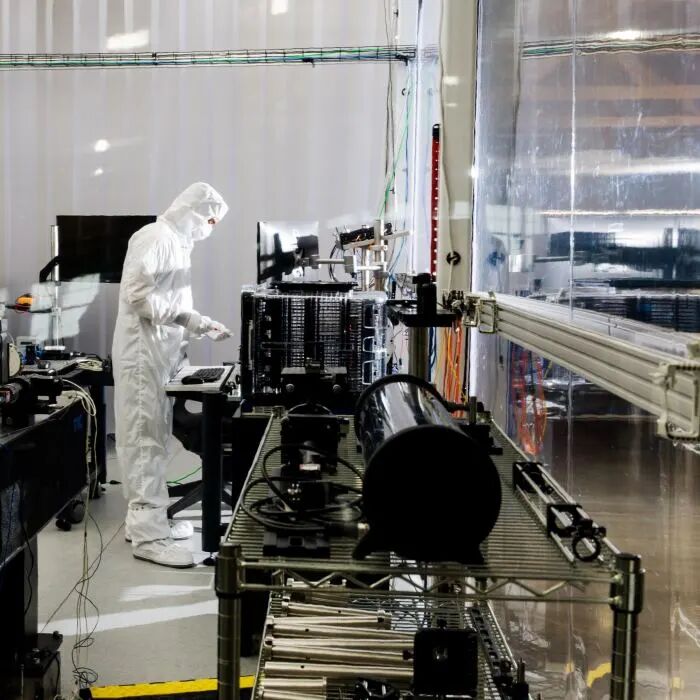
Core Viewpoint - The article discusses the emergence of Substrate, a startup founded by James Proud, which aims to revolutionize semiconductor manufacturing by developing a new, cost-effective lithography technology that could challenge the dominance of ASML and TSMC in the industry [1][4][19]. Group 1: Company Overview - Substrate has raised over $100 million from investors, including notable figures like Peter Thiel, and is valued at over $1 billion [4]. - The company plans to establish a manufacturing facility in the U.S. to reduce reliance on overseas suppliers, aligning with national security priorities [4][19]. - Substrate's technology involves using particle accelerators to create a new type of lithography tool, which could potentially lower manufacturing costs by half [1][3]. Group 2: Technology and Innovation - The startup aims to combine proprietary particle accelerators with custom lithography machines to achieve high-resolution microchip layers comparable to those produced by leading semiconductor manufacturers [1][13]. - Substrate claims its machines can print features at 12 nanometers, matching the capabilities of ASML's latest high-NA EUV machines [13][15]. - The company has demonstrated its system at U.S. national laboratories, achieving complex patterns on wafers [14]. Group 3: Challenges and Industry Reception - Despite significant funding and ambitious plans, Substrate faces skepticism from government scientists and the semiconductor industry regarding its ability to replicate the complex supply chain within three years [4][8]. - Concerns have been raised about the reliability of using a single particle accelerator as a light source for multiple tools, which could lead to factory downtime if it fails [8]. - The company has encountered challenges in securing government funding, with initial requests for over $1 billion from the CHIPS Act being rejected [8]. Group 4: Future Plans and Goals - Substrate aims to establish a vertically integrated foundry in the U.S. for custom semiconductor production, requiring significant capital investment potentially in the range of billions of dollars [19][20]. - The company is in discussions with Texas A&M University to build a particle accelerator and factory, with an estimated investment of around $10 billion [20]. - Proud emphasizes the need for innovative solutions in semiconductor manufacturing, stating that creating a better alternative is essential for the industry's future [21].
一个辍学生,同时挑战ASML和台积电
3 6 Ke· 2025-10-29 02:45
Core Insights - Substrate, a startup founded by James Proud, aims to revolutionize semiconductor manufacturing by developing a cost-effective alternative to ASML's advanced lithography machines, potentially reducing manufacturing costs by half [1][4][15] - The company has secured over $100 million in funding from notable investors, including Peter Thiel's Founders Fund, and is valued at over $1 billion [4][17] - Substrate's technology involves using a particle accelerator as a light source for X-ray lithography, which the company claims can achieve resolutions comparable to the latest ASML machines [12][13][15] Company Overview - Substrate was founded in January 2022 by James Proud and his brother Oliver, who have backgrounds in technology and entrepreneurship [6][7] - The company is based in San Francisco and has grown its team to 50, including engineers from major tech firms like TSMC, IBM, and Google [7] - Substrate's goal is to establish a manufacturing facility in the U.S. to reduce reliance on overseas suppliers, aligning with national security priorities [4][16] Technology and Innovation - Substrate's approach combines proprietary particle accelerator technology with customized lithography tools, aiming to commercialize a previously uncommercialized process [6][12] - The company claims to have achieved a resolution of 12 nanometers, suitable for producing chips at the cutting-edge 2-nanometer technology node [13][15] - Substrate emphasizes that it does not rely on externally produced lithography tools or intellectual property, claiming a differentiated technology [15] Market Position and Challenges - Despite significant funding and technological advancements, Substrate faces skepticism from industry experts regarding its ability to replicate the complex semiconductor supply chain within its projected timeline [4][8] - The company has encountered challenges in securing government funding and support, particularly from the Biden administration, which has raised concerns about its proposed funding requests [8][10] - Substrate's long-term vision includes becoming a major player in semiconductor manufacturing, potentially rivaling TSMC and ASML [16][17]
一个辍学生,同时挑战ASML和台积电
半导体行业观察· 2025-10-29 02:14
Core Viewpoint - The article discusses the emergence of Substrate, a startup founded by James Proud, which aims to revolutionize semiconductor manufacturing by developing a new technology that could significantly reduce production costs and challenge established players like ASML and TSMC [2][4][15]. Group 1: Company Overview - Substrate has raised over $100 million from investors, including Peter Thiel's Founders Fund, and is valued at over $1 billion [4]. - The company plans to establish a manufacturing facility in the U.S. to reduce reliance on overseas suppliers, aligning with national security priorities [4][17]. - Substrate's technology involves using a particle accelerator as a light source for a new type of lithography, which could potentially match the resolution of ASML's advanced machines [12][15]. Group 2: Technology and Innovation - The startup aims to combine proprietary particle accelerator technology with custom lithography tools to achieve commercial viability [12][15]. - Substrate claims its machines can print features at 12 nanometers, comparable to the latest high-NA EUV machines from ASML [13][15]. - The company has demonstrated its system at national laboratories, creating complex patterns on wafers [13]. Group 3: Challenges and Market Position - Substrate faces skepticism from industry experts regarding its ability to replicate the complex semiconductor supply chain within three years [4][8]. - The company has encountered challenges in securing funding from government initiatives, with initial requests for over $1 billion being denied [8]. - Despite the challenges, Substrate's founders believe that their approach could provide a viable alternative in the semiconductor market, especially as the U.S. seeks to bolster its domestic manufacturing capabilities [18].
不再忍让,荷兰作死不断,成了第一个被“祭旗”的欧洲国家!
Sou Hu Cai Jing· 2025-10-29 02:09
Core Insights - The ongoing "element war" between China and the Netherlands has intensified, particularly affecting ASML, a key player in the semiconductor industry, which relies heavily on Chinese rare earth materials for its lithography machines [1][3][6] - China's recent revisions to its rare earth management policies are aimed at tightening control over the supply chain, particularly for materials used in lithography machines, signaling a shift from cooperation to confrontation with the Netherlands [3][4] - ASML's dependency on Chinese rare earths is highlighted by the fact that over 50 critical components in its DUV lithography machines are sourced from China, making it difficult for ASML to find alternative suppliers [1][3] Industry Impact - The new regulations from China include a "white list" for core metals and magnetic materials, which will complicate ASML's supply chain and potentially halt its operations in China [3][4] - ASML has acknowledged that orders from the Chinese market are currently "paused," indicating a significant impact on its business operations and future revenue [3][4] - The shift in China's approach demonstrates its growing control over the global supply chain for critical materials, emphasizing that Western companies are increasingly reliant on Chinese resources [6] Strategic Responses - Companies are beginning to pivot towards investing in the Chinese market to secure rare earth quotas, indicating a strategic shift in how businesses view their relationships with China [6] - The situation serves as a warning to other nations considering alignment with U.S. technology restrictions, highlighting the risks of underestimating China's influence in the supply chain [6] - The conflict illustrates that technological prowess alone is insufficient for success; companies must also navigate the complexities of global supply chains and geopolitical tensions [6]