BABA(BABA)

Search documents
千问App全面接入阿里生态业务
Zheng Quan Ri Bao· 2026-01-15 16:49
Core Insights - Alibaba's Qianwen App has integrated with its ecosystem, enabling AI-driven functionalities for tasks like ordering food, shopping, and booking flights, marking a shift from conversational AI to task-oriented AI [1][2] - The app features over 400 AI functionalities, allowing seamless execution of complex tasks within the Alibaba ecosystem without switching apps [1] - The integration of Qianwen with services like Taobao, Alipay, and Fliggy allows for a comprehensive service experience, completing tasks from user commands to fulfillment [1] Company Strategy - Alibaba views Qianwen App as a critical component in the AI-to-C market, positioning it against competitors like ChatGPT and aiming to establish a strong foothold in the global AI application landscape [3] - The app's rapid adoption is evident, with over 10 million downloads within a week of its public release, indicating strong market interest [3] - The company is focused on enhancing the app's capabilities and expanding its ecosystem, which is seen as essential for maintaining competitive advantage in the evolving AI landscape [4] Industry Trends - The competition in the AI sector is shifting from simple functionality to a focus on "AI + services," emphasizing the importance of seamless user experience and service coverage [4] - Industry experts suggest that leading companies will consolidate their ecosystems to create proprietary AI hubs, while smaller applications must either integrate with these hubs or specialize in niche areas to avoid marginalization [3][4] - The evolution of AI capabilities is expected to transform AI from a mere tool into a comprehensive assistant in users' daily lives, enhancing interaction and problem-solving abilities [2]

汇丰上调智能眼镜市场预期 2040年规模将达2000亿美元 用户量增幅超18倍
Sou Hu Cai Jing· 2026-01-15 16:43
Core Insights - HSBC has significantly raised its growth forecast for the global smart glasses market, predicting it will reach $200 billion by 2040, making it one of the fastest-growing segments in smart devices [3] - The user base is expected to explode from 15 million in 2025 to 289 million, representing an increase of over 1800% [3] Market Growth and Trends - 2025 is identified as a pivotal year for the smart glasses market, marking a transition to large-scale growth, with global shipments expected to reach 4.065 million units in the first half of 2025, a year-on-year increase of 64.2% [4] - The domestic market shows even higher enthusiasm, with Tmall's smart glasses category sales surging by 2500% during the 2025 "Double Eleven" shopping festival, and JD.com achieving a tenfold increase in sales volume [4] Supply and Demand Dynamics - The growth is driven by coordinated efforts on both supply and demand sides, with major tech companies like Apple, Huawei, Google, and Meta investing heavily in R&D to accelerate product iterations [4] - The integration of AI features has significantly enhanced product usability, with 75.5% of consumers expressing a willingness to purchase, activating a broad first-time buyer market [4] Technological Innovations - Key technological breakthroughs in 2025 include advancements in display technology, such as improved Micro-LED brightness and full-color MicroOLED for enhanced visual experiences [5] - Weight reduction innovations, such as resin diffraction waveguide technology, have enabled some new products to weigh under 40 grams, comparable to regular sunglasses, greatly improving wearability [5] Application Scenarios - The application of smart glasses is expanding from consumer to industrial sectors, with functionalities like navigation projection, immersive entertainment, and educational visualization becoming essential tools [5] - In industrial applications, scenarios such as remote surgical guidance, industrial equipment maintenance support, and AR tourism guidance are demonstrating significant practical value [6] Competitive Landscape - The smart glasses market is entering a "hundred glasses battle" phase, with participants including tech giants, specialized hardware manufacturers, and internet companies [6] - Meta's collaboration with Ray-Ban on the Ray-Ban Meta has become a bestseller, with projected sales of 2.24 million units in 2024, validating the market viability of non-display AI glasses [6] Cost and Ecosystem Development - Increased competition is driving collaborative upgrades across the supply chain, with core optical components like waveguide modules and Micro-LEDs seeing cost reductions of 40% [6] - Future hardware costs are expected to drop below 150 yuan, while ecosystem development is becoming a competitive focus, with manufacturers partnering with navigation, payment, and music platforms to create seamless smart experiences [6] Future Outlook - The growth potential of smart glasses is not only based on the proliferation of existing functionalities but also on revolutionary changes in human-computer interaction [7] - Innovations in interaction modes, such as "spatial bookmarks" and "information layering," are anticipated to reshape business models and social governance, with smart glasses poised to replace traditional eyewear and become the next core smart terminal by 2040 [7]



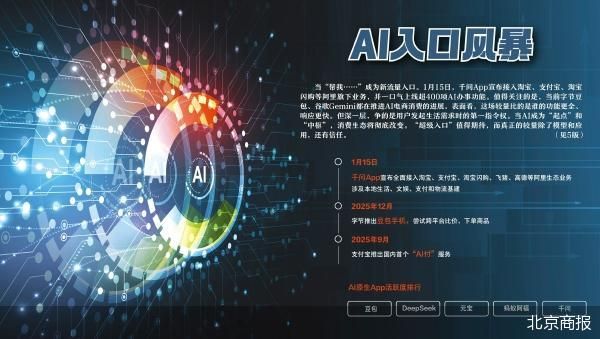
阿里抢攻AI入口之战
Bei Jing Shang Bao· 2026-01-15 16:32
Core Insights - Alibaba aims to take control of its destiny in the AI era by integrating its services into the Qianwen App, which now offers over 400 AI functionalities for tasks like ordering food and booking travel [1][2][10] - The Qianwen App is designed to streamline the user experience by allowing users to complete transactions without switching platforms, thus positioning itself as a new entry point for consumer engagement [1][2][4] Group 1: AI Integration and User Experience - The Qianwen App has integrated various Alibaba services, including Taobao and Alipay, enabling users to place orders and make payments seamlessly within the app [2][4] - Users can issue simple commands to the app, which can handle everything from product recommendations to order placements in under a minute [2][4] - The app's ability to provide tailored shopping suggestions based on user needs is a significant advancement in consumer decision-making [4][11] Group 2: Market Positioning and Competitive Landscape - The integration of AI into e-commerce is seen as a potential game-changer, with Alibaba positioning the Qianwen App as a central hub for consumer interactions [10][11] - The competition for AI-driven consumer engagement is intensifying, with Alibaba and other giants like JD.com and ByteDance exploring similar AI tools [10][13] - The success of the Qianwen App will depend on its ability to build user trust and adapt to consumer habits, which may take time [6][7] Group 3: Challenges and Future Outlook - Despite the technological advancements, there are challenges in user adoption, particularly as consumers are accustomed to traditional platforms for product research and purchases [6][7] - The AI's effectiveness in providing optimal recommendations without bias towards specific platforms remains a concern for consumer trust [7][8] - The long-term success of the Qianwen App will hinge on its ability to create a robust ecosystem that balances user privacy with data utilization [14][15]
欢迎AI“卷王”
Bei Jing Shang Bao· 2026-01-15 16:32
Group 1 - The core viewpoint of the articles emphasizes the competition among major tech companies like Alibaba and ByteDance in the AI super entrance battle, with the launch of Qianwen App integrating various Alibaba ecosystem services as a significant move [1][2] - Qianwen App will provide over 400 AI service functions, enabling users to perform tasks such as food delivery, shopping, and booking flights, thus transforming the AI assistant from a simple Q&A tool to a comprehensive service provider [1][3] - The AI entrance competition is not just about traffic channels but involves deep user decision-making processes, indicating a shift in how users interact with applications and services [1][3] Group 2 - The article discusses the importance of establishing new rules and order in the AI era, highlighting the need for collaboration among platform providers, hardware manufacturers, and regulatory bodies to address challenges posed by AI technology [4] - Companies must balance the protection of commercial innovation with the need to ensure consumer benefits and compliance with personal information processing regulations [4] - The competition for the "last mile" connection with users will determine the next phase of the internet, with companies needing to refine product experiences and deepen ecosystem collaboration to meet core user needs [3][4]
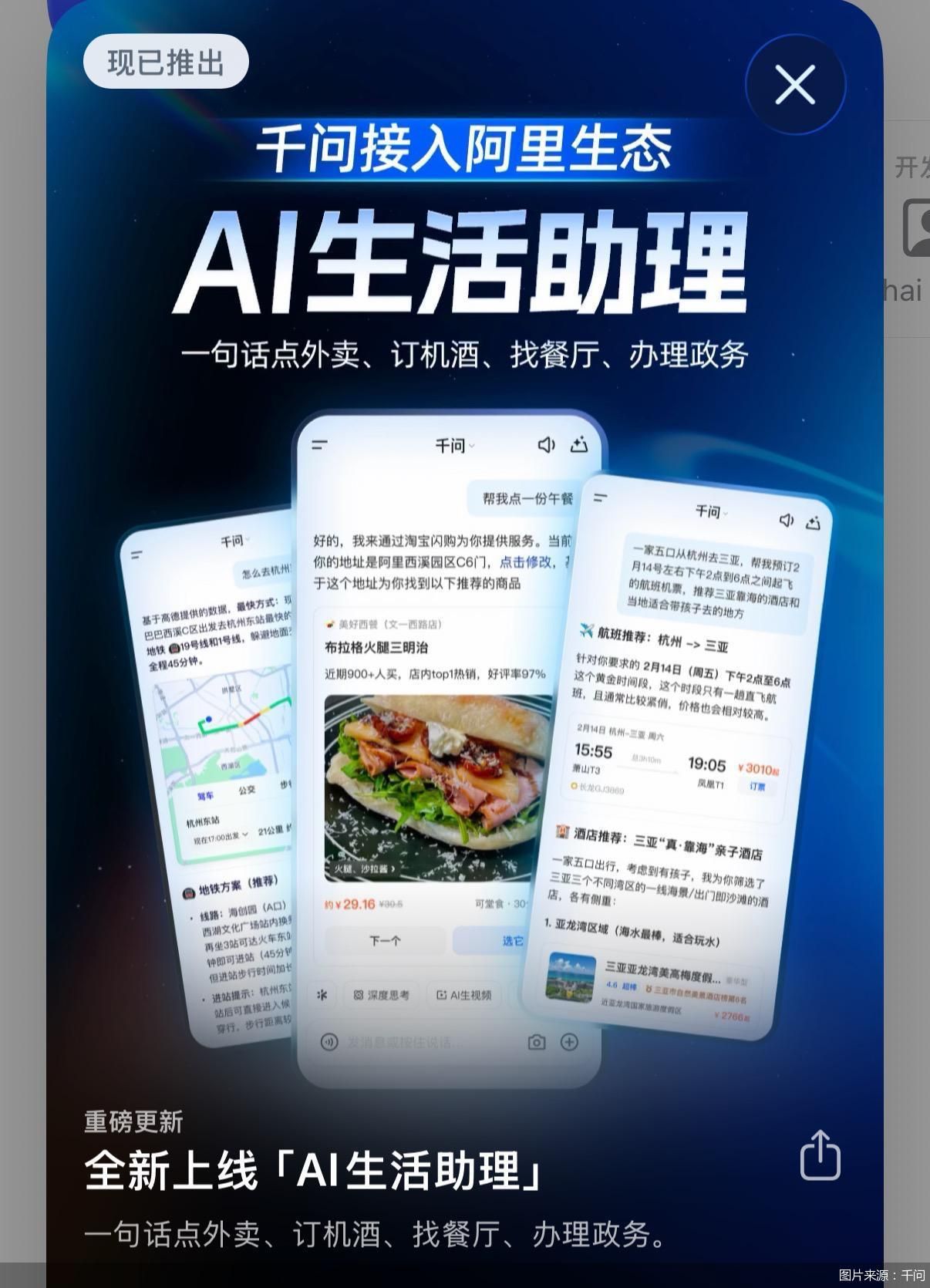
一句话就可点外卖,阿里千问将重磅更新
Xin Lang Cai Jing· 2026-01-15 16:21
Core Viewpoint - Alibaba's Qianwen is set to launch a significant update with the introduction of the "AI Life Assistant," which aims to streamline various daily tasks such as ordering food, booking hotels, finding restaurants, and handling government affairs [1] Group 1 - The new "AI Life Assistant" feature will allow users to perform tasks with simple voice commands [1] - The update is expected to enhance user experience by providing a more efficient way to manage daily activities [1] - This development reflects Alibaba's ongoing commitment to integrating AI technology into everyday life [1]
当千问App打通阿里“全家桶”:一场“入口革命” 还是生态“围墙”?
Mei Ri Jing Ji Xin Wen· 2026-01-15 15:39
Core Insights - The launch of the Qianwen App marks a significant shift in AI assistants from simple Q&A to autonomous task execution, integrating deeply within Alibaba's ecosystem [1][2][18] - The Qianwen App has introduced over 400 AI functionalities, enabling a complete shopping loop from planning to transaction execution [1][2] Group 1: Qianwen App Features - The Qianwen App now fully integrates with Alibaba's services such as Taobao, Alipay, and Fliggy, allowing users to complete transactions without leaving the app [1][2] - A key feature highlighted is the AI food delivery function, where users can place orders directly through voice commands, streamlining the ordering process [2][3] - The app also provides product recommendations based on user needs, although it currently directs users to various Taobao stores rather than brand flagship stores [4][8] Group 2: Strategic Positioning - Qianwen App's strategy contrasts with ByteDance's Doubao Assistant, focusing on creating a closed-loop system within Alibaba's ecosystem rather than attempting to integrate across multiple platforms [2][10] - This approach minimizes risks associated with cross-platform restrictions and enhances service fluidity, relying on Alibaba's extensive data and application ecosystem [2][11] - Experts suggest that Qianwen's integration with Alibaba's ecosystem could lead to significant changes in e-commerce and food delivery, making the shopping process simpler and more efficient [14][15] Group 3: Market Context and Competition - The competitive landscape includes Doubao Assistant, which aims for a more open system but faces challenges from existing platform restrictions [10][12] - Qianwen's model may provide a more stable path to commercialization, leveraging Alibaba's resources to avoid the compliance issues faced by Doubao [11][12] - The current user engagement metrics show Qianwen achieving over 100 million monthly active users within two months, indicating strong market interest [17]
【西街观察】千问点外卖,AI入口之争打响
Bei Jing Shang Bao· 2026-01-15 14:44
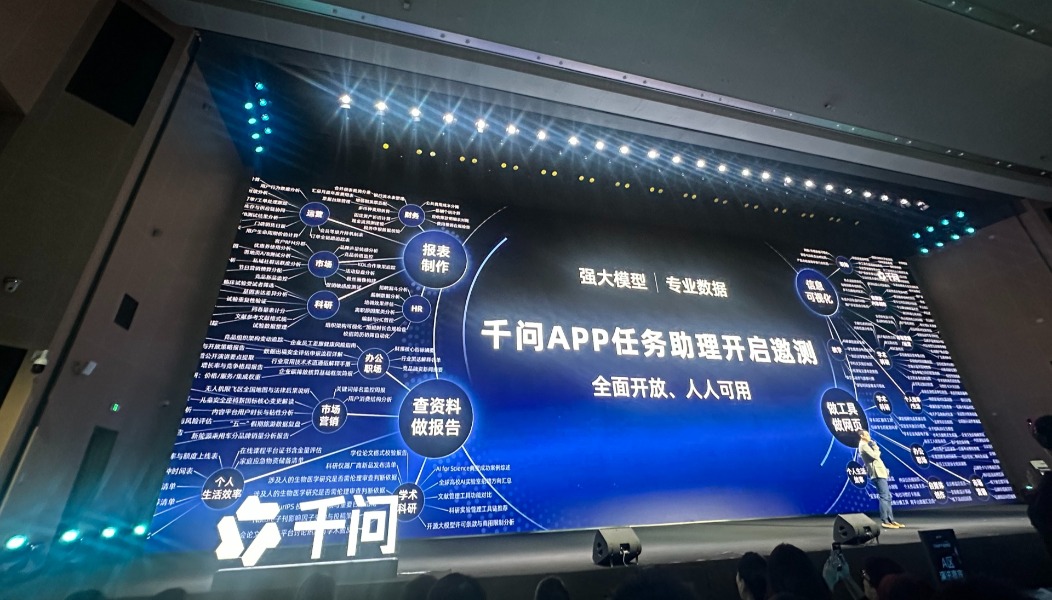
传统入口,用户明确关键词获取定向结果,在不同App之间存在决策割裂。在AI时代,用户需求简单 化,AI将其需求拆解生成方案推进服务,实现了真正的AI帮你做事。 时代的列车挡不住。无论字节还是阿里,不如主动按下加速键。 1月15日,千问App宣布全面接入淘宝、支付宝、淘宝闪购、飞猪、高德等阿里生态业务,实现点外 卖、买东西、订机票等AI购物功能,并向所有用户开放测试。同时,此次升级将上线超400项AI办事功 能。 千问充当AI超级入口,阿里率先生态协同。AI助手要做的事不再局限于简单的问答,而是要通过AI助 手真正打通阿里的业务体系,执行跨应用的长任务,进入实际交易链路。 AI入口之战,从豆包手机开始明示。尽管只在合作硬件中小范围试水,掀起的巨浪却远超想象。 现阶段的手机,还远远没有AI化。小厂做过很多尝试,注定跑不过互联网大厂,尤其是阿里字节这样 的"卷王"。 字节一直在尝试各种硬件入口,选择和品牌手机合作也在情理之中。而阿里拥有得天独厚的生态优势, 自我内部整合完成AI化顺理成章。 AI时代的入口之争,看似从简单的"帮我"做事开始,实则并非简单的流量通道,而是可能深度参与用户 决策的智能中枢。 北京商报评论 ...
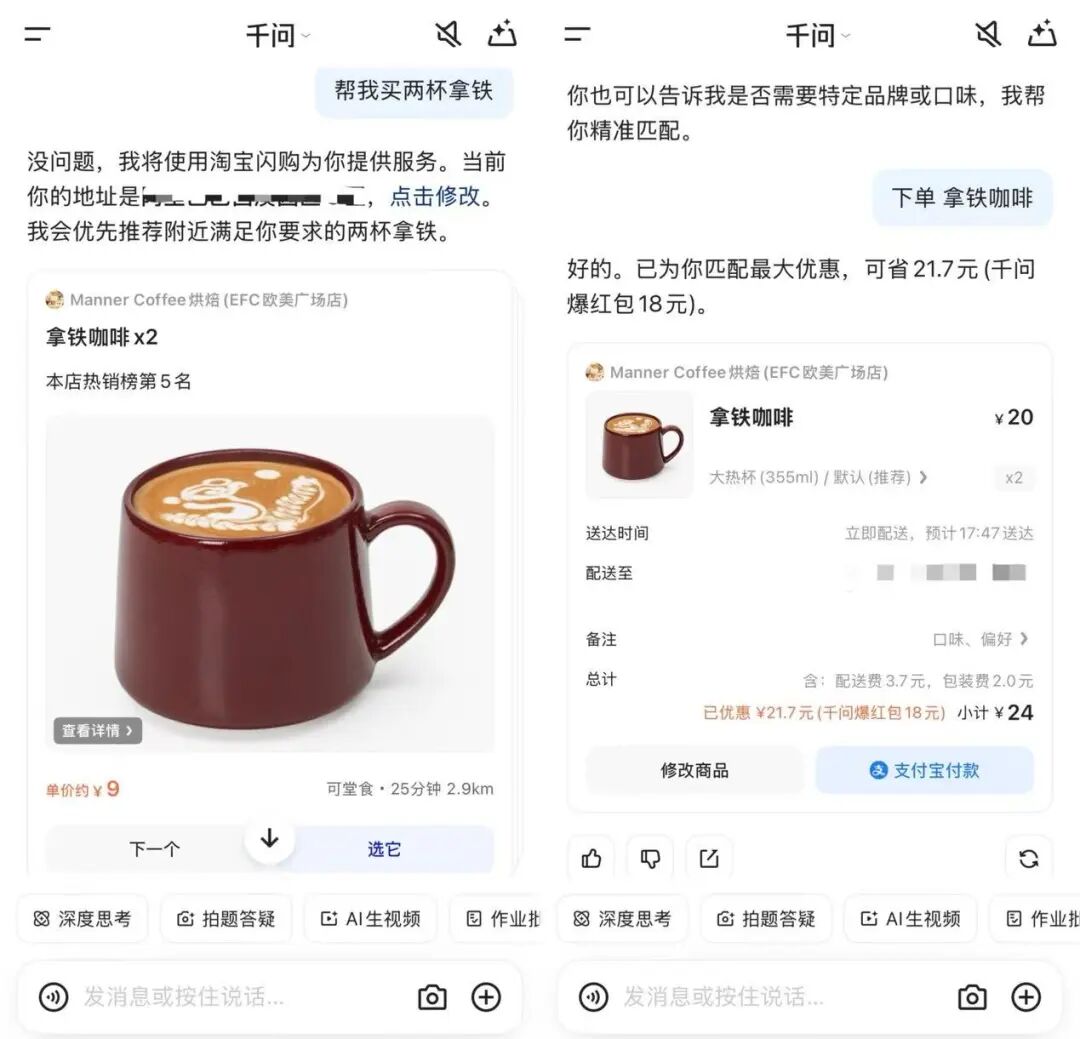
实测一句话点外卖!千问打通支付宝背后 AI付时代来了
Bei Jing Shang Bao· 2026-01-15 14:42
Core Insights - The launch of "AI Pay" by Alipay marks a significant advancement in integrating AI with payment systems, allowing users to make purchases through simple voice commands [1][5][8] Group 1: AI Integration and Functionality - The Qianwen App has fully integrated with the Alibaba ecosystem, enabling AI-driven functionalities such as food delivery, shopping, and travel bookings [1][3] - Users can place orders by simply stating their requests, with the app automatically processing payments through Alipay without needing to switch applications [3][5] - The integration includes over 400 AI service functions, enhancing user experience and streamlining the payment process [1][4] Group 2: User Experience and Feedback - Initial user experiences indicate a smooth and efficient process, although some users reported minor issues with order accuracy [3][6] - The AI Pay system significantly reduces the steps required for payment, with a claim of over 60% fewer steps compared to traditional methods [5][6] Group 3: Market Implications and Future Prospects - Analysts suggest that the integration of AI Pay represents a transformative shift in the payment industry, potentially reshaping competitive dynamics [4][8] - The expansion of AI Pay's application scenarios is expected to facilitate the growth of the intelligent economy, with future developments likely to include public services and third-party platforms [7][8] - The success of AI Pay will depend on addressing user trust concerns and ensuring the accuracy of AI commands to prevent errors in transactions [9][10]
阿里正把自己装进赛博分身
虎嗅APP· 2026-01-15 14:18
Core Viewpoint - Alibaba is strategically entering the C-end AI market with its AI app "Qianwen," aiming to leverage its ecosystem and model capabilities to enhance user experience and satisfaction [3][4][10]. Group 1: Strategic Approach - Alibaba's approach to the C-end AI market is characterized by two main strategies: maximizing the capabilities of its Tongyi large model and leveraging its overall ecosystem advantages [4][12]. - The company aims to focus on two primary user scenarios: AI office (learning) and daily life, prioritizing user experience and reputation [4][12]. - Alibaba's strategy is to engage in an "ecological war" and a "model war," rather than merely competing on product features [6][12]. Group 2: Competitive Landscape - Prior to Alibaba's entry, major players in the C-end AI market adopted three user growth models: ByteDance's model focused on product and traffic, Tencent's model leveraging social and content ecosystems, and Meituan's model centered on core business scenarios [5][6]. - Alibaba's strategy aligns with ByteDance's logic of maximizing its strengths, but differs in viewing its core assets as "model + ecosystem" rather than "product + traffic" [6][12]. Group 3: Internal and External Challenges - Internally, Alibaba must ensure its model capabilities remain superior while improving operational efficiency across various dimensions [8][12]. - Externally, competition is intensifying with the upcoming release of new models from competitors like DeepSeek, and the market is expected to see explosive growth in AI applications by 2026 [8][12]. Group 4: User Engagement and Metrics - The core goal for Qianwen in the coming year is to enhance user satisfaction to ensure retention, which will subsequently drive new user acquisition and interactions within the ecosystem [9][12]. - Qianwen's evaluation metrics focus on user satisfaction, delivery completion, and retention rather than traditional metrics like monthly active users or GMV [12][13]. Group 5: Future Outlook - The next five months are critical for Qianwen, as they will coincide with Alibaba's fiscal year-end and the 618 shopping festival, providing an opportunity to assess early user engagement and the operational link between Qianwen and ecosystem businesses [14][12]. - Alibaba's long-term strategy involves continuous upgrades to model capabilities and user demand insights, with a focus on enhancing user experience across various scenarios [18][19].

千问接入淘宝闪购:这场“降维”打击,真的来了
Xin Lang Cai Jing· 2026-01-15 14:14
Core Insights - The emergence of AI-driven platforms like Taobao Flash Purchase signifies a paradigm shift in the food delivery industry, moving from a graphical interface to a language-based interaction model [1][2][4][5] Group 1: AI Integration and Competitive Landscape - Taobao Flash Purchase leverages the Qwen AI model, enabling it to understand user intent and execute complex orders seamlessly, positioning it ahead of competitors like Meituan, which lacks a comparable AI framework [5][7][8] - The integration of AI allows Taobao Flash Purchase to proactively anticipate user needs, contrasting with Meituan's reactive approach [8][9] Group 2: User Experience Transformation - Natural language processing eliminates the need for users to navigate complex app interfaces, making the ordering process more intuitive and accessible for all demographics, including the elderly and visually impaired [9][20] - The AI-driven service model transforms user interaction from a transactional experience to a personalized service, enhancing user loyalty and engagement [14][24] Group 3: Ecosystem Synergy - The Qwen AI model not only connects Taobao Flash Purchase but also integrates with other Alibaba services, creating a comprehensive local life operating system that addresses both spatial and temporal needs [10][12][23] - This interconnected ecosystem allows for smarter decision-making, as the AI can suggest dining options based on user preferences and real-time conditions [23][25] Group 4: Market Dynamics and Future Outlook - The shift towards AI-driven services marks a transition from subsidy-based competition to value creation, with Taobao Flash Purchase showing significant growth in non-food categories and improved unit economics [25] - If Meituan fails to develop a comparable AI capability quickly, it risks losing its competitive edge in the evolving market landscape [25]