
BABA(BABA)

Search documents
China's Alibaba and ByteDance Embrace Agentic Commerce
PYMNTS.com· 2026-01-21 14:59
Core Insights - Major Chinese tech companies like Alibaba and ByteDance are integrating agentic commerce into their services, indicating a shift towards AI that performs tasks on behalf of users with minimal supervision [1][2]. Group 1: Agentic AI Developments - Alibaba has enhanced its Qwen AI chatbot with features that allow users to order food, book travel, and make in-chat payments, reflecting a transition from foundational AI models to agentic AI [2]. - ByteDance has upgraded its Doubao AI chatbot to autonomously manage tasks such as ticket bookings through eCommerce features on Douyin, the Chinese version of TikTok [4]. Group 2: User Engagement and Experience - The agentic transformation of commercial services is expected to improve user engagement and retention, as noted by research analyst Shaochen Wang [3]. - Despite advancements in payment technologies, 60% of middle-market merchants report user experience issues during checkout, highlighting the potential for agentic AI to streamline these processes [5]. Group 3: Implications for Commerce - In agentic commerce, the consumer's role in the checkout process diminishes as software agents take over tasks like product selection and payment initiation, potentially reducing the reliance on traditional wallets [6]. - The application of agentic commerce in B2B payments is also being explored, with the potential for automation in managing invoices and contracts [6][7].



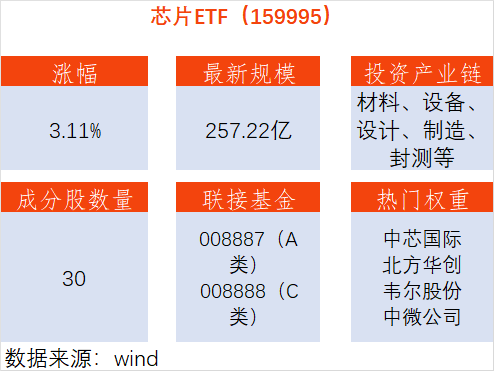
【千问APP实现全面接入阿里生态,芯片ETF(159995.SZ)上涨3.11%,龙芯中科涨停】
Mei Ri Jing Ji Xin Wen· 2026-01-21 11:30
Group 1 - A-shares opened on January 21 with all three major indices rising, with the Shanghai Composite Index increasing by 0.11%, led by gains in the electronics, communications, and defense sectors, while coal and retail sectors saw declines [1] - The domestic substitution trend is gaining momentum, with semiconductor technology stocks performing strongly; the Chip ETF (159995.SZ) rose by 3.11%, with key component stocks like Loongson Technology up by 20.00%, Haiguang Information up by 8.95%, and others showing significant increases [1] Group 2 - Alibaba held a product launch for the Qianwen APP, which integrates over 400 new features and connects with various Alibaba ecosystem services, marking a shift towards AI-driven operations [3] - According to Guotai Junan Securities, the rapid iteration of domestic model products like Qianwen is expected to stimulate demand for domestic computing power investments, enhancing the maturity of mainstream applications and increasing capital expenditure and penetration rates of domestic computing chips [3] - The Chip ETF (159995) tracks the Guozheng Chip Index, comprising 30 leading companies in the A-share chip industry across materials, equipment, design, manufacturing, packaging, and testing, including major players like SMIC and Cambrian [3]


“AI入口大战”--字节已成“倒逼之势”,阿里腾讯“输不起”
华尔街见闻· 2026-01-21 10:37
Core Viewpoint - ByteDance is aggressively expanding in both AI cloud infrastructure and consumer applications, creating significant pressure on Alibaba and Tencent to increase investments by 2026 to defend their core markets [1][2]. Group 1: AI Cloud Market Dynamics - ByteDance's Volcano Engine has rapidly become the second-largest AI infrastructure provider in China, achieving a market share of 13% in AI cloud services by mid-2025, trailing only Alibaba's 23% [1][3]. - ByteDance is leveraging its first-mover advantage in AI to disrupt the long-standing dominance of Alibaba, Tencent, and Huawei in the cloud market [2][3]. - The company's strategy includes expanding its sales team and utilizing aggressive pricing to weaken competitors, focusing on selling AI products based on its extensive database and computing infrastructure [3][4]. Group 2: Consumer Application Impact - The shift in user behavior towards AI as a primary interface poses a risk of marginalizing traditional apps, as users may prefer to interact with AI first rather than using search engines [2][5]. - ByteDance's control over user engagement time is a critical advantage, as it can influence user actions during idle moments, positioning its AI applications favorably [6][7]. Group 3: Strategic Implications for Competitors - Goldman Sachs identifies 2026 as a pivotal year for Chinese internet giants, emphasizing the need for Alibaba and Tencent to significantly increase their capital and operational expenditures in AI to maintain their market positions [2][8]. - The competition is not merely about technology but also about who can establish a "default entry point" for users, which will redefine traffic distribution and advertising budgets [8][9]. Group 4: Investment Logic Transformation - The investment landscape is expected to shift from valuing "visions" to focusing on profitability growth and new narratives by 2026, with an emphasis on "alpha" returns rather than mere valuation expansion [9][10]. - Investors are advised to prioritize metrics related to "entry success rates" and the progress of transaction closures over emotional responses to models [10][11]. Group 5: The Nature of the AI Super Entry Battle - The AI super entry battle does not require all players to succeed; it only needs one dominant entry point, with others potentially becoming secondary features [12].

Chinese tech giants enter the 'agentic commerce' race as AI reshapes super apps
CNBC· 2026-01-21 09:40
Core Insights - China's technology giants, including Alibaba and ByteDance, are entering a new phase of the AI race termed 'agentic commerce,' focusing on transforming chatbots into comprehensive shopping and payment tools [1] Group 1: Alibaba's Qwen AI Chatbot Update - Alibaba has updated its Qwen AI chatbot, enabling users to complete transactions directly within the interface, such as ordering food and booking air tickets [2] - The update integrates Qwen with Alibaba's broader e-commerce ecosystem, allowing users to compare tailored product recommendations from platforms like Taobao and Fliggy, and complete payments through Alipay without leaving the chatbot [2][3] - Previously, Qwen could only make recommendations based on user prompts, requiring users to navigate multiple platforms for purchases [3] Group 2: Shift to Agentic AI - The update signifies a broader shift among global AI firms from foundational AI models to "agentic AI," which performs tasks on behalf of users with minimal supervision [3] - The transformation of commercial services through agentic AI enhances user engagement and builds a sustainable competitive advantage, often referred to as a business moat [4] Group 3: E-commerce as a Use Case - E-commerce is emerging as one of the earliest and most widespread applications of agentic AI, with payment and tech giants in the U.S. also launching their initial versions recently [5] - Alibaba is well-positioned to lead in agentic commerce due to its advanced large language model capabilities and extensive e-commerce network covering various sectors such as clothing, food, housing, and transportation [6]


摩根大通(JPMorgan)对阿里巴巴-W的多头持仓比例增至8.03%
Jin Rong Jie· 2026-01-21 09:29
本文源自:金融界AI电报 据香港交易所披露,摩根大通(JPMorgan)对阿里巴巴集团控股有限公司 - W的多头持仓比例于2026年 1月15日从7.99%增至8.03%。 ...

美股中概股盘前多数上涨,拼多多涨7%
Jin Rong Jie· 2026-01-21 09:15
Core Viewpoint - The majority of Chinese concept stocks in the US pre-market are experiencing gains, indicating positive market sentiment towards these companies [1] Group 1: Stock Performance - Pinduoduo is up by 7% [1] - Bilibili has increased by 4% [1] - Alibaba shows a rise of 3% [1] - Trip.com is up by 2% [1] - JD.com has gained 1% [1] - NIO is up by 0.6% [1]


摩根大通对阿里巴巴-W的多头持仓比例增至8.03%
Jin Rong Jie· 2026-01-21 09:15
据香港交易所披露,摩根大通对阿里巴巴集团控股有限公司 - W的多头持仓比例于2026年1月15日从 7.99%增至8.03%。 ...
决战2026: 淘宝闪购正在打一场决定命运的硬仗
3 6 Ke· 2026-01-21 09:01
Core Insights - Alibaba has set a clear goal to achieve "absolute first" in the instant retail sector by 2026, transitioning from a competitive stance to a decisive declaration of intent [1][2] - The company aims to leverage its financial strength and ecosystem advantages to dominate the market, with a focus on efficiency optimization and high-margin product categories [5][7] Market Overview - The instant retail market in China is projected to reach 971.4 billion RMB in 2025 and exceed 1 trillion RMB in 2026, with an annual growth rate of 12.6% [3] - Instant retail has become a critical battleground for major retail players due to its high-frequency consumer engagement potential [2][3] Performance Metrics - Instant retail revenue reached 14.784 billion RMB in Q2 2025, marking a 12% year-on-year growth, contributing significantly to Alibaba's overall performance [2] - As of August 2025, Taobao Flash Purchase reported 300 million monthly active buyers and a peak daily order volume of 120 million [4] Competitive Landscape - Alibaba faces intense competition from established players like Meituan, JD.com, and Douyin, each leveraging unique strengths in logistics, product offerings, and consumer engagement strategies [15][16][17] - Meituan has built a robust delivery network, while JD.com focuses on high-value categories with a self-operated model, and Douyin utilizes content-driven strategies to stimulate impulse buying [16][17] Strategic Initiatives - Alibaba's strategy includes the introduction of "flash warehouses" and partnerships with offline brands, aiming to onboard one million brand stores over the next three years, potentially generating an additional 1 trillion RMB in transactions [9][18] - The company is transitioning from a focus on scale to enhancing operational efficiency, with a significant emphasis on AI technology to improve merchant and service provider operations [7][10] Financial Considerations - As of Q3 2025, Alibaba held 573.89 billion RMB in cash and liquid investments, providing a substantial financial cushion compared to competitors [5] - The company's adjusted EBITA fell by 78% year-on-year to 9.073 billion RMB in Q3 2025, primarily due to investments in instant retail and user experience [8] Challenges and Opportunities - Despite improvements in unit economics, challenges remain in balancing service quality and profitability, particularly in high-value order segments [12][14] - The company must address supply chain complexities and enhance delivery capabilities in lower-tier markets to maintain competitive advantages [13]

恒生科技指数涨幅扩大至1.7%:快手涨超5%,百度涨超4%
Jin Rong Jie· 2026-01-21 08:03
Group 1 - The Hang Seng Tech Index experienced a significant increase, with a peak rise of 1.7% [1] - Notable individual stocks included Kuaishou and Hua Hong Semiconductor, both rising over 5% [1] - Baidu Group and Tongcheng Travel saw increases of over 4%, while SMIC and Alibaba Health rose over 3% [1] Group 2 - Alibaba, BYD Electronics, Bilibili, Sunny Optical, and BYD Company all recorded gains exceeding 2% [1]


去年两度押注新型核能后,阿里系出手传统核电项目
Xin Lang Cai Jing· 2026-01-21 07:21
Core Viewpoint - Alibaba has officially entered the nuclear power sector by investing in China Nuclear (Xiangshan) Nuclear Energy Co., marking a significant strategic move into traditional energy markets [1][3] Group 1: Company Investment Details - China Nuclear (Xiangshan) Nuclear Energy Co. was recently established with a registered capital of 250 million RMB, focusing on power generation, transmission, and supply [1] - The company is co-owned by China Nuclear Power's subsidiary, Hongrun Construction, Youngor Group, and Alibaba's Shanghai Yiqi Network Technology Co., indicating a collaborative investment approach [1] - The investment aligns with Alibaba's previous engagements in nuclear energy, including funding for controlled nuclear fusion technology companies [2] Group 2: Strategic Intentions - The investment serves dual purposes: providing stable financial returns and positioning Alibaba for future market opportunities as private sector participation in nuclear power may increase [3] - By entering the nuclear energy sector, Alibaba aims to create a synergistic supply chain, leveraging nuclear energy to support its data centers and reduce operational costs [3] - The move is also seen as a way to attract more private capital from the Yangtze River Delta region to support nuclear technology development and project implementation [3] Group 3: Industry Context - The investment reflects a broader trend of private enterprises entering the nuclear sector, with recent projects allowing increased private equity participation [2] - Experts suggest that Alibaba's strategy is not driven by immediate energy shortages but rather aligns with national energy innovation goals, supporting advancements in nuclear technology [4]