
BABA(BABA)

Search documents
复盘高德扫街榜100天
乱翻书· 2026-01-07 12:45
Core Viewpoint - Gaode has launched the "Gaode Street Ranking 2026" with three major upgrades, including the world's first "Flying Street View," a dynamic seasonal service ranking, and new social features for friends and personal rankings [1] User Growth and Engagement - In just 100 days since its launch, the Gaode Street Ranking has achieved a user base of over 660 million, contributing to a monthly active user increase of 46 million, bringing the total to 996 million, nearing the 1 billion mark [3] - The platform has attracted 860,000 new merchants, with order volume increasing by over 330% and revenue rising by over 270% [3] Unique Positioning in Local and Travel Scenarios - Gaode's unique positioning is highlighted by its ability to cater to both local users and travelers, with a focus on simplifying decision-making in unfamiliar locations [5] - The platform addresses the need for quick and efficient decision-making for users in unfamiliar cities, providing structured rankings that help users make informed choices without extensive reading [5][6] Trust and Credibility in Local Services - Gaode aims to tackle the trust crisis in local services, as evidenced by rising complaints about false advertising and increasing marketing costs for small businesses [11] - The Gaode Street Ranking leverages behavioral data to differentiate between "tourist navigation" and "local repurchase," ensuring that only genuinely popular local establishments are highlighted [6][8] Innovative Ranking Mechanism - The ranking system is based on "foot votes," which rely on actual user behaviors rather than subjective ratings, making it less susceptible to manipulation [15] - Gaode's data-driven approach includes metrics such as the distance users are willing to travel, frequency of visits, and the diversity of the customer base [15] Social Features and Personalization - The introduction of social features allows users to see friends' check-ins and create personalized lists, enhancing the trust factor through social connections [16][21] - Gaode is also launching a "Detective Creator Program" to engage users in sharing their favorite spots, further enriching the platform's content [21] Comprehensive Service Offerings - Gaode has expanded its rankings beyond dining to include various categories such as hotels, attractions, and seasonal activities, with over 6,553 dynamic rankings available [26][27] - The platform's AI capabilities allow for real-time updates based on seasonal and weather changes, catering to a wide range of user interests [26] Commitment to Transparency - Gaode has committed to keeping the Street Ranking free from commercialization, ensuring that rankings are based on genuine user choices rather than paid promotions [28][29] Advanced Technology Integration - The introduction of "Flying Street View" aims to enhance user trust by providing a realistic view of locations, addressing concerns about the authenticity of online ratings [30][33] - This feature allows users to explore areas from an aerial perspective and even enter establishments virtually, improving the overall user experience [30][33] Vision for the Future - Gaode's long-term goal is to establish a credit system for offline services, similar to how Alipay functions for online transactions, by using real behavioral data to replace manipulated review systems [36][37]


当Token成为“北极星指标”,AI云市场可能忽略了什么?
3 6 Ke· 2026-01-07 11:15
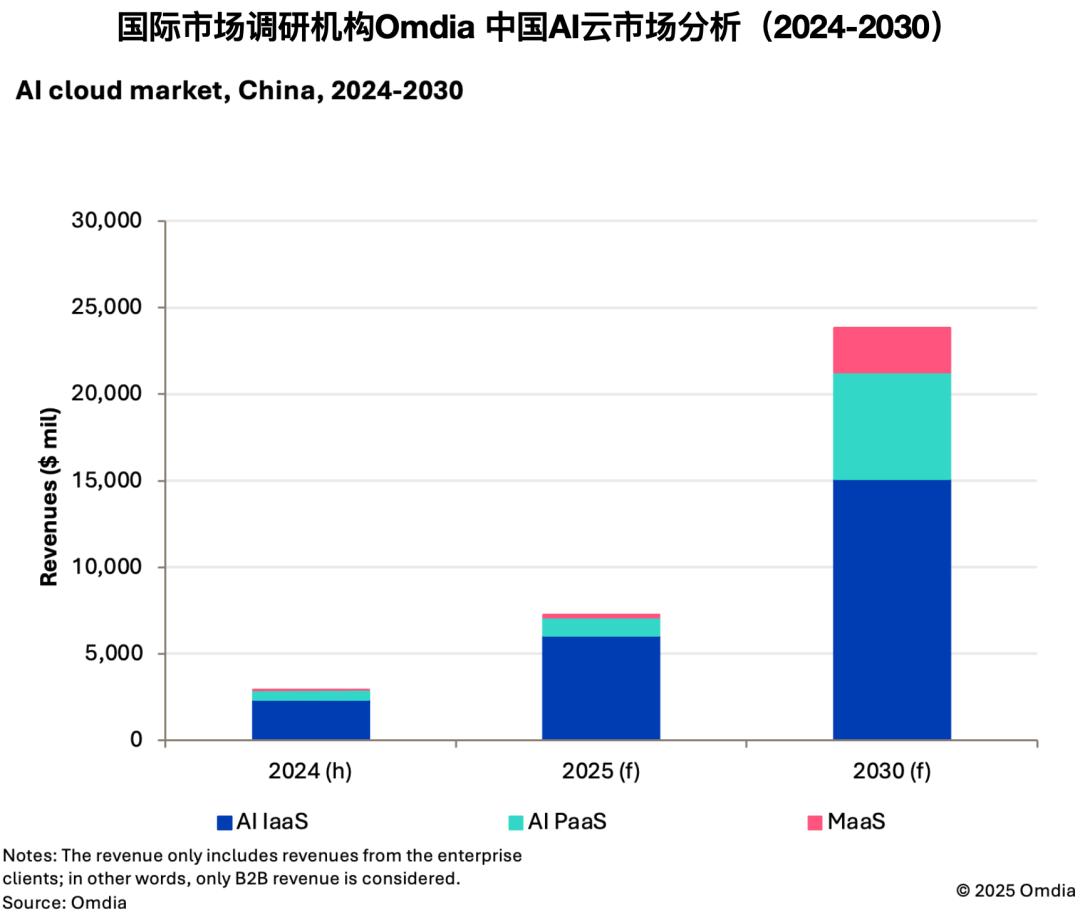
Core Insights - The AI cloud market is increasingly recognizing the importance of Token consumption as a key performance indicator, often referred to as the "North Star metric" for guiding strategic direction [2][3][4] - The rapid growth of Token consumption in China reflects the swift expansion of AI applications, with daily Token consumption projected to reach 30 trillion by mid-2025, up from 1 trillion at the beginning of 2024 [1][7] Token Consumption and Market Dynamics - Token is becoming a crucial metric for cloud service providers, with major companies like Amazon AWS and Alibaba Cloud actively expanding their MaaS (Model as a Service) offerings [6][10] - Despite the rapid growth in Token consumption, it currently represents a small fraction of overall cloud revenue, indicating that the Token market alone cannot sustain the growth of the broader cloud market [4][10] - The AI cloud market is projected to grow significantly, with estimates suggesting it will reach $72 billion by 2025 and $268 billion by 2030, although the MaaS segment will still only account for about 9% of the total by 2030 [7][11] Challenges and Limitations - There are significant blind spots in current Token consumption statistics, as they primarily rely on public cloud API data and do not fully capture private deployments or other AI computing scenarios [4][14] - The decision-making process for enterprises regarding AI cloud services often does not prioritize Token consumption as a core metric, focusing instead on business value and cost reduction [26][27] Future Outlook - The potential for Token revenue growth varies among cloud providers, with some optimistic forecasts suggesting that certain companies could see Token income rise to between 4 billion and 7 billion in the next 1-2 years [11][12] - The complexity of AI cloud services means that a singular focus on Token consumption may obscure other critical factors influencing market dynamics and enterprise adoption [19][22][29] - The long-term success of AI cloud services will depend on their ability to integrate seamlessly into business processes and deliver measurable value, rather than merely focusing on Token consumption metrics [30][31]
AI进入“拼爹”的时代
3 6 Ke· 2026-01-07 11:10
Core Insights - The AI industry is increasingly resembling a "game of power," where major tech giants dominate the landscape, making it difficult for smaller companies to compete effectively [1][3][5]. Group 1: Industry Dynamics - Major players like Google, Microsoft, Meta, ByteDance, Tencent, and Alibaba are heavily influencing the AI market, leveraging their vast resources to outpace smaller competitors [3][4][7]. - Google's Gemini has rapidly caught up to and surpassed OpenAI's ChatGPT in performance and user engagement, highlighting the competitive pressure faced by smaller firms [4][6]. - The dominance of large companies creates a challenging environment for startups, as they struggle to replicate the ecosystem advantages provided by these giants [8][10]. Group 2: Resource Dependency - The success of AI applications is heavily reliant on the backing of large corporations, which provide essential resources and ecosystem integration that smaller companies cannot match [7][10]. - Startups like Manus and Kimi face significant hurdles in gaining user traction and functionality without the support of major tech firms [11][12]. - The integration of AI into widely used applications, such as Google's embedding of Gemini into Android and Microsoft’s integration of AI into Office, creates a competitive edge that is hard for smaller players to overcome [8][10]. Group 3: Monetization Challenges - Monetization strategies in the AI sector are heavily influenced by the size and resources of the company, with larger firms able to bundle services and create attractive offers for customers [14][15]. - Smaller companies often struggle to monetize their technologies effectively, as they lack the ecosystem and customer base that larger firms possess [12][19]. - The pricing of AI services is constrained by user expectations and industry standards, making it difficult for startups to charge premium prices [19][21]. Group 4: Acquisition Trends - The trend of larger companies acquiring smaller AI firms is becoming more prevalent, as seen with Meta's acquisitions of Scale and Manus, which can provide these startups with the necessary resources and market access [22][23]. - Acquired companies can leverage the infrastructure and user base of their parent companies, significantly enhancing their operational capabilities [23][24]. - However, some companies, like OpenAI, prefer to maintain independence and aspire to become major players in their own right, despite the challenges posed by larger competitors [25][26].





阿里巴巴(09988) - 截至2025年12月31日止月份之股份发行人的证券变动月报表
2026-01-07 10:30
股份發行人及根據《上市規則》第十九B章上市的香港預託證券發行人的證券變動月報表 截至月份: 2025年12月31日 狀態: 新提交 致:香港交易及結算所有限公司 公司名稱: 阿里巴巴集團控股有限公司 呈交日期: 2026年1月7日 I. 法定/註冊股本變動 | 1. 股份分類 | 普通股 | | 股份類別 | 不適用 | | | 於香港聯交所上市 (註1) | | 是 | | | --- | --- | --- | --- | --- | --- | --- | --- | --- | --- | --- | | 證券代號 (如上市) | 09988 | | 說明 | | | | | | | | | 多櫃檯證券代號 | 89988 | RMB | 說明 | | | | | | | | | | | | 法定/註冊股份數目 | | | 面值 | | | 法定/註冊股本 | | | 上月底結存 | | | | 32,000,000,000 | USD | | 0.000003125 | USD | | 100,000 | | 增加 / 減少 (-) | | | | 0 | | | | USD | | 0 | | 本 ...
高德扫街榜上线百日扩容:引入世界模型,加码到店业务
2 1 Shi Ji Jing Ji Bao Dao· 2026-01-07 09:09
Core Viewpoint - Gaode is enhancing its penetration in the local life service sector through the upgraded "Street Ranking" product, leveraging its map data and traffic advantages to find differentiated paths in the local life market [1] Group 1: Product Development - Gaode's "Street Ranking" has been upgraded to include the "Flying Street View" feature, which is the first application of its self-developed world model technology in the life service industry, providing users with a continuous dynamic navigation experience from street view to in-store [1] - The "Flying Street View" allows users to preview restaurant environments and nearby parking details before arriving at their destination, enhancing the "real scene exploration" experience [1] Group 2: Merchant Engagement - Gaode aims to lower the entry barrier for merchants by allowing them to create their own "Flying Street View" by simply uploading videos and photos taken with their smartphones, with plans to provide this service for free to 1 million small and micro merchants [2] - The initiative is part of a broader strategy to enrich Gaode's content ecosystem and convert online traffic into offline transactions, with partnerships already initiated in cities like Shanghai, Sichuan, and Jinan [2] Group 3: User Growth and Engagement - Gaode's app has seen a significant increase in monthly active users (MAU), reaching 996 million, with a monthly addition of 46 million users, driven by the "Street Ranking" feature [2] - Within 100 days of the "Street Ranking" launch, 860,000 new merchants joined the platform, with a more than 330% increase in order volume and over 270% growth in revenue for these merchants [2] Group 4: Competitive Landscape - The local business competition is intensifying, with competitors like Meituan leveraging ground teams and fulfillment capabilities, while Douyin uses short video content to penetrate the market [3] - Gaode is attempting to utilize its map as a foundational infrastructure to combine user location, real-time traffic, and consumer reviews, aiming to guide consumer choices while planning routes [3] - The introduction of "Flying Street View" and AR features is intended to enhance user experience and attract more merchant resources amid fierce market competition [3]
Asia-Pacific B2C Ecommerce Market Report 2025-2029: Alibaba, JD.com, Amazon, Flipkart, Shopee, Lazada, Rakuten, and Coupang Face Rising Competition From Temu, Shein, and TikTok–Tokopedia
Globenewswire· 2026-01-07 09:01
Core Insights - The Asia-Pacific ecommerce market is projected to grow at a CAGR of 5.9%, reaching approximately US$4.83 trillion by 2029, up from US$3.58 trillion in 2024 [2][10] - The market is expected to grow by 7% annually, reaching US$3.83 trillion by 2025 [1][10] Market Growth - The ecommerce market in Asia-Pacific has experienced a robust growth rate of 9.7% from 2020 to 2024 [2] - The forecast indicates a continued upward trajectory with a CAGR of 5.9% from 2025 to 2029 [2] Competitive Landscape - Competitive intensity is increasing as short-video platforms integrate commerce in China and Southeast Asia, while cross-border entrants are reshaping price expectations in Australia and Japan [4] - India is witnessing stronger competition in grocery and FMCG sectors due to the expansion of quick-commerce into more categories [4] Current State of the Market - The ecommerce landscape in Asia-Pacific is characterized by high competitive intensity, with multinational platforms, domestic marketplaces, social-commerce players, and quick-commerce operators expanding their presence [5] - In China, Alibaba and JD.com are facing pressure from short-video ecosystem platforms like Douyin and Kuaishou [5] Key Players and New Entrants - Major players include Alibaba, JD.com, and Pinduoduo in China; Amazon, Flipkart, and Reliance in India; Shopee, Lazada, and Tokopedia in Southeast Asia; Rakuten and Yahoo! Shopping in Japan; and Coupang in South Korea [8] - New entrants are primarily cross-border Chinese platforms like Temu and Shein, which are gaining consumer adoption in Australia and Japan [8] Recent Developments - TikTok's integration with Tokopedia in Indonesia marks a significant restructuring, allowing it to resume ecommerce operations after regulatory restrictions [9] - In Australia, increased scrutiny of consumer protection is prompted by rising activity from Temu and Shein [9] - Reliance is actively acquiring and partnering with offline retail brands to enhance omnichannel capabilities [9]


B2C Ecommerce Global Market Size & Forecast Report,2020-2024 & 2025-2029: Digital Payments Expand as Ecommerce Checkout Becomes More Localised
Globenewswire· 2026-01-07 09:01
Core Insights - The global ecommerce market is projected to grow at a compound annual growth rate (CAGR) of 6.2%, reaching approximately US$9.21 trillion by 2029, up from an estimated US$7.25 trillion in 2025 [3][13]. Market Growth and Trends - The ecommerce market has experienced a robust growth rate of 9.5% from 2020 to 2024, with expectations of continued growth at a CAGR of 6.2% from 2025 to 2029 [3]. - Digital payments are becoming more localized, with countries like India and Brazil seeing rapid adoption of local payment methods integrated into ecommerce platforms [4]. - Social commerce is reshaping online purchasing pathways, with platforms like Douyin and TikTok Shop driving engagement and sales through content [5][9]. Competitive Landscape - Competitive intensity is expected to increase as cross-border discount platforms scale globally and social-commerce ecosystems deepen their integration with traditional commerce [2]. - Major players such as Amazon, Alibaba, Walmart, JD.com, and Mercado Libre are scaling logistics networks and financial services as key differentiators [11]. - New entrants like Temu are expanding their presence in the U.S. and Europe, intensifying competition in the ecommerce space [11]. Cross-Border Commerce - Cross-border ecommerce is gaining momentum as consumers seek imports and price advantages, with platforms like Temu and Shein attracting customers through competitively priced international goods [6][9]. - Improved international logistics and favorable government trade policies are facilitating cross-border flows, although regulatory scrutiny may impact certain models [9][10]. Omni-Channel Integration - Retailers are increasingly integrating ecommerce with physical store formats to enhance fulfillment and inventory management, leveraging existing store networks for improved last-mile efficiency [7][10]. - The trend towards omni-channel retail integration is expected to strengthen as retailers seek margin stability and adapt to consumer expectations for flexible delivery options [7][10]. Recent Developments - Strategic partnerships and mergers have been prominent, such as Shopify and TikTok's collaboration for cross-border merchant onboarding and Amazon's investment in Deliveroo for grocery fulfillment [12].


A50突发!三大变数来袭!
天天基金网· 2026-01-07 08:54
Core Viewpoint - The article discusses recent fluctuations in the equity markets, particularly focusing on the performance of the Hong Kong and Japanese stock markets, and highlights three main variables affecting market sentiment, including Alibaba's rating downgrade, the decline in precious metals, and liquidity concerns [2][4][6]. Group 1: Market Performance - The Asia-Pacific markets showed weakness, with Hong Kong stocks collectively declining and the Japanese market also underperforming, leading to a drop in the A50 index by nearly 1% [2]. - The Nikkei 225 index closed down 1.06% at 51,961.98 points, with significant declines in major stocks such as Nintendo (-4.65%) and Sony (-3.28%) [3]. - The Hang Seng Index fell significantly, losing over 355 points and dropping below 26,400 points, while the Hang Seng Tech Index declined by over 2% [3]. Group 2: Alibaba's Rating Downgrade - Freedom Capital Markets downgraded Alibaba's rating from "Buy" to "Hold," reducing the target price from $180 to $140 per share [4]. - This downgrade occurred despite Alibaba reporting quarterly earnings that exceeded expectations, with cloud services being a key growth driver [5]. - Concerns were raised regarding the rapid increase in capital expenditures related to the cloud business and the relatively moderate growth of its retail business compared to competitors [5]. Group 3: Precious Metals Decline - Precious metals prices fell as investors took profits, compounded by a strengthening dollar ahead of key employment data releases [5]. - The market sentiment for precious metals was pressured, with expectations that the Federal Reserve may cut interest rates at least twice this year [5]. - The adjustment in the stock of Zijin Mining, which had previously surged, contributed to pressure on the Shanghai Composite Index [5]. Group 4: Liquidity Concerns - According to CITIC Securities, there is a liquidity gap due to seasonal fluctuations and increased government debt financing, which could tighten liquidity in the banking system [6]. - The central bank's actions, including reverse repos and medium-term lending facilities, will determine whether the liquidity situation will trend towards tightening [6]. - The ongoing foreign exchange settlement by commercial banks may consume excess reserves in the banking system, leading to structural liquidity pressures [6].

A50,突发!三大变数,来袭!
券商中国· 2026-01-07 08:22
Core Viewpoint - The article discusses recent fluctuations in the equity markets, particularly focusing on the performance of the Hong Kong and Japanese markets, and highlights three main variables affecting market sentiment, including Alibaba's rating downgrade, the decline in precious metals, and liquidity concerns [1][3][4]. Group 1: Market Performance - The Asia-Pacific markets showed weakness, with Hong Kong stocks collectively declining and the Japanese market also underperforming, leading to a nearly 1% drop in the A50 index [1][2]. - The Nikkei 225 index closed down 1.06% at 51,961.98 points, with significant declines in major stocks such as Nintendo (-4.65%) and Sony (-3.28%) [2]. - The Hang Seng Index fell significantly, losing over 355 points and dropping below 26,400 points, while the Hang Seng Tech Index saw a decline of over 2% [2]. Group 2: Alibaba's Rating Downgrade - Freedom Capital Markets downgraded Alibaba's rating from "Buy" to "Hold," reducing the target price from $180 to $140 per share, despite the company reporting better-than-expected quarterly earnings [3]. - Concerns were raised regarding the rapid increase in capital expenditures related to Alibaba's cloud business, with uncertain return prospects [3]. - The company's ability to expand its retail and cloud businesses without significantly increasing costs will be a key factor influencing its performance in the coming quarters [3]. Group 3: Precious Metals Market - Precious metals experienced a decline as investors took profits, compounded by a strengthening dollar ahead of key employment data releases [3]. - The market sentiment for precious metals was pressured, with expectations that the Federal Reserve may cut interest rates at least twice this year [3]. - The adjustment in the stock of Zijin Mining, which had previously surged, contributed to some pressure on the Shanghai Composite Index [3]. Group 4: Liquidity Concerns - According to CITIC Securities, there is a liquidity gap due to seasonal fluctuations in M0 and increased government debt financing, which could lead to structural tightening in the banking system [4]. - The central bank's actions, including reverse repos and medium-term lending facilities (MLF), will determine whether the liquidity situation trends towards tightening [4]. - Continuous foreign exchange settlements by commercial banks may consume excess reserves in the banking system, impacting overall liquidity [4].

高德依托自研世界模型推出“飞行街景”功能 向100万户商家免费开放
Zhong Zheng Wang· 2026-01-07 08:04
Core Viewpoint - Alibaba's Gaode has launched the upgraded Gaode Street Ranking 2026, introducing the "Flying Street View" feature, which allows users to view real store environments from a street perspective, and is opening this feature to 1 million merchants for free [1][2]. Group 1: User Growth and Engagement - Gaode's user base has surpassed 660 million, with the app gaining an average of 46 million monthly active users over the past three months, bringing the total to 996 million [1]. - The Gaode Street Ranking has attracted 860,000 new merchants within 100 days of its launch, with merchant order volume increasing by over 330% and revenue rising by over 270% [1]. Group 2: New Features and Offerings - The "Flying Street View" feature allows users to preview restaurant environments and parking conditions, enhancing decision-making efficiency and helping merchants showcase their stores [2][3]. - Gaode has introduced seasonal and location-based dynamic service rankings, along with 1,550 category rankings covering various activities such as hiking and camping [3]. - The platform now offers personalized ranking creation, enabling users to create and share their own exclusive lists [3].