BABA(BABA)

Search documents
【e公司观察】国内AI原生APP竞争格局逐渐清晰
Zheng Quan Shi Bao Wang· 2025-12-26 14:08
Core Insights - The article discusses the competitive landscape of four major applications: Doubao, Quark, Yuanbao, and DeepSeek, highlighting their unique strengths and market positions [1][2][3] Doubao - Doubao, developed by ByteDance, has achieved significant success due to its high promotion efficiency, leveraging the Douyin recommendation system for user acquisition [2] - As of December 2025, Doubao is projected to have 155 million weekly active users, with an average daily interaction time of 28 minutes [2] Quark - Quark, initially launched as a minimalist browser by Alibaba in 2016, has evolved into a strategic innovation for the company, being recognized alongside other key products [2][3] - The app has diversified its offerings to include search, cloud storage, and various productivity tools, making it popular among students and professionals [3] Yuanbao - Yuanbao, launched by Tencent in mid-2024, has struggled to establish a strong competitive position compared to its peers, despite initial growth supported by Tencent's user base [3] - The app's development has been marked by a lack of distinctive features, leading to a perception of it as a follower in the market [1][3] DeepSeek - DeepSeek's growth has primarily relied on organic user downloads, but it has faced challenges as its technological advantages diminished, resulting in user attrition [3] - The app's market share has been eroded by competitors, indicating a need for stronger promotional efforts to regain user interest [3] Industry Dynamics - The competition among these applications is characterized by a focus on technology, user engagement, and promotional strategies, with ByteDance and Tencent holding significant advantages in traffic control [4] - The current market trend emphasizes investment in large model infrastructure, with companies like NVIDIA gaining attention as industry leaders [4] - The ability to serve users effectively is crucial for monetization, and app usage metrics are key indicators of a company's AI service capabilities [4]

2025即时零售20大事件复盘:卷不动的即时零售,谁能拿下2026入场券?
Sou Hu Cai Jing· 2025-12-26 13:37
富了即时零售的商品供给品类,加速了 "内容引流 + 电商交易 + 即时配送" 的生态深度融合,推动即时零售与内容生态的联动更紧密。 2 月 11 日,京东外卖正式启动 "品质堂食餐饮商家" 招募计划,明确 2025 年 5 月 1 日前入驻的商家可享受全年免佣金福利,同时京东将为全职骑手足额 缴纳五险一金。此次京东以 "品质外卖" 为核心切入点,正式进军即时零售赛道,直接打破了此前美团、饿了么长期主导的双强格局,让即时零售行业从 "双雄争霸" 正式迈入美团、饿了么、京东三足鼎立的 "三国杀" 时代,行业竞争格局迎来根本性重塑。 3 月 18 日,抖音小时达宣布将带货权限面向全量电商达人开放,达人无需额外申请即可通过短视频种草、直播带货等形式推广即时零售商品,消费者下 单后依托抖音配送网络,最快 30 分钟就能收到商品。这一举措不仅为广大内容创作者开辟了全新的变现路径,让流量快速转化为实际收益,还进一步丰 3 月中旬,多家媒体报道显示,2024 年朴朴超市实现首度全年盈利,全年收入约 300 亿元,毛利率达 22.5%,全段履约费用率控制在 17.5% 以内,全国布 局 400 多个大型前置仓。2025 年朴朴 ...




热门中概股美股盘前集体走强
Ge Long Hui A P P· 2025-12-26 13:32
Group 1 - Li Auto and Xpeng Motors saw an increase of over 1% in their stock prices [1] - Bilibili rose by 0.73% [1] - JD.com increased by 0.45% [1] - Pinduoduo experienced a rise of 0.32% [1] - Baidu's stock went up by 0.29% [1] - Alibaba's shares increased by 0.16% [1] - NIO saw a slight increase of 0.02% [1]


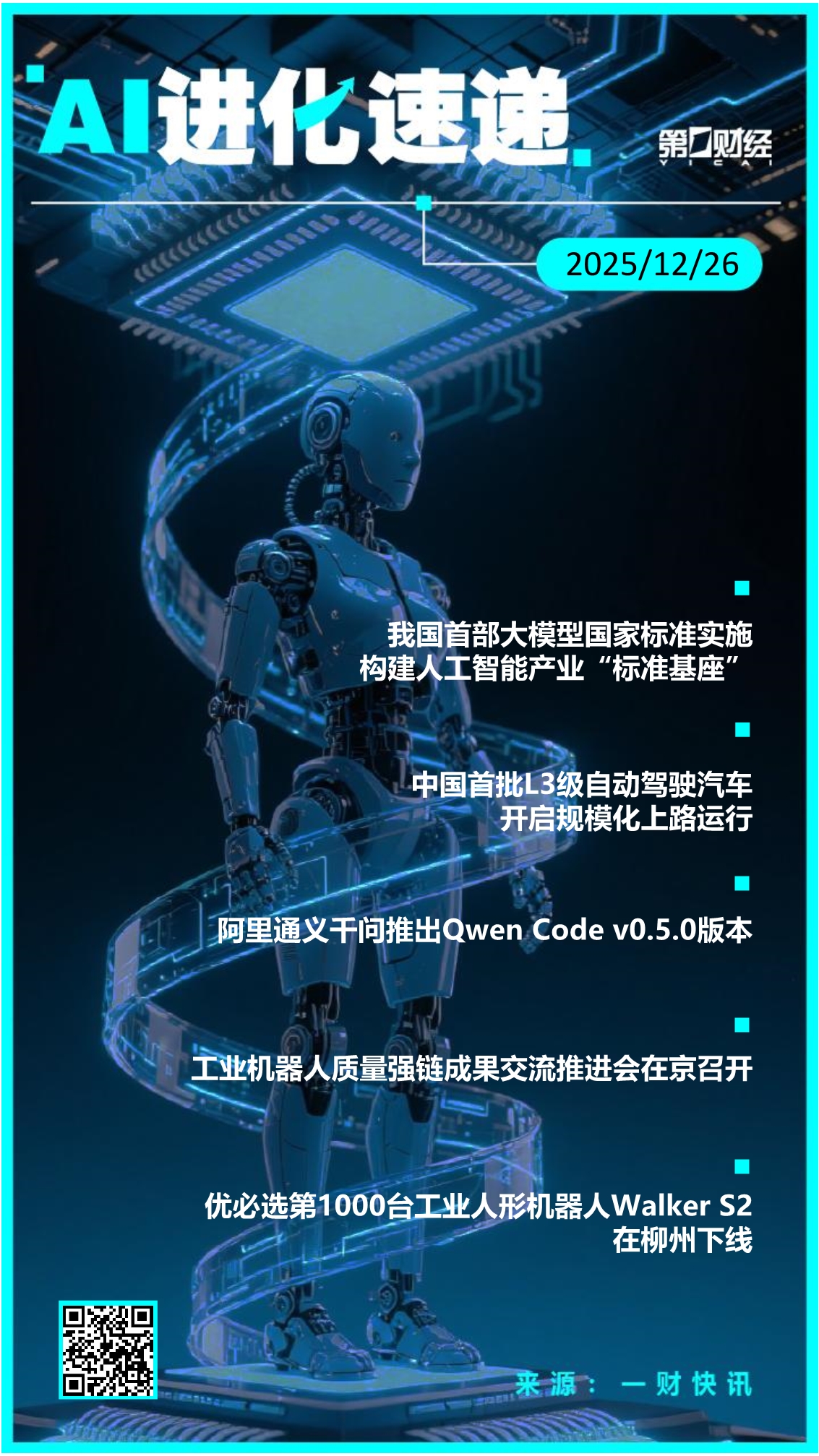
AI进化速递丨中国首批L3级自动驾驶汽车开启规模化上路运行
Di Yi Cai Jing· 2025-12-26 13:00
Group 1 - The first national standard for large models in China has been implemented, establishing a "standard base" for the artificial intelligence industry [1] - The first batch of L3 level autonomous vehicles in China has begun large-scale road operation [1] - Alibaba Tongyi Qianwen has launched version 0.5.0 of Qwen Code [1] Group 2 - The Industrial Robot Quality Strong Chain Achievement Exchange Conference was held in Beijing [2] - UBTECH has rolled off its 1000th industrial humanoid robot, Walker S2, in Liuzhou [3] - Zhaowei Electromechanical's next-generation dexterous hand is set to debut at CES [1]
抖音杀入移动支付,微信支付宝慌不慌?
Tai Mei Ti A P P· 2025-12-26 12:47
Core Insights - Douyin has launched its offline payment feature, "Douyin Buy," in major cities, marking a significant expansion into the payment sector, which is seen as a crucial piece of its commercialization strategy [1][4] - The Chinese mobile payment market is dominated by WeChat Pay and Alipay, which together hold over 90% market share, making it a challenging environment for new entrants like Douyin [2][3] - Douyin's strategy is to create a complete commercial ecosystem that retains user data and enhances user experience by keeping transactions within its platform [5][6] Market Dynamics - WeChat Pay and Alipay have established a stronghold in the payment market, with WeChat Pay leading at 59.7% and Alipay at 36.2% as of Q1 2025 [2] - Douyin's entry into the payment space is viewed as a defensive move to complement its existing online content and e-commerce offerings [2][6] - The competitive landscape is characterized by a "dual oligopoly," with both WeChat and Alipay continuously innovating to maintain their market positions [3][8] Douyin's Strategic Intent - Douyin aims to create a seamless transaction experience by integrating payment into its existing content and e-commerce ecosystem, thus preventing user data from flowing to competitors [4][5] - The introduction of "Douyin Buy" is seen as essential for Douyin to achieve its goal of a complete commercial loop, facilitating user transactions directly within the app [5][10] - Douyin's payment strategy is not merely optional but a necessary infrastructure for its broader ambitions in local commerce [5][12] Challenges Ahead - Douyin faces significant challenges in gaining market share due to the entrenched positions of WeChat and Alipay, which have established ecosystems that provide essential value beyond just payment [9][10] - Initial promotional strategies, such as subsidies, have shown limited effectiveness and may not sustain long-term user engagement [7][11] - The lack of unique payment scenarios and the reliance on existing payment methods like WeChat and Alipay within its own platform may undermine Douyin's payment initiative [11][12] User Experience and Merchant Perspective - User experience issues have been reported, including delays in transaction confirmations and refunds, which could hinder adoption [11] - Merchants prioritize transaction volume over the choice of payment method, making it difficult for Douyin to incentivize its payment solution [12] - The perception of Douyin's payment service as an additional option rather than a necessity may limit its growth potential in the competitive landscape [12]

黄金织锦、皮影跳太空步:年轻人解锁创作职业新赛道
Xin Lang Cai Jing· 2025-12-26 12:25
Core Insights - The rise of self-media creation has become a new career choice for many young people, facilitated by platforms like Douyin's "Youth Creator Growth Plan" [2][20] - This trend reflects a shift in traditional career boundaries, allowing youth to pursue interests and achieve value realization through creative expression [20][34] Group 1: Individual Creators - Douyin creator @Chen Chuan successfully replicated the complex traditional silk weaving technique "Floating Light Brocade," gaining 1.25 million likes on his video, showcasing that creative work can be a viable career path [5][23] - Another creator, @Wang's Shadow Play, initially aimed to increase visibility for shadow puppetry but evolved into a professional creator after gaining popularity and brand collaborations, highlighting the potential of short videos as a platform for traditional arts [6][25] Group 2: Institutionalized Creation - The emergence of institutionalized creation is represented by creators like @Dayuan Mirror Science, who utilize AIGC technology to transform complex scientific topics into engaging visual content, indicating a trend towards more structured creative endeavors [8][25] - This shift is part of a broader movement where young people are increasingly valuing flexibility, self-fulfillment, and the integration of interests with income, moving away from traditional job security [8][25] Group 3: Platform Support - The Douyin "Youth Creator Growth Plan," launched in July, aims to support young creators through a comprehensive service system that includes creative courses, traffic systems, and monetization opportunities [9][26] - Since its trial operation, the plan has supported 14,000 young creators, with a total of over 500 billion views on their works and cash earnings exceeding 800 million yuan, demonstrating the platform's role in facilitating creative careers [11][28] Group 4: Employment Impact - Research indicates that Douyin's ecosystem is expected to create 64.55 million job opportunities by 2024, with 49.21 million direct jobs and 15.34 million indirect jobs in related industries [14][30] - Among the 16 million people employed within Douyin's ecosystem, diverse demographics are represented, including 8.21% full-time mothers and 5.75% migrant workers, showcasing the platform's inclusivity [14][30] Group 5: Cultural and Social Impact - Self-media has transcended individual content output, fostering diverse employment forms and facilitating cultural and emotional connections through content [31][34] - Creators like @Wang's Shadow Play have successfully integrated popular culture into traditional art forms, achieving commercial success and demonstrating the potential for cultural transmission in the digital age [31][34]

2025年,AI在重复互联网打法
3 6 Ke· 2025-12-26 12:21
Core Insights - The article highlights the competition for traffic in the AI sector, drawing parallels to the internet era's promotional logic, particularly the significance of major events like the Spring Festival Gala as a traffic pool [1][4] - Companies like ByteDance, Tencent, and Alibaba are leveraging existing platforms to promote their AI products, creating a closed loop of "traffic-product-traffic" [4][5] - The user acquisition cost for AI applications is heavily reliant on traffic channels, with an average of 68% of costs attributed to these channels, mirroring the mobile internet era's investment structure [1] Group 1: Traffic Competition - The competition for traffic is reminiscent of past internet eras, where the mantra "whoever controls traffic controls the market" prevails [4] - ByteDance's AI assistant, Doubao, has achieved over 100 million daily active users by integrating into established platforms like Douyin and Toutiao [4] - The strategy of utilizing existing user bases for rapid user acquisition is evident in Tencent's integration of AI capabilities into WeChat [5] Group 2: User Engagement Metrics - The ratio of daily active users to monthly active users has become a critical metric for measuring the success of AI products, similar to traditional internet products [2] - The AI ecosystem is evolving, with a focus on user engagement and retention as key indicators of success [2] Group 3: Market Dynamics - The AI landscape is characterized by a battle for the next generation of traffic distribution rights, with traditional search engines and app stores losing their central positions [12] - The competition is driven by the need for rapid user acquisition to satisfy capital market expectations and establish a sustainable business model [13] - The evolution of AI models relies on a "data flywheel," where increased user interaction generates data for model improvement, necessitating a large initial user base [14] Group 4: Future Directions - The industry is transitioning from an "App era" to an "intelligent agent era," with companies striving to create user habits that favor their AI solutions [16] - The focus on traffic and ecosystem dominance may lead to market saturation and monopolistic practices, prompting a need for sustainable growth strategies [17] - Future competition should shift from user quantity to value creation, emphasizing the importance of AI's ability to perform complex tasks efficiently [18][19]
新兴城市消费力爆发 “家门口的品质”成跨年新仪式丨新消费观察
Xin Lang Cai Jing· 2025-12-26 11:53
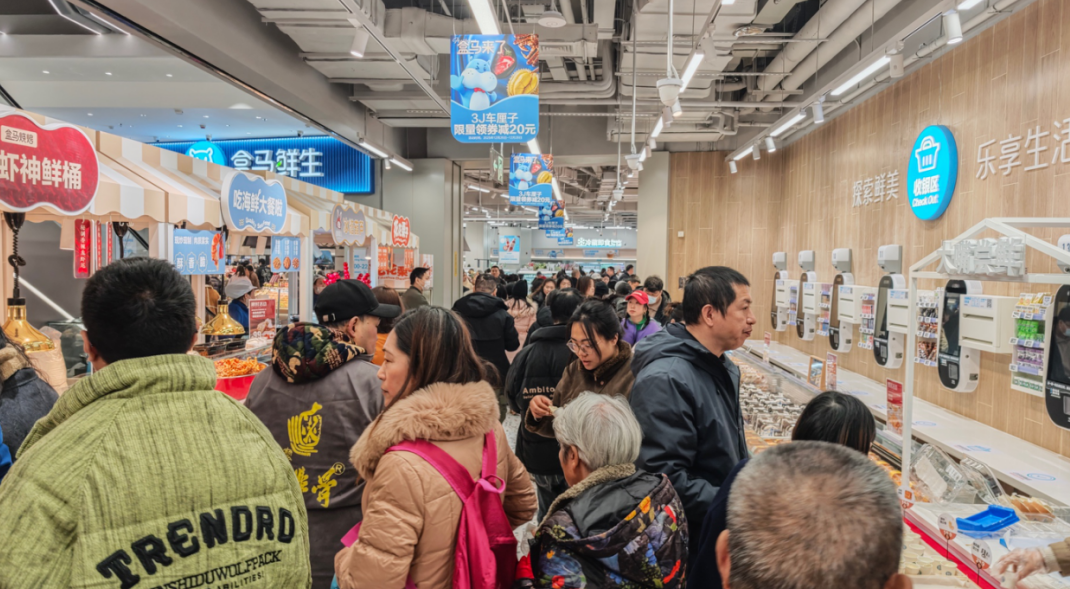
12月26日早上10点,记者在绵阳新投·大卫茂美学中心看到,已有不少绵阳市民在商场选购年货。位于商超负一楼的新零售超市,在海鲜岛、烘焙区和水 果货架前都挤满了顾客。 以绵阳为例,过去5年,绵阳消费动能强劲,全市社消零总额稳居四川第2位。在商业提档升级上,新投百盛、王府井购物中心、万达广场等商业综合体 开业或升级;尤其在新字号"引"进来上,采取大力发展"首发经济",盒马鲜生、泡泡玛特等品牌首店超过100家陆续落地。 封面新闻记者 欧阳宏宇 "以前每次买进口鲜货三文鱼,都得专门去一趟成都,太麻烦了。"在绵阳工作的陈先生说,随着经济条件越来越好,自己在购物时更看重商品品质,但 也苦于在当地购物时选择并不多。"现在盒马等更多高端商业进入了,我在绵阳也能买到过去只能去成都买的商品。" 对于家住绵阳安州区的康女士而言,在家门口体验了一次新零售超市的快闪店后就再也回不去了。"我从家里专门开了半个小时的车过来购物,这里卖 的东西和传统超市卖的完全不雷同,而且价格还更便宜。"她告诉记者,这些来自全球的品质商品和异于传统的购物体验,都让她期待着有更多的零售 业态落地。 消费场景持续拓宽,品牌进位显著加速,体现在元旦消费市场热潮中 ...
淘宝闪购推出“燎原深耕计划”,加大服务商培育与AI技术支持
Xin Lang Cai Jing· 2025-12-26 11:53
Core Insights - Taobao Flash Sale has launched the "Liaoyuan Deep Cultivation Plan" to enhance strategic investment in official ecological partners through policy support, organizational development, and systematic AI technology support [1] Group 1: Strategic Initiatives - The plan includes significant investments in AI technology and products, leveraging the Tongyi large model and self-developed industry models [1] - Taobao Flash Sale will provide ecological partners with access to core capabilities such as intelligent diagnosis, AI store decoration, business alerts, and store inspection assistants [1]
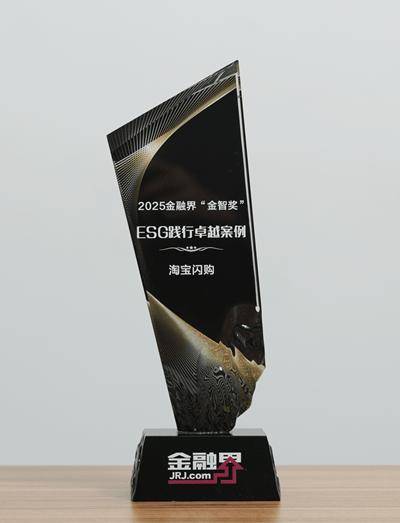
打造绿色、共赢、有温度的即时零售生态,淘宝闪购荣获第十四届金融界“金智奖”ESG践行卓越案例
Sou Hu Cai Jing· 2025-12-26 11:18
其中,2025年度ESG践行卓越案例中的企业,在环境可持续发展、社会价值共创、公司治理优化等方向 的深耕实践,取得显著成效。该奖项旨在树立高质量发展标杆,激励广大上市公司聚焦主业、深耕创 新、践行社会责任,为"十五五"时期实体经济与资本市场协同发展凝聚行业共识。 作为阿里巴巴集团即时零售业务的承载平台,淘宝闪购将ESG理念深度融入业务全流程,构建起特色鲜 明的实践体系。 在环境保护维度,淘宝闪购积极推动绿色消费,助力消费者低碳行为习惯养成,并通过流量倾斜、补贴 激励等方式引导商家践行低碳理念;社会价值层面,淘宝闪购开展多项爱心公益活动,并构建了"社区 侠"公益体系,发动城市骑士参与社区隐患排查、助老送餐等公益服务,实现骑士群体从城市服务者到 社区共建者、社会治理参与者的价值认可;治理层面,淘宝闪购不断完善沟通协商渠道,通过多项举 由金融界主办的"启航·2025金融峰会"于12月26日在北京成功举办,本届大会以"新开局、新动能、新征 程"为主题,汇聚监管部门、行业协会、金融机构、上市公司、媒体等领域数百位相关领导和重磅嘉 宾。作为大会备受关注的重要成果,第十四届金融界"金智奖"年度评选结果正式揭晓,淘宝闪购荣 ...