
BABA(BABA)

Search documents
苹果涨近3%,英特尔跌近6%,白银拉升,特朗普宣布对韩国加征关税
21世纪经济报道· 2026-01-26 23:26
Market Performance - The three major U.S. stock indices closed higher on Monday, with the Dow Jones up 0.64% at 49,412.4 points, the S&P 500 up 0.5% at 6,950.23 points, and the Nasdaq up 0.43% at 23,601.36 points [1][2]. Company Updates - Major tech stocks mostly rose, with Apple increasing nearly 3% as it plans to announce a new version of Siri in late February, following a partnership with Google due to internal AI model challenges [2]. - Facebook rose over 2%, Google increased over 1%, while Tesla fell over 3% and Nvidia dropped 0.64% [2]. Earnings Season Insights - Over 90 companies in the S&P 500 are set to report quarterly earnings this week, including major players like Microsoft, Meta, Tesla, and Apple. So far, 76% of the companies that have reported exceeded earnings expectations [3]. - Investors are particularly interested in details regarding AI plans, investment speeds, and expected profits to assess the sustainability of the current bull market [3]. Semiconductor Sector - The Philadelphia Semiconductor Index fell by 0.39%, with Intel dropping over 5.7% after a significant decline of 17.03% the previous week. Intel's projected revenue for Q1 is between $11.7 billion and $12.7 billion, below analyst expectations [3]. Chinese Stocks - The Nasdaq China Golden Dragon Index decreased by 0.63%, with many popular Chinese stocks declining. Notable drops include Hesai down 10.06% and XPeng down 2.39%, while Li Auto rose 1.38% [3]. Commodity Market - Spot gold prices briefly surpassed $5,000 per ounce and then $5,100 per ounce. Long-term forecasts suggest that gold may continue to perform strongly, indicating a need for portfolio diversification [5]. - The cryptocurrency market saw a collective rise, with Bitcoin surpassing $88,000, while Ethereum increased by 4.14% [6]. Federal Reserve Outlook - The Federal Reserve is expected to announce its first policy decision of the year, with a 97.2% probability of maintaining the current overnight rate. Market speculation includes potential rate cuts later in the year [9].


又暴涨,白银涨疯了...
Xin Lang Cai Jing· 2026-01-26 23:20
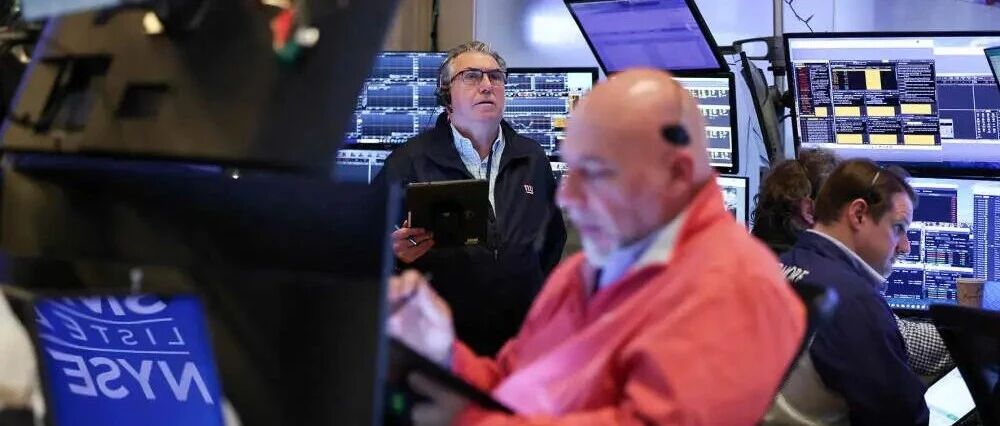
来源:中国基金报 【导读】疯狂的白银 中国基金报记者 泰勒 大家好啊,今晚继续关注海外市场的表现,白银,又涨疯了。 白银暴涨 1月26日晚间,现货白银涨势不止,向上触及112美元/盎司,日内一度涨超8%。纽约期银也一度突破 112美元/盎司,日内涨超10%。 有分析师指出,本周白银的上涨,还受到华盛顿与欧洲盟友关系出现裂痕的推动;同时,结束俄乌战争 的最新谈判尝试迄今未能取得突破。对美联储独立性的挑战,也进一步点燃了避险买需。 ING集团大宗商品策略师Ewa Manthey表示:"在政策不确定性加剧的背景下,美元走弱、实际利率下 行,以及投资者对硬资产偏好增强,共同强化了对白银的支撑。"她指出,相较黄金,白银波动更大 ——这既源于其市场规模更小,也与其兼具工业金属与投资金属的双重属性有关,从而放大了近期行情 的幅度。 与此同时,全球白银市场已连续五年处于供应缺口。随着白银价格不断走高,散户买盘持续涌入。 此外,在特朗普表示其已完成对下一任美联储主席候选人的面试后,贵金属也获得支撑——这一表态再 度引发市场对央行独立性的担忧。特朗普对美联储的再度抨击、对委内瑞拉的军事干预,以及"吞并"格 陵兰岛的威胁,进一步助 ...
千问最强模型来了!多项性能破全球纪录
Shang Hai Zheng Quan Bao· 2026-01-26 22:54
Core Insights - Alibaba has launched its flagship reasoning model Qwen3-Max-Thinking, which is the largest and most powerful model in its series, boasting over 1 trillion parameters and a pre-training data volume of 36 trillion tokens [1][6]. Model Performance - The new model has achieved significant performance improvements, setting global records in key benchmarks related to scientific knowledge, mathematical reasoning, and code programming [3]. - Qwen3-Max-Thinking employs a novel Test-time Scaling mechanism that enhances reasoning performance while being more economical compared to traditional methods, which often lead to redundant reasoning [4]. Reasoning Efficiency - The innovative reasoning technology allows for "experience extraction" from previous results, enabling more efficient multi-round self-iteration within the same context, resulting in smarter reasoning outcomes [4]. - In the "Human Last Evaluation" (HLE) test, Qwen scored 58.3, surpassing GPT-5.2-Thinking's score of 45.5 and Gemini 3 Pro's score of 45.8, marking the highest score among all models [4]. Tool Utilization - Qwen3-Max-Thinking has significantly enhanced its native agent capabilities for autonomous tool usage, allowing it to intelligently combine tools for various tasks [5]. - The model has undergone joint reinforcement learning training based on rule rewards and model rewards, improving its ability to think while using tools [5]. Accessibility - Developers can experience Qwen3-Max-Thinking for free on QwenChat, while enterprises can access the new model's API services through Alibaba Cloud [7]. - The Qwen app is set to integrate the new model, allowing all users to experience the strongest model for free [7].
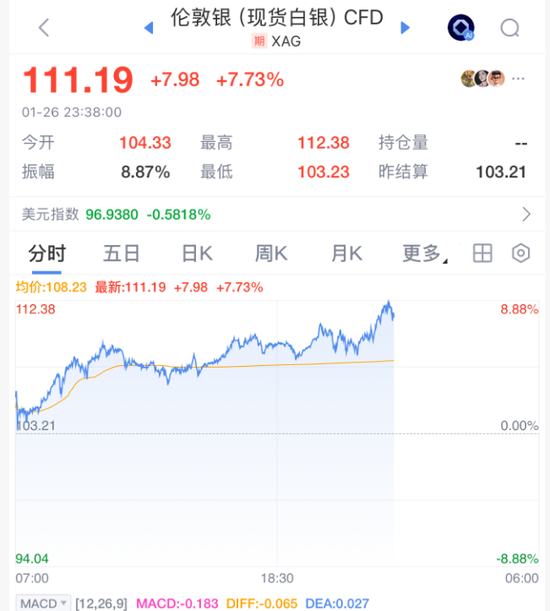
美股三大指数集体收涨,热门中概股多数下跌
Sou Hu Cai Jing· 2026-01-26 22:33
转眼间,OpenAI、软银、甲骨文官宣"星际之门"已经过去了一整年,但这个号称"立即部署1000亿美 元、4年争取投资5000亿美元"的项目不仅进展缓慢,而且在周一又传出受挫的消息。据最新消息,此前 有关软银集团计划以500亿美元估值(含债务)收购美国数据中心运营商Switch的交易已经告吹。 凤凰网财经讯 1月27日,美股三大指数集体收涨,纳指涨0.43%,道指涨0.64%,标普500指数涨0.5%。 科技股涨跌互现,苹果、甲骨文、Meta涨超2%,英特尔跌超5%,AMD、特斯拉跌超3%。 热门中概股多数下跌,纳斯达克中国金龙指数收跌0.62%,百度跌超3%,小鹏汽车跌超2%,阿里巴巴 跌超1%,理想汽车涨超1%。 黄金与白银大幅回调。现货白银涨幅收窄至2%,报约105美元/盎司,此前一度上涨14%。现货黄金涨幅 收窄至不足0.8%,报约5020美元/盎司,此前一度上涨2.5%。 全球要闻 "星际之门"再遇阻:软银的巨额数据中心收购案据传已告吹 人工智能(AI)热潮"孕育"了许多赢家,尤其是"科技七巨头"受益匪浅。不过,AI领域的主角今年似乎 要有变化了。美国投资银行杰富瑞(Jefferies)最新报告称, ...


Texas governor bars state employees from using Alibaba, Temu products
Reuters· 2026-01-26 21:21
Texas will bar its employees from using Alibaba, Temu and TP-Link hardware and software, the governor said in a statement, saying his state made the decision to protect the "privacy of Texans" from th... ...

巨额红包“助燃” 机构看好AI应用方向投资机遇
Zhong Guo Zheng Quan Bao· 2026-01-26 20:54
Core Insights - Tencent and Baidu announced a total cash red envelope distribution plan of 1.5 billion yuan for the Spring Festival, which has attracted significant market attention and is seen as a catalyst for investment opportunities in AI applications [1][2] - The AI application sector is expected to stabilize after a rapid adjustment period, with analysts emphasizing the necessity of AI applications in 2026 across various industries [3][4] Market Performance - The AI application sector experienced a decline of over 2% as of January 26, following a peak on January 14, but has shown a cumulative increase of nearly 12% since the beginning of 2026, outperforming major A-share indices [3][4] Investment Opportunities - Analysts recommend focusing on valuable AI application areas such as AI advertising, AI e-commerce, AI office solutions, AI education, and AI healthcare, as these sectors are expected to see accelerated user growth and commercialization [1][2][4] - The competition among major AI firms is intensifying, with companies like Alibaba integrating various services into their platforms, indicating a growing opportunity for AI application investments [2][4] Industry Trends - The AI application industry is witnessing a shift from conceptual discussions to practical implementations, with significant investments in computing power and talent, making commercialization increasingly urgent [2][3] - Smaller AI application companies may benefit from integrating into larger ecosystems or focusing on niche markets to enhance their professional depth and explore new opportunities [4]


阿里发布最新AI推理模型Qwen3 Max Thinking
Xin Lang Cai Jing· 2026-01-26 16:34
阿里巴巴发布最新人工智能推理模型Qwen3 Max Thinking,称该模型在准确性、复杂推理和智能体等方 面较之前版本实现了"显著的性能提升"。 阿里巴巴在声明中表示,该模型在解决科学、数学和编程问题上的表现足以媲美 Claude Opus 4.5、 Gemini 3 Pro和GPT-5.2-Thinking-xhigh。 阿里称,该模型的搜索和记忆工具旨在帮助减少幻觉,并做出更具个性化的应答。 阿里巴巴发布最新人工智能推理模型Qwen3 Max Thinking,称该模型在准确性、复杂推理和智能体等方 面较之前版本实现了"显著的性能提升"。 阿里巴巴在声明中表示,该模型在解决科学、数学和编程问题上的表现足以媲美 Claude Opus 4.5、 Gemini 3 Pro和GPT-5.2-Thinking-xhigh。 阿里称,该模型的搜索和记忆工具旨在帮助减少幻觉,并做出更具个性化的应答。 责任编辑:李桐 责任编辑:李桐 ...
参数破万亿!阿里Qwen3-Max-Thinking发布,编程能力“踢馆”Gemini与Claude
AI前线· 2026-01-26 16:33
在多项权威基准测试中表现优异,Qwen3-Max-Thinking 性能可与 GPT-5.2-Thinking、Claude-Opus-4.5、Gemini-3 Pro 等闭源顶级模型竞争甚至超 越。 具体而言,Qwen3-Max-Thinking 在多项关键 AI 基准测试中达到了或刷新了全球 SOTA 表现: 这些测试覆盖了科学知识问答(如 GPQA Diamond)、数学推理(如 IMO 等级测试)、代码编程(如 LiveCodeBench)等多个领域,是衡量大型语 言模型综合能力的重要指标。 阿里突发最强旗舰模型,总参数过万亿 就在刚刚,Qwen3-Max-Thinking 正式版突然发布,总参数规模超过 1 万亿(1T),位于目前全球最大规模 AI 模型行列,预训练数据规模高达 36T Tokens,覆盖大量高质量语料。 作者|冬梅 Qwen3-Max 是阿里通义团队迄今规模最大、能力最强的语言模型,该版本包括 Base、Instruct 和 Thinking 多种形式。 在包含事实科学知识、复杂推理和编程能力在内的 19 项权威基准测试中取得极高水平,有记录显示其综合表现可媲美 GPT-5.2-T ...
继续看好光纤光缆和AIDC
2026-01-26 15:54
Summary of Conference Call Notes Industry and Company Involved - The focus is on the **fiber optic cable** and **AIDC (Artificial Intelligence Data Center)** sectors, with specific mention of companies like **Changfei Fiber**, **Hengtong Optic-Electric**, **Zhongtian Technology**, and **Fenghuo Communication**. Core Points and Arguments - **Fiber Optic Price Surge**: The price of fiber optics has significantly increased due to rising demand from operators and AI, particularly driven by overseas data center construction for the 657A1 type fiber. The supply remains tight due to low willingness from domestic and foreign manufacturers to expand production and a contraction in supply caused by bankruptcies in the industry [1][4][5]. - **Impact of AWS Price Increase**: AWS's decision to raise GPU capacity block prices indicates a potential increase in AI cloud infrastructure costs, which is favorable for the domestic AI industry chain. The H200 incident's impact is diminishing, and the development of domestic computing cards is driving AIDC demand [1][8]. - **AIDC Market Dynamics**: Recent changes in the AIDC sector include some companies increasing delivery volumes, leading to a tight supply-demand balance. If demand continues to grow and energy consumption is strictly controlled, prices may rise. Notably, AIGC prices in Hong Kong have surged significantly, with some companies receiving demand guidance for 2027 that is several times that of 2024 and 2025 [1][11]. - **Investment Recommendations**: Short-term investment suggestions prioritize AI giants (Alibaba, Tencent, ByteDance), followed by AIDC (data centers, liquid cooling, power supply), then network components (switches, chips, optical modules, copper connections), and finally computing (chips, servers, server power supplies) [1][13]. Other Important but Potentially Overlooked Content - **Performance of Related Companies**: Companies like Changfei Fiber, Hengtong Optic-Electric, Zhongtian Technology, and Fenghuo Communication are expected to benefit significantly from the current price increases in fiber optics, with leading firms' cost prices between 14-15 yuan and second-tier firms at 17-18 yuan, indicating substantial profit margins [1][6]. - **Monitoring Factors for Fiber Market Trends**: Key factors to watch include upcoming telecom procurement and the impact of AI on the prices of 652D and 657A1 fiber types. Continuous tracking of the industry chain is crucial due to the unpredictable nature of raw material prices [1][7]. - **Future AIDC Developments**: The growth of domestic computing cards is directly linked to increased demand for data center infrastructure, with major brands like Huawei and Alibaba having significant needs. The successful distribution of H200 cards could further benefit the domestic AI and computing chains [1][10]. - **Investment Focus in Communication Sector**: Investors should pay close attention to the satellite communication sector, AIDC, domestic AI chains, and fiber optic sectors, as these areas are experiencing significant short-term marginal changes [1][14].


商业航天-VS-AI应用
2026-01-26 15:54
商业航天 VS AI 应用 20260126 摘要 云计算价格因 AI 产业链全线涨价而上涨,亚马逊和阿里云已涨价 10%- 15%,预计其他云厂商将跟进。Token 消耗量激增导致算力需求倍增, 是云计算涨价的主要驱动因素,预示着 AI 算力需求将持续增长。 字节跳动计划在 2026 年增加 KMAX 资本支出至 3,000 亿左右,主要采 购国内芯片,如华为和五 G。东阳光在 ITC 份额上领先,润泽科技、大 为科技等紧随其后,液冷技术公司如英维克等也将受益。 商业航天板块行情启动早于 AI 应用,自去年 11 月中下旬以来平均涨幅 超 100%,部分公司股价翻倍。AI 应用行情自 12 月底启动,平均涨幅 超 30%,但回调幅度较大,目前回调约 40%。 商业航天板块风险已得到一定释放,但 AI 应用赛道仍具潜力。互联网大 厂在 2026 年争夺超级入口,阿里加大投流费用,增长数倍甚至十倍, 以抢占市场份额。 字节跳动预计豆包将在 2026 年春晚亮相,效仿抖音发展路径,通过国 民级应用提升影响力。腾讯通过发放 10 亿现金红包推广元宝应用,抢 占 AI 时代入口。 Q&A 腾讯在 AI 产业方面的最新 ...