BABA(BABA)

Search documents
计算机行业周报20260124:Token需求“通胀”:从CPU到云服务
Guolian Minsheng Securities· 2026-01-24 13:25
Investment Rating - The report maintains a "Recommended" rating for the industry [4] Core Insights - The demand for Tokens is driving inflation across the AI industry chain, with price increases being observed from storage to CPUs and now extending to cloud services, marking a significant shift in the pricing dynamics of the cloud computing sector [14][30] - AWS has initiated a price increase for its EC2 machine learning capacity blocks by approximately 15%, breaking a long-standing trend of declining prices in the cloud services industry, which may lead to a revaluation of cloud computing and related service providers [14] - The report highlights potential investment opportunities in cloud computing, CPUs, and databases, suggesting companies such as Alibaba, Kingsoft Cloud, and Inspur for cloud computing; Haiguang Information and Longxin for CPUs; and companies like StarRing Technology and DM Database for databases [30] Summary by Sections 1. Cloud Computing Price Trends - The report indicates that the AI industry chain is experiencing a price transmission trend, with cloud computing being the next area to see price increases following storage and CPU price hikes [14] - AWS's price adjustment reflects anticipated supply-demand dynamics, suggesting that successful price increases could lead to further adjustments in the future [14] 2. CPU Market Dynamics - The report notes a persistent supply-demand imbalance in the CPU market, particularly with Intel facing production limitations that may lead to continued shortages into 2026 [16] - The importance of CPUs is expected to rise significantly due to the increasing demand from AI applications, with the report emphasizing the need for optimization across both CPU and GPU resources [24][25] 3. Database Sector Growth - The report anticipates a rapid increase in the number of database PCU nodes driven by the demand for AI agents, which could lead to significant revenue growth for database providers [26] - The emergence of AI-native databases is highlighted as a key trend, with companies like Alibaba's PolarDB gaining traction in the market [29] 4. Investment Recommendations - The report suggests focusing on companies in the cloud computing sector such as Alibaba, Kingsoft Cloud, and UCloud, as well as CPU manufacturers like Haiguang Information and Longxin, and database firms like StarRing Technology and DM Database [30]




阿里国际站SEO案例:流量骤降背后的增长教训
Sou Hu Cai Jing· 2026-01-24 12:49
那天我正吃着火锅,真的,油碟刚打好,毛肚还没下锅。电话就来了。 "流量崩了。" 阿里巴巴SEO的核心优势是什么? 很多人会说,是关键词研究、网站结构、外链。没错,但这些是表象。阿里很早就能做到,即使用生冷的产品名搜索,它的信息也总出现在前面。它的每个 网页,从标题、META标签到HTML代码,都透着专业。 就四个字。阿里国际站九月大促,SEO流量断崖式往下掉。你能想象那种感觉吗?全世界供应商的眼睛都盯着呢。后来查出来,是开发同学为了服务器稳 定,顺手把搜索引擎爬虫给屏蔽了。原因简单得让人想哭,但绩效确确实实受了影响。 这事儿让我琢磨了好久。 我们这些搞SEO的,整天在干嘛?盯着GA、GSC的数据曲线,像个救火队员。流量一下降,马上维度细分、链路细分、关键词类型细分,一顿操作猛如 虎。搞个巡检系统,检查TDK、死链、统计代码。再弄个数据预警,涨跌超10%就报警。 这重要吗?太重要了。这是基本功,是地板。 但天花板在哪? 我后来看到阿里工程师写的一篇文章,猛地被敲了一下。他们早就不满足于这些"维护"了。他们在用深度强化学习,教AI从海量又杂乱的商品描述里,自动 抽取出能提升搜索排名的商品摘要。这不是优化,这他娘的 ...

AI手机的终局,“读屏”还是“对话”?
创业邦· 2026-01-24 10:43
Core Viewpoint - The article discusses two distinct technological approaches to AI integration in mobile devices: the GUI (Graphical User Interface) route, which prioritizes speed and ease of use, and the A2A (Agent-to-Agent) route, which emphasizes security and collaboration through standardized APIs [7][17][29]. Group 1: AI Integration Approaches - The GUI approach allows AI to simulate user actions on apps by utilizing system permissions, enabling rapid deployment but raising concerns about user experience and security [10][14]. - The A2A approach establishes a standardized communication protocol between AI and applications, requiring dual authorization from users and app developers, which enhances security and accountability [14][15]. - The choice between these approaches reflects companies' strategic interests and their positions within the tech ecosystem, with GUI being faster but riskier, while A2A is slower but more stable and secure [17][29]. Group 2: Industry Responses - Major tech companies like Apple and Google favor the A2A approach, focusing on API integration to maintain control over their ecosystems and ensure compliance with privacy regulations [18][21]. - Microsoft has developed frameworks like "AutoGen" to facilitate multi-agent collaboration, while OpenAI and Anthropic are pushing for API standards that align with the A2A model [19][21]. - In contrast, domestic companies like ByteDance are exploring high-permission GUI routes to disrupt existing ecosystems and capture new market opportunities [23][24]. Group 3: Future Implications - The A2A model is seen as a long-term solution that could lead to new business opportunities, including the development of specialized agents for various industries and the establishment of a new ecosystem of protocols and middleware [33][35]. - The article suggests that the evolution of AI integration will ultimately shape the relationship between humans and machines, emphasizing the need for AI to serve as an intelligent assistant rather than a replacement for human decision-making [37][38].




阿里巴巴加码教育布局 云谷学校二期开工引入香港汉基合作
Xin Hua Cai Jing· 2026-01-24 07:14
值得关注的是,二期项目引入了重要的战略合作方——香港汉基国际学校。该校标志性的"杭州十年级 寄宿项目"将整体入驻,实现课程体系、师资与管理模式的深度共享。此举强化了云谷在国际化教育领 域的品牌影响力,预期将间接带动周边区域价值与教育生态升级。 仪式现场,前淘天CEO、阿里巴巴创始人之一戴珊低调出席,引发市场对其未来是否更深入参与教育板 块的关注。分析人士指出,随着国内教育行业向高质量、特色化转型,企业办学尤其是科技企业赋能教 育的模式,正逐渐成为民间资本进入教育领域的重要路径。 (文章来源:新华财经) 新华财经北京1月24日电(记者刘旭阳)记者24日获悉,杭州云谷学校二期工程正式奠基开工,该项目 预计于2028年8月建成投用,标志着阿里巴巴集团在教育领域的战略性布局进一步深化。 云谷学校为阿里巴巴集团创办的15年制私立国际学校,总规划占地面积约14.6万平方米。此次开工的二 期项目建筑面积约8.2万平方米,设计容纳规模1200人。项目建成后,将与已投入使用的一期工程形成 协同,整体容纳量提升至约3000人,进一步巩固其在长三角地区高端教育市场中的资源配置优势。 ...
“平头哥”单独上市?摩根大通:对“报道时机”惊讶,估值或占阿里市值6-14%
Hua Er Jie Jian Wen· 2026-01-24 04:26
媒体报道阿里巴巴准备推进旗下芯片业务"平头哥"单独上市,摩根大通对"报道时机"感到意外。 追风交易台消息,1月23日,摩根大通中国证券研究主管姚橙的团队发表研报,参照同业估值测算,"平 头哥"的潜在估值可能在250亿至620亿美元之间,约占阿里当前市值的6%到14%。 但报告明确指出,这个数字高度依赖未来实际的业务规模、竞争力以及最终的交易结构。 分析师认为当前市场更聚焦于验证阿里云与AI核心业务能否扎实兑现的阶段。公司选择重启"价值释 放"叙事,更像是一种战略沟通姿态,试图展示资产价值。 250-620亿美元怎么算出来的 针对"平头哥"的潜在估值,摩根大通给出了一个宽泛的区间:250亿至620亿美元,约占阿里巴巴当前市 值的6%至14%。 报告强调,这是一个示意性的"选择权价值"估算,通过激进的2026年收入替代指标,将其与昆仑芯、寒 武纪等国内同业进行粗略对比得出的。 这个区间对三个因素高度敏感:实际对外出售的资产是什么、与国内外替代产品相比的竞争力如何、最 终交易结构怎么设计。 换句话说,这个数字更像是在回答"如果平头哥成为单独估值资产,市场会给多少钱",而不是基于完整 芯片业务基本面的建模。 研报坦承 ...
大厂CIO独家分享:AI如何重塑开发者未来十年
Sou Hu Cai Jing· 2026-01-24 04:13
Core Insights - The article discusses the transformative impact of AI on the technology workforce and the need for developers to adapt to the changing landscape [1][4][41] - It emphasizes the importance of measuring true productivity in software development beyond just code quantity, highlighting the role of communication and collaboration [10][12][41] Group 1: AI and Developer Anxiety - The article explores the anxiety among developers regarding their ability to adapt to the AI era, suggesting that the source of anxiety is self-doubt rather than AI itself [5][6] - It notes that many developers are not as anxious as presumed, with some embracing AI to enhance their skills and productivity [6][7] Group 2: Measuring Productivity - The article argues that traditional metrics like lines of code do not accurately reflect a developer's contribution, as a significant portion of their time is spent on communication rather than coding [10][11] - It highlights that AI-generated code often lacks complexity and that the most critical code still requires human intellect [10][11] Group 3: The Future of Engineering Roles - The concept of a "full-stack engineer" is discussed as an ideal but difficult to achieve due to high skill requirements and traditional role divisions within companies [16][17] - The emergence of new roles, such as "AI product design front-end engineer," is proposed to bridge gaps between product management and technical execution [20][21] Group 4: Enhancing Efficiency through AI - The article suggests that organizations should prioritize internal efficiency improvements through AI before focusing on business efficiency, advocating for a closed-loop approach to problem-solving [22][25] - It emphasizes the need for effective collaboration between IT and business teams to leverage knowledge and drive AI initiatives [29][30] Group 5: Recruitment and Skills in the AI Era - The article outlines the evolving expectations for tech talent, emphasizing the importance of curiosity and resilience in navigating the fast-paced changes brought by AI [39][40] - It stresses that while AI will enhance software engineering efficiency, the demand for skilled developers will persist [41][42]
千问补课:阿里在AI时代缺少的是流量入口,还是数据容器|估值叙事03
IPO早知道· 2026-01-24 02:07
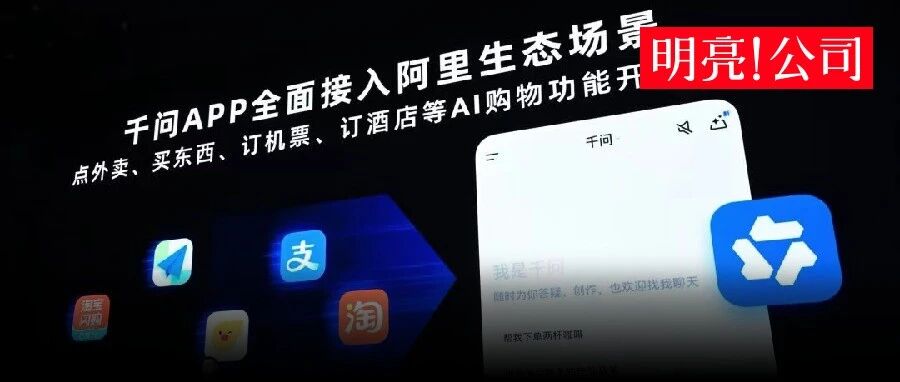
以下文章来源于明亮公司 ,作者主编24小时在线 明亮公司 . 追踪新商业、好公司,提供一手情报与领先认知。 作者: 苏打 出品:明亮公司 阿里正在用千问"补课"。 「明亮公司」获悉,1月14日,阿里宣布千问月活已破1亿。次日,千问宣布全面接入阿里生态,由淘宝、支付宝、淘宝闪购、飞猪、高德、优酷、大 麦、菜鸟、阿里健康、1688、盒马"组团"为其服务。 在大厂之间这场AI军备竞赛中,与豆包、元宝相比,千问可谓姗姗来迟。早在2023年4月,阿里云便已正式发布大语言模型"通义千问",但直到2025年 11月千问才正式面市,迄今仅两个月。 公开资料显示,千问App运营商为上海智信普惠科技有限公司,经过股权穿透,背后正是阿里巴巴资管平台。千问将已成为阿里巴巴AI能力在C端市场 的超级入口。 不仅如此,阿里CEO吴泳铭在此前业绩电话会上谈及千问项目的启动时表示,"意味着阿里巴巴在AItoB与AItoC两个方向齐发力。" 将生态"折叠"成一个千问入口重新进入用户视野,固然是AI时代的一个合理选项。但相比"超级入口",年幼的千问迅速被推到C位,本质上折射出的是 阿里对高价值数据的渴求——尽管拥有庞大的业务生态,但在数据维度、 ...
特朗普突然变卦 还称“美国从没需要过北约”!欧洲抛售美国资产 美股震荡 英特尔暴跌17% 金价银价狂飙!英首相:特朗普应道歉
Mei Ri Jing Ji Xin Wen· 2026-01-24 01:24
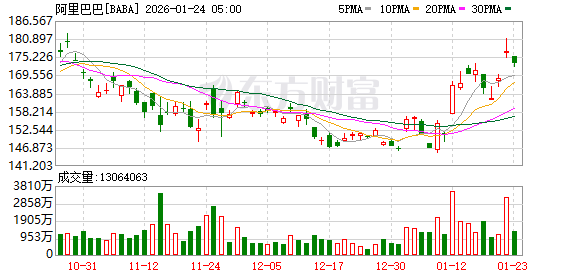
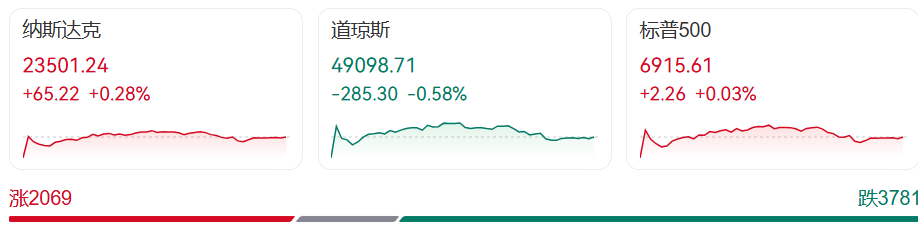
Market Performance - On January 23, US stock indices showed mixed results with the Dow Jones down 0.58%, the Nasdaq up 0.28%, and the S&P 500 up 0.03% [1] - The precious metals sector led gains, with Pan American Silver rising over 4% [1] - Technology stocks had varied performances, with Microsoft and Netflix up over 3%, while Intel fell 17%, marking its largest single-day drop since August 2024 [1] Chinese Stocks - The Nasdaq Golden Dragon China Index decreased by 0.26%, with notable declines in stocks such as Xpeng down over 3% and NIO and Alibaba down over 2% [1] - Conversely, Youdao rose over 4%, New Oriental increased over 2%, and Trip.com was up over 1% [1] Precious Metals - International precious metal prices reached new highs, with gold briefly surpassing $4,990 and silver crossing the $100 mark [1]


特朗普突然变卦,还称“美国从没需要过北约”!欧洲抛售美国资产,美股震荡,英特尔暴跌17%,金价银价狂飙!英首相:特朗普应道歉
Mei Ri Jing Ji Xin Wen· 2026-01-24 01:15
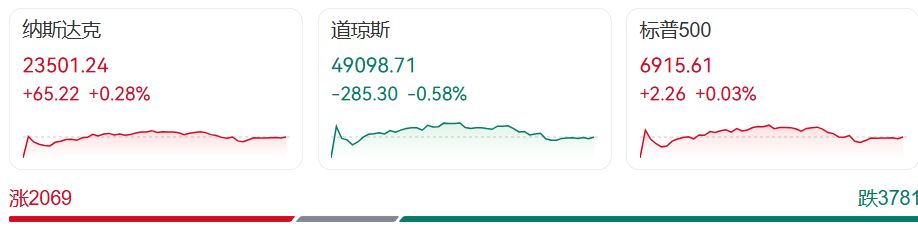
Market Performance - On January 23, U.S. stock indices showed mixed results, with the Dow Jones down 0.58%, the Nasdaq up 0.28%, and the S&P 500 up 0.03% [1] - The precious metals sector led gains, with Pan American Silver rising over 4% [1] - Technology stocks had varied performances, with Microsoft and Netflix up over 3%, while Intel fell 17%, marking its largest single-day drop since August 2024 [1] Chinese Stocks - The Nasdaq Golden Dragon China Index fell 0.26%, with notable declines in stocks such as Xpeng down over 3%, NIO and Alibaba down over 2%, and Weibo down over 1% [1] - Conversely, Youdao rose over 4%, New Oriental increased over 2%, and Trip.com was up over 1% [1] Precious Metals - International precious metal prices reached new highs, with gold briefly surpassing $4,990 and silver crossing the $100 mark [1]
芯片巨头大跌17% 英伟达市值一夜增超4700亿元!贵金属领涨 现货白银大涨超7% 现货黄金逼近5000美元
Mei Ri Jing Ji Xin Wen· 2026-01-24 00:22
Group 1: Stock Market Performance - The three major U.S. stock indices closed mixed, with the Dow Jones down 0.58%, the Nasdaq up 0.28%, and the S&P 500 up 0.03% [2] - Technology stocks showed mixed results, with Microsoft and Netflix rising over 3%, while AMD and Amazon increased over 2% [2] - Intel experienced a significant drop of 17%, marking its largest single-day decline since August 2024 [2] Group 2: Chinese Stocks and Indices - The Nasdaq Golden Dragon China Index fell by 0.26%, with notable declines in stocks such as Xpeng down over 3%, NIO and Alibaba down over 2%, and Weibo down over 1% [3] - Conversely, stocks like Youdao rose over 4%, New Oriental increased over 2%, and Trip.com gained over 1% [3] - The FTSE China A50 Index futures rose by 0.41%, closing at 14,843 points [4] Group 3: Precious Metals - Spot silver surged by 7.34%, reaching $103.21 per ounce [5] - New York silver also increased by 7.17%, priced at $103.28 per ounce [6] - Silver saw a substantial annual increase of approximately 147%, driven by strong demand, limited refining capacity, and ongoing supply shortages [6] - Analysts noted that geopolitical tensions, a generally weaker dollar, and expectations of a shift to monetary easing by the Federal Reserve are influencing gold demand [6] - Spot gold rose by 1.01%, reaching $4,986.02 per ounce [7]